Streaming Live from SaaStr Annual: Cantina Stage - Wednesday
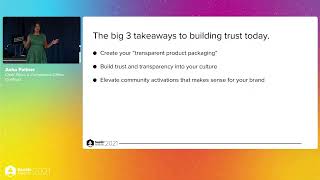
Three segments from SaaStr Annual's Cantina Stage: a blooper reel on aligning product, sales, and marketing teams; Sarah Stroop, CMO of TaxJar, on why SaaS companies need sales-tax compliance automation; and Asha Palmer from OneTrust on building trust as a competitive advantage through transparency and stakeholder engagement.
Chapters
Theo at ramp, Kareem Atieh.
[FOREIGN LANGUAGE] All right.
So, hey everybody. Very excited to be here. This is actually my first time at SaaStr and my first time giving this presentation, so I hope you all— and how to think about those bets when you're starting or scaling a company. So just to get a sense of who's in the room today, a quick show of hands of how many of you are founders or work at an early-stage company? Fantastic. And how many of you consider yourself gamblers or have a Robinhood account? All right, great. So we'll be talking about some of the bets we made along the way and how we think about those risks. So before we get started, I just want to give you a little bit of background of my backstory and how I got here today. So my first time in the U.S. was actually in 2007. I was born and raised in Lebanon. Came here to study and decided to stay. So I first moved to New York, did a little bit of work in consulting, and very quickly wanted to go back to writing code, building software, and started a company in 2014 called Paribus, where we're focused on helping consumers save money. So at the peak of it, we were saving about 10 million customers more than, like, many million dollars a year year on their online purchases. So whenever the price of something they had bought online dropped, we would automatically give them a refund on their purchases, working with the different stores. And 3 years later, we sold that company to Capital One, spent a bit of time in the card industry, and decided to leave Capital One after 2 years. And in 2019, started Ramp. So at Ramp, we're actually focused on helping businesses save money. And the way we do this is we help them understand their spend, control their spend, and reduce their spend in negotiations and all sorts of way. So Ramp today is a $4 billion business. We raised about $600 million, have 170 employees, and are helping more than 2,000 businesses save money on their spend. So in the time that it took it took us to build and sell our first company, Paribus, we were able to achieve an outcome that was about 100 times the size in those same 2 years with Ramp. And the way we thought about it is, how do we, how do we make those bets? How do we look for bets that have very high magnitude in the case of, very high positive outcome in the case of success? As opposed to trying to minimize the risk. So, and I'm sure you've heard this stat before, but when you think about startups, generally people will tell you like most startups fail. 90% of companies don't make it. It's like a plane is crashing and you're trying to rebuild that plane before gravity just like pulls you down and crashes you. So you only have a limited amount of time to make a couple of bets. And you wanna be focusing on the ones that have a potential to give you that escape velocity and really take off. And instead of asking people for advice and looking for sort of like the average of all the advice you get out there, you should probably be taking bigger, bolder bets. Because if the average is failure, you don't want to be taking average advice. So the way we call this concept internally is just asymmetric outcomes, right? Like, you want to look for outcomes where in the case of success, you have a 10x payoff, and if you fail, maybe it's a 1x loss. So you don't want to limit your downside, but you want to maximize your upside. And we're going to be talking about, like, what this asymmetric risk means in a little bit. So you can do that across different aspects of building and scaling a company, whether it's choosing your problems, space, hiring your early employees, picking your vendors, partners, building products, and fundraising. So what is asymmetric— what is an asymmetric outcome? What are asymmetric risks? I don't know if any of you have played poker here, but if you have, I'm sure you've been in this situation where you've drawn a pretty bad hand, and people are going around the room, and everyone's betting, betting, betting. Betting, and then the size of the pot becomes big enough, and you're looking at your hand, you're like, "Well, my hand is not that great, but there's enough in the pot, I might as well try it." And this is exactly what it is. So sometimes you're not dealt a very good hand, but the prize at the end of it is good, so you might as well just give it a shot and try. Or another analogy here is if you were playing a game where you're flipping a coin, in the case of heads, you win $1,000, but if you get tails, you lose $1,000. that's a pretty boring game. Like, the outcomes are perfectly symmetrical. And if your goal was to play that game until you reached, say, $100,000, you would have to play that game at least 100 times, and that's if you're extremely lucky. Now, if the game was a little different, where you could flip heads and get— or flip heads and get $100,000, or flip tails and lose $10,000, that's a much better game. Game to play. The outcomes are asymmetrical, but there's a catch. You need to be able to lose $10,000 to be able to play that second game. And that's how we thought about our problem space. So, if you're trying to build a company that launches rockets into space, it's a lot harder to do that on $1 million of seed funding. But if you're able to raise more money, you're able to go after these bigger problems where the barriers to entry are high, high, but the outcomes are massive. And there's a lot of that in financial services. It's no— like, it's not random that most banks are more than 100 years old. Like, Amex, who I would say is the incumbent in our space, is 161 years old at this point. In financial services, there are high barriers to entry. You need to be able to convince the banks to work with you. You need to be able to convince the card manufacturers to make cards for you. So the fact that we were second-time founders with Ramp allowed us to raise an outsized seed fund, and as a result, we decided to sort of go after a bigger space where it's harder to start. The same applies to hiring, right? The average advice on hiring generally goes something like this. Like, you have a checklist of competencies you're looking for, and you go competency by competency, trying to make sure that the person ticks all the boxes. The problem is most people who are exceptional at what they do tend to be very spiky. They don't have an evenly distributed skill set, and that first approach makes it very easy to find the flaws and to disqualify candidates, but it makes it very hard to find the people who have a 10x potential and can grow with you. So at, at Ramp, we were lucky to have had, I guess, interns in the years prior and worked with two freshmen actually at the time that we started working with them. One of them had— one of them on the left, actually, Viral, had sold his company to Apple when he was a freshman at Stanford and was just exceptional at writing iOS code. He had zero fintech experience. And the other one was Calvin, who was just extremely quick at building software. He also had zero fintech experience. And may not have had the communication skills of an engineer who was more experienced. But those are the types of people that we chose to hire early on, not because they had the experience and they were the low-risk bets, but because they had the slope that we were looking for. And when you hire these people, they scale with you, they scale with the company, and it makes it much easier to keep growing and grow your product. And sometimes we like to joke We try to hire for the slope that matches our logo. But yeah, so that's been pretty good for us. The same applies to vendor, and I'm sure that's relevant to a lot of you today, right? The saying goes something like, "No one ever got fired for choosing IBM." Or Jira, which I'm sure you're all familiar with. Jira does everything well. If you want to limit your downside, side, like, no one's going to blame you if you choose Jira because things are probably going to go right. The problem with making these, like, really obvious safe choices is you miss out on potential opportunities of working with an up-and-coming vendor that can really alter the trajectory of the— of your company if it works out. And when you're early stage, the cost of going with an up-and-coming vendor is really small. If things don't work out, the switching costs are are usually easy. You have 2 or 3 accounts to replace. You only have a few issues to move over. So why not try it and make this bet? Shopify and Lyft bet on Stripe very early on. At the time, it was a very non-obvious choice. Stripe was a very small company. But they had something that they did very well, which is they made it very obvious and easy for developers to get started. At Ramp, we thought that one of our early competitive advantages advantages with speed. So when we looked at issue tracking software that was available to us, we ended up going with the one that just offered that, and that was Linear in our case. They didn't have all the features that JIRA had, but they allowed us to move extremely quickly, and that advantage compounded over time. In some cases, if you pick the right vendors, you can have your cake and eat it too. So this is a cake that we had sent to us by our friends at SwagUp who are here in the room. And I guess the example here is like when you're working with like these scrappy earlier stage vendors, you're able to build relationships, help shape their product vision, it can match your product vision, you have skin in the game in each other's success. So it makes things a lot smoother and allows you to move a lot faster. Same with product. No one wants the faster horse. People wanted the car. And if you keep listening to the solutions that your customers give you, you're not going to end up with that 10x product that's going to alter the trajectory of your company. So there's a big difference between the remote on the left and the remote on the right. On the first one, maybe you just went and asked your customers, like, oh, which other button do you need? Or like, what's the next feature that you want? And you end up with something like the remote promote that, that looks like the one on the left. But if you make big, bold bets on product and listen to your customers' problems, not the solutions they're giving you, you're able to actually achieve big leaps and let your product actually help you win the market. And in some cases, there is asymmetric negative risk, right? There's asymmetric outcome on the negative side, and that tends to grow your customer base grows. So you've got to be careful for that and watch out. In our case at Ramp, we give people credits, right? We allow them to spend on our cards and they pay us at the end of the month. And our business model is such that our revenue is about 1% of— or profits is about 1% of what we lend out. So for every mistake that we make, we need 100 customers to pay us back. So this is an area where we've decided to not take any any risk because the cost of making a mistake is 100 times bigger than the reward if we get it right. And this applies in a lot of companies. Like, think about the— you can think about the risks that you would take where it could like really drop your customer satisfaction score, and these are the areas that you want to avoid. So, try to figure out the areas where you can take a lot of risks and make these big bold bets and isolate them from the ones where you shouldn't shouldn't be. Choosing your investors, that's another big one. A lot of startups, I'm sure, out there like trying to meet investors and fundraise, and it's easy to get drawn by like the headlines of like big prices, large rounds, and think that price is really everything. But when in reality, the price is almost never like a good indicator of like how well the fundraising went. There's a lot that goes into fundraising, and the terms that you raise at are extremely important, particularly when you're raising your first institutional round. And if you're able to attract a reputable investor, generally what reputable investors come with is really clean terms. You avoid liquidate— things like liquidation preferences, or weird covenants, or giving up too many board seats early on. On, and as a result, if you're able to raise from reputable investors on very clean terms early on, it makes every other fundraising conversation much easier down the line. So you don't want to optimize for that first, uh, fundraise, but every time you fundraise, you want to be thinking about all the other rounds that you're going to have to do after that, especially if you're trying to go after a big outcome. And the other thing that's interesting with that is, if you're able to attract a really reputable investor, even if it's not at the highest price, and you're a B2B company, you can call up your potential customers, you can call up angel investors. Like today, a lot of founders are angel investors, and they get asymmetric upside from event— investing alongside these reputable investors because they don't have to pay the 2% and 20% that the VCs charge. So, right, these investors are able to invest alongside the Founders Funds, the Sequoias, the Andreessen pay 2 in 20. So it's a pretty obvious decision for them to make. And as a result, you end up having a lot of your customers on your cap table. You can call them up for advice, and they'll be your first beta customers. And yeah, that's all I got for you today. So, in summary, bigger bets don't have to be scarier. They tend to be less risky, actually, especially if you look for opportunities to have have an asymmetric outcome in the case of success. And these are the areas where you should be thinking about risk differently than, I guess, the average advice you find on the internet. So thank you. Please welcome CEO at Vanta, Christine Kachopo.
Okay.
Okay.
Let's see.
Cool.
Hey, Saastr. Great to be here with you today. My name is Christina Cassiopo, and I'm the co-founder and CEO of Vanta. Vanta helps startups get secure, and then get through compliance audits like SOC 2, HIPAA, and ISO 2701 in weeks, not months. The idea for Vanta came, like so many do, out of personal experience. Prior to Vanta, I was leading the PM team at Dropbox Paper. We were trying to act like a startup. And so we were moving fast, breaking things, and trying to get Paper to market for the very first time. We were really enthusiastic, and we were convinced that we were going to be bigger than Dropbox if we could only get the product to market. But that was the first step. And so our go-to-market was pretty simple. It was just go get all the Dropbox users. And we were about ready to do that when we ran into a really big roadblock. In our efforts to move fast, we realized that we hadn't actually adhered to Dropbox's security commitments, and part of that was we didn't have a SOC 2. So we had to stop, and it was gonna take about a year of our team's time to fully meet those security commitments and get that SOC 2. So this was This was all taking place around the time of a slew of high-profile data breaches. Like, if you can remember back to 2016 and the election when everyone's emails were everywhere, and Equifax when everyone's Social Security numbers were everywhere. And it was becoming clear that security wasn't something you could afford to put off until you were a big, high-profile target. It was something you would to do from the start and particularly to go to market. So in 2017, I co-founded Manta with the idea that you could start— get startups to start on security early and build secure products from the start. We also realized that if you did this, you could help these startups unlock new deals, move up market, and ultimately compete on a more level playing field with other big incumbents. So we started in 2017, and by the end of 2020, we'd almost hit $10 million in ARR and helped over 1,000 companies— startups mostly— secure themselves. And we hit that milestone without raising a Series A, just on our seed round. We felt this pull from the market and saw this huge opportunity in front of us. It seemed like what we were doing and our approach to the market was resonating. And so in May of 2021, we decided to raise our first Series A, uh, and the first round of institutional funding. It was a $50 million round from Sequoia. The decision to wait until we passed $10 million in ARR to raise our first venture round didn't happen by accident. But also, if I'm being honest, it wasn't our original plan. When Vanta left Y Combinator in the winter 2018 batch, so March of 2018, we were going to do the standard startup plan. Series A at $1 to $2 million in revenue, Series B at $10 million, and so on. And so we left the batch thinking we'd do that, and we felt really good. We'd hit our revenue milestones, raised a seed round, and were so confident that we paused all sales so we could go try to hire our first engineers. Continued to feel good for a few months, did hire those engineers. But then about 9 months later, a YC partner pulled me into their office and said we were way off track. That most of our peers in the batch had gone out, kept building their businesses, also been able to recruit somehow at the same time, hit $1 million in ARR, and were driving up and down Sand Hill Road. And we hadn't, and it was already 9 months out, and we were behind. And so I left this partner's office really freaked out, probably appropriately freaked out, but really freaked out, but sort of resolute about one thing. I didn't want to pitch Vanta then. I didn't want to pitch it without the full confidence that it deserved, and that we could go, rather than thinking about fundraising, and start to concentrate on building the business. So, that's what we did. And particularly, instead of slide building, I spent a few time doing a few other things. First, talking to customers. Trying to sell to them. Figuring out, trying to explain Vanta in my words. Seeing what they said back to me. And then, like, rinsing and repeating with the next call. Selling the product. Some of those, at the end of those conversations, someone would ask me for an order form, and you're like, "Oh, right, that is why we were talking. I will mail that over to you." And then third, growing my own conviction that we were solving the right problem with the right approach. And so we did that, and about 6 months later, we did hit that magical million dollars in ARR and sort of revisited the topic of fundraising, right? Like, now we were We were back on track, felt good. Went back to that partner, and he was like, "Ah, yeah, I kind of knew you'd be fine. I was just trying to scare you." Which was very effective, again. Thank you, Aaron. But when we revisited the topic of funding again, like, something in me had shifted. We were actually operating at basically cash flow break-even. We didn't need to go fundraise. Felt really clear-eyed about the opportunity in front of us. And felt like we can go spend that time building a slide deck, or we can just keep building the business and see how far this will take us. And so I want to stop briefly for one moment and say this isn't a talk about not raising money or how venture is bad. If you walk away and think, like, Christina hates all VCs, that's not true. I actually started my career at an early-stage venture firm, Union Square Ventures, in New New York, and it's great partners that I respect tremendously. And we now obviously have a really great long-term partner in Sequoia. But waiting to raise did in fact have a lot of benefits for Vanta. First, we had to rely on organic word of mouth to acquire customers. We just like literally didn't have the bank account to go spend a bunch on paid marketing. And I think this ended up being a really good litmus test for product-market fit. Second, we had to be disciplined about spending and instill that discipline across all parts of the company. We literally used to put the bank balance in front of everyone on a weekly basis just so we all knew how much we had, and that on its own created a bunch of discipline. And then And third, it forced us to think about whether we had a good business and we liked our business, and not whether some VC really liked what we were doing. And so I'm a huge believer in this approach. And so today, I'd like to share with you 4 lessons I've learned over the past few years of building Vanta. And I hope they're helpful to you, whether you're building an IPO-ready a company, or just a proper cash flow positive business. So with that, lesson number 1: the market always wins. AKA, build something people want. So if you're starting a startup, or thinking about it, you probably have pretty good intuition and an idea that people want what you're building. But also really helpful to validate that, somewhat obviously. And if you can validate that before you write any code or start building. And so for me and Vanta, this was really important. And honestly, it was so important because over the last decade prior to Vanta, I have written a lot of code for products that absolutely no one wanted. While it felt really good at the time, and I felt super productive, slamming into the reality of no one wanting the thing was not so fun over and over again. And so for Vanta, the way we validated that we might have something people wanted was initially just talking to other founders. We were talking to them about security broadly. It started with just like, what does this mean to you? What do you do at your company? And then got in and we sort of realized there are two reasons that folks buy security products. The first is to close a customer. We realized that founders were spending a bunch of time answering customer questions, filling out security questionnaires, getting on the phone, trying to get companies that were bigger than them, which in the early stages is kind of definitionally everyone else, to buy their product. And we also realized that if you're going after you wanna sell to Google or Facebook or Slack or whomever and they tell you to jump 12 feet in the air, you're gonna jump 13 feet. You will do anything to get that deal over the line. The second thing we realized was that security falls in this low-knowledge, high-anxiety gap that can be really pernicious and that people are really worried about it and rightfully really anxious about it. Anxious about it but don't sort of know what to do. And so we talked to some CEOs and CTOs who'd spend time and money on really high-priced security consultants who would write their policies and sort of tell them what to do and get on the phone with prospects. And sometimes this was helpful and sometimes it wasn't, but it was always a ton of cost. And we also found that just more CEOs and CTOs kind of wouldn't do anything. They'd just lose sleep and worry and say, "Should I be doing something with security? I don't know where to start. What should I do?" So with these conversations, we sort of realized that there was a market need here. There was something there, and we felt good. But next we were like, "Well, what do we kind of do about this?" And we kind of had more of these conversations, and we realized that a SOC 2 was sort of the Common App for security. If you remember these from applying to college or hearing about it. It was like one form that all the enterprises understood and accepted, and so in theory, if a company could just do a SOC 2, they could kind of apply to all the colleges, right? Sell to anyone. And so we figured that if we could figure out a way to make SOC 2 compliance easier and accessible accessible to small companies, we'd probably have a lot of very willing users and customers. But we wanted to make sure we actually understood what a SOC 2 was before we blindly, again, started to write code to automate it, kind of whatever that would end up meaning. And so we got lucky again and had friends at Segment who were about to start thinking about compliance for the very first time. They didn't have anyone on their team assigned to it and sort of didn't really know what to do. It was one of those nebulous, like, "As part of our enterprise go-upmarket, we'll think about this and figure out what it means," sort of things. So they graciously gave us desks in their office for a few weeks. At the time, they had just moved into a new office, and so it was comically large. The segment team was in 20% of the office. Of the office, and then we were in the other 80% with all of the free snacks. And so we sat there and ate a bunch of chocolate-covered pretzels and read a bunch of SOC 2 reports. And I probably read about 2 dozen of them that first week. And then talked to Segment and tried to talk through and work it out. And what came out of the exercise is literally this spreadsheet. This is literally Vantas v0. List of all of the things we thought they needed to do for a SOC 2, a red, yellow, green status for each, and scores. This was, this was literally Vanta's V0. And so we handed this over to Segment and then asked them 3 questions. And I'd encourage you all to ask these questions if you're thinking about prototyping something. The first was, "What did I give you?" Like, "What is this thing?" Second, "Would you use it?" And then third, "Would you pay for it?" So repeating again: "What did I give you?" "Would you use it?" "How much would you pay for it?" And I would really encourage you to ask your early customers or early users these 3 questions. And if they can't answer them, especially if they can't answer the first 2, go back and keep iterating. And so at this point, again, our project was— or our product was just a color-coded spreadsheet, but we felt like we were on the right track. We figured out that we could sort of engineerify a SOC 2. We could take a lot of jargon and break it down into component pieces, we call them tests, that could be coded and automated and checked against continuously. People understood it. Segment thought, yes, we get it, we would use this, thank you. And they'd pay for it. 'cause the security and compliance problems that they felt were so acute. So that's the first lesson. Build something people want. And no matter how much money you raised, you can't raise your way into product-market fit. And it's actually kind of harder because if you have it raised, raised, right, you've got to pivot quickly before you run out of money. And if you have raised a bunch of money, you've got to pivot, but then go back to all these people that you pitched your grand vision on and say, "Hey, JK, here's vision number 2. Let's try this." So either way, raising just doesn't help here. And so, as you're thinking about building things, I just encourage you to validate your ideas before you start building them, before you write a line of code if possible. Lesson number 2: charging annually upfront makes everything better. So after you confirm you're building something people want, the second most important tip to scaling is figuring out go-to-market. How are you finding customers? How are you selling to them? And then what happens after after that contract is signed. One of the lessons I've learned from Vanta is that if you can, charging annually up front just makes everything else a little easier. And this, again, didn't— we didn't start out with this. When we first started selling Vanta, we had two options. We had an annual option and a monthly option. And that was partially because we wanted to, you know, give people options, buy how you want. We don't even know if our product's all that useful, right? Let's not make it harder for you to give us money. And part of it was honestly, we just looked at a bunch of other SaaS pricing pages and realized that everyone else had monthly and annual, so we probably should too. So that's what we did. And it seemed to work. It was enough actually where I could convince a first AE, a first salesperson to join. "and he did, and then he immediately stopped offering the month-to-month option. Just didn't give it. He just annual or bust. And we were pretty shocked and pretty scared because what are you doing? At least you're incented to do the right thing, but this is pretty scary." But he came back and was like, "Look, you guys are creating security automation as a category for startups and you're convincing startups very early on early on, founders on a couch stage, that they need to spend money on it. That's hard enough. Then you're going and creating all this other uncertainty in how to buy and being like, well, once you buy, you know, what's the right option? How do you do it? Like, answer these 7 questions, right? And so we'd created this product that was meant to relieve a bunch of anxiety, hopefully was in one domain, and then we were creating a bunch of anxiety in how you buy it and kind of how you use it. So we kept only quoting annual pricing. We sort of bit our tongues and sat on our hands to see what would happen. And what happened is deals actually started to close faster. Because again, fewer options, more certainty. They just moved. And in retrospect, which I think makes more sense certainly than it did to me at the time, just because security is not something that you wanna think about on a monthly basis. You're in or you're out. And so by building the product or building the product to go to market as an annual subscription, we're sort of training our customers that this is something they're thinking about all the time too. The other thing we found is that the folks who are actually on annual contracts and monthly contracts used Vanta differently. The annual contract folks, again, used the product in a more continuous way. It wasn't just about audit prep. And so that was a bit of a light bulb moment for me in that we could change a little bit of how people thought of us and used the product with how we were pricing it. [FOREIGN LANGUAGE] I mentioned earlier that charging annually makes everything better, and so a few examples of that that we found. One was that it was easier to think through a customer lifecycle and figure out where they were, and ultimately provide better support when we knew somebody was there for an annual basis. So it's easier on our success team. Second, RevOps, Salesforce automation, all of that billing just became easier with fewer contract options and fewer SKUs or products that we're offering. And third, revenue itself became a lot more predictable, right? We knew what we were raising, we knew what we had, we knew what was in the bank, and it made it less likely that we'd have to run out and raise real quickly on probably very unfair favorable terms to avoid a cash crunch. I also think that annual billing ends up being a good barometer of lesson number 1: Did you build something that people really want? It takes a lot of conviction to ask someone to pay for a product upfront, full year, nearly sight unseen. But if you can pull it off, and if they're pleased with that, it's a very good sign that you're on to something important. And ultimately, if you've built something that your customers can truly see the value in, they'll be okay with annual billing. And it'll probably simplify a few things for them as well. Lesson number 3: Hire more workers. Courses and spend less time searching for unicorns. So at this stage, you've hopefully built something that people want. You're selling it in a way that resonates with them and helps you build your business. And so now the challenge any startup faces is hiring. The most valuable advice I can give on recruiting recruiting. Probably doesn't sound all that great, but it's just that you have to do a ton of it. There's no magic bullet. There's kind of ways to make it easier on the margin, but you're just doing it constantly. In YC, they told us that 50+% of a startup CEO's time should be spent on recruiting. This struck me as sort of absurd at the time, but there's also kind of no two ways around it. You just wanna do it. And at that point, if you're actually spending 50% of your time recruiting, you're probably talking to a lot of people who you don't actually need to hire in the next 4 seconds, or more realistically in a startup, like 2 weeks ago. You're building a pipeline of candidates, talking to a lot of people, I think at the time it can feel a little luxurious. There's some task or job you can't wait to get rid of. You know you're bad at it, and so you just want to laser focus on finding the accountant who can fix the books that you've been doing wrong for a year and a half. But if you can also meet a few smart product marketers along the way, that actually ends up being really helpful later. It's just a, like, no silver bullet, but as much recruiting as you can stand to do, do. And then, once you're spending over half of your time recruiting, the next piece of advice is probably a little painful, and that's don't over-engineer your roles, or kind of look for things that might not actually be there. And I say this is painful because Vanta very much did this in our early days. We were so convinced that Vanta was really special, and it is, but we were so special that normal jobs at a SaaS company, like customer success manager, operations, didn't apply. We didn't have those. We had special versions of those jobs. And so we created these special jobs that were cobbled together parts of of different roles. And then also as part of this, we were meeting people who we thought were really great, we were really excited to work with, smart, motivated, wanted to have a big impact, but they didn't quite want these standard roles and titles either. They were like, "I don't really wanna be a customer success manager." And we're like, "Yeah, we don't know if we have those and you're also really good, so let's work out something bespoke." We sort of did that and we were sort of making these unicorn rolls. We were mashing these different pieces together. And one, well, it just didn't work, right? And two, on the other person's side, there was this mismatch in expectations where they expected this very special thing and then turns out what the business needed was something that was more common across SaaS companies. And so here, the idea of Ted Lasso, like taking someone who's really specialized in one domain and plopping them down somewhere else, makes for really good TV. But I think it just doesn't work in the context of a SaaS company, especially a small one. And so when you're thinking about your early team, especially prior to raising a big round and all of that buzz, it's really important to pitch people on how special your startup is, because jokes aside, your startup is very special. But on the flip side, it's also important to keep in mind all the ways your startup just isn't that special. It's maybe a standard SaaS company. And one of those, namely, are the roles and job descriptions and job titles. Titles that you have. And so this list of job titles showing up on the slide right now, literally pulled from banta.com/jobs. So two things. So one, if you know anyone who's interested in these, would love to chat with them. But two, right, like very standard job titles, exciting roles, exciting opportunity, but like this is not the place where we're differentiating today on these job titles in particular. And so just overall, would recommend saving your time coming up with these elaborate job descriptions and titles and Rube Goldberg interview loops, which we very much did, and just focus on meeting the best folks you can for roles you need today and roles you think you'll need in the future too.
Lesson number 3.
Number 4: Know which problems money can and can't solve. Okay, so at this point, you've got a product people want, you're selling it in a way that works for your customers, and you're building a great team. At this point, you've probably got VCs chasing down your door with term sheets, and that's fantastic. My final piece piece of advice before signing any of those term sheets is to just be clear with yourself about which problems money can and can't solve. Some of which it can, and some will be waiting for you after your celebratory— celebratory glass of champagne. And also, harkening back to the beginning, this is not a talk about not raising money. There's a lot of really good reasons to raise before you get to $10 million in ARR.
Oops.
Good reasons to raise before $10 million in ARR. Namely, if you think something in your industry is about to change. Market dynamic, competitive dynamic, something like that. You also might just be hiring really quickly. We used to joke, but our thing was like, can we hire fast enough to draw down our bank account balance faster, such that we need to raise? We weren't able to pull it off, but all the kudos to you if you can. And then the third reason, if you're marketing, if you actually start spending and it ends up being really efficient, if you have this machine where, go-to-market machine, where you put in $1 and $5 comes out, then you should probably raise. Those are all good reasons to raise, but I think it's also important to keep in mind that fundraising is at most— or at least, sorry, a 1 to 2 month process. And that even in the Zoom Tiger financing era, you still got to do a lot of stuff, right? You've got to put together your narrative, design a deck, stand at the data room, manage this pipeline kind of investors, make a decision that'll have ramifications on you and your business for years and years, right? It's a lot. And so when we raised earlier this year, I canceled everything on my calendar. And some of it was to do all that stuff, all those tasks. And some of it was also just to enter into this headspace where everything about Vanta was totally perfect. Nothing was unoptimized, so that when VCs started asking questions, you can answer truthfully and confidently, but not with all the nuance of the day-to-day and whatever fun thing is happening that day. And then also, beside that time commitment, again, there's just things like validating your initial product idea. Figuring out your customer pitch and go-to-market that you just can't solve with more cash. And so as you've seen from our story, there are good reasons to wait before you raise money. It helps you better test for product-market fit. It instills discipline across the team. And again, it forces kind of conviction and your own team's sense of whether you have a good business, not whether a VC likes your business. And I think both as companies and an industry and honestly an event like SaaStr, we celebrate the big PR moments. And it's really fun to get your team's photo in Forbes and have your biggest sales week ever because of all the buzz that you generated. But ultimately, that stuff's all fleeting, and you and your team are with your business one way or the other. Again, that conviction piece is just so important. I'd say when you are thinking about taking on external partners, you want to do it because you have conviction in the problem you're solving, the way you're solving it, your customer partners and how you find them. And ultimately, the team you've assembled, and ultimately, you raise on your terms, not those of a hype machine. And to that point, every startup is different, and they're all hard, whether or not they work, which is part of what makes them so fun. But I hope that some of these lessons are helpful. To help you have a more rewarding experience with fewer battle scars. And so to recap, my 4 lessons for building to $10 million in ARR before a Series A are: first, build something people want. Second, charge annually up front if you can. Third, spend lots of time hiring, but don't over-engineer your roles. And fourth, be realistic about what fundraising can and can't solve for you. So that's Vanta's story. I'd love to hear yours and continue the conversation. At Booth 415, which is like on a corner that-a-ways, or at vanta.com. Thank you all so much.
Please welcome VP of Customer Experience at Mapistry, Maya Collado.
Hi everyone, thank you for joining. My name is Maya Collado. I am the VP of Customer Experience at Mapistry, and I'm really excited to be able to talk to you all about building customer advisory boards. Together. Today I'm gonna be talking about 3 main sections. The first will be building the foundation of your Customer Advisory Board, or CAB. The second will be achieving mutually beneficial meetings, making sure you're getting as much as you can out of this and making sure your customers are having fun and you're having high retention rates throughout the year. The third will be bringing home learning, so taking it back home, what value are we getting out CABs and what lessons learned are we going to be—
sorry, excuse me—
what lessons are we going to be adjusting for the years ahead. But first, I'm going to start off by answering the question, what is a Customer Advisory Board or CAB? For today, we're defining this as a group of key customers or selected key customers that are going to be providing strategic feedback on the direction of your product roadmap, emerging industry trends, and the general direction of the company. I do want to highlight that a CAB is not going to be a product focus group only giving experience and feedback on existing features. Neither is it a board of directors giving you executive decisions on company policy. This is going to be a forum for your customers because at the end of the day they want to be heard. If you're doing this correctly, you're going to be able to show them that they're part of something bigger than the software contract with you. And that's going to make you, or allow you to grow as they grow too. Because when they invest into your software, they want you to continually meet the needs as they develop their own company. And a CAB is a wonderful way to do that. When CABs are utilized correctly, you're going to be able to Do Yes, that open forum of feedback, but it even takes it a step further and allows you to create an opportunity to develop nurture-centric culture at your business. And this, as we are learning, develops in higher business growth for yourself. The second thing is building a loyal customer base. We're bringing these awesome advocates together to discuss your company and allow them to feed off of the energy from one another. So whether you have whether you have a group filled with legacy customers or new customers, you want to, at the end of the day, make sure that they, again, are feeding off of each other and starting that loyal customer base from day one of your CAB. At Mapistry, we first realized that our customers were invested in where we were going in our annual summits. You see, each year we pull together our customers, prospects, and experts in the industry to talk about environmental compliance. We talk about evolving regulations. We talk about best software use cases, not just about Mapistry, but any softwares that they are also looking at developing within their industry. In 2018, our CEO and design leaders held a conference, or held a talk just about Mapistry, and were transparent about the direction of where we wanted to where it was supposed to go, and the current status of the software. We saw that the attendees thrived off of this kind of interaction. Our discussion leaders ended up not having enough time to go around the room and listen to all the feedback and ideas that our key customers had. At the end of the conference, we realized that the level of feedback was invaluable. Because yes, of course, we were doing discussions one-on-one with our key customers, customers, but those were really just pieces of the puzzle. This group dynamic allowed us to see the whole puzzle at once in real time. And that just saved so much effort for us internally. And the way that they fed off of each other on questions and ideas and brainstorms, it was just amazing. So we knew we wanted to continue that, but we also wanted to realize that we didn't have the structured forum to do that for us. So fast forward to 2019. 2019, our leadership team reconvened and decided that a CAB was where we wanted to go. But we do have limited resources as a small startup. So how are we going to do that? We needed someone to own the process and be able to organize ourselves internally. If you're looking at CABs from other companies, you may see these folks or these leaders coming from different teams. I've seen it from marketing teams, product teams, and customer success teams. Success teams. For us at Mapistry, I had the privilege of owning that role and organizing our leadership team internally to be able to drive goals forward. Fast forwarding again to 2020, we had our first round of CAB calls in Q2. We ended up with two subcommittees, which I'll dive into how we were structuring that, with 27 members total. About half each of executive creative and practitioners and a mix of industries, but the big chunk of industries that we focused on were building materials, waste management, and transportation. And so we wanted to make sure that the makeup of our CAB also represented the growth areas that we also wanted to focus on.
Cool.
So I'm going to start by letting you know the breakdown of the processes and lessons learned, starting the building of the foundation. And the first item that I wanted to talk about here is reaching internal alignment. Because even though this may seem like a simple task, it's super important to spend enough time here to ensure you understand what every internal stakeholder wants to get out of this initiative. It's easy to make assumptions, but for example, your product leaders may want to focus on the next best thing that will move the needle forward for bigger and better deals for you. Your customer success leader may want to strategize on the best or the most painful pain points during your customer journey that we're identifying and stunting customer growth. Your marketing leader may want to know more about the most meaningful content that's leading to higher quality MQLs. My point is here, you want to be actively listening. Start your foundation on the right foot because you don't want end up a year from now with different ideas of the value that you provided to the company. If you are bringing your folks together for a couple hours of a brainstorm, you're able to dive into these baseline questions. Talk about the time and effort everyone is willing to invest into this program, so when you're engaging every quarter for new meetings, you know who to go to when you need to develop a demo for the product or you need to put together slides for the marketing discussion questions that you decided to focus on then too. And the money part of this slide was that in Mapistry we wanted to do in-person cab calls, but with COVID obviously that didn't happen. We did have the discussion of we weren't at a place where we can financially compensate folks for joining the cab, but we wanted to reimburse them for travel and lodging to really encourage them to come meet us in person. Again, that didn't happen. We're hoping, crossing our fingers, that this year is going to be our first in-person summit, uh, for our CABs, but we'll let you know.
Great.
So you've talked to your apostles, now it's time to write your Bible. And what this means is taking all those missions, goals, and expectations that you outlined with your leadership team members and drafting it on a document that you can share internally and also with potential board meetings. This is gonna allow you to be explicit with the time, effort, and financial considerations that you want to be transparent with your board members. You're gonna be able to bring back this document throughout the year and say like, "Yeah, okay, we are committing to these 4 objectives and this is how we're fulfilling them throughout the year." Or you may find that your summarize, or you're focusing on objectives number 1 and 2 and totally forgetting 3 and 4. It's gonna be super helpful to pull this up and say, okay, let's move forward and provide more value by changing different parts of our processes. The other thing I really wanted to highlight here were your benefits. You've already talked about how all of this is gonna be valued within your company, but how are you going allow customers to be excited about joining you on this process. This is where your benefits really come in. So for Mapistry, we decided to highlight or summarize these four ones. If you're developing a cab of your own, you might find something else that works for you, but just to go through this really quickly, the first one was creating a network. So we wanted to allow them to be able to join and build connections with other peers within their industries that maybe they would not have met without this customer advisory board. The second was building and sharing best practices for the software. So they're all using Mapistry in different ways. They're all solving different problems, but they find that they might have similar solutions. Creating this safe space to trade ideas allows them to increase the adoption of the software and also bring new stories back home. The third was being able to influence the product that they rely on. I already mentioned that when they invest in your software, they want to be able to use you for as long as they can. And that only is going to work if you are aligned with their growing needs and continue to change and adapt your software to be of value for them for as long as that they stay with you. And then the lastly is early access to new features and functionality. And I'll even throw in early access to our senior leadership. They love talking to executives. They love seeing the new exciting software that they can bring back home. And if you're highlighting this within your charter, they'll be able to see everything that they'll be getting from you. On the right-hand side, I just have a couple of quotes from some of our CAB members. One of my favorites just says, "Grand slams await." We got that right after we sent over the invitation and they read through the charter. That to me was just a great signal that they were seeing things the same way that we were and we were gonna be able to create a great partnership together.
Cool.
So we've made joining a CAB seem so exciting. Everyone's gonna be wanting to join, right? Well, they can't. And if you're leading this initiative, it's your job to identify and invite the most strategic customers. You can't invite everyone. And so the way that we did this at Mapistry was first talk about what customer segments we wanted to represent within our CAB. After a lot of discussion and back and forth, we decided to focus on two things. One was industry type because we were historically very successful with SMB companies, but we wanted to lean more into the enterprise deals because we knew that that's how we were gonna be able to grow faster. The second was role at the company. One we will call practitioners. These are decision makers that we had that could buy software on the regional level. And the second was executives. So they were able to buy software on the corporate level. Two different languages of power that we wanted to separate and make sure we both listened equally. Once we have this perfect profile, we went to our our CX team and said, okay, look, this is what we're trying to do. These are the people that we want to invite. Who do you got? Who can we put on our draft list so we can consider to invite for our CAB members? And your CSMs are a great tool because they're in the front lines, they're talking to people, they're writing down your notes, and they'll be able to tell you who are advocates and who would be great players for this program. Lastly, as we look We looked at both legacy and new customers to bring diverse perspectives. Your legacy customers have been with you for so long, they'll be able to give you rich information of how you've grown already. They know you and they'll be more than willing to join you here. But there is seriously some value by adding new customers to your ACABs too, because their experiences with your sales cycle, with your onboarding processes are fresh on their mind and they'll be able to put that perspective into the mix. And one great value out of that too is if your new customers are learning from your legacy customers, it just creates this positive feedback loop where they're feeding off of their energy and they can see how they can grow with us by just talking to legacy customers as well. Okay, so you have your draft list of key players. Now we have to get into recruitment mode. And I highly suggest pulling your lever with your CEO, your COO, whoever is your C-suite level sponsor to create personalized invitations to make them feel special. Because at the end of the day, they are, they're a great resource for you, and you want to make sure that they understand how excited you are about being able to bring this program to them. So the way we We did that with personalized emails, but our COO Ryan would also hype us up when he would visit sites or if he had calls with folks, really just hyping up the program and allowing them to see everything that they could get from it. I've also seen folks write letters. If you're in an older industry, some folks really would appreciate that. But whatever you do, highlight your benefits because if they don't read your charter at least you can vocalize those benefits to them and really entice them to join you on this journey. And lastly, if you're starting to get yeses, follow up immediately. Let them know that the excitement continues and we're really looking forward to the next steps of this CAB program with them. Okay, so you have your, you have your foundation, your charter, your goals, and now you have you have the folks that you want to invite to this board meeting? How are you going to achieve mutually beneficial meetings so that your retention levels stay high? The first thing that we did, or that I did, was pull together our internal stakeholders again quarterly so that we can identify all the amazing things that we were trying to do in every team. Now, a lot of things happen every quarter. If you're a startup, you're literally a speedboat changing directions all the time. What that means is there's too much to talk about in the allotted time that you have with your CAB members already. So what you want to do is narrow it down to 1, maybe 2 themes for each quarter, but make sure you're rotating these themes so again you can follow through with your objectives. I highly don't suggest going over 2 just because you're diluting the information that you're getting from your CAB, and this is just going to be the best way to really focus on 1 or 2 things. The engaging part— so with COVID we've all learned that we'd have to adapt and to this virtual environment. That's hard for some more than others, so we try to leverage out breakout rooms for larger groups so that they can really socialize and network with folks to again fulfill that commitment of a network for themselves. We also use surveys to prep folks before calls to get into that the mentality of a CAB. This is the first time for a lot of them that they were part of this kind of initiative. And so just introducing them slowly before even the meeting was helpful because we were allowed to start from the first minute of the call to the great— the content that we had scheduled for them. And then the last thing, maybe one of the more important ones too, is to follow up on the advancements from previous conversations. Because if I'm your customer and and I, the first call, say, "All my feedback that I have for you," and the next few quarters I never really hear anything back from it, it's very discouraging. I'm not gonna want to continue to give you all my feedback if I don't know what's actually happening to it. And so if you decide to make changes from feedback from your CAB, let them know. Show them how the software is changing. Show them how your strategies are changing. It's just gonna foster a great environment for them. And if you decide some things are, you don't want to follow through with some things, still be the, allow them to be part of that conversation. That way you're just following up with as much as you can. So now that you have your roles, responsibilities, you're ready to get into your call. I don't want you to forget that there are humans behind every screen. Pay attention to the dynamics that that you have within your cab. Some people are soft-spoken, some people are a lot louder than others. Your soft-spoken folks might struggle with feedback during the calls, but that doesn't mean that their feedback is any less worthy. Take note of that. Next call, maybe encourage them a little bit more individually. Pose questions to them individually and ask them by name. That way you can really encourage them to get involved into this program. Another thing that we learned was to open the floor to the members because we do have our agenda, but we also have blind spots. And if we open the floor to them, they're able to say like, "Hey, actually I want to surprise you with this. It might be of value." And this is just another way to get as much as you can, as much feedback from your CAB members during that time. And I put this in the slide again just because it's so important, but close those feedback back loops to maintain those high engagement rates. You want to make sure that you're building these partnerships throughout time, not just for the 1-hour, 2-hour allotted slot that you have with them. Okay. So if you got your first meeting down, I am so proud of you. You should be proud too. It's a great accomplishment. But you don't want to forget that your work is not done. I'm sure you all know self-reflection is an amazing skill to have. It creates opportunities for you to adjust throughout the year to be better. And so 3 ways that we've done that in our own practice is one, create retrospectives with your leadership team after every meeting. So after a cab call, bring together your internal stakeholders, ask them questions like what went well, what did you love, what didn't go well, and what would you want to change off off of that. If you're doing this right after the call, you're essentially creating a game plan for the next quarter. And just, if you're doing that over and over again throughout the year, you're improving the quality of your Customer Advisory Board. The second thing is to reevaluate your charter annually. You did it once, doesn't mean you have to let it go on a shelf to gather some dust. Dust it off, bring it back, and even pull in some CAB members. If they've been with you for the whole year, try to get their understanding of what concerns they have, what questions, what adjustments that they may want to see off of your charter. And lastly, ask for feedback directly. It doesn't have to be at the end of the year. Do a pulse point 6 months in. Figure out if they're getting as much as you, as they wanted out of this. And again, it's just another way to be better throughout time. Okay. So bringing home the learnings, we quickly realized that the cab wasn't just good for the cab itself. It also had a domino effect on the rest of our company, allowed us to be more customer-centric and throughout the different teams.
Oops. Sorry.
So going into the value derived that we got off of this, the first one that I'm gonna talk about is the product roadmap adjustments. This happened both short and long term. The short term being, okay, we scheduled out these 4 themes for the year, help us organize what should be going first. We did this with our compliance calendar. It allowed us to direct more conversations with prospects. And a long-term example would be like, hey, before our product team actually dives into the amount of work it would take to build this, help us figure out if this is a direction that we should be even thinking about. And if they validate that, you're saving a lot of time. And it also hypes up your dev and product team because they'll be able to hear from your key customers, like, yeah, if we do this now, we'll be able to solve for X, Y, and Z. And that's just very validating for the whole company. The second thing is internal onboarding resources. So when we hire a new AE, they have access to our recorded cab calls, and that allows them to learn very quickly how our customers are talking about us, how they make decision-making, or how they make decisions to buy the software, and how they want to see us grow. And that really helps us fuel the prospect conversation from the start. The second is customer advocates. So I mentioned before, CAB is a great way to build customer advocates. Our CSMs saw these kinds of changes in the relationships and conversations that we were having with folks. And if folks jump from company to company, they'll be able to bring those stories with them and bring your company with them too. Lastly, and maybe the one that we didn't expect ask the most is a resource in the sales process. On the right-hand side is a screenshot of an RFP from a recent Fortune 500 deal, and in Section 6.8, they asked how they can actively voice, participate, and influence the product that they were— that they might buy. That they might buy.
Excuse me.
In our response, of course we highlighted our CS program, of course we we highlighted QBRs, our quarterly business reviews, our NPS program, one-on-one conversations with our CSMs, but it was also a great opportunity to highlight our customer advisory board. So we were able to say like, "Hey, yeah, we got this awesome program that you can be a part of. These are all the amazing companies that are already part of it already that you can network and learn from, and this is how we're gonna change if you give us your feedback and you decide to join us." And that was really enticing to them. On the flip side, we did have a good amount of lessons learned. The first was members value knowledge from diverse industries. So I did mention before that we had two subcommittees. Originally we structured them by industry type, but after the first round of calls, our customers vocalized like, "Yeah, I really value all my peers from the building materials industries, but I see them all the time at conferences. I want to know what waste management is doing. I want to know what transportation is doing. Bring them here, combine us so that we can brainstorm together and we can learn from each other. And so that's what we did. We quickly diverted from industry-based subcommittees for it to be just only based on role. So now we have executives and practitioners with mixed industries in both. The second, which is kind of basic, but multiple subcommittees, schedule them with caution. Because meetings take so much energy from your internal team. If you do them back to back to back, it's gonna be draining. Space them out. That's what we did after a couple of rounds. The third was use homeworks more strategically. So at the beginning, we put a lot of importance on that to teach them what the CAB was, to teach them what what we wanted to focus on quarter after quarter. But you gotta remember these folks live very busy lives, especially your executives, and what you're asking from them may be a lot depending on what they have every day. So we changed the initiative off of homework and made it more optional, made it more fun. Demo videos, access to beta features, and just allowed them to play in there if needed, but we didn't really need them to finish it to actually have really important conversations with the CAB. So it's a fun thing to use, but don't put too much importance into it. Lastly, turnover acquisitions and churn affect attendance. So I'm sure you all understand what all those 3 terms mean, but what this alludes to is that when— if you've drafted out your key players once throughout the year, continue to build that list of advocates on the side, because if you do If you see a champion loss, if you see acquisitions, you'll have holes that you want to fit. And those are great opportunities to bring in new customers and allow them to join a great program.
Cool.
So wrapping up, I just want to give you 4 key takeaways. One, remember to invest that time with your internal stakeholders. Build your foundation on the right foot. You won't be able to get anywhere without it. 2, write your Bible. Document it in a charter. Allow them to be— or allow the charter to be explicit with your intentions and what you want to commit so that you can entice folks to join you on the journey. 3, ensure your meetings are mutually beneficial. You want this to be as engaging as possible so that at the end of the year you're left with CAB members that are excited for the next year and and then the year after that. Lastly, refract and reiterate throughout the year. If you are focused on improving the high quality or the quality of your cab, then that, your company, company's quality will also improve. And if your company's quality will improve, it's gonna drive more business growth for you and your customers. And at the end, that's all what we're really here for, right? Before I say thank you, I do wanna give a shout out to the Mappistry team that's also been super, super supportive in the cab and also great internal stakeholders as I learn and get some wins for us. So thank you guys, and thank you all for joining. Let me know if you have any questions.
What's going on everyone? We're gonna have some fun today. All right, introducing Rebecca Klein, the SVP of marketing over at Loom. Give a big round of applause, braving the hot seat with us. Rebecca, thanks for coming down. And a warm welcome for Garrett Scott, the head of marketing, growth, and demand gen at Calendly. So, Be honest, though.
Super excited.
How excited are you? Scale of 0 to 10. You ready?
Ready.
Okay.
This is a questionable life decision right here.
All right. So here's how this is going to work, everyone. I'm Mark, head of marketing here at Dooley, and we run this show called Fire Talks. We bring on the best SaaS leaders and we put them through a gauntlet of the world's spiciest hot sauces while we answer your questions about sales, SaaS and revenue. So for today, we're talking all things product-led sales. We've got rapid-fire questions, 6 sauces, 6 questions. It's gonna be hot, and we're gonna dive right in.
So they gave us a safe word. We actually have a safe word.
All right, we've got our first sauce here. So here's how it's gonna work. I'm gonna give you all the question. While I'm asking you the question, you're going to take that first bite of the sauce, and then for equality, I'm gonna come and have it with them. So we're all on the same page, I'll be eating them with you, and we're gonna dive right in. So the first sauce we're having here in working order is called Burning Questions: How to Run a Discovery Call. And now it is a game time, so if you want to have that first bite, we'll get that question going and we're gonna jump right in. So you all probably heard the term product led, right? Product-led is on fire right now in SaaS, but there's a new evolution of something happening called product-led sales. Oh boy, we're sauce number one. This is gonna go deep, everyone. We, uh, if you hear pineapple, our safe word, or if you see this, take a pause, give them some love. And what we want to hear is, good, what is product-led sales? But more importantly, what What is it not? So Rebecca, Garrett, whoever's ready, I'm going to take my bite with you on that.
I didn't even hear the question. I know the first one is a habanero and it goes up from there.
This is 50,000 Scoville habanero. We're starting at like the ground floor here, everyone.
We're doing it well. So what PLG is, is it's not a new thing. I was at New Relic a long time ago, and we had the notion of product-led growth, product-led sales, but we didn't know what it was called. We didn't have a name for it. It was just, "Let's get a whole bunch of people to sign up, and then when they do a certain thing in the product, then let's pass them over to sales." And so that's sort of what we did, and that has evolved. We didn't think we, until this week, invented it, and we didn't, but product-led growth and product-led sales, get people into your product, get them to love it, focus on your end users and then pass them over to sales. That's how I think about it. And that's how we think about it at Calendly at least too.
Great take. Rebecca, how you feeling?
Uh, still questioning my life right now, but, um, PQL, you know, it's starting with a product qualified lead versus a cold outbound.
Yes.
Yeah.
All right. Well, this is rapid fire, so we're going to jump right in and I'm sorry to do this, but our second sauce here, hot opportunity sauce. Opportunity. You know, if you're in sales, don't get ghosted. We got ghost pepper sauce. So in the state of SaaS, we couldn't go linear, right? We couldn't just go like this. So we're going from 50,000 to half a million Scoville right now. Ghost peppers right off the bat, and this is sauce number 2. So jumping in, our second question: with the state of product-led being so hot, a lot of folks jump on the bandwagon. They're like, oh, we got to be product-led right now, sometimes moving too quickly, you know, a little bit pretentious, leads to mistakes. So Rebecca, Garrett, what's the one thing that SaaS companies trying to be product-led should stop doing right now? Here we go. I'm gonna sauce with y'all.
I mean, what they shouldn't stop doing is focusing on their end users as the ultimate focal point for the customer. If you start shifting to what it is that your sales team needs as your primary focus, then you're gonna miss what made you great to begin with. So we just try to stay focused on the end user. That's what helped Calendly reach 10 million users. So never lose that as your North Star as you shift.
Same. I mean, there's, there's like, as things have moved to the cloud, it's not like I'm talking about philosophy or something, but the buying motion has changed and everybody knows that, right? But there's also the other thing, which is if you're selling If you're building something that's like a high degree of sophistication, like cybersecurity, or there's, the administration of these products has changed quite a bit and the ability to get people inside a product, like that whole motion has changed, which everyone has known, but it depends on the company and it depends wildly on what you're doing. So like online scheduling is very different than like protecting an endpoint of like a, like major, you know, national, you know, I don't even know what I'm saying, but.
Oh, how are we doing? We got some applause, please.
I think—
and Rebecca, come on, come on, here we go.
I'm okay so far.
There's like some spice, but it's like—
it's okay.
Like I said, in the spirit of SaaS, we're hockey sticking, we're coming back up, we're getting close to about 700,000 with our next sauce here. So you'll see what we got on deck, our signature Sauce, Fire Talks, what our show is named after. And again, it's pretty dangerous. So give them a little hype, a little bit of drum roll, and we'll get into the next question.
I have milk and water.
Yeah, you got milk, you got water, you got bagels. You'll be all right.
So the Tums are gonna help.
There's Tums, there's Tums. We covered all bases. They signed waivers. We're okay. I hope you got waivers. Okay, legal, don't yell at me. Anyways, in the spirit of growth, you know, us at Duolingo, we're big fans of Loom and Calendly. We've been using them since day zero, even at past companies. And obviously both of you have incredibly viral products that lend really naturally to building a product-led sales engine, right? The question is though, is this motion universally applicable to any organization, right? Imagine an enterprise org who's been doing traditional sales-led for 20 20 years, is this something that they can shift towards, or are there key characteristics you need to have in order to bring this motion to market? So did y'all sauce?
No.
Okay, sauce it up together. We'll jump right in. Sauce number 3, you're halfway there. We're making good progress.
This one does look scary.
Here we go. Got a weird color.
Oh man, I don't get paid enough for this, Chris.
You're getting paid.
Alright, you're finished chewing. What do you got?
I'm gonna chew longer next time. No, right, like not all companies can be product-led, and I think it's really hard and almost impossible to shift if you've been in a top-down enterprise sales. If you're Oracle shifting to a product-led product-led growth is probably not gonna happen unless it's a totally new product line or a totally new everything that, and even then your brand is so consistent with that, so no, like flat out, I don't think you, it's sort of like what is your DNA from the get-go? It's easy to move up, right? We're hoping it's easy to move up to a more sales influence, but yeah, no, I don't think just anybody can, start out?
And yeah, it goes back to what is your core business offering. The model should be second. What are you trying to do? Why does your company exist? That is first and foremost. Who are you selling into? What is the regulatory environment, if there is one? All of those things dictate. And but one thing you definitely will see is like, don't be the haves and the have-nots, right? Like all the enterprise companies are trying to move down market. Oh, I want that. I need to build this like low CAC acquisition engine. Like, Well, wait a minute, does it actually apply to your business? And then the other way around is like people are trying to move up into the enterprise when they might not yet have an enterprise product too. So there's the two pitfalls that I see sometimes. And it's like the grass is always greener. You want something else when you have a healthy business. But it really does come back to, again, to who are you selling to and what does that environment look like? How do those people buy?
I would say the third pitfall is probably getting to know us at Duolingo and coming on here. So halfway through, let's get some applause for them. We're starting to ratchet it up. Let's go! Come on! So the next sauce is a signature favorite of mine. So for those of you that don't know, the, uh, the Chainsmokers are investors in Dually. They joined our Series A and our Series B, and we got to actually make this hot sauce with them. So this has been custom designed, approved by them, and we're about to dive right in. So if you want to prep the bite, I do warn you, we're getting close to about the the $1 million marker here. It's gonna get a little bit hot, and then we'll drop the next question and kick it on up. So, okay, so obviously both Loom and Calendly, right, you're seeing massive growth, which means growing sales organizations. But one of the tensions we often see in the product-led space is that, you know, product-led can often mean high-volume transactional sales, right, lower ACV. How do you balance when to bring in a sales organization, right? What is that tipping point? Because if you have an account executive making, yeah, take the bite, okay, making $100 an hour working a 3-seat deal, right, the unit economics don't make sense. So I know a lot of us have been asking about how do you know when to bring sales in? What's that motion? What's the timing? And then I'm gonna be right here with you, sauce number 4.
Okay, I don't like that one.
Yeah, I'll let Alex and Drew know you're not That's good.
We very much segment our sales team by skill set. On the 3-seat deals, very transactional, it's I want to buy, and there is no champion finding or any traditional sales motion. We try to funnel as many of the identifiable leads to those folks as possible, keep it transactional, and give easy outs to the enterprise sales team. Sales team when it's identified. I just need 5. I know I'm at Oracle's in my head because there's not much else in my head anymore, but I just need it for my small 3-person team. That's not the traditional deal that an enterprise sales rep would do, who costs— if they were $100 an hour, that'd be awesome.
Have the milk.
Are we making sense?
Have the milk.
I think I'm making sense.
We'll fix it in post.
We'll fix it. There's a chance I'm not.
It's all good.
Segment by skill and try to route as best you can. That's how we did it to start. Start transactional and take them down as you can. Good luck.
I like the— I can feel a sweat building, so I know. I know what you're feeling.
There is a—
Martín Casado, who's at Andreessen Horowitz, has done some great talks on this that you can find them on YouTube about when you layer in sales and all the pitfalls that can happen. There's no right or wrong answer. It again depends on your business. It also depends on what kind of sales strategy you wanna have, right? All of this has changed so much in the last couple years of hyper-competition. It used to be that sales quota and sales attainment was like you would have 80 to 100% hitting attainment. In a lot of product-led growth companies, that is not the case. There's like 60% hitting attainment. It's a different kind of culture. It's a different kind of organization. You have these halves, And then you have 40% churning out. And are you ready for that level of cultural difference? It's a big deal. And so I don't think there is— I think, again, it goes back to the model, not to keep saying that, but I think the worst thing you could do is use a playbook and just say, this is exactly how it should go and when it should go. Analyze your business, make the decisions, think about how many reps you want to deploy. What are they going to start with in terms of book of business? How is it going to work? Work, PQL, and you put your best foot forward. And remember, at the end of the day, you're hiring people too, and you want them to succeed.
Well, speaking of putting your best foot forward, we're going to kick off to the penultimate sauce here, which is my personal favorite, named after ours truly, the Holy Dooley. You can see the rooster on stage. I promise you, it is very clucking hot. So can we get a little bit of love for Rebecca and Garrett again as we get rallied here? Come on. [Speaker] All right, so we're about to get personal here. I know we haven't already, but it's gonna be fun. So both of you have had pretty tremendous careers so far working, heading up marketing and growth in the product-led space, right? Obviously through that journey comes learnings. What is the number one takeaway, as in the number one lesson learned? If the audience here left only remembering one thing, What is it that you want them to walk away from? And have you tried the sauce yet?
No.
All right, all right.
We're trying to put that off as long as possible.
I'll come with you. We'll do this in tandem.
How many—
one more to go after this. How many circles are we at now? So this one again, we're edging up in a million and we're gonna end at about over 2, 2.5 when we end. So in traditional SaaS hockey stick, we're about here and we're gonna be here. That's like the Series C. So how's it feeling?
It's great.
That good, eh, Garrett?
Yeah, feeling good.
All right.
We're like, why is this on the last day? Shouldn't this be on the first day? We've all been out like the last couple nights.
Yeah. All right. Number one lesson learned in your career. Audience walking away with one takeaway. What is it?
Sure.
Well, I'll start at Calendly just because it's such a unique place compared to everywhere I've been before, at New Relic, at Quip, very small, and it's all about demand gen and finding acquisition, and Calendly's unique in my world that it's already 10 million users all over the world, and so it's a little bit less of go out and tell everybody what you know and pray that they like what you're talking about. Everybody almost already knows. I would imagine 80% of you are probably Calendly users already. And so we have to do a lot of lifecycle marketing, a lot of communicating all of the new stuff that we do and why you need to, why you should pay or why you should upgrade. So product education and lifecycle is huge for us at Calendly, maybe more so than it would be if you're starting out because you really only do one or two things and you're just about trying to find new new people. So know where you are in that cycle and sort of shift resources from pure demand gen growth to now you need to educate, now you need to grow the people who came in 2 years ago who didn't need it, but now they need it again. So there's lots of stages as you grow your products and product-led growth strategy. So pay attention to where you are and then be okay to adjust. Adaptability is key. Key because so much changes so rapidly with competitors. It's the ease of entry.
So, yeah, I'll give you that.
That was the one I practiced.
We were talking about this. So both of us are actually now at Loom and Calendly, but Garrett was at New Relic for a long time, and New Relic was like the bar for net dollar retention for a long time. I think was like, yeah, so it was the benchmark and that was like 5 years ago. And so I think people forget that like this is all happening in real time and we're living this now. So get comfortable with being uncomfortable. And I have seen people be very uncomfortable. They will cling to what they know. I know enterprise or the other extremist of like, I know product-led growth and like FV salespeople. Like I've seen that happen in an engineering-led organization. And it's like, okay, neither of these extremes is the right answer, but nor is it the right answer to march into a business and say, "I know this, I've seen this, I've done this. New Relic did it X, Y, and Z way." And some of these businesses are lucky that they are naturally built with this land and expand motion in them. Not every business has that. That's okay.
Well, speaking of getting comfortable getting uncomfortable, now is the moment you've all all been waiting for. So here we are, the final sauce, Notoriously Spicy. Julie, notes, get it? Dad jokes, sorry. So what we're gonna do here is you're gonna prep that bite, I'm gonna prep the question, and to commemorate this moment, I'm gonna come in here, get a little selfie with y'all. So we have this, here we go, we'll put that with the waiver. So prep the sauce, let's get this ready.
The safe word is pineapple.
The safe word is pineapple.
Somebody yell it.
Ready here? Cheers! All right, great, we got that. All right, so prep that sauce, and then I got the final question for you here. I'll be here to do it live with y'all again.
Yes, I'm shaking too.
Yeah, yeah, this one, this one is, this one is serious. So as most of you know, it feels like a little too much.
Why?
It's perfect. Oh boy. Okay, bathrooms are this way on on the right, please clear the way. So, you all know that sales and marketing sometimes has some historical tension, right? I'm gonna do a little. What happens when you throw product into that mix? You have product, you have sales, you have marketing, you got 3 cooks in the kitchen on the go-to-market side instead of, are you like microscopically putting this on? That's no joke.
Well, I mean, that still feels too much for me.
Okay, okay.
Yeah, I'm like dabbing it off.
So the question is, how do you make sure that from day zero, The product, marketing, and sales org are all working in unison together as one high-performing team rowing together. Here we go.
I died. I just died.
That one was not as fun as the other one.
I died.
I'm dead.
Give them some applause. There's 2.5 million Scobills. Come on. Come on. Here we go.
So, uh, apparently we're lucky, so—
I think I just did it out.
Here, Tums.
I'll distract.
Tums, milk, you're good. I haven't touched it.
Here you go. We had a, so Patrick Moran was a CMO for most of his career. He's now the Chief Revenue Officer, so there's a great alignment between sales and marketing. That's about it in my brain. So like we can present a unified, not unified front, up front with product, but it helps their alignment.
That one's the real deal.
Yeah, that one's a real deal. That one's a lot of fun.
This is not meant for eating, let's be honest. This is like 100— oh my gosh.
That's like day 5.
I'm definitely shaking.
Stay my mic down.
I don't even know what the question is.
Something about product and sales and marketing. Like a triangle or something. It's great.
Well, I hope you got value from the first 19 minutes of the talk. Let's give a big round of applause for Garrett and Rebecca. If you want to see more great bloopers like this or try the flight of hot sauces yourself, you can see the Dooly team at all exits where you can come and get these sauces yourself, try it at home with your company and your friends, and be sure to check out season 2 for Fire Toks. Oh my gosh, we're done. Play the song.
Roll credits.
Ah, thank you, thank you.
Sarah Stroop from TaxJar.
Hi, good afternoon everyone. My name is Sarah Stroop and I'm the Chief Marketing Officer at TaxJar. We are a full-service tax compliance Salesforce Commerce Compliance Platform, we help you automate your sales tax from calculations and collections to reporting and filing. Now, you may be wondering, why is a chief marketing officer talking to you about compliance? Well, one of the great joys and privileges of being the chief marketing officer is that I get to speak with prospects, customers, partners, even competitors. Over the past year and a half, I've had the chance to interview over 50 finance leaders directly, and we recently completed a survey of 500 financial leaders. And through these conversations, I've started to see a number of trends, and that's what I wanted to share with you today. It doesn't matter your stage of growth. It doesn't matter if you're an early-stage company like Wild Alaskan or Buffer, if you're squarely in the middle of of your growth cycle, like Farmer's Dog and Misfits Market, or if you're later stage, like Truebill or TunnelBear. No matter your stage of growth, it is never too early to be compliant. 3 in 4 businesses think that sales tax compliance is a top priority. In fact, one of the CFOs I talked to said in the first 90 days of his job, getting compliant was one of the 5 things that he had to do. Another CFO told me, we're growing so fast, I know we're gonna raise another round, I have to be compliant now in order to be ready for due diligence. And a third CFO told me not to go into doom and gloom, but he said, I could go to jail if I don't get this right. So it is never too early to be compliant. But unfortunately, the need to be compliant is also Sales tax is critical. Who thinks really about what states do with that sales tax revenue? States use that sales tax revenue to fund transportation, education, healthcare. But in the past year, the gap between what states are able to collect and what is actually owed is growing. We've seen a $46 billion decline in state sales tax revenue collection in 2020. And IDC estimates that there's actually a $700 billion gap between companies that should be collecting sales tax versus those that are actually filing and remitting their taxes. But at the same time, there's enormous growth in the internet economy. $700 billion in e-commerce sales in 2020, 32% year-over-year growth. So if you're sitting in the audience right now thinking, "Oh, that's okay, I'm not e-commerce," or, "It doesn't really matter to me. It's not a question of if you'll be audited, but when. And again, in terms of getting ahead of the game, don't wait for that audit to happen. Get ahead and prepare for your due diligence.
But the mean—
being compliant has never been harder than it is right now. You have to monitor Nexus. You have to understand your taxability rates. You have to understand who you're selling to and where they're located. Located, and you have to monitor ongoing changes. Let's take a quick look at an example in Connecticut for SaaS. In Connecticut, SaaS for personal use is taxed at the full rate of other taxes in Connecticut, but tax— SaaS tax for business use is only taxed at 1%. Let's imagine you're selling into Knoxville, Tennessee. Great, I know the person lives in Knoxville, Tennessee. I've got the right tax tax rate. Unfortunately, wrong. Most of the addresses in Knoxville, Tennessee actually fall outside of the tax jurisdiction of Knoxville and are actually a different tax rate. So knowing the actual address so you can get rooftop-level accuracy is really important. If you're not collecting address in your checkout process right now, you might want to start doing that. And finally, it's not static. You might think, Sarah, no problem. I'm using some software. I've got a great controller. We've got this under control. There are over 500 changes in sales tax rules and rates every year. And it keeps magnifying. Just in this past year, there are even more substantial changes. Florida introduced an economic nexus law and a marketplace facilitator law. Maine and Wisconsin removed their economic threshold. And Colorado Colorado has added more home rule jurisdictions and rules. How do you keep on top of all of that? So what I heard from these interviews and our benchmark survey is that the first thing is that you need to know about Nexus. If this is a new term, don't worry, I'm gonna tell you more in just a minute. The second thing is that you have to plan for compliance. Whether you're raising your Series A or you're getting ready for an acquisition, you need to think about all all the different pieces that make up your compliance picture. And finally, you need to automate in advance. We've heard a lot about how to automate your growth across sales and marketing and other functions. It's time to help your finance team automate for growth as well. So let's dig into the first piece, knowing about economic nexus. A couple of conversations I want to highlight for you about what different finance leaders are saying. And how onerous this process can be. One finance leader said it took 3 months to get out of arrears. And the real kicker is they couldn't start collecting until they were actually out of arrears. So their business was kind of halted until they could get compliant. Another VP of Finance told me that he went through the process of understanding where they had to pay tax, started to fill out the voluntary disclosure forms. It took him 8 months. He's like, how How many times do I have to ask you to give you my money? And finally, it's this feeling of like, why wasn't anyone upfront with me? I mean, I met with some tax consultants. I met with some advisors. Nobody told me how hard this might be. And that's because it's so complex. Let's look at SaaS just for example. SaaS is taxable in 23 states, but it varies in every state. Some states consider consider SaaS a service and tax it as such, like Arizona. Other states consider SaaS to be software, a tangible good, like Washington State. The tax rates vary in each place, and again, this map is always changing. Now, even if you understood what your tax rate is for your software, what about economic nexus? Now, if you started your business prior to 2018, you're probably only thinking about physical nexus, right? Where do I have an office? Where do I have employees? Maybe even where do I have servers? Since the Wayfair v. South Dakota Supreme Court case in 2018, there's been the establishment of economic nexus, which means that you have a certain amount of sales or transactions, you owe tax in that state. And just like the sales tax rates, nexus economic nexus varies state by state. Let's do a quick little deep dive here. In the great state of California here, if you have $500,000 in gross revenue sales in the previous or current calendar year, you've hit economic nexus. If you're also selling into our favorite state of Connecticut, though, the threshold's $100,000 a year in gross revenue and 200 individual transactions in the previous year. But in Illinois, Illinois, it's another scenario. In Illinois, it's $100,000 in gross revenue or 200 separate transactions. Keeping on top of all of these different qualification criteria, and remember, as I mentioned, it's changing. You know, Maine and Wisconsin just changed their economic nexus thresholds in the past year. So it's really important to understand where you have nexus today. and also keep monitoring it. And once you know that you have nexus, you've got to kind of get into the sales tax lifecycle. You got to start collecting, calculating, reporting, and then filing and remitting. So I'm not just here to share, make you worried, but give you some tangible tips. If you haven't yet, I recommend you do a nexus study. This is a great time to meet with a tax advisor and a partner to help you figure out the particular nuances of your your business. And again, things are constantly changing. Digital goods, streaming content, states are looking for more opportunities for revenue as we first discussed. So it's a great time to understand where you have nexus and where you're approaching nexus with that amazing growth that you have. All right, Sarah, great. We got our nexus covered. I'm done. I can set it and forget it, right? Wrong. You got to plan for these changes.
You got to—
the same way you're planning for the changes in your business as it grows, you got to plan for compliance changes along the way. Keeping pace with this digital economy means ever-changing taxability, and it means stress on your finance team. 88% of the finance leaders that I spoke with said that they have at least one major challenge a year, and most actually have multiple challenges concurrently. And some of these challenges include understanding understanding state registrations, actually integrating all of your data sources across your billing and payments and subscription platforms, maybe also integrating an ERP. How do you bring all of that data into one view to fully understand your sales tax liability? And as we just talked about, understanding physical and economic nexus, monitoring it, getting ahead of those changing qualification criteria, and then monitoring and registering. So I really recommend that you make a plan for compliance changes at each one of your business milestones. Start with your sales growth. We've talked a lot about how much are you going to grow your revenue this year and next year, but when you do that, it is time for a regular review of where you're selling into to understand if there are different compliance and liabilities in that jurisdiction. The second piece is launching launching in new markets or launching new products. Remember that Connecticut example where SaaS is taxed differently if it's for personal use or for business use? If you're starting to think about adding in something in your product line so your product line can be both B2B and B2C, it's time to review your compliance. If you're starting to think about selling cross-border, I remember Vimeo's example yesterday of how much of their revenue comes from outside the US. You have to understand what the sales tax implications are for cross-border sales. New employees, new offices, continuing remote work, that'll impact your physical presence. The fourth one is legislative changes. Now I'm not saying that you have to go monitor all 500 state changes every year, but when there are landmark pieces of legislation or major changes like the ones that have happened in Florida or Colorado, that's a good time to kind of check back in with your finance and your revenue team. And finally, what I think you guys are all thinking a lot about is fundraising and acquisition. You wanna be prepared for due diligence. You want to have all of your compliance data ready and be able to add it to your data room. You don't wanna be sweating it. And so with that, we recommend that you do a compliance health check. Schedule this, make a plan to regularly review and update your compliance requirements and positioning. And each time you're getting ready for one of those business milestones, when you're planning your sales growth and your marketing tactics, plan your compliance tactics too. Again, remember, I'm the marketing leader telling you to plan for compliance. And finally, let's talk a little bit about automation. So we've got our nexus figured out. We're thinking forward. We're thinking forward about how to be compliant as we grow. Let's make it easier on our teams to do so. One of the things I heard from a finance leader was they wanted to help their team be more efficient, right? Their controller just wanted everything automated. Pull in all my transactions from my ERP, pull in all my transactions from my e-commerce or my billing or payments platform, and just take care of it for us. Another finance leader said, I want to know that once I I'm going to institute some technology that is going to help me from this day and every day going forward. And there are a couple of different ways that you can make this happen. I think it really comes to leveraging technology and your team. Your internal finance team, maybe it's one person today, maybe it's a part-time controller, but as you grow, you want your finance team to have some general knowledge of sales tax compliance and liability. Accountability and general understanding, keeping up, maybe helping lead those compliance check-ins. You're going to want to leverage tax consultants, whether it's one of the Big Four firms or other tax consultants like Tax Matrix and Cherry Bekaert, to help you understand the nuances of your business. Again, I am not a sales tax expert. I'm giving you general education and advice, and if you need really specific counsel, that's the time to leverage leverage the expertise of a tax advisor and consultant. And then finally, leveraging an automation platform to help you stay compliant once you go through all those steps and help automate the process, making sure that you never miss a deadline, making sure you have all the reports and information you need when you're getting ready for that due diligence. And we know that automation creates efficiency, right? That's not a surprise. We've been talking We've been talking about that with our sales teams. We've been talking about that with our marketing teams. Same thing for finance leaders. 70% of finance leaders use automation software to be more efficient. Why not help get them get out of spreadsheets? Why not help them reduce errors and manual processes? We've seen some of our customers at TaxJar actually save 40 hours a month by moving to automation and stopping, doing things manually. But even better than that efficiency, and this is something I really love, is that idea of confidence. 64% of those who use automation are more confident and more prepared. Again, when you're thinking about that moment when you're going into building out your data room, getting ready for due diligence and your next fundraise, wouldn't it be nice if your CFO showed up to the table and just said, here you go, I got this. Wasn't sweating it, let's help them help us all grow. And so with that, I wanted to make sure that you have a couple quick tools when you're thinking about beginning to use an automation platform for sales tax compliance. A couple quick things, 84% of the survey respondents said that they wanted software that was secure, that had key integrations, and stayed up to date on sales tax laws. Sales tax legislation. Obviously, system reliability and security is huge. In terms of staying up to date on sales tax rates, things to ask: do you have a dedicated tax research team? When information is updated, is it automatically distributed? Is it a SaaS platform so you automatically are able to take advantage? You don't have to do software updates. Third thing, do you have smart product tax categorization? So as a software tool, We're using machine learning and AI to help match your product to the right product tax code. Again, if some of you might have SaaS models where it's considered more of a service, maybe it's a learning technology, there are a lot of nuances. Streaming content is starting to get a whole new glance at certain states, thinking about how to capitalize on all of those new streaming services out there. So how can we help match you to the right product tax code. The fourth one is making sure that the platform is API-driven and is flexible. It can actually integrate directly into the billing and payments platforms that you're using, but also allows you some customization. Maybe you have a homegrown solution in your app that you need to integrate with. And we all know how much documentation matters. So it's not just the breadth of integrations, but making making sure those integrations are really well documented and maintained. And number 5, easy-to-use reporting. Again, if we're making this all about your finance leader and helping you scale, you want to make sure that your reporting is easy to use. You can drill down from state to jurisdiction level and that you can also do transaction-by-transaction search. Finally, automated filing. Filing. Wouldn't it be nice to not worry about, did I have to file monthly or quarterly? Did I get it submitted on time? To know when the filing date's approaching, quickly review the report and see it automatically filed with the amount remitted as well. And finally, those nexus threshold indicators. A great piece of automation software will be predicting for you when you're about about to hit one of those nexus thresholds. And it's going to make sure that you understand the difference state by state like we first talked about with the differences between Illinois, Connecticut, California. So make sure that you have indicators of when you're approaching nexus. And finally, a great automation tool is also supported by a great team. So making sure that there's great documentation self-service knowledge base, live chat, and human support too. Tax is complicated, right? 11,000 jurisdictions, 3,000 product tax codes, always changing rules and rates. Sometimes we need a little extra support. So in quick conclusion, I wanted to leave you with a couple takeaways. First and foremost, go ahead, geek out a little bit. Invest invest in understanding your taxability and where you have economic nexus. Second, create a plan to stay compliant at each stage of your growth. The same way you're thinking about your revenue model or you're thinking about your team growth model, you should be thinking about compliance and have that as part of your checklist for each stage of your growth. And be prepared for due diligence and be prepared Prepare for audits. Don't be scared by them. Acknowledge that they're gonna come. And finally, leverage experts and technology. It's really the marriage of both that helps you stay compliant. And leverage those automation tools to take some of the onerous work off of your plate and increase the efficiency of your team. And one of the things that really struck me most about this survey that I mentioned that we did of 500 Finance professionals is that two-thirds of them actually enjoy, enjoy researching sales tax and compliance issues. And so I hope today that a couple of these snippets left you a little bit curious, and you go and do a little research, and maybe like me, you start to enjoy thinking about compliance and sales tax as well. Thank you.
Please welcome Chief Ethics and Compliance Officer at Onetrust, Asha Palmer.
Hello everyone. Well, I don't have to introduce myself because that was already done, but my name is Asha Palmer and I am Chief Chief Ethics and Compliance Officer at OneTrust. Today we're going to talk about something that I feel like is looming in the air, right, is how do you do more than just the minimum to become a trusted brand? How many times do we hear the word trust in conferences like this? What I was reflecting on before this talk was, you know what, it's actually better to be trusted than it is to be loved. Would you want someone to say, "I love you," or, "I trust you"? So today we're gonna talk about how you become that trusted brand. Yeah, people love you, you build a great product, you have this big idea, you do good in the world, but do people trust you? Today we're gonna talk about how you establish that trust, how you build that trust, and how you maintain that trust. Because trust is what is going to keep your company and bring people to you. It's going to keep your employees engaged. It's going to build your reputation and your brand even in ways you never imagined. So we're going to talk about how you build that trusted or organization. Let's start with a definition. What is trust? Well, there's two types of trust. There's inherent trust and there's earned trust. Let me give you some examples. Inherent trust usually comes from your reputation, right? You trust something because you know it will deliver. You've seen it deliver. You heard it delivers. Think of an iPhone. People buy an iPhone 13 because iPhone 1 worked, kind of, but then iPhone 2 got better and iPhone 3 got better, and I don't know what number we're on now, but you trust that it will deliver the things that you need it to deliver, so you have an inherent trust in an iPhone. Earn trust. Earn trust is where most of you guys are in your sales companies. People don't know who you are, they might not even know what you do. You're talking to a Chief Ethics and Compliance Officer, so nobody knows what I do. They might not know why you're doing it, they may not know your value proposition. So you need to not only tell people who you are, but you have to show them who you are because you want them to trust you and what you do and know that you are a partner with them to solve the problems that they need to solve in their daily work. So you have to earn that trust. How do you do that? Well, there's a lot of ways. You do it through your reputation, you do it through your reliability, you do it through your corporate citizenship, you do it with your partners. You are always earning trust, whether it's in the public sphere, whether it's on Glassdoor, whether it's with your customer reviews on G2, you are earning trust in all that you do. So the key to building trust is thinking about all these stakeholders, but also it's doing what you say you're going to do, when you say you're going to do it, how you say you're they're going to do it, and doing that consistently. There is nothing that will erode trust more than inconsistencies. I'll give you an example. If you treat your customers well and don't treat your employees well, should people trust you? If you do one thing, if you make a public statement about what you care about, whether it's environmental, social, governance, or other otherwise, and you don't actually fulfill those commitments, why would I trust that you're actually gonna deliver the services that you've promised? And so sometimes you can undermine your trust by being, simply being inconsistent. So when you think about the statements you make, are you consistent? The truth is brands are built or broken by by trust. We all know what's happened with Wells Fargo and the very public scandal that they were involved in. Wells Fargo right now is rebuilding trust. They need their consumers to trust that they have their best interests at mind, because their actions either allowed or enabled the erosion of that trust. The thing about Wells Fargo though is that it was founded in 1852. Before the scandal, it had over 100 years to be able to establish that trust. Who in here has a company or works for a company that's been around over 100 years? Oh right, 'cause SAS probably didn't even exist 100 years ago, right? Let alone own computers. So we don't have that benefit as SaaS companies to have that inherent trust, that established trust, maybe that, you know, debit card that you got when you were 16 because your parents opened you an account and you don't really know how to change it. But Wells Fargo gets the benefit of reestablishing trust. What we are seeing is that trust is also driving driving the next decade of growth and differentiation. So before it was about, do you have a good product, does it deliver, and what am I paying for it? Right? We saw that in the 2000s. Then it was about, well, what is the employee experience? What is the customer experience? Who are you as a company? Now it's about— Trust and transparency. People want to know not just what you're making, they want to know how you're making it, who you're making it with, what are the drivers, and what is your responsibility to the community. So today we're going to talk about how you really establish that trust and transparency within your organization. We are going to give you actionable takeaways that you can take back to your companies today. And there's one thing I just want— that is consistent that I want to get across is that you have to be authentic in your journey. What is trust for you and your organization is not going to be trust for me and my organization. And you have to lead your own path because that's the only way you will meet those commitments. Who's heard of stakeholder capitalism? I feel like it's the biggest buzzword of times. Stakeholder capitalism was a concept that emerged in 2019 from the Business Roundtable. If you haven't read it, look it up. Over 200 CEOs signed the Business Roundtable, and basically what it said was you cannot just cater to shareholders, also known as investors for a lot a lot of SaaS companies, you can't just cater to them. You have to cater to your footprint in the world and what you are doing to the other stakeholders. Just caring about the people who are giving you the money is not going to be enough to sustain business. 200 CEOs signed that. So what we've established from that business roundtable is that there are 3 areas you focus on: your customers, your people, and your community. So let's talk about customers. Edelman releases every year the Trust Barometer. It's in its 20th year. It surveys over 33,000 individuals in 28 countries, and it measures their trust of companies, of brands, of NGOs, of companies, governments, and how much they trust. And this is what the respondents said. 40% of individuals will not buy from a company they love because they don't trust them. 40%. It goes back to original what I said, right? It's better to be trusted than it is to be loved. Because there's a lack of trust of consumers. Consumers that's making them not purchase items, SaaS, etc.? Your people. What we see in the Trust Barometer as well is that individuals and employees have decided that they will go to companies that align with their values. So there are 59% of individuals who are leaving their to go to companies that are aligned with their values, which inherently says they're leaving companies that are misaligned with their values. Usually people leave— why? Because they're not getting paid enough, they got a better offer, they're doing that. That landscape is changing. They want to work for a company that they trust and that they know is aligned with their values. Now, your community. What we find is that defining your community is very, very difficult because it can consist of a lot of different things. Investors, I gotta please them. You know, social activists, I gotta please them. Rating agencies, I gotta please them. Who do I concentrate on first? We are not here to define your community and you shouldn't let anyone do that. What you should do is define who are your stakeholders other than other than your customers, other than your employees, and what do you do for them and what do you want to do for them? Because it's your community and how you engage with that community that's going to matter. Who are your regulators? Are they passing laws that you care about or you think are misaligned with the direction the industry goes? How do you engage with them? How do you advocate for better practices? How do you get a better loan, maybe? Who is your community and what do they care about and where do you want to meet them? So let's talk specifics about your customers. Peloton. Who has a Peloton in here? Okay, I do. I haven't been on in a while, but I have a Peloton bike. Is anyone familiar with what happened with the treadmill at Who's heard of Peloton? Okay, so it was publicly announced that the treadmill, there were child deaths on the treadmill, 4 of them. Yet Peloton refused to recall the treadmill at first. And there was a bunch of activism, there was a bunch of people that said, "Hey, this is killing kids, is it safe?" Peloton right now is they eventually recalled it. It's back on the market, but do you trust it? No. So how do you rebuild that trust once you've lost it? You have to be transparent. You have to communicate about what are the safety measures we've added. What are the things we're doing differently? And what's important here that Peloton has done is incorporate that feedback shown what they've done about it, and then communicated about it. And that's a big deal for us as SaaS companies because we won't do everything right the first time, right? We have bugs, we have releases that mess things up, we make mistakes. We're building technology, right? Technology doesn't always work and we can't just restart it and it work, right? So we will make mistakes, but the question is how do we deal with those mistakes mistakes in a way that makes our customers understand we're incorporating their feedback, we're doing something about it, and we are changing the way we do things. Here's a few things you could do. What is your transparency plan? How do you communicate how you make your product, the supply chain, the ingredients, the, the feedback loop? How do you communicate that transparency to your stakeholders, to your customers. This is an easy example because it's food, right? But how do we make our product? How do we incorporate feedback? All of those things are things we can be very transparent about that builds trust in our brand. Here's two examples from a SaaS company. Buffer on the left tells It all. They tell salaries, they tell stockholding, they tell it all. On the right, we have Kickstarter, who tells what are the company's values, what do we care about, where are we spending our time other than making software. These are two examples of SaaS companies who are telling the world who they are. They're being transparent about their process, about their equity about their procedures. I'm not saying the buffer or the Kickstarter model is right for you, but what are you transparent about and how can that transparency build trust in your brand? Your people. The Trust Barometer has also told us that an employer is now the most trusted institution. People trust their employers more than other businesses, more than NGOs, more than government, definitely more than the media. Not hard to beat these days. But we are trusted institutions. So what do you do with that trust? I think what's always interesting to me as a SaaS company, and you guys may be in various rounds of funding. It's always about, we got funding, the market believes in us. But if you turn the mirror on yourself, if you have all this money, are you paying your employees equitably? Are they happy? Do you have flexible policies? How does that additional money not just translate into you building a better product, but translates into how you treat your people? Because here's the other sack. They— employees are our most critical stakeholder. They will go to Glassdoor in a minute, tell everyone what you're not doing, but also we need them, right? We need our employees. We want to keep them. We know how much it takes to ramp people. So how do we make sure we're listening to our employees and that we're incorporating what they what we say into what we do. Here's an example of Front. What Front does is they have a very open decision-making process. They actually even share with their employees their board deck. They share the decision-making process. They have like open inboxes, shareable inboxes, so that that transparency with how they're making decisions, particularly as it relates to their employees, builds that trust that they have their best interests at mind. So here's what you can do. What is your culture? You have to define it. Do you want people to be open and honest? Do you want people to be able to speak up about important things? And once you define it, you have to We measure it. There's an accountability there, right? So it's easy for us to say, people first. We want you to speak up. We care. And I deal with this particularly in my profession where we ask people to speak up. If I treat an executive different than a non-executive at the outcome of an investigation, do you think people trust my process? Do you think people will say, yeah, I'll speak up if I know that you're not going to do anything about it. So creating that culture and that accountability is important. You have to prioritize your people. What do they need? Do they need some flexible working? Do they need ClassPass? Do they need— what do they need? And how do you show them that you not only want to attract good talent, but you're invested in retaining You're retaining big talent, good talent. You want them to stay. And by doing— making them a priority will show them that. And then enable agency. Are people enabled to contribute to the decision makings in your company or are they just told what to do and expected to go do it? Agency and trust requires you allowing people to be able to speak up. And not just about illegal or unethical or any of that, but about important things. And one of the biggest things you can do for your people is notice who doesn't talk, who's not engaged, and to have a conversation as to why. Because there could be a very small tweak you could make in your leadership style, in your engagement style, in anything that can help engage more people in your brand and trust you more. Now, your community. As I said, there's a big community and there's a fly. There's a huge community that you'll have to think about. Engaging with that community and the trust that you want to build has to be your own journey. It has to be. This was a slide I put up earlier. Which one of those is your community? What is your engagement with that community? What is your interaction with that community? How can you make an impact? The thing about community and all of building a trusted brand, risk management is the baseline, right?
It's the baseline.
When you, when you think about flying on an airplane, You don't think about, okay, safety. You assume that everyone has safety. So when you're thinking about an airline, you make decisions on other factors. So risk management has to be a baseline. As a SaaS company, our baselines are security. You have to have a secure platform. Data privacy. Are you doing what you say you're gonna do with either customer information or employee information? An ethics and compliance culture, are people able to speak up? Those are baseline. But above that sits an engagement that you have the choice to seize the opportunity in. It's a choice to differentiate yourself beyond the minimum into showing where you can make impact that can also benefit you. I'll give you an example. I'll give you an example. There's someone who is on their ESG journey, one of our customers, and they said, you know, Asha, I believe in the altruistic nature that you say ESG makes the world a better place. But he said, we're not there yet. We did environmental— we took environmental measures because we wanted a better rate on a loan. And doing that, we got the better rate on the alone, we did something great for the environment, and guess what? We saw the return on investment and the opportunity we had against our peers. We won more customers, we publicized it, we saw great things come from it, but we started in a very selfish place, admittedly, that it was a benefit for us. That's okay. That's an okay way to start your contribution in whatever way it is. You will see that return on investment and you will see the competitive advantage that engaging with your stakeholders and making an impact can do. Let me give you an example. And here's the thing. I know many people are looking for investors and we've heard that ESG investment is at an all-time high. Time high. And it's true, 80% of investors right now look at ESG efforts within companies that they invest in. We've heard the leaders in those. You got BlackRock, you've got State Street, you have Vanguard. But it's going to become the norm because we've got to change a lot of the trajectory and the contribution of business. Here's some SaaS companies that authentically have decided what their contribution to the community is, what their impact on the world is, what the stakeholders they want to engage are. Dropbox, human trafficking. CrowdStrike, election security. Canva, content diversity. And Mailchimp, small res— small business resources for COVID-19 support. So people have said, look, here's something we can make an impact on. Impact in. It may not be in all of the areas that we're hearing about, that we're seeing some of these other larger, bigger companies do, but here's something we can do and make an impact. Your authentic journey to trust is the only thing that's going to sustain you. Because the worst thing that you can do is commit to doing something that you don't actually do. That is the way to not build trust. And we see a lot of companies who come out with these sustainability reports and pledges and DE&I statements, and then they don't do anything about it. They don't meet those or track those objectives. The problem with that is, again, if we go back to the definition of trust, you said you're going to do something you haven't done, And then you find not talking about it may make it go away. It doesn't, because people distrust you, whether it's your customers, your employees, or your greater stakeholder community. So few things you can do as a startup. Who is your community that you care about? Is it investors right now? It might be, but talk to those investors about what they care care about. Talk to those investors about where is the impact beyond developing technology that they feel you could contribute to. Talk to your 20 employees. We were talking about this earlier. If you have 20 employees right now, get them all in a room and say, what should we be doing other than building technology? What is our impact? What is our competitive advantage? It's okay to have those conversations now because I'll tell you, as you scale and you grow, it becomes so much more difficult to define that culture and to really figure out where you can make a commitment and a community. Create your purpose. Literally, your purpose. Are you a healthcare company? Is there impact in healthcare? Healthcare. If you're a healthcare company and you're like, let me go, you know, do something in, I don't know, the environment. If it's not authentic to who you are, you shouldn't do it. So what do you want to do and how does that align with who you are as a company? And then deliver. Do what you say you're going to do, how you say you're going to do it, when you say you're going to do it, and be be consistent in it. And I think importantly, to really get all of the stakeholders involved into the table to say, what can we deliver? How can we make an impact? What's an easy small thing? Is it recycling? Is it community activism? Is it just engaging in the communities that we're in? What is it? And be authentic in it and deliver. So what do I want you to take away from this? What is your transparent product packaging? Who are you? If you were to put a statement on your website right now, if you don't already have it, you should. What are your values? What do you care about? What are you working toward? How do you incorporate feedback? How do you treat your employees? What are your goals that you're striving for? And the important thing about transparency is that you might not be where you want to be, but it's very important to get people on the journey with you because that's how you earn that trust of, look, we're on this journey with you. We don't have everything we need to have yet, but we're trying to get there and we're building in mechanisms to track and be accountable in doing that. You have to have trust and transparency in your culture. We are a very collaborative industry, right? We work together to create SaaS technology. We do that well. But do we talk about things other than the product we develop? Do we have, as we say at OneTrust, conversations, not conferences? Confrontations. 'Cause in trust and transparency, there will be very difficult conversations. You are gonna hear a few things that you don't wanna hear or you don't know how to deal with. But having that conversation that doesn't turn into a bar fight is very important because that is going to build trust into who you are and that you're trying to get better as an organization. And that helps with trust. What are— what is your place in the world? What is your place with investors? What is your place in the community? Where is your impact? Define it, stick to it, and then promote it. It's okay to say, here are the things that we're doing and here's how we decided to do them. I guarantee you I guarantee you it will be a competitive advantage because a lot of us are in the day-to-day. We're trying to build teams. We're trying to build products. We're trying to solve those bugs and fixes. But when we step back from that and we're actually willing to think about something that's bigger and the impact and the why we actually founded or working for the company that we do, we have such impact that we can make and such trust that we can build. So thank you very much for sticking with me and listening, and I hope you had something to take away from today.
More from Jason

Why Your Next Hire Should Report to an AI, Tragedy Apps, and Too Many AI SDRs? | The Agents #004

Our Agents Drove Our Salesforce Bill Up 80%, Marketo Hates Agents, and We Stealth-Churned Off Notion




Managing 20+ AI Agents: Lazy Agents, Our $500K AI Bill, Stealth Churn & the Death of 60% Solutions




