Tales of a Modern CEO with the CEOs of Atlassian & Trello
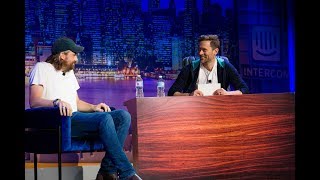
In this fireside‑style interview hosted by Brett Slatkin, Atlassian co‑founder and co‑CEO Mike Cannon‑Brookes (joined by Trello’s Michael Pryor) discusses the evolution of his role from engineer to CEO, the persistent feeling of imposter syndrome, and how he now spends his time on people, storytelling, and strategy. He explains Atlassian’s core values—especially “build with heart and balance”—and how they guide hard decisions such as layoffs, product relocations, and cultural integration after the Trello acquisition. The conversation highlights the importance of scaling culture and communication as the company grew to thousands of employees, including the use of town‑halls, small‑group storytelling sessions, and efforts to keep the distance to customers short. Real‑world resilience stories illustrate the shift to remote‑first work: the Hurricane Sandy generator‑fuel crisis and a later office flood that had no impact because most staff were already distributed, and the rapid three‑hour migration to AWS. Cannon‑Brookes shares lessons from the Trello acquisition—cultural and vision alignment, treating the “us‑and‑them” divide as a “we” problem, and learning from Trello’s freemium model. He also talks about taking public political stands (Australian marriage‑equality vote, renewable‑energy activism, and the South Australia Tesla battery project) and the need for thoughtful, open internal debate. Finally, he offers founder advice: treat building a company as a marathon, maintain mental‑health‑friendly pace, and appreciate the present phase rather than romanticising the past. The interview ends with a brief nod to his angel‑investing activities.
Chapters
Just a young gun with a quick fuse. I was uptight, wanna let loose. I was dreaming of bigger things.
As Atlassian, we want to spend time not celebrating the individual, but celebrating the team behind the individual that got the work done.
Have a seat in the foyer, take a number. I was lightning before the thunder. Thunder, thunder, thunder, thunder.
Our goals when we started were not to have to get a real job and to not have to wear a suit to work every day.
The thing that Trello excels at is giving you a map for where you're going and where you've been. So the idea is that this is a shared collaboration space, so it's not just about you, but it's about the other people so that they can see. So everyone's on the same page. Oh, from sweet to the ranch. Who here does not use Trello? Can we have a show of hands who does not use Trello? Alright, there are a few. Please welcome Mike Cannon-Brookes, co-founder and co-CEO at Atlassian, and Michael Pryor, CEO and head of product at Trello and Atlassian. So welcome. We need a name for our talk show.
That's right. We need—
Two microphones. That's right. All right, so I got an easy one. Tell us a little bit about Atlassian, what the company does, and what your job is as CEO.
Sure. We've been around about 15 years. What hasn't changed in that time, our mission is to unleash the potential of every team. So as you all know, we make a whole series of different collaboration applications for teams. Project management, documentation, communication, a whole bunch of different things. My job, I say there are kind of 3 things that I do. My job's changed a lot over 15 years, obviously. I don't write a lot of code anymore. The 3 things I do every day or every week, number 1 is people, people equation. Obviously, a lot of recruiting still. We're growing really fast. And making sure we got the right people, managing culture and all the people issues that come up with that. Second part of my job is storytelling. So going around to all the different offices globally and telling stories and explaining the company in a human manner so the teams can understand and do what they need to do. And third part is strategy. Obviously we as founders set the north star as you do for Trello, like where are we headed to give people a little bit of the map and then they fill in the detail.
Now, you said you don't code anymore. It's a lot different now, what you're doing. And they showed in the video before we came on, you were speaking at TED about imposter syndrome. And you said, I think you said you're totally unqualified for your job now.
Sure.
What did you mean about that?
Yeah, I mean, I think I gave a TED Talk on imposter syndrome, which was rather more popular than I anticipated. And I think it's a very common founder phenomenon. The number of founders since have come up and said, man, I feel exactly like that every day. And it's a simple phenomenon that you turn up to work and you realize that you don't actually know what you're going to do each day, that you're kind of out of your depth. And as I say, as you put it aptly, unqualified, right? I wouldn't get hired to run a 2,500-person public company off the street. If we got an executive recruiter, I wouldn't be on the list.
Well, you might now.
Still doubtful. But the thing about that imposter syndrome that I was trying to get across in the talk that sometimes resonates is it doesn't go away. And if you are aware of it and you understand it and you lean into it, you can make it a positive, right? I think we work harder because we know that we don't know what we're doing. You're constantly afraid of being caught out. Means you test your own ideas a lot more, and you take more feedback and things like that, which is a positive place to be, as long as you don't get paralyzed by it.
So your job's changed a lot in the last 15 years as the company's grown. I think the industry and work has changed as well. What do you think about how work has changed, and what are the biggest changes in the way people work today?
I mean, look, we're obviously riding a huge wave in terms of teams. We've been on it for a while. We feel like people are somewhat— the world is catching up, which is really good. If you look at work, it's increasingly smaller teams, more distributed, less hierarchical organizations, more organic, autonomous as a general trend. But that creates a whole different set of management challenges. And coordination challenges. This sort of industrial era command and control doesn't work, as I'm sure anyone in any sort of technology business, you can't work that way anymore. Collaboration becomes more important, goal setting and allowing autonomy to happen in a somewhat controlled fashion. I used to say that my job is to sort of run a nuclear reactor, and there are two things you can do in a nuclear reactor, and you can take cooling rods and you can put them further in and cool the thing down and the reaction will slow down. But if you do that for too long, it just shuts down and it's not gonna happen. Obviously, if you pull the cooling rods out, different kind of result. And my job constantly is to know if they're too far in or too far out, right? You want some chaos, some reaction going on internally, but not too much. You want it to be somewhat of a controlled chaos. Distribution, global, companies are global and a lot more separated, a lot more quickly. Remoteness, I mean, you guys brought our largest remote team, so you're probably better qualified to talk about remote work than I am, but it's a huge challenge that obviously we've been dealing with and working through as a company.
[Speaker] Yeah, I think that was a big part of what we were trying to do with building our company and the distributed workforce is trying to, we're building a tool for distributed workforce. It's funny that, A couple weeks ago, we had something happen at work where it really shined a light on having a distributed workforce and the benefits of it. Back when we first started Trello, we were housed in a data center in downtown New York. And Hurricane Sandy hit. And the storm surge came in, filled all the basements of the buildings, including the one that our data center was in, where The generator was up on the roof, but the fuel tanks were in the basement, so they all got ocean water all in the pumps and everything. I got a call from the data center, and they're like, "Your servers are going to be shut down in 3 hours because we're going to run out of gas." At that time, AWS was barely around. This is probably 2011 or something.
[Speaker:JASON M. LEMKIN] Good tales of a modern CEO. You don't have to carry diesel anymore.
[Speaker:BRETT SLATKIN] Yeah, yeah. Basically, that's what we did. We went down there. We bribed truck drivers, diesel truck drivers, for fuel, and they poured it into 55-gallon drums, and we took buckets from my aquarium and siphoned it into the buckets, carried it up 18 flights of stairs for 3 days, pouring it into the generator to keep the generators running. I mean, at the same time, we also got a couple developers and were like, "We need to move to AWS, like, now." They had been—
How long did it take you to move to AWS?
They had been investigating. We were investigating this beforehand, and we were like— my co-founder and I were kind of like, "How long's it gonna take? How much is it gonna cost?" They're like, "Well, we think it's gonna take 6 months." And so we went up, we had to run up the stairs in the building that the developer was in because his elevator wasn't working. There was no power in his building. We wake him up, and we're like, "You need to move us to AWS in 3 hours," and so he went uptown to someplace with power and was like, mm-hmm, and then he did it in 3 hours, so it was kind of funny. You know, 6 months, 3 hours, eh-eh.
[Speaker] Developers. Man.
But, so then we got on AWS, but the funny thing was a couple weeks ago, so it was December 23rd, it was Friday night right before Christmas, and I got a call that an air conditioning unit in our office in New York City, we have a supplemental unit, there was a pipe that was there and a cap came off and the water just started flowing in the office. No one's there, it's 10 PM, 2 days before Christmas. So it did that for 8 hours. On the 25th floor of the building, filled the entire building with water. We had 4 inches of water on our floor. It rained down. All the elevators were ruined. I mean, it was just a giant disaster. And, you know, it's a lot to clean up, a lot of work, but it didn't have any impact on the business because everyone was already used to working— like, more than half of the people were spread out over the U.S. And, you know, we already have a culture of working remotely with people, and so it was like, Oh, that's the difference between Sandy, where it's like we're running around with gas, and this time where our office was destroyed, but it didn't have any impact on our velocity.
I love every founder CEO you find has some organic formative experience, right? But I bet that couple of days of ferrying diesel up, how many was it, like 17 stories?
Yeah.
That was probably pretty good for the team culture, actually. Yeah, well, totally. When you look back, it's an event you kind of all look back on and be like, And remember when we had to do that?
Yeah.
So.
Pretty bonding event.
That's right.
So.
Sorry, I totally distracted your talk show here.
No, no, no. One of the—
when we— This is really funny, by the way. Michael reports to me, so we normally have one-on-ones in a business scenario, and this is completely different.
So when you came to—
I feel like I should get out the Trello board of what we're working on and be like, hey, let's just— yeah.
OK. So, OK. One of the interesting things when we first started talking about the acquisition— so it's been about, actually, it's almost exactly a year since we closed the acquisition of Trello. And when we first met for lunch that one day in downtown New York, at that Mexican restaurant. I gave them a great review. I said, this is a great place to get acquired by Google.
On Yelp?
I remember that conversation, because the stuff that we were talking about was about the people and the values. And I think a lot of times when you think about companies and their values, it's like this thing that they put on the website. And something that was very important and eye-opening to me was the way that Ellacian's values are just woven throughout the company and actually practiced on a daily basis. And you had talked to me about— in fact, we were talking about things that were similar between Trello and Ellacian and trying to find alignment of those values. And one of the Ellacian values is be the change you seek. And at Trello, we had one called don't do nothing, which was a very similar intent, which is to give people autonomy and responsibility and let them act. Another one of our values at Atlassian is build with heart and balance. Can you talk a little bit about that and tell us how you do that?
Sure. I guess first I'd say, when you talk about the evolution, 15 years and stuff, and we started building products, right? We were two engineers and we wanted to build things. We didn't really want to build a company, we wanted to build things. Then as the things that we built got a little bit successful, and we built another thing, and we were very focused on customers, and products, and features, we evolved into realizing that the company challenge of building was more exciting and interesting than the product challenge of building. We still build products. We're a product company through and through. Then what didn't scale in that model was the founders. We could no longer go and talk to every single person individually. We stopped interviewing every hire. And you start thinking, shit, OK, how do I scale this, what we've been doing? And one of the things we came to was the values. So when I try to explain them to founders, I say, look, think of it as an engineering scale issue. If you have to write down what it is that you never want to lose about the company, don't write down anything you aspire to be in the future. That's not the way it works. You can't say, I really want to do this. So firstly, don't write down anything you aspire to be. Secondly, don't write down any basic human values, right? You'll notice our values, there's no honesty, there's no integrity. Like that stuff you get hired or fired for. That's like simple basic human values. That's not unique company values of how you want the company to feel. And then we wrote them down and they've worked really well. They've lasted the test of time. How long have we written them down for? 13 years, 12 years, something like this and everything else. So anyway, build with heart and balance is, how would I explain it? It's one of my favorite values. The other thing I should say about the values, the lasting values, they're designed to be axiomatic. They're not a set of equations that you answer problems with. They're thought-provoking lenses to look at questions or decisions that you have to make. And you want people to kind of consider how they are affected by these things, rather than, it's not a weapon. You should never say, we are doing this because of value X. We've had plenty of people try to do that internally. It's supposed to be axiomatic. So build with heart and balance. We're building things, what we do as a company. And when we build the company, the way I explain it is there's a lot of really hard decisions we have to make. My job is making hard decisions on a regular basis, right? And when I make those decisions, or when anyone's making a decision in the company, I want them to consider both The heart aspect and the balance. Balance is easy. You want to consider the options. You don't want to just head right because you happen to prefer that. You want to think about left, think about right. Have we considered, you know, have we taken a balanced approach to the problem? Consider the customer, the shareholder, the staff, that, you know, whatever the balance of the decision is, bit hard in abstract. And then secondly, you want to do it with heart. And what does that mean? Well, it means two things to me. One is you want to do it with passion. Like you're making a decision, you want to lean into it and actually do it and like Show people why it's exciting or the good way to go. Secondly, you want to do it with some form of caring, right? Because these hard decisions have impacts on people, on customers, on someone, and you should think through the impact of that. It doesn't mean the decision is wrong, but the impact of that decision needs to be thought through. Too many times, I think people take this abstract, a company is a legal entity, right? We always say we don't solve technology problems, we solve people problems. Problems. That's what we do as a company. That's what we build. That's what we do internally. And when you're solving people problems, you have to care about people. You have to care about how they feel and think and are impacted by a decision. But you still have to make the right decision by the company, by the rest of the staff. And that's what that's trying to be informative on. And that's what it's trying to help people at least think about the different aspects when they're making a decision.
Do you have a time when that was difficult to do or hard to do?
We have lots of examples where we've had to employ that, I suppose, if you want to think about it. Whenever we're letting people go is a good time. Whenever any manager has to say, look, this job is not a fit for this person at this particular time, you want them to do that in a constructive and caring way, but you also want to do it with the rest of the team in mind and all the different bits and pieces. We know this, we've recently moved a product from one office to another office, right? Classical business problem, really hard to do. The way I think most businesses approach this problem is to sort of move a little bit of it. We're gonna start a second team over here. We're gonna do this, we're gonna do that. And then after a while they're like, yeah, we're gonna move the Nexus. And then eventually they shut down and they never really give employees the full story of what's going on. When we moved that product, we told people a year ahead, this product is moving from Office A to Office B. Here's why. And we were very open about why it was moving and explained all the reasons. And I think that when you're open as a company, that leads to better decision making, because you have to be able to explain stuff, hard decisions and easy ones. But we told people what was happening a year ahead of it happening internally. But we tried really hard to think about how that would impact employees. We had people who'd been working for 10 years on a product and being told that product is moving to another country. And that's hard. [SPEAKING CHINESE] But it didn't mean it wasn't the right decision for us to do. And I think we got through it pretty well. And the employees, at the end of the day, I think really valued that we were very open with them and treated them as adults and gave them the full story and gave them time. Hold the thing.
So I think back on that, and that was one of the big reasons why I thought this was the right move for Trello, was because those values were so important to the company. When we were going through that acquisition, Atlassian had done, I don't know, 18, 19 acquisitions before that. And one of the things I also noticed was that there's this constant sense of learning and perfecting and getting better at doing everything, including acquisitions. Can you talk a little bit about, you know, maybe for people that are thinking about acquiring companies or like what things have you learned? What's important during that process?
Yeah, I mean, I think with acquisitions, they're hard. They're really hard to do successfully. Any business literature will tell you that most of them fail, et cetera. We've had a pretty good track record. I think you gotta think of this, no pun intended. You gotta think about both sides of the table and be very open about how it's gonna work, right? We've always tried to get cultural alignment number one. If a culture's not gonna fit, it's just not gonna work. It doesn't matter how strategic it is. I think it's just gonna end badly. The second one is there's really vision alignment. I don't know if that's, I don't know if that's the technical business term, but you gotta explain why you're doing this and what you want to achieve out of it from both sides and be able to see that it's a good deal for everybody. Because otherwise, you're gonna hit some rocky period down the line. We were very clear, we wanna invest in Trello, we think it's a great business, we wanna continue its momentum. We can provide staff and help and all these things. I think largely we've done that, right? If we had wanted to shut it down and use the talent for something else, we should have said, "This is the reason we're doing the acquisition." I think a lot of them fail because there's an internal agenda and then the deal agenda, and it is different. When they come together, it doesn't really work very well. Other than that, it's people problems. We spent a lot of time talking to the Trello team. We were very honest about how difficult the process is going to be. We tried to get as many people on the Atlassian side of the fence to meet as many people on the Trello side of the fence.
Yeah, that was super helpful.
Well, one of the things we've noticed is you get this us and them phenomenon, and you have to move everybody to a we. It sounds like bullshit, but it's really important because you start having people saying, "Well, at Atlassian they do it that way, but at Trello we do it this way." We're all doing it the same way. We're all on the same team now. And get people to kind of see that through a series of, I don't know, exercises and meetings and projects and putting them together and having Trello people run parts of Atlassian. Having the acquirer not talk down to the acquiree. I think that's really important at all levels. Generally, a bigger company acquiring a smaller company, You have this thing where people go in and be like, hey man, son, let me tell you how this is done. We know how to do this. And that just pisses people off. No one wants to feel like that. There are things that we did better. There are things that you guys did better. And we tried to tell our staff, we can learn a lot from these. Remote work being one. A lot of things on the technology side. We can learn a lot about how freemium businesses work. We're spending a lot of money to buy something. Let's learn a lot and treat people as adults. I don't know.
So we're going to run out of time. So I want to shift gears a little bit. Like, probably a lot of us might have watched the Falcon Heavy yesterday.
Yeah.
Pretty exciting moment. Awesome. So thinking about Elon, recently you had a little interaction with him on Twitter. Can you tell us a story about that and what happened?
Sure, it's kind of relevant, I suppose. I'll try to make it relevant. Yeah, we have— look, we have some power problems in Australia, both physical power problems and political power problems. And the physical power problems are there are parts of our grid that just don't work and were going off. And the parts that were going off were heavily renewable driven. And the political power problems are we're the largest exporter in the world of coal. Uranium, gas, top 3. We export a lot of shit, right? But when you have a company, a country, sorry, that's one of the sunniest countries on the planet, but is also one of the largest exporters of coal, guess who wins when it comes to political decisions? There's not a lot of sun lobbying going on. And so anyway, Elon, well, actually, Lyndon was down Jason M. Lemkin, who was the CEO of SolarCity and ran Tesla Energy, talking about launching the Powerwall 2 and saying that Tesla thought that they could, with a large-scale industrial battery, solve this state called South Australia's intermittent power problems. I was up late one night with one of my kids and on Twitter said, "Was he serious about this?" We've got a little bit of clout now, which is kind of a weird phenomenon for us. And we could try to help things move along. It was a little, we sort of threw a rock down a hill, as I like to say, and it became this massive avalanche, and people poured on, the media poured on, and now we have the world's biggest battery in South Australia that's 3 times larger than any battery man's ever made.
I think—
Working. It was employed within 48 hours to solve problems, right?
I think you said Elon said he would do it in 100 days, or it was free or something.
Yeah, he got it done in 100 days. They actually started before the contract was signed, so I think they still got it done in 100 days, but he did it in like 30 days according to the clock. But yeah, I mean, it's up, it's running.
You know, it ties into this because I think like, you know, that interaction in politics and things, one of the journalists in Australia called you an activist CEO. CEO at the time. I think Atlassian, there was the marriage equality vote in Australia. Going back to the open company, one of our values is open company, no bullshit. Let's get those things out there and talk about them. What are your thoughts on that, taking political positions as a CEO and or how that affects internally the employees and externally the customers?
[Speaker:JASON M. LEMKIN] Sure. A bit like the imposter syndrome. Look, it's a challenging area, and you need to be thoughtful about how you do, obviously, all those interactions. The worst thing I think you can do as a CEO is be paralyzed and do nothing. Again, fade back into that sort of faceless corporate entity. You know, one of the things we try to do is foster internal discussion, but do it in a constructive manner. Again, these are human beings. We have internally all sorts of viewpoints, all sorts of views. People have to be able to have conversations with fellow colleagues and staff members and see that there are other points of view. They don't have to agree with them. Try to open your mind to different points of view and debate and understand that not everyone feels the feel the same way about every issue. But at the same time, one of the reasons we were very, I guess, stridently public on that in Australia is we were telling people, look, you can vote whatever way you want. It's a vote. You vote the way that you feel and you believe and your life experiences have. But we have a group called the Outlassians, and it was a tough period for that group of staff members. And we were trying to tell people, hey, here is a group of people who have made a set of life choices. You can agree or disagree with them. That's your own personal choice. But you can at least acknowledge that they're going through a very hard period when their way of life and everything is being publicly dragged through the media, and you've got outlets on one side and outlets on the other side, and there's people coming to work and crying, and it's a hard period. And we can all see as humans that they're in a tough spot, whichever way you're gonna vote, and we should be able to stick up for our colleagues and say that this is the way that it should be. I don't know. Activism is kind of like, I feel like we're going to go and save whales on a boat or something. It feels like a different thing than we do than, I don't know, sticking up for people that work for us and acknowledging the differences that we all have.
I think that sense of team—
Not an expert.
—even as you grow and the company grows, it's actually an interesting— another question I have, which is, One of the things I noticed, I used to tell people, "Hey, if you have any questions or concerns or whatever, just come to me." You have 20 people, 30 people, it happens. You'll have a little all-company meeting, people just speak up. You get to this point around 60, 70, 80, and people stop speaking up. Around 100, people just don't stop by your office anymore. It's the old guard that might come talk to you, but the new employees just are— They're kind of like, oh, I'm not going to talk to the boss. And so as much as you can say, I'm open, my calendar's open, come talk to me, it doesn't necessarily happen as you scale up. How do you stay connected to the people in the company, to the product, to what's happening at Atlassian when you get to 2,000 people? Sure.
I guess we try to model good behaviors. I mean, if you think Atlassian is a collection of little companies and products and different things if you take that lens on it. They all have the same problems. Communication is hard and critical. We've learned over the years you can't communicate too often. We have a weekly town hall like you do in Trello. We have one for all of Atlassian, 2,500 people dial in global.
It's just very— At that stage, it becomes this— Yeah. It's an audience.
That's one form of communication. That's right. One of the things I personally have found most useful is whenever I travel, try to gather groups of 15 to 20 employees together, and that's what I call storytelling sessions. And then I just tell them, "Turn up with questions, and you can ask me anything." In a group of 15, people will ask you questions. They'll say, "Hey, how'd you get started?" or "Why?" or like, "Strategically, we're doing this. I think it's a stupid idea," right? And it might well be a stupid idea. It might be a good thing that someone has said that. You might not know that that's happening. or you might have to defend it or explain it, or they just don't understand. So, but that happens in a smaller group of people, and part of my job is to go to continually go to smaller groups of people and do that communication. Um, you know, the other aspect about staying connected that I think is important is, um, I always believed in this kind of notion of the distance to the customer. And as you grow, companies get further from their customers, which is a weird phenomenon. Founders do, and everyone else does. and you have to constantly be finding ways to reduce the distance of every employee to every customer. If you could kind of draw some sort of, I don't know, set of strings and lines. The company grows, they, they move further apart. And bringing that internally through scalable ways of telling customer stories and the benefit we're having and the pains that customers are having and how we bring that into product teams. Is hard. It's really hard, but it's something that I think you have to invest. It'll be different for every company in the manner that which they do that. But I used to talk to customers directly all the time. Right now, I have once or twice a year, we have these big conferences, and I get a massive rush of customer stories. You have to find a way to make that a daily part of things, but also not just give it to me, get it to the engineer who's building the feature or get it to the— the product manager to really get direct interface with customers to try to figure out their pains and problems.
Having [Speaker:JASON M. LEMKIN] been to that conference, the summit, it's like that's one of the biggest wins for us as a company is when all the employees are there and all the customers are there and we're talking. And also all the user groups that we have around. I know you go visit them and stuff. So I guess we got a minute left. You also do some angel investing on the side. So you're sort of on the— the sort of the VC side of things. Do you have any advice for founders, let's say?
Sure. What do I tend to tell founders? Probably, well, two things, I guess. One is, I mean, they're both a bit clichéd, to be honest, but they're both very true. Treat it as a marathon, not a sprint. If there's one thing I've seen founders do, I'm personally very concerned. Founder mental health is a That's a big issue. When you look at some of the causes of that is they sprint too hard, too fast, too long. You can't— I mean, you guys are running Trello for like 5, 6 years. We've been running Atlassian for 15 years. It's a marathon. You got to maintain a sustainable pace in whatever way you do that, with family, with health, with fitness. Different people have different devices for that, but trying to run, working 20-hour days, 7 days a week, it's just not healthy. It's not going to be sustainable, and you can't really build a business that way. It's not going to— it's just not going to happen. That's certainly something that I tell people. The other thing I think that's important, and especially when you've been on a journey like we have, is our chairman, our last chairman, used to always say, "Remember that these are the good old days." Right now, these are the good old days in a growth company. It's too easy for people to look back and be like, "Man, you remember when we had 500 people? Ah, you could get so much shit done. I knew everybody. That was just the purple period. That was so good. Now it's just kind of miserable." I'm like, "Yeah, you know what's funny is when we had 500 people, everyone was saying, 'Remember when we had like 50 people and we could put everyone around a table and like 500 people sucks, and at every phase the company is different, but appreciating where it is now and not just constantly looking backwards is a really important aspect for— It's a fun journey that we're all on, whatever the company is, and enjoying kind of the now and appreciating where you've been and where you're going and today, rather than just sort of constantly looking backwards with some sort of rose-colored glasses. I don't know. Me when he said, these are the good old days. Someday people will look back, so enjoy it now. Don't have some perverted backwards view.
All right, well, thanks for coming to the— Thank you. —this is the first and only Mike and Mike show. So thanks for having us. Thank you.
More from Jason

Why Your Next Hire Should Report to an AI, Tragedy Apps, and Too Many AI SDRs? | The Agents #004

Our Agents Drove Our Salesforce Bill Up 80%, Marketo Hates Agents, and We Stealth-Churned Off Notion




Managing 20+ AI Agents: Lazy Agents, Our $500K AI Bill, Stealth Churn & the Death of 60% Solutions




