The Secret to getting VC funding in the Midwest and South with Lightship Capital GP Brian Brackeen
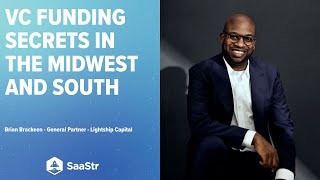
In this SaaStr Annual 2020 session, Lightship Capital general partner Brian Brackeen explains why building and raising venture capital in the Midwest and South can be more advantageous than on the coasts. He presents data showing lower capital costs and higher return multiples for startups in these regions, outlines typical funding amounts and exit valuations, and shares practical tactics for founders: pricing their deals appropriately, leveraging Zoom for remote fundraising, cultivating local investor syndicates, and allowing a Midwest VC to lead rounds while co‑investing with coastal firms. Brackeen discusses nearshoring development teams to English‑speaking South American countries, the role of corporate limited partners such as Procter & Gamble, and the shift toward open‑application processes and Twitch Pitch for deal flow. He answers audience questions about remote outreach, valuation gaps, corporate vs. pure VC involvement, and how COVID‑19 has altered diligence timelines. The talk concludes with an optimistic outlook for founders, emphasizing the post‑COVID opportunity surge and the importance of preparing talent pipelines.
Chapters
Hi guys, and welcome back to SaaStr Annual 2020. We know it's been a long few days, and we're super glad to have you hanging out with us for another session. This— today I'm here with Brian Breakeen, and he is here to talk about the secret to getting VC funding in the Midwest and the South. I'm going to pass it over to you, Brian.
Thank you so much. Thanks to you, thanks for the team, thanks for Jason for putting this on. I know it takes endless hours of planning and even more hours of execution, so really, really good to be here. I wanna talk a little bit today about— there's a number of founders that are not located in the coasts, so how do you raise money and how do you get the kind of valuations or even opportunities that you should hope to get if you don't live in New York and San Francisco? And so this is really for everybody, even beyond the Midwest itself. You could be in Miami, you could be in LA. This is really for you. So next slide. And so who is this guy, first of all? Like, why is he even giving this talk? My name is Bryan Burkeen. I'm the general partner, along with my wife, of a $50 million venture fund focused on women and minorities in the Midwest. As you see there, we vest women, minorities, and disabled. And Candace is by far the better speaker than I, so you're stuck with me, but the information will still be good, just delivered not as good as smoothly as her. Next slide. And so this slide actually came from the SASR folks. Right here it said big point. I was supposed to say a big point. I thought it was more funny just to leave those words there and just say Big point is, build in the Midwest, you'll be rewarded. That, that's it. If you think about, um, why you should build anywhere, um, in the Midwest and South, it has the lowest amount of money to build a company because buying everything from your real estate to your employees costs less. But at exit, all exits are the same. They average out, they normalize all across the country. And so you can build something great for less and you can sell it for more in the Midwest. Next slide. And so what are the— what's the kind of numbers behind that, right? And so the median for funding in the Midwest, about $15.5 million. As you see in other places, a little higher. But then the exit valuation, $178 million on the median. In the Midwest versus some of the other areas. So again, this is like a real, real, real dollars and cents thing. Many of the companies that you're gonna exit to are already in the Midwest and they want to exit to partners that are in their region. They wanna exit to their neighbors, they wanna make their communities better. And so you'll find more aggressive valuations when you build here. Next slide. And so what does that mean, like in kind of dollars and cents? If you were to put a dollar on the map and invest it in starting your company, for every dollar you put down in the Midwest, you'll get $5.17 back in this region. $4.35 in the South, and then less in the other two coasts. Still good. These are firms that did exit. So if you're exiting, you're generally doing well. But again, you'll do better in these regions. Next slide. And I'll say a little bit about the last slide. This is also the story that you wanna tell your investors as well. It's why you moved here, why you picked this place. It's really for their benefit. They're going to do better if you're here. And so why does that, where's this density come from? Where do these numbers come from? It isn't just magic, right? You look at a place like Cincinnati, for instance, where our fund is based, GE, Macy's, PNC, Fifth Third, First Financial, Kroger, Great American Insurance, P&G, All of these headquarters offices are all on the same block, literally the same street. And there's a number of even beyond this that aren't even on this slide. This density of potential partners and this density of big co's allow a startup only 2 blocks away from there where you can rent an office space for $1,000 a month. You can rent a, or you can buy a, 4-bedroom, 3,000-square-foot house completely newly renovated for $239,000 in Cincinnati, right? And so you take all these kind of truths and kind of spit them together, and again, it starts to make a lot of sense. So next slide. So let's get down from the kind of macro into the micro, like what do I have to do to get this funding? So number one, pricing, right? So as a kind of former entrepreneur prior to becoming a venture capitalist, I started a facial recognition firm called Kairos. And so I've lived this story. I've pitched investors, pitched the company over 1,000 times, got 120 yeses, 880 nos, raised about $13 million. So I've lived on both sides of the table, and I'm an entrepreneur. I still consider myself an entrepreneur even though I am an investor now. So pricing is really, really important, right? So you can, you're gonna have a little bit more, a lower valuation, but that again will bring more venture capitalists even from the coasts into your deal. Number 2, Zoom, Zoom, Zoom. Like, we're all in a post-COVID world. Everyone, investors are expecting to see entrepreneurs on Zoom for all the way from meeting to check. Maybe they want to meet you in person one time. Many of these days are not. Many are just writing a check only through Zoom. And so when we're all normalized in that way, when you don't know if you're talking to somebody in Chicago or New York, then that helps all of our cases for getting investment. I think having a local investor network is really, really important. So I'll say when you're trying to attract capital from outside, if I'm a San Francisco investor and nobody in, let's say, Louisville, Kentucky invested in your deal, but you're all the way out here asking me for investment, that does start to set off some red flags in the person's mind. So it helps them to see that your community is supporting you and that you're taking that support, or you just need more or different style of capital, or they provide a background or experience that's really key to your success. Maybe they're SaaS B2B and ex-Salesforce folks, right? Something for, something to be considered. And so that's, that's One key point. I would also say, even though I said pricing is important, on the other side of that, do not let Midwest investors underprice your deal. Midwest investors are really, I think, being too aggressive on valuation sometimes in certain states. We see this as a huge problem in a place we work in a lot, in Louisville. People have $8 million of revenue and then raising at an $8 million valuation, right? I mean, this is like, you know, again, good for the investor, but bad for the company. And so don't let Midwest investors push your valuation too low. And then last, let the Midwest VC lead. And 'cause we have a, in our case, we have great relationships with investors on the coast. And so if we invest in something, they will co-invest with us. So yeah, we actually did this in a deal very recently. I'm gonna show you the next slide. What that looks like. And so we led a deal in a company called Undoc. It's a predictive scheduling tool. It's amazing tool, easy to use. It allows you to know the person's schedule as you're emailing them out, like no back and forth, no going to website, just, I know what your schedule is, I know you're available, is this cool? So we led that round, but best of our venture partners, who's obviously Valley, and Lair Hippo, which is obviously New York City, also participated, followed us in the round. And so we were able to give a good valuation, be fair, not screw the entrepreneur over, and then pull in coastal money from both directions, you know, into this company. And so this is something that I think you'll see more and more of as there's more and more Midwest venture capital firms. So next slide. And with that, we're gonna open it up, Q&A. This time is really yours. I'm happy to answer any questions and get you guys off to The end of Saster. So I think Caitlin, Voice of God, is going to join us and maybe tell us how to do so.
I am, and I'm here. So if you guys have any questions, feel free to throw them in the Q&A. In the meantime, I'd probably throw it over to you, Brian, to kind of tell us about some stories since you got started in the Midwest and maybe how you got— you chose the Midwest and the South to get to where you are.
Yeah, so probably came here for other reasons. My wife was based in Cincinnati. We got married and she was like, oh, come here and mentor companies in Midwest. And so, you know, you do and go where your wife is, but then the light went off as soon as I got here. Just amazing levels of talent and just not enough opportunity. You know, people are doing great things and simply we're raising all angel money. And getting to $3, $4, $5, $6 million of revenue on angel investors alone. So, yeah, I saw it as an opportunity to— that we could do really well as real invest— as what I call real venture investors, and with a real venture fund, and giving the kind of support to entrepreneurs that we need. So one of the questions I hear— I see here is, "How do we help startups to expand to new offices in New York and Silicon Valley? Do you have a playbook for that?" That's a very good question. Sometimes what you'll see with some investors is like, okay, you can be in Chicago, but you need to have an engineering group in the Valley or what have you. I will say that's strongly changing in this COVID time. So I don't think people are requiring that as much. But when they do, I would ask, one, is it necessary given the cost? Two, are they going to invest enough to make that work? Three, are they going to continue to invest to make that work if it's their requirement? And if not, I would look at dev teams in other parts of the country, or even— I'm a big fan of offshore, but not as far as Asia. Sometimes right out here in the hemisphere. So we love dev teams in Suriname, Guyana. These are English-speaking South American countries. With amazing technical talent. Um, just not to get too, like, deep in, into the history, but a place like Suriname has a large Indian and Asian population. You're dealing with exactly the same types of folks in India and Asia, but in your timeline, and also English speaking. So something to think about when you're talking about nearshoring versus offshore. Uh, Anonymous asks, "How attractive are the marketplaces launching outside of the Valley to NUS or the NYC to Midwest investors?" I would say we see the world pretty much the same. We're absolutely positively interested in those businesses and absolutely positively investing the same, you know, American dollars as they are. So I would say that there's definitely an appetite. To invest in those deals even when they're outside.
I have another one for you. So one of your points was zoom, zoom, zoom, zoom, zoom. So what are some of your best tips to connect over video and to network over that option?
Yeah, I would say one, coming to things like SaaStr are important, right? Because you do get to see a community and see the folks who are asking questions and even the folks that are presenting help you to start to kind of bridge some of those gaps. When people share their LinkedIn and things, connect there and start to see the connections, that certainly goes a long way. But I also think you'll find that wherever you're from, if you're in innovation, if you're in high-growth entrepreneurship, you will have connections back out. Um, most valuable are other entrepreneurs who have had successful exits. Least valuable are service providers like lawyers. Um, so think about who the person is too when you're trying to make those connections.
Perfect.
Looks like Camille has a question about, what's the best way to reach out remotely to investors in Silicon Valley? I kind of answered that a little bit in the last question with Caitlin, is like how, you know, how you wanna think about who the connection is and how strong that connection is. But I would say more and more, Twitter is a strangely, fascinatingly good way of kind of getting connected. And also more and more, a lot of venture funds are moving to an open application model from a closed application model. I hate that some people don't take open applications. It still does happen. But I think more and more companies are like ours to apply for funding. It's on our website, like apply for funding with this link, you put in your information and we review every single deal with our associates. So I think that's happening more and more, just trying to find out who they are and then go to their sites. Another question about what kinds of LPs fund or in a Midwest fund? I would say oftentimes, at least in our case, it's foundations and it's the corporations that are in the Midwest. Procter Gamble is one of our investors. Delta Dental is one of our investors. So yeah, just corporations that are in the same region because they want to support innovation and entrepreneurship in our regions. What's— next question is from Poya. What is something that can't be replaced when you leave Silicon Valley? In other words, what What advantages or defensible items that Silicon Valley provide? I would say not, almost none anymore. If I was asked, if you were talking to me in a pre-COVID world, I would say the density, the number of people, there's so many people having so many great conversations, that's very, very important. But you see Silicon Valley has like the highest rate of one-way U-Haul rentals now. Same with New York, I mean, people, that density is lowering and then therefore that value is kind of going away. Plus we all can't really hang out anywhere right now with COVID and we're all on Zoom. So density would have been the answer a few months ago and that's quickly changing. If I were in a SaaS B2B startup, I think that if I didn't have too much traction yet, I could learn a lot from the folks in that region. But if I'm crushing it, and I am in Austin, then I would just stay in Austin and be done with it. Sean Miller, uh, have you seen the length of deal negotiation change since going all remote? Um, depends on how hot the deal is. Uh, for us it's 4 to 6 weeks, um, and that hasn't changed in the all-remote world. Um, so I would say, for us, I would say generally no. And for the investors that I know, I think they're actually investing a little bit faster, to be honest with you, just because It's much more efficient because of the Zoom aspect. There's no like, oh, I can't meet this week, I can meet next week or 2 weeks from now. There's no— we don't have that as much anymore. So I'd say it's actually probably getting a little faster. Um, let's see. We are Silicon Valley based with distributed team. Significant portion of our seed round was raised from the Midwest. Oh, um, we are off the beaten track when Sand Hill Road is focused. Any tips on networking? With non-Silicon Valley firms. That's so interesting. So I would say this, I would, I would, if you have 1 or 2 or 3 engineers in a particular place, I would say, hey, we really focus our engineering teams in that city. And then just let that sentence be the sentence, right? And for a lot of Midwest investors, that's good enough. I would say to everybody here, if you're looking for funding outside of the Midwest, Tulsa, Oklahoma, and a firm called Atento Capital is doing a very good job with that. We also do a lot of work in Tulsa. So for teams that are willing to have dev talent or team and have a second office in Tulsa, I know for a fact we can bring $500,000 to $1 million to a deal just for them having some secondary office in Tulsa. So think about these kinds of opportunities. Come here. How do the valuations compare Silicon Valley versus the Midwest? I would say, You're generally looking at a 10 to 20— it depends on the company, but a 10 to 20% discount. But again, it costs you much less than that to build. The company and the staff cost less too. Something to think about. My approach to that would be raise a seed potentially at a lower valuation, but when you get to A, B, C, you use the coastal VCs to pump the valuation back up to the national market, and then you'll— it won't cost you anything beyond that. Let's see, I'm not a— next question is, I'm not a founder, but if I was, what would be the best way to get my attention if I was asking to raise money from you? How can I capture your interest? As mentioned, we have an application process, so you just go to lightship.capital. There's a link that says apply for funding, you click that, you fill out the form, and we look at the deal. And I think there's a lot, a lot more VCs that are doing that in the— in this time, so Don't be afraid just to apply. But for other folks that don't have that, I think Twitter is a really good place. For everybody here, please feel free to follow me. It's @BrianBrackeen on Twitter. I think my name is there. But yeah, definitely between something between either Twitter or direct applications. I don't— I'm not a big fan of LinkedIn stalking. I don't think it does very well. Also, for those old school, old school VCs that don't have any kind of access, just find a company that they invested in, find that founder, and have that founder introduce you. That'll always, almost always be successful. For Anonymous, what was your strategy for getting Procter Gamble and the corporations to invest in our firm? Well, being here, you know, we're based in Cincinnati, and so we, they're our neighbors and they support a lot of the work that we do. We, neighbors, friends, you name it. I think that was important. And two, for us, being focused on the Midwest told the Midwest corporations that if you want to make your neighborhoods better, if you wanna make your communities better, if you've got a son or daughter that moved to New York and you want them to have an opportunity to come back, 'cause there's jobs here now in Indianapolis, invest in the fund that is focused on Indianapolis and New York, I'm sorry, Indianapolis and Chicago and Cincinnati and you name it. And so I think our geographic story help to tell a story as to why they should support our firm.
So I have another one for you before we close out, or if anyone else has some more Q&A, feel free to put them in. Um, so obviously top of mind for everyone right now is COVID, and with that going on, how has that changed how you evaluate the startups that you choose to invest in?
Yeah, I mean, it depends on the industry. So we made an investment in a company that was really focused on the restaurant space, It's called Fresh Fry. It's like a pod, like a Tide pod you drop into commercial cooking oil at the end of the night, and it sucks up all the impurities and filters the oil. And the next day you just kind of throw it out. That company was doing their, really their, we'll call it seed round, but they were already in 3,500 restaurants. Now the challenge is, in the COVID world, literally, Any other time, 6 months ago, I said, look, you're already in 3,500 restaurants, great, no risk. But in a COVID world, literally every single one of their customers was closed for like 60 days, right? And no matter where they were in the US. And so that definitely gave us, I guess, a little bit, one more thing to think about. But ultimately, this is a long-term investment, a 7-year, you know, 3, 5, 7-year investment. And so if it is, we all knew that we're gonna eat at restaurants again eventually, right? And so that kind of lowered our concerns and we made the investment.
Awesome. Sounds like a good one. It looks like you got another, a few more in there.
Yeah, a couple more, a couple more. Pros and cons, VC versus corporate venture, which is better for whom? I like to see corporate venture in deals, but not leading deals. Corporations are very slow decision makers, and also it's very difficult to figure out why they make decisions. They can be helpful, but also they can be— they can slow down a deal. So I think pure VCs, if they love what you're doing, they'll write a check faster, they'll set terms, and the corporates can join the round. But I would say make sure that we're leading rounds and corporate is joining. And I say better for the same reasons. Um, another anonymous, thank you for representing Ohio. Whoop whoop! Hello Akron. Um, would you recommend pushing Midwest roots as a cultural value add, uh, to a startup, or would you market Midwest culture as having a negative impact on growth, um, and attention? So interesting question. I would say this, When you're pitching investors, investors are generally finance people, and you wanna kinda make a financial argument around the value in being in the Midwest, again, around cost, access to talent. You know, I would argue that folks in Ohio are as talented as anybody. You look at the number of corporations and the number of exits in Ohio lately, very successful. So I would, I would try to tell that story. I don't find that investors are moved by the Midwest culture as much because it also implies, if it's a, if it's a coastal person, that that culture is somehow different or superior. People have a hard time understanding that or seeing themselves in that. That's something that maybe you and I would say at a bar about some Wall Streeter, but not necessarily how they see themselves. And so, yeah, I would push more the cost and less on the cultural issues. Many firms ask about BIPOC founders, but does it carry any weight? I mean, in our case, we only invest in women and minorities. I think it does. In the post— what I would consider, again, there's a post-COVID world, there's also a post-George Floyd world. And I think it does add weight in deals. And if it's taking weight away from your deal, then that's not the right investor for you. Jim Gibbs, brilliant person that I know out of Pittsburgh. Good man. Good man. Does Twitch pitch help getting meetings with Lightship? Yes. Fact. For those who don't know, we have a show called Twitch Pitch, and it's— you can pitch us like Shark Tank, but it's on Twitch online. And We had season 1, we had a company called Undockdawn and we invested in that company. We led that round as we saw. So yeah, we've got maybe 3 or 4 companies that are on SwitchPitch due diligence and we'll probably make a bunch of investments. So yeah, absolutely, absolutely does help.
Awesome. Well, thank you guys and thank you, Brian. This has been terrific, a terrific way to end up SaaStr Annual at home. Again, if you guys have any more questions, we'll wait just a little bit, but if not, I know the weekend is upon us, a holiday weekend at best, and so people are getting excited to have their time. Any last parting words, Brian?
Just that even though it's kind of crazy time between COVID, politics, racial unrest, you name it, It's also probably the best time ever to be starting something and building something. The amount of opportunities available to you right now that are flowing in are very, very positive. Again, now we're all kind of just all on Zoom, so there's a lot of kind of fairness around geography. There are going to be some— a lot, not some, a lot of multibillion-dollar companies that were really got going in this period. I'm a firm believer in that. And so I would say keep going, prepare yourself for success. I guess my last, last thing is I think about this time as like prior to COVID and things, the economy was really kind of humming along. COVID is an unnatural kind of stop to that growth. It's not like a slow beginning of a recession, it's kind of like an instant stop to capital. And so what that means though is it's more like a bow and arrow, like being pulled all the way back. And so when it does restart, it's going to come back, I believe, very quickly. And so you've got to be prepared to take advantage of that restoration because your competitor will. So be prepared for success. Start lining up the folks you want to hire. Stay in good contact with them. You don't have to hire them yet, but just keep them close because when it's time, it's going to be time and just run with it.
Awesome, awesome, Brian. Thank you guys, and thank you for helping us again. And I hope everyone has had a great time at SASter. We hope to be in touch soon, and we hope to have you speak again, Brian.
Thank you. In person, when we're back out of the COVID world, I want to come be on stage. Gestures could be great. Clint, thanks for your thanks. We appreciate everybody. Follow me on Twitter. And I hope you guys enjoyed SASter this year.
Thank you. Have a good one, guys.
More from Jason

Why Your Next Hire Should Report to an AI, Tragedy Apps, and Too Many AI SDRs? | The Agents #004

Our Agents Drove Our Salesforce Bill Up 80%, Marketo Hates Agents, and We Stealth-Churned Off Notion




Managing 20+ AI Agents: Lazy Agents, Our $500K AI Bill, Stealth Churn & the Death of 60% Solutions




