The Twists and Turns Along the Way to Building a Unicorn with Salesloft CEO/Co-founder Kyle Porter
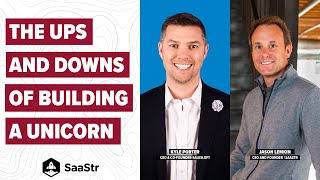
In this interview, Jason M. Lemkin talks with Kyle Porter, co‑founder and CEO of Salesloft, about the company’s evolution from a $7 million product line that was abandoned in favor of a cadence‑based sales‑engagement platform, the strategic pivots that led to product‑market fit, and the fundraising journey that secured $100 million from institutional investors such as Insight Partners and Emergence Capital. Porter explains how Salesloft grew from a handful of SMB customers to over 3,200 enterprise accounts, the development of conversation‑intelligence, integrations, and security features, and how the firm positioned itself against competitors like Salesforce’s High‑Velocity Sales. The discussion also covers the company’s culture, leadership principles, and the importance of organizational health. Porter and Lemkin explore the total addressable market for sales‑tech, the impact of AI and data on selling, and how COVID accelerated digital‑first sales motions. The interview closes with Porter thanking the SaaS community, acknowledging the role of mentors and investors, and outlining future valuation milestones (aiming for $3 billion and $10 billion) that they plan to announce publicly on a rapid cadence.
Chapters
Nails Loft. We help inside sales organizations and sales teams that are driven by sales development convert more prospects into qualified opportunities.
3, 2, 1.
It didn't start off as this, you know, this wonderful journey. Really what happened was start the company 2011, 2012 into the year, boom, like tanked out. I had to start the company over from totally scratch. Like, we hit our head up against the wall really, really hard. Salesloft has raised $100 million. That puts our valuation at $1.1 billion. You're out there and you have a sales process and it doesn't require significant sales skills, then you should be skeptical.
All right, welcome everybody. Uh, I'm super excited here to, at our fun SaaS University day, to have a good friend and one of my favorite founders, Kyle Porter, CEO and founder of Salesloft. Um, Kyle, thanks for joining us.
Oh, well, thanks for having me. I'm incredibly excited about today, and I know we've got a great audience and looking forward to sharing our story.
And Salesloft, there's so many ways Salesloft's interesting. I don't know how many generations of SaaS we've had Kyle and I met early through SaaS, maybe 2013 or so. My generation, when we know there was one unicorn, it was Salesforce. That was all there was of my generation. When Salesloft came out, we saw that SaaS was picking up, but we still didn't know. We didn't know how big it was. Salesloft's now worth $1.1 billion, but that was almost a dream when we met, right? We didn't have any of these companies to look up to in the market. We didn't know how big the markets were, right? The overall— we weren't sure how many products does a sales team really need? Need, how big can these markets be, and it was murky. And we look at today and it seems like every niche can be a billion-dollar niche, right? So you went, we went through this phase, you went through this phase where we just didn't know how big a new market could be, right? And you're helping create a new market, which is fun and scary, but you've never lost your commitment or enthusiasm to the mission, which, which is tough. So there's a couple things I want to talk about today, but maybe let's skip to that point. First, because, um, talk about just a little bit, what's the journey? Where did you start? What was the initial vision? How has Salesloft changed and how have you tilted? Like, how has your customer changed, your persona changed, your deal size changed?
Yeah, well, great. Thanks for asking. So, I mean, there's been so many things that have changed, but there's one that has stood the test of time since the very beginning. I had been in sales my whole life going back to my childhood, and I had always sold in a different way where I was you know, really trying to add value and connect with my buyers to, you know, deliver excellence for them. And so I had this vision that, you know, with technology and the internet and all these tools that existed, how are salespeople still stuck in the dark ages of the way that they, you know, deliver experiences to their buyers? And I wanted to create a world where, where sellers were loved by the buyers they served, where they, you know, work to understand them in unique ways and delivered excellence in terms of value. And what would happen is that would allow them to maximize their revenue potential. But that never changed, you know, we talked about sincerity in sales and, and then, you know, everything from there changed. What are the specific problems? How are we solving them? With which products? And that's just morphed a ton, as you, you know, of course, and happy to share more. But that's kind of the essence of the beginning of that is, you know, clear visions never changed, but lots of navigation through making that a reality.
So let's go back a little bit just for fun. So in the beginning, you actually had to drop a $7 million product line, right? A $7 million— not only was it doing $7 million revenue, Despite issues, it was insanely profitable. It was generating massive amounts of free cash flow, and you dumped it entirely to build what is Salesloft today. What are the lessons learned looking back on that?
[Speaker:JASON M. LEMKIN] Well, there's an old proverb, like a wise man built his house upon the rock, and someone else built it on the sand. I think that was a product built upon the sand. I remember there was an era of these companies that were the feeds for the social networks like Gnip, and there was a couple other ones. That was before us, of course. And they had these, you know, big aspirations and valuations. They went away, and we were leveraging data that existed on social media to help companies generate lists of contacts to communicate with. And we knew from the beginning that this wasn't the long-term play for us, but it went from 0 to 4 million in less than 2 years. And then in the year that we shut it down, it went from 4 million to 7.5 million that year. Um, but earlier in the year we had built this new product that is now our core of Salesloft. It's the Cadence product, and, um, it's, it's what's, what is now defined as sales engagement. But we realized the old product didn't have legs, it didn't fulfill our mission the right way, and we couldn't build a billion-dollar business, you know, under that product. So I think it was when I, when, when you introduced me to Jason at Emergence, um, the old product was a $3 to $4 million ARR business. And the new product was like $150K. And barely off the ground. And I said, hey, I've got this product that's doing really, really well, but I want you to invest in this new product because this is the future. And, you know, it worked out. I remember we had a candlelight vigil for the old product and we sang a few songs and lit some candles and, you know, sent it on its way. So, you know, you kind of go through some interesting milestones on the journey.
And who, and from the, and just because what folks are these days are actually more interested in the early days because now everyone believes they can do it. When you and I met, no one was really sure we could do it, right? So people just wanted to know what it was like today, but they, but people now want to learn the stories because they believe. So when you started, talk a little bit about how, how the buyers and personas changed, right? Because in the early days, you know, we were all we were all excited about how we could do email automation for sales professionals. Right. But in the early days, and I think today, it's always been almost impossible to sell to the AE or the SDR. Right. I mean, they have no budget. Right. And they don't spend anything. How has all of this changed? How is the size that, like, the size of customers, the deal size, the stakeholders in a deal, right, the ROI, how has that changed from the early days?
Tremendously, of course. I mean, in the very beginning, we were selling the data and it was marketing that was buying a lot of it. And they were slamming it in those marketing automation grinders and turning the wheel and spitting out all that email spam and seeing what would hit. And if there was a response or if someone clicked, it would raise a score. But we knew that wasn't right, and that didn't create that environment where sellers were loved by the buyers they serve, or delivering that buyer with an incredible experience. So the next wave, while we were still selling data, was kind of email merge. And there was— ToutApp was out at that time. I think they were the hottest one. And Yesware. And I remember we used these—
Those all seemed slick at the time, right? They all seemed slick, didn't they? Yeah.
Yeah. But they also were one channel and they were thinking about it in a very automated way. And what we did is we started chair-siding with great reps and we would see how they would connect with their buyers. They had these spreadsheets with all the touchpoints they wanted to make. They were doing it multichannel. They were researching them to get information and value so that when they connected with the buyer, they wouldn't be seen as spammy or they'd be seen as relevant and potentially helpful. And so we wanted to map all that out. How do you create a multi-touch cadence that's not just email, that injects relevancy into that messaging so the buyer receives it warmly? And the original mission for that was let's be the application of record for SDRs because this new thing of SDRs and you saw predictable revenue come out and people were jumping on that bandwagon. But it was SaaS companies and it was Series A, B, C, you know, Kind of that was the sweet spot early on, but that just kept morphing and morphing. And today, you know, Salesloft's the only complete sales engagement platform in the marketplace. There's companies that sell cadences, there's companies that sell conversation intelligence, there's companies that sell deal management, but only Salesloft brings all of those together in one platform. And companies don't want to go to 3 different providers for data security, legal privacy, integrations, phone, email, calendar, best practices, change management, all those things. And so, you know, we're growing very rapidly. So we serve big tech companies like Google and LinkedIn. We serve, you know, industrials, manufacturing companies, healthcare, financial services, in the States, globally, but also still serve small businesses. So it's really expanded. And it's not just SDRs, but it's AEs, frontline managers, CSMs even.
Okay, I really want to dig into that platform question because it's super interesting. But before I do, I don't want to forget that go back in time a little bit. When you talk about products a generation or two ago, ToutApp and Yesware, that were very slick in their time, right? I mean, they were, these were things that people hadn't done before, right? But what's interesting is I don't think that those pro— one of those products was built by someone that really understood email marketing, right? From the marketing side. I know the other background, but your point about, I should know the term, sidecar-ing with AEs and SDRs. Talk about that a little because that's where you learn, right? So you went out and sat next, a little harder during COVID but you can do it on Zoom or whereby, but you sat next to 20, 100 reps and really learned what their problem was? Yeah.
I mean, you know, one of our early investors, David Cummings, and he built the Atlanta Tech Village, which was really the first great accelerator and incubator in Atlanta. And so we were there with, you know, 15, 20 other startups that had, you know, more capital and more traction than we had. And so we would just go sit with their teams and watch them. And literally, and then we'd be like, Go here, click this, download this thing that we just created. And I'm gonna come back tomorrow and see if it's added value, you know, or ask you why you didn't use it. And so we did a lot of that really early on. And, and we still do. I mean, we've got value engineering teams, when we're engaged with an enterprise customer, they're doing chair sides early on, and they're doing them often, because we want to really be able to paint that picture for how we're going to transform your organization. So yeah, I think there's a ton of value in that. And it's, you know, the company that cares the most about the problem they're solving is going to be the one that wins and that is going to figure out how to solve it the best. And so that's what we know, that's kind of a hallmark of the way we operate.
[Speaker:JASON M. LEMKIN] Yeah, I think I get so concerned when I see entrepreneurs that think they understand a domain but don't do the chair side one way or the other, however you do it. So that is, that's a super interesting case study about one way to break out. So platforms, platforms, it's interesting, right? I mean, it used to be a bad word, right? But Buyers are fatigued, right? Buyers are fatigued. And yet, and yet we still, when something— I want to come to this next— you can still break out if you have something that hasn't been done before, right? But talk about a platform. I mean, the truth is, I've talked about this with, with lots of folks from Dharmesh with HubSpot. We talked about it as they're expanding their CRM and others. But the platform can't be perfect at everything, right? Not every module can be as great as a standalone vendor. So how does that matter? Where do you need parity? Where do you need to break out? How— what are buyers thinking? Um, and what's the trade-off there for buyers today?
Yeah, great question. I mean, I think one of the things— maybe we got lucky, and there's definitely luck involved in it— but this Cadence engine, which is the communications platform that sits on top of whatever CRM you have and holds your reps accountable to all the actions they need to take, it becomes the cue for them to execute on all those activities: phone, email, social, other. That has, you know, become really the core of this kind of new wave of digital sales technologies. So we're fortunate that that's one that we evangelized and helped create the category for. So that's been great, right? And then there's been a bunch of others that have come into the space. And, you know, conversation intelligence is a great example. These solutions help you record and analyze the conversations you're having with customers. They transcribe them to text. They give you a place to play them back. You can have libraries for reps to get onboarded. Coached. You can share with the product and implementation teams. We saw that and we said, hey, we'll build integrations with the providers. Our customers started using them and loving them. We didn't see that as a standalone category. It had a lot of dependencies on sales engagement on our product. So we went out, acquired one, and built it, and now it's part of our offering. And so, you know, if you want to buy conversation intelligence Cadence, you know, product, and if you want to buy a deal management product, you've got to go buy from 3 different providers if you don't buy from us. And we make it easier on our customers by offering that. And really, at the end of the day, it's like the empathy for the customer, understanding of their problems, being the best place for them to solve them. That's what we want to do and be focused on. So that's where the platform comes from.
Now, do you want to chat about it a little more? But let's flip it around for a minute. And I admit I'm a few years out of date, but Salesforce introduced a broadly competitive product, at least for cadences, didn't they? What's it called?
I forget what it's even called. Salesforce High Velocity Sales Cloud.
OK. Now I could flip, and I actually have never used the product, but in theory I could flip that around. Look, maybe High Velocity Sales does not do as much as you do, but it's part of the product. It's built in, it's one SKU, it's one bundle, it works out of the gate. Maybe it doesn't do as much, but is it— I'm flipping that argument around because there's a little piece, not all of what you do, but there's a piece of what you do that is in another platform that you attach to, right? Yeah. Well, any thoughts on the other side? How much better do you have to be than that built-in? How much better do you have to be?
Yeah, you have to be, you know, the reason I mentioned we got lucky on building the sales engagement, the cadence piece, is because you have to be, you have to be best in class at the core.
Yeah.
And so we're best in class at the core. We've got years and years and years of edge cases and staying super close to the customer and being very nimble and moving fast. I mean, the Salesforce HVS is a, you know, one of 20+ SKUs, right? And they've got Tableau to digest. Now they've got Slack to digest. It's going to be hard for them to— and they got $100 million deals they're out there doing with their other products. So it's difficult. I think it's 2 to 3 years behind and not moving as quickly as we do. But Salesforce is a great business and they've got a great CRM and other products. We just don't see them as a super competitor, you know, given the speed that we move at and how close we stay to the customer.
Do you find When I, when I got to know Tiago at Talkdesk, that was just after Zendesk had introduced what seemed to be a competitive product. And when we talked again, he said his heart just dropped when he announced it. And then quickly it became a massive source of leads because the Zendesk product worked, but it was very feature-poor, right? Does the Salesforce product generate leads for you when customers try it out and see they need more? Does that not happen for Salesforce?
Not really. It's not. They haven't put you know, a ton of marketing behind it, like they may have with Einstein or some of the other things that you've seen from them in the marketplace. I think, and they sell it to, they try to sell it to CIOs and CFOs versus kind of the business line leaders and the sales leaders and revenue leaders. So, you know, it'll come up in evaluations. We've had companies that were using it, they got bundled in on their renewal, and then they wanted to move to us. So that's been helpful. But it's not as much, I don't think it's as marketed as some of the other things you might see like that.
Makes sense. And then let me go back to a point you talked about today with both serving the Googles and LinkedIn and manufacturing companies and others. For some apps, I can imagine that's pretty easy to do, right? At the end of the day, the Zoom use case is similar, right? For, for those industries, I would imagine for Salesloft, the exact workflows and features are quite different in some of these organizations versus a traditional IT worker, right? That's literally sitting in like, living remote, the remote lifestyle we're living. So have you had to branch the product in a bunch of ways? And how do you, how do you deal with the pull from different industries?
Yeah, I think it's actually been less of an issue than in some other categories because there's best practices in how you communicate with your customers and prospects via phone and email and other channels. And we're helping them adopt these best practices and we're, you know, kind of bolting right into their playbooks that they're building from consultants or even us or, you know, best practices on the web. So we fit in really nicely with the way companies want to sell. So we haven't had to do a lot of, you know, one-off integrations or custom development. You know, one of the things that—
you don't need to work with funky vertical CRMs or other things that you wouldn't have thought.
Not at this point. And we've made the API very open and extensible. So we have companies that do integrate to their own CRM, but they do the work themselves versus us kind of deploying to make that integration work. But we've seen— the thing that we've seen the most of is enterprise security needs as we've scaled. So that's where we've really spent a lot of effort, time, and attention. And that was, you know, a learning lesson for me, but it's been an awesome one. You know, we deployed a product. So one of the things about sales engagement and most of these kind of sales tech companies is they want to integrate with your email server, right? They want to help you kind of send the right messages to the right customers. And that's important because if you use the MailChimp or the You know, Pardot, Eloqua, Marketo, that's a transactional email server that's picked up transactionally. It looks like it came from that type of system. So using the email server is really important. We developed this product in partnership with one of the very large enterprises out there to allow them to have a middleware where all their server traffic would come to the middleware and then all of our Salesloft capabilities would come there as well. So we wouldn't have full access unfettered to their email server. But they've been able to get all the benefits. And that's been a big differentiator for us with these large enterprises. So I think a lot of enterprise stuff has happened from a development perspective, but it's scalable out to the other companies.
And rough and tough, can you, by becoming more enterprise, doing everything from security all the way to this sort of, you know, more protection for data, can you drive your deal size up by that? Will enterprises in essence pay more? To get the level of enterprise-grade software that they want. Yeah.
And they're also paying more by nature of the fact that they have more seats. Right. So we're charging by seats. So a company that's got, you know, 2,000 sellers is going to pay a whole lot more than a, you know, 10-person team. I think one of the big challenges when you're looking at enterprise needs is, you know, Salesloft is SMB to enterprise. Can we keep the usability, the functionality, the ease of use for the SMB as we're also building for enterprise? And that's been one of those things like if you go back to board meeting after board meeting after board meeting, that's always been a discussion. Should we see the lower end of the market or should we stay that way? And I've always said we're SMB to enterprise because, you know, we want to serve this entire market. We want to own this category. We want to transform this profession. Oh, by the way, you know, the Googles of the world are going to call on those Series B, you know, excellent sales operators to come join their firm in their organization too. So we want to I think the— by the way, the first ever SaaStr blog post I read was about second-order revenue. I never forgot it. I was sitting in Cumming's office at Pardot with the CEO of Rigor, who just sold his company to Splunk. And he goes, you got to see this. And he turned his laptop. That was the first time I knew of Jason M. Lemkin. It was second-order revenue. And so I never forgot about that. But I think that's been a big, big reason why we've stuck to making sure that we deliver for all sizes of companies.
And how do you Do you segment your sales team? How do you deal with internal conflicts with natural energy going to enterprise? Right. There is, even if you want to stay in the market, which I'm, as you know, I'm the biggest champion of, right? Because when you leave the bottom, you never go back, do you? But how do you allocate resources, both sales and marketing and engineering resources?
Well, I mean, that all comes from being operationally healthy. And, you know, that's a, I think if there's, you know, this is a game of creating differentiators. Once you've picked the right problem and category and you're executing, it's all a differentiation game. And for us, the number one differentiator we have is organizational health. You won't find another company with the amount of reviews in sales tech that has the same Glassdoor reviews that we do, period. You just won't find it. And, and what that means is, is that we're very rigorous about, okay, we're coming into the year, here's the theme for the year, here's our vision, vision, mission, values. Here's the core strategies for the, you know, the 18-month core strategies with the goals. And here's the way we're refining those metrics. And then we're refreshing those through OKRs on a quarterly basis. So enterprise is not just running away with the show, right? They get that segmented planned approach that follows with the, you know, the projects that are assigned to it. And there's no core values that matter more, there's no core strategies that matter more than be the best place to be a customer of. And that's across the whole board. So that takes priority over everything else. And then be the best place to work. And then enterprise, international partners, things like that happen. But I think it's all through the planning process. And, you know, the company planning has to feed right into the product strategy and planning, which is all the execution. And you just got to be aware of what things are that are most important to you and make sure you don't do too many things.
Well, let's dig into that. It is, it is. I missed the Glassdoor thing, although I'm not surprised you'd be so high rated on Glassdoor. It's definitely an investment, right? I always said in the early days, people would ask me about Salesloft and you, and, you know, I obviously recommended you to quite a few people. And I said, you know, people are always going to want to bet on Kyle, right? It's a compliment. But what I really meant is the investment that you were making in culture and people was always high, right? So I wanted to cue off that I had a question. You know, it's a competitive category you're in, right? It's not, there's not infinite competition, which is interesting. It is interesting. But you are the highest ranked vendor on G2. What— let me flip that around. Where— what— you talked a little bit about enterprise and platform. What are maybe some things you wish you'd done earlier, like you'd gotten in earlier than you did?
Yeah, I think about this a lot. You know, when you ask questions like that, it's always hard to answer because you never know if you would have been the company that you would have been if you would have changed things dramatically. But one of the things is I didn't ever expect that it would grow as— the category would grow as fast as it has. And so I would have invested more money into it. I would have moved into enterprise sooner. I would have moved international sooner. I would have moved into vertical sooner. You know, it's kind of like Monday morning quarterbacking in hindsight, of course, but I would have just, you know, every time that we raised a round of capital, we raised it not fully knowing the size of the market as we know it now. And we also raised it not knowing that the economy would thrive the way the economy has thrived. And so from that perspective, we were always you know, we weren't hesitant or resistant, but we also weren't like out over our skis. And so we'd raise the capital that we thought we needed to get to the next milestone. But I'd tell everyone how much bigger this market's gonna be than I even imagined it to be. I remember you always had this thing, you said, hey, if you wanna raise money, predict the future for me. And I think I sent you an email once and it said predicting the future. That was like the subject line. I was like, here's what's gonna happen. And I don't think I thought as big then as I'd be even realizing now, you know? So I think that's probably the big one.
Well, what is— let's take that to the other end. You know, now that you are a unicorn, right, which is just a milestone today, right? And we can chat about a little bit, but now you can see the future even more clearly, maybe not 10 years, but certainly 3 to 5 years out, right? So when you're a $3 billion or $10 billion company, right, which now you do believe, right? Maybe back then it was murky. What do you look like? Tell me what you look like at a $3 billion company, right? And then a $10 billion. What do you want the product to do? What's going to change? How's the market gonna change, right? Yes, it's bigger, but it's dynamic, right? The market isn't static, is it?
Yeah, I mean, there's a way to digitally sell, and that's the way that we will adopt over the coming 3, 5, 10 years. And so companies will have a digital sales application of record. And that's not gonna be the CRM, 'cause the CRM is really an enterprise database, but that digital sales application of record will cover all revenue activities from the top of the funnel SDR that's converting an inbound lead into an opportunity, all the way through to the CSM who's renewing, upgrading, cross-selling, and engaging with their customer. And all of those things that they're trying to achieve will be boosted by the set of technologies that we've baked into our platform, whether it's the sales engagement, that's the communications queue, the conversation intelligence, which is capturing the voice of the customer, the deal management that's helping you walk through your pipeline and forecast and all open up so that reps can, you know, always stay on task and management can have visibility into everything. You know, that's the, that's the essence of what we're seeing here. And it's every company who sells to their customers and prospects via phone and email, right?
Yep.
And, and that's every vertical and global. And so it's a multi-billion-dollar ARR category. And, and, you know, our mission is to change the profession and be a longstanding, you know, independent business in this space.
And are there, are there 1 to 2 big pushes that you have on development, product, market, insertion, any big big hills you want to climb to get there?
Yeah, I mean, I think the big one for everyone is how are you using data and how are you using data to accelerate the way people act. And I think there's some flawed views in this space. And you've seen a lot of companies that have really bet on AI for sales really heavily. You see a lot of marketing from them, you see less results. And those companies have petered out or, you know, not really, you know, made a big impact. And so I think it's all about really looking at how do you use data to ameliorate the role of these sellers, not to eliminate it. Now you're eliminating some of their function, but you know, some of their workload, but you're elevating them to deliver a better experience to the customer. And I think that's where people have gotten kind of things wrong, is that they've thought about automating more than they've thought about accelerating. You know, we always talk about— sure, you've got Terminator and then you've got someone like, you know, Iron Man or Tony Stark, right? There's two totally different scenarios there. You know, Terminator is just independent on its own robot But Iron Man or Iron Woman, you know, we're humans inside of a robotic exoskeleton with a brain. And, you know, we've got the ability to empower these things and they've got the ability to power us. I think that's the way that we look at the future of sales. And so massive investments on leveraging data to really accelerate our customers' ability to deliver excellence to their customers.
In my view, I don't know why people think you can get rid of sales folks or they'll be obsolete. I think technology should enable them to provide more value. And spend less time in lower value activities. The one I would ask, I mean, it sounds like you agree, the one, the one that this whole AI thing, I'd be curious your thoughts because you're forefront. Despite all the tools in the stack we have, which is great, right? We can use Salesloft and Zoom and a million other tools and Pipedrive and Salesforce. But I still watch every, every group of sales folks I work with, even our tiny little team at Saastr. There's so many inefficiencies today. Lead scoring, has it really advanced anywhere? Right? Time management. We're still sending crazy, unpersonalized breakup emails. We're still having the wrong person talk to the wrong prospect with the wrong messaging. What is the role of AI? I mean, I feel like just like back in the day, just even scheduling an AE was amazing. Like best of breed 5 years ago was an AE rolled into the office, where we don't go anymore, and their calendar was full. That alone was amazing, right? That alone, rather than doing literally, they'd have 6, they could do 6 demos instead of 3. That was groundbreaking. Shouldn't there be an AI, even though a lot of this is Sony baloney, why shouldn't not only the AE have 6 meetings, but they're the perfect meetings? Why shouldn't they be the perfect demos? Why, why, how are we going to get there? That to me is the nirvana for data in sales, isn't it? Yeah.
I mean, it's empowering the rep to know, A, these are the right target accounts and customers that we should be talking to. And then B, here's the messaging that we should take when we engage with them because it's relevant to that customer.
Right.
I think those are the big things. And I love the idea of, you know, I love the concept of meetings as a center point of, of, you know, a sales process. It's like that old Billy Beane, you know, the Billy Beane story where they come in and they say, you know, you've been trying to buy players, you need to buy wins. And the way to buy wins is to buy runs, right? So they start engineering to buy runs. And so I like engineering to buy the right meetings and, and to buy it with the right messaging. But sometimes you need the right messaging to get those meetings in the first place, right? So it's the targets and it's the approach.
Yeah, I still feel like we're in the— at best in first base on all this AI stuff. And it's not some magic app. It's got to be the step. It might take 5 years, right? Maybe it takes 5 years to have every comp. But imagine every conversation was the perfect conversation, right? That's how sales adds more value, isn't it? If every conversation is the perfect conversation, right? They're delivering the right solution at the right time on every call. You could be twice as productive or 3 times as productive.
Well, one thing that's unique is if you go back to every time we've sat in an investor's office and raised a round of capital, going back 5, 6 years ago, the investors would say something along the lines of, you know, AI is not here right now for sales, but it will be in 2 years. Right? And that's been the message every year since then. It's not here yet, but it will be in 2 years. It's not here yet, but it will be in 2 years. 8 years later, you know? So that's an interesting kind of perspective.
So is mobile in many ways, right?
That's right.
Um, okay, let's, um, let's talk about some other fun TAM things. Um, so we talked about how Salesloft building a platform is a big deal, right? We could spend the whole time on that because I think it's a fascinating conversation. Even when you and I met, I almost thought there were too many sales apps, right? It seemed like— I'm— I've been doing this for so long, I remember when, when you could literally look at every app on the AppExchange and that was your universe, right? Today I read TechCrunch and there's like 30 prospecting automation data. I just can't keep up, right? It's like, it's like what I think it's like what marketing went through like 5 years ago, right? Yeah. But, but, but what's going on? Can you still break out and what's the budget? Like how much, how much are, how much are your customers spending all in for their sales professionals? Not just for Salesloft, but for Salesforce, Salesloft, everything else in there is IT stack. How much are they spending per AE and how much, how much is there to go get?
Yeah, I mean, I've heard that number has gone up dramatically over the last few years and I've seen north of $300 per month per individual. Uh, but you know, none of that really matters in relation to like, what are the results, right? I mean, when we have conversations with our customers about the price of Salesloft, it's all about the value of what we're achieving with it. And I think that's where, you know, the most important, you know, focus should be. But I don't know if you can break out now if you're another company. I mean, I guess, I guess there's a way, there's always a way, right? I remember seeing your post and you nailed it. It was way back in the day. You were like, if Salesforce is this big and they're underserving this much, then there will be another CRM billion-dollar company. You know, there'll be this many billion and you just, you just had this experience, right, with Pipedrive.
Yep.
And so I imagine there's some of that going on, but, you know, I'd way rather be in our position than be a brand new sales tech company right now.
It is. Are you budgeted today? And how often are you budgeted?
And yeah, hard to say. It'd be a great answer for our CRO, or a great question for him. I think so. I know we come in kind of— we try to get ahead of all of it, right? We try to be the one who helps them set the budget. So it's hard to say like when it was there, or, you know, how much we added. But it is definitely— companies are saying we have to have this and now more than ever. And it's a lot of the consultants out there have done a great job with this and the advisory companies like Forrester, Topo is a fantastic one, you know, Gartner. And they've got, I think they've, and then all the marketing that we've all done. I think there's a point now where people are saying it's a must-have.
Yeah. And is that—
Especially with coronavirus.
Well, how, yeah, and how has that changed things? Talk a little bit about that. What's the evolution since March for you and Salesloft?
I mean, it's been wild. I mean, I thought, hey, the economy is going to crash and the sky's falling. And we had, you know, a month of craziness. We lost our conference about the same time as yours. And so we had to go through all that. But we bounced back with a vengeance after that. I think it was— so our Q1 ends April. Q1, the end of Q1 was murky and, you know, rough. And then Q2 just shot back up. And Q3 was the biggest quarter. Q4 will be the biggest quarter ever. And so really, you had these trends already happening. If you go back years, you know, for the last 5 years, inside sales have been trending way faster than field. You know, the rise of all these types of technologies and collaboration tools, the need for sellers to have digital at their fingertips to give the customer a better experience. So it just accelerated all those things. It's almost like, you know, this was going to happen, and it's almost not even a surprise that it's happened. It's just a surprise of what was the thing that caused it to happen.
Yeah, like if you compare Slack and Zoom, right, iconic, iconic companies, right? Slack got, didn't really get a COVID boost, right? Because, and why? Well, I mean, I asked Stewart when we did our first meeting, but intuitively we were already slacking, right? Zoom obviously got the biggest boost of all because it was a paradigm change. Where did, how did sales teams and sales ops fit in that? Did it, did sales teams and revenue teams working from home Was there a COVID boost from that? And what will that look like when we're all vaccinated?
Yeah, there certainly was. I think, you know, what happened was that companies that typically would take a year long to plan out their purchase or what they wanted to do strategically to change their organization, their people went home and they said, now it's an emergency and I got to go now. So we saw sales cycles reduced by 35%. Got it. It just happened faster. So there wasn't as much deliberation. There wasn't much to bring in the consultant. There wasn't as much, you know, what else do we have to do while we're doing this? It was just, let's go get this solution that helps our reps stay accountable to executing on the right actions and stores everything so that we can see, you know, how we're being successful.
And I think we chatted about this before, so I don't think you have the data yet. I want to get it from your— how many customers do you have altogether?
Over 3,200.
Okay, well, that's enough to do a survey. So what do you know? Are sales teams, are they going back to the office after this? I wrote a post recently qualitatively saying most of the veterans I've talked to, the veteran CROs and SVPs of sales, said they like it. At first they didn't like it, but they like it this way better. They get better data, there's better accountability, the reps are accountable daily instead of monthly, and they like to recruit across the country rather than have offices. But I got flamed a lot by saying, "No, God, I so miss the pit, the sales floor," right? Do you have data? What are you seeing? What, what's this sales floor going to look like after all this?
Mine's only qualitative as well, and I'm seeing some of that from executives. I do see more of a desire to be in the office with colleagues for the reps themselves, especially the inside reps and the SDR teams. Um, you know, when we hosted, opened our office up and we let folks come in, we have 2 days a week. We're in the Atlanta headquarters where it's called COVID mode, and you can come in and you've got to kind of go through some process. And we track the numbers and keep them low. But it's, it's more salespeople than other departments inside the organization that folks are coming back to the office in Atlanta. Very few. And it's Atlanta, you know, but it's not a lot. I mean, I think we're hitting like 25 was the max that came in in one day. And we've got, you know, 400 employees in Atlanta, probably. So, you know, less than 5%. But, but the desire and the surveys have shown salespeople more than some of the other roles. We'll see. I mean, You know, it's hard to say. We'll learn a lot over the next few months.
Have you learned, especially in sales, when training entry-level folks, junior folks, is so hands-on? Have you, have you guys changed how you do onboarding and all of that for entry-level folks during, during all this? For veterans, we get it right. We know what to do. But what about the, what about the newbies? Yeah.
Well, I mean, we've always drank our own champagne, meaning that newbies are going to have a process and playbook day one in Salesloft, and they're going to have a library of customer calls that they can view to kind of catch up to speed. So of course, you know, kind of leveraging that, but yeah, it's work. I mean, it's bigger playbooks, it's more intentionality. It's not just show up at this meeting on Tuesday at 9 AM and we'll get it all done. It's, you know, you got to put in the work up front.
Yeah. So the new folks, because when Mark Zuckerberg talked about going, he said when we go back to the office, the new engineers still have to come in, right? But the veterans don't have to. You haven't had any trouble getting the new folks up to speed in sales and otherwise during all this?
Not really. And we've also kind of had that COVID push with the shorter sales cycles and easier deals and more inbound. So that's probably helped some of the new reps as they've come in to get off the ground running fast.
Yeah.
But yeah, we'll see what— you know, I don't have too much challenges from that perspective. We're about to host our first sales kickoff, right?
Yeah.
So that's going to be in February or that's going to be in early February and that'll be all digital. So it'll be interesting to see how that goes because that's always a thing you like to do in person.
Yeah, the, um, and the one we were commenting before we started, certainly what I— no matter where we go, everyone's— everyone knows that if the customers want to visit you, we're still gonna— we're still gonna be doing field, aren't we? We're still gonna show up to their offices after all this, aren't we? Or are we not? A lot of folks think we're still closed. Million-dollar deals over Zoom, is it still gonna happen after all this?
We might just show up and take them to dinner. You know, don't even come in the office, just take them to dinner. I mean, we were talking about it, right? I saw the survey and it said how many sales reps want to go back to customers and the number's big, but then how many customers want to host a salesperson in their office and the number's not as big?
Yeah, I think what we've— what we seem to have seen both, and it's in venture too. Let's briefly talk about raising the last round before we run out of time. But, you know, these— I don't know whether you met in person for your last round, but the meetings tend to be at the end of the funnel instead of the start. Right. And I think we're going to see that more in bigger deals. Right. We're still going to visit the customer. But not to schmooze, but they may not want us to schmooze, but when we're vaccinated, it may make sense for Kyle to fly out for a million-dollar deal, right? Right before it closes. It may make sense, right?
Yeah, absolutely. I mean, you mentioned the fundraising, never left the house for the entire time. And there's some positives to that for sure. I think some of the positives are they get to meet all, you know, anyone that they wanted to meet on our team. It was easy.
Pull it up, right?
I got to meet people with their team. I got to meet, you know, other partners easily, you know, just And just, it's a lot less taxing, of course, to be on a plane all the time. Missed the closing dinner. That would have been a fun one to have, but we can do that another day, another time. But yeah, it was definitely a different experience, but I think the positives outweighed the negatives.
[Speaker:JASON M. LEMKIN] So let's chat with that for just a few minutes and then feel free to throw a question or two into the Q&A, but we will run out of time. Did the investors you met for this last round, were they all folks that were still tracking you pre-COVID, or were they a lot of them raw relationships that came out? Because a lot of these deals, yes, it's done over Zoom, but we met Kyle before, right? Or we'd known the company for a while. Were there raw relationships that got to a pre-term sheet or term sheet level?
Well, the fund that led the deal, Owl Rock, we had one of the gentlemen who had joined the fund, we had met at a different fund prior.
But you had met.
Yep. And it wasn't the partner, it wasn't the lead partner, but it was one of the individuals in the firm. And he came in with a message, you told me 3 years ago, these were the things you were going to do with your business and you did them all. So that helped us, right? That does help, right? So that helped build trust. But a lot of them were crossover investors that are pre- and post-IPO, you know, public investors that we hadn't spent as much time with over the course of, you know, Salesloft journey. But we started meeting them about the last round. So some of them were folks that kind of are on the journey with us. Mark Souster has the lines, not dots analogy. Yeah, I think that's a really good one. And so we work hard to build those lines with great investors and keep those relationships going. We also started doing like the Morgan Stanley roadshow where you meet the, you know, public investors. And that's been really cool doing that and getting to meet them and learning a different angle of investing, what they care about. And, you know, sharing, you know, really helping that crystallize the Salesloft, you know, game plan for our long-term outlook.
What's the— I did a chat with Bernadette Nixon from Algolia just as they're crossing $100 million ARR and Her biggest insight from doing those, which is obvious if you read our 5 interesting learnings, is the public markets are okay if you have consumptive-based revenue, as long as it looks like recurring revenue. If you have 140% NRR, no one cares where it comes from, whether it comes from Bitcoin, 20-year contracts, 6-second contracts. So that was her learning. Any new learning you had talking to folks that are writing these huge checks that you didn't know before?
Yeah. I mean, it may not be an insight for some, but the value of the partners that are going to stay with you long-term, that aren't just going to kind of come in and buy and sell. I think that's really important. You know, we always knew that the net retention and, you know, gross retention are so important. I think I went through a journey where I was so focused on net retention and not as focused on gross. And I think probably about a year and a half, that clicked to where gross mattered more because I realized what that would do to the future of the business. Hold on.
Slow down and explain that. I claim to know a lot about SaaS, but tell me why you switched your thinking there.
You know, I think net retention for us was kind of a vanity metric that we could really—
Because you feel so good about it, you feel so good about being in the triple digits, you think you're achieving what you need to achieve. Is that the point?
That's right. Yeah. And you can always affect it by selling more to current customers. But gross is literally just keeping your customers happy. and not losing them, right? And so I think that one became a more important metric for us. We actually saw something happen with coronavirus early on where, um, gross dollar retention— gross, uh, logo retention, uh, would stay— stayed good, but gross dollar went down a little bit. And what we found is more downgrades were happening than ever before because people were letting go of reps. And that was an interesting moment where I thought— I never really thought about that, you know, always usually gross, uh, logo and gross dollar just kind of stay the same. But that happened. But yeah, I mean, it's, you know, gross retention is the number one metric for me in terms of, you know, making sure that we're delivering our customers an incredible experience and helping them see the outcome— outputs of using Salesloft. And so yeah, that happened. I think that was kind of started to be clear through the conversations I had on that roadshow.
So gross— and so is gross— boy, I should know this, but is— when you're talking with, you know, crossover investors and pre-up investors, gross gross revenue retention is a core KPI for them that they're tracking.
Oh yeah.
Yeah. I mean, we've seen so many companies, I've done this 5 interesting learning where they have the 140%, 150% revenue retention and they're growing 40%. And you can see that, you know, it's not totally apples out, you can see 70%, 80% of the growth is from the base, right? It's true of Salesforce, 70% of their growth is from the base. So what is, how do you think about what goals do you set there for gross revenue retention? I haven't set goals there yet. How do you think about it?
Well, first on the mix, on the mix, we want to be less than 50% bookings from current customers to just kind of give you that mix perspective.
Oh, that forces the team. It forces the team to spend the time on newer deals versus milking the base, right?
That's right. And then in the gross dollar retention, it depends on the segment. So the higher up the segment, we expect to be closer to 90%. Gross retention. So enterprise needs to be 90%, and then the lower, it's okay to be in the low 80s, I think. Um, you know, SMB and emerging being in the—
that's classic. That's classic. And let me just push on that for a minute. So, because this is super— I think it's super helpful. So you, you have, you have gross ARR retention, and then you have logos, and you're, and you're pushing ARR over— I mean, you have to pick, you have to force rank, right? You're picking ARR over logos, right? You want to maximize And these are— it does hide the conceit because 90% is as good as it's going to get, right? It's about as good as it's going to get. And 80% for true SMBs is as good as it gets. Maybe in very small business, it could be 60% or 70%, right? So it keeps you honest, doesn't it? And then that interesting ratio, that 50%, I guess you have to calculate what you want, right? Do you find it changes folks' behavior? Do you have to change sales comp plans so they're not constantly chasing Google and LinkedIn to buy more from you? How does that change behavior when you, when you do that 50/50?
You do that by, you know, titles, roles, and assigned accounts, I think. So that's happened strategically at the, at the, you know, executive level of how that's all distributed. Um, you know, so reps are, you know, you've, you've got it baked into the mix of your reps and what they're responsible for.
Yeah, it is, uh, it is such an interesting— because it could, it could force so many— it's like, it's like, how much do you want to— how much The more you push on NPS, the more you change behavior, right, from everybody, right? If you make it a— and I'm a fan of that, at least especially in the early days, because it aligns the company, right? Forcing folks to hit 50% or more of their revenue from new accounts, even after $20 million, think back on time, that would— that could radically change behavior if you make it a top goal, wouldn't it?
Yeah, absolutely. I mean, although I think that, you know, I mentioned gross retention as a primary objective. Another one is how well is the customer succeeding with your solution? I heard this story once from an investor that was working with DocuSign where they brought a bunch of consultants in and they were trying to find the most important metric for DocuSign. And ironically, and you've been in this category with EchoSign, they came up with the conclusion that the most important metric was docs signed or, you know, documents signed, right? They took some consultants to do that. And so for Salesloft, it's kind of—
That's just like a million dollars to get that answer, right, from Baker or whoever it is or McKinsey. Yeah.
And so for Salesloft, it's sales lofted, if you want to call it that, right? It's how much did we help our customers create new opportunities and close more deals? And so we're working on— that's a lot harder metric to calculate because every one of our customers has a different environment. But that's really the ultimate metric for us as a business. And I think every company out there has got to find that one, you know, how do you know when your customers are successful metric? And it's not just retention, it's not just NPS, not just CSAT or anything else you might find. It's not the anecdotal, you know, it's the actual data. It's not engagement. You know, there's something bigger than all that, I think.
What about— since you took us on this, maybe this will be like our penultimate question, but though that is an interesting topic— what about time to deployment, right? I find that this solves for so many other issues if folks can get up and going instantly versus later, right? What metrics do you use there, and how has that evolved over time, if at all?
Yeah, it's gotten a little longer over time since it used to be you just download it online, click and go. Now we're integrated with more systems. Now there's some change management and some process and best practices. You know, we have an implementation process. We always work to be faster than CPQ, way faster than CPQ, way faster than marketing automation, you know, way faster than a customer success platform that's going to do a bunch of instrumentation of your usage data. So I think that's kind of— but, but it also ranges from size of company and what the scope of what we're doing is. You know, we've got You know, one of the 10th largest companies in the world who is not running a traditional CRM, and they're building the integration to Salesloft with their own CRM and our team's helping and assisting. That's going to be the longest, you know, time to go live of any deal that we've done, but it'd also be the most worth it and very sticky when we're in there. So, you know, there's examples like that. So it ranges from, you know, we can get an emerging company up and running in a day or two. Enterprise can sometimes take 6 months if they're doing, you know, big integrations and stuff.
It's business process change, right? I found, I found that I, I, you opened my eyes to the idea that NRR can be a cheat, right? Because it can obscure other things happening, right? Um, I found that most CS teams, most companies, CEOs too, are shocked when they find out their, their real time to deployment in production. They're shocked. They all think— everyone thinks their NPS is a little higher than it is if they don't measure it. They're like, oh, I just talked to Jane at LinkedIn. She loves us. But you're missing, you're missing. So you think you're a 60, but you're not. And I also find a lot of CEOs, things get busy. They assume that deployments are rapid outside of outlier cases. And they're like, oh my God, it's 62 days to go live. And if you measure it enough and you have to segment it, right, small, medium, and large, and you, and you make it a core goal to drive that down, magic happens. Magic happens if everyone knows, look, we got to go from 60 days. This is product sales loft. It's easy. We got to make it 30 days. And it just radically changes post-sales behavior. It radically changes it because people, their intuition is wrong.
Well, and for us and maybe many other companies, there's kind of two go-live dates. There's a technical, we can use it date. And that happens way more sooner than now we're using it the right way with the right systems mapped to what we're already doing. So there's kind of two dates in there. I mean, the day of like the reps can start executing and it's very simple, but now it's, is everyone trained to, you know, set up the right process?
Does it even count at the end of the day? You, if you want to get that NRR up and that renewal, you want, you need to go live across the whole organization, don't you?
That's why we have, you know, we, we really harp on having graduation metrics. When these metrics and milestones are hit, engagement across users, volume of usage of these modules in the product, when those get hit, then that's a graduation date. And that's when implementation can say we've done our job. Yep. Yeah.
All right. I know we've gone long. Let me just make sure I grab one or two questions from, from just so we have a few that aren't just me, right? Since you talked about this one, since you talked about you wish you'd gone more international even earlier, a mistake I made too, right? Because when you see it in your base, lean in, I think is the learning, right? If you have organic growth, just lean in. And so this question, what global markets do you think have the best potential for the space? What are the best markets either you're in or you want to go in that have the biggest run here?
Yeah. So we have a lot of success in EMEA, English-speaking and non-English-speaking Europe. And that's an area where we've seen double-digit growth. I mean, I'm sorry, doubling in growth, significant growth there. So we're investing heavily. We see Australia as an opportunity because it's English-speaking, it's easy. We still have a bunch of customers there already that have just bought from our teams as is. And then you start looking at APAC. I think that's the next move for us at some point in time. And, you know, we've got customers there, but we don't have any sort of feet on the ground, if you will. But it's ultimately a global business of companies that want to communicate with their customers and prospects via phone and email. So it's just a matter of kind of picking the right times.
And I should know, but how localized are you? And did you— what'd you do on that decision-making process?
Somewhat. I think there's always room for improvement. And, you know, it's Get as far as you can with English and then, you know, and then, you know, get dragged into it by big, you know, high-paying customers.
That does make sense. All right, one last one. I actually don't know what this one means, but it could be interesting. I probably should. There's a lot of definitions around relevance in sales. How do you define relevance?
Yeah, I think the way I'll talk about this is there's a lot of best practice, you know, people that are training salespeople online, especially LinkedIn, of what they should say when they want to communicate with customers and prospects to get a meeting. And you see a lot of junk of like, you know, we shared the same high school or I like this football team. And that stuff's like personalization, but it's not relevant to them achieving the objectives of their job. So what we like to do is coach our customers to understand the vocation that their buyers are in. What are the best practices and the problems faced with that vocation? I'm a digital marketer, I'm a CFO, I'm a lawyer, I'm, you know, whoever I am in the organization. You're probably facing these challenges. Here are some of the solutions that we've seen be wildly successful. And so being relevant means helping them out in their job versus just being personal and saying we both like the same sports team. So when I talk about relevancy, I talk about a seller who is delivering an experience to a buyer. And when the buyer feels that, they sense, oh, this is not just another seller. There's a chance this person can add value to what I'm doing. Maybe they hypothesize my needs correctly. And I've got trust to learn more about them, right? Because that's really what you want to do is you want to establish trust to take the next step. You want to earn the right to get a meeting. You want to earn the right to ask tough questions. You want to earn the right to present your feelings and thoughts and insights to them. And so I think that's what it's all about is relevancy is, you know, how relevant are you to me? If someone calls me today and they say, you know, hey, Kyle, you know, I know that you are focused on creating a public company before you're a public business. You know, these are 3 of the things that I've seen 10 other CEOs just like you struggle with and solve. And here's the answers to them. I'm gonna take that meeting. You know, I'm gonna listen. I'm gonna take that meeting because it's relevant to me. So that's what I mean.
All right. One last one, but I'm gonna, I'm gonna, I'm gonna tweak it and make it a different question. This question's around growth marketing. But since I have you, I want to ask, are you the CMO? And when were you— how long are you the CMO? And I don't mean this literally, but in the early days, you were always marketing, whether it's rogue stuff Hiring Marc Benioff impersonators, throwing money guns off the thing, creating, being a public persona, interviewing me on the podcast and the videos. But many CEOs really are the CMOs, and a lot of CMOs have told me they have to be thoughtful about it, right, and take their direction. Are you the CMO of Salesloft too? And how does that, how does that impact everything?
I'm not the CMO of Salesloft, but I didn't drop the hat until a little too late. I waited a little too long to drop the hat even after I hired a CMO. Does that make sense? So Sydney joined and I wouldn't fully give her the role and I should have done it earlier. But now I have. So I've learned that. And she's incredible. And having, you know, someone that's fully capable of running this entire function and department. Now she listens to my crazy ideas and sometimes they're stupid and sometimes they're good.
You know?
And so I think giving me an opportunity to still be consultative from an ideas perspective and weighing in, that's really helpful. And, and she's done an awesome job. And, and, and I owe her for sticking with me on the journey and letting me evolve to delegating over time.
Yeah, we all need to let a little bit of that in market and product go if we're good at it, because it gets too complicated, right? You get your shtick is great, but is that the right shtick for enterprise customers or for other segments? And when our intuition— there's too much going on for intuition to, to be accurate at scale, isn't it?
That's right. And the segmentation has been one of the areas where she's really shown me, you know, how world-class marketing works.
Yeah, we tend to just do one. All right, Kyle, this was a great catch-up. Anything— I think we hit a million things. Anything we didn't hit that you wanted to touch on?
Well, you know, I just want to say thanks to you for all that you do for the SaaS community. And, you know, we wouldn't be where we are at Salesloft without you. I think you introduced us to Jason M. Lemkin at Emergence. You introduced me to Teddy Wardi at Insight, and those are our two big institutional investors. And You do a lot for the community. And, you know, for everyone out there, stay tuned to all this content because it helps you get where you need to go. I mean, one of my things is always learn faster than the rate of my own experience. And being able to see other experiences and hear them helps me do that. So thank you.
All right, good. I'm going to insist then, since we checked in at a billion, that we're gonna do the same thing at 3 billion and the same thing at 10 billion going to the points. We're gonna do it within a week of the public announcements. And we'll do— this will be like a, you know, like that, that British series every 7 years, we're gonna go 1, 3, 10 and track the journey. So Kyle, thanks. Thanks for taking the time out. And the next time we'll talk, we're gonna start to be on the other side of all this, right?
That's right. Thank you. All right, see you soon, everyone.
Thanks.
More from Jason

Why Your Next Hire Should Report to an AI, Tragedy Apps, and Too Many AI SDRs? | The Agents #004

Our Agents Drove Our Salesforce Bill Up 80%, Marketo Hates Agents, and We Stealth-Churned Off Notion




Managing 20+ AI Agents: Lazy Agents, Our $500K AI Bill, Stealth Churn & the Death of 60% Solutions




