The Why and How of Category Creation and Leadership with BlackLine's CMO
BlackLine's CMO explains how B2B software companies get into analyst reports like Gartner Magic Quadrant and why it matters. Being a category leader brings pricing power and free leads. The key is regular, honest briefings with analysts over time, not celebrity CEOs or pay-to-play schemes.
Chapters
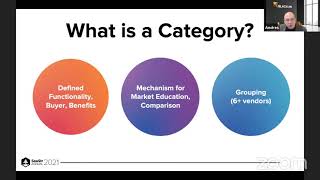
What do you use for CPQ? I mean, those, those acronyms, those names convey pretty much everything you need to know to have a conversation. They bring you to a place where it's easy to exchange ideas. At the beginning, there were very few categories: applications, software, operating systems, firmware. Over time, these categories break into new ones, and we see how we have a ton of them. They're evolving, they're changing. Constantly. Some of them are appearing, some of them are disappearing and turning into many smaller ones. But really, what is a category? We said that it was a grouping of functionality. That grouping of functionality has defined, defined functionality, defined processes that the software is enabling. And it has also a defined buyer, someone in an organization, a title that cares about it and will write a check to buy it. It has defined benefits that will accrete to that buyer or someone in the organization, but that is defined and is common to all the vendors in that category. And a category, it facilitates conversation. We talk about it, and a category is plural, meaning there are several vendors in a category. A category of wine does not exist really. A category becomes a category when there are many vendors and you need comparison. A category is officially in existence or blessed when an analyst, a reputable analyst, creates one of these reports. There are examples, there are other analysts as well besides these three, but the category comes into existence when there is a 2x2 report that actually compares vendors according to a set framework or a number of parameters and allows the market to understand who plays in this space and, and what they do and how they compare versus each other. Who creates a category? Let me introduce our analyst, the industry analyst, again from one of those reputable houses or other houses that are maybe smaller but more niche or more concentrated. The industry analyst. Let me tell you about an industry analyst. Normally this person is a practitioner, someone that has had hands-on experience with the processes that you, in this category that you enable, has used maybe your software or your competitor software, has run this function in a company, maybe all of the above. So this person has experience in this topic. Number 2, an industry analyst usually makes a living by selling subscriptions to their advice. This person talks to end users, prospective buyers, vendors, implementation consultants, all the people in the industry day in, day out. And an analyst might have 5, 6, 10 conversations or more in a day, in 45-minute or 30-minute increments. They have conversation after conversation after conversation. This is really important, remember, because when they talk to you, you're one of many, many, many people that she's talking to in a week. Number 3, the main function of an industry analyst is to provide advice. Again, this analyst houses Sell seats. The seat provides the buyer access to an analyst to ask questions, set meetings, 30 minutes, 40 minutes, ask questions, get advice. Hey, I'm thinking of buying Salesforce automation software. Which one should I buy? I'm gonna make an appointment with my analyst and talk to the analyst about how they compare. Maybe I'll do another appointment later to review pricing. Maybe I'll do another one later to find an implementation consultant and compare them. So again, they sell their advice and they talk to people day in, day out, and that's their main function. Finally, they write pieces. The external manifestation of what they do is this, either 2x2 reports, or notes, or ROI, or case studies, documented ROI, or maybe a guide, a market guide, a survey of a market. That's what we see externally that they are producing. But what we don't see is that they are talking to a lot of people and advising them on what to buy, what not to buy, how much to pay for it, and how to implement it. And very interesting and very important, every analyst that you meet is different. You know, just because they have the same title, it doesn't mean that they behave or act or do the same things. They all have different motivation and different goals. On one hand, you might have an analyst that has been doing this for 25 years, has written or blessed 5 different categories, is a celebrity, is invited to present, and people pay big bucks for this person to present at a big event. On the other hand, you might have a brand new analyst, just joined the analyst house. This is her first experience being an analyst. She's looking for a category or a space to make it. Her own and research it and start providing advice to the market. So there are different motivations out there. Maybe the new analyst will be more motivated to talk to you, a small company really innovating, versus an analyst that thinks that knows everything in the space because he's been following for 20 years. Personality. They all have different personalities. Some people are very outgoing, engaging. They would like to run into you and meet you at conferences. They want to talk to you all the time. Other analysts are more reserved, and they want to be on a schedule. They want to hear from you every quarter and only every quarter. Maybe they are less engaging. They all have their methods. I've worked with analysts that have told me, Andres, for this magic quadrant, you have 1 hour to give me a demo. You got to show me these 25 pieces of functionality. If you run over the hour, I'm going to stop. The demo and you're not going to be able to talk to me anymore. You know, very precise, rigid. Other analysts have said, nope, I'm interested in anything and everything you want to show me. If you want to show me 1 to 10 customers, that's okay. If you want to introduce me to them, even better. So anything in between, they have their methods and their preferred way of acquiring information. They all come to this with their own perspectives and experiences. Again, I said usually they are practitioners, It means they come to this job with maybe a preformed idea of what your software does and how good it is. Maybe they were happy customers, or maybe they were unhappy customers of you. Maybe they've used your competitors. They all have this perspective, and they bring it to the job, and therefore they have a current thinking. They have an idea of what's going on in the market, an idea of who you are and what you do. They start from, from this point of view. So we've talked about categories, what they are, and who creates them. Now, what are the benefits of being included in a category? There are big benefits. Number 1, a category creates critical mass. If there are 5, 6, 10 vendors in a category, the category has a name. All of a sudden, you have 10 companies that are using the same keywords out there to advertise. They are talking to the market with the same kind of language, vocabulary, and it creates a critical mass for awareness. Also, if you think about it, if you and your software and your company are included in a category, that category has reports out there and analysts talking about it. It creates third-party validation for a purchaser, for a buyer. You know, imagine you're talking to someone that is considering your software. All of a sudden, there is a document that says, yeah, this, this is legit. Many other companies are buying this software. There are many, there are many vendors in the space. You need this. Having a document from third party, I mean, it really helps motivate those reluctant buyers. Crossing the chasm. You've been successful, you know, getting your first, second, tenth customer. 50th customer. Even including a category helps you hit or reach to the masses, go from early adopters to mass adoption. Finally, having a category with all these companies using the same keywords and talking to the market in the same way, it means the market, the prospects are hearing the same terms, same functionality benefits from different angles, And therefore, when they reach out to you, they are better educated. The leads that reach out to you are better qualified, because people know what they're talking about. They know what to expect when they reach out to you. Now, that was, that was the benefits from being in a category. The benefits from leading a category are huge. Competitive differentiation, when you're competing head to head, being, you know, up and to the right in a category is fantastic. It also gives you pricing power. You know, you're selling to a big company, purchasing is engaging, they want you to discount the price. Hey, you have a document that says you are top right, you are the best, or one of the best in a category, you command a premium. And you know, they're looking for something cheaper, they can go to, you know, vendor 5, 6, or 7 in this category. You're vendor 1 or 2, you command a premium. You being the leader in a category also gives you a festival of free leads. You know, all RFPs in big companies are really inviting, you know, the top people in a category, the 3, 2, 2, 3, 5 vendors at the top of the category, and they include you and they come to you, you know, very low-calorie investment, you get a lot of leads, very qualified leads. Finally, being the leader in a category makes you or gives you first dips in the ecosystem. All of a sudden, the other leaders want to partner with you, they want to partner with a leader. They don't want to partner with number 5 or 6 in a category. If they have a choice, if they can, they will go for the leader. So all of a sudden, those implementation partners, the Big Four, they want to talk to you and be associated with you. So if you're in a category, that's great. That's good news. If you are the leader in a category, that is fantastic news. So play to win, play to be the leader. How is a category created? We talked about what it is, who creates it. How is a category created? You know, any innovator, an entrepreneur, you find a gap, a need in the marketplace. There's a gap that other software is not fulfilling, you create your company, start innovating, start enabling some processes. You secure your first customers, grow. All of a sudden, you get in the radar. You get in the radar of the analysts by being in the media, writing articles, engaging the analysts directly. Analysts want to hear from new vendors all the time. You don't have to have a seat to talk to them. You meet them at a conference. Maybe your customer talks to an analyst about you, asking questions about you, and the analyst all of a sudden is curious. So you get on the radar. Over time, you're growing, your company is getting a little bit more traction. You start briefing the analyst. You reach out to an analyst directly via LinkedIn, via email. Introduced by your customers. You offer a briefing, the analysts are interested, intrigued, they wanna hear from you. You start briefing them. If you have the money, if you can afford it, you buy a seat and the seat gives you access to that analyst as an advisor. So it gives you the ability to inquire with the analyst. You set a meeting and the analyst will respond some questions, give you advice. You do that frequently. Over time, the prospects and buyers that are talking to you and your competitors start calling the analysts to ask them for their opinion, their advice. When the volume is interesting for the analysts, they will write a market survey report. This means they will survey the market, they will investigate. They're not gonna compare vendors, they're just gonna see who is out there. And usually, it's called like a market guide or a market survey report. Who is out there? What is this new potential software category? Who plays? What are the benefits? If there is more traction, if the analysts are getting high volume of calls asking for guidance, then they will write the 2x2 report. The 2x2 report is a heavy process for analysts. They have to talk to all the vendors, They have to get references, talk to customers, see demos, come up with a framework and compare the different pieces of functionality. So this 2x2 is a much bigger investment from an analyst point of view than the market survey. So they only do it when there is traction. So the blue part here, notice the blue part. When you find a— when you get a market survey, or a 2x2 report, this is an indicator of traction in the marketplace. Meaning, I've seen a lot of entrepreneurs that are obsessed from the very beginning with getting a Magic Quadrant, a Forrester Wave, an IDC MarketScape done from the very beginning. These 2x2 reports don't happen at the very beginning when you are beginning to get traction. They are a lagging indication of traction. They only come into existence after there are several vendors to be compared, and there is a huge or a notable volume of inquiry calls into the analyst to get advice about this category. And once a category exists, sometimes categories die or disappear or morph into something else or splinter into multiple ones. So how are they maintained, or what happens to them? You continue with the cycle. You continue briefing the analyst continuously, and the analyst is watching the volume of inquiries and the type of questions they are getting. In some categories, if there is a clear winner, if a company is so dominant that is obviously the best choice, what happens? The analyst decides not to do that 2x2 report anymore. It's obvious. There is no business to be had explaining people how vendors compare. There's a clear winner, the market stops asking questions, that category kind of disappears from the 2x2 point of view. There's no more magic quadrant or WAVE or marketscape because the market doesn't need to distinguish vendors anymore. So let's assume you're in a category, either including the category or you lead the category, Now what? What I'm supposed to do? Here is in a nutshell, this is what you should do. First, understand your role and the analyst role. The analyst role is to understand where the market is going, investigate, talk to every participant in the marketplace, vendors, implementation consultants, people that have deployed software for your customers and your competitors' customers, other analysts. Her role is to understand and have a vision of where the market is going and enrich it over time. And she thinks she knows better than you or all your competitors. Why? Because she's talking to everybody. Usually you have 1, 2, 5 conversations in a day. She might have 10 or 15, and she might be talking to all of your competitors, something you are not doing. She might be talking to all of your competitors' customers. She thinks she knows better, she knows where the market is going. Your role is to influence that. I've seen a big mistake in my experience where an entrepreneur or an executive thinks that, hey, I'm the enlightened one, I know where the market is going. Let me tell you, Mr. Analyst or Mrs. Analyst, take notes, I'm gonna share with you my wisdom. Wrong approach. She thinks she knows better, and you're just one of the people that she's talking to. And so while you think that you know a lot, she thinks she knows more. So what do we do in that situation? You engage with her to understand. Number 1, you wanna understand where she sees the market going. Where is the market going according to her? Number 2, where does she see you and your company in that context? The market is going here, your company is here. Your mission is to understand and ask her in your interactions what she needs to see from you and your company to change that perception. If she thinks the market is going here and you're here, creates tension. You know, what do you need to see me doing to get here, be leading this category? Once you know what that is, review what you're doing, align internally, maybe modify your vision or embrace and express your vision, whether it aligns or not, but express it in a way that she understands and in a way that she can understand in that context of where she sees the market going. And in your interactions with her, softly influence, communicate over time what you're doing, to get there. She told you the market is here, you are here. To move up, you need to do this, softly influence and communicate what you're doing to alter that perception. Analyst relations, that's how this is done. The big companies like SAP, like Oracle, like ServiceNow have entire teams that this is what they do. They have the professionals have been doing this for many years. The good news is you as a startup, mid-sized company, you can do it yourself. You don't need specialized people to do it. What you need is to understand how it's done. And analyst relations is really about building relations, as it's in the name. You have to build a relationship. This is a long-term game. It's not a one-off interaction. You're going to see this analyst many, many, many times, perhaps many years. So it's a long game. Your goal is to build a relationship. So in that process, I'm going to give you some dos and don'ts on how it's done. Treat each analyst interaction as precious. Analysts are very busy people. You're an early-stage company. They might give you 1 hour initially, and they will talk to you for an hour. They won't give you 2 or 3 or 5. They won't talk to you every week. They have to talk to everybody else in the market. So they're busy people. Treat every interaction as precious and always, always provide value. Be upfront. Tell them about what you're seeing in the marketplace. Don't waste their time. Do ask for their advice. That's what they do. They love giving advice. They give advice to people that are paying for it. They give advice to people that are just asking for it. They love to give advice. Get their advice, but if you get it, act on it. Demonstrate that you are applying it. It's a long game. Think in game theory, you get this concept of a repeated game. You're going to see each other now, in a year, in 2 years. This 2x2 report might be here for the next 5, 10 years. It's a long game. You don't want to win a battle and lose the war. You want to build a long-term communication plan, and every time you see this analyst, you're going to drop a little bit of information, part of that communication plan. So establish your plan from the very beginning. What is it that you're going to communicate? What is it that you need this analyst to be convinced of in order for you to move up in the, in the category? Do, by all means, this is probably the most important thing, select and prepare your team for the briefing. Who from your company is going to come and talk to this analyst? It has to be someone that matches the background of what she's going to talk about. If it's something super technical, bring your technical people. If it's something more business-like, CEO, CMO, someone more, more business-like. There are some people in your company that just might not be suitable to engage with an analyst because they don't get it or their attitude is going to rub the analyst the wrong way. If you have someone that is overly aggressive or is going to pontify and tell the analyst where the world is going and she needs to take notes, that might not be a good person to bring from the analyst. Choose people with good judgment. Once you say something to an analyst, that analyst is writing it down and it might stay there forever. So use and choose, select people that have good judgment answering questions. If you have doubts on the judgment of someone, don't bring that someone to talk to the analyst. Now this is very important. Analysts are talking to 10 people, 15 people every given day. So while you will remember everything you tell her, with details. She might not, because she's talking to a lot of these people, and she might have a vague recollection of your conversation 2 weeks ago, or 3 months ago, or 6 months ago. She might have taken notes, but you know, all it stays is a little bit of a perception. So just focus on 1 or maybe 2 max simple messages at a time. In my case, I had an analyst that told me long ago, Andres, I perceive your company to be weak in Europe. What do you want to see from me? Well, I want to see that you have traction with European customers. Okay, for a year, all I did was talk to an analyst 30 minutes at a time and tell her about 3 new customers in Europe. You know, by the 4th call, you know, she had changed her perception. Hey, you're thriving in Europe, you're doing great. Only 1 or 2 simple messages at a time. Be consistent. Remember what you told them. Tell them again and again and again. Use different examples, but be consistent. Same message, simple message. Remind them of what you're doing and remind them that you're making progress. Things not to do. Please don't antagonize, patronize, or threaten the analyst. Some of the worst mistakes I've seen in my life are when companies, big companies, are trying to threaten an analyst. Remember, this is a long-term game. This is for years. So you don't want to win this war convincing or pushing the analyst to do something she doesn't want to do and then lose the war forever, having an enemy instead of a friendly. Don't lie. Don't lie, don't lie. The analyst is talking to everybody in the industry. At some point they will talk to your customers, to your partners. Don't lie. If you have weaknesses, use them to your advantage. Ask the analyst for their advice. How do I solve— hey, I have this customer that is unhappy. We screw up, we didn't invest enough time to make them successful at the beginning. Now we're correcting it. What is your advice? Don't lie. Don't cover the sun with your hands. Own, own what's going on and use these weaknesses into opportunities by getting her advice on how to solve these situations. Don't wing it. This goes to the point of not wasting her time. You want to talk to this person a lot. If she doesn't find it valuable, she's not going to take that many calls. Don't wing it. Always, always prepare. This is another one I've seen happen. Don't bring the big guns. Bring in your celebrity CEO, your celebrity venture capitalist, someone very well known from the board of directors. It doesn't work unless these people have new unique information that you cannot provide. Do not bully the analyst with authority. Analysts really pride themselves on being independent. And when you bring a celebrity, they feel the pressure. Oh, you're bullying me with authority, bullying me with this celebrity. I'm gonna dig my heels. I'm gonna explain to you why I'm doing what I'm doing. Bringing the big gun actually makes the analyst more entrenched in her views. Don't confuse access with obligation. I see this one all the time. People think that because they are paying $50,000, $60,000, $70,000 for a seat to get access to this analyst, the analyst has to do something for them. It's not true. Paying for a seat gives you access. It's on you to get value out of the relationship. It's on you to schedule meetings with this analyst. It's on you to make sure that these interactions are valuable for her and for you. Oh, and don't expect that just because you're paying for a seat or a little bit of money or sponsoring a conference, the analyst is gonna write great things about your company. I've heard this many times from companies that do not do well in these reports. Hey, the Magic Quadrant came out and we are really low. Oh, it's because we're not paying this company enough. It's not true. I've seen big companies do poorly, and big companies that spend millions with the analyst, and I've done really well with companies that pay nothing. We didn't even have a seat. At some point we bought a seat and we came top right. So I've seen it done both ways. There is no pay for play. If someone is telling you, you need to do pay for play, it's an excuse. That's a CMO giving himself or herself an excuse for not doing well. There's no pay for play with a reputable analyst. Don't forget what the analyst told you. If the analyst gave you advice, don't forget it. Remember it, act on it, and repeat it to her. Hey, you told me this, I took your advice, and this is what we're doing. Here is the summary. I have one of these printed here, and when I talk to an analyst, I get reminded of what I'm supposed to do and not do. It's very easy to go into the don'ts. So maybe put it in your wall when you engage to an analyst and remember what to do and what not to do. Here are the essentials. 2x2 reports are really lagging indications of traction, not early indicators. So don't go for them if you're very early stage. These are the things that happen once you have competitors, lots of traction, there's volume in the inquiry calls at the analyst houses. Being a member of a category is great. Congratulations if you're in one. Leading a category is really huge. So go for it, play to win. Analyst relations is a science and art. You know, it requires strategy, communications, psychology. It's really an exercise in psychology, understand your analyst, and it's all about relationship building. Access is very desirable. If you can buy a seat and inquiry and talk to the analyst all the time, get her advice, But use the knowledge that you get, use her knowledge of the market, use her, and she can be your biggest market intelligence tool out there. But really don't expect any pay for play. And finally, remember the role. Analysts can be really powerful guides. They give you a lot of information. They think they know where the market is going because they are talking to everybody. Your role is to understand where she sees the world going and then look like that. So I truly think that if you engage analysts the right way, they can be your greatest ally in your road to 1 million, 10 million, 100 million of ARR. So please do engage. Don't be afraid. And go for it enthusiastically. So with that, let me thank you all and open for questions. Sean, please, do we have any questions?
Yes, we do, Andres. I got a good one to start with. What company were you with that created a category, and can you tell us about your strategy?
Sure. I was with a company called SteelWedge. SteelWedge. It was software as a service for supply chain planning, the niche of supply chain planning called sales and operations management, SNOP. It's a niche of supply chain. It's a software you use to plan billions and billions of parts that come, when to order something from who, how much in advance, how much to pay for it in order to, let's say, assemble a computer in the millions of units. A software that big companies use for manufacturing and for planning their supply chain. This, I mean, initially was part of supply chain management, But that's a huge category. Over time, there are vendors like SteelWish that enable only that part of the supply chain management. I engaged with the analyst at the time in Gartner, Tim Payne, and started briefing him, asked for advice, set on a cadence. Every month we had a conversation. Every time I went to London, I paid a visit, I went to— took him out for breakfast. But my goal was really understand what was going on in the marketplace, who were my competitors at the time, what were people buying, what kind of questions he was getting from prospects and buyers, were there any concerns about our software, or about our pricing, about our model. And over— I mean, it took a while. I mean, it took a while. But really, it was about creating a relationship, a trusted relationship with this analyst. Over time, he created a magic quadrant. We came top right as a company, SteelWish was a very small company, you know, at the time, maybe $40 million in ARR, something like that. We're not paying the big bucks to Gartner or anything. It was just purely an exercise on seeking to understand where He saw the market going, applying those learnings, modifying what we're doing, and then growing.
Thank you. So here's one from a different angle on the analyst. How do you see B2B software review sites, such as G2 and TrustRadius, fitting into category creation?
Ah, that's a very good question. Those are relatively newcomers. G2, TrustRadius, there are others out there. They are peer-to-peer review sites, and they play a great function. Essentially, users of the software are going there to enter their and document their experience, so they are collectively asking the market for their feedback. I think the The more complex the software, probably the less interesting they are, because let's say Gartner or Forrester are usually talking to very high-level executives, CIOs, Chief Supply Chain Officers, CFOs. So that's the type of conversation they're getting. In G2 Trust Radius, you're getting the user point of view. So there are different things. The big analysts are talking to executives, people writing the checks. G2 TrustRadius are getting the user experience. So you might see a lot of comments about UI. Hey, it's easy to use. I love it. Or I don't like the documentation. As a user, it's fantastic information. But from a business point of view, I think the analyst houses still have something very valuable to offer. In terms of pricing, documenting value. They both have their function, and they are not equivalent. They don't do the same thing. They are not substitutes of each other. They are just complementary.
All right, it's time to be humble. What were mistakes you've made with Analyst in this pursuit?
Oh my gosh, that's a mistake. OK, mistakes made. You know, mistakes I made, I didn't engage early enough. That's one mistake. Another one could be the sometimes, you know, the analyst houses are changing how they cover spaces. There are internal politics, and maybe the analysts you're talking to today are not the analysts that are going to be covering your space tomorrow. So you really have to be in the known of what's going on inside, because your world can change quickly with some internal reorganization. And maybe I'll say the last mistake I made early in my career was treating the analysts as far away, like arms away, sending very polished documents, very polished PowerPoints, but not really engaging them as a person. And what really works here is be honest, be authentic, engage them as a person. Don't overdo the Polish side and forget the human side. It's all about the relationship, really. Very good.
So this will go back to your sweet spot of marketing. Uh, how— you spoke at the beginning, I want to follow up on this— how can analyst relations bring you leads?
Well, uh, that's an interesting— okay, once a category is created, uh, maybe a, a market survey or a 2x2, a Gartner Magic Quadrant, a Forrester Wave, IDC MarketScape, Those documents compare vendors, and usually the 2, 3, 4 top vendors in that 2x2 report will buy the report and buy the distribution of the report, and they will start advertising it online. And so they will also start talking about it at events, trade shows. So they're gonna put that report in front of pretty much every possible buyer and prospect out there. So it's very powerful in that sense that it might be your competitor that is actually advertising something that has your name on it. And you don't have to be the top right, you can be the second or the third. If you are high up, or what the, what the report says is very flattering about you, the prospect might be enticed to include you in the RFP, the request for proposal. So it creates awareness. As a small company, you might not be top right because you don't have enough traction compared to a large vendor. But if you are very visionary, if you are on the cutting edge, if the analyst thinks that you're in the cutting edge, you know, then the buyers out there that are early adopters of new technology, they want to try something new, they might reach out to you. So just being in these reports will ensure others advertise, distribute these reports, and then you're invited to RFPs.
Thank you, Andres.
Awesome. I think that might be our last question on the list. If anyone has any last-minute questions for Andres, please send them through. But this was so great. Thank you so much. Some great quality content. Glad we got some good engaging questions from the audience. That looks like that is going to be our last question for— oh, last question we have from Jose. Any analyst company to recommend?
Oh, analyst company to recommend. This is a great question, Jose. Thanks for the— that is on you. You have to do the research on who covers your space better. Who's the best? Some topics are better covered by Gartner. Some topics are better covered by IDC or by Forrester. Or there is also a long tail of niche analysts that are— MGI, for example, covers billing and revenue management. It all depends on who is out there covering your space. So you know better than me, you know, who is the most reputable analyst out there. The ones to run away from are the ones that would imply pay for play, or don't have following, don't advise buyers, prospects, and customers. A good analyst always have that connection to the market. It's advising end users, it's advising buyers. If all they do is talk to you to create reports about the market without really talking to end users, I would say those analysts are not interesting. There are others really good, Ventana is also very good. So depending on the topic, and— makes sense?
Awesome, that was lovely. Well, great, wonderful thing to end with. Thank you so much, Andres. This was wonderful. We really appreciate your time and all your expertise. We've got lots of digital sessions running this morning, so be sure to tune in to the next one. Thank you both so much.
Thank you so much. Bye-bye. Good luck, everybody.
More from Jason

Why Your Next Hire Should Report to an AI, Tragedy Apps, and Too Many AI SDRs? | The Agents #004

Our Agents Drove Our Salesforce Bill Up 80%, Marketo Hates Agents, and We Stealth-Churned Off Notion




Managing 20+ AI Agents: Lazy Agents, Our $500K AI Bill, Stealth Churn & the Death of 60% Solutions




