Usage-Based Revenue Models: Successes & Pitfalls from Checkr COO Lindsey Scrase on CRO Confidential
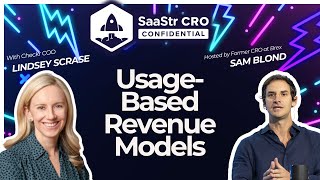
Lindsey Scrase, COO of Checkr, a $5 billion background-screening company, explains how usage-based pricing created misaligned incentives and low revenue conversion. She fixed it by shifting compensation to reward revenue realization instead of bookings, introducing a month-2 conversion KPI, and embedding product teams in customer conversations to drive upsell and renewal.
Chapters
a checker we'd also layer in a commit component, which makes sense. This is what you think you're going to do. We're going to put a commit in there that you have to do at least this, which, which is done in SaaS more often. And what this was doing was incenting reps to heavily discount to get this commit. Hey, customer doesn't really want to commit, but let me discount this really heavily to get the customer to commit contractually. They were unnecessarily giving these major discounts to get this committed contract with a customer because we were incenting it because there was a huge upfront commission component. And like you said, what you incent, you get. And so the, the reps are doing exactly the right thing, but we were over-incenting it. So we, we took that, we took that specific component out and we're spiffing on different things that we do wanna see more of and we're tying the actual bulk of the compensation more to revenue realization.
Sastervans, welcome to another episode of CRO Confidential Podcast. I'm your host, Sam Blonde. Delighted to be back with another incredible episode with an amazing guest. Today we have the treat of having a guest who is in a position that many CROs aspire to be in her position. Lindsay Scrace is the COO at Checker. She was the CRO prior to being promoted into the COO. So just incredible experience at one of the sort of generational SaaS businesses of the last decade in Checker, most recently being valued around $5 billion. Just an awesome guest in an awesome company. Delighted to have you here. Thank you for being here, Lindsay.
Oh, thank you, Sam. Excited to be here to chat with you and also just a huge fan of SaaStr. So I'm pumped to be here.
Amazing. Okay, so we're going to jump right in. You joined Chekr in August of 2022 as the CRO. You joined from a 10-year tenure, incredible run at another incredible but much larger business in Google. So you join— this is now something like 2 years ago— joined Chekr, a pretty large business at the time that you joined it as CRO. I wanted to talk a little bit about just setting the stage. Describe the environment at Chekr when you joined, just in terms of what did the go-to-market organization look like? And then we're going to talk from there about some things that you did to uplevel that organization.
Yeah. And maybe just to start, I'm sure a lot of folks know about Chekr, but many might not as well. So, just to set a stage of what Chekr is, we're late-stage Series E tech company focused on background screening. So, think the screens, the background checks, employment verifications, verifications you do before you hire someone into your company. And our founders, started Trucker because they were working at a delivery startup and they could not onboard workers fast enough. Like it was the gig economy, needing to get supply is absolutely critical. And this background check step took weeks, if not longer, to get done. And so they figured out a way to do APIs, get the data themselves, and, and, and streamline incredible, the process incredibly while also making it even more compliant and more accurate. In terms of the go-to-market, yeah, Checker, we got our birth in the gig economy. So DoorDash was our very first customer 10 years ago, and obviously it's grown quite a bit since then and grown with Checker. But we, it was critical, like seeing a critical need for gig companies where they need to hire quickly and onboard, and people are out looking for a job and they wanna start that day. They wanna start earning that day. And We started with DoorDash. From there it went to ridesharing and other delivery companies and, and had 95% plus of the gig economy. So that was like really the, the focus of the go-to-market in the early days and very large customers and growing with them over time. In terms of the organization, when I joined, we had then pivoted, I can talk about it later, to, to enterprise. Quite some time ago, did not succeed, learned a lot. I can talk about what was learned and then built a self-serve business. And so a lot of the go-to-market marketing work focused on self-serve and then built out our mid-market team. So I think a few hundred people, most of the sellers focused on mid-market solutions, engineering, customer success, really important, especially with these very large customers. And then pre- and post-sales separated as well. That's, that's a high level.
No, super helpful. And so then what I'm hearing is a go-to-market organization of a few hundred people, and then the business is segmented in terms of product-led growth or companies that are acquired and onboarded without a sales rep, those probably orient towards the, the sort of like smaller size in terms of a company. And then there are at least a couple segments in terms of the folks that you're selling into mid-market. Only maybe hopeful context to, to set there is something around what were the cycle times for most of those folks and, and new customers. And then how do you make money? I hear background checks and I hear potentially a usage-based model. It also could be a SaaS-based model. So just a little bit deeper in terms of how you price.
Yeah, absolutely. So yeah, and on the low end in terms of segmentation, we've got the PLG kind of self-serve. These are, I think, very small. It could be like a local Subway franchise, it could be a dry cleaner, it could be a local gym hiring not a huge amount of people every year, but coming through our self-serve website, PLG, and then We're working to upsell them from there. We also, though, at that, for that segment, we have a very large channel business as well. Think like Gusto, they're payroll providers, Gusto, Paylocity, where we're embedded in that experience. Same for applicant tracking systems like Greenhouse or HRIS like Rippling. It's a very big channel for us in parallel to this self-serve. So really strong product market fit. Across segments, SMBs all the way up through large enterprises. And then set the cycle times there, like days. You're, you're like, hey, I need to run this now. It could be minutes, but let me sign up online, get it done. And it's either part of the experience and you're in a partner or it's doing it straight through Checkr. The, in the mid-market, kind of commercial mid-market segment, think like 30 days is the average cycle time and deal sizes in the tens of thousands of dollars typically. And, and then up into enterprise, with enterprise it could be as long as a, a year sales cycle and deal sizes in the $100,000 and, and above. Then the pricing, sorry, the pricing. Yes, it's, it's a key component. We are usage-based. So, and this was a key focus for me when I started is, you know, getting that focus on consumption and revenue versus, you know, you're not selling a subscription. Very different from a sales perspective, from a compensation perspective, and just from a how we monetize perspective.
Super helpful. Just to summarize what comes to mind for me in terms of the environment that you joined, that when you joined as CRO at Chekr, If we're thinking about relating to the category of startups, this was a mature and complex go-to-market organization with hundreds of people and multiple different customer acquisition strategies around channel, product-led growth, sales-led growth. And so you enter, at least using the framing of startups, this complex and mature go-to-market organization and where I want to initially spend time is your first experience there. You were in the CRO role for about a year and a half, and then you were promoted into a COO role. The thing that comes to mind for me is you had to have just crushed it. So let's start at the very early days. You come in, I want to first talk about the process that you went through for identifying the areas of opportunity. And then I want to evolve to what were those areas of opportunity and how did we address them? What was the, the process that you went through? Like how did you discover where you should first spend time in, in the opportunities to improve the business as fast as possible?
Yeah.
Yeah.
I was very fortunate in that the coming on at Checker, a lot of things were going really well and I had a, a very strong leadership team that I had the benefit of inheriting. At Trekker. And so, I did a mix of a couple of things. For me, it's really important to honor the past when you start in a new organization and take time to really understand why things are the way they are. So, trying to find that balance of not waiting too long to act and make change, but also really understanding the why and how things are. So, I spent a lot of time with the team and talked to, you know, everyone of my directs, like, what's going well? Where do you need help? Where are the improvement areas? And heard from them, like, one resounding thing that came through was the product and go-to-market feedback loop alignment was not there, and there needed to be help to bridge that across the exec team. There were other things that I saw as I talked to people, as I started seeing the rhythm and the cadence of the business and putting that in place, was just from a data looking— I look at data, I'm very data-driven, like looking at data, what are they, what do they care about? What are they measuring? And I saw some gaps. I think one of the first big thing that I spent time on was the, back to the point you mentioned earlier, Sam, this is a transactional business and usage-based, and that needs to be managed very differently than a typical subscription SaaS model. And we earn revenue when the customer is using the product. It's versus a license base where you're as a seller on the one hand and SaaS product, you buy, you sell this many seats or licenses and the customer goes live, then you really, in many senses, like you can set it and forget it for the following year at least. Whereas here you, you have to be laser-focused on making sure they're going live, adopting and using the product as intended. So on that, I, I looked across the board and said, how do we first look at comp plans and make sure that these comp plans are tied to revenue? And some were to some extent, some were not. And so made sure across the board that people were aligned in the incentives. Their incentives were aligned with what we needed to do from a company perspective. Our lowest or smallest, lowest segment sales team was focused on activating customers. No, no incentive on revenue whatsoever. It's just like a volume-based incentive plan. And so completely changed that focus of that team, moved them to be revenue-focused, bringing value to the customer and to Trecker. And the other thing I did was bring that revenue and focus into the entire cadence of running the business. And so instead of just thinking about bookings targets and bookings attainment, which was the, all of the, all the dashboards, all the reviews, we bought, brought revenue focus into every cadence of our go-to-market team. And so that's our weekly business reviews, measuring at a segment and a team level. Individual level, like bookings to revenue conversion. You could have a rep with a million-dollar quota, two reps, like one could be making, like, closing a million and a half of bookings, but that's only generating $700K in revenue. And another can be closing $900K in bookings, but generating $900K in revenue or a million in revenue. And that awareness is really important and was not there. And so we have been laser-focused and still a journey. There's so more we can do here, but laser-focused on giving that visibility. And then we looked at a lot of the processes operationally and made sure that once a deal is closed, what are the steps and all the handoffs? And then too many handoffs in place. There was not enough sense of urgency getting the kickoff meeting with the customer, getting the right implementations person and account management, customer success person involved earlier and just pulling that through end to end and tracking it was a big focus. So, that was probably one of the biggest low-hanging fruit I saw right away and had a big impact once we were able to like get it measured, get it improved. And, and now we've seen that realization improve dramatically over the last couple of years.
You're speaking my language. I, I wrote down notes in 3 categories. All of which, it just like my mind is racing with all of the things in each of these categories that we were able to take advantage of during my tenure at different companies. The categories are, so you mentioned something around like studied data and identified trends. So that is, I categorize this one oftentimes as RevOps. And I have just received, as I've talked about probably multiple times on this show, the impact that sophisticated RevOps has had on my success and the success of the organizations that I've worked with cannot be understated. And I want to go deeper on each of these categories, but just framing them before we do so. One is this stuttering, studying data, understanding trends in the business and leveraging again, this category that I would put with rev ops. The second thing that I wrote down is around incentives and the Charlie Munger quote, show me the incentive, I'll show you the outcome. I have just realized huge benefits and nearly immediate benefits by changing incentives to be more appropriate to drive to the outcome. So I want to go a layer deeper on what that meant for you at Checkr. And then the last one that I wrote down is around the customer experience. Mm-hmm. And you talked about how customers are onboarded, who they're interacting with. So I think each of these three categories resonate with me. And then let's go a layer deeper. On each. So maybe starting on the data, what were some of the trends that you identified as areas of opportunity? And then maybe specifically if you have any stories or things that you recall around what you did tactically to change those.
Yeah. The first, maybe two come to mind. I think one on the revenue realization front and the other on ARPU or the kind of equivalent at Shekhar. On the first revenue realization, we saw that the bookings to revenue conversion was not where it needed to be. And I think the first, the first conclusion is, oh, we're— the customers aren't ramping as expected. That was not the case. As we dug into it, we saw a lot of reps were overbooking deals because there was this pressure to just hit this bookings quota. So we were way overbooking deals in many instances. And there was operational pieces from a customer experience that we could do to improve. And we, it's hard to measure this, right? So for those of you who do have this thesis-based business, I've talked to dozens and dozens of people on this. There's a lot of different approaches, but you need to have a leading indicator of how this is trending. Is it, you don't really see the full effect for a full year. We measure month 2 booking to revenue conversion. What was the expected revenue? And we had set a goal of 10%. So 10%, we should be seeing 10% of the bookings realized within by month 2. And it was at like 4 and we pushed and, and now it's at 12. But it was measuring this every single deal for the larger deals, every segment, every team. And that was something we, we continue to look at and we look at the, the cohort curves across every month. The other was there was no visibility whatsoever. This wasn't a trend, it was just lack of data. There was no visibility into what in a SaaS license-based model I focused on being ARPU, average revenue per user. In Checkr, we, it's not a license-based model, but average revenue per screen that the customer is running. And it's obviously it's different than ASP, which, or average deal size, which is based on the customer size. That's important, but If you look at all customers, independent of size, how much revenue are you getting per user, per transaction they're running on the platform? And that then becomes the job of everyone across the go-to-market organization. And so for me at Checkr, first we do like figure out what was that metric and we coined average revenue per report run. That's how many reports, how many hires is this customer doing and how much revenue are we getting per hire? And then there's a lot of levers to impact it. Now there's pricing and packaging. There is discounts. Are we giving too much discounts? And I think we saw that we were discounting often unnecessarily given where our win rates were, which were quite strong. And then the other is just the complete, like, realization for the customer of all the products we have at our disposal. Like, often, you the rep's just trying to get a deal closed. Like, we'll figure out the upsell later. It's like, no, especially if you look at win rates being decently high, you want to, you know, make sure we're getting a good go at all of the products at the initial sale. And so we have meaningfully improved that over the, like, every quarter based on focus from marketing, from even BDRs, SDRs, sales. And then our CSMs are, have a metric on this as well, and we're measuring it throughout the renewal cycle. And so that's something that across the company we've used and brought into focus. Because if you don't, like, to your point, there's incentives and there's measurement. If you're not measuring it and not looking at it, then there's not really an explicit focus.
Yeah, the super helpful examples. I'll reciprocate with a couple that come to mind for me. And you just said something that resonated, which is if you're flying blind and you're not measuring these things, you just never know the opportunity that exists.
Exactly.
And so a couple interesting ones that come to mind for me, and hopefully for the audience, Checker's business is unique in that the first example that you provided where it's a usage-based business may not be applicable to a traditional SaaS business, but hopefully what you're able to do is pattern match some of these examples to things that are directly applicable to your business. When I was at Zenefits, which we made money as a health insurance broker and we were licensed in all 50 states, so we sold to anybody in the United States, but there was heavy influence state by state because of the nature of health insurance where the broker commissions are regulated by the state and the price of health insurance is regulated by the state. There's other dynamics that are sort of state-specific as well. And for many months, if not a year plus, we were like flying blind in terms of just treating all companies regardless of where they were located as equal, all opportunities being equal in targeting these companies. The same. And we, like you, but for a different role, we brought in a really senior rev ops leader. And one of the first things that he did was he came to me about 2 weeks in and said, we should stop selling in these like 15 to 20 states tomorrow because the average price of health insurance in these states is X, the average price in the remaining states is Y. It's almost 3x the cost, the commission rates in these states, again, X and Y. And then even more so our conversion rates. There were extreme examples where we had given like 1,000 demos and had 2 customers in certain states. And it was just like, we have this huge TAM, we should just shift our focus to acquiring demos and opportunities in these states and look what happens to revenue. And I think like in the same category of RevOps, understanding data, running reports through different cuts that are relevant to your business, whether it's geo or industry or persona, and then orienting the business around the opportunities that have the highest likelihood of converting, the highest likelihood of successful customers and generating the most revenue. I can't positively reinforce that concept enough. Let's move on to incentives, which some of which you mentioned could be related, or at least segue into incentives as well. I'd love to understand what were, what was something that you discovered where incentives were misaligned? How did you discover it? What change did you make? And then what was the outcome of that change for the incentive change?
Yeah, there's several. I talked about the, the SMB team and they were incented on logos versus revenue. Another one was for the majority of our sales team, we had a pretty large incentive on closing an upfront commit, which can be very valuable. Did that in prior roles as well. What I just—
And this is like what you described as book— sorry to interrupt. This is what you described as bookings, I think, previously.
Yeah.
And for the audience, in a usage-based business, You want to forecast out what you believe the revenue is going to be. And when you described this delta, what comes to mind to me is we were over-forecasting. We were like over-promising and under-delivering when we closed a deal.
Exactly. Yeah. So yeah, you have to predict out how much are they going to use, how many hires for our scenario, for other concept of businesses is different, but how much do you think they're going to use and therefore contract with the customer on that amount and give a discount based on the expected deal size. But then often at Trecker, we'd also layer in a commit component, which makes sense. This is what you think you're going to do. We're going to put a commit in there that you have to do at least this, which, which is done in SaaS more often. It gets a bit trickier. And what this was doing was incenting reps to heavily discount to get this commit. Hey, customer doesn't really want to commit, but let me discount this really heavily to get the customer to commit contractually. And what we started seeing was either they were, you know, overbooking the deal, or our retention rates are incredibly strong at Checkr, and it— the product's fantastic. Our GRR is high 90s. Max you can get GRR is 100%. What amount of your, your revenue are you retaining and they were unnecessarily giving these major discounts to get this committed contract with a customer because we were incenting it because there was a huge upfront commission component. And like you said, what you incent, you get. And so the reps are doing exactly the right thing, but we were over-incenting it. So we took that, we took that specific component out and we're spiffing on different things that we do want to see more of and we're tying the actual bulk of the compensation more to revenue realization, which is better for the customer. It's aligned with Tracker. What I love to do is like, how do we align the reps' incentives to the success of the company and then make them as successful as possible? I want them to be blowing out their number and where we're all celebrating, not blowing out their number where actually, was this really good for the company? And too often I think that happens unknowingly by putting the wrong incentives in place.
Both of the things that you mentioned, I can relate to, and then I'll put them in a category and give a version of my own as well. You mentioned SMB reps were incentivized on logos and not revenue. So that means you get, for folks that are listening, just like credit for an activation, for lack of a better, and it doesn't matter how much revenue that customer generates. And then the second example that you gave was we were— and were you paying out on bookings? Like the quota was based around bookings. Was also commission based around bookings or actual revenue?
At that point, there had already been a move away from bookings-based comp, thankfully. But it was like half at that point. It was half.
Okay. Got it. Makes sense.
Yeah.
And lo and behold, the outcome is we have inflated bookings because that's what we celebrated. When somebody closed a deal, we probably had the bookings number up there and that's what we felt like was revenue. And in practice, it actually wasn't. Both of these, I think, are in the category of non-revenue incentives that evolved to, it sounds like, becoming revenue incentives. And I mentioned that I can relate. At, I'm going to use actually an SDR example. At Brex, as I think probably the majority of SDR incentive plans are structured around some leading indicator to revenue, like opportunity creation. And the thinking is something like, once the meeting is held and maybe opportunity is created, The SDR has no control over what happens beyond that point in time. And so they're doing their job if they're scheduling demos and creating opportunities with qualified customers. And at Brex, we noted a— again, like back in this previous category of understanding the data, a trend that we noticed was that the AE-sourced opportunities converted at a significantly higher rate. To customers, and they generated far more revenue. So the ACV of AE-sourced outbound opportunities was significantly, almost exponentially higher than the SDR-sourced opportunities. And when we dug a little bit deeper to understand, it all went back to who they were targeting. And the AEs were incentivized to target the people that were most likely to convert and that were most likely to spend a lot, generate a lot of revenue because that is what they were compensated on. And the SDRs weren't. They were incentivized to reach out to people who would take a call. And so we actually made the shift to incentivizing SDRs to close revenue. There are second-order influences of doing something like that. But the lesson for me, I think, in that example is something like, especially for the teams, oftentimes being SDR and marketing, that are oriented around top-of-funnel metrics, I would go through the thought exercise of what does it look like if we orient these teams more around closed revenue? And what are the, like, gives and takes in doing something like that? And look, it doesn't mean that you stop caring about how many opportunities are being created or how many meetings are being scheduled. It just means that's a leading indicator that you are managing the team towards and not necessarily compensating them on. So again, I love your examples because I can relate to them so much.
And we actually tried this. We just shifted to the same thing for our SDRs. We call them BDRs for outbound SDRs to give a component of the comp based on closed, closed one as well. There's some pushback. We're still seeing, does it work? But it's that same thing. It's like, how do you get the right incentives to do the right behavior? In marketing, we're also working on our self-serve business, not to optimize all our SEM spend for activations, but for revenue. It's a journey to get there, but it's absolutely the right way to spend the investment throughout the entire funnel.
Awesome. Let's move on to the third, but the third one that you mentioned was around the customer experience. So I would love to learn the things that you recognized early on, whether it's in the trends that you're learning from data or just talking to customers. But what did you recognize as an opportunity to improve the customer experience and what did you do from there?
Yeah, I think that there's probably two, two buckets of things I could talk about. The first is the— it's relating to what I talked about earlier, so I could cover this briefly, but If the rep isn't centered on bookings, they're probably not going to be as deeply ingrained and really understanding, is this solution going to work the way we need to have this customer go live and be successful and generate usage, which then generates revenue, which then generates my commission? And so we've really oriented that a deal, especially as we're investing heavily in enterprise, we have a big goal on new logos closed. And on revenue, but also implement successful implementations and making sure that the pre-sales team and our solutions engineers have signed off on something before it closes. And they're going very deep because we were seeing not only if you're overbooking a deal, that's not only bad for the company, it also can be bad for the customer if they're expecting more and or from our product or product gaps and then they go to go live and it's not working. So there's been a major focus on that. That. And it's been incredible to see, like, when you rally the teams on this and get everyone on the same page, how it can work, and, and conversely, how poorly it can go if that's not happening. The other piece is on our product feedback loop and in the engagement with the customer. I talked to many customers when I joined and ongoing, and the feedback is very strong on where we are today. But as I talk to more of my customers, like, there's so much opportunity for upside well here. There's so much low-hanging fruit, and the feedback loop was just not getting to our product and engineering teams and like getting these things on the roadmap. And we invested heavily in the— across the company to have our— we have a new chief product officer, but he's meeting with customers day in and day out. We've got an Adopt a Customer program for engineers and product teams. So not only are we solving customer pain points and problems that always do come up, but more importantly, like building the roadmap for this next opportunity for growth with these customers and, and upsell and, and beyond. That was absolutely missing. And, and especially if you're going big and enterprise, like that has to be completely interlocked. And if you don't have that, you'll absolutely fail.
That's awesome. For those that are listening, both exceptional examples, which with very important takeaways. Where my mind went was similar to the first example that you gave. And then I'll try and package up the second example just in terms of what I think my takeaway would be, but where you described But the thing that I heard from you was something oriented around the onboarding and implementation of customers. And we had this experience at Brex, and I imagine that the same thing is relatively true at most companies where we could actually predict things like expansion renewals For Brex, it was card spend. So how much revenue a customer would generate by their, the actions that they took very early on as a customer. And for us, it was like the first 30 days. And we didn't recognize this until something like 12 or 18 months into the business. And for Brex, that was like tens of thousands of customers. So, uh, because we moved very quickly, a relatively mature business. And I think that the process that we went through that I think many companies do, and I would now say it was probably wrong. We started with salespeople that were focusing on new customer acquisition. And then we hired like some version of CSM, account manager or something like that, that were focused on customers after they closed. And we would have the same person serving customers right after they signed up. It was serving customers that were 6, 12 months into their journey on Brex. And what we should have done and what we evolved to was being hyper-focused on the initial experience that the customer had with Brex. You only get one chance at a first impression. And I think if you successfully onboard customers It solves for so many potential problems that could come up down the line and just far less support needs of customers as they mature with you as a business, higher renewal rates and so much more. So that's the thing that comes to mind to me, for me on the first one that you mentioned. And then the second thing that you mentioned, the takeaway is something like generally companies don't spend enough time with their customers. And this is true beyond just the customer-facing teams. You talked about you have a new Chief Product Officer. It's something like at the founder and the executive and at the product and engineering level, there's no higher ROI than time spent learning from your customers, something like that. Exactly. And so again, just each of the examples that you're providing resonate so well with me. And I think for the folks that are listening, the two of us, we had like very little agenda coming into this call and we're both gravitating towards the exact same things. And so that's probably a pretty strong signal that these things are likely to be happening in your business or likely areas of opportunity in your business.
Yeah. And for the folks, the customer-facing folks on the call, like that insight you're getting from day in and day out talking to customers is gold for the company. And you know, if there's not a standardized way of capturing that, like getting that is so important and it's on the leadership of the company to dig in and get it and spend as much time with customers as possible. Then also like getting that feedback from the team.
Okay, I'm going to quickly recap because there are so many, I think, takeaways that I'm very passionate about that you've organically touched on, Lindsay. We went into 3 categories. The first one is around when you joined a checker, you really studied the data and understood some trends in the business. And so I, I think what that means is from as early stage as you can, just start running cuts of data around things like conversion rates by anything that you think is influential in your business. Geo, persona, industry, sub-industry, source of opportunity. Not all opportunities are created equal. And so, and so just really understanding where your customers and where your revenue is coming from and then mapping that back. Leveraging that information to, to make decisions and invest in what is ultimately generating revenue and happy customers for your business. The second thing was around incentives. And I think the takeaway for me from hearing your comments, Lindsay, and then marrying those with my experience is maybe default to incentivizing revenue. And it may make sense to incentivize teams on things other than revenue. But if you default there and then maybe try and make an argument for why it makes more sense, I, I think that's, that, that's where I would start.
Yeah.
If I'm building incentives for the first time or rethinking incentives. And then the third category was around customer experience. And I think the two takeaways there, invest early and overinvest in the initial customer experience, onboarding and implementation, setting customers up for success and really specialize in that time period, try and identify the things that you would like customers to accomplish during their first experience with your product and track those things, ensure they are accomplishing those things. And then the second one is the ROI on spending time with customers and learning from them is incredibly high. So many things that, that we talked through and we could have gone so much longer. I think we had more topics, but in the interest of time, let's stop there. Lindsay, I think this was an incredible episode. Thank you so much for joining and sharing your learnings with the audience.
Thank you so much, Sam. Yeah, you summarized it well. Get the data, know the data, and then obsess over your customer and their experience. Thank you so much.
Thank you so much. See you all back here sometime soon and at SaaStr Annual coming up. Thanks, Lyndsey.
Thank you.
More from Jason

Why Your Next Hire Should Report to an AI, Tragedy Apps, and Too Many AI SDRs? | The Agents #004

Our Agents Drove Our Salesforce Bill Up 80%, Marketo Hates Agents, and We Stealth-Churned Off Notion




Managing 20+ AI Agents: Lazy Agents, Our $500K AI Bill, Stealth Churn & the Death of 60% Solutions




