What a Great VP of Product Really Does | SaaStr
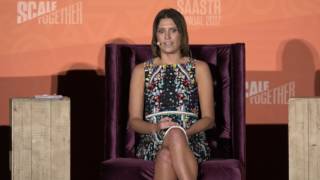
In this SaaStr panel, moderator Jason M. Lemkin brings together four product leaders—Satya Patel (former VP of Product at Twitter), Ciara Peter (Head of Product at BetterWorks), John Stross (Co‑founder & VP of Product at Greenhouse), and Zach Smolinski (VP of Product at Rainforest QA)—to dissect what a VP of Product actually does and how to be great at it. The conversation covers the core responsibilities (strategy, execution velocity, go‑to‑market), the "3 C's" of product leadership (Conductor, Communicator, Coach), and a practical framework of Mobilize‑Prioritize‑Optimize‑Recognize. Panelists share the traits that distinguish outstanding VPs—vision, decisive product taste, ability to say no, and protecting the team (the "shit‑umbrella" metaphor). They discuss ideal backgrounds (business, engineering, design) and argue that data‑driven, user‑centric, decisive people can come from any discipline. The timing for hiring a VP is explored, with signals such as reaching ~100 customers, needing scale, and founders being stretched thin. Relationship dynamics with CEOs/founders, cross‑functional collaboration, and where product sits in org charts are examined. Various organizational structures are debated, from pod‑based product‑design‑engineering squads to centralized design, and the importance of clear ownership and KPIs is emphasized. Process tools like OKRs, quarterly roadmaps, continuous delivery, retrospectives, Product Design Reviews, and embedded user research are highlighted as ways to maintain velocity and quality. Hiring criteria for product managers are detailed, focusing on operational cadence, decision‑making frameworks, empathy, and the ability to produce clear requirements documents. Finally, the panel offers practical advice for sourcing great VPs—leveraging investor networks, talking to engineers, and seeking references from product managers who have repeatedly worked with top VPs.
Chapters
Please welcome Satya Patel, former VP of Product at Twitter and currently a partner at Homebrew Ventures.
Oh, thank you. Is this on? Thank you so much. We recognize we're the only thing standing between you and lunch, but I guarantee you we're going to make it worth your while. We have a group of stellar product management executives who are going to shed some light on what it means to be a VP of Product. So let me just get started by introducing those folks. First is Ciara Peter, Head of Product at BetterWorks.
She's—
Ciara's also held various design roles at Salesforce over many, many years. So welcome, Ciara. Yeah, come on up. John Stross. John is co-founder and VP of Product at Greenhouse, longtime product manager over the last couple of decades. Thanks, John. And finally, Zach Smolinski. Jason M. Lemkin, VP of Product at Rainforest QA. Zach has held various product management and product marketing roles at a number of companies over time.
Oh, that's bright.
We're so far apart from each other.
It's so comfortable.
Yeah. We're going to start with the obvious question. What is the role of a VP of Product? Who wants to dive in? Maybe Zach, you want to start on the far end?
What's the role of VP Product? I think it really boils into 3 things. One is strategy, making sure the company really knows what it's doing, who they sell, what they sell, how they sell, manage that process over time. The second thing is the minutiae of what you really supposed to do, which is like make sure there is a velocity between PM, between engineering, customer feedback. And the third thing is the go-to-market, which is all about supporting sales Sales and sales, supporting marketing, pricing, all of those things. So those 3 functions, if you execute on them, you're in a good place.
Yeah.
John?
Yeah, I mean, I think to add to that rather than repeating it, I think the other thing we think about a lot is that the VP of Product is the choke point in a lot of ways for the whole company, where you're listening to all the different things coming in, whether it's requests from customers or future customers or what your engineering team thinks that needs to be done, or your kind of vision that you're doing. And inevitably, like, you can't do all of it. And you're the one trying to decide which stuff you're going to do and which you're not going to do. And inevitably, that means you're saying no to a lot of stuff. And so a lot of times, you're the person saying no, but also you're the person who has to make everyone believe. And say, even though we're not doing the thing that you want today, like, hang in there with us. We're going to get there. And so I think there's a whole thing of, like, both internally and externally, it's like, You're the one who has to make everyone believe, even when you can't do everything they want.
Yeah, communication's so central to the role. Ciara, I'm curious to hear your perspectives.
I'd say that there are probably 3 roles within the VP of Product. So the conductor, the communicator, and the coach. I call these the 3 C's of product leadership. And what that means is, as a conductor, the product is your orchestra. And it's up to you to set the tone for the organization, by setting really, really clear goals and metrics. And then also, you know, these cadence activities that will happen within your organization. So the more you can automate that, I think the more time there is for your team to be strategic. Communicator, you know, like John mentioned, you're kind of this bottleneck of information. And so you got to communicate upward to let the CEO know how you're executing on the vision, communicate downward so the team can be agile and make changes quickly, and then outward so that your customers know what's going on. And then finally, on the coaching side, I would say there's sort of the traditional coaching activities, like frequent feedback. We know that that's super important. And I can't say that there's one week where there's not one piece of feedback, whether positive or constructive, that you can't give feedback to someone on the team. But also helping them understand frameworks to use, so that they can kind of put them in their arsenal to use moving forward and scale.
Yeah, that's great. I often talk about it as mobilize, prioritize, optimize, and recognize. And that last piece is pretty important in the context of being a VP of product. That leads me into my next question. What makes a great VP of product, and what's the difference between a VP versus a product manager? Zach, do you want to take that?
Sure, sure. I think there are like two things which I think make a big difference to be a great VP Product. One is sales support. In my mind, the product team needs to be the team that supports sales, supports new deals, supports saving a renewal. It's kind of like, it's time-consuming. It makes the product team flying a lot, but I think you just have to do it and that makes your team unique in the organization to take the right decisions to drive the organization. I think the second thing is, you know, we're all again busy with what we're doing day to day. I think a good VP product, an excellent one, would always look beyond where the customers are today and where the market is today. And if you have that figured out all the time, then you can always make sure that your company has a competitive advantage. And, you know, I found that working with the CTO group is probably the best way to achieve that. I think that's what makes you kind of like a great VP product.
John, you are a VP of product. You've worked with many VP of products at different companies over the course of time. What have been the characteristics of the great ones?
I think of it like two different things. One is the leadership thing of whether it's having the vision of where we're going that's unique and differentiated so you're not purely being reactive to everything. The other thing I've seen is just product management, like in the engine, or in the metaphor, the engine of a product team or of an engineering team is A great product manager is like the oil that makes everything go well. And bad product management is the sand that makes everything stop. And so it's a subtle thing. Everyone thinks, oh, product, you're the driver of the bus. It's like, well, sort of. But actually, you're the one who makes everybody better, or you make everybody worse. And so in a lot of ways, it's a subtle thing. It's hard to tell if somebody is a good product manager when you go to hire someone. But that is the difference I see, is you see these really high-performing teams overall or not.
Yeah, I always like the statement. I don't know where I first heard it, but I abide by that. Great VPs of product are— shit umbrellas and credit funnels, right? Like they protect their teams and make sure that if there's great work being done, it's never their own work, it's the work of their teams.
Exactly.
I think it ties in really nicely with that. What are the, you know, the three of you and me, we have very different backgrounds in terms of our product, where we started and got into product management. Zach, I believe you're an engineer by background or computer science. John, political science if I remember, and Ciara, design. So in addition to the characteristics of a great VP of Product, what's the right background for a VP of Product? Ciara?
So when asked this, I think I personally kind of default to this Venn diagram of there's business here, design here, and engineering here. And that's typically where a lot of product leaders come from. But I think it's less about having experience in those specific roles and what characteristics of those roles are important. So from a business perspective, I would say that being analytical, being data-driven, and being able to communicate to all your constituents is why maybe someone would say an MBA makes a good product leader. From the engineering side, a great VP of product needs to understand how to scope things and how to make really, really crisp trade-offs. And on the design side, we know that there's a lot of enterprise folks here today, and it's different than 10 years ago. You have to compete with the user experience of all of the consumer products that are out there. And so I think a deep user empathy and embedding that into your process is what's really important. So if you are data-driven, user-centric, and able to make really, really concise decisions, then I think you can come from any background.
John, I imagine you share that perspective in some ways.
Yeah, exactly. I don't think there's a specific education or even previous job. I think it's a bunch of those traits you're looking for, like a lot of the user empathy thing. We talk about also taste. Do you have a good product taste? And so something we've done is we've hired a bunch of people out of our customer support group. Folks because we saw that they knew the customer backwards and forwards and had good instincts as to what they liked and didn't like. They knew the product all the way through. And they had already built relationships with the engineering group. And people said, oh yeah, if that person escalates something, it's a real thing. And that's like 75% of what you need. And we can kind of teach them the rest.
Yeah, I always talk about product management, including being a VP of product, is more attitude than aptitude. It's a state of mind and you have to have certain ways of thinking and certain characteristics that are all about your attitude and how you approach things that make a great VP of Product. Along those lines, when's the right time, to the title of the panel, when's the right time, what are the early warning signs that you need a VP of Product? Maybe John, you can start because you're a founding VP of Product, but obviously have joined companies as a product leader as well.
Yeah, I mean, I think that the trap that companies will fall into is that you've got the CEO with some vision, of like, here's this customer problem and I'm gonna build this product, but they've never actually been a product person. And breaking down that kind of generic vision into a card that an engineer can work on today, there's a whole bunch of stuff that happens in the middle there. And the truth is, there's a whole discipline to software development, right? And if you're gonna go be a SaaS company, you have to be really good at it. And so for our company, both me and my co-founder have built tons of software for 20 years, me as a product person, him as an engineer. So we were able to kind of get away with not hiring a VP of Product, 'cause I'm kind of doing it still. But I think for companies who don't have that, who are hired by, started by a salesperson and an engineer or something, there is a missing function there. And it's gonna be a trap to think like, ah, we don't need that. I know what I want the product to be. It's like, mm, there's more to it than that.
[Speaker] Sierra, you were the first non-founding hire at BetterWorks, so what led them to believe that they needed a VP of Product at that point?
Yeah, well, if everyone sees the name of the panel, it's The Time Is Now. I think what it is is when you can add to that CEO's vision, and at the time our CEO had a vision, and kind of having some of the product experience and domain experience, I was able to kind of like maybe pull out some of the ways to execute on that vision. And so I think it really is a matter of how much time does the CEO or the founders have to invest in making sure that the details are right and making sure that the plan is in place so that you're not going into work every week saying, what are we going to build this week? Agility is great, but the strategy is necessary. So I think earlier is better.
And Zach, you joined Rainforest when it was about 70 people. And if I remember right, there's a founder who has a strong product mindset. So what was the signal to them to bring you on board?
So I think two things. One is once you go over the 100 customers, And the CEO or the CTO, one of them usually is the product person, right? When they were just too busy and they have to support sales, you know, you have to get the VP product to scale the organization to really make it happen. And you also start to get like, you know, there's like so many things to get from customers and get the feedback and really scale that. That's pretty hard. So those were kind of like the big two signals I think that we just took Too many customers, less time, you just have to get that. And the reality is that they have to compromise, right? They can hire a VP of marketing, they can hire a VP of sales, so it's a really big trade-off. I mean, I think when you get to 100 customers, you just have to do that, right? If you're a size B2B, of course. Before that, you could compromise depending how deep the founder and the CTOs are in the product.
So there are a lot of companies like yours start with a founder who has a strong product mindset or a CEO who's kind of the leader of the product and then a VP of products hired, how do you make that relationship work? Maybe you can speak to your experience there at Rainforest.
Yeah, yeah, that's a great question. So that was their baby, right? I mean, the product was their baby. They controlled everything. They kind of like micromanaged that in a way even. I think in the first 3 months, you have to really make sure that you let them influence. Like, don't really take big decisions. Create the platforms to collaborate between between the CEO and the CTO and what you're doing. Make sure you demand that time because otherwise you can't really execute on that. I think after some time you have to just kind of like go into a bit more of a low-touch mode, make sure that you collaborate with them on the strategy, but also get to a point that you are like in the details of the product and the customers like very deep because they need to feel that you're there and you should be there because you're the one that gets all the information. And once you are there, it kind of gives them the comfort that you can actually run with things, of course backed by data and things like that. So to have those things going for you in the beginning until you can really run.
Sierra, you joined a company where obviously the vision was the founder's vision, and then you were brought on very early. So how did you manage that relationship and kind of the direction of the product versus the vision of the founders?
I use something that I kind of call myself like the idea ROI feedback loop. And so most founders are going to have the big idea to start the company. And they're going to have many ideas that are all top priorities. And so I think it's the job of the VP of Product to be able to not just prioritize those ideas, but really do the analysis and go back to the CEO and let them know not only why you think things are prioritized, but it's more important to let them know why certain things are deprioritized. So tactically, we have a feature that we launched kind of like an MVP, maybe a little bit more MVP than we wanted to. But also, shortly after that, we found that there was a great demand to go into a new market. And so we had a choice. Do we look at kind of fixing some of these polished details on this one feature, or do we go into this new market? People assume the CEO knows everything, but they're not going in and spending time in your data analytics products. And so the data that I presented was, well, 5% of our user base uses this, and 30% wants this other thing. So we made a really clear decision there. But I think that's something that people can overestimate the time the CEO has to invest in that. So I think it's the head of product's responsibility to communicate that back so the CEO can then free up that kind of like brain space that they were investing in those lower priority items to generate new ideas.
I mean, just as important as the relationship between the VP of Product and the CEO is the relationship of the VP of Product and the rest of the organization. What's the right structure to have for a team, and where should the VP of Product sit within a company to make that organization work well? John, maybe you've worked at 4 or 5 different companies in product roles. What have you seen work well? What would you recommend?
Yeah, I don't think there's a right answer. Different companies handle it really differently. We were just talking, I mean, product marketing specifically, we see sit sometimes in product, sometimes in marketing. Does product sit under engineering or not? I've seen it in all different ways, and they all have their pros and cons, so I don't know if there's a right answer. For me, who's been a product manager at many different companies, being the founder and the product manager, Way better. So much easier. Why is that, John? Because you don't have a boss. Ultimately, you can just make the decision. I'm never going back. Yeah, but I think, you know, ultimately, like, as you said, though, like, you do have to have nice relationships with everybody. Relationship with the VP of Engineering where there's kind of a natural or a healthy tension, but ultimately, like, at this company, I have I have the utmost respect for him and just love the guy and we love working together. And that's super valuable for the company regardless of who reports to who or wherever it is.
Zach, do you have a perspective? Given that you came into an existing organization, maybe you had to rethink how the organization was set up.
Yeah, you know, I, so Coverity is an example where I joined, I actually reported to the CMO, which eventually was changed and I reported to the CEO. I think it's again, it can work in many ways. I think the one thing which is kind of like all of you need to think about is if you want to empower somebody to really define the strategy, he needs to kind of like have that power and access and that relationship with the VP of Eng that are kind of like love-hate in a way sometimes. So if you want it to be successful, just give him that environment. Otherwise, it's pretty hard. Especially if it's a product which is very technical, then having somebody that is not so technical that you report to is kind of like challenging.
I find a lot of time that companies bring in VPs of product when they begin to do more than one thing effectively, and then the VPs of product have to come in and figure out their own organizations as well. Curious if you have a particular structure you like for product organizations and how those are set up. Sierra, I don't know if you have any perspective on that.
I think it depends on the company as well. Really, a lot of it is like, who are the people there? What are their skill sets? I guess one point that I do have some opinion on is where design sits. I think in an enterprise organization where you have a different buyer and a different end user, you might have like 3, 4 personas you work with. I think it's OK for design to be nested within product because you really have the exact same goals. You might just be executing on them differently. In a more consumer-type company where the buyer is going, or the user, they're going through the marketing, through the acquisition workflow, and then into the product, in that case, maybe consolidating those and having and up-leveling the role of design to combine brand design and product design would make sense.
John, do you have a perspective on either design specifically or product teams more generally?
Yeah, we're just seeing that we're making small little pods where you've got a product person and a designer and a bunch of engineers who own something, whether it's a portion of the product or a separate product or the mobile app or whatever, where they can have a shared backlog and a shared goal and can all own it together. And work on things through the lifecycle from concept to post-launch.
So those are long-living teams, not temporary teams.
That's right. And so they kind of have— and we may rotate people for the sake of learning, but ultimately, if you just have one— like, we first started, you had a team of people building stuff. And at some point, you realize, oh, everyone's trying to know everything, and product managers are stepping on each other. You want to carve it up, and then the VP of product then has to, like, have a shared vision that cuts across all of them to make sure that everything is still cohesive.
Zach, what about you? How have you set up your team?
So I think that design should be part of product. I think that it's kind of essential. I think the product and design just needs to collaborate with each other very well. Product marketing could be on the marketing side, depending on the company really and what it does. But for me, it's pretty simple. I mean, as long as you give somebody the ownership of something that they can own and have a strong KPI and attach dev team with that and kind of like designs, then you're in a good place.
What about from a process standpoint? One of the things that VP of product has to focus on is kind of execution. What tools or what processes work well in terms of getting the right velocity and quality from your teams? John, maybe you want to take a crack at that.
That could be a whole conference on its own.
Yeah, I know.
That's like a whole thing.
I mean, do you use things like objectives and key results? Do you focus on continuous deployment? What are the things that you've kind of embedded within your team?
Yes, many of those things. So from the product planning process, there's a whole, like, annual product roadmap that's sort of amorphous. It turns into a more crisp quarterly roadmap that turns into a crisp, like, what are we doing this week? Which is more product management driven. With the engineering team, we've evolved over time, 'cause you kind of have to as you go from like 3 people to 40 or whatever. But we made the investments in doing everything they were talking about in the last panel around continuous delivery and continuous integration, and so we're there now. And have just recognized that like velocity is kind of everything. Like if I know I can ship 20 things a quarter, I have to stress way less about the priority of those 20 things. If I'm like, ah, maybe I can do 3, then it's like a bloodbath deciding which 3 I'm going to do. And so we spend a lot of time trying to figure out how do we just keep velocity up, which can be a bad thing. You turn into a feature factory. But if you know that you can push things through, and you can learn and improve them, it makes some of the fights a little bit easier.
Ciara, what's worked well for you and your teams?
OKRs are super important, and so we— do those every quarter. We have KPI, OKRs. We have— yeah, objectives and key results around what we're going to deliver and then kind of more operational things. And doing this as a team is really important. Actually, one that I want to bring up is we don't have a dedicated user researcher. We embed that into all of our process. And so one of our OKRs is complete 100 user research activities per quarter. And then engineers either spend a day with support or they do 3 sales calls. And the reason I think this actually has a lot to do with process is that everyone has these 10 interactions, so they're really deeply connected to our customers. And when it comes time to make a trade-off, we have to make a difficult decision, the more people already know going into that, the more logical that conversation is going to be and ultimately, efficient it's going to be because you're not spending time kind of making assumptions or like doing this discovery. So I think that connection to customer is something that the entire R&D organization, it's a really important aspect of what they do.
Zach, what about you? Any particular tools or things that you've implemented that help with execution and delivery?
Yeah. I agree with everything that was said over here. I think when you, one thing that usually people forget, which I like to focus a lot on, is really when you develop something and you actually roll it out, it's after that that you start to monitor that and continue to actually do that. Many organizations that I've seen, including where I worked, is like you develop something and then you just move to the next one. And we all kind of like, it's really everybody's doing it. And I found that when you actually to insist on monitoring that KPI and iterating on that and making more iterations on that. That's actually a process which works very well and eventually connect you also with sales and the customer success and everybody that's actually using the feature. The other thing which I found to be great is kind of like go beyond the box of just product as a process. So for example, if you want to go and develop your territories, your geo in Japan, I would give somebody, hey, you're responsible for Japan. You go figure it out. Make that thing happen for them. Fly there as much as you want. Do that. And I find that those processes that are kind of like coming from the side are really powerful because it makes the PM team connected with the business. And they could get visibility and things like that. So those things that are kind of like different for me work very well.
Yeah. One other trick that I think I didn't anticipate how powerful it would be is we got into this pattern of really regular cadence, like every 2 weeks, of each of those teams does a retro, where it's a pretty structured format where a lot of things come up. And what it turns into is each team becomes self-healing. And I don't think I got that. I think it was more like it originally starts with a bitch session. And then over time, as everybody understands how to do it and how it creates, like, here are things we should fix. And then they fix them. And everybody says, oh, wow, if I bring it up at the retro, it can actually get fixed. In each team, you just see become self-healing, which is a really incredible power to have.
Probably one last thing that I would add is something that works well for us. We have this meeting called the PDR, Product Design Review. I know there's a ton of acronyms. But what I like about it is it gets every stakeholder in one room once a week. And so it's head of eng, design, product, and all the leads of the team. And then we go in. Reverse priority order, so things that are being built now or need to be built, we're like, let's check all those boxes. So we don't have to have side conversations about it. And then once that's done, if there's time, then we go into more of the design. And so we can do kind of a formal design review. But I find just making sure there's time to just have everyone in the same room, it cuts so many meetings that people would need to have outside of there.
Yeah, I love that. I'm a big fan of— product reviews and product design reviews. And one of the tools I like within the context of that is just a documented user story, which is a living document that anybody can refer to, whether it's on the product management team or more broadly, that reflects what you're building, why you're building it, how you're going to measure success, what the goals are, and using that in the retro as well as a document that kind of captures the thinking and is shared broadly. As you've probably picked up from everyone's answers here on the panel, product management, being a VP of product, is much more art than science. And any time you're creating art, the key inputs are people, generally speaking. So I'm curious what you look for when you're hiring your teams. What makes a great product manager that you try to hire and bring on board?
I could take.
Ciara, you want to start?
Yeah. So there's a quote that I really like, which is, ideas are precious, but they're relatively easy. Execution is everything. From the legendary investor John Doerr. And the reason I like that quote is we're in Silicon Valley, and we're in the tech industry, and there are billions of ideas. And so the person that kind of positions as the idea guy, that's great. Ideas are necessary, but what's more important than that is what you do with them. And so I think there are a couple of key traits that I look for. So one is, are you operational and organized? And so tactically, a question that I ask is, what is your operating system? I think everyone should have some sort of operating cadence that they do a few things regularly. And that gives a sense of, you know, is it planned or is it more ad hoc? And that'll give you a sense of how much kind of overhead management you'll have to do. I think decision-making is a really great one. So as you mentioned, there is a lot of art in here. But what you can understand is like, what are the inputs that you think are important? So I ask, you know, what are the inputs that you think are important to making a decision? To see, you know, are they diverse? Do they vary from project to project? And does this person kind of know how to approach getting the right information? Secondly, you know, give an example of a time where you've had to make a change mid-flight. And what I look for is, you know, did that person go back and like look at the data and say, Hey, stakeholder, just so you know, this is what will happen. Or did they just kind of take it and run with it? And how did they communicate it? And I think the final thing is understanding how they'll work with engineering and design. I mean, you can have them interview, but really, actually, I think a requirements document, like you just mentioned, is a great way to understand that. And we ask of designers to see their portfolio. We ask of engineers to do a code exercise, but we don't really ask anything of product managers. And so I think asking to see a requirements document or any, if they're a senior person, presentation is very fair, because what I want to know is, did they actually list the goals of the work inside of that document? Because that's where engineers look, and they're not going to be in every conversation. But it's so important for morale for people to know why they're building the thing that they're building. Is it organized? Does it have a hierarchy? And I think you can tell a lot about— and does it have the detail, the user stories? They have to at least— they don't have to be an engineer or designer, but they have to have empathy and know how that person works or have collaborated with them to have that information. So I think that's a really clear indicator.
John, what do you look for?
Get stuff done, right? So look for some example of them— getting something done in a really difficult environment where there's a bunch of things against them. As Sierra was saying, we do do a project with them where we say, like, I'm looking for this kind of product sense. So we'll say, take some product that you use that's not ours and have some complaint with it and spec a feature to improve it. And then tell me why they haven't built it and why they would build it. And so you get a lot there. You get their curiosity. Can they actually answer that question, or people are like, some people don't have that imagination, and that's a terrible sign. And then can they think beyond, like, oh, here's the thing I want. It's like, yeah, but not everybody's like you. So what about the people who aren't like you? How's that going to work out? And then a little bit we'd look at, can they speak all the different languages? Product managers got to connect with engineers and marketers and customers and customer support. Can they thrive in that environment? Because they're going to be in the middle of all of those different people. Or are they like 2 on one of those sides?
Zsák, anything to add?
Yeah, agree with your comment, especially I think on the sales side, it's extra important. The other thing is I think product managers just need to know how to context switch like 7,000 things a day. And I think it's how you're wired sometimes as a person. The reality is that you're going to handle tons of files, you're going to jump from one task to the other, and And if you don't feel comfortable in that environment, then just probably don't be a product manager. And I think when I transition people from different organizations, if I think about one thing which eventually caused them to actually stay in product, to actually move ahead, was the ability to, after some time in the work, to say, you know, I'm actually not reading all of my emails, but that's actually okay. I'm just deep browsing them. I'm going to do what's important, which goes back to what you're actually supposed to do and not do. So I think that kind of a character can be learned, but I think it's really, really important.
A lot of the companies in the room may be in the process of hiring their first VP of product. A big key in figuring out who the right person is to hire is to know what excellent looks like to begin with. What resources, what people, what tools have you used to try to figure out how to become a VP of product or how to identify great VPs of product that that you've had the joy of working with or cooperating with?
So for me, it's like, I look into the experience. I mean, if somebody actually did a product from like, you know, started when there was certain revenue and took it to some place and kind of like give you the story behind that and also the ugly stories, right? Like we had a churn issue, we had this, this thing didn't work, kind of like really the juice over there. And went through that, that's kind of, if you need a couple of times, that's like for me is the most important thing. Because I think it's just something that you really have to experience to be able to then kind of like drive that in my mind.
I don't think, I think there still is an opportunity for a playbook, like a real product leadership playbook to emerge, but You know, what I would say is, you know, if you have investors, leverage those networks as much as possible, because people have built— most heads of product have built their organizations in a homegrown way. And those networks are just emerging. And so I found that people are really gracious with what they will share, and they want to talk about it and share their experiences. So, you know, organically, I think. Reach out to others.
Yeah.
I'd say obviously you want to run a nice structured interview process using Greenhouse. Plug. But I think the other thing I'd say is go through your engineers, right? Engineers are typically very opinionated about product folks, and frequently in a negative way. And so when you go to engineers and say, who's the product person you've worked with who you loved? you get pretty meaningful answers.
Yeah, I think that's a great one. As you've picked up, a lot of the skills of VPs of product and product managers are soft skills. So the hack for finding a great VP of product is to talk to product managers, because great VPs of product have teams that will work with them over and over and over again. So if you can find those individual product managers and talk to them about who have been great in their careers, that's an interesting hack for finding great VPs of product. Thank you so much. Lunch is next for all of you, so we'll end it here. I really appreciate your time.
Thank you.
More from Jason

Why Your Next Hire Should Report to an AI, Tragedy Apps, and Too Many AI SDRs? | The Agents #004

Our Agents Drove Our Salesforce Bill Up 80%, Marketo Hates Agents, and We Stealth-Churned Off Notion




Managing 20+ AI Agents: Lazy Agents, Our $500K AI Bill, Stealth Churn & the Death of 60% Solutions




