What Venture Looks Like In 2023 | SaaStr Founder Jason Lemkin + 20VC Host Harry Stebbings
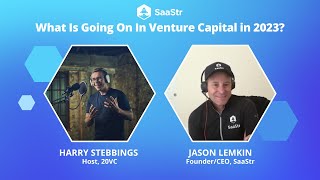
Jason Lemkin and Harry Stebbings discuss venture capital and SaaS in 2023. Deal flow has thinned as investors reset expectations after years of abundant capital. The market has swung back to favoring companies that dominate a niche and manage capital efficiently, targeting $100-200M ARR in 7-10 years with top-quartile growth and disciplined burn.
Chapters
Jason, this is going to be a very free-form discussion, but I wanted to start with something I'm seeing a lot, which is I'm in a lot of WhatsApps with GPs and they're going, I want to invest, I want to invest, but there's no companies. And then I'm going on Twitter and the companies are saying, are any VCs investing? And I just want to understand, how do you see where we're at today, especially when I see what I just said there.
I've been investing in venture since 2013. As you know, we met fairly early in your career, and I bolted out of the gates in 2013, right? I did Pipedrive, Talkdesk, Algolia, Greenhouse, and Salesloft all within 12 months. I did almost no investing the last 12 months, and some of it's certainly the macro. I mean, boy, the markets changed a lot 12 months, didn't they? The world changed. But it is, I will say, and I will say, I do think it's harder to find good deals, and I think it is true, and I think people are a little bit full of it on the Twitter, right? And on the social media. And there's probably a lot of it going on. And some of it is just that, like, we just, we all have to reset, which is that we all took so much risk for 2 years and the markets were so strong that we're resetting to a day when we're looking for so much more out of an investment. The bar's gone up and they are harder to find. But I think that anyone who's, you know, I look at, I agree with you, I look at folks on Twitter, they're like, yeah, it's whatever, January something, 2023, I've done 11 deals this year. I'm like, kudos. Kudos, because I have, I have not seen 10 times the qualified deal flow of 12 or 24 months ago. I haven't seen it in these times, right?
Can I ask what has changed in what early-stage investors are looking for in the companies that we back?
I wrote this at sort of the peak of the meeting in 2021 when I was talking with someone to Sequoia, and they said they called it the Postmates effect. And what they decided is that it— I mean, obviously Sequoia is ahead of most of us, certainly me— is that they realized early on when things exploded post-pandemic that at this point now, number 3 or number 4 in the market could be worth billions, right? Postmates, like, you know, I used it, but in the US, I think it was number 3 or number 4, and it still sold for almost $3 billion. And so, for ever since I was a founder in my first job, and then an investor, we were always looking, you had to be number 1, right? And back in the days when I was competing with DocuSign, I almost wanted to jump off the roof if we couldn't be number 1 in categories, right? Being number 2 wasn't good enough, right? Oh my God. But then we realized there was room for 10 vendors in every category. Right? Payroll, sales automation, or expense management, right? Some of these products are hard to tell the difference, right? And you don't have to sweat it because when, when Brex and Ramp and Expensify and Divvy, all of them are worth billions, it changed. Not only did it change the size of outcomes, but it changed the way we invested. We didn't have to decide who was number one. And it was very stressful in the old days, like until 2018, to have to know if they were number one, you'd pass on so many deals, you would pass on so many deals. And I don't think that's— we're back to that today. But we're back to pulling our hair out of realizing a billion-dollar outcome is really hard. It's really frackin' hard, right? And, and we got so arrogant in 2021, so greedy, everyone with their unicorns. I don't think anyone brags about being a unicorn today, do they? Do founders brag about it? It's gone out the window as a term of brag, brag, bragification.
I'm just looking at a lot of founders who are DMing me and they're going, I don't get what you want to see. Do you want to see growth still? Do you want to see profitability now? Do you want to see margin improvement? What do you want to see at the early stage so I can focus my efforts. When you hear that, where do you go, ah, that—
let me step back for a minute. I think the key to, to success in SaaS and B2B investing that I only do, and you do a lot of, it actually hasn't changed that much. It's that somehow, somehow in 7 to 10 years, you've got to get to $100+ million in revenue. Okay, you just have to. And, and really, today it probably has to be closer to $200 million because that's when you can really IPO, right? Approaching $200 million. So you've got a decade to get to $200 $100 million. Like, there's—
you have—
there are certain rates that you just have to grow. And whether— and, and Niraj from Battery simplified it all for triple, triple, double, double, right? For me, in, in the old days, it's like, you know, can you go from like 1 to 5 in 5 quarters or less? That will also set you up. That was— I guess that was a 5x. But the math has to work. And founders— and the only thing that's changed is the amount of capital you're allowed to spend, right? In the old days, the rough rule is we could raise, including A, B, C, D, E, F, G, H, I, and J rounds, you could raise 100 total, right? Then that kind of grew to like $300 or $400 million as the IPOs got bigger at the peak. And now we're probably back to $100 million, which is everyone has to be capital efficient in a way we forgot how to be. And so VCs, unfortunately, are looking for the trifecta. They're looking for top-tier growth, but also some sort of top-quartile capital efficiency. And, um, even at, you know, even at a million, even at a million in revenue, maybe not, you know, $10K in MRR, but even at a million in ARR, they're looking for this combination. And all the original investments I did, Not everyone, not Benchmark Square. They all met that bar, right? They were all growing at top decile rates, but were pretty capital efficient. And that's, that's the market today, I think. And they're harder to find, especially with founders' burn rates and everything where we have not fully reset. If we are going to reset to sort of the old day expectations, at least in SaaS.
So I do want to touch on that. I do just want to finish on the Postmates effect though, because I totally get you in terms of Postmates effect. But it's turned out not to be true. That was in a macro—
it was true for 2 years. It was true. There were many exits, there were many cash exits, right?
True, in a macro environment that was kind of artificially inflated by, you know, certain stimulus by, you know, yes, um, and now it's not true. What happens in a world then when the Postmates effect isn't true?
There's 2 ways to look at it. There's the, there's the VC perspective and the founder's perspective. Okay, let's step back for a minute, um, You don't always have to directly compete with someone else in your category. You can, you can own a segment of it, right? Um, you can own the SMB segment or the mid-market, or you can be focused on e-commerce or a different vertical. So categories have more rooms for number one than sometimes VCs realize, right?
They're—
and that has certainly happened as SaaS and cloud has expanded, especially with vertical SaaS. Um, but it's, it's, it's true. Um, you— I think you have to have, as founders, you have to have conviction about why you will truly win the, the competition slide finally matters again. Like, why will you win? And I always knew it as a founder, and I think the best founders know it, um, and we need to know. And it, it certainly alarms me investing when I ask a founder, you know, why will you beat the competition, and, and they don't know, right? Um, or my, my version of that question is, is I asked them, why did whomever stumble? Why did Postmates stumble? Why did whoever stumble? And the best founders always have a story, and they know why they're going to win, and they Almost great founders are like, I'm not sure. I'm not sure why my competitors stumbled. I don't know if that answers the question, but I think you have to be number one. But the good news for founders is there are more number ones, I think, in most categories than existed a few years back because SaaS is bigger.
I totally agree with that in terms of market expansion there. I do want to ask you, when we look at— and you look at portfolio companies today, when you look at the buying patterns, what are you seeing in terms of overall SaaS buying patterns today?
Yeah, I have a very different perspective than Twitter. There is a, a subset of categories that are doing fine. Let's, let's be clear, they're doing fine. There is a subset that's deeply troubled, and then there's a bunch in the middle where it's just a little bit, a little bit or a lot harder, and so be it. That's called life, right? But these folks who are saying this is the worst, worst recession since the Tulip Age in Holland are out of their minds. They haven't— they have no life experiences, um, and it's not evenly distributed. And let's talk about a few examples for a minute, but before we even get there, Think about folks maybe in your portfolio area that are selling to healthcare. In the US, there's no downturn in healthcare right now. There's nothing. And I can't imagine it's different in the UK. So yes, I'm sorry if you sell only to overfunded startups, you may think that this is the worst recession since 1811. But if you sell to healthcare, and then we'll just give some others, you don't see an issue. For example, in my portfolio, like let's take a really interesting example, which is B2B e-commerce, OK? Now B2B e-commerce, I have two leaders I've invested in, Gorgeous, which is number one contact center in Shopify, and then now AlgoLia, which we talked about before, where about half of AlgoLia's business is in e-commerce. And interestingly, you can see the future because e-commerce actually peaked early in 2020, and then it fell off a cliff and it hit rock bottom in the beginning of 2021. Okay, it hit the beginning of '21 and then kind of rock bottom as 2022 came back. But e-commerce rebounded in the second half of 2022. It came back. Look at Shopify's numbers. Shopify at the end of 2022 was not the rocket ship it was at peak COVID. Shopify has stronger numbers at the end of 2022 than it did at the start. When you look at folks like Gorjus, on its own, it grew faster in the second half of last year than in the beginning. If you look at Algolia, half its business is e-com, half is SaaS. The SaaS folks have multiple impacts, pro and con, but the e-commerce is up. There's lots of effects, and they're not even. You and I are both co-investors in a company called RevenueCat. We were emailing on it. RevenueCat automates subscription management for mobile. It was a rocket ship. Then in COVID it blew up, then it kind of plateaued, and then it reaccelerated at the end of this past year, reaccelerated 2022. And it has its own issues, but there's not a lot of macro issues impacting it. So I'm, I'm not saying it's easy out there. It is hard. But, but go find the segment of your customer base that's winning. Go find healthcare or e-commerce or mobile or some part of infrastructure. MongoDB, Okta, these companies are doing really, really well. Right? They're doing really, really well. Get some of that business. So maybe it's not quite the question you're asking, but I kind of quit on founders that say the world's ended. I kind of quit on them.
What do you say to the founders where actually they're doing really well and they're still getting a battering? When you look at quite a lot of the SaaS companies, they're down 20, 30% by the multiple. Yeah.
Um, well, I say praise the Lord you're private. You know what's not fun, Harry? Um, and I've only experienced this once as a startup executive, but but I've seen it in a few investments. It's not fun to be running a public company that's down 70% when your revenues are up. It's really not fun. It's a, it's a morale crusher. And you tell the team to ignore it. You tell the teams there will be ups and downs. I did a great interview with Spencer from Amplitude. He was like, we prepared the team for this. Like we said, there'd be ups and downs. I just didn't know there'd be this down because Amplitude's pretty much hit all of its numbers. It's a great one, right? So that's That's at least in a private company, you can hide a bit and it is a gift of being private. You can up as long as there's no down round or a lot of drama, you can hide a little bit. And maybe that's not the question exactly you're asking, but it's a benefit of being private is that you can duck out some of these issues if you don't need to raise capital.
Totally agree with you. Can I ask, we mentioned like the buying patterns. In terms of marketing spends, how are you seeing marketing spends impacted across the board? And are you concerned about that? I am running the media company that I do.
I'm concerned about it. You know, we work— I have a, I have a limited visibility through my portfolio of like 25 larger investments, but we have 200 sponsors for Saastr, right? And you have quite a few. Look, it's exactly what— this is one thing where Twitter has it right. Okay. Which is that marketing has become myopic. Marketing is focused on this quarter, right? What can I spend to get more revenue this quarter? I'm under pressure from my board. My revenues are down in some cases and my, and my burn rate has to last longer. So the CEO is only approving these, these marketing expenses that create revenue immediately. And they do exist out there, right? But the problem is it's, it's such a small part of marketing that, that pays off. The only part that really pays off is like funnel assist, like taking someone that's almost ready to buy. And then they hear about, they hear about someone on 20VC and that magic moment gets them to buy the next week, like, but nothing else. And so we're cutting too much in marketing. And I'll tell you what I think we should be doing. We're cutting too much and it's going to hurt everybody, not this week or even this quarter, but it's going to hurt everyone. Everyone's going to not going to have enough pipeline at the end of the year when I think things will be better. I think things will be better for startups at the end of this year. And I think we will all be hurting for pipeline. And I think we're all making the mistake. We made in each of the last downturns. I mean, Marc Benioff in his book wrote his biggest mistake in the last downturns was cutting sales. And what did he just do? Cut sales. So we're all— he's making them— he's making the same mistake 3 times. And if Marc can't help himself, I guess I can't blame any founders. But we're all gonna come out of this with not enough sales capacity and not enough pipeline. It's just gonna happen.
So I'm a seed founder, seed slash Series A, and I'm being told by everyone, you gotta cut burn, you gotta extend runway. But then I'm also hearing you saying your pipeline is going to be short at the end It is. So what do I do, Jason?
Well, the answer, it's actually pretty simple. It's going back to basics, which is be data-driven. If you have a sales and marketing leader, right, or whoever it is, give them a budget. It's just that simple. Okay?
You have—
I have $1 million to spend this year in marketing and I have an incremental half million in sales. You make the decision, right? You make the decision and spend that $1 million the best you can. Cutting the marketing budget to zero? Wrong answer, right? Let them optimize what they can do with the million and trust in your team. I think we can't solve everything We do— most of us have to extend runway right now, right? We have to, we have to extend it. But I think we're overcutting in marketing by not empowering people to have budgets. And we're doing the same in sales. Just tell them, look, you have this much to spend this year, this quarter, this month, and then trusting your team to make the best hires. Layoffs don't really solve anything. They're just little, they're little snacks, right? They make little incremental changes, but layoffs don't create growth on their own, right? So say, great, okay, Fine, even if you did a layoff or 10 or 20%, you're still going to have budget for this year. Hey, head of sales, you get 20 hires. You get 20 hires and you go decide who those 20 are going to be. You've hit your number, right? Same with marketing. And I don't see enough of this trusting the adults on your team with a number. And I don't see enough— I don't see strong enough ops and finance support helping them do that because we don't all know how to do that intuitively, right? We need some help from budgeting and planning to manage it. Many VPs need help.
I think also, which bluntly, we've had a generation where budgeting and planning has not been a central focus because of the liquidity that we've had in the system.
And actually, there might have even been none in some cases.
I mean, absolutely. I mean, QuickBooks and FTX is a wonderful example. Wouldn't have that for QuickBooks.
I remember the first time I'd never really worked with a VP of marketing before the first startup job I had. Right. And I remember we went through a situation where we had to cut the budget. Right. And everyone, everyone that was young on the team was kind of freaking out in our cool 50,000 square foot office in SF. But we had one, we had one person on the team over 35 or so at the time, and he walked in, he's like, okay, understood, um, tell me what my new budget is and I'll start executing on tomorrow. He just— that was the answer. And I'm like, who is this? Who is this godlike character? The only seasoned executive on our team. But that was the right answer. Tell me what my new budget is and I will get you as much and get as much leads, as many pipelines, as many opportunities as I can with my budget. Just tell me, just tell me what it is and I'll go execute. That's what you want from your sales and marketing team. Not, you know, come to me with the perfect— because the problem in marketing, Harry, is everything has crappy ROI. If you want to talk about marketing, here's the problem. This is why CAC is such a flawed metric. Because if your customer— let's say your average deal size is $5K, a $5K a year customer, you're real— you're actually not going to have anything that's where you can spend $5,000 to get a $5,000 customer. You're gonna have a lot of stuff that's viral, that's free, that's word of mouth, that's people telling their friend. That CAC, the marketing's close to zero, right? Even with other work. And then frankly, your average customer is gonna cost you like $10 grand to get $5 grand, right? And if they stay 5 years, you're ahead. If they refer their friends, you're ahead. If you steal it from a customer, you're ahead. If you hit your plan and raise the round, you're ahead. But all of these marketing programs are too expensive. And so if you view them too simplistically, you just don't market. And that's what people are doing. They're just doing nothing, and, um, it's going to fail them. Instead, they should be doing the best they can with the budget they have.
So if we put on the hat of a sales leader or a founder, when we think about like target setting, how do we do target setting in a market like this where there is such volatility and uncertainty?
This is where there's a lot of burden on CEOs, and CEOs have to have to be the adults in the room and they have to do it the right way. You gotta, you gotta slow down. First of all, you have to look at your trailing velocity. You have to look at your last 3 to 4 months, average the growth rate, average the burn rate, and that's who you are. Whoever, whatever you've been growing or burning last week, even if you want to be a different person, even if you don't like how you look, that's who you are, the average of your last 3 to 4 months. And that's your base plan. And then you have to calmly sit down and say, hey, if I don't like that, How do I do better? And how— and be realistic about it. You can only inflect a curve so much. If you, if you, if let's say you're— let's say last year you were growing, you were growing 200%, but for the last 4 months you've only been growing 20%, right? That's your average growth rate. That's you today. And if you go to your sales team and say, we're going to get back to 100 by the end of the year, you may destroy the team, right? You have to level— you have to take that trailing 3 to 4 months average and scale it, gradually scale it up to something that is sane. And you have to importantly do it with the burn rate. I think we've gotten better the last couple months, but people that don't do this on the burn rate are still going to drive their cars right off the cliff this year. They're going to drive their cars right off the cliff.
What are the big mistakes you're seeing there, Jason M. Lemkin?
Look, the biggest mistake I, I've seen, which is probably twofold, um, the number one one is not enough sensitivities to models. And this got people in trouble last year, but it's going to hurt again this year, which is that that if you miss your growth plan even by a smidge, um, it can dramatically increase your burn rate. People do not build sensitive enough models, right? If I've hired all this headcount, extra headcount, and they don't hit the number but I've incurred all the expenses for that headcount, um, my burn rate often is materially higher than I think. So people don't build the right sensitivity analysis to when they underperform, right? So you have to have at least either you have to have a great model, or what you have to do is build a worser case model, right, where you miss the plan significantly and you're sort of stuck with a certain amount of expenses and just understand what your burn rate is. So, so really, that's the, that's the biggest problem I see. The second one is there is still delusion out there on the odds of raising a, a later round. There's still delusion across all of the markets And I still anger founders when I bring it up. I still get toxic comments, but you just have to assume, absent evidence, you're unfundable. Like, go find— go get a term sheet, or just go get someone you trust to tell you, hey, Harry, if you hit $10 million growing to these numbers, I will write you a term sheet. Go prove me wrong, but assume you are unfundable. Um, and it's— I mean, I literally— I'm gonna write a small check into a great second-time founder that had multibillion-dollar exit, right? And I was talking to him this week. I'm like, what's your plan? And he's like, he's going to raise a pretty small amount of money in his first round. I'm like, I think you need more. I mean, you've built a huge enterprise before. He's like, I'll just go raise the A or the B later this year. I'm like, oh my friend, like, you've been out of market. Okay, raise it all now. Raise every dollar you can get now.
Is that what you would say? Raise it all now?
Because this is the other— yes.
Well, but then a lot of people say, well, actually, you know, now is the worst time because now everything's uncertain. It may be worse later, but it will probably be more certain, or maybe more certain. Now it feels like kind of—
you don't think— I think things are settling into certainty. I think they're uncertain at the end of last year. I think they're settling into certainty. Uh, I think we've had crummy multiples in the public markets for 3 quarters now. Um, and I think we have— everyone has reset what they want to do in a world where we're dealing with, you know, to simplify in SaaS, we're dealing with 5x ARR world. Okay, do you want to be bullish? Do you want— and I can give you a story from today. Do you want to be bullish and say we're going to come out of that world aggressively? Do you want to be a Debbie Downer and say we'll never get out of it, which some people are fine? But I think people do have a thesis now this year. I think they've settled on a thesis on— they've adjusted that we're in a 5x ARR world, okay? And they've decided how they're going to view— what's their worldview around that. Uh, will it stay? Will it recover? Will it recover a little bit, or will it get even worse? Uh, different views out there. I don't know. Uh, but I got this, this morning I got a first growth offer of 2023 on a portfolio company, and it was interesting. They were aggressive. Not everyone is out of— I would say 90% of growth— I don't know what you see, you have— you might see more than me. I would say 90% of growth investors are mostly out of market, like they're not actively investing, but some are. Some, some want to tell me they want bargains, which I'm not sure exists, right? Or they're making a bullish bet. And this one actually was an offer at 15x ARR, which was interesting. Said, this is, this is what we will do for a top decile company. That's it. But this is, we've, this is our thesis, okay? This was our thesis for the best ones, not for any company. 15x ARR, right? Um, and are over 100%, don't want to take any risk, right? Um, depending on the stage, 50 to 100% growth. Growth, right? And profitable or close. That's the kicker. Profitable. So they'll take the ARR risk, the 15x, right? Above— this is $50 million and above, $50 million ARR. This is their thesis, right? They'll even actually take a little bit less growth, but it's got to be basically profitable, right? That's their thesis, which— and there's logic in that, right? Because they're saying there won't be another check, probably.
Do they have late prefs? Do they have protection on the downside? Because I think this is the other thing that people forget.
It's a different issue.
Right?
And I actually personally don't think any of that stuff matters. We could talk about it.
Um, well, I think it does for employees because they see the numbers of like $1.5 billion valuation. But if it sells for $500, your growth investors will still be made good because they only raised $250. But for you as employees, you'll be underwater.
If as an employee— if you join a company with— in, in 2023 with a valuation over a billion, as an employee, you're gonna make nothing. It doesn't matter what it sells for. You can make nothing. There are no $100 billion outcomes. You are probably not joining Microsoft or Adobe or whatever, and those took forever. There are, there will be an occasional Figma, and that's why we invest, right? But what are the, what are the incredible ones? What are the HashiCorps worth? What are the GitLabs worth, right? They're, they're, they're, these are not worth $15 or $20 billion. You will make nothing. So don't worry about your equity. When you join a unicorn. Like, last year joining a unicorn was a smart play. Today, if you care about equity, it's a sucker play, right? Um, you're not going to make anything. You're not going to get any RSUs, and you're not going to make anything.
So though HashiCorp's $5 and GitLab's $6 now.
Yeah, those should be, those should be $20 billion companies, Harry. They should be $20 billion companies.
So where's the injustice there? Is it, is it that that's like misvalued? Is it that they're like— I don't understand when you say they should be.
I don't know. I just— I, I, I— this is, this is the problem of a seed investor, is you have, you have very passionate views about these companies. But how can HashiCorp be at over $500 million in revenue, growing— what, what the heck is it growing? Over 50%, right? How can it be worth less than 10x? This is a gen— these are generational companies. GitLab and HashiCorp are generational companies, right? How can they be worth these amounts? It's, it's very hard. And the truth is we can talk about how VCs make money. It's actually very hard for employees to make money on these companies. You know, it's very hard for most employees to make money on anything that doesn't have a $10 billion+ outcome. It's very hard to get rich as an employee.
Can I ask? Oh, okay. A couple of things. One, do you ever think about dipping into public markets? You know, you are an OG of SaaS. You look at S&C generally. Why are you not just aggressively deploying into your HashiCorps and your GitLabs?
I think folks have— Iconix and others have done a lot of crossover investments into the best ones, right? Um, for me, I have done a tiny, a tiny bit, but, um, I, I think it's a— personally, I find it a distraction, right? We talked— we started this conversation and we talked before we started about finding more gems, startups. Anything, anything you do that takes you away from that kibitzing in the public market, it's not worth it. It's not worth it. Let's step back. As hard as things are, Harry, there is a magic in a solo GP practice, or maybe a 2GP fund, which is— venture is so hard, but good God, Harry, if you own— if you're a solo GP and you own 10% of GitLab today, you make $100 million yourself. Okay, so I don't want to screw around with a few shares of Okta or HashiCorp. These are companies I love. I don't even want screw around with a lot of shares of them. If, if there's any chance, if there's any chance I can find another Talkdesk or Algolia or Pipedrive or Salesloft, or if I can find a GitLab or Figma, like, you should drop everything. If you have a chance of investing in even one of these deals, you should drop everything and do it. And this was the first time I ever worked with a VC. Forget about anything in venture. This is what I learned. I was with my mentor and he's like, here's this VC of a guy that that was what's now IVP. And he's like, you know what I learned about this guy? When he finds one deal, he drops everything. He drops everything, right? We were visiting a public company that had IPO'd, it was worth $8 billion, and he did one deal a quarter and dropped everything. You want to make, that's the answer. And so when I see VCs on Twitter talking about how they're looking at buying some shares of Shopify, honestly, I think they're losers. Fucking go find the next Shopify. Venture is so hard to make money, but if you're privileged enough to be able to write a significant checkbook, you can make a lot. You're not going to make as much money as a CEO, but you can make a lot of money. But it's hard. You've got to find the next Shopify. But God, it's a gift, so go spend all of your time doing that. Stop screwing around and put it all into QQQ or VTI. Everything public I own is almost all VTI. Put it in the stock market. Ignore it.
We mentioned that pricing of some great assets like, you know, GitLab and HashiCorp. What about the $3 to $10 million ARR companies last year who were valued at 100x ARR? I've got one that was 1,000x ARR.
Yes.
What happens to those companies in this market? Do they just ride out their massive runways?
Yeah, I mean, it really depends on the founders. I, I don't have any 1,000x ARR. I have two, two companies I've invested in that are doing okay. That have like a decade of runway, right? So we'll see what they do. Like, well, I actually don't know of these two, right? We'll see what they do with their decade of runway. Um, that's the first time in my lifetime, right, in tech where that could happen, right? Where you can get so much capital that you could have a decade of runway and you could just fart around and do whatever you want, right?
Do you mark them down to your LPs, one? And two, do you say to them, you've got a decade of runway, give cash back?
Like, this is, uh, I've marked down only one Um, because, uh, if you're growing at a decent rate, um, uh, I, I don't, I, I don't know that a markdown at the C-level helps a lot if the company is growing. I think if the company's stale, it makes a lot of sense to mark it down, right? Um, but, uh, but I only have one portfolio company that's not really growing, and that one I did, I did, I did mark down, or maybe one and a half, I would say. I would say, I would say there's two. If you're not growing, I think it makes sense to mark it down. If it's growing at a decent rate I think, um, if you're not Fidelity or a late-stage investor, I think it's a waste of your time to mark up or mark down. Because, um, I asked all my LPs this question. They said if it's growing, they don't care. Um, uh, but I don't think that's the question you asked at the beginning, right? Is what's going to happen to these folks, right? Um, and I think, um, I think it's terrible, Harry. I tried to summarize my thinking actually today in a tweet, which is in the old days before $10 million in ARR, you could just— couldn't raise much money. You could only raise $5, $10, $12 million. And so you sold your company for $100 million, which is still very hard to do. There are not that many $100 million exits, you know, even in the best of times. But everyone makes money. You raise 10— if you— this is my old SaaS rule: if you sell for 10x or more than you raise, like, it's all pretty good no matter what. It gets worked out. You can work out the valuation, you you can change this, right? But when you raised massive amounts of money early, how are you going to sell for 10x what you raised? Who's going to buy you for $500 million? They're— you're dead. You're— and I don't have an answer for these ones. I, I think that they— the answer, the best answer may be to combine with a competitor, right? Um, and, and build some sort of critical mass with your combined revenue and capital streams. But I, I think it's sad. I wish I had a lot of answers, um, in SaaS, but this You know, you raised— they're just— exits are rare. They're really, really rare. And VCs don't talk this way, and Twitter doesn't talk this way. They're very, they're, they're very rare. Um, I've only— in all my startups as a founder, I only had a handful of true M&A offers that were decent. Only a handful.
That's what I found funny though with the last couple of years, is just the amount of times you're like, I don't know if it's a $50 billion company, but it's definitely a $10 billion. I'm like, definitely a 10. And you're like, 10 is fucking big. Um, I do want to go back to you said about like, hey, if you join the company at over a billion, like, you're not going to make money. Question then, are we going to see this like great resignation away from those super overvalued companies and they're going to start new companies and it's going to be this glorious age of innovation with this talent? Or actually, are they going to go, I might not make any money on my equity, but I'm paid okay I haven't been laid off, security is really important.
Everyone that says that this is going to lead to a wave of new innovation, I think there's some truth to it, don't get me wrong. But I think what everyone, what old-timers, anyone that's been doing this more than 5 to 7 years forgets is that the typical tech worker today is nothing like 5 to 7 years ago. This, what happened is that you used to have to, when I started in tech, you had to be crazy to do a startup. When I told my dad I was doing a startup the first time, joining one. He said, that's— they said go do it, but it's a terrible financial idea. I'm like— and I went through the math and how it works. It's such a— I'm taking a 50% salary cut, and like, if everything goes right, someday after all these years, I might make $1 million, but divided by this many years— he's like, this is a terrible idea. He said, but go do it, right? So first of all, you had to be insane, right? And then, and then as things got a little bit bigger, you kind of had to be just kooky to do a startup. Like, not, not a founder, but just to join one, you had to be a romantic. You had to be one of these people that's like, I just can't fit in at an Adobe or, or, or Microsoft or whatever. And then startups sucked so many human beings into it— thousands of SDRs, thousands of AEs, thousands of, of marketing managers and social media strategists— that these became just highly paid ordinary jobs. Highly paid ordinary jobs. And I don't think any of those people are going to go off and start the next Figma. I think they're going to continue to look for a job. They can kind of phone it in and make a lot of money. And, and tech went from one of the, uh, a risky, terrible paying segment to like the best risk-reward segment in, in, in the economy for, for 3 years, for 3 or 4 years. It was such a good deal. Come outta college, um, be handed a whole bunch of warm leads at the peak of the, of the pandemic and make $200 grand in sales. I mean, this is, this is an insane world, right? Hey, publish 3 TikToks a week and make $140,000. Like, I don't think we're going back to that. And I don't think those people are looking to start a Figma. But so I think what will happen with that dislocation remains to be seen.
My worry is that actually I think there's this generation of kind of entitled, but also pretty crap team members that are also not—
Terrible. Terrible. This is a triggering topic, but the quality plummeted as we hired mainstream normal people, the quality plummeted. Any leader will tell you this quietly. Any VP— Mark Benioff said it last week. Like, they'll tell you the quality went down the last 3 years.
Way down. Do you meet the broader team? Because like, actually, when you're investing in companies, you know, you're investing in a company, not in a founder, to be clear. Like, you are a shareholder of the company. And so do you meet those, like, head of marketing? Because I meet some head of marketing that sponsor the show, Jason. And I'm like, you are shit. Like, that was, that was terrible. And I would never have invested in your company if I'd known you were head of marketing.
The latest I do is late seed, um, but I'll tell you a story.
I do—
I don't meet with the whole team because usually there isn't much of a management team. I do for sure always spend a lot of time with the CTO. This is my cheat, um. I view the CEO as the proxy for sales and marketing. Like, if the CEO is great, with some help, maybe you and I can we're working on a search together today. We can help you find a sales and marketing leader, but I don't really care who you have at $100K in ARR or $1 million. Like, you are that person. But the, the CTO is the product, right? Usually. So that's, I think, the mistake 90% of VCs make is they haven't built product themselves. They don't even know how to talk to a CTO or a technical co-founder. And I find them the funnest conversations. So that's as far as I usually go. But, uh, when I've invested at the edge of A, right, I certainly do. And I remember when I was starting investing, there was a founder I really— I just liked him, I knew him, he was so charismatic, and they had pretty good traction. And I went and it was great, and I kind of wanted to do the deal. It was cheap. Always a good sign in venture when it's cheap, right?
Love a good deal.
Love a good deal. And I went up and I met with the VP of Sales. I'm like, how's it going? He's like, I'm quitting. He's like, he's like, we're not gonna make it. I'm like, okay, this is learning. Next, bring in the head of marketing. And the head of marketing is like, yeah, I was like the office manager until recently. I don't know a lot about marketing. I said to the CEO before I left the office, I'm like, listen, I'm not your, I'm not your Hail Mary. And, um, so I do do that. And I think the meta-learning, you know, and I reflect a lot on this today, is you do have to be careful with the bullshit artist, right? So I don't know if you need to meet all the management, but you gotta talk to enough people, I think, to push through the bullshit artists. And I think the bullshit artists really benefited from the boom, right? They really did well from less scrutiny. It's not just Sam Bankman-Fried, or however you pronounce his name. They're all over the place in SaaS and cloud. And you gotta meet enough people to make sure that you're not investing in the bullshit artist.
I totally agree with you. Can I ask, one trend that I'm seeing now is, like, given how tough it is, just bluntly. Yeah, the mature founders, the fathers, the— and the mothers, and the more mature-minded are weathering it well. They know that if their child gets sick, it's going to be much worse than a recession. But yeah, the young, young founders, their volatility is very extreme. In the highs, they're selling secondaries and buying Guccis, and in the lows, they're absolutely on the and I'm really seeing the power of the mature founder and gravitating towards them. Are you as well?
I get your point about maturity. I do think that you can be passionate at any age. You can be passionate at 80 or 90 about your startup. But I do think that passion is so important, right, for what you're doing. So I hear the comfort. I think we have to be careful. Let me answer the question differently. I think we have to be careful in tougher times what we take comfort in. It's like taking comfort in a low burn rate. Hooray.
Hooray.
I call this a strategic retreat. If you do a brief strategic retreat as a startup, it's fine. Take a quarter, get your house in order, right? Get rid of that terrible VP, cut your burn rate. But if you stay in strategic retreat for a year, you never pull out of it, right? I see— this is what I see happen too often over my decade of investing is when folks— and this is what I worry about today. I don't— I worry about strategic retreats. And so if I see a founder that's young and very passionate and they're struggling, I can try to help them. But if they cross that line into full strategic retreat, I, I, I, I, I, I lack ideas. So yeah, the seasoned folks, they like, they know what to do that second. Right. I remember like, you know, going back in time in March 2020, when we had to cancel SaaStr Annual the night before, we lost $10 million. Okay. The team was, my team was all first timers. They were devastated, Harry. They worked for this on a year and we lost $10 million in one night.
Were you devastated?
Took me about 15 minutes. Okay, I waited. I saw this happening. I saw the first ship come into San Francisco with COVID on it from this tour ship.
This—
and I, and I knew. And then, and then I fought it. I fought it. And then the moment came when the fight was over, right? Santa Clara County said there's no COVID here in the Bay Area, but we're shutting down larger events. And so I just called it that day. And the team was— I'm like, okay, It took me about 11 minutes, maybe 5 minutes to be your adult, right? Because I'd seen this playbook before, right? It didn't even bother me all that much because I had to go into fix-it mode. But I don't know that that makes me a better person or better— I mean, you know, first-time founders are so powerful, right? They're so powerful. By the same time, they both have superpowers, right?
It does make you better. It does make you better because I think for me, it's like the only anything that matters. Yeah, Jason, why am I successful? It's not because I'm fucking smart. Um, we both know I'm not. It's just I'm just dogged and persistent. I never stopped. I just kept going. Like you there, when you had the shit of shit, you went, okay, let's carry on.
That's why I think that's good. I just think, not, not to sound like fuddy-duddies or to talk about the laziness that's gone into tech, I think that's true. But also, I worry today that more— not, not necessarily founders, but I worry too many seasoned folks just quit too quickly now. They just waiting for that easy job. They quit, they're jumping, they're jumping in. Startups are meant to be hard. They're meant to have these hard periods. But yes, young, young, new founders, young founders, the emotionality in the downturn can be— I'm not sure I'm compatible with it.
Jason M. Lemkin, we're both fund managers. What happens to LP markets in this?
Well, I can just tell you what I've learned with my LPs, right? And I'm a small, a very small check for my LPs. But I have a lot of good commonality, like I have a lot because of Alex Bengish. I have a lot of overlap with Initialized, with Atomic, with— we have a lot of LP overlap. So I think what I've learned is interesting. None, one, none of them want another manager. They don't. Okay. It's not that they won't take another manager in like they, they will, right? If you or I sent one of them an email and said, this is the best new fund on planet Earth, they will probably write up, write a check. Right. But no one wants another manager. Simple answer. No one wants another manager. To— they're pretty chill right now. They're pretty chill. Um, the LPs that have been doing this for a while, I've heard versions of this from 3 or 4 top LPs, which is we still believe fundamentally this is the best asset class in our portfolio, and this is part and parcel of the asset class. Now, if this went on for 5 years, they might reassess whether timber or diamonds or ventures should be in portfolio. But right now, people, people are pretty chill with it. And the last insight, which I didn't totally get until my last LP meeting, which was just a few weeks ago, which is a lot of LPs are judged on an annual basis, right? They're judged annually. And last year actually was great for a lot of LPs because— I didn't get this— the last big exit I had was Salesloft, which sold for $2.5 billion to Vista on December 31st, 2021. But by the time the LPs got their distributions, especially from IPOs, they're deep into 2022. So a lot of LPs— this is just what— this was not— this, you may be skeptical, this is what I've heard. A lot of LPs may be worried about 2023 when they may have no distributions, right? But 2022 was much better. Even if the stock market was down, cash in many cases, cash was pretty good compared to model, right? Because of the lag, the cash collections lag.
Okay, could our saving grace for 2023 be the distributions from Figma? When you look at the amount of LPs across the different funds from Kleiner to Index and everyone in between. There's a lot of LPs in there. That's a lot of distributions.
I think it'll help. I think there's so much money in venture now though. We wouldn't— I would need someone smarter than me to throw together a spreadsheet to say, is it enough, right? So how much did Figma sell? So if Figma generated $10 billion of venture returns out of $20, let's say, right? Um, is that enough compared to the size of the funds in Figma, it, it might not be enough. Like, again, going back to the start of the conversation, venture is a hard business, right? And if, if that $10 billion represents sort of $50 billion of funds, right, in coverage, then it's, uh, it's helpful, but it's not going to rain, right?
I think we'll see the death of many of the micro funds, the funds that raised from founders, public market founders who now have had their net worths crushed, and then GPs like me and you who bluntly are probably writing less LP checks than we did before.
I think they're going to be decimated. I think they already are decimated and they don't know it. I think the last 2 years were insane, were insane. And kudos to everyone that raised, every new manager with absolutely no track record whatsoever, no exits, um, sitting on likely a 1x portfolio at best, was able to raise double-digit million first-time fund. Kudos to you because that never happened in venture before. Okay, I literally— when I raised SaaS or Fund 1 in 2016, we knew each other then.
You—
I still have some of the testimonials on one side. People thought it was insane. They're like, how could one person raise $60 million? Like, they're like, that's so much, so much money, right? And, and I already was— by then, like, it was still early in my career, but I already was almost 4x from like real companies with significant ownership positions, right? Not like, not like throwing a check into, into something. And so it was— I hope that the new managers know that it's a gift, and I hope that they leverage that gift, because, um, you can make so much money in venture if you invest extremely well. But investing at a mediocre level only gets you fees, right? So use your— if you're a new manager with a new fund, don't waste your shots. Like, I think we all wasted a few shots the last couple years. I know I wasted one or two. I wish I could get them back. I didn't waste 20, but times were so good, I wasted shots. Don't waste— don't— maybe don't waste a shot if you're a new manager, right? Just assume this fund's your last one. Um, but one Figma, one HashiCorp, one— that you can make a lot of money. Do you don't think so? You don't think you make a lot of money on one?
Oh no, I totally think you do. But do you know your winners early? For those that are the Figmas and the HashiCorps or the Saleslofts or the Algolias— yes, do you know it early, or you I can only share my experience.
I think people have different experiences. I think, you know, that they are operationally successful early. You know that they're going to grow. I had no idea that any of my cash unicorns, right, the ones that were exited for billions, I didn't think any of them would except for Talkdesk. I did. And it's not that I didn't love the founders. It's just, it's just so hard, right? It's just so hard to build these companies. Companies that I would not have predicted that Pipedrive, Algolia, Salesloft would get that big. I knew Talkdesk would, just because going from, you know, $1 to $15 million with so few employees in a year with so much product market fit in there that you're like, okay, well, this is going to be worth a billion but not more, right? Not the $10 billion on paper. But I think— so I think the meta-learning is just like, get into winners and just, just don't worry about the stock market. Don't worry about multiples, because you can't control it. And it's going to change so many times. Like, it takes 10 years to get a billion-dollar exit, like M&A. IPO can vary. It's 10 years for— so the market's going to change a lot in $10 billion, right? Don't, don't— you don't even need to look other than to understand follow-on capital and burn rates. Just, just do it. But I do think— I know people disagree— I do think if you're able to invest post-revenue in SaaS, um, you, you can— you know, you know it's going to be going to do reasonably well and you also know it's probably going to have a crappy year in there.
I think me and you— I don't know, I speak for myself here. I definitely have a sweet spot of like post-product, $20K to $40K in revenue. You have some customers, you have some data. The founder's probably still leading the sales process, but there's something there. There's that seedling of goodness.
You know what the truth is? That's where I started investing because I was like, I'm a founder. Like, I just— I need to invest at least at the moment in time where I can tell if they're a better founder than me. And so I needed a little meat on the bones. And you're a founder now, Harry, so you know who's better than you as a founder, not just an investor. So founders have this investing superpower that money managers don't have, which is they know who's better than them. But if in SaaS and B2B, if you do that pre-revenue, you really can't be sure.
Jason, what happens with re-ups? They don't want new managers. Are they re-upping?
I don't know. I should have asked that question more, and I think think we would have to ask other people. I think that if you have done reasonably well as a manager, you are still earmarked for the next fund. I think you are still earmarked. Whether you will get it, uh, and whether you will get it in the same amounts or the way you want, I don't— I, I don't know the answer. I know that, I know that, um, other than one LP, I remained earmarked. One LP de-earmarked me, so that was a learning process. Um, but I know I'm here, but it doesn't mean I might not get any more money. But I know that I'm— but The budgeting process for LPs, like, I'm on the other side. It's really complicated between capital calls and timing and managers. It's not a simple process. You have to plan the science out of it, otherwise you're going to get hit hard, right? It's so many capital calls over so many years and so many managers.
Why did they DMARC you? Did they tell you?
I think they felt I was investing too slowly and wanted to invest more in crypto or a hotter your manager, they said.
You're investing too slowly. What, you don't want vintage diversification in this cycle? That seems a little bit— sorry, I'm just— I agree with you, because I invested 35% of my fund in 17, 18 months. My LPAC are going, that's fantastic news. This is great. Unlike every other manager, you deployed slowly. Good.
There is a certain amount of pressure to deploy capital. But LPs, they're dealing with large pools of capital. And they just don't want unexpected— they want expected risk. Risk. Yeah, they don't want the unexpected risk. That's what freaks them out, right? Is, um, uh, you know, there's this one fund out there which— who we won't name names— who raised their huge— I think it's their third fund— and they called 95% of it at the peak and put most of it into some of the hottest crypto names, a well-known fund. And, uh, that's, that's what LPs— and my limited— my— not, not to gossip in a gossipy industry— my limited understanding from the limited overlap is that the LPs did not expect 75% of that fund to be called in the first year.
On the re-ups, from what I understand, and I speak to a lot of LPs, if you had the chance to produce DPI last year and you didn't, you're in the bad books. If you deployed way too fast and left them very, very surprised on your deployment cycles, you're in the bad books. But otherwise, if you stuck to plan and you actually prioritized the relationship, this is where, yeah, I love people, you know me. Like if you did build the relationship throughout cycles and didn't just take money and say fuck off, actually, and you start to plan, they should be there, but likely in the same, not an expanded capacity where they would have expanded normally. Do you see what I mean?
I think that's right, with, with maybe the only family caveat for newer managers. Like, yes, I forget, someone great on Twitter said like the ultimate LP judge was how many exits did you have in 2021. Right? So I'm new, but I did have $3 billion cash exits in 2021 in my investing career, but I didn't make those investments in 2021. So if I hadn't started investing, or I didn't have any like B2C stuff, if I'd invested early, I would have zero instead of these good-looking cash. So I think new managers are— it's tough because there just wasn't enough time for all, but you know, unless you're in these super hot deals to create those cash exits, right? You probably are sitting on no DPI, and it doesn't mean your investments are bad, but it's just a time trouble, right? Is that these— the just— it— there, there is secularity there, man.
I had like $5 billion consumer companies. I think one is still one.
But I'm talking about cash. LPs want to know how much. I think it's a very important question for LPs to ask, is not just the fund but the GP. They should ask like, you know, if you didn't have multiple billion-dollar cash exits in 2021, you're not a good investor. That's the— that, that— I saw that on Twitter and it struck me as painfully true. If you did not as a GP, if you've been investing more than 6 or 7 years and you didn't have multiple billion-dollar cash outcomes in 2022 at the best because they were just so accelerated, you never will. Like the LP should just quit on you.
But I speak to LPs, Jason. I don't see that transition of power. They're still like, oh, I couldn't ask them for GP track there. That would— they wouldn't like that. It still feels like the premier GPs tell LPs how it's done and say, speak to IR teams.
Well, sure. Why?
I don't—
I mean, not to get lost in the weeds, yeah, the best GPs don't want to deal with any of the LP issues. They want a team that just handles that, right?
Uh, that, that's part of the funds that we know. And now that side, that's what's terrifying, where actually the tier 2, tier 3s are still IR teams and $700 million plus.
Not to get really lost in the weeds, but you know, there's a line and it's I don't know what the AUM is or what the fund size is. Where you— seed investing is not money management, okay? I'm sure people that are doing it longer than more successful would echo some version of this. Once you get up to a certain size, you are money managers, right? You're, you're, you're money managers of these illiquid investments. And you do want these huge teams and you want the, the IR team and the folks doing this. Um, the, the seed maybe ChatGPT and all this will change it and AI, but it is still a weird hand-curated, crafted, weird space that maybe YC has disrupted but no one else has. And you're not a money manager, so you need those direct LP relationships, right? You need to do these things. And I think it's appropriate that when you're managing billions as a GP, someone else can deal with it. And like, you know, I was— I'm an LP only one, you know, top-tier huge fund, but I get nothing. The LP updates, there's— I don't know what they've invested in. I don't know. And I think they carry a lot of it at 1x. Like, I literally know— I've been in— I've been an LP for like 4 years. I know nothing about the underlying— other than what I read in TechCrunch, I know nothing about my investment. Nothing. I'm treated with utter contempt. And but they have the track record, so, so be it.
Jason, I know which one you're talking about because I'm an LP in the same fund and I go, oh, nothing.
Yeah, nothing wrong with that, right? It's nothing wrong with that.
Jason, I want to finish on a quickfire, my friend. But if we look forward to the next year, December 2023, will we be in a better or in a worse place than we are now?
First of all, seed investors are optimists, I think, right? And I'm a founder and founders are optimists. But I'm— based on all the downturns I've been in, the 2016 flash crash, which we don't talk about enough in SaaS because it was terrible, when multiples fell to 2x, 3x, uh, from the global meltdown in 2008 to 2009, I have learned again and again that things are brutal. They seem to move in slow motion, and then they come back pretty fast, and they're never quite as bad as we thought. So I, I find it very difficult believe that when we see Okta growing 40% at $2 billion, when we see the type of growth we see out there, that we will have these multiples— when the Fed gets through whatever the hell it's going to do, and when we get on the other side of this, I just don't believe that we will have multiples that are just this low in the public market. Now, I'm not a DCF guy, and I'm not going to talk to you about free cash flows in 2084. I'm just a meat and potato SaaS guy. I've never seen multiples this low when businesses were this good. Okay, I've only seen multiples this low when businesses were struggling, um, or shrinking, like in 2016 when literally they were shrinking. And so I'm pretty bullish at the end of this year. Um, I'm bullish that multiples will be up somewhere between 20% and 40%, and I believe that will lead to a rush to deploy capital. But for founders, you have to understand that will never lead to a return of 2021. Never, never, never. We'll be through— buyers will be back, CIOs are still increasing spend next year. We're going to get through a lot of things. Things will be at the end of the year, but we will never— for founders that have only been in market, or founders for 3 or 4 years, realize that you lived in insane times. They will be better at the end of this year than the start, but you will never— the world will never work the way it worked before. It can't, it can't, it can't. We can't have ADX, our public company multiples are not coming back. We're not going to see Zoom go from $1 to $4 billion in one year ever again. Like, these— this was a generational thing for us, right? It's not going to happen again.
I just laugh when I see some GPs we both know who became a GP in 2010 and stopped in 2020, and you're like, the perfect 10 years. 10 years. The perfect 10 years. Um, okay, what do you—
the one thing I would wrap— I would end up to finalize that, I just— and I think you would agree with me, I think the if founders are listening, have gotten this far, there's a lot of advice which is wait till the markets thaw, right? It's not that simple, man. Um, they're not coming back. They're not bouncing back to 2021. They're not bouncing back to good times. They're just going to get like a little bit better, but there's no thaw. If you can't raise any money at all today, like if you're unfundable, I don't think you're going to be fundable at the end of the year.
Okay.
If you're, if you're, if you're fundable today, but you don't, you don't like the metrics, you don't like the valuation, and you double the end of this year, and you see some multiple recovery, you're going to be pretty happy at the end of the year, right? But if you're unfundable today, you're going to be unfundable even in a recovery. Do not wait for this magic moment when, air quotes, the markets recover, because it doesn't exactly work that way, right? The bar is going to remain high to be fundable for a very long period of time, especially Series A and B and later. It's going to remain very high.
Jason, what have you changed your mind about in the past 24 months?
I don't have the answer to the question. I'll tell you why. Maybe we could end on this. I, I've spent the last 24 months relearning the unicorn lessons, relearning that companies I thought would never be unicorns became unicorns, that sociopath CEOs became unicorns, that bullshit artists became unicorns, that folks that did not have an extremely strong understanding of the market became unicorns. And I felt like an idiot, as many of us did, right? I felt like an idiot not investing in a bunch of these companies where I just, I couldn't see it. I couldn't see that they would become a unicorn. So now I'm relearning this, this lesson. And, um, and I think the lesson I'm learning is, you know, no cut corners, and that, you know, the, the bar is just insanely high, and so it should be. And I, I, so I don't know, I'm still re-digesting the fact we learned so many lessons for 24 months and now we got to quickly unlearn them because we turned out this stuff was hard. Like, it's all hard. SaaS is hard, startups are hard, it's meant to be hard. And I'll tell you my last little bit of lack of sympathy, but like, you talked about new founders being emotional, right? When I see like a founder cry, I have no sympathy. And I know someone's gonna listen to this and be mad, but I mean, like, it's supposed to be hard. Like, you can cry a little bit with me, like Harry, you and I can cry. We can end this, we can cry a little. I don't mean that literally, but like, adult up. I mean, it's— this stuff is hard, right? So that's what we're learning. It's hard. It's meant to be hard. You should have a terrible year. You should almost run out of money. Like, if— I bet if you went back in 20VC and you interview and you, and you looked in the early days, almost every top founder I knew almost ran out of money, but they didn't. They almost, they almost all had that great story, right? You get them on stage outside of the last 2 years, you're getting on stage, you know, we were 3 weeks away. We only— we had to meet 7,000 investors and we only got one. And those stories kind of evaporated, but they're all going to come back.
My personal favorite, I got an investor update the other day. It said, the good: amazing team offsite. I was like, when that is number one, oh yeah, that's still not good. It's still not okay. Um, Jason, I love this. This has been fantastic as always. I think it's so helpful for fans understanding games the year So thank you so much, my friend. It's wonderful. Okay.
Thanks, Harry. Best, best of luck to you and everyone in the audience in 2023. Let's— it's gonna end— this year is gonna end better than it started, right? So take advantage of it. Take, take advantage of it.
More from Jason

Why Your Next Hire Should Report to an AI, Tragedy Apps, and Too Many AI SDRs? | The Agents #004

Our Agents Drove Our Salesforce Bill Up 80%, Marketo Hates Agents, and We Stealth-Churned Off Notion




Managing 20+ AI Agents: Lazy Agents, Our $500K AI Bill, Stealth Churn & the Death of 60% Solutions




