Why Diversity is Key to High Performing Companies Big and Small with Notion Capital and Topia
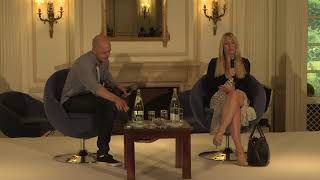
In this 2018 YouTube interview, Notion Capital founding partner Joss White and Topia founder‑CEO Brynn Kennedy discuss why diversity is essential for high‑performing companies, especially in tech and enterprise SaaS. White opens with stark statistics—only about 4% of VC dollars go to female‑founded firms and 72% of Fortune 500 CEOs are white males—highlighting a disconnect between the proven business benefits of diverse teams (better decisions, innovation, employee satisfaction) and the current lack of representation. Kennedy shares her personal founder journey, detailing the challenges of raising capital as a woman and a non‑US founder, the importance of a bold vision, and how she leveraged networks and mentorship to overcome bias. She explains how Topia embeds diversity into its DNA through company values (e.g., “be global citizens”), a 50/50 gender split across the organization, multinational hiring, and intentional recruitment practices that demand diverse candidate pools. The conversation then moves to how global mobility—moving employees across borders—can serve as a pipeline for diverse leadership, noting that women are under‑represented in mobility programs despite high interest. Both speakers explore inclusion tactics such as equitable benefits, affinity groups, and encouraging managers to buy into diversity goals. They debate the role of data‑driven hiring and AI, warning that algorithms trained on biased historical data can perpetuate inequities, and stress the need for diverse product teams. Finally, they discuss the merits and pitfalls of formal diversity targets and quotas, referencing Notion’s #50/50 event policy, venture‑capital term‑sheet requirements, and alternative models like the UK’s 30% Club, concluding that removing bias and creating fair, comfortable environments is more effective than tokenistic quotas.
Chapters
My name is Joss White. I'm a founding partner at Notion Capital. I'm an entrepreneur turned investor. I founded 3 tech companies. The most recent one was called Message Labs, which was a very early SaaS business which did antivirus and anti-spam in the cloud, which we sold successfully to Symantec in 2008. I then set up Notion with 3 other guys to focus on what we know, which is the— which was the emerging software as a service opportunity. We're now at Notion, we're on our third fund, which is about $150 million. We have a team of 16 people in London. We invest across Europe, mainly at the Series A stage, and we still focus on SaaS, but we also focus on B2B marketplaces and hardware software models. So we're— we, we've kept our roots in SaaS, but we, we, we focus across more broadly across enterprise tech now. So, uh, Topia was, uh, one of my investments from Fund 2. Uh, we led the seed round and we've continued to support the business, and, uh, definitely one of the most exciting businesses in our portfolio. So we're Excited to have Brynn up here to talk about diversity.
Hi everyone. My name is Brynn Kennedy. I am the founder and CEO of Topia. Topia is a modern HR platform for global mobility. And what global mobility is, is it's really anything related to the movement of an employee. So movement to a different office for a project, a relocation, a movement to a new role. It's a $33 billion category that we created. And 6 years into the company, we have about 110 large enterprise customers, 200 people, and 8 offices globally. And we've raised about $100 million. I know that's what everyone always wants to hear about.
Thanks, Brynn. So, um, we're going to talk about diversity. Um, we're going to talk about diversity within the workplace, within business, and specifically within tech. And I think just, just to make this sort of obvious comment, the, the numbers for diversity in tech and more broadly are extremely stark. So if you look at the average percentage of VC dollars that have gone to female-founded businesses over the last 10 years, it's about 4%. If you look at the Fortune 500 more broadly, Um, 72% of the Fortune 500 CEOs are white males. Um, so there's a massive disparity in terms of diversity in business. I think it's probably even greater within tech. And yet, um, all the evidence would suggest that more diverse teams, um, make better decisions, drive better innovation, are more interesting places to work, and overall create more successful companies. And yet there is this massive disconnect between the diversity numbers and the evidence that suggests that a more diverse organization is a more successful organization. So I think we wanna just try and dig into that a little bit and try and explore ways for how companies can think about that and to think about how they can take their companies, how you can take your companies on a journey towards better diversity and inclusion, and thereby making your businesses more successful. So Bryn, as a female founder who's raised more than $100 million, who's managing a company of around 200 people, who's raised money from all over the world, who also manages a business, runs a business, Topia, which enables mobility, which is, you know, a close relation to diversity. She has a really interesting lens on the subject. So I think it's great to have Bryn here, and hopefully we can get into an interesting conversation. So Bryn, just going back to the early days of Topia, what was your experience of getting the company set up and raising your first funding round and just overall kind of laying down those foundations as a, as a female founder in a world that, as I said, um, 96% of the money goes to male founders. How was, how was that experience?
Yeah, it's been a really incredible and interesting journey. So just for context, I actually founded Topia, which previously was called Move Guides, when I was in business school in London at London Business School. And that was in 2012. So I actually raised the first angel round and closed it the week I graduated from business school, which is not something that I would recommend to anyone for your stress levels, but was a great way to start the company. So initially, I just never really thought about it. I never thought about being a female founder. I never thought about diversity intentionally. I just thought that I had a really big problem that I wanted to solve that was a compelling business. And I guess over the years, it's become more of an intentional thought for me in terms of building the company. And there's a couple reasons for that. So as I've built the company, as I've raised more and more money, first of all, I started to read the statistics. So it's actually 4% of companies that are female-led have raised the money, but just 2% of actual VC dollars go to female-led companies, which is actually really pretty horrific if you think about that, and really shocking. So for me, as I've grown the company, more and more women, frankly, and all types of minorities have come to me. They come in to interview every day and say, wow, we're so inspired to work for a diverse company. We're so inspired to work for a female CEO. I actually have C-suite executives that have said to me, I'm male, who say, I'm excited to work for a female CEO because I've never had that opportunity in my career. So, that has been really powerful for me in terms of being an example for people and talking, I guess, more publicly about diversity as a competitive advantage in recruitment and in company building success. The area where it's ostensibly most challenging to be a minority founder is in fundraising, and those statistics are the proof of that. I was able to really successfully navigate, I think, 3 major challenges as I've raised money. So firstly, I founded our company in the UK. I lived there for 7 years. I just moved back to the Valley a year ago. So I raised about $70 of the $100 million while living in the UK. So that was the first thing, cuz people in California think it's pretty odd when European founders come to pitch to them. They're like, why do you have to leave Palo Alto? You live in England? And so that was the first thing. The second thing is we have created a new category. So when I started this business 6 years ago, no one had heard of global mobility. They were like, you mean corporate relocation, this back office thing? And so I really was pounding the drum on the category. And then the third thing is I didn't look like everyone else in the Valley. And so that was rare, because often people invest through patterns. And so I had like 3 things against me when I was raising money. And I used to drive up and down 101 in San Francisco and hear some pretty crazy comments like, Why would you ever leave Palo Alto? Have you ever, can you name a woman who's built a billion-dollar enterprise company? And I'd be like, well, no, but that doesn't mean that I can't, and someone's going to. So that was all really interesting, and I think there's two ways that I really navigated that. One was by having a really bold and compelling vision. So this is true for anyone starting a company, but I think women are often less comfortable with having a really bold, shoot for the stars, multi-billion-dollar compelling vision than men are. So I had that. I had that from day one. Joss can probably attest to the fact that sometimes my board actually reins me in the opposite way, and that's a real, really important piece.
Bryn definitely has always had a huge vision. I think it's about, you know, actually turning mobility into a competitive advantage. You know, we always talk about one of the key roles of a CEO is to get the right people in the right places. So Bryn's company is really there to try and use technology to make that process much, much easier. So to really transform mobility from a sort of an annoying task that you have to do to actually something that could be a competitive advantage because you can move your people more easily and actually create more diverse teams at the same time. And I think that, as Bryn said, I think that having a really big vision is sometimes not as easy or doesn't come as naturally to a female founder or a founder who's actually from one of the underrepresented groups across the spectrum. And I think part of the reason for that is there just aren't enough examples of female founders, particularly in enterprise software, but of female founders who have gone on to build billion-dollar companies. So maybe without that precedent, female founders feel that they can't communicate such a big vision because no one's done it before. But, you know, I think that that is putting yourself into a sort of pigeonhole, whereas, you know, to me, people are people. And actually, in some ways, if you're from an underrepresented group, if you're a female founder, we're trying to back people that can create outliers. And if you're an outlier in terms of your background, I think you're going to stand out, and you— it's more likely that you're going to create an outlier in terms of the outcome for your business. So I, you know, I'm sure I still have my unconscious bias and I think everybody does, that I try and guard against. But to me, you know, on a level playing field, a female founder beats a male founder because of that outlier point. They're just different, and therefore we're trying to find things that are different in the world of investing. And so, you know, that's something that really appeals to me about backing a female founder.
Yeah, but I think the example point is really, really important, and that's one of the things that really drives me, is, is when people come in and they talk about that. My view is We need more female CEOs of public companies. We need more female founders that build billion-dollar companies that go public. We need, I'm American, so we need female president, we need female politicians, we need female bankers. We need all of these things to set examples that it is possible for girls to grow up, you know, young and see these examples in the market. And we just don't have a lot of that today. Like when I was a kid, there wasn't even the, dialogue that exists today, and it's really powerful that it does today. So, just going back to the fundraising point, the first thing that was very helpful, I think, for my success in fundraising was the bold vision. The second thing was the power of networks and mentors. And this is true for anyone raising money, but again, I think it can be a little bit harder for underrepresented founders. So, you know, VCs like introductions from people who they know and who they trust, so that there's a social proof dynamic and there's a validation dynamic. And so, it's incredibly important as a founder to build those networks and to educate people on your idea and your tenacity so that then they can make introductions for you and vouch for you. That's harder if it's halfway around the world. It's harder if you didn't go to college with those people. It's harder if those people don't naturally, you know, want to go to the bar with you or play golf with you. And so, it's really, really important to invest in that. I mean, I spent months and months and months before every funding round, and especially in the early days, like literally coffee shop hopping, like meeting so, so many people, telling them about the company, having dinners with people before I ever talked to an investor. Because my goal was that every introduction that I got very intentionally would be from someone who was an insider, in those networks and could make those introductions directly.
Great, thanks, Brynn. So you, um, you now have about 200 people at Topia, which is kind of extraordinary even to think about that. But what's been— looking at that kind of growth from a people's perspective, what's been your approach to diversity as you've kind of built and scaled your own team at Topia?
Yeah, it's a great question, and we're incredibly proud of the fact that we, of the 200 people that we have today, we cover about 30 different nationalities. We have 8 offices. We have 2 here in Europe, London and Estonia. We have an office in Melbourne in Australia, and then we have a handful in the US. So we're very, very global, and we've always been very global in our ethos, is the nature of what we do. And then largely our company is 50/50. So my C-suite is half women and half men, and the majority of the company is half and half, and that's pretty much across functions. Very, very proud of that. So initially, I think it was very organic. It was very, very much in our DNA to be diverse. As I said, I founded the company in London. I'm American. I was an expat. We do something that is fundamentally about mobility between borders, and I am female. So naturally, we attracted people across the company, across the investment base, across the customer base that really had an affinity for that. So, we were saying earlier, actually on our board today, 6 years later, we don't have anyone that is, in the US context, just an American white male. We have many different nationalities and many different backgrounds on the board and the investor base, and that's the same at the company. So, I think the takeaway here is, It's important to build diversity into your DNA in your company. And you can do that in many, many different ways. People have different profiles as founders, but you can do things early on, like making it a priority to recruit diverse people into your founding team or into your early leadership team, because that has really immense trickle-down effects in the DNA of the company. And then you can codify that, which we did. In your company values. So our first company value is be global citizens. And we talk about that in nationality, in socioeconomic background, in gender, in sexuality. That's literally what it says under the value is a global citizen is that we welcome everyone to the company and we seek to operate above borders and we respect people's differences around the world. And so that's always been a really, really core part of who we are. As you scale, it gets a little bit more complicated because different markets have different things and you have pressure to fill roles and all of this sort of thing. But the way that we've approached that very intentionally is I really encourage my leaders to look at a diverse candidate pool when they're recruiting for a candidate. And we really push the recruiters to do that as well. And you'd be shocked how much pushback there is from recruiters because 'cause it makes their job harder if they have to present to you a balanced applicant pool. So I'm often like, nope, try again. Like, there's no one diverse in this pool. And the recruiter will be like, there's no female CFOs, or there's no, and I'm like, okay, there definitely is. So let's try again. And so you kind of have to really have that commitment to go through that dialogue at many, many different times and many different points in the company. I think the other thing actually, just to note, and this kind of brings it back to what we do, is we've also always been very intentional about giving people opportunities between offices. So initially, we flew everyone from around the world for training in London, 'cause we thought it was so important that people could see each other, they could sense our international identity. Some people had never been to the UK, some people had never left the US. That we had recruited. But for the most part, we recruited people that really shared that value of being a global citizen through studying abroad, living abroad, having an interest in travel, like displaying that in some way. And then we made a big effort to give people opportunities to interact physically and to spend time across different offices.
Great. And yeah, my experience of being on the Topia board and then working with the, with the exec team is that slightly differently to some of the less diverse teams that I'm, that I'm working with, I think it— you can see how it, it makes for a more stimulating and a more varied, um, and just generally a more kind of productive dialogue and discussion. Um, you know, it's not, it's not always comfortable because I think we're most comfortable with people who are like ourselves but I think better results come from it. So you almost kind of need to be comfortable with being uncomfortable because you're going to be more challenged from different perspectives and different viewpoints. And I think that very much comes out at Topia, and I think that's one of the things that's making the company successful.
Yeah, it's interesting, and that's actually what the research says, is that diverse teams outperform teams that are, that are not diverse, statistically, like in all studies. However, it's harder to manage a diverse team, and it— and speed and velocity can often be challenging because you come to a better outcome, but when there's more of a diversity of views, it can sometimes be hard to come to an outcome. And we definitely see that. So it's been a very intentional— it continues to be a very intentional conversation about how we manage this. My head of product lives in Estonia, as an example. First of all, it's 10 hours ahead of San Francisco, where I live. So that's rather difficult from a time zone perspective. Secondly, Americans tend to make decisions in a pretty hierarchical, kind of top-down, quick way. Like, I go into a meeting, I'm like, what are the 5 things we're going to cover, how do I get get out of here in 30 minutes. We're going to make a decision. That's not how many Nordic cultures make decisions. So my Estonia team tends to be much more consensus-driven. And some of us Americans are like, why is this taking so long? Let's move on. And he's like, why are you not including everyone in the decision? But ultimately, you meet halfway. And in this example, you get more input from people to ultimately make a better decision for the company.
Great. So Topia, as we've said earlier, Topia enables companies to move their people around the world more easily with a kind of digital platform that kind of, you know, makes that whole process much, much easier than a kind of manual process that we've probably all been through. So Bryn is regularly talking to the heads of HR or CEOs, CFOs about their mobility strategy and how that kind of feeds into their whole strategy for diversity and inclusion. So what have you— what have you learned from talking to the world's largest companies about their approach to mobility and how they're thinking about that in relation to— because it seems like it's closely related to the subject of diversity.
Yeah, it is. And it's really interesting because, as Joss said at the beginning, I have this unique lens because I have my CEO hat, which I wear to build, you know, the best company that I can— high-growth technology company, diverse, And then I have my I'm selling to customers hat, where I talk to them about how they can leverage global mobility to build more diverse teams and create more shareholder value. And these are the biggest companies in the world. In France, we have AXA and Alstom and Schneider Electric and L'Oréal and Criteo, big, big public companies that are complex and global and are grappling with this issue. And the reality is that global mobility is, So when people spend time in different offices, there's a direct correlation to the amount of time that you've spent across a global organization and the leadership, the path to the C-suite. So global mobility really feeds the leadership pipeline. But there's a lot of selection biases in who companies select to spend time in other offices. So 71% of women say that they want to have experiences working abroad or working in different offices. Except just 20% of the mobile population at multinational firms is female. The implication here is that there's unconscious biases around managers just assuming that a female or a mother or something like that might not want to go to a certain country or might not want to spend time abroad. And that is really problematic because of the correlation and the path to the C-suite. And so what we talk to customers about a lot is, You need to remove unconscious biases in the selection for recruiting, the selection for mobility experiences, so that you can build more of a diverse pipeline to have more of a diverse C-suite or more diverse leaders in your organization over time. And so we see actually a lot of interest in this topic from public companies around the world, and they use the Topia datasets and suite to actually track the different elements of diversity within their mobile employees. and then how that correlates to diversity within their leadership pipeline, which is really cutting edge in the HR industry, HR technology industry today, and you're really fascinating to see people talking about.
Great, thanks, Brynn. So I think another kind of piece of diversity and inclusion is to actually make people feel included and make people feel kind of recognized within the organization. I think there the stats are that if someone's going to leave, then they normally leave within the first 3 months. So it kind of gets into the whole kind of culture of an organization and that sort of feeling, feeling of, uh, of inclusion. Um, what, what, uh, what kind of approaches or strategies have you seen, um, or have you used to try to, to try to kind of push that sense of inclusion forward so that, you know, everybody does feel recognized within the company?
Yeah, it's a good question. I think building companies and building cultures, for the most part, it comes from the DNA of the founder. But you also need to codify that and approach it very intentionally. And for me, that starts with the values. And I was the last person who was into values previously. I was an investment banker before this. I used to roll my eyes when at Lehman they would be like, be courageous. And I was like, well, you were courageous and destroyed the economy. And we were all like, why does it say courage on the wall? And so, but as I went When I became a founder, I realized that it really is the manifestation of the DNA of the company, and that does drive the decisions that you make in terms of who you hire, the processes that you run, the benefits that you offer, et cetera. So we've done 2 rounds of values, and they're very core to who we are. Today they are: be global citizens, collaborate radically, learn relentlessly, make bold bets, and never ever give up. And everyone can say them, and it rolls right off the tongue. So that then translates into who we hire from a values alignment perspective. As I said, we put a big emphasis on people who display interest or experiences in diversity and in having time spent in other places. And then it translates into kind of the activities and the processes that you have in the company. So for us, we haven't rolled it out yet, but we've looked heavily at our benefits and we've talked a lot about, anything a man gets, a woman gets, anything a traditional family gets, a homosexual family gets, anything a married person gets, a single person gets. Like maybe someone has maternity leave, maybe someone who's single and 40 adopts a child and they should have an equal amount of leave. And so we've really tried to say, okay, if you're talking about global citizens and all the different types of people in the world, like what does that mean for benefits and how do we blow up this notion of traditional employee, a traditional family, and put that into our benefits. So that's kind of one element of inclusion. And then we also have really tried to highlight this idea of bring your whole self to work. So like, who are you? What did you do this weekend? What do you want to wear, et cetera? I was joking with Joss earlier, actually, when I bought this dress, I was shopping with another female founder in the Valley. And I was like, I can't buy this, it's going to scare the entrepreneurs, like, or the engineers. There's ruffles on it. And the shop woman was like, well, their hoodies kind of scare me, so why don't you buy the dress? And so I did. And so that, that's just kind of like a funny example of this, but we've really tried to think about that. And then we have also talked about things like affinity groups where people that have different interests can come together and can talk about things. We have Slack channels around that, and I think that's just a really, really important part of it.
Yeah, and I think just to add to that, in my experience, is to make sure that the managers in an organization, not just the executive team, but the managers at every level, actually buy in to the concept of diversity. So they're not just saying it because they think that they should be saying it, but they're saying it because they actually understand why the company cares about it. Because not just because it's the right thing to do, but that, you know, the way that, you know, we're represented demographically in a country or in the world should probably be the way that we're represented in the company. And, you know, so that's something that people should understand, that it's the right thing to do, but also just as importantly, that there's so much evidence now that diversity will create a happier, healthier, and more successful workplace. There was a big report by McKinsey recently that said that organizations which are at the upper quartile in terms of their diversity and inclusion are something like 30 or 40% more likely to be successful against their peers. And I think that the evidence in Silicon Valley is that female-backed companies return twice as much capital as male-backed companies in the world of VC. So there's amazing evidence there. So I think to get every manager in the company to buy into why we're doing this rather than just paying lip service to it, so they can represent diversity in the organization and they can drive it out. And I think that's one of the best ways of trying to— of making it sustainable and making it kind of at the core of an organization's culture. So something I wanted to talk about is unconscious bias. So obviously, you know, unconscious bias is a very hot topic right now in Silicon Valley and I think across the tech sector. It's definitely something that I think kind of holds up progress towards better diversity and inclusion. I think often we don't even realize that we're doing it, which is what makes it unconscious. But it would seem to me that trying to take a more data-driven approach to, you know, what kind of candidate are we looking for in terms of the facts and the data? How are we going to actually— what's our decision-making criteria for this role in terms of the data and the facts? And trying to approach it in that more objective, data-driven way would seem to be a way of maybe trying to move away from the unconscious bias issue. But what do you think about that?
Yeah, I think in theory that is the case. And they just— taking a step back, if you look at the HR technology ecosystem right now, really the conversation around diversity and inclusion has gone from sort of an HR compliance issue to an actual strategic imperative. So most HR systems today that are broad are expected to be able to have some sort of functionality or some sort of answer for how they're thinking about diversity in the employee population. There's a report by Gartner that talks about this that came out pretty recently. And so, we have our piece of that. But the question is, unless you have diverse product teams building those products, there is a question and a possibility that the algorithms that actually drive the selection of those candidates may have biases embedded in their code, right? It can be a very downstream situation. So I think the way that I would think about it is, yes, we need to get to a world where candidate selection, whether it's for a full-time role, it's for a gig economy member being a part of a team, or it's for a mobile experience, has no biases in it and it's fully data-driven. But in order to get there, we as humans need to make an intentional effort to build diversity into our teams. Otherwise, we'll just perpetuate this issue through the products that we build and the algorithms that we Right.
Yeah, no, because you, you would have thought that AI machine learning would be a way of really removing kind of human-based bias, but at the same time, if the algorithms are feeding off historical data which kind of reinforces those biases, then we've kind of— we're just perpetuating the same, the same problem, right? So, so whether you can get data sets from the most progressive and the best performing companies in terms of diversity and then you can train the algorithm based on those more advanced organizations, and maybe that would be a way of, of addressing it. But there is always the, the issue of, you know, the dataset that you're using and, you know, the, the risk of the, the dataset itself being, being, being biased. So it's kind of a— you're getting into quite a complicated subject.
Yeah, I mean, I think it's just kind of like logic, right? So if you're building products for people to use, whether they're in the enterprise or they're in the consumer space, like by definition, a lot of those users are gonna be not white men. They're gonna be women, they're gonna be people of minorities. The users reflect the society that you sell to. And so to then have a product team that does, or an engineering team that doesn't reflect that is rather odd, right? And so for us, we sell to HR. Many HR leaders are women. Not as many as probably you would naturally think, but many are women. And one of the greatest privileges of my job is that I get to meet with incredible CHROs all the time at large companies, and they're, they're really, really impressive and often female. And so for us, we, we thought like we need to have a product team that reflects our users and understands some of the differences and maybe how they would use software. And I would encourage anyone who's building any product that has a diverse user base, which I think is probably most products that people build, to think about building their teams as a reflection of their user. Otherwise, you may build functionality that users don't adopt or users don't necessarily relate to.
Yeah, and I think that's, that's probably thinking that through, that's probably why enterprise software or B2B tech companies are further behind in terms of moving towards a, you know, more greater diversity and inclusion, because it's even more of a, you know, the, the buying customer, not so much in HR but more generally, is even more of a kind of white male dominated market. So I think again that holds up the progress towards, towards greater diversity. But I think that, you know, you need to be more intentional and you need to try and kind of set the right example and get people to understand the, the value in it. But actually, if you look at, if you look at the consumer side, the consumer companies are selling into the consumer market, which represents a much more diverse demographic. So maybe they've got that, that greater motivation to make sure that they're matching, you know, their, their team internally with the market that they're selling to. Whereas, you know, I think enterprise software and the, you know, B2B markets generally are probably a little bit further behind on that, on that journey.
Yeah, but it is, you know, it's a good point. But even in the HR space, like where you would think, you know, given that that's generally the function where there's a greater proportion of female leaders, I mean, most big HR technology companies that you can think of right now that are public are founded by men. I mean, Larry Ellison, Dave Duffield, SAP, you can go through all of these. Cornerstone On Demand. And so we have this annual HR tech conference and they do this like women in HR tech thing and people are, and customers are always like, it's incredible to buy software from a female founder. Like it's so inspiring to see a female founder in the HR space. And I'm like, what? Like that's kind of weird. But it's just like endemic in the enterprise software space that I think is it's a really incredible opportunity to think about how do I build teams, how do I found companies with unique expertise that I may have as it goes toward the user and being able to build products appropriate for them.
Yeah. And do you think, just if you look at Silicon Valley and if you look at the great examples of amazingly successful female execs, they're often not actually the CEO. You know, if you look at Sheryl Sandberg or Marissa Mayer at Google, You know, there are examples of this sort of number 2 figure, which maybe is, is part of the problem in terms of, of female founders or founders from underrepresented groups not having that example of actually a CEO that strikes out and really builds a, you know, one of those outlier businesses. And I think the more we see that, then the more that's recycled and the more that belief starts to get ingrained.
Yeah, I think that's actually a really, really big issue, and I think that's where the example point comes through. So I think the specific point is not CEO, it's founder. So, like, the founder's job is to have an incredible vision, to convince people to put in relentless effort at below-market rates in the early days to create something that is fundamentally irrational. Because if you're creating a big enough company, generally most of the world thinks you're insane. Generally the company doesn't, the category doesn't quite exist yet. And generally 9 out of 10 people when you talk to them or you fundraise slam the door in your face. For lack of a metaphor. And so, like, that's a unique profile. That is very different than having a COO or having a CEO who comes in at a different stage. And it is great that today we have many more women in leadership positions in the C-suite than we did 5 and 10 years ago. But we still have very, very, very few examples of female founders who have founded a company, who have scaled that company and who have grown that company to a billion-dollar valuation and some type of liquidity event. I mean, I think Katrina Lake is kind of the only one, and that is in a fashion consumer business. So, in the enterprise space, there's very, very, very few. And so, the problem with that is it has a downstream impact to then the funding markets because VCs often admittedly invest based on patterns. And so when they don't have examples and they don't have patterns of other women doing that, then that unconscious bias becomes bigger and bigger in the fundraising cycles. So I think that it's really, really important for women to start companies, have bold visions, believe in those visions, talk about those visions, and really change this mentality.
Yep, well said.
And by the way, Joss, just to give you a little plug, you did not fall in that bucket. Joss was the first person— I mean, literally when everyone else thought I was crazy and I ran into Joss at an angel investor's office. And he's like, oh, how's it going? I was like, well, not so good because most people are afraid of this business in the UK. And Joss is like, well, why don't we get breakfast? And you were the first investor, and the second, and the third, and the fourth rounds as well.
I paid to say that. So just the last question, as I'm interested in the whole idea of targets. So do you think, do you think companies should set targets for diversity and inclusion? We actually at Notion, we came up with this idea for every event that we run should be 50/50, so that should be at least 50% represented by female founders or other, you know, other members of underrepresented groups. And we, we coined this hashtag #50/50. And so whether it's office hours or whether it's a, a, a, a, um, um, some kind of white paper event or, um, a marketing activity, whatever it is at Notion that we could be running on our own or in collaboration with another company, that we're now running this kind of #50/50 hashtag, and we're determined to, to stick to that from now on. And I know that Mark Suster wrote an interesting blog post about how upfront ventures now put in their term sheet that they want the companies they invest in to sign up to a diversity and inclusion program. And what he means by that is that he, he wants them to better demonstrate that for every executive— I think it's any management role— that they include at least one person from an underrepresented group in the recruitment process, and they can demonstrate that, which is not— you wouldn't have thought is that complicated to do, and they actually put it in their term sheet. So it's just little things like that, like the 50/50 thing at Notion. I think it's really made us think about things differently, and I think it's been really kind of refreshing. I think the Markzware idea, I think a lot of VCs have now adopted that, and it was kind of interesting that he'd kind of pioneered that. But what do you think of having kind of targets, or, you know, more of that, more of that approach?
So I think, um, I applaud the effort, but I think rather controversially, the interesting thread with all of these is they're all initiatives created by men. So, I think there's very, very, very few, myself included, women who are founders that would ever want that, right? Because the last thing in the world you want as a woman, like, working super hard against all odds is to be thought of as a token board member, or a token investment, or a token VC partner. Like, I wanna be a founder who creates a great company in a great category that is in a standalone, right? I wanna be on boards because I know the enterprise software market or my domain. I don't wanna be there because there's a quota. And so what I prefer to focus on is removing the bias and having a drive toward fairness. Like, don't do the deal at the bar at midnight where a woman might be uncomfortable. Like, teach the team unconscious bias training. Like, don't ask the woman when she's going to have kids and make her feel uncomfortable in the meeting when you would never ask a man that question. And like, focus on supporting and creating really, really incredible examples that will have downstream impacts to other women building great companies and sitting on a lot of boards or running Fortune 500 companies or whatever the corollary is.
Yeah, no, I think that's a— That's a good point, and I, I would never dare to patronize you, Bryn. But, but, um, I, I think I was talking about it more at the top end of the funnel because I think often it's just people struggling to kind of get on the radar and get into a process at all. And then I think you need to exist on your own merits. But I think if we can do better at the top end of the funnel, then it would seem to be, you know, a good step in the right direction towards actually creating a better, you know, a more, more diverse and more inclusive Well, for sure.
And I think that there's been some really interesting initiatives to not necessarily use quotas, but targets like the 30% Club in the UK, where the FTSE 100, a number of FTSE 100 CEOs signed up to aim for 30% female representation on their board. And many of us who were involved were adamantly against some other countries' models where they mandated 50/50, because then you sort of maybe need to make different decisions. So I think part of the funnel issue, though, is just creating an environment that is accessible and comfortable to females. And there's little things about that. Like, I promise you, you never wanna go to another fundraising meeting when you sit there and someone's like, well, tell me any other woman who's ever done this. You're just like, what? Like, I never wanna talk to any of you ever again. This is so uncomfortable. Or when they say, so you're 30, when are you gonna have a child, and how do I deal with that? How do you have children and work? I'm like, I don't know. I'm not going to ask you that. And so that is— I think there's just behavioral things that can be really tweaked that can make a really, really big impact to make the sort of environment more comfortable and welcoming.
Great. Thanks, Brynn. Well, that was really fun. Good to chat. I hope that was interesting for everybody. I'm being told to wrap up, but thank you very much, everybody. Thank you, Brynn.
Thank you.
More from Jason

Why Your Next Hire Should Report to an AI, Tragedy Apps, and Too Many AI SDRs? | The Agents #004

Our Agents Drove Our Salesforce Bill Up 80%, Marketo Hates Agents, and We Stealth-Churned Off Notion




Managing 20+ AI Agents: Lazy Agents, Our $500K AI Bill, Stealth Churn & the Death of 60% Solutions




