Why Investing in People Matters: 5 Secret Metrics to Track with Visier and Humu
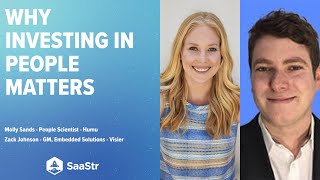
Zach Johnson and Molly Sands lay out five metrics that matter: employee engagement, staffing productivity, upskilling, diversity and bias, and manager effectiveness. They argue companies should track people data like they track sales, starting with basic dashboards from existing HR systems and slicing results by manager and demographic group.
Chapters
Hello and welcome to SAS/STR Annual 2020. Thank you for joining us today. I'm going to pass it over to our presenters now.
Good morning, SaaStr. Thank you so much for taking time out of your day to join us. My name is Zach Johnson. I'm the general manager of embedded analytics at Vizier. I have to say, I am so excited to be here. I've been a longtime SaaStr reader and I've attended multiple events in person, and I remember just how difficult it was, you know, being a founder once upon a time, trying to get my first customers, close rounds of investment. All the various things that we needed to do in order to be able to build our businesses. But I think the most challenging one really was, you know, just trying to deal with people, right? Like, we'd have all these teams and we'd recruit this top talent, but people problems made work really tough. So today we're going to take some time to talk about why investing in people matters and also 5 secret metrics to track to get you started on your People Analytics journey. I have a special guest with me today. Molly Sands from Humu. Molly, why don't you tell the audience a little bit about yourself?
Hi everyone, excited to be here. I am a people scientist at Humu, and at Humu our mission is really to make work better for people. And we do that using behavioral change technology that delivers nudges, which are little personalized coaching moments, to everyone across an organization to really unlock the potential of individuals, teams, and the company as a whole.
Thanks, Molly. Super excited to have you here today. So why are we talking about people analytics at an event that's mostly for startup founders? What's crazy to me is if we look back 10 years from now, I think we're going to consider it ridiculous that we don't measure people in a standardized way across all of our businesses. Think about it. Imagine if your organization, like, didn't track your sales funnel, or, like, didn't track your marketing automation, or, like, didn't use QuickBooks or NetSuite to track your finances. It'd be absolutely bonkers. But regardless, today we spend most of our money on people. Like most companies, it's about 80% of your capital expenditure is based on your payroll. But we don't have systematic ways that we measure what makes talent effective, how do we develop talent, and how do we really make sure that we're spending our money the best way on people and really developing and getting the most out of them. And what's been really exciting is over the last couple of years, a whole bunch of technologies hit the market, both through HR vendors and through folks who've been focused on analytics to really help whether you're an executive or a manager or someone in HR, be able to make sense of this really complicated and hard to measure asset. What's even crazier though, is I always thought that this stuff would happen, but over the past 6 months, and I mean, you know, we're all remote today, just the change in how people work has made this something that's absolutely critical and has really accelerated this process, right? Whether it's having people work remotely or scaling up and scaling down your headcount based on changes in demand, whether positive or negative, And that change isn't going to change, isn't going to, isn't going to slow down anytime soon. And so today, even though we know that especially as startup founders and early stage executives, you're really, really busy and there's only so much time to spend on HR, it's one of like 90 priorities that you're working on. We wanted to give you a head start to think about, you know, what are some of the ways that you can make your people data that you already have through your current HR and payroll systems begin to work for you? And begin to help you go on a journey from managing kind of by gut feel to really putting some rigor around your talent so you can be the absolute best company that you can be. And so I want to kick things off first by talking a little bit about what are people analytics, right? You heard me drop the term a couple of times. I like to think of people analytics, and Molly, feel free to hop in and correct me if you disagree, as like the macro category of all the things you can measure about your people, right? Whether it's like, you know, who, you know, stuff as simple as like, how many employees do I have? How long have people worked for me? All the way to like, who talks to who? How do people collaborate? How do we measure trust? All those various things. Now, for the sake of this audience, as much fun as it would be to like spring applied social network analysis on you guys, or like use NLP on all of your employees' Slack messages, like, let's start with the basics and really focus on some of the things around HR. And so one way that I like to think about people analytics before we dive into the metrics is it's kind of like you're baking a cake. Now mind you, I'm more of a sous chef than a chef. So like when we talk about baking a cake, like this is kind of theoretical for me, but the idea is like when you bake a cake, you've got ingredients, you've got analytics, and then, sorry, you've got ingredients, you've got an oven, and then you get cake. Now when you're baking a cake, unless you're crazy or you're on like some TV show doing it for everybody, you really focus on getting the food you eat at the end. Same thing when you're talking about people analytics, Yes, you have data, and that's a key ingredient. Yes, you have your analytics engine or whatever your development team or your IT organization tells you they're going to want to build for you. But at the end of the day, you care about insight. And so today I'm going to talk a little bit high level for each of these metrics about things from like the data analytics perspective. And then Molly is an expert in helping people eat the cake. And so I'll be bringing Molly in on each one for a little bit of a story on how folks are thinking about some of these things in the marketplace today. So let's talk about the first one. And I want to start with the basics. And I know there's people on the call who are probably rolling their eyes right now, because everyone's heard of engagement. But to be honest, it's a really great place for organizations to start who aren't measuring their employees. And yes, you may have a 10-person company or a 15-person company or a 4-person company. But there's tons of tools out there to help you check in on how your employees are feeling about work. And so one of the things that I think is most critical on the engagement front is just doing it, right? Doesn't matter if it's SurveyMonkey, Qualtrics, or any of those tools out there, but it gives you a barometer on how people's sentiment is changing vis-à-vis the other things you're changing in your company. Now, where it gets really cool, if you want to up the ante a little bit, is to combine engagement data with other data about your workforce, whether it's by department, which is like the obvious one that comes in most of the engagement tools you can buy, or other things like tenure, different diversity tagged groups, looking at people with different sales outcomes or sorry, organizations within your company with different sales outcomes, you can start to slice and dice and really understand what's driving what could potentially be a future engagement problem, as opposed to trying to, you know, just blanket have a solution for your whole organization. Now, when I spoke with Molly in prep, though, she was telling me that there were some surprising things that they're seeing with Humu when looking at engagement and COVID. So Molly, why don't you tell us a little bit about those?
Yeah, absolutely. So at Humu, we help lots of companies understand where the highest impact places are to invest to increase employee happiness and engagement. And so we really focus on what can the organization do at like a higher procedural kind of structural level, as well as what can individuals and teams do to have a big impact on this. And one of the most interesting trends we're seeing across industries and the globe and all sorts of different types of businesses is that this piece around emotional support is not there right now the way it needs to be. And this is kind of surprising to me, because even when you're thinking about all the challenges people have faced in this crazy COVID time, we have a lot of issues around flexibility, lots Lots of people are working from home with their kids, or their jobs are changing dramatically. They're asked to learn new skills. But in fact, what we're finding is that emotional support from your colleagues is really one of the highest impact things that can happen, and people are missing it right now. And so we're hearing a lot from employees that jobs are quickly just becoming a job, and they're not feeling like that fun, connective part of their experience at work is there. And that's really scary for organizations, because that means that people are a lot more likely to leave. Especially as things in the economy improve and as job opportunities open up again. And so that sense of belonging is really, really critical right now. And that's one place that I would really advise everyone from leaders and managers to invest in their people right now.
Thanks, Molly. Yeah, I mean, we see that in our everyday work on the support side. I think that's, that's really, really helpful for the audience. I want to talk about the second one. And so if engagement is soft and squishy for you and you're like, hey, all I really want to do is optimize my sales funnel, when you think about people and when you think about how you deploy people, it's really, really expensive. And so another key area to focus on as you move past some of the more simple things like, like, like engagement or sentiment is looking at like how you're actually staffing up people vis-à-vis the productivity metrics that matter for your business. Now I like to think of things in terms of like simple business metrics. I find that businesses splinter so much that like it's just an easier way to conceptualize. When you're talking about like, imagine you have a restaurant, right? During COVID depending on your local jurisdictions, you'd have to, you know, you'd have to scale down your staff that you deploy, right? Like you'd have to space out seats. You'd also maybe have to open up a delivery business if you didn't have one before. Like that's a lot of stuff to keep track of as you're balancing overtime spend for hourly workers. Do you have your best people on your best shifts? That's really hard to do, right? But imagine you've got a whole chain of restaurants. So being able to take some of those people metrics, who's working when, who are the people, you know, like who, you know, time that people are working, experience of people working, Uh, overtime, hour utilization, things like that, and then comparing them to actual output, right? Whether it's like units sold or upsells or things like that can be absolutely critical as you think about your talent. So that's one, as you're getting to the next level, make sure you've got a place to compare that data together to figure out how to squeeze more margin out of your business. Molly, I know we were talking about some of the really big companies and what they're doing here. What are you seeing?
Yeah, absolutely. So a lot of our clients at Humu are really focused on what I would say, it's sort of 3 different areas right now. And the first is this idea of upscale. Upskilling or reskilling employees. So we've watched a lot of businesses change, just as you said, so dramatically, where one day you have every, you know, coffee chain is bustling, and there's tons of business in that space, or your call centers are absolutely overwhelmed. And overnight, some of that dried up. You have other places within the same business oftentimes, where growth has just like hyper-accelerated because of the changes that have happened. And so lots of organizations are using people analytics to smartly move individuals around and understand where they have capacity and capabilities to really reskill people to do different types of jobs. We're also seeing a really, really strong focus on customers. Customer success, customer loyalty is really going to be critical for coming out of this, especially for businesses where those in-person interactions are so important. And one way that you can ensure that your customers have fantastic experiences is to make sure that your employees are really proud to work at that company, that they care deeply, that they're really connected, that they feel strong trust in the organization. And so a lot of organizations are really thinking about how do we invest in our people in ways that ultimately benefit our customers, so that those individuals are coming back to us as they're ready to start doing more, more things. This is really prominent in kind of the travel and hospitality, retail, food service spaces. And then the other thing we're seeing that you kind of tapped into with this idea around how do you manage a restaurant business or a business where it's so dramatically changed from what you're used to. And really innovation is so key there. This is actually a huge opportunity for companies that innovate. But it's really difficult to build up those behaviors and sort of the way that you do work every day. And so at Humu, actually use nudges to help people to bring that kind of creative problem-solving and out-of-the-box thinking to their day-to-day with these quick little reminders about ways to shift your mindset or interact with people just a little bit differently in ways that kind of foster that creativity and experimentation that turns out to be so critical in times like this.
Thanks, thanks, Molly. And I'd love to talk a little about the nudges, particularly with our next topic. One of the things that I think is really interesting about people analytics is just how many aspects of the business it can touch, right? We're just talking about operational aspects and like staffing, basically. But one of the other things that I think is really important, um, and I know it was on the minds of a lot of people in the audience, is really understanding diversity inclusion. I think most HR systems allow you at this point to look at, um, what I would call diversity metrics, right? So how many people do you have of groups that you've called out as being flagged as diverse, whether you're looking at ethnicity, gender, age, nationality, things like that. But I think What's really, really exciting and where I think everybody here can do a little bit better and really be able to have data-driven improvement in their organization is looking more at inclusivity around some of the things you're measuring. So like, it's not just about counting, but it's looking at things like movement, right? So how does promotion compare when you look at various demographics, right? How does your compa ratios compare for demographic groups? And what are the performance ratings in certain like areas where bias can show? How are those manifesting themselves in your organization? We find that really the best way to improve something is to measure it. And like, even just knowing where you are or benchmarking yourself against peer organizations can change a conversation from either, oh my God, the sky is falling, to, hey, we're actually doing a good job, but we could do better here. Or, you know, it could tell you of a problem that a lot of other people in your company maybe don't see the same way. And so that's something that we've seen has been one of the biggest improvements we're able to look at from organizations, uh, from using people analytics, is being able to take something that's hard for a lot of people to wrap their heads around and make it something tangible, measurable, and improvable. So, so Molly, how are the nudges being applied to help drive like more inclusive and diverse workforces?
Yeah, yeah, absolutely. So we, we really focus on this element of building the behaviors that create an inclusive culture with the nudges. It's really important that you have all the, all the metrics and the funnels in place to really hire a diverse workforce to make sure that you're really getting the best talent for the roles that you have. But then you want to make sure that on the other end of that too, people are interacting interacting in ways that give everyone the same opportunity to feel valued, heard, and empowered to succeed. And that's really what we focus on driving with Humu, with the nudges. And what we hear so often in the diversity, equity, and inclusion space is that people value the trainings. There's lots of individuals that are really bought in, excited to do these things, but they don't know how that shows up in their day-to-day work. They're not sure if they missed that opportunity to be an ally, like, should you have spoken up in that meeting? How do you approach someone when you feel like they've been slighted in some way, or some individual has said something inappropriate, or even more simply, like, how do you de-bias those promotion processes or the opportunities that you're giving to people? And so we use the nudges to give leaders, managers, and individual contributors at organizations behavioral recommendations about things that they can do that are sort of earlier in that process. So before there's some sort of biased promotion decision? How do we go ahead and make sure that everyone's getting the same type of feedback, the same type of growth opportunities? And so that's a lot of what we focus on in the diversity, equity, and inclusion space. And I think during, you know, during the pandemic, this has been a really important time to double down on diversity and inclusion. We know that a lot of different demographic groups have kind of been impacted in, in really disparate ways. And so the challenges people are coping with are probably different based on a lot of elements of their background, but also silos form really easily when you're shifting to remote work or when people are on different shifted schedules and all of those kinds of things companies are coping with right now. So really making sure that you're being very intentional about how you include across the board and that you're measuring those outcomes. So if there are negative impacts, you're able to correct for them. Is going to be really critical, and that's where people analytics can really help.
Absolutely. And I think it's a fantastic transition to our second-to-last metric, which is really about understanding managers. And so I think like, like one of the things that's crazy for me, so at this point, through the work we've done at Vizier and some of the stuff I've done before, brought people analytics to like some 5,000 different organizations. And what's really fascinating to me every time is a lot of people think about this belonging to HR, but it really doesn't. Right? People analytics are something that empowers every manager of people, right? Because the folks who can actually change how your organization works are the people who lead for the business. And so whether you're talking about diversity inclusion and making sure that hiring managers understand how they compare to similar hiring managers when it comes to diversity, or you're talking about, um, someone who leads a sales function trying to get the most out of their, their salespeople performance, like, you got to make sure that you have syndicated analytics to the rest of the company. And by the way, when you're cramming for your board presentation or that investor deck and you're trying to figure out how much each department's grown over time and who's been added, that like, like this will save you a lot of time too if you set up some of that infrastructure. And so I think this is one of the most fascinating areas, uh, really to focus on is what, like anything you can measure, make sure you slice it by manager because you can have massive impact on the change you can drive. One last thing I'll say too, just like to paint a picture of the future. I started earlier by saying 10 years from now we're going to look back and say it's crazy we didn't measure all this stuff. The amounts of analytics that's going to be applied to measuring manager performance over the next 10 years is going to be astounding. And so right now where management's mostly folklore, kind of passed down from mentor to mentor, a lot of that stuff's going to be more paint-by-numbers as data sped through nudges like Molly's been talking about and through other means. And so it's something where like really understanding how you're going to be measured in the future is not only important for building your own good business, but also as you think about your career opportunities and the path you're going to take, understand that the game's going to change a little bit under your feet. So this is a really, really critical one. Molly, how are you thinking about this stuff?
Yeah, so at Hulu, we do— we think a lot about the soft skills that managers need to have. And so recently what we've seen is really that managers that are expressing a lot of empathy and really putting mission and vision and purpose focus first and providing clarity for their teams, those are the people that are really succeeding. And a lot of that is not the traditional skill set that you display to get promoted to be a manager and to be on that manager track. And so there's a lot of need to really build up those sort of capabilities. One of the more fun and interesting findings that we've had at Humu in the manager space, I think, is, is really around this idea of how long those manager relationships last with you. And so we typically see that your feelings about your manager kind of deepen over time. So if you think they're fantastic and super effective, they're aligning your team against shared goals and really like doing a wonderful job, you tend to think that even more as time passes. Same if you hate them. Anyone that's ever had a manager they didn't like knows this is true, but as you, as you work with that person longer, you despise them more over time. But the really wild part of this is kind of what I think of as like manager baggage, just like with any sort of relationship, you carry some elements of that with you into the next one. And so we see that if people have a really negative manager experience, and even 6 months or a year later, even if they've changed managers, so they're now working with an entirely different person who may be fantastic, they actually feel less positively about the effectiveness of that manager. I think this really speaks to the idea that people see your managers as a representation of your organization. And they're going to carry that with them in the way that they think about the company and the other people that they interact with more broadly. So making sure that your managers are all really fantastic, doing a wonderful job investing in their people, aligning them against those goals is really, really critical.
Awesome.
So, so we're just about in Q&A time. Um, and by the way, I always start with the old adage, people don't quit jobs, they quit managers. Totally true. Um, just real quick, we had one last metric we wanted to share. Uh, we'll do, you know, 30 seconds on it. Um, one last thing, because someone asked a question actually about how do you keep employees happy and measure happiness, uh, especially in the pandemic time. One thing I think that's really helpful is you have to keep investing in people's development. The trick is most of the time we've invested in people's development, we haven't been able to measure impact. And so Molly, anything you want to add super quickly on just like what you're seeing in L&D, like 30 seconds?
Yeah, I mean, I just think the ability to link softer metrics or things people think of that way, like sentiments and how employees are feeling with those business outcomes, and they are linked, like you will find that they are correlated, they are predictive, they're really closely related, and is really, really important. And I think that that helps a lot of organizations to justify their investments in their people because they really do pay off.
Awesome. Thank you so much, Emily. Thank you so much for joining us today. It's great to have your expertise on the call, and it's fun to share about people analytics with this audience. Um, so we're going to go to Q&A. We got a couple questions. We're going to talk about it. One other thing too, if you want to continue the conversation, feel free to follow, follow either of us on LinkedIn. I'm going to post like a, like, you know, getting started guide with people analytics to help address some of the more practical questions that are popping up, like what types of people analytics are there and things like that. But in the meantime, let's answer a couple questions. So a really fun one popped up from Casey where it's talking about like, how do you balance the various desires of your organization. And the example she gave was people choosing, uh, some employees saying they want more beef jerky versus others wanting a 401(k). Um, I'll pass that to you right off the bat, and then I'll take a stab.
Yeah, yeah, absolutely. So I think there's some levels of this where you want to be really personalized in the way that you address problems, but there's also this higher-level place where people analytics is super helpful because you really can actually get insight into what that's going to do in terms of your recruiting pipeline if you make a decision like that. Is that actually going to help you diversify your workforce and get the talent that you want? But I think that people analytics can let you sort of predict the future in that way and justify those decisions rather than having them be left up to a vote.
For sure. One thing I'll add is that people analytics supplement or augment intuition as a manager. And one of the most important things that I've seen is really like when you're talking about measuring soft and squishy, it's having the soft swishing behind, like really writing down and codifying what the company culture is, really codifying what values are, and then constantly measuring against those values. And so this is where like standardized hiring practices around values and like standardized scoring and stuff really helps. Ultimately, I think we're really talking in that scenario about like, what do people value reward-wise? And that's something that if you hire a bunch of people who value fundamentally different things, it's very hard to lead in one direction, let alone keep everybody happy with it. Comes time to 401(k) contributions.
So that's a great one.
Another one that we got that I think is helpful is, you know, how do I get started with people analytics? And this seems like a lot of work, so are there any things that you could share to get started? So from my perspective, one of the easiest things you can do is start with the basics, right? It's being able to just on a finger, like on snap of a finger, know how many people work for you, how many people have left, how many people did you add, like stuff like that, that once you get past 10 people counting on like one hand can get kind of hard. Make sure you always have a dashboard that has that information. And so the best way to do that is look at whatever HR tech tool you have, whether you're using like, you know, Ceridian or Namely or like any of those different HRSs or payroll systems, and start using the out-of-the-box stuff. There's usually enough there. As you start to get a little fancier, one of the things I'd recommend is having somebody in ops or in HR if you have those functions, or if you can get an hour, you know, an hour or two to carve out for a project, is just list down the most basic people questions you need to answer and start making sure you've got that data in one place. And so, like I said, I'm going to share a little booklet online that helps with this. But, you know, if you— I'd also recommend that if your HR system doesn't do this, try to pair up with a vendor who can help you. Because it's one of those things where like really doing the heavy lifting yourself is tough, and it's something that's becoming baseline capability. Molly, any words of wisdom for this last question?
I mean, I agree with you. I think that you can actually get a pretty long ways with some of the technology tools that are out there to do some of this stuff and get started with the basics. Um, and then just always having, having some sort of channels so that you're really transparent and clear about how people can surface challenges that they're facing and things that need to be addressed as you grow is really critical.
Absolutely.
All right.
This has been great.
I'm really, really pumped that we got to share this with the audience here.
Thank you all so much for tuning in early this Wednesday morning. Like I said, if you have any questions, feel free to drop either of us a line. And I wish you all a wonderful and enriching SAS Fair. Thank you so much for having us.
More from Jason

Why Your Next Hire Should Report to an AI, Tragedy Apps, and Too Many AI SDRs? | The Agents #004

Our Agents Drove Our Salesforce Bill Up 80%, Marketo Hates Agents, and We Stealth-Churned Off Notion




Managing 20+ AI Agents: Lazy Agents, Our $500K AI Bill, Stealth Churn & the Death of 60% Solutions




