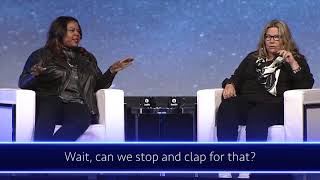
A white female leader argues that silence on gender and racial equity in SaaS is no longer acceptable. She says white men have a unique responsibility to speak up without facing backlash, and compares resistance to diversity initiatives to past skepticism of cloud computing.
Chapters
And to Molly's point of like, you can't get in trouble if you don't open your mouth, like, those days are over, okay? That type of leadership where you stand back and are like, "Hmm, I'mma see what happens," you won't be a leader in 5 years if that's the way you decide to do it. Like, you have to play in this. And if you are a white person, My God, if you are a white man, which I love white men, I'm married to one, I'm made to, I'm down with it, right? I like them. But you have the most important voice in this because no one expects you to say anything, right? You can just stand by the wall and be quiet. Oh yeah, I don't agree, but I'm not, you know, I'm not getting involved. That's the definition of privilege, ladies and gentlemen. And in this day and age— Wait, can we stop and clap for that? Yeah. Oh yeah, I agree. I mean, I do think that that's the definition of privilege. And I have a lot of privilege. I'm well aware of how much privilege and luck I've had in my life. I'm not sitting up here acting like I'm perfect, by no means. But I do think that in the day of #MeToo and in the day of diversity and equality— this was not a topic 5 years ago. We were weird in the corner being like, we got to do something. Something about this is wrong. And she's a Black woman, and I'm a white woman, and we work at a really amazing company that's on the edge and thinks about things a little bit differently. This wasn't normal. Like, by the way, I'm old, but cloud computing wasn't normal 10 years ago. I spent like most of my career telling people it was okay to put their data in the cloud. Now we act like that's normal, right? It's the same thing with diversity.