Zendesk From Day 0 to Today: The Lessons Learned
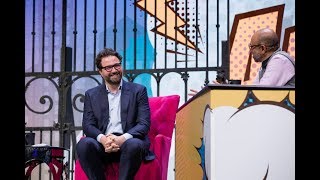
Zendesk co-founder Mikkel Svane walks through the company's ten-year climb from Copenhagen startup to $312 million in revenue. He covers the 2008 fundraising crunch, a price-increase disaster that nearly broke customer trust, and the shift from pure self-service to a hybrid sales model. The roadmap ahead: $1 billion.
Chapters
Alright, let's give it up for Mikkel and Devdutt. This is great. Thank you.
Thanks, Jason. And thank you, Mikkel, for coming in.
Maybe you should introduce yourself. Maybe.
So I'm not Stephen Colbert. This is Devdutt Yadurkar. I'm a venture capitalist and lucky to be one of the first investors in Mikkel's company. So I've been I've known Mikkel for a long, long time now.
We were supposed to do this session today with Christoph Jans, who was the first angel investor in Zendesk. But unfortunately Christoph is German, based out of Germany, and unfortunately he got sick right before leaving. So DevDudes very much agreed to take over and have this conversation with me instead.
And I think most of these people know Christoph. Christoph? He's a prolific investor.
Christoph Janss, he's now with Point Nine Capital, a venture seed, early-stage VC company in Berlin.
How many of you know Christoph already? Great. 5. 7.
CRV, formerly known as Charles River Ventures, how many know that?
Many.
A few more. Great. All right.
So enough of the host introductions. I'm sure everybody here already knows about Mikkel and Zendesk, but why don't you take a minute, Mikkel, to talk about Zendesk and what you're all about?
Sure. So Zendesk, we are a SaaS enterprise software company. We build solutions for customer service, customer engagement. Been on this journey for almost 10 years now. And have close to 100,000 businesses around the world using our software for providing great customer service, great customer engagement. We've been so fortunate to work with some of these fantastic companies here in San Francisco, Silicon Valley, fast-growing startups that have changed the world and also changed how you think about customer service and customer engagement. So we've been very fortunate and it's been a It's been a really, really fun ride.
By the way, congratulations on your phenomenal results yesterday.
Yes, thank you. Yes, so now we are a public company, so we had our earnings yesterday. Thank you very much. We ended 2016 on a really, really good note. A lot of momentum in the business, and the stock market reacted very positively to that.
Well, that's always good. So for people who don't know, $312 million in revenue in 2016, that's about $310 million more than when Christoph and I met you.
Yeah.
So it'll be great to kind of— there are lots of SaaS founders here today. Would love to kind of— it'll be great to kind of talk about that journey from zero to now.
Yep.
Zero to $312 million. I'm sure there are multiple lessons, anecdotes, funny and not funny, that can be shared by you.
And terrible, terrible things I can never share.
So, you know, by the way, Mikkel's written a fantastic book. I must plug it. If you have not read it, everybody should go get a copy. It's called Startupland and really describes the journey from the founding of the company all the way to the IPO. But before we dive in, you know, Christoph told me that he has access to an email from 2008 when you were just starting. Where one of your co-founders, Morten, said that, you know, he can't believe this thing is gonna get more than $100 million. I think he was talking about valuation.
I, I'm not sure. Yeah.
So, so what about that? What, what's going on there?
No, but I think that's a good description of what happens like in the very early stage of, of a startup that where part of you is like incredibly confident about what you're doing and you know, the sky is the ceiling and everything. And part of you is just like, oh my God, how will we? I can't even pay my bills. How are we ever, how are we ever gonna make money out of this? And so I think it's a good, um, it's a good, uh, uh, it's, it's a good email that symbolizes very much kind of the, the conflict, the internal conflict you have as early founders of a company. It's also a good email that, you know, it's his, like, he should never, he should never like fucking co-founders. Like, why does he write an email like that?
So when did you guys know, what was that moment when you knew that this could become big?
Well, so I think that's interesting. I think maybe when you see us from the outside and now we are a big public company and blah, blah, blah, and you feel like we to some extent made it, but like as a, we still have that startup mentality. We still feel that like we have, you know, our biggest opportunities, our biggest struggles. We have, our biggest hurdles in front of us. You know, we, we, we, we, we have high ambitions. We believe that's a huge opportunity, but to continue to execute on that, it's going to be a lot more work. So like, I don't think— I think it's a good thing in a company to never really feel that you made it or that you made it big. But it's a little bit like cycling, you know, like these guys that take the Tour de France or whatever. It's like every morning is just a new mountain. And when you get up on top of that mountain, there's another fucking mountain behind it. So, you know, it's both good and bad.
That's fantastic. So let's talk about this. You know, it's been a long journey from 2008 to now. Let's break it down into kind of 4 segments.
Yep.
0 to 1 million. I think that's pretty seminal. And then 1 to 10, 10 to 100, and 100 to today. Yep. Makes sense.
Yep.
And, you know, let's start from the very beginning, zero to one, you know, what are the most important lessons as you built that in the early days of Zendesk when you were in Copenhagen?
Well, I think there's different angles on that story on that early phase. And I think one of the, one of the dynamics you have to deal tremendously with in that phase is kind of just the pure founder dynamics. It's a little bit like being in a relationship where you're not really willing to commit. Like none of you are really getting on, like nobody kneels down and proposes, like you're all kind of checking out what are the opportunities out there and, and like you never, you're not really willing to commit the same way. So there's a lot of those dynamics where you kind of feel each other out a little bit and, and, and, and figuring out a way of, of, of trying and starting to believe in this. So that I think there's a lot of those dynamics in the early days. Um, but also it's, it's, there's a lot of uncertainty, like you have no idea what you're doing. And a lot of it is just instinct and gut, and especially because we came out of Copenhagen, you know, there's not a startup tradition in Copenhagen. And like, in those, it took us 18 months to get to our first million dollars in annual recurring revenues. And like, in that entire period in Denmark, we met almost nobody who believed in the idea. Like nobody. So that's a little, you know, It's, that's uphill all the way. And it wasn't until we really kind of got engaged with Christoph, who's done startups in the US before, and we started to speak to American VCs, that we actually started to believe in ourselves and started to believe that we have a model.
I think one of the, we, so talk about Christoph's role in that, because I think a lot of people here who are entrepreneurs who kind of bring on angels, What is, you know, he was so instrumental when I, when I remember meeting you, you were so much buttoned together because of Christoph. So tell, tell us about that relationship.
Yeah, I think that's a really, really good point. Uh, because when you are in that early stage as a company, as a startup, you are incredibly fragile. Um, there's so many things that like that can go wrong basically every single day. Um, so Getting an angel investor who's really digging in, who's helping you, who makes you smarter, who's not just challenging every single decision you make, who doesn't have a need to start being on the sideline and pretend they're much smarter than they are, that doesn't constantly kind of, you know, comes with like introduces conflict into the company, but really kind of is focused about taking the company ready for the next stage. And for him, for Christoph, is really about like kind of describing the business, putting together like the basics of a business plan, showing kind of what model we had for, for growing the business, and then helping us present that in a way so we could go out and talk to investors. And I think for us, like, it's so— I can't, like, I can't value enough what he did for us because like He made us understand the whole world that we knew nothing about, like, and talking to you guys when we first got introduced to CRV and, and, and, and making sure that it was a conversation, uh, where we kind of, um, where we understood each other and we had a common language and all these things. Like, it's been so, so incredibly important for us in that early stage. And, and, you know, I see so many examples with small startups where, you know, they get ruined. By early angel investors who are, you know, spending all their time challenging the company and, and like have their own agendas and like don't focus on just making the founder great and, and building a great story. Um, so we were incredibly fortunate to meet Christoph very early.
Yeah, he, he's a terrific guy. So I know, but I think also for you guys, I think, let's talk about 2008 because you started the company. Yeah. In the middle of a shitstorm in the VC world, right? Everybody was running for the hills. I remember a very popular VC put out RIP good times. Yeah, it was viral. Obvious funding thing.
Credit crunch.
Tell us what you were—
Yeah, that sucked.
That life. Yeah, it sucked.
Like we had so many like early indicators of people wanting to invest and then from like one day to the other, it's just like all of that evaporated. I remember a personal story where I was like in the final stages with the VC and, you know, everything was good. It was just like final confirmation. We did the last meeting and we're supposed to write the documents. I was sitting down here. I was sitting at a hotel, you know, 2 minutes from here in the Tenderloin, a place called Phoenix Hotel. Phoenix is a great place, by the way. And I was just sitting there waiting for the call and the call just never came. And, and that was just like, it was so demotivating. And then had to travel back to Denmark and talk to my two co-founders about, yeah, not this time, and, and start all over. So it was, it was incredibly tough period to raise money in. But it also meant that, you know, it, when we finally raised money and we finally did the move, like, we had a, we came out of a bad time that gave us a lot of maneuver room and gave us a lot of trajectory. And so in many ways, you know, what turned out as— what started as bad timing turned out to be good timing for us. Yeah. Because that's also, you know, talking about the move in 2008. Yeah. Like, we moved to— so we moved here early 2009. And we could afford moving to San Francisco back then. I don't know how people do it today because it's incredibly expensive here, like salaries, rents, everything. It's such a, it's such an expensive lifestyle here in San Francisco. Back then we still thought it was expensive, but compared today it was nothing.
So how did that happen? You know, you had some, you had family and you had, you know, leaving, you, you had grown up in Copenhagen, getting everybody convinced, the three founders, you know, and their respective families convinced to you're gonna move over. How did that go?
Well, it, it, it went, but it's, it's of course an incredibly taxing period. Like you have to, like, because you have to be 100% focused on your company, but then you also, you know, have to deal with 3 kids and schools and insurances and health insurance. Like I had no idea what health insurance meant in the US and all these practical things. So doing all of these things at the same time, you know, is, is really, really hard. And I cannot recommend it. But, you know, at the same time, it is a, it is a, it is a, it is a, it is a once in a lifetime experience.
And how was, how was it taking money from a VC and then from multiple VCs?
Ah, fucking VCs. No, no, it was great. You know, like, like getting there and having suddenly having money to execute and moving forward and all these things, it was fantastic. And like, we were very lucky with the VCs that we got. Like, you joined us as our Series A investor, and right after that, Peter from Benchmark joined us as our— Peter Fenton from Benchmark joined us as CSB. So we had like a fantastic team very early on. And from there, it's always been, you know, building an early strong investor team is so important for attracting future investors. So it was really— it went really well for us.
Any other anecdotes about, you know, learning about whether product wins, something else wins?
Yeah, but it like that phase, you know, like we were, we were like in the, we were part of the first wave of a new generation of companies that was all about the user experience. It was all about the design, the simplicity of the product, removing friction, removing complexity out of the, out of the, the application, removing all the complicated framework and making decisions for the user and so on. And so we were all about that. And for back then, there was a lot of external VCs that was like, I don't really get it. Like, how does it become better just because it's nicer and easier and slicker? Like, how does— that doesn't necessarily mean better for the business, for the enterprise. But it turned out that that was really like we were part of that first wave. Wave, and we just doubled down on that. And in many ways that also introduced our initial business model, just like making things easy for businesses to sign up, start using the software.
And, you know, and I think, you know, as you— one thing that we found when we looked at you was that you were so passionate about building a brand and brand as an eventual moat for your business. What is— how do you get that insight about investing so much in in building that brand.
Yeah, but I think that's, that has, that had to do with the industry we were in, like customer service, business workflow systems, like everybody hated that. Like, it's not like even on the customer side, nobody ever looks forward to contacting customer service. So we really tried to say, let's build a brand which is really about, you know, you know, providing joy and enlightenment and tranquility and all these things. To that experience, something that is typically, you know, a very stressful, terrible experience. Let's bring a completely different brand to that. And I think that's why our brand got important.
So we'll switch to the next phase of the journey because a lot of the entrepreneurs here— Jason was telling me that a certain big percentage of the entrepreneurs here are north of $1 million and they're on this journey from 1 to 10. That's a, I think, one of the most critical journeys as you go, you know, as you kind of become a serious business. Tell me something, tell me about that. You know, how long did it take? What are the stumbling blocks? What worked? What didn't work?
Yeah, so like that was a lot of serial trying and failing. It, that, so 0 to 1 took us 18 months and, and, uh, 1 to 10 took us another 18 months. So of course it was a very, very busy 18 months. Um, and it was all about starting to build some of the initial team that was like the, it We didn't really build a team until we moved to the US. So now we had to start building a team and hiring in San Francisco where we had absolutely no network. That was incredibly hard. And also hiring Americans was very new to us. Like, you know, we come from a culture and a country where you're incredibly modest about your achievements. And then we met the Americans and we were like, I was like, oh my God, like this guy, he single-handedly like change the world. Like, he should. And like, every— my co-founder Morten, every time he had a— every time he had an interview, he came in and said like, that guy should have my job, that was amazing. Yeah, so we learned, we learned a little bit about differences in culture then. But like, it was a lot of serial falling, getting up again, and, and, and, and working hard. And I think in that phase is also like, we all— so everybody here talks about funnel models, and that's a business model, you know, getting people to your website, getting them easy to sign up, other points of engagement, getting them to try the product and converting them into customers. It's the business model for 90% of the people in this room. Back then, like, if that was all like, are you sure that's a model? Like, is, is that really a way to think about your business? And it felt very fragile and new And was that a real thing? And it wasn't until we were in that phase where we said like, yeah, this is actually like, this is actually how a lot of, of businesses are building the business. So that realization that this, this, this very primitive way of thinking about your business was actually a subtle and a simplification of a very solid business model. Uh, we learned that in that phase.
Yeah. Bringing some consumer techniques to enterprise or to the software world.
Yeah.
New in those days. Yep.
Yep.
So I heard you had PTSD from one particular episode of, you know, what that I think was, I still carry those t-shirts by the way.
We had, so, ah, fuck. Yeah. But it's one of these things and we embraced it today and really learned from it. But like we had a good idea to how we could make some more money. Like we could raise the prices for all our customers. We thought that was, Brilliant idea because we've added all these new products and features and capabilities. Of course customers want to pay more for that. So we just turned up the prices and like, ah, ah, Jesus Christ, that almost killed us.
And it's a month-to-month prices, right?
So yeah, yeah, yeah. So, so like from one day to the other, we basically, most customers heard like, oh, we are raising prices, give us some more money. And, and, and that was the first time we really realized how many customers we had. And how vocal they could be. So it was, and you know, that's suddenly having like, you are a cool startup and you're sexy and everybody thinks you're like the shit. And then suddenly you have all your customers revolting. It's like really, really traumatic for an organization. So like figuring out getting out of that and then regaining the trust of our customers. And I think that, that has been such a telling lesson for us, like that the trust you have with your customers is so critical for your loyalty, for your evangelism, all these things that basically are the key growth drivers of a subscription-based service. So it was a big lesson for us. It was hard for us, but I think we came out the other way. So much stronger and really, really learn from it.
That was, you know, Mickle, of course, makes from a culture perspective, takes things head on and he started printing t-shirts with all, with the stuff that came back and most of them were kind of vulgar bad language. And so I still have 3 t-shirts with tell your board to go fuck yeah.
Yeah, no, but we still wear them today because it's a good reminder. You know, it's a good reminder.
Let's talk about 10 to 100. Yep. You know, that was incredible. It took— you did 18— 0 to 1, 18 months. 10 to 10— 0 to 1 to 10, 18 months. And then how long did 10 to 100 take?
That took a little longer. I think like approximately twice as long, so about, you know, 36 months or 3 years. And, um, and that was really about shifting gears for the business, um, because until kind of our first, you know, until like $10 million in, in run rate, we didn't have sales. Uh, it was all a self-service business, um, we doubled down on giving great customer service, of course, but we didn't really have sales. Um, but it was obvious that we could start scaling the business much faster if we hired sales.
And, and we had, you had Jennifer Hansen.
We had Jennifer Hansen, which was the customer service alter ego. Um, but I had, we had this experience with a, with a startup here in, in town that, you know, a brand that we loved, that we had great connections with them and everything. And, um, and I, I heard from other sources they were a little unsatisfied with us. And so I looked into their history and basically they had reached out to us like 10 times. To ask for a demo or ask about some help or ask about how to do this and that. And every time we said, told them basically like, you know, if you can't figure it out, we are probably not the right product for you. And I was like, I, I'm not sure this scales. So we, we started hiring salespeople that could really engage with these customers that, you know, needed some handholding, needed demos, needed to, you know, negotiate, needed to understand understand the, the business, the product a little better and, and needed to help them with scaling the product. So that we started that journey. Uh, it's a lot of injecting sales into an organization that never dealt with sales was hard. Uh, but that really, really helped us, uh, scale our business.
But you know, uh, self-service is still the core, right? Was still the core from 10 to 100.
Well, I think it's very much the core of the DNA. Like you have to make everything as simple as possible for your customer. Being really, really easy to do business with, removing the friction for every interaction. You know, that's why we are so— that's why we all use Amazon and all these products like crazy, because it's just so easy. And so that's still very much core to our DNA, to our growth. And, and although we have like— it's more if customers need help that we have help for them.
So, you know, how did you go about about kind of breaking the product up for different segments of the market? Because you, you know, earlier you had one, when we first met, you had one plan called the starter plan, $9 per seat, right? Now if you look at your 10 to 100 is when you started segmenting the market segment in the customer base feature set. How did that go?
Well, that, you know, you have to try a lot and, and it's still like, I think packaging and pricing is, is, is a constant exercise for a company today because there's always new things to kind of answer to and new things to try and new use cases, usage situations. So being really flexible with your pricing and your packaging can be really, really competitively disruptive that you can, you can come with a price point or you can come with a pricing model that works for your customer that is almost feels designed for their needs is incredibly important. So that's a good piece of advice for everybody who starts a business there for that scaling, like have, be, build a model that really enables you to be very creative with your pricing and packaging.
When did you start putting an enterprise sales force and outside, you know, you began with an online model, then you built an inside sales team. When did you decide, What caused you to create an outside sales team?
Well, we, I don't, I wouldn't say we have like a traditional outbound outside sales force, but we do, we have this what we call a land and expand. So we really try to land customers frictionless and then work with them to expand them within the organization. And that's how we've grown into some amazing organizations over time. Like our first Adobe customer was a small division in the UK and now we have, you know, thousands of people within Adobe using our software. Uh, same with Disney and a lot of our other organizations. And so that is how we focus our, you know, outbound or outside sales, if you will.
Great. Now tell me about—
by the end of that $100 run rate, that's of course when we took the company public.
Tell, tell us about that. You know, because I remember in 2014 there was a logjam, right? Nobody wanted to take the companies public. Like there was a big— and you were actually, you were the jam cracker. You broke that logjam and were the first company to get out. Yeah, I know there are scars on your back because of it.
Yeah, yeah, no, but that's, it's, it's, it's—
why did you do that?
It's very stressful to go through a period like that because like going public is a, is a, is something you start, you know, you start the process years in advance. You have to build a team, you have to hire the right people, uh, the right executives. You have to start building relations with all investors. You have to implement all these processes, these controls, uh, and all this compliance stuff and like your, you, all the legal work and wow, it's so much work and it can be a big distraction for a company. So going out at a time time where everybody's like, I'm not sure the timing is right. It's just like, oh my God, like what? Like then what? You know? So like basically we made early on, we made a decision and say like, we will go out because it's the right thing for us to do. And then we have to figure out the market after that. So we, so that was our, that was how we thought about it. We went out, uh, probably at a lower valuation than we could have gotten in a better market. But at the same time, you know, who thinks about the valuation at the point of, uh, going public? Like nobody here remembers what valuation Google went public with, or Apple, or Amazon, any of these companies. It doesn't matter. What matters is that you grow up, you get out there. And I think for any kind of fundraising, it's ultimately not about the valuation. It's really about the team and the path you set yourself up for after that.
Well, now you've— that was 100. Talk about 100 to now. What are the things that have changed and gotten better, gotten worse?
Well, everything has changed, of course, again, which is part of a high-growth company. So like 2016, we grew at almost 50% over 2015. That's a lot of change. That's a lot of turnover. There's a lot of new people. There's a lot of new customers, a lot of new process. So you're like, when you are in a startup, like a fast-growing company, your company changes all the time. And going pre-post public, it's a lot about execution. It's a lot about like, when you go public, you describe, this is our business, this is how we roll. And then it's about showing that you actually roll like that, uh, after the—
and quarter over quarter.
Quarter, every— yes.
So, you know, uh, Mikkel, a few quarters ago, came out with a roadmap to get to a billion in revenue by 2020. That's a— I know there are very few SaaS companies who have gotten to a billion, so this would be incredible. But I think this is— as a VC, we see this as a huge opportunity for this generation of companies. There are going to be many, many, many such companies that can get to it. So what caused you to go set that goalpost?
Well, I think that it's part of getting everybody on the same page about our ambitions. And it's also about like setting something that you can kind of refactor, saying like, to take us there, what does that need? What do we need to do? And then put a plan together that takes you through all the steps to getting there. Um, so like we, we see, we see a huge opportunity in continuing to disrupt the enterprise, uh, software world. Um, everybody here who has a B2B startup, it's, It's— there's a huge opportunity right now because a lot of the established vendors are lagging tremendously behind. You have a whole new generation of much more consumer-friendly, consumer-oriented CIOs and executives out there who think much more about agility, who think much more about trajectory than they think about, like, can I build everything with this application I put in-house? So it's a huge opportunity. Huge opportunity and we look very much forward to executing on that.
Great. I think we are at 0.00. So thanks again, guys. Thanks again, Mikkel. Thanks for making it.
Thank you.
Thanks everybody. Thanks everybody. Thanks guys.
More from Jason

Why Your Next Hire Should Report to an AI, Tragedy Apps, and Too Many AI SDRs? | The Agents #004

Our Agents Drove Our Salesforce Bill Up 80%, Marketo Hates Agents, and We Stealth-Churned Off Notion




Managing 20+ AI Agents: Lazy Agents, Our $500K AI Bill, Stealth Churn & the Death of 60% Solutions




