Build An Epic Sales Team With D2D Expert’s Carnivore-Like Secrets
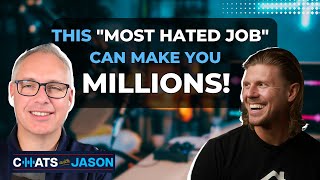
YouTube interview (Chats with Jason) featuring Sam Taggart, a door-to-door sales veteran turned CEO and author. Sam traces his start selling door-to-door and curb-painting businesses in high school, through high-earning sales roles at Vivint and in solar/alarms, to founding DDDCon and a company focused on direct-sales training. He promotes an "eat what you kill" (sales carnivore) mindset: proactive, 1099-style ownership of results, strong recruiting and training, and high integrity (sales as service). Practical guidance includes structuring separate hunter vs farmer teams, removing friction for reps (clear daily priorities, short huddles, in-class/field/online training), and a recommended "blitz week" (intense week-long sales push) to reset performance. Notable facts: launched DDDCon January 2018 (≈800 attendees first year; ~3,000 attendees at a recent event).
Questions this video answers
January 2018.
About 800 attendees at the first event; about 3,000 attendees at the recent event.
Eat What You Kill: Becoming a Sales Carnivore.
Chapters
Hi everyone and welcome to another episode of Chats with Jason. I am of course your host, Jason S. Bretra and this is the show that helps you transform the experience to transform your business today. Joining us is someone that's gone from door to door salesman selling solar and alarm systems to the CEO of a multi million dollar business. Our guest today is Sam Taggart. He is also the best selling author of Eat what you Becoming a sales Carnivore. Sam, it's great to have you on the show today.
Yeah, happy to be here.
Fantastic. Now I used to say that one of the most hated jobs in the world was being a telemarketer, but I think a door to door salesperson probably trumps that. So how do you do?
Arguably.
Arguably, yeah. Slamming doors on your face or slamming phones on you? One of the two. How did you get into the world of door to door sales?
Great question. I think it was when I was little. My brother was doing some door to door and he was selling these happenings books where it's like these coupons and I'm like 11 years old and he's like, you want to come do this with me? I end up selling more than him and he's 10 years older than me. And then I call my cousin and he's like, you want to paint addresses on the curbs and go door to door on a Saturday and end up Saturday and made some money. And I was like, oh, that's cool. Then I ended up take that to a whole nother level and had 11 of my friends in high school working for me painting addresses on the curbs. So I started my first little business called Gutterman in high school and that was my first take in management recruitment. Had guys backstab and go rip off my business idea, you know what I mean? Went through all that. And then when I was 18, I jumped into the alarm space and really started like professionally door knocking where I actually had to pay taxes. And I did that for many years in the solar and the alarm space. And yeah, that's how I got my start.
Yeah. And here we are today. So how'd you go from those, I'm going to say humble beginnings. From those humble beginnings to being the CEO founder of a multimillion dollar business.
Bloody knuckles. My dad taught me at a young age where he's like, if you want something, you got two legs. I wanted a car. He's like, you got two legs, go figure it out. And I'm fortunate to have a parent with the wherewithal to have the discipline to say you should learn how to work and go out and learn sales and talking to people and encouraged it. I remember dropping out of college and my dad was like, why are you even in college? Where a lot of parents are like, no you shouldn't, you should finish school. And to me, I go out every summer and I became the number one sales rep at Vivint, which is a multi billion dollar company. And I made hundreds and hundreds of thousand dollars every summer. And I remember sitting in biology and I'm looking at my teacher and I look up like what's the average biology professor make? And it was like 80 to 100 grand or whatever. And I just made 550 grand that summer in four months knocking on doors. And he's getting mad at me for not doing my homework. And I was just like, I'm done. And I vividly remember I folded my textbook and I was like, I'm out. And I never went back to school and I quit college just to drop into the school hard knocks. I just kept recruiting and growing. I built a team of 70 reps in Vivint and then I had 100 sales guys as the VP of Sales of a solar company. And then I was sitting on a rock in the desert and had one of those like existential moments in life where God's like, you need to do this thing. And I had a vision to go start dddcon and if you. It was a conference to bring all the door to door salespeople together. I was like, no, that won't work. Like they're all competitive. They all recruit each other's people and it's fragmented industry and God's just look, you need to unify up level, bring honor and integrity to this space. And it was one of those calls that just seemed almost like you can't forget it, you can't not hear it, you can't stop thinking about it. And I was just like, all right, I got to do this. I don't even know what that looks like. And so we launched our first event January 2018. We had about 800 people there and ever since then done it every year. And we had about 3,000 people there this January and had every big speaker from Jordan Peterson to head Mylett to every name you can think of, John Maxwell. It's a really cool movement that we've started over the last eight years. Now we have recruiting services to training programs to masterminds, to team of experts, 50 employees and its own thing now. But our big mission is to train Direct sales, because there's not enough people talking about belly to belly. Let me get up the. Pull out the phone and actually like, talk to people versus all the AI and marketing and magic funnels and all that stuff that people teach and we're just like, yeah, apple, that. How about we just like cold call? How about we just go knock? I would just go talk to people.
Yeah. I think it reinforces the fact that there is still a place for that direct to consumer, direct to business sales model. You can't automate your way out of everything. And quite often in sales, as I'm sure you've heard, people need to know and trust you. It's hard for someone to know and trust you if all you are is a bit of a marketing page with some good copy. I feel like I'm gonna have some copywriters send me a note after that statement, but that's all good. So talk to us about the book, Sam. Talk about a title that grabs you. Eat what you kill. Becoming a sales carnivore. Now, is this your secret sauce? Is this how you were making half a million in your summer? Yeah.
I think of a sales book is like a anthem for any company that is struggling. Think of all the people that are sick of just like, hey, when are you going to give me a lead? When are you going to give me a preset appointment? And you've got this team of sales guys that are sitting there on their thumbs being like, oh, man, I would have sold this week had somebody walked into our company or had they called in and I was like, how do I build, like a book that really teaches not only the mentality but the sales tactics to do more of a carnivore, like, sales environment. I think today the world is continuing to breed more herbivores. It's breeding because of the softer generation, because of the Internet, because of all of this whole, like, oh, let's build an AI automation system that drips them, blah, blah, blah. And I'm like, whoa. Let's go back to foundational basics of cells, like from the history of time is people want connection. They don't have to know and trust you. And if you're being so dependent on an ad, a marketing campaign, this or that, I'm like, whoa, whoa, whoa, whoa, whoa. We're missing it. Yes. AI, yes. There's all this cool stuff, but I'm like, I guarantee you, I take a team of 30 ninjas and we infiltrate a town. Whether you're going B2C or B2B, and we showed up to dude's office. He's paying attention to me. Over. He's paying attention to email. Like, no offense. Like, I go to a networking event and I'm having a real meaningful conversation, they're going to remember that. Not read your Facebook ad. That was five seconds of their capturing their attention. And so I think we need to remember this carnivore that we're innately built to be. But too many people have been herbivoratized essentially, as lead babies, and then they lose that fight. It's almost like you tame a lion, you put it in its cage and. And you've been feeding it dog food all day. Go put it in the wild. It's going to feel out of place. Right. And that's what's happening in the sales world, unfortunately. And too many business leaders and companies are just complaining because they're like, man, I can't find somebody that just wants to make their dials today, wants to just show up as a human and talk to people. And so the book gives tactical strategies from pitch frameworks to objection handling, to closing to the mentalities it takes to really be a carnivore in sales.
Yeah. So before we dive further into the book and there's nine different parts to the book you like, it provides a great blueprint on how to be successful in sales. Why do you think so many people are fearful of this notion of sales? No business can survive without sales. Right. Yet you do have leaders, you do have founders, even that perhaps get more distracted by the nice shiny object or the marketing campaign or something else, versus sometimes hard to do but picking up the phone, knocking on the door, making a sale happen. Why do you think so many people are scared of sales discipline?
I think it's simply because there's a perception around. And I intentionally made the title eat what you kill. And some people look at that and they're like, oh, you're scamming, you're sleazy, you're a salesman. And there's this negative connotation. And I'm like, yeah, you're a gazelle. You're somebody that just crazes and picks up berries. And that's fine, but like, the world wouldn't survive if it didn't have actual carnivores. And no offense, that's just how the animalistic kingdom, capitalistic economies drive. Sales is a lubricant of society. And if you run a business, let's say I'm a mom and I'm like getting this entrepreneurial itch. My ex Wife, she started a baby romper company. And I'm like, that's really cool if you're passionate about baby rompers and functional clothing and design. But if we don't sell these things, then we're not making a next order. I hate to break it to you. So we go to Pinners conference. It's like this massive conference. And she's like, hey, we can come and help sling these. And I bring one of my other sales buddies, and there's probably a thousand booths. And the five booths around us were like, what the freak? How are you selling so much stuff? And it's like, every person, baby or no baby, we would sell them a baby romper. And I'm like. Because we actually looked at the psychology of how do we hook them, how do we bring them in, how do we get their credit card right now? How do we close? And I'm like, every other mom that has some little booth around us that are selling their candles and selling their whatever, I'm like, you're going to have a cost of booth. You're going to stand here for three days of your life, and you're going to walk home and say, man, that show wasn't that great. You're running a business. You should be so passionately aggressive, but, like, with love and serving mentality that these people should buy and want to buy because you're obviously passionate to run a business. But if you are the interference because you don't have conviction, the skill set, the mindset, the passion, and you're interfering with their buying process. Now you're disrupting your own business without you even trying, because you're actually getting in the way of them wanting to buy because you can't communicate, you can't talk to it enough, you can't market it the right way. And so I think of, like, sales, where most people, they create what I call death by business cards. They start a business and they die because they're sitting there going, I care so much about what my business card looks like and my website and my hats and my shirts and all this stuff. And I'm like, how about you just go get your first 20 customers? How about you just go put on some revenue and then worry about what your business cards and shirts look like? You see what I'm saying?
Yeah, absolutely. Absolutely.
I think it's like, welcome to entrepreneurship. You should care so much about sales. And I watch ops. People get mad at sales all the time. And they're like, oh, you salespeople and the sales team and there's always this conflict, right? And I'm always like, bro, if you didn't have sales guys, you would have a job. So you better stop bitching because they're getting fired after you. No offense.
Yeah, it absolutely is the reality of the situation. Business needs sales to survive and even not for profits. Whether they want to believe it or not, they have to be selling something. They have to sell the hope that leads to donations. Part one of your book is all about mindset. You mentioned mindset just a moment ago. What sort of mindset does a sales professional need to get into to be really successful?
I was on a podcast today and a guy asked me because he's like trying to recruit him to go sell pest control, right? And he's working in tech sales where the tech sales guy has a base salary with some small bonuses, right? Where in door to door sales. None of us ever had a base, none of us ever had leads. It was all 1099. And the problem is, no matter what sales job you're in, do you have a W2 mindset or a 1099 mindset? I don't care what your taxation model is. It's more so eat what you kill mindset, meaning it's all up to me versus as long as my base is X. And so I responded to this question because he's like, what would you tell that software guy that I'm trying to recruit into door to door? And I used a couple examples of like Qualtrics or Entrada or Weave or some of these big tech companies. I said recently, last three to five years, every single one I can think of has had a massive layoff. Why? They go get a big thing of capital, they go and boost their sales, they increase their RMR and then they get rid of their sales guys. Why? Because they don't make money when they pay you, let's say six grand a month and you're making $300 a month, add ons the profitability range for your cost and operations and dev and tech and all this stuff, they're in the negative. Let's just look at simple economics. And so I said the reality is you have to have a mentality of I will go create so much value, company would gladly pay me more and more. And it's undeniable. When you have a mentality of I just want to make sure I keep my job as a sales professional because I don't want to get fired, it's low. You can clearly do math like your sales revenue, the profitability Per product, you break it down how much you're getting paid, do you contribute value or do you not? I would look at the software kit and I would say if you don't come and do 10, 99, 100% commission, you should go back to your company and say, what's it worth to you if I didn't take a base? And what would be my commission if I took 100% commission? Because a true carnivore doesn't need somebody else to spoon feed them like they go hunt. They don't need a lead, they don't need a base. And in today's society, we're looking for comfort and we're looking for safety nets, we're looking for cop outs. And I'm like, whoa. True capitalistic freedom comes from your ability to go create so much value. You can demand so much return back. And to me, that is a shift in mindset that I think a lot of sales professionals should think about. But they're too thinking about their family. And I'm like, you should never be worried about your job. If you're performing, you're always the most employable person. If you were a top performer 100%, you should never be worried about your job.
Yeah, that makes sense. Now you've mentioned earlier at the top of the show, you mentioned some people might call you a scammy or one of those sales guys that just will say anything to get the sale. But I know in the book you actually do focus a lot on integrity. And coming from a different point of view, not the traditional I'll say whatever I want to get the sale, but from that point of integrity, I obviously believe that having integrity in the way you operate is important. But why do you think that sales people get this label, if you like, of not acting with integrity? Like the least trusted profession in a lot of countries is actually the car salesperson. Why does it get such a hard community take on the profession?
It deserves it. No, no offense. There are a lot of bad actors well caught. 5 to 10% of salespeople probably are not with good intent. Thus 5 to 10% of bad actors make up a big complaint. And a lot of it has to do with their commission hungry or they're trying to just say whatever they need to because their performance is based on their sales. And so the problem is the mediocre sales profession has to be that way. The real good salespeople actually are the highest integrity in my opinion. I've interviewed 400 some podcasts on my DDD podcast. I've trained thousands and thousands. And when you look at the top 1% that are like sustainable long term, you might have a guy hit like a good year doing it with unethically. But the guys that last decades in this industry and sales because they have this conscience of I'm serving my people and the highest of the sales reps, if you look at it like I care and I have a chapter 11, I talk about, you might be saving a life. The way that I shifted my sales career from like feeling kind of sly or feeling like, man, do they really even need it? As I shifted my way of being like, I sold alarm systems and I was like, well, I don't know which homes are going to get broken into or have a fire or medical emergency. So therefore I must sell everyone. And so give me resistance and pushback and this and that. I'm like, but look like I'm not using Scaretaxic or anything like that. Just knock on wood. Hopefully it's never going to happen to you. But most people call us after the fact instead of before, when then you don't need it. So it's my job to set it up before instead of after and hopefully you never need it. Does that make sense? I had this proactive mentality of everyone needs this. Because it would have been really easy for me to listen to a consumer of them being like, man, that pressure and that guy that was pushing me to do this thing. I tell this story in the book where I'm like selling in this little teeny town in Canadian Texas, which is like in the Panhandle and nobody even locked their door. It's like selling ice to Eskimos. Like talk about alarms and people like, there hasn't been crime here in 30 years. And I set up this old guy and he was like a two hour hard sale. And you know, and I'm like competitive and I want to make sure I get sales and help this guy. And a year later I was in the same town. This lady answers the door and she answers crying. And I was like, what's wrong? What's going on? She's like, are you Sam Taggart? And I was like, yeah. She's oh my gosh, come with me. I'm like, this is not a normal door approach. So she takes me down the street to her dad's and she's, you gotta see my dad. Because last year you set him up with this medical pendant and he fell and had he not had this medical pen, he would have died. And it was really an Emotional moment. And I was just like, wow, okay, out of the thousands of customers I've sent up, or is it all now worth it because of that one guy that has saved his life? And I didn't know which of the thousands, I didn't know how it would come back, but I luckily got a moment of and a glimpse of, okay, it did something. And maybe everybody paid monthly for that one guy. I don't know how the universe works, but at the end of the day, I look at all of my efforts and the pressure that I had. I served him at the highest level where I actually saved his life. I'm selling software, I'm selling whatever. At the end of the day, what if you looked at your passion and your way of approaching this as the highest level to serve your people is only if I transact with them. I don't serve them unless I service them. Like having demos and cold calling, that actually is annoying. How I really help you is you buy my thing and we actually show you value. Does that make sense?
Yeah. Yeah, absolutely. I think it's important to reinforce the point that it's about demonstrating value, not just trying to find that single hook that will get the sale quickly. So you've trained thousands. You've done the hard work yourself. You've sold on thousands of doors. If I'm a business leader and I'm looking to set up my sales team, what would be one or two tips that you could give us to help craft a winning, successful sales team?
Great question. And we get asked that a lot. Like, next week, I have a sales leader bootcamp teaching how to manage sales teams. Last week, we had a business boot camp and a recruiting boot camp. So our three pillars at DDD Experts is recruiting, sales and leadership. And come last week, teaching all these business owners, you know, what I'm finding is a common trend, and I've done this over 50 times at thousands of companies come through, is I have to assess their culture. And a lot of people, they have maybe an herbivore culture, and once an herbivore, always an herbivore. And so the problem is you might actually have to set up two sales teams. A hunting culture and a farming culture. And it's not that like the herbivores and the farmers are bad. It's just you can't really cross contaminate. They're a different breed, they have different styles. And to try to go take your herbivore sales team that you currently have and be like, all right, everybody, we're now just going to start Cold calling and going to be like uphill, super uphill battle. And so either you're from start and scratch. Here is the culture in which I'm cultivating instead of this wish washy kind of one or the other like we call that an omnivore and it is like a unicorn. They're not very common. If somebody's like, oh, I'm an omnivore, I self generate deals and do leads. It's like add a couple crap pretty quickly on that. I would divide the culture and figure out who's my hunters, who's my farmers, how do I set appointment? Maybe it's an SDR BDR kind of scenario. Maybe I have a outbound team that goes out in the field and goes business to business and they don't do much of the crme stuff and the marketing lead stuff and they just go cool coal business to business. And I have a different comp plan, a different meeting structure, a different incentive game that they play because it's just a different muscle they're using on a regular basis. And if you took all the marketing spend and you said I could put it into paying these guys more because they're just generating their own deals, I would structure that. I de incentivize leads that were given by company and I would personally really incentivize leads that were given through self generated appointments and deals closed. And so we could go into the, I mean I have 101 page playbook on this. But like I would heavily suggest auditing your personnel and being like man, am I going to have this like crazy battle restructuring. And it's okay, you might have some casualties. If that's like what you're fully committed in because you're like my marketing dollars aren't getting them a return, then you'd probably want to reconsider and say give us a call and we can architect like a better model that isn't so dependent on marketing dollars. Because if your phone's not ringing then that sucks. Like you're not making money.
Yeah. So as a leader in a business, you've set up your hunters and farmers or maybe you've just gone with hunters, whichever model. But as a leader in a business, what can a sales leader do? Or a business leader maybe the founder who's not the day to day sales leader. What can they do to really set up that sales team for success?
I think it breaks down to three components. One is can I remove all the friction? And questions of what should they be doing? I remember I go consult A company in Denver. And he's here's the 17 things you should do every day. And I'm like whoa, can we just turn that into here's the one thing you should do every day. Does that make sense? And so if you said let's remove the friction of like where they should be calling, who they should be going to, what should they be doing, when should they start, where should they start, what should they say? If I could answer all of those questions where it's laid on a silver platter for my sales team. Now the only thing I have to really worry about focus on is talk to human close deal. You know what I mean? That's it for sure. If I'm running sales org daily meetings, too many people go too long of distance meetings. But your meetings should create value. So to have a daily huddle with accountability, what's your target? What's your actual call outs? Support culture should be to where the culture calls for higher trust, higher performance, higher results. And then the training side I watch too many people not have a really strong three prong approach. There's an in class, there's an in the field and there's an online component training and I think all three need to be developed company we as an organization help film, edit and create people's online academies. Like we customize their training systems. But like the in field could be whether you're on the phone doing like ride alongs, whether you're going out in the shadows. But I think leaders and the last opponent is something and watch too many leaders sit on their throne and act, hey, I'm going to hire what they're own Gallup are going to be like to me most out there. A lot of them had really good sales backgrounds hence why they have that visionary, that entrepreneurial and they're probably the greatest salesman on the company. But the problem is they themselves so far where recruiting and sales should be like one of the main positions that the CEO as a leader should be and they could delegate some of the other tasks. And so I look at like leading from the front like I've already outsold my sales team and I've done five podcasts today, two consulting meetings and in between one of the podcasts turned into a customer. The other was like I've already outsold the sales team and I haven't even been on sales. And then I walked in the middle of the freaking bull and I was like let me talk to this guy, let me see where I can help out. And I'm like, I'm involved still. Even though I have 15 sales guys at CRO and the sales manager, I still go put my foot down and say, hey, let's go chat. You know, what I'm finding is that lead from the front mentality, because it's like what got you here sometimes was forgotten. And that knocking, that cold calling. And a lot of entrepreneurs, they built their business off of this referral cold call drive and then they get away from that as they grow and evolve.
Yeah, some great takeaways for us there, Sam. As we're wrapping up the show. Thinking of that person that's listening today who's in the sales profession day to day working leads or knocking on doors to get the next sale, what's the one thing that you think they should start doing as soon as they finish watching or listening to this episode that will help them be a better salesperson?
I would say commit to just a week. And what I mean by this is it's going to sound dumb, but give yourself a week of a blitz week. And I think a lot of people, they don't ever fully get a full week hustle like nine to nine, like 400 dials or 150 doors a day or whatever the number is. Too many salespeople and business owners, they like get so distracted with multitasking, full of pipeline ops. This right? And I'm like, if you could clear the calendar and give yourself a week of just uninterrupt full tilt balls to the wall sales week, what that'll do is it'll help remove a lid, give you back into the clarity of what problems and issues and customers and your systems and all that stuff. And it'll help inspire if you're a leader and it'll help you reach a full potential if you're a sales rep to where now you've set a new lid. Because your goal would be to like if I could do one week's worth of work and a whole month's worth of work in one week, now I've now seen and tasted what's possible or what I'm capable of. And I think if I were to finish this podcast and say, okay, starting Monday next week or whatever the day is, I'm going to clear the freaking calendar. My schedule is going to make me violent and I'm going to go hard as hard and just commit to a full like hell week, we'll call that and see what comes on the other side of that. And I think too many reps and too many companies are afraid to go do something like that, like half assed, tip and toe, old school kind of habitual sales style. I'm like, dude, what happens if you go balls to wall for one week?
Yeah, great suggestion there, Sam. It's been great having you on the show Today. We'll be sharing links to your podcast and to your work so that our audience can follow you. Thanks again for being on the show.
Thank you, Jason.
Hey, just quickly I wanted to reach out and say thank you for taking the time to listen to this episode of Chats with Jason. I'd really appreciate a five star review on your favorite podcasting app. Or if you're watching along on YouTube, give me a thumbs up and show that you like this video. And be sure to subscribe so that you don't miss out on the awesome content and the great guests that we've got coming up for you.
More from Jason

Bringing Wonder Back to Work | Leadership, Culture & Service with Peter Merritt







How to Lead With Empathy: Claude Silver on Emotional Bravery & People-First Culture


Inside Harley’s Cult-Like Loyalty | Ken Schmidt on Turning Customers Into Believers
