Building a More Inclusive World: The Power of Employee Resource Groups
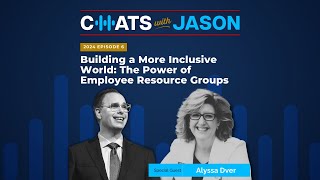
This is a recorded interview (YouTube) between host Jason S Bradshaw and guest Alyssa De Vere about Employee Resource Groups (ERGs) and confidence-building. Alyssa—author of ERG Intelligence and founder of the ERG Leadership Alliance (ELA, ~25,000 members)—explains ERGs as affinity-based employee associations (origin traced to the 1960s/Xerox) that support retention, recruitment, engagement, innovation and professional development when run well, but can harm outcomes if mismanaged. She outlines four key executive-sponsor roles for ERGs: securing/facilitating funding, helping leaders prioritize volunteer ERG work, advocating/representing ERGs within senior leadership, and visibly showing up as role models. Alyssa connects ERG work with her confidence research—motivated by her son’s focal dystonia—arguing that confidence is a learnable skill ("confidence is a choice") and offering practical guidance: notice the physical "itchy"/amygdala signal, pause and gather better data, and practise confidence when cognitively resourced (rested, fed). She directs listeners to her ERG book (free PDF on ERGLeadershipAlliance.com) and TEDx talks; the episode closes with a brief call-to-action to take control of one’s confidence.
Chapters
Hey everyone. Welcome to the show. It is so great that you're joining us again for the next 20 to 30 minutes as we have what's bound to be an exceptional conversation. Our guest today has delivered not one but two TEDx talks. They're absolutely worth checking out. Has written not one, not two, but eight best selling books. She's won Stevie Awards as a thought leader. She works with organizations across the world, global organizations. She is a coach with the MIT and Wharton Innovation Centers. The list goes on and on. But you're not here to listen to me introduce the guests. You're here to listen and learn and be inspired by this wonderful person joining us today, Alyssa De Vere. Welcome to the show.
I'm so, so excited to be here with you. Thank you. Thank you so much.
Now, congratulations on your phenomenal success and certainly the reason I reached out to you originally was your new book, which as I understand it, you've already updated and it only came out earlier this year, ERG Intelligence. What Every Leader Needs to Know about Employee Groups. So let's kick off with what is an employee group?
Well, not to make this kind of like a dull beginning, but I find these particular structures to be fascinating. Employee groups have been around since the 1960s. Xerox was kind of credited with starting them and they kind of were in the background for a really long time. And about 2018 I started getting invited to speak a lot to them because we're going to talk about the confidence work which is really around my TED talks and so forth, and, and the science of confidence. And I looked at these constructs and what they are, are employee associations. And what I find absolutely fascinating by them is because they are affinity groups, if you will, by nature. So think of any kind of parent, teacher association, automobile association, people with common affinity most of the time along diversity lines. So black, Hispanic, LGBT women, etc. But there's all kinds of other examples, including religious ones, including hobby groups. And I thought, this is a really interesting contract. You have this employee association, they're getting some funding from whatever entity they are in. And the entities weren't just for profits either, Jason, they're like non profits and academic and governments. So I thought, why isn't anyone paying attention to these? And lo and behold, I started this company called the ERG Leadership Alliance, ELA for short. And it has taken off like a rocket ship. So Today we have 25,000 members. They represent companies of the biggest of the big global multinational brands that everyone knows and some really small ones that are just, you know, trying to do the right thing by their employees. So it's fascinating space, full of paradox, very intellectually challenging. But if anyone in the world could use some confidence, it's usually the people that are part of this group. So I have a tremendous pleasure working with them.
When I think of employee groups, I think of companies like Salesforce and Google and Apple who I think they have a group for everything. I'm blessed to know quite a number of people that work at those organizations and a number of individuals will actually be part of multiple groups, given, you know, their various backgrounds and the things that interest you. And I definitely know that those companies invest heavily in supporting those groups and see them as a real way, as being a differentiated employer, you know, making the workplace not just about the work, making it about more.
True, true. Now, what we're starting to learn, and again, you know, we could do our conversation just on this topic alone. But what we do know about employee groups already is that they not only help with employee retention, acquisition, of course, people want to see that your company's diverse, this is the proof. But they increase productivity, they dramatically increase employee engagement. So you're getting better innovation, more productivity, happier employees, which lead to what you would imagine to be healthier employees, so even reduced costs of the. The benefits. So there's only good reason to do it. But the research also says that when you don't do these kinds of groups well, they have the inverse effect. So what ELA does is we do training and certification and we support all the different players in the ecosystem, which is not just the members, the leaders, the DEI team that typically runs these groups, but even the executive sponsors. And I'm doing at least one, if not two or three trainings a week for the C suite level at these organizations to really help them understand not just what these groups are, but, but what their roles are in supporting them properly.
So sum it up for me. What is the key role of that executive sponsor of ERG Group?
Well, the key role, I think there's like four key things. One is in terms of funding. Now, sometimes the funding is given to the group through the diversity office, but at times the funding has to be acquired. So fundraising, if you will, from the executive level. The executive themselves may not be the one who's contributing the money, but they have to at least help acquire it at times, and of course help the leaders in that group spend it properly, wisely aligned with the business objectives. Right. So in the old days, people used to say ergs are food, flag and fun. They're not anymore. What they're doing is professional development for their members. They're doing community service work, they're doing focus group kind of work for the businesses, the business itself. So there's all different activities. What we what's called programming. And the executive sponsor again on the funding level can really help in making sure that's optimized. So that's number one. Number two is really helping prioritize. Now ERG leaders, people who sign up and raise their hand, they may be Mary Jo in accounting or Billy Bob in marketing. And so they may not have leadership experience. And at the same time they come with a lot of passion, a lot of intention, really good intentions. So they want to do a lot more than they can because this is on top of their paid or their hired job. And these roles are typically volunteer jobs. Sometimes they're given some kind of a bonus, sometimes tied to performance of that work, but largely is not their full time responsibility. So the executive sponsor again can really help in a coaching capacity to help prioritize and keep that additional ERG work within the scope of what's feasible. Another thing that these executive sponsors have to do and you know, people say they should advocate and I say that to people, you should advocate. They don't know what that means, but what it breaks down to is really represent that group. So if there is a, an opportunity, maybe at a company event or a way of elevating the knowledge of what's going on in the group, that executive really has that voice and that visibility at the, at a level that the leaders and the members wouldn't normally have. So those are all different things that an executive sponsor can do as part of their role. I think one of the biggest things that an executive sponsor really needs to do is show up. And what I mean by that is they act as a role model. They shouldn't necessarily be at every event that that group does, but they need to come and show that they are visibly supporting that group because the work is hard. Diversity work is really hard. And if you don't have that senior executive support, quite honestly, I don't think it can. The groups can be, that can be successful. We've seen lots of groups fall apart despite the best intentions of everyone else when the executive sponsor is not really engaged. So showing up at some events, participating in meetings, really just telling the members and the leaders that their voice is being listened to. That's really, that's the role.
Yeah, it makes so much sense. And I was thinking about some of my experiences that a Lot of the time, at least in my experience, the executive sponsor is basically told everyone on the C suite needs to sponsor something and he or she, you know, could be the one that just gets the leftover group as opposed to the group that they're, they're passionate about. And I think sometimes they just ignore it because they're not necessarily even sure. Even if they are passionate about the idea, they're not necessarily even sure about what they should do. Especially in organizations where these groups have been set up as a response sometimes to those employee engagement surveys or as a bit of a knee jerk reaction to something that's going on. So help with fundraising or securing the budget, providing leadership guidance and coaching to the leader of the ERG group. And I think there's something really key in that. You know, you said it could be Mary Beth from accounting or Jo from marketing and who hasn't got leadership experience. And I think these are also great areas for people to in a safe way get some exposure to different things, whether that be leadership, whether that be to a different way to participating in their day to day work. So providing that mentorship is fantastic. Advocating and representing the group, I think that's a good one for us to remember. And then to show up and be visible and participatory, but not controlling I think is the key point there. Right? It's not, well, you're the most senior person in the room, therefore you have to run the room. No, you're the most senior person to sponsor and support the group and you can contribute, but let the leadership do what they need to do. So excellent, excellent insights for us already. And we're just getting into it. I was really, really impressed by the diversity of your work, looking at the impact that you deliver through ERG. And then you go over and look at your TEDx talks where you're talking about confidence and on the surface you might think that you're a little bit bipolar. You don't know whether you're a confidence expert or whether you're an ERG leadership expert. But when you take the time to step back and look at it, a lot of these employee groups are actually a way for people to build community and to gain confidence in themselves and in the workplace. So they are absolutely married together. Now in your professional bio you described as a confidence expert. What is a confidence expert?
I appreciate it. Well, before I forget too, for anyone who's out there is like, I'm into, you want to learn more about ERGs? I flashed the book before, but I'm going to do it on the video so you can see it, how skinny it is. It's a thin read. It's about an hour to two hours if you're a slow reader. But it's also free. So if you're interested in ergs, by all means go to the ERG leadership alliance.com website. Get the PDF for free Amazon. You can order paperback if you're prefer that. But needless to say, anyone who's interested in that field, please check it out. Confidence. So you know, it's it. It is a field that I am beyond passionate. It's kind of the thing that gets me out of bed every single morning. Because my original career I was a product manager and then into marketing. I ran marketing for a number of companies, some public, did a couple startups and loved the thread in there is that I loved to understand motivation theory. Like what was it that made people click a link or buy a particular product or even, you know, decide to start a podcast? Right? I mean like what is, what is all that impetus and how does it, how does it happen? So it was always something that was fascinating to me. Fast forward. After about 25, 30 years in the corporate world and some startups in there, I had a crisis in my life. My, my older son, who's now 24, when he was eight years old, There was a neurological situation where he was diagnosed with something called dystonia. And it was at a time where there wasn't a lot of knowledge about what this condition was. Dystonia technically means that there's a disconnect between the brain and a part of the body and the neural chain, two things is just not functioning 100%. So if you know somebody, or maybe you have, if you're listening, Parkinson's, Mississippi, Tourette's, there's a whole set of neurological diseases that fall in this dystonic, dystonic category. And my son has something called focal dystonia where he can't control his forearms. And so it became very scary because they said it was probably going to cause him to be paralyzed and subsequently they didn't really know how to treat it. Lots of medication, things that were making.
Him.
Very sleepy of course, and, and dizzy and all those things, but their brain slowing drugs. So here I am, a mom giving my kid something to slow him down and is thinking and is learning. And then they started to inject him with Botox in his arms to deaden the muscles that were causing the conflict. Or as, as you would think about it, actually, you know, he had muscles that were good and those were the ones they were knocking out so that he wouldn't have the spasms. But none of it was really working very well. So I did what I don't think anyone believes they can do until they're in that situation as a maybe a parent. And I started diving into brain science. I was like, I had to figure this out because the doctors clearly did not know. And I was calling doctors everywhere, including Australia, my friend. So after about two years of researching, I started to really recognize some patterns and things across different disciplines. I started talking to alternative medicine people as well. And at the time brain science then started to emerge as something that everyone was recognizing. And we got some new technology in the world called functional MRI that really kind of cracked open that whole area of discipline. So again, kind of at a surface level some more. In one of my TED talks on that whole topic, I became very knowledgeable to the point where doctors were calling me and not the new book I flashed, but the one before that. Confidence is a choice. Harvard Medical School is on the COVID They've endorsed it along with MIT and a whole bunch of others. So I don't pretend to be a neurologist, I'm just a mom and a marketer at heart. But what I do know about this area is that the more we learn about how we have agency in our brain and teach people to take agency, to have control, to be more aware of what you can do and think and feel and be and behave because you do have a lot more control than you're led to believe. Most of the time we don't teach people that. And so it became a real personal mission. And I. Confidence crusader is kind of a funny way of putting it. Yes, I'm a neuro nerd too in that. But I started talking to people about it and it kind of started to take take a very fast path to again those employee groups was one of the groups that seem to really appreciate this knowledge and they were really wonderful people. So while I was doing the confidence work, I said, you know, I can teach confidence to anyone. We have kids and, and grown ups and professionals and you know, the gamut. But one of the things that I know as a marketer is having a target market makes all the difference. So became very clear to me that the employee resource groups were a beautiful target market. And I would say about 80% of what I do on the confidence space is now in that erg world.
Well, the book Confidence is a Choice. Real Science Superhero impact. Well it's definitely a Catching title you raise. Well, first of all, hats off to you for doing the work, despite what must have been a challenging and scary situation. I'm not a parent myself, but I certainly appreciate that you would do anything to look after your child and make them better. And your response has led to a generation of work that's going to make a difference to a lot of people. So thank you for that. Thank you. When I look at your TED talks and I've. I've only seen part of them, but you really capture right at the beginning that perhaps were groomed in some ways to seek out. I am stealing from your tender talk a bit, but groomed to achieve, to do more, to get that next promotion. And when these things don't happen, our confidence gets shattered. You know, thinking about the economic situation we're in at the time of this recording and so many people are finding themselves displaced out of their jobs. And I have conversations with people every day that are like, well, I must be bad. You know, they're losing their confidence. Even though they could have been brilliant in their careers. Brilliance doesn't necessarily mean that the company keeps you and it's got nothing to do with you and more about numbers on a paper at times. So there's so much that impacts us every day. And I think confidence is something that people do struggle with and something that we should focus on getting better at as individuals, but also be more mindful of how what we do impacts others. So my question to you in that really long wind up is how, how do people develop this habit of being confident?
Well, I'm going to correct a little bit of the way that you just phrased that, because confidence is a skill. It's not a state of being, it's not a genetic inheritance. You know, it's not. It's none of that. It is a skill. You learn how to be confident. And that's the problem. We don't teach people how to be confident. We try and build their confidence. Right. And again, that's a misnomer. It's. You don't build confidence. Confidence is, you know, it's almost like, again, maybe another maternal example, being pregnant. You either are or you're not. Right? Definitionally, I don't care if you're studying in a laboratory, you're either confident or you're not. Now, there's always a margin of error in that, some standard deviation that we say, I might be wrong or I might fail, but I'm confident that I can do X or I'm confident that I did Y. Right. It's not, I'm sort of confident. I don't feel confident. It's you are or you're not. And the deliberate title Confidence is a choice is you make that decision if you are confident or not. Given any scenario you can imagine right now you have different data coming at you all the time. Whether it's the news, it could be something. You smell that, you see that, you know, a memory. You have all kinds of data points that factor into your brain, in particular prefrontal cortex right in front of your forehead, that you then say, yes, I'm confident about what I'm going to do, what I'm going to say I'm going to do or act or I'm not. Now, when somebody loses their job, it's not that they don't feel confident about losing their job. They don't feel confident about their performance in the job, right? And like, oh, well, I thought I was doing great and then I got laid off. Right? So they're second, second guessing, they're going back and they're going, wait. I used to feel confident that I had a job, I was good at my job, I showed up every day, did my job right. And then all of a sudden, maybe I, maybe I was, I didn't know what the truth was. They're, they're, they're doubting their ability in that job at that time. Their confidence itself is being questioned because they're, did I really have the right data? Did I really know? Now how are you going to know that if you are not the CEO or in the C suite of a company and there's some meetings going behind closed doors, they're planning a layoff and you just happen to be in the wrong chair at the wrong time. How are you going to know that? But instead of being rational like that, that's the rational way of saying I was the wrong place at the wrong time, right? I got cut and it stinks. Instead we go because we haven't been taught otherwise, right? I suck. I stink. I must have been terrible. I didn't have the right data. So if you, if you stop yourself in that moment where you're self doubting, if you know how to do that and you can say, wait, timeout, I need to get better data. I need to really think this through. I need to be more rational about what happened or I know how to get more rational, maybe I have a coach or a good friend that I can talk in a logical way. Yeah, things can get a lot. You can kind of remedy that, that's, that's the choice you're making. You're taking action to say, wait a minute, timeout. That moment that you say, wait a minute, timeout. I'm not going to stew in this. I'm not going to assume anything. That's confidence right there. That's. That choice. Now, neurologically gets a lot deeper very fast. But, you know, at a surface level, hopefully that helps.
Yeah, I love how you rephrase that confidence. You're not building confidence. You're. It's. How do you become confident? How do you make the choice to be confident? And, and that, that skill, the. The. That decision skill to say, I'm. What's the rational way to look at this and therefore come to a confident conclusion of the outcome versus well, I'm just no good. Because X happened. It's a great way of looking at it. Now, like any skill, it takes practice. Right. So what's the biggest tip that you could give our audience today around practicing this skill of confidence?
Practicing the skill. Okay, I'm gonna, I'm gonna give you two. Two very woo woo, as we would call it. Fuzzy, like the situation, but they're really important. And again, you know, everything we do is based in brain science and research. So when I say woo woo, it's not that. It's not like we are playing out of air. So first and foremost, there's a feeling you get. Everyone gets it. My old business partner, who now teaches full time in university in Canada, you say, call it the itchy feeling. It's that feeling where you're like, I'm not really sure. You know, maybe you have a little twitch here. You eat this, that and the other, or stomach butterfly. And it can be for anything. You know, I'm going to ask that person out or I'm going to go cause a, you know, a customer service problem or whatever it is that you're doing. And you're like, you're not really sure if it, you know, you're feeling like if. I was talking with my CFO earlier today and, you know, he asked me about the pipeline for the rest of the year, and I'm like, well, you know, I'm not really sure what's coming in the economy and the politics, you know, the standard line, whatever. But what was underlying that was, can I afford to do some things that we want to do, Right? So I could feel it. I could feel when I was answering his question, you know, I was feeling a little bit squirmy. That's the moment that you Say stop, catch your breath, so to speak. And sometimes people will say, take a deep breath that doesn't over hijack your amygdala. There's all kinds of science around that too. But if you can identify that feeling where you're feeling insecure, uncomfortable, you can label whatever you want, but it's a physical feeling. That's the moment you go, timeout, timeout. What's going on here? And you got to stop yourself at that moment because what happens after that is either going to be a reaction to that feeling, which is means you're not in control versus a conscious action that you say, I recognize that this is not good or that this doesn't feel good, but I'm going to take action to, to figure out how to make myself feel better. That feeling, I know it sounds woo, woo. That's the amygdala screaming at you. That's your brain saying, whoa, be careful. You're going into some place that might be a little scary. You recognize that you can address it. Now, what makes that really hard is my second part. And this is for all you entrepreneurs out there, all you people burning the corporate candles when you're tired, that recognition is really hard. When you're hungry, when you're overwhelmed. You know, end of the day, like we were joking, before you turn on the recording, it's almost 6 o'. Clock. It's 6 o' clock pm here, it's been a long day here. It's hard to make a good decision, even if it's like, what do you want for dinner kind of decision, right when you're tired, when you're overwhelmed, when your cognitive resources are low. So save the brainy stuff. When you're feeling fueled up, when you've slept well, when you've had enough to eat, when you certainly are in a place where you're not feeling deprived physically, that makes all the difference in the world too.
Some fantastic advice for us. Alyssa Devere. It's been an absolute pleasure having you on the show and for our audience. I cannot encourage you enough to check out both of her TED talks, grab the resources that she's got available on her website. I'm going to leave in the show notes a link to all the great resources. I definitely think Alyssa's work is something that we all should follow and understand more. But before I let you go, what's one thing you really hope that our audience members watching or listening today will do in the next few days after listening, to make a step forward, make an improvement in their lives.
Oh, well, maybe it's so easy that it almost sounds pedantic, but recognize that you get to control your confidence. The world doesn't get to control you, and you get to control your brain. So the day that you say you want to do something about it, you can. And I promise you it is possible. We worked with half a million people at this point, my son included. Jason, I didn't get to say that. My son not only is working as a elementary school guidance counselor with helping kids today, but he's also a tennis pro. So everything that we talked about today, I have personal experience that it really does work well.
I'm delighted beyond words that your son has managed his condition and achieved what he has. And that just is fantastic news and a great way to wrap up the show. Melissa, thank you so much for taking the time out of your evening to do this recording with me and to share your insights with the audience.
It's my pleasure. Thank you so much for having me.
And to you, the audience, if you've loved this episode, please give us five stars. Share it with a friend. And remember, taking action will move you towards what your goals and dreams are. Thanks for listening.
More from Jason

Bringing Wonder Back to Work | Leadership, Culture & Service with Peter Merritt







How to Lead With Empathy: Claude Silver on Emotional Bravery & People-First Culture


Inside Harley’s Cult-Like Loyalty | Ken Schmidt on Turning Customers Into Believers
