Decoding Product Led Growth Marketing
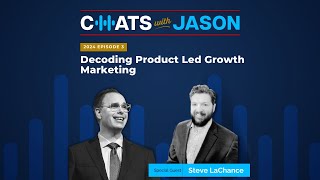
Stephen Lachance breaks down product-led growth: when it works (clear product-market fit, abundant users, obvious value), and how to market it. He defines product-market fit across four axes, emphasizes understanding customer journeys through direct interviews, and stresses empathy over tactics. Free resources available at discerner.com.
Chapters
The podcast. Today we're going to decode product Led growth marketing with Steve Lachance. Now, Steve's the author of the best selling book Marketing for Product Led Growth. Become a company leader through credibility and empathy. I absolutely love the conversation with Steve, and I hope you do too, as there's so many key takeaways that I'm sure you can implement in your business as soon as you finish listening to this episode. So without further ado, let's jump into the conversation I had with Steve. Hey, Steve, it's great to have you on the show.
Absolutely. Pleased to be here.
Well, congratulations on the new book Marketing for Product Led Growth. It's a bestseller and a fantastic read. So congratulations on the book.
Thank you very much. Probably the hardest thing I've ever actually gotten across a finish line. And like any great project, it was certainly more than just me hitting things on a keyboard. If you're thinking of writing a book, pay your editor, Love your editor, appreciate your editor.
The joys of writing a book. It's always great though, when the editor comes back, sit back and say, you've got to rewrite this entire section. It's just not working. I feel your pain there. I feel your pain there. For our audience, help me understand and help them understand why. Now to write a book about product led or Marketing for product led growth.
Sure. So brief history, like PLG was a term that was coined I think probably in like 2016, 2018, something like that. We had been talking about it in at least the B2B software as a service space. Definitely in the other as a service spaces in the world, in the marketplace. I should say from even prior to that, we just didn't really have a name for it yet. And having sort of grown up and seen it implemented in a number of places, failed in a number of ways, succeeded in a number of ways. There became a couple focal points of what was required for success, one of which was having, you know, an organization that had its resources around building a PLG motion, which for those who aren't really familiar with what PLG is, think of it as at its most basic definition, the self service funnel for whatever it is that you sell. Could be a software product, could be a physical product, could be a consumer good project, whatever. So you needed to have a good team focus on that. So someone from sales, someone from marketing, someone from product, et cetera, you know, someone from leadership. And the ones that kind of were doing the best were the ones who let the marketers really step into the gap and coordinate Things. And then the sort of aha moment for me was when I was at a recent startup which we had actually just closed a seed round and leadership was very keen on getting a product led growth motion set up. I had some opinions on whether or not we should go down that road. And what I was running into was a lack of information in like a consolidated space around the role of marketing and product led growth, the role of sales and product led growth. It was all sort of built around the idea, if you get the Hollywood reference, the field of dreams, where if you would just build this product, people will come and find it and love it. And anybody who's been in business for 10 minutes knows that's not the case. So I just googled marketing for product led growth and nothing came up. I mean, in 2021 when I really started putting pen to paper, nothing came up. And I said, well, I've been doing this a while, let's finish the research and get it into the book, get it on the page and as I.
Say, the rest is history. Thanks in part to a kind editor who guided you along the way. That's fantastic. So you said that you had some concerns or hesitations around using a product led growth strategy in the business that you're in. Why would, why would someone use a PLG today?
Yeah, PLG works great when you've got kind of like four key required things and then the two things you add on top of it. The first is a product market fit. You need that to be a going concern. You need that to be making money. It's the hardest thing to get. But if you're working on that and you've solved that problem right, you solve a problem for someone, there's going to be more of them than there are today or tomorrow than there are today. So growing audience, you address articulated needs, you do it better than the competition. Congratulations. You're. You're either at the point of tens of billions of dollars a year in revenue or you're quickly approaching that or more so fantastic. But the other thing you need for PLG to matter or to be functional for your product is an abundance of potential users. If, for example, your product or your service is just exactly what every chief technology officer at Fortune 500 company needs, that's not a very good product led motion because there's only 500 human beings that are going to get a lot of value out of your product. And that's an extreme. But you're aiming for millions of users, ideally things that solve horizontal problems across different Organizations like a meeting scheduling problem, a design problem. Every marketer has to create designs and some of them have to do it alone. So along comes Canva to really expedite that process, that sort of thing for large organizations say, you know, you say you're selling into a company that's got a couple tiers of management or whatever you want a PLG will work with. You can sell to that individual contributor level or at least have that where it be where the product is first tested and then empower those individuals to sell laterally and up their organization for you. So, and the last thing is a very, you need a very conspicuous value experience. Maybe the user needs to experience some value and they need to be aware of experiencing that value. Maybe defining that in the negative could be helpful. You know, think about the last time you like had like a really stuffy nose and then suddenly it clears and you get your very first deep breath of air and you think, I'll never take air for granted again. And everybody listening right now is suddenly aware of how the, well they're breathing. Like you weren't aware of having a nice clear airway until just this moment. So you know, making the value that your product delivers, especially if it's a background service, right. Or the type of product that alleviates a pain, making it available or obvious to the user that it's happening is going to be far more successful in a PLG motion. Now to the specifics of your question. I was working for a cybersecurity startup. The cybersecurity vendor for most companies is chosen at a pretty high level within the organization and it's typically forced down onto the broader organizations operation model. So it's hard to, it's not impossible, but it's hard to sell a cyber security product from the ground up to, you know, a series or a large base of potential users. And it's also very difficult to make security and compliance conspicuous. Right. Security when it's successful is the absence of a breach. How do we, how do we put a value metric around that? Again, it's possible some companies have done it really well. But that particular instance created a situation where there were more pitfalls than our leadership might have realized. So like any good leader in an organization, they said can we do this? And I said yes, if. And then it's if we do all these other things, then it will work. And that's what we did.
Yeah, I like how you call out that the user has to be aware of the value. Quite often organizations will focus on the transaction Selling the widget, product, service, whatever it might be, and they forget to reinforce the value that they deliver. And I think that becomes even more important in something that by design is meant to be in the background. Imagine if, to take the security company as an example, imagine if every five minutes there was some pop up on the screen to say, just letting you know, still no security threats. Very quickly you would be kicked out of a company because you'd be a friction point, not a value point. So it's a great call out.
Yeah, the everything's okay alarm is not, has not ever made it to the shelves. Nobody's trying to buy that, that's for sure. So.
Absolutely. So you mentioned also product market fit. Now I know a lot of people listening to this show work in organizations where they launch new products from time to time and sometimes they just rely on the fact that the brand will carry them through. What is product market fit? And, and how do they find it?
Yeah, hopefully some of your listeners just rolled their eyes when they heard product market fit because the definitions really are scattershot, often backward looking. They're very unhelpful. Things like you'll know it when you have it, it's traction. We used to say things like when you can't produce as much as you can't meet demand, that's when you have product market fit. I would actually argue that's just poor for supply chain. But I define product market fit in a forward looking way and in a quantifiable way. There's four axes of measure that I would target and the first is am I solving a real problem and who's it for? Right. Am I solving a strategic problem or am I solving a tactical problem? Higher scores for tactical problem because there's more people who are solving tactical problems than strategic problems. Is this for a growing audience? Now in a SaaS or product led growth based level, we're talking about delivering exceptional and delightful experiences to people by way of conspicuous value experience. And what you're looking for is more human beings solving that problem today than yesterday. So if you're in an industry, not industry, but if you're in a like job cohort, for example accountants or cybersecurity professionals or teachers, whatever it might be, if that cohort is in decline, that's negative score, negative points towards your product market fit score. If it's stagnant, that's pretty. That's also negative points. If it's growing at the pace of the market, that's good. Faster than the market, even better. The third Axis is addressing needs, specifically the difference between articulated and unarticulated needs. An unarticulated need from a product led growth standpoint is not really doing you any favors. You can sell as an organization to unarticulated needs, but that requires a conversation with a sales rep to really walk a prospect or a potential client through their pain journey that they're living. And you know if you're going to do a product led motion or just a shorter sales cycle in general, you want to create content and speak to the needs of someone that they're already asking for a solution. Maybe they already have a solution and they're researching alternatives. And because you've got a really great marketing team in place, they're happen to find yours. Whether that's through word of mouth because you've delivered on a fantastic experience, whether they've experienced an output share from your current product because you had marketing design beautiful work with the design in your team or in your company to to produce a beautiful dashboard or whatever that output might be. Back to the CANVA example or whether or not it's a marketing helped you orchestrate the cadence of inviting teammates into your product. So there's kind of those four ways to bring them in and then the final again we want to attack and address articulated needs and then the final one is performing and solving that problem, addressing that need better than the competition. There's always going to be something that you're doing better than the competition. So what you're looking for are shortfalls in the marketplace, ideally a flagrant shortfall as opposed to a trivial shortfall. A flagrant shortfall means an outcome was promised but it wasn't delivered, or a problem solution fit was promised but it wasn't delivered. And so you're going to step in and actually do it that way as opposed to a trivial problem such as I don't like the user interface or there's no dark mode and I like to work in a dim lit office or something like that. So bottom line at the bottom, unfortunately instead of up front product market fit is addressing a real problem at a tactical level for a growing market that addresses articulated needs better than the competition in an obvious and conspicuous way. It's so easy to say, it's so hard to find. You got to get out there and do so much work to make that happen. But if you make that happen, you're better off than I'm telling you. Like 90% of companies that they go out of business because they never found that product market fit and they Ran out of cash. Right. They never got their cash from operations machine positive and the company went out of business. So if you can solve that problem, you're the hero no matter what your job title is.
Yeah. I think also that while not every business necessarily goes to that doom state of going out of operations. There's I can think of a mid sized business that I consulted with for a number of months and they just kept launching product after product and their model was well, we'll find a product that someone will buy and they found enough people to buy the products. They're reasonably profitable. But I think the lack of focus on understanding their consumers trying to find product market fit, even trying to resell products that the consumers are asking for, their lack of willingness to explore that space actually slowed their growth and their profit potential because they, they became more of the, more of the marketplace for leftovers as opposed to the marketplace people go to, to get, you know, exactly what they, that they need. I also, I also love that you called out that or how I interpret it was worry less about do you have a dark mode? You know those, those subjective items where sure, you might have a thousand users that want a dark mode, but if you've got a million people that don't care about it, that's a better market to be looking for.
Yeah, I agree. I appreciate your, so your assessment there, you cut to the, to the quick of things earlier when you had mentioned that that company who had kind of went with the shotgun approach, you know, let's put a bunch of products out into the market and we'll see what fits. Now if you've got the capital to back that up, all well and good. Your assessment though, I think was spot on. They left a lot of money on the table and quite frankly they left a lot of people in the world starving for a problem or starving for a solution to one of their problems by really sort of diluting their efforts into just to see if it would stick, just to see if it's going to make it. And I, I can't speak to that specific company but I've worked in with organizations at Fortune 500 level where you know, the approach to product launch is well, let's treat ourselves like a venture capital fund. We're going to go get, you know, we're going to go put 20 products into the market. We expect two of them to succeed, three of them are going to break even, five of them are going to break even and they'll pay for all the other ones. And that is a rather inefficient model to find the right product when you're putting up a hundred percent of the capital for that product success. But yeah, so, yeah, well, I think.
It'S always, I think it's always inefficient. It's just, it's better to be inefficient with someone else's money than your own.
I have many opinions on how capital is allocated. Maybe another podcast, I was going to say.
I think there's definitely a conversation there. Jumping back, jumping back to the book, though. So the main title, Marketing for Product Learned Growth. The subtitle is To Become a Company Leader through credibility and Empathy. Now, what's your take on empathy? What do you mean when you, when you say empathy?
Certainly. So empathy is, I mean marketing. I should say marketing is empathy. It's the capacity, mental, emotional, psychological, intellectual, to place yourself in the position of another, in a case of, you know, the marketing leader or even a business human being in our public here, to understand the needs of another individual at a specific point on their journey. And then you should be able to leverage that understanding to create aids and solutions to move them further along towards where they want to be. To be a bit more specific with that and to be candid, this is not a human being like you or me sitting in a room just imagining what other people are going through. This is a, this is a systematic effort to understand the types of customers that you'd like more of. So say you've got a business already, you're doing really well, you've got favorite customers, they have a certain profile about them. There's also customers out there that would, you know, really, really suffer if your product ceased to exist. Right? That's, that's your critical user profile in addition to maybe an ideal client or an ideal user profile. And a good marketer is going to be able to empathize with both of those profiles, where the only thing missing is they're not yet a customer, they're not yet a client. And so you use the empathy to understand what questions they're trying to answer out there in the world. About 85% of a buyer's journey happens in the research phase. So no one's ever raised their hand to ask to talk to your company, or any company for that matter. Which means they're, they're googling things. They're asking ChatGPT to tell them stuff from the Internet two years ago to answer their questions. Eventually, you know, they're going to start to realize, wait a minute, I keep coming Back to company X to answer these questions. Let's see what else they have available. And then you know, they decide that they're going to give your, your company a shot and you're going to give your product a shot. And in PLG that always involves some component of try before you buy, whether that's a free trial or a free trial that downgrades to freemium or you know, the first one's free if it's in a consumer goods or a retail setting that's putting on the shirt in the dressing room or having trying the snack if you're I know it's popular in American grocery stores where you get to eat a little bit of what's in the package before you buy it kind of deal and then let them move on, you know, empathize with the journey that they're in the middle of. And a big piece of empathy too is, you know, product led growth and self service and a reduction of time spent with a sales professional. This wasn't invented by companies because they wanted to go there. This was forced upon companies who sell complicated products to then distill that into easy to understand stories thanks to their very well equipped marketing departments or well intentioned, but maybe under resourced marketing departments because the market demanded it. People said, I don't want to pick up a phone and go through the rigmarole of a demo. I've already made the decision that I want to buy your product or I just want to know what something costs. Don't make me cough up a whole bunch of my information so you can market to me later on down the road just to get a free quote. I mean the buyers of the world said I don't want that anymore. And so PLG came about to satisfy the vastly growing or the rapidly growing need to just get people the info they want and get out of their way and trust them. Now the great thing about empathy is it feels like to the person that you're writing for or you're speaking to that you've basically read their mind. It shows them that you've thought about these questions before. By definition of something like a white paper or an ebook, you can't write it until you've already thought of it. And if you've already written it when I thought of it, that means you're one step ahead of me. That shows some credibility. And if you can repeatedly and routinely deliver a value experience. I needed a piece of information company, I'm not going to say X company, Y gave it to me and they Keep doing it again and again. You've, you've just delivered a fantastic experience to someone who's not your customer yet, but they remember that and they know how your website and how your brand makes them feel about making a decision. And you're very likely to win in the end because you've spoken to their needs. And you can't do that with just data and algorithms. You need data and the human mind and the capacity to be empathetic. You don't necessarily have to be, you know, overly compassionate, but I like you better if you do.
Excuse me.
Quite right.
It makes so much sense that it reminds me of a phrase that I feel like I'm a broken record with so many clients is who's your customer? Do you know who your ideal customer is? What they look like, what their desires are and how you can add value? What's the pain point you can take away from them so that yes, they know you and they like you and they trust you, but more importantly that they want to do business with you. And so many organizations forget that actually understanding, deeply understanding, what you're saying is deeply understanding your customer, meeting them where they are in the conversation and perhaps just being that one step ahead of their research journey so that you're making their life easier and that you become the trusted source. And if you're the trusted source, you're likely to become the person I do business with. Right?
100%. Along with that, it's important to remember that the people who are looking for a solution, right, they have one now, most likely, and they just don't like it. So if you can speak to, hey, we understand the frustration of how you're going through things now. That's why we created this, you know, major step up, this major improvement. They're going to feel a lot better about it. You have to deliver on that, right? If you set a promise and you under deliver, that's a negative experience. That's going to breed resentment and mistrust. But if you can over deliver on that or meet those expectations routinely, now you have delight. Now you're building social capital, you're building professional capital with that individual. They now feel comfortable recommending you to a friend or to a colleague or to a boss. Because anytime you make a recommendation, Certainly in the B2B space, you take a little bit of a risk, right? You know, we've all been in a position where we've recommended a book to a friend and then like two weeks later you find out they didn't love it that much. It's like, oh shoot, you know, yeah, should have done better, you know. But it's, it's. If you can diminish the anxiety for your potential users and your current customers around the referral process, then you're in a real product led scenario because they're going to be inviting the people that they work with to join them in this delightful experience they're having with the with what you with your solution essentially.
Makes perfect sense now. It'd be remiss of me not to ask how can people follow your work and stay in touch with your thought leadership?
Certainly. So you can always find me on LinkedIn, the only Stephen Lachance that looks like this. You can find me on my website discerner.com the guy who invented it spelled it wrong. So it'd be better to follow a link that said listeners here do get a discount code. Typically it costs quite a lot of money to have a one on one conversation. You would bring an idea to that conversation. You're leave it knowing what to do next in your unique case and feeling good about that because we're going to put an actual plan together for you. But it's free for listeners if you got the code for this, so check out for it. And then the other thing you could do is I have a podcast of my own. It's called 15 minute CMO. It's 15 minutes in length. Sometimes they go a little long, but season two is about to drop and get started off and feel free to tune into that in the last 15 minutes. You have a day not connected to your screen. Fill it with my silly voice and you too could learn some marketing tricks.
Well, we'll be sure to put all the links in the show notes and on our website as well as the code for that fantastic and very generous offer. I certainly appreciate it. I love how you said that your 15 minute show sometimes runs long. Many, many moons ago. 20 years ago I launched a 60 seconds with with myself which was basically just me providing a piece of wisdom around a specific topic each day with a view on customer experience. It was very marketable. 60 seconds. You know, you just need to give me 60 seconds. The problem was I spent hours trying to get it into 60 seconds and it very quickly became the three minute show.
Yeah, that's a great example of meeting a need that maybe folks were aware of but didn't have the comfortability with just yet. If you were to say you had a 60 second tip show or clip show kind of thing going on, I think Gen Z would Say, oh, you mean TikTok, which would be a good thing because you would just have a platform to deliver it. But so way to be forward thinking by about 15, 20 years there.
Yeah, look, it did well. It was just one of those projects that were more work than they should have been. Anyway, the audience does not need to hear me reminiscing about a show that I killed a number of years ago before I let you go. And it's been a fantastic conversation. I'm just wondering what's the one thing audience member listening or watching along today can do as soon as they get off this call? Other than buying your book and listening to your show, what's one thing that they could do to make them better at connecting their product with customers?
Certainly the next best thing you can do after the first two would be to start putting together a framework and a system around your customer outreach. Think about, actually, I'm going to call it ecosystem outreach because there's customers, there's suppliers, there's customers, customers, there's industry, industry advisors and influencers like consulting groups and industry associations. All these people live in the ecosystem of your product. And if you can put together a nice framework around who they are, how to contact them, the types of questions that you want to ask of them, who should be in the room with you. For example, if it's a client or a customer of yours, you might have a sales team that's very possessive of that relationship, or a customer success team that knows quite a lot about them. Bring those individuals with you or into your conversation so you can frame up really the conversations you want to have with all these different people to ask what gains do they, what gains can you create for them? Or are they looking for what pains can you alleviate for them? How are they solving those problems today, however poorly, et cetera, et cetera. And if you didn't get a chance to write all that down very quickly, I've actually got a free swipe file on my website. You can just go download all these frameworks, tweak them to your own liking and get out there and literally just get off the Internet, get outside of the four walls you're in and start talking to real people about their real problems and how you guys can do that for them better and all their friends and colleagues.
And if I can pile on there, I would say don't get a focus group, actually go and have the conversations yourselves because you will learn so much more. Even if you only speak to three or five customers yourself, you'll learn so Much more than if you outsource the work to a focus group. Now I'm not against focus groups that have their place, but there is nothing more powerful in my opinion than actually having the conversations yourself with the customers.
In a past life, I think it was actually, you can't see, it's the logo behind my chair. We did customer discovery in that front end. Heavy lift for new products coming to the market. I've conducted well over 2000 individual like subject matter expert interviews in these different areas. And I can tell you that conducting the interview yourself is the best way to do it. The second best way is to have someone conduct it in one on one or just the two of you with the target or the interviewee. But tag along so you can follow up with probing questions and take your own notes without worrying about trying to think of the next question. And then my third caveat in there would be don't pay the people that you want to talk to. You can go buy time with people through like GLG or Guidepoint and I'm giving a commercial to companies that don't like their product. But you can go buy time with people. You're not going to get the best information on the market. You're certainly not going to get up to date information on the ecosystem you're trying to study. That's like a rule, like that's a law. You can't give away secret information. But what you can do is go talk to people not about the solutions they provide, but about the problems they have. And if you are genuinely empathetic and that comes across in your zoom call or your over the phone call or in person meeting, you're going to just open up a wealth, a wellspring that will go eternal of a friend and a new colleague in a space that you want to get to know more about and just, just have a conversation about, you know, what are the problems they have and don't bring your product with you to sell it to them. Just be a friend, you know.
Yeah, absolutely. Great advice. And what, what great advice. Delivering value.
Right.
Till then, Steve, just as we would expect. Thank you so much for being on the show today. It's been an absolute pleasure having you join us.
Thanks for having me. I had a great time and I look forward to listening to this and all the other episodes.
Thanks so much.
More from Jason

Bringing Wonder Back to Work | Leadership, Culture & Service with Peter Merritt







How to Lead With Empathy: Claude Silver on Emotional Bravery & People-First Culture


Inside Harley’s Cult-Like Loyalty | Ken Schmidt on Turning Customers Into Believers
