Mastering the Art of Better Decision Making
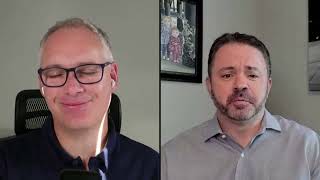
Conversation between host Jason S. Bradshaw and Jack P. Flaherty (founder of The Decision Switch and author of The Decision: Seven Principles of Successful Decision Making). Flaherty explains why decision-making should be treated as a repeatable process, presents seven actionable principles (triage; follow your North Star; collaborate; recognize cognitive bias; establish a champion; manage fallout; practice self-reflection), and discusses applying the framework across contexts (fast vs. slow decisions, cultural barriers, and augmenting — not replacing — judgment with AI). The interview emphasizes habit-building, empathy for affected stakeholders, and fostering open debate without ego.
Chapters
Hey everyone, welcome to this edition of Chats with Jason. I'm your host, Jason S. Bradshaw. And joining me today is a former client services director of Both Deloitte and PwC, a strategic advisor to high tech organizations and a best selling author today. He is the founder of the Decision Switch. I'm talking about none other than Jack P. Flaherty, who's also the author of the best selling book the Decision seven Principles of Successful Decision Making. He shares with us today his insights on how to make effective decisions, no matter the time frame or the circumstances. Let's dive into the conversation.
Hey Jack, it's so great to have you with us today on the show.
Thank you for having me, Jason. Really appreciate your time.
Congratulations on your new book, the Decision seven Principles of Successful Decision Making. Now this book has got some rave reviews. A best selling book as well. What led you to take the time to sit down, do the research and put together this book?
Genuinely, I'm an empathetic person. I always loved working and building teams and people and having spent 25 years in risk management where majority of my job was to identify gaps or issues with companies. When I took a step back, I saw the root cause for many of these was simply a poor decision. A tremendous executive leader who in haste might have made a poor decision because they didn't collaborate or get the necessary information. It made me realize that particularly for our next generation of leaders, that it's critical that they understand what are the fundamentals of making good decisions. Because it's simply not just one instance, it's a process. It's a process that we do need to share and I think it's becoming a critical issue as we move farther and farther into this technologically charged world.
Yeah, I was just thinking about graduate school or even undergraduate school. I don't remember once there being a conversation about how to make decisions, but rather you make a decision and predict an outcome or report on an outcome as the case might be. So I think this is a really fascinating piece of work that you've undertaken and it's a great digestible book with really actionable content. I'm wondering though, why Seven Principles or seven Steps to Decision Making? Is it really that complicated?
Yes, actually we probably could extrapolate it further because within each chapter I purposely put subchapters in there because some of the content is just dense and abstract, which is why I took probably six months in writing the book to put stories with it to make it really digestible to your point. And so that virtually all of Your audience can really understand and absorb it, be able to apply it to either their personal or professional lives.
Yeah, and that application is the important bit. I think there's so many books out there on a whole range of topics where the theory is great, but when I look at the seven steps that, that you talk of in your book Triage, first, follow your North Star, collaborate with others. I could and will go on at some point during the show. Each of them, in and of themselves is instantly relatable and understandable. And then as you dive into your work, you can see how it's not necessarily a lengthy process to apply these, but rather about developing habits, a way of operating, if you will, that streamlines your decision making, I would suggest, but results in better outcomes. Because that's ultimately what you're trying to help people achieve, right? Is to make better decisions to lead to better outcomes.
Absolutely. I mean, to really distill it down to its most simple form. The success that you achieve tomorrow is based on decisions you make today. And so the more well informed decisions you can make, bringing others that have a particular viewpoint or position on that enables you to achieve those successes. But otherwise there's a higher tendency for you to stumble and may not get the outcomes that you really wanted to achieve.
Yeah, yeah. And sometimes I think we get so focused on the goal we forget some really important steps which, which I'm sure you've got some stories around. You know, quite often as leaders we turn to, shall we say, popular brands for thought leadership and encouragement. And recently the good folk over at Harvard Business Review did a special edition around how to make decisions amid chaos or amongst chaos. And it got me thinking is, are your principles only relevant during turbulent times like if, if we're. The economy's great. If business is doing well, do we need a decision making framework or is it. And then therefore, in Harvard speak during the chaos, we need to care about it. What's your take on the need for a decision framework? And, and perhaps the Harvard view, giving.
Credit where it's due. I have to say a portion of my research did come from a number of Harvard authors. So they do have good sense and for better words, compass on what's necessary. The challenge, though, for I would think a lot of your audience and for most of your listeners, is that content is so deep and rich, that's really hard to. To get through and understand how to apply it to their own lives. So flipping your question in reverse, I would say that we've always had a challenge with decision making and that there's just a general bias, particularly when we think of folks in senior positions that they know how to make great decisions where in fact, having worked closely with a number of executives throughout my career, many struggle with this, whether they're insecure to ask a question or they just don't want to listen to someone else and what their viewpoints are. Where we're coming into now is the age of innovation. Moore's Law and for those that aren't familiar means that the evolution of technology is half life ing virtually every year that goes by. So the impact of technology is only getting greater. And so when we look at that and how it applies to our personal professional lives, the amount of information that we're receiving on a second minute daily basis is just increasing and how and the number of decisions that we need to make is comparatively so doing the same. And so by implementing a framework, it helps us be able to sift through what information is really relevant, what decisions are going to matter and be able to focus on those that are going to provide us the greatest fulfillment, the greatest richness, you know, for again, for our personal professional lives. So I don't think it's just in a turbulent period because I think retrospectively we can look back and saying life's been nothing but a trivial period. It seems like my entire life. So I, I go back once again of I think there's a spike in insecurity, I think there's a spike in uncertainty because so many folks are reading the newspapers or watching the news or reading Reddit and really questioning what is going on and how can I make sure that I'm either future proofing my career or just being able to navigate my day to day.
And we're not saying that the seven steps in the framework are lengthy because the goal is if it becomes a way of making decisions that going to use the word automatic, but it's not quite the right word, but becomes efficient, shall we say, in going through those steps? Because in every decision each step applies but in a different context. I was thinking about my work in customer experience and employee experience. And one of the challenges organizations have, especially once they get past five, five or six people, is the culture that they create. And that culture often leads to some poor decision making, shall we say, think about Oceangate or Silicon Valley bank Exxon oil spills versus the BP oil spill and how both companies did or didn't deal with those challenges. Close and dear to my experience is the global scandal that Volkswagen Group had called Dieselgate largest financial penalties for breaking Corporate law, consumer law in Australia and in many parts of the world. Definitely there's a whole company being created in the US out of their fines in the US and the decisions were without a doubt flawed. But, but the culture was, well, if I don't make this decision, I might not have a job. Now I can't talk for every organization and every person in every organization. I'm not trying to do that here. But what, how, how do you use your decision framework making framework to navigate challenging cultures where perhaps the culture is get the result be damned with downstream potential challenges.
You packed a lot in that last one, so I'll try to keep it brief. So from the start, I purposely state at the beginning of my book and just my speeches that it's not meant to be taken a chronological order. It's based on your current situation and what your needs are. So yes, the principles are not meant to be holistic and take you days. Because I actually believe that speed right now is more critical than ever before in our history. You don't have months to make a decision. Sometimes it's, it's split seconds. And if we apply it to like an air traffic controller, you know, versus implementation of a new information system at a bank or whatever, you know, the air traffic controller's got, you know, split second. In the same way, the business may have time to really think about how they want to design it. But in both scenarios, the faa, the aviation administration here actually put in a governed structure to help air traffic controllers talk to each other so they are more informed. So it's not visual or computer, but how are we collaborating to make sure we have safe skies? And the same thing for organizations, it's how are we designing these systems and implementing them to minimize disruption and really to help the organization. So I think it's really important to focus on the goals. But one of the aspects is the criticality and speed that we need to do so. And so it is a combination of the two. But it does become a practical habit then in that ambit that when you come and you're faced with a decision, certain alarms go off or red lights and are there other stakeholders that might have a position that they could be negatively impacted or that they're going to have to change how they do their function. And so understanding what those implications are, trying to put ourselves in those folks shoes, helps to get others around you to embrace and support a decision. But the one thing that I'll pause and say, I'll catch myself in saying my decision because I think too Often we feel a decision is our decision, where yes, ultimately I may be held fully accountable. But were there other factors, other opinions that we needed to consider that could help us make a more well informed decision and thereby achieve greater results? And I think that's the most important thing. And the last piece is culture. I without a doubt believe that we can change cultures to be more agile and decisive by setting a tone at the top of asking open, objective questions, almost to the point of enabling furious debate amongst individuals. But the one caveat is it's not an advocacy position where it's ego against ego. It's having a deliberate discussion about what is the best for the organization, what's the best for a scenario, because we all have a very clear, succinct understanding of the goal. But yet a CFO may have a significantly different opinion than the head of marketing, but they're both valid opinions. By coming together in really understanding what is the goal and what are the sacrifices to get there, we can come to the best decision that's supported by the greater community and again, more likely to achieve the outcomes that we desire.
I'm thinking, thinking about the point you made of having the intentional or the purposeful conversation debate without the ego. How often does ego influence the decision we make? I'm speechless there because I would think that unfortunately, especially in the corporate setting, ego plays a big part in decision making, especially if you're hungry for a promotion.
That's why it's so important at the senior executive levels to set the expectation that all individuals, if they're coming to a meeting, are going to come well informed, to have a position, right or wrong, but so we can have some discourse.
Yeah, yeah, makes perfect sense. Can you share with the audience the seven principles in your framework place?
Absolutely. So the first principle is to triage. First, it's a name that I love triage, because it comes from the medical industry and it means to understand, gather the information necessary to first see if we even need to act upon it. Because quite often the issue is either a delayed reaction because we didn't know that we had to act, or the opposite is folks that jump in that don't even need to be part of the discussion. And with that we gather the necessary information to then see who are the other stakeholders are, who the other influencers are. The second principle is to follow our North Star. And yes, it's the prototypical idea of what is our goal. But the most important thing about this is to distill it down into the most simple terms and that Way it means the same thing for a cfo, for a marketing officer, for salesperson, salesperson, or even a new hire at the organization. Who are we and what are we looking to achieve? The third principle is to collaborate with others. And this realizes that we are a team. Even if you're a soldrepreneur, as you mentioned before, before our call, you have suppliers, you have customers, there's other individuals that have a seat at the table. And so by not taking into consideration consideration their positions, you're setting yourself up potentially for failure. The fourth is a very interesting one. It's recognizing cognitive bias. It's something that we all have. It's a lens that we put on our decision making based on maybe a past experience, based on what we believe an individual can contribute. And it's again, by encouraging a culture to ask objective analytical questions, we can either support that bias that makes sense, or we can, I don't want to say discount it, but we can nullify the negative impacts. The fifth is to establish a champion and going back to decision making as a process. How often have you. Have I. Have we all seen a great decision fail simply because no one carried it forward. I had one client, you know, who was implementing new information system at their organization and they were in their seventh year of implementation. 7 and the reason was that no one had ever established a champion to make sure that folks were held accountable that they achieved their goals. The right folks were sitting at the table. And that is what's so critical about having a champion. The sixth is to manage fallout. This is one of those aspects that I actually rarely see in other books on decision making. And there's not a plethora of them out there. But I will say is we rarely think about empathy and what the negative impacts are of our decision because every decision generally has some negative fallout. And we as leaders, and I believe in human beings, I would rather be sitting in a rocking chair when I'm old and seeing how many people I benefited versus the money that I've gained. And by empathizing with them, helping them understand what a predicament's going on, why a decision has to be made, builds bridges that are well beyond anything that you could have created had you done something positive for them. And I'm fortunate to have done that numerous times. And I really take that down to my core of who I am as human being. And the seventh principle is to practice self reflection. One of the premises or thesis statements that I made in writing this book is that because of technology, because of this decentralized workforce, we don't have the types of mentorships, we don't have the on the job experience that we use to learn how to make good decisions. So now it's incumbent upon us to start, you know, running a decision journal. It doesn't have to be anything formal, but it's the notion of if I made a decision, what are the inputs? Who did I pull in? Why did we make a final conclusion and then reflect on that after the fact. Or it might be as simple as me having an interview with you today. And there's certain crutch words that I always use that might be a lightning rod for someone or tendencies that we have when I become insecure, I don't want to ask questions or ask for help. And by start acknowledging, you know, I don't say those weaknesses, but those insecurities, we're more apt to address those and be able to build ourselves into better leaders. And I myself, I'm not one for a lot of formal documentation, but this whole book was written on a school of hard knocks. Me learning from my bad mistakes.
So much, so much that we could dive into there. I, I wanted to interrupt you about 50 times. If I was to choose a favorite out of those seven and what you just ran us through, it would be the principle three, collaborate with others. Not to discount the others by any the other principles, but the point that you made, I think it was one we shouldn't lose. Even if you're a solopreneur and for those that aren't, collaboration with others is not limited to the people that work for you or work with you. Your customers, your suppliers, the business community, the communities in which you work and operate are all ways that you people you can collaborate with.
And.
If we want to power our success, understanding what the expressed and unexpressed desires of the people we seek to serve is just as important as saying to someone that works directly for you, do you think this is a good idea? Because there's also some potential challenges in just collaborating with people that work for you. Because undoubtedly in any room you're going to have someone that's just going to say yes because you're the boss. And great decisions. If we go to the principle four is to remove cognitive bias out of the room. I would say not just out of ourselves. If you're listening today or watching the show, I would absolutely encourage you to get a copy of the book. It is super easy to digest and importantly, even as easy to implement. But of course there's more ways than just reading the book to stay in conversation and stay connected with Jack in the show Notes, I'm going to share all the ways that you can stay in contact with Jack and follow his thought leadership as he continues to help people just like you make better decisions and have a greater impact in the world that we all operate in. But before we go, before we wrap up today, I've got two more questions for you, Jack. And the first one, I'm sure you're getting sick of being asked, but the question is this. Do I really need to make better decisions or do I just need to get the next AI tool to make the decisions for me?
I love the question. And again, we could have another three podcasts on this. Yes, absolutely. Your success, your audience, everyone that's listening to this, your success tomorrow is based almost exclusively on the decisions that you make today. And as we look and embrace technology, we need to understand what the impact of that is because there are scenarios where we need to aggressively get into, you know, whether it be automation or artificial intelligence or plethora of other technologies that are out there that are here to support us. And I pull back from you and I'm going to, I'm going to pull part of the conversation back with you is to collaborate with others. Because as executives, as the leaders of organizations listening to this particular podcast, we have to realize that the id. The id. The I. Sorry. The ideas that are really going to drive our organization, our personal success, are more than ever likely to come from virtually anyone in your organization. Somebody brand new, hired out of college may come up with an idea because they're familiar with, whether it be AI or automation, some other, you know, disruption for your industry. And by allowing yourself to listen to them, not discounting them because of their, you know, their greenness or newness to the organization, you're more apt to identify new ideas. And that's why I employ you to, you know, solicit those really drive cultures where, you know, everyone within the organization puts on a decisive and agile mindset and hat and thinking about, all right, how do we overcome this? How do we, you know, don't. Basically, how do we avoid being a New York City yellow cat? Because everyone knew that we texting was available, Everyone knew that we had geolocating available, yet they didn't act upon it. And further, when Uber came about, they did nothing to react to it. And so you can see how that significant of a disruption meant that nobody was really listening to the changes that were occurring within the industry and why it's so important for your industry, whether the manufacturing or financial services, whatever, to listen to those insights and inputs from all members of your organization.
Yeah. And leveraging those tools to make better decisions versus, versus giving the decision away.
Yes, yes. I mean, the autocratic nature of I have a vision of where I need to go, needs to go, that whole concept. Because Gen, you know, Gen Z, I lose some track of the letters at times. One of the ways that you build a culture of following, devoted following that'll work hard for you, is to listen to them. They want to feel that they've been heard. Even if you don't choose their path by sitting down and listening, providing feedback, they feel heard. And that's sometimes more of the battle than the decision itself. Because people follow through on what we decided. You're more apt to get to the outcome versus somebody purposely just not doing their job because they didn't care for how you dealt with that situation. Yeah.
I think it's important to remember that today, more so than ever, we are working with a multi generational workforce and that collaboration works across every generation. While there are definitely generations that are comfortable with less collaboration doesn't mean they don't appreciate it, and it definitely doesn't mean that your decisions will be worse for trying to collaborate. The opposite is, in fact true. Jack, we had a fantastic conversation before the show's recording. This recording has been great as well. I'm wondering what's next for you? How can, how can you impact more leaders to make better decisions? What's one of your goals?
What's one of my goals? I believe decision making is an egg that needs to be cracked. And what I mean by that is that whether we're driven by ego, because we, you know, at least here in the United States, and I know you're a global audience, there is a notion of if somebody exudes confidence, we believe that they know what they're talking about. And so we don't ask those analytical questions to verify authenticity. And so how I'm driving that is through speaking, through consulting and working with executive leaders and saying, we need to get past this. And the second component is insecurity. We are more than ever working remotely. And when I first cut my teeth in the working world, if something good or bad happened, it wasn't unusual for me to walk into a partner's or an executive's office and spill my beans for better words on the table and saying, this is what happened. Can you help me figure out what the path is forward? And since we are working remotely, we don't have that ability to really get intimate and open up our insecurities. And so we need to release this in saying it's okay to not know because I will emphatically tell you. One of the most powerful CEOs that I've ever worked for would walk into a meeting of executives and we're talking, you know, 12 or 15 very senior executives, multi billion dollar company and present an idea that he would self, you know, this was the idea that I thought of last night while eating dinner. Present the idea not in a way of saying this is the end product, but how do we make this better? And I think if we can have confidence in ourselves and again, really reinforcing that culture about how do we achieve the best outcome will really drive more success amongst organizations than ever before. Because that CEO knew going in that what he presented wasn't going to be the finished product but to pat his own back. He was the one who tipped the first domino. And I found that extremely powerful because at times he would pull me into his office and ask me from an advisor perspective, Jack, give me a breakdown of that meeting or what you thought of X, Y and Z. And I would give him my honest feedback. And most people might be insecure in that situation, but because he had undressed, that formality of communication allowed for those additional enriching conversations to be had. And so again I'm going to drive culture top down approach. We really need to unlock this because there's tremendous intelligence out there. We just need to allow it to seep into our decision making process.
Yeah, it definitely is a great mark of a leader where he or she is able to present an idea but not be that wedded to the idea that that is the only idea in the room regardless of what people might be thinking. So fantastic example there. If you or your organization wants to work with Jack, he is the founder and CEO president of the Decision Switch. TheDecisionSwitch.com is where you will find Find Jack. As I said before, all the other ways to follow Jack's work will be in our show notes. Before I let you go though, what's one thing our audience should do as soon as they finish listening or watching that will help them make better decisions today.
Going to pivot off that last question you asked. It's the first principle is to triage first. There's so much uncertainty in the world. You can see the statistics out there right now. Everybody's fearful about what the future holds for ourselves, for our organizations, for everything. And if we are not actively looking at the horizon, looking at challenges, seeing what our competitors are doing and what they may be doing is good or bad, who doesn't matter. But if we're not actively evaluating these opportunities or potentially risks, then we're lying blind and coupling that with collaborating and culture. It's not just you yourself who's listening to this podcast right now, but really driving that notion amongst your entire organization that we want to be the best. But to do so, I can't do it alone. So how do we all come together, bring together this pool of ideas, sift through them, and figure out what the best path forward is for ourselves? And that's. It's an actionable idea that you can at least level up and surface these new ideas that really is hitting virtually every aspect of every business out out there in the world.
Yeah. Fantastic way to end the show. Triage. First is your goal today in improving the decisions that you make. Jack, thank you for taking the time out of your busy schedule to share your wisdom and thought leadership with me and the audience today.
Thank you. This was a great conversation and I appreciate your time.
More from Jason

Bringing Wonder Back to Work | Leadership, Culture & Service with Peter Merritt







How to Lead With Empathy: Claude Silver on Emotional Bravery & People-First Culture


Inside Harley’s Cult-Like Loyalty | Ken Schmidt on Turning Customers Into Believers
