Meta's CX Queen Shares Mind-Blowing Secrets - Customer-Centric Cultures Skyrocket Business Growth!
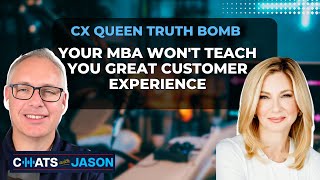
A recorded interview (Mar 11, 2025) between Jason S. Bradshaw and CX author Blake Morgan about building customer-centric cultures. Morgan defines customer experience as the customer’s perception of a brand, argues that employee experience and customer experience are tightly linked, highlights examples (Amazon, Louis Vuitton, Trader Joe’s), and offers practical leadership advice: start small, invest in employees first, and balance short-term fixes with long-term customer-focused investments.
Chapters
Hi and welcome to another edition of Chats with Jason. I am of course, your host, Jason S. Bradshaw. And this is the show that helps you transform the experience to transform your business. Now today's guest is a multi time bestselling author. She's worked with some of the biggest brands that you can imagine and she was named by Meta and as the queen of cx, of course, I'm talking about the one and only Blake Morgan. Blake, welcome to the show.
Jason, what's up? It's so nice to see you.
It's great to connect with you again. And as I was mentioning before we started recording, I've been following your work for decades, it feels at least, and certainly recommending your books to friends and colleagues, professional and otherwise. Thank you for taking the time out of your day to be with us today.
Blessed.
Like you've been in this field of CX or four decades. What got you into customer experience?
It was one of those things where you're at the right place at the right time. I'll be honest, Jason, I was 21. You were saying you remember me living in New York. That was like a million years ago, but I wanted to live in New York and I wanted to stay in New York, so I really didn't want to lose my job. So it was just this wonderful kind of series of events that led me to falling into this job to take a conference company and help make it a digital company. So the conferences they produced were on customer management, and so they had me become the digital face of the brand when that was very early. So in 2007, I was podcasting and starting to do video blogging and stuff like that. And so that got me on this trajectory of customer experience. I also just found the topic really interesting. The intersection of technology, people, brand, how we make people feel, the study of human behavior, it all is all related. I mean, it's all linked. And that is the area of customer experience that I continue to focus on now. And I write books and I have my own podcast, the Modern Customer. I create a ton of content and now with AI, there's just so much change, so much excitement. And so that's how I fell into it. I accidentally fell into something I really love and brought style and my own personality to a topic that many people find very dry. I thought it was interesting. And that's customer service, customer experience, and now it's a really exciting, growing field.
Yeah, it's funny how sometimes we do just fall into what ends up being our passion, right? And so often in Corporates, we do take some things on at first that were a unsure about, but then it turns out to be the best decision we made. You mentioned that a lot of people find the topic of customer service or customer experience a bit dry or dull. Why? Why? Why don't people understand in 2025, why do people not understand that customer experience? Customer service, whatever word you want to.
Put around it, it's not sexy. It's marketing and sales. It's all about making money and flashy lights and big messages and services. Ugh. Something broke. So let's fix it. That's traditionally who drives or owns customer experience. We know that's not true. That customer experience starts far before the transaction even happens. But traditionally, that's who owns it. That's who has the budgets for the technology, the software. And so that's why I say it's a bit dry, that service. Who wants to work in a contact center? Nobody. But that's actually what I did when I worked at intel, the chip maker here in the US I was launching the intel customer service handle on Twitter when customer service and social media was new, and my boss said, oh, great, you want to expand our customer service social media program. Great. Blake, you're going to be the actual agent responding to customer service requests on Twitter. And I thought, I cannot do that. But I'm so glad I did because it gave me unique insights into how customer service works and it really did give me, like, a unique perspective that I didn't have before.
Yeah, I always love throwing the C suite into the contact center just for even an hour. It's amazing how quickly their priorities change when they're at the cold face, hearing what customers are actually saying and not just reading it in a report. Now, I mentioned at the front of the show that you've published a number of bestselling books. More is more. The Eight Laws of Customer Focused Leadership and the latest one, the Customer of the Future. And when I look at all of those, I see that there is really a common thread through them all. And that customer experience and the cultures that you create around customer experience in your business really is the driving force to business growth and sustainability. What do you find is the biggest challenge organizations have when it comes to creating a customer centric culture?
I think the biggest challenge, and I wrote about this in my new book, the Eight Laws, is that executives have a hard time focusing on two ideas in their mind at one time. And those two ideas are taking care of everything on our plate now, putting out all the fires out of Today, but also planting seeds of growth for tomorrow. So how can you hold these two opposing ideas in your mind at one time? Because you can do two things at once. You can't think short term and long term, but it turns out to be customer focused. You have to, because some of the decisions you will make might cost you today, but tomorrow will reward you. And so I think that's the biggest hindering block is the thinking is the short term thinking. And so that's why so many customer focused companies, they have a few things in common. They often have founder CEOs where the founder of the company is still involved. They have customer centric cultures. So a lot of the companies that are customer focused, you can also find on the great place to work. Listen, they have leaders that flip burgers next to employees, like Lindsey Snyder, the president of In N Out Burger. And so I would say those are the common threads. The ability to focus on short term and long term at the same time. The ability to create a customer focused culture. The ability to move fast and break things, to be honest, and then really think about how are we going to feel about this decision in the long term rather than just what's going to make money tomorrow.
Yeah. So how do you define customer experience?
Customer experience in the most simplest terms is the perception the customer has of your brand. But that can change according to who the customer is. Often in business we like to think our brand is what we've told you it is. There's a great podcast called Acquired. There was an episode about the origins of lvmh, of Louis Vuitton, which is owned by LVMH and Louis Vuitton. What are they selling? They're selling a high end, very good quality bag. But in the podcast they talk about how Louis Vuitton doesn't just sell a bag, they're selling a dream. Because they really transport the customer into another world. Because it's not rational to purchase a bag that costs like 5 to $10,000. Why? You can get a bag for free at the grocery store, but it's how the bag makes the customer feel. And the way the brand does this through the website, the mobile, the store, the signage, the quality of the product. Louis Vuitton bags don't go on sale. And so it's all of these things that make the product, the commodity, an actual brand. So really the experience is the brand. And if the experience is the brand, how would that change how we invest in traditional marketing?
Yeah. Interesting that when you're providing that example, you didn't talk about the call center or the sales associate in the store, but rather every element I would say you touched on, it was the product. It's their pricing strategy, it's their decision not to ever put the product on sale. It's of course, the in store experience. It's each of those elements and more. So I guess I'm hearing from you that customer experience is everyone's responsibility in the business or is it really just one or two people that are responsible for it?
Customer experience is not a division at your company. It's not a discipline. You can't go to college for it. Customer experience is just a decision, but it's a decision you have to make every single day. And it's very hard for employees to make this decision every day, all day, month after month, year after year, decade after decade. That's why so few companies do it well. But customer experience is just a decision. So that's why. Yes. You did not hear me say, oh, customer experience lives in the contact center. It's ridiculous that we think that because the customer doesn't experience something only when something breaks. So we have to really change the way we think about business, the way we think about our customers, our investments, and how we want to be perceived as a brand.
Yeah. So why do you think we don't spend so much time teaching customer experience fundamentals in academia? You go and do a business degree, go and do your mba, More often than not, customer experience will be a side topic as opposed to a core fundamental teaching. Why do you think that is?
I'll tell you something, Jason. I never went to school for customer experience. I think the best education you're going to get is not at a university because think about it, all my professors, like, they weren't working, they weren't running businesses. I didn't go to business school, but they're out of practice and my mom's a professor, so, you know, she's an art professor. But like the best, to me, the best learnings are from internships I did when I was young, from working, from having mentors and from building businesses. You're going to get the best education experience by building a business yourself and having customers and learning on the job. It's not from reading it in a book because it's easy to read about being customer focused, but actually scaling a sustainable business that is customer focused is much harder than doing some academic journal about it. It's easy to say customer experience is important. It's not easy to build that into an actual brand and sustain for years.
Yeah, absolutely agree. I'm glad that we're aligned there. Now, in the eight laws of customer focused leadership, law number six is don't forget that employees are customers too. So what are you trying to remind us of here? Employees should actually matter.
Yeah. Employee experience and customer experience are linked. They are married. They go hand in hand. And that's why, again, the most customer focused companies are on the great place to work list. And if you think about it, you can feel it when you go to a store or let's say you're a patient in a hospital, when the staff don't want to deal with you, when the nurses are in a bad, bad mood. There's a very stark difference from, let's say you go to a hospital and the nurses are lovely, they're propping your pillow up, they're making you comfortable. But you can feel it as a customer does. The person providing the experience, do they want to be there or not? And so I think that's like the most important piece in a culture is do we feel extreme ownership? Do we like working here? Are we happy? And it is not only about the nice perks at work. It's also about what kind of experience you provide to employees. Do you give them meaning and purpose? Do you empower them? Can they block and tackle for the customer? Or do you put so much red tape inside of the employee experience that the employees are miserable? And so I think that's why you see that there's a very clear link between employee experience and customer experience.
So a question I'm often asked is, if you can only invest in one, which one do you invest in? The employee experience or the customer experience? What's your take on that, Blake?
I think that happy employees will translate to happy customers. There's so many great examples of this, from Costco to Trader Joe's, that employees that have what they need to do their jobs. So I'm not talking about hot yoga at work or free granola in the snack room. I'm talking about, do employees have what they need to do their jobs? These are very basic things employees often don't have. They're not onboarded, they're not given support systems. They don't have what they need. They don't get their laptop on day one of work. These are big missteps. And so I think if you have to choose, you should first invest in your employees and that will trickle down and benefit your customers. But often these are companies, they get it. So they have the customer experience mindset and they invest in both.
Yeah, it makes perfect sense. And it alarms me that still in 2025, there are employees out there starting on day one without the basic tools they need to be successful. And yet the manager will turn around and say, why aren't you achieving your goals? So it's a constant battle for CX professionals like ourselves. I'm thinking to myself though, Blake, at least intellectually, leaders understand that customer and employee experience matters. And perhaps they're in an organization, let's just say it's a middle level manager. They're in an organization that doesn't necessarily subscribe to great employee experiences. Great lead to great customer experiences. What as a leader in that sort of organization, other than getting up and leaving, can I do to positively impact the people that I lead?
I think you have to lead like you would like to be led. It's a very obvious epiphany. The golden rule. If you wouldn't want to be treated that way, why would you treat someone else that way? Sometimes people call it this sounds terrible but kid gloves. But these days, like you have to be careful with people. You have to think about the implications of how you speak and what you say. And you have to just have open communication as well. So I'm a big fan of communication. I think most problems, most things break down because of a breakdown in communication. So just constantly understanding where your employees are at. And don't be a robot. Get on the phone with employees and ask them about their day. Like how are their kids doing, their kids in camp this summer, what do they eat for breakfast? Don't treat people just like transactions. You're going to get so much more out of your teams if you actually are more of a coach than a manager. Because anybody can be a boss. But that doesn't mean that the employees will want to follow that boss. You have to earn that through being a caring manager.
Yeah, having that genuine care. Not just someone in HR said, I need to ask this question every three months of my employees. It makes a difference. I'm wondering, you've mentioned a couple of brands already, but who would you say is the leader in delivering a consistent customer experience at the moment in the us?
Oh for sure. Amazon. Without a doubt. Amazon consistently sets the bar for everyone else. People will say this and that. As a customer, I don't see another brand raising the bar as far as technology innovation, making customers lives easier and better, walking the customer journey, constantly iterating and making improvements based on feedback, based on data. Amazon just surpassed Walmart in quarterly revenue. This last quarter. And it just goes to show that they're just so smart in how not only they innovate, but how they've diversified their portfolio and then their reputation for their say, do ratio. They do what they say they're going to do and they don't pull the wool over customers eyes. I'm not saying it's a great place to work or I necessarily want to work in an Amazon warehouse, but I think they're mostly fair to employees and they do a really great job with.
The customer experience and probably have built out the processes and systems which help support that customer experience. Even when things aren't necessarily going right in other parts of the business, the processes keep things moving, at least in the right direction. Amazon is often touted as one of those organizations that are doing a great job and as you mentioned, they're not perfect. They certainly have been in the news over the last few years around some of the employee experiences in some of their warehouses. Is it purely that they deliver on their promises consistently? Is that the key thing that we as other business owners should look at is delivering on promises consistently or does it really come down to all the tech and everything else that they do as well?
I think they're a first mover with tech in order to deliver on the customer promise and I just can't think of a brand that has impacted more American consumers and even global consumers. I always talk about being a working mom. I'm real busy. I don't even go to the store anymore. Everything is delivered to my home. And that's thanks to Amazon. Helps me live my best life. And it reminds largely me of Clayton Christensen, his idea of the jobs to be done framework from his book Innovator's Dilemma. It's an old book, but it basically he argues that every product or service you're helping a customer finish a job. What is the job the customer's trying to achieve and how does your product or service help them achieve that? And if I'm a case study and Amazon is helping me achieve my job, I don't know how working mom can do it without the help of smartphones, technology and same day or next day delivery like Amazon with grocery with stuff for my kids, whatever it is, yeah.
They'Ve combined convenience, consistency and that technology layer to really deliver. So talking of technology, I remember a few years ago it was a Google I O event. CEO gets up and start showing off technology from their Android platform where they can book a haircut for you. They can do a whole pile of tasks automatically for you and have real conversations, shall we say, with the person at the hairdressers that answers the phone. How is that shaping the future of customers? Or the future customer, I should say.
Yeah. I was recently talking with a gentleman who has an AI startup and he was saying that every company will have just like an AI representative in the future and it will just be all AIs talking to other AIs. And I thought that was a really interesting concept. I don't think we're there yet, but the whole point is to take the minutia, the tedious stuff we don't want to do, and take it away so humans can actually enjoy work and enjoy life. I personally do not like calling and making appointments and all this. I can't stand any of that stuff. So I'm totally happy to have an AI do that. For me, it's really about thinking about the human experience and how we can make human life easier and better. But I prefer humans. I like going to my local grocery store, Trader Joe's when I can and having some chit chat with the cashier. They know me. The guy, the cashier I like, he knows I have a podcast because he's a writer. We've talked about it. Like they actually ask customers like, how's your day going? What are you doing with this Indian spice that you're purchasing? How are you going to use this? Or any fun weekend plans? And they talk to customers and that small interaction, it really makes you feel happy. So I think studies show that in the future, customers don't want more technology, they want more human interaction. I just want nice human interactions. I don't want to waste time in making appointments for a haircut. I'd rather have an actual genuine interaction.
It sounds like a challenge for businesses going forward will be how do they maintain that human connection when they're using technology to automate the mundane?
Yeah, there's a store reformation in Texas and it's like an art gallery, it's a clothing store. And you just go and on the tablet pick out what clothes you want even though you're looking at them. And then someone brings everything to you, to your dressing room where there's also a computer tablet. You can change the lighting, you can on the tablet ask for different sizes. And it's interesting because the in store and the digital are married really beautifully. And I think we'll just see more of that. And as we don't need physical retail stores anymore, I think the physical experiences will get much better because they're not necessary. So when we actually do get customers in person, we're teaching them, we're helping them, we're styling them, we're helping them with their groceries, with their health. And so I think it's a really interesting time to be in customer experience and we'll only see more excitement and innovation coming our way.
Yeah, a great example of how you can fuse the two together. And I think with same day delivery technologies it becomes even more beneficial for the consumer. The store doesn't have to have a big stock room out the back. It's about creating that experience in store and then potentially even just shipping the purchased good directly to the consumer's home so they don't have to worry about lugging things around. I was looking the other day at the American customer satisfaction scores over the last decade and it doesn't matter whether you look at JD Power or Customer Service Institute, the overall experience seems to have flatlined. There hasn't been a lot of growth. In fact, during COVID it dipped by many measures. If there are more people focusing on the customer experience, why don't we see that reflected in the overall national metrics?
I think that after Covid, companies were so exhausted from meeting the customer where they were, they spent so much money on digital transformation, they spent so much money on remote work and again meeting the customer where they were, which they were at home. That certain point they got burned out, they were tired of it and they didn't want to spend. So that's what we saw then. Then in America and all over the world there was inflation. The economy was not really doing well in the last two years. And so when the economy suffers, customer service is the first to go because it, you don't necessarily need customer service. It can just create bare bones customer service. It is seen traditionally as a cost center. And so a lot of companies stripped back investments in customer service. But I think that as the experience economy continues to grow, as buying habits change, as Gen Z gets more purchasing power, I think you'll see even more of a focus on experiences. But a great experience doesn't just have to be like going to a rock concert or a cooking class or an Airbnb. It can be just a really great experience that is seamless and zero friction, like buying something on my phone. On Amazon, they call this. In my book, we talk about the pendulum switching back from experiences to efficiencies. In a bad economy, companies tend to shrink. They get scared and they start focusing on efficiencies and stripping experiences down to the bare bones and I think, see as the economy gets better, I'm optimistic 2025 is going to be a better year and we'll see even more fun and investments in customer experience.
Yeah, it is a shame that normally what happens is the funding disappears or reduces. I always say though that as CX professionals, our job or part of our job is to continually make that commercial link between our work and the impacts on the business. So Blake, you mentioned earlier in the show that you have a podcast. We're going to share the link to it in the show notes, of course. But what's the podcast called and what's the sort of things that you talk about on your show?
I have a podcast called the Modern Customer and I talk about a lot of the topics we addressed in the show today. Customer experience, marketing, sales, what is a customer focused decision? How does AI impact customer experience? What are the use cases? So these are some of the topics that we're exploring lately and I usually have brands like the person that manages or leads customer experience from the brand side. So customer officers, chief marketing officers. So yeah, I would love for your listeners to check out the Modern Customer.
Fantastic. I'll be sure to share the link to it and it is a great podcast. I've listened to many an episode. We've talked about a lot. Investing in technology, frictionless customer experiences, the need to deliver a consistent experience. And that customer experience isn't just one person or one department's job, but rather it should be the way the business operates and a mindset. So I'm just starting to wonder if I'm a leader or I own a business, am I going to have to spend years to get started at improving the customer experience or is it something that I can start doing much sooner?
Customer experience is a game of inches rather than yards and you really just need to take one small piece of the business, something customers hate dealing with and if you don't know, can ask your frontline employees. So just start small, take one thing, begin to chip away at it and you don't have to boil the ocean. So that's my advice to your listeners. You can get to work today, but just by listening, walking a mile in the customer shoes, asking for feedback, saying yes to accountability and small improvements every day. This is a great framework. It's my ways framework for your audience to get started today.
I love that. Taking accountability and taking action or even small action every single day to improve the customer experience. Blake, it's been great having you on the show. Before we let you go though, what's one thing someone watching along today or listening on their podcast app should do as soon as the episode wraps up.
So I believe in the customer experience mindset. I believe it's a way of life, it's a servant, it's a service oriented and servant leadership style of life. And so you have to do things that get you in the mood to want to be generous with others, to give to others, to smile at work and whatever gives you that energy for influencing change, that energy for your day so you have enough to give to those around you who need you. You have to do that. So maybe that's walking your dog or petting your dog's head, doing yoga, listening to music, dancing in the shower. I'm a big fitness fanatic. I love exercise. It gets my head right. Meditation. There's so many great ways to get your healthy chemicals flowing, your serotonin. And then you feel like your heart is full and you have energy to give to others.
What a fantastic takeaway to wrap up the show. Blake Morgan, it's been great having you on the show. As I said, we'll be sharing all the ways that our listeners can connect with you and follow your great work. Thanks for your time today.
Thank you, Jason.
More from Jason

Bringing Wonder Back to Work | Leadership, Culture & Service with Peter Merritt







How to Lead With Empathy: Claude Silver on Emotional Bravery & People-First Culture


Inside Harley’s Cult-Like Loyalty | Ken Schmidt on Turning Customers Into Believers
