The Human Element: Navigating Talent Acquisition in the Digital Age
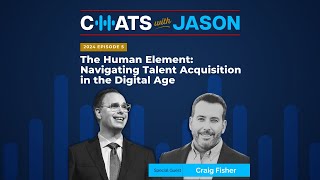
Craig Fisher, author of Hiring Humans, talks with Jason S Bradshaw about fixing talent acquisition. Apply to your own jobs to see where candidates get stuck, treat them like customers, and use AI as a tool, not a replacement for human connection.
Questions this video answers
February 14, 2024.
Hiring Humans: Attract, Convert, and Retain Top Talent in the Age of Automation.
hiring-humans.com.
talentnetlive.com/Slash Cool Tools (Cool Tools workbook available under "Cool Tools").
Chapters
Hey everyone and welcome to this episode where we are delighted to have a best selling author, an individual with significant experience in this space and the space being everything about recruitment, employee experience. We're talking about the employer of an employer, marketing advisory, talentnet Media, the one and only Craig Fisher. And his best selling book is titled Hiring Humans Attract, Convert and Retain Top Talent in the Age of Automation. Craig, welcome to the show.
Jason, thank you for having me. It's a pleasure to be here. It's great to see you.
Well, I certainly appreciate you taking the time to be with us today after reading your very impressive bio, what a great breadth of experience you've had, especially when it comes to this topic of attracting and, and retaining talent, which is sometimes harder than attracting these days, is retaining talent. So I can't wait to dive into the book, but would you mind sharing with the audience a little bit about your background, I should say, and what got you to the point where you felt you had to put all your experience into a book?
Yeah, so when I graduated from university, I got recruited into pharmaceutical sales and I sold drugs in Texas for a few years and then I sold hospital equipment. And then you and I were talking about this before the US government changed the way we could entertain doctors for a living. And a lot of us jumped into the physician recruiting space that quickly became the technology recruiting space with the dot com bubble. And once you're kind of in recruiting, you don't really ever get out. So I've been in every kind of position in talent acquisition and recruiting you can imagine as a recruiter, salesperson, manager, director, owner, operator, and eventually as LinkedIn and other platforms came along, I started teaching my customers how to brand themselves better to make my job easier. And that eventually became a thing where they started inviting me to come speak to their teams and do side projects. And that led to a thought leadership business in the late 2000s and it's been sort of off to the races ever since. With, with that.
Well, it's certainly an important topic and one that I think there's a lot of misinformation around. If I think about some of the various things that come up in my social feeds around how to game the ATS system or how to, how to make sure that your, your application gets seen even if you're not the strongest candidate. It seems that there is a big focus by a lot of people on how to game the system as opposed to the angle you take is how to actually do the right thing to attract the people. Leverage tools. Yeah, sure. But get it right and don't let people game the system. So the book really came out of that desire, I guess, that thought leadership piece of, of helping individuals get better at attracting and converting talent and then retaining them. Right.
So one of the things that I'm big on, Jason, is so I, I get to speak on a lot of stages, but I don't like to talk about things that I haven't actually had experience with. Right. That I haven't done. So I document very well. I, I write a lot of case studies. I always have. And that's one of the deals I make with my customers. I work with a lot of hungry startups and a lot of big enterprises and everything in between, but the deal is you're going to have a. A real story here with data that you can report up to your management, why did we spend this money? What was the outcome? What was the problem in the first place? And that's going to be forever a thing. Right. Even if you're ownership or your leadership and talent changes over the next year or two, as it will, you will have always done this and you will have always proved that it was worthwhile. And so during COVID I started sort of culminating these things in an order that makes sense for how I like to do talent attraction and conversion and engagement and, you know, ultimately retain good employees. And I just had enough of them in this last year where hiring was a little slower, that I put them in a good order. And it makes sense. It's a, it's kind of a good little, I would say, primer for anyone in Talent Acquisition on how to do the job and all that stuff that you were talking about with gaming, the applicant tracking system, and it doesn't work. I mean, there's a lot of that advice is fluff. And recruiters and TA people don't actually say, oh, we're trying to build this impenetrable wall with our applicant tracking system that no one can get through. It doesn't work like that.
Yeah. It seems a bit counterintuitive. Right. We will create a system that makes it harder for us to do our job.
Right. Yeah. And granted, some of the applicant tracking systems are, are make it harder to apply to a job. Right. I mean, you have to log in or remember a login, username or password, and then you have to fill out reams and reams of pages. And so, you know, there are ways around that as well. There's light technology that you can put in between to make it easier on the candidate. There are Plenty of things that you can do to make the candidate experience better. And we have to remember that right. In this age of automation and AI and all these great tools that we have, we are sometimes automating ourselves out of a good relationship with our on deck circle. The people who are going to work with us eventually and the people that we hope would refer customers and other folks to apply to our jobs. And so, you know, if that's the experience as a candidate, could it possibly be much better as an employee? I mean, this is the promise, right? This is the carrot we're dangling. Oh, just get in here if you can, because it's great. But it doesn't seem like a good way to start a relationship to me.
I love how you highlight the candidate experience there. I think it's a easy area to not pay attention to, but, and I'd love your, your thoughts on this. The candidate experience sets someone up for, for their level of commitment and joy to the process, but also when it comes to the crunch and you make that offer to them, it plays out in their mind, is this going to be what my next three years or four years at this company is going to be like? It's going to be difficult. There's going to be hoops all the time, or obviously there's better versions than that.
Yeah. And I mean, you read the subreddits about working at some of these giant corporations and they go through 23 interviews and months of time and preparation and side projects that you have to build for the prospective employer to even get in there. And, and then they complain about the, the work environment once they get in there. Yeah, the pay is good and you get options, but if you don't, you know, finish out your X number of contracted years, some of that just doesn't come into play. And so I, I don't think that. And onboarding is a big factor here too. I mean, let's be honest. How long does it take? Do you get sat in a room with a list of videos to watch for days on end and no communication? I mean, there's all of these things play into the relationship that you're setting up with the people that you want to do the work that makes your company go.
Yeah, the end to end journey is what we're talking about here. And so many organizations unfortunately only pay attention to that annual performance review cycle, if you will, and they sort of forget that, that there's a lot in between that that happens and impacts whether someone really stays committed or not. On New Year's Eve, when everyone's making their promises to themselves about how they'll be better or bigger or whatever in the new year, you don't want to be part of that conversation. It says, well, let's get out of here and find a better job. Now, in the book, you have a chapter that's titled Branding Yourself for Success. Now, this is an area that I personally find really interesting, and again, an underserved area is that organizations so often think of branding as a way to attract new consumers, to stay appealing to consumers, but they forget about the candidate side of things. So.
That's.
Right. Why is branding yourself as an employer? What do you mean by that? And. And what's a really practical way that it makes a difference in the recruitment process?
Yeah. So people like to work with people they like or they think they're going to like or that they might want to have lunch or a beer with. Right. I mean, this is what you think about. It's like, can I spend every day working with these people with this team? A company's culture is not one thing. There's dozens or hundreds of microcultures within an organization. Right. Each team has its own unique culture and certainly parts of teams. And so it's important to kind of showcase your employees. Right. Both for the customer experience and for the candidate experience. And so if you think to yourself, okay, well, we are McDonald's, and we don't have to showcase any of our employees. We're just McDonald's, and we can just live on that. And everybody wants to work with us and eat at our store. That's not what they do, though. They show their people in every commercial and in every graphic in every. Right. I mean, maybe they're actors, maybe they're not, but very often they're real people. Right. And they're showcasing a day in the life and stories with their people on all of their social channels. And that's. That's the way to go about it. You want to be transparent, and you want to have an organic brand about you that attracts both customers and clients because. And candidates. And. And the customer piece is important because if you think about brands you really like, it's not the brands that you hear treat their employees badly.
Right.
You like companies that you feel like are good to their people, and their people want to be helpful and want to work there. And so it works both ways. It's very practical in that result.
Yeah, you make a really valid point there. You don't. I don't think I've ever seen someone falling over themselves to go and do business with a company that's known for treating their employees like crap. It would be a different take on things, that's for sure. I think about companies like Disney who have entire websites designed just to talk about what it's like to be a Disney cast member. And by no stretch of the imagination am I trying to suggest that Disney gets it right in every, every step of the way. But they're a great example, as is some of the other, you know, common brand names like Apple and, and who, who you think of that actually you can see they take the time to intentionally explain what it's going to be like. In most cases, of course, I can't get it perfect. But in most cases, when you work for them, why do you think it's that HR professionals just haven't focused on linking the commercial benefits of this work to their, to their activities? So that when they're talking to their CFO and saying things like, I want to have my own website, I want to do a five part series on what it's like to work here, do all this work is going to cost me a million dollars or however much is it, because they're not used to having to link that work to a commercial outcome. Because it seems to me that it's so important, yet so many are still not doing it.
I agree with you. In talent acquisition, in hr, we generally tend to only link things to sort of the hiring outcomes and the employment outcomes and not the commercial outcomes, which is not the best way to go about it. Right? If you can rebrand yourself as not a cost center, which is what most CFOs think of HR as, but as a revenue center, then you've really got something right? You're on, on the right track there. Because when you want to go barter for dollars for new software or new processes or whatever it is, you have to take data with you and say, there's a reason why we need this, it will help us on the bottom line. You know, the diversity question is a good one, right? There's proof that companies who are more diverse are more efficient and better off and actually do better in overall goals and sales. So that's just a small example, but there are plenty of others that say, look, if you retain someone for just one more year or six more months, the cost is X, right? And the benefit is Y and the outcome is Z. And you can do this. And there, there's a part of the book that talks about exit interviews where people who leave the organization, even if they're voluntary leavers. They have a bad taste in their mouth. They're the ones who are going to complain. And people who complain right on Glassdoor or wherever really just want to be heard. So why don't you listen to them on the way out instead of after they get out the door? Right. One last five minute or ten minute conversation with their manager, for their manager, whoever they are at that time, to just say thank you, we appreciate what you've done for us. And maybe even offer them a $5 Starbucks gift card and say, when you get where you're going, look me up and let's have a cup of coffee over the phone or whatever. I want to hear how you're doing. Right. That sort of thing could change you all of your Indeed or Glassdoor review scores in weeks or months. And it does because we've done it.
Yeah, yeah. It makes perfect sense. You've mentioned the term employee experience a lot and candidate experience. I want to focus on the candidate experience because it's really where things start for everyone. We don't just wake up one day and suddenly we're implanted in a new company. Right. What, what's, what's something that you would highly recommend people to start doing to improve the candidate experience or to deliver a candidate experience that you think is, is a. The right one given the current environment we're in.
Yeah. First and foremost, apply to your own job. Right. You've got to walk in the candidate's shoes to understand what they go through. If you haven't applied to your own jobs recently, I mean, there's a lot to be learned and it starts with searching for your jobs. Don't use the job title that you've got listed on the job search for it as a candidate would because they don't know your job title until they've already done the search. So if you're looking for a Java Developer 3 in Systems XYZ, okay. That's very specific to your organization. So look for Java developers in Dallas, Texas. Right. If that's the location and see where you fall in the search results. So that is a very beginning of candidate experience right there. It's how does a candidate experience you before they apply to a job? Do you show up in their peripheral vision on social channels? I mean, are you actively pursuing them? Are you targeting ads to them, whatever that is. And then when they read that ad or find you in that search, how does that messaging feel when they get a response after submitting their resume? How long is it? How does that make you feel, Is it very generic? Is it what comes out of the box with your ats? Right, that's just the beginning. And then how hard was it to apply? How long did it take? How did it feel again? And there's a lot of subjective things here, but if you get multiple people on your team to write their results or have a consultant help you, you can actually make a huge dent in that candidate experience. Any road bumps there are very quickly.
And it's not too different to what we talk about in a customer experience space.
You know, that's right.
We say shop your products.
Secret shoppers.
That's right. We ask the question in the CeX space all the time, how easy was it for the customer to achieve what they wanted to achieve? And we're flipping that here and saying how easy it for the candidate to achieve the next logical step for them, which is making an informed decision to apply, or perhaps not apply, as the case might be. Now, I understand on your website that you've got some fantastic tools free for our audience. Would you like to share that with us now?
Absolutely. So you can find the book@hiring-humans.com but if you go to my company website, talentnetlive.com and then go to Slash Cool Tools, there's a Cool Tools workbook that accompanies the book. And it's all kinds of hacks and companies to help you do recruitment, marketing, candidate experience, employer branding and more. It's really great.
So we'll have in the show notes, of course, a link to the cool tools, the book, and also all of your social media channels so that people can follow your thought leadership. And this really important work when it comes to the employee experience, that starts with how we attract and recruit talent. In your book, you have a very provocative, or at least for me, a provocative headline or chapter, I should say. Thinking outside the box. Don't take the status quo for granted. This is a bit of a mantra for me. I think that it's important that we constantly try to break the mold so that we can learn. But from your perspective, from the candidate experience, the talent attraction experience, what are we talking about here and how can our audience members apply it?
So when you're hiring, you need to think that the candidates that you're trying to attract are also consumers, right? And they're used to a good consumer experience. If you think Amazon or Apple or whatever it is, right, the things that you use every day, you're used to a certain level of results, speed, ease of use. And we should be Thinking about the candidate experience. In the same way, we should also be personalizing, I mean we should be using empathy maps just as marketers do to attract customers to understand their audience. All of these consumer driven customer experience things should be applied at the candidate level as well.
Yeah, so we've spent a bit of time talking about attracting people the candidate experience. But you did mention earlier the onboarding experience and there's loads and loads of books and research out there that talk about the first 90 days in business and how important it is. Perhaps now it's even more important in a shorter timeframe given the, the talent war as some people say that we're having. So what, what's your, what's your go to advice for employers? How do you onboard an employee so that it starts to, or I should say hopefully continues to foster that connection and that loyalty to the new employer?
Well, here's a really good example of one of the places where a little bit of automation goes a long way, Stephen. It's setting reminders for your manager of that employee to check in with them on a regular basis. And don't leave them out on an island. Right. Survey them as soon as they start the onboarding process or finish it and ask them how they felt about it.
How did it go?
How do they think they're going to impact the organization? How was their recruiting experience and application experience? Ask all these questions and if they had a good experience, if they had something good to say, put a button in that survey that says, hey, would you like to post this to Glassdoor or LinkedIn and talk about your hopes and dreams and then hit them again with that kind of communication at one month and three months and six months and every year and right. Multiple times throughout the year, engage your employees and talk to them about like in a one on one basis, just as you would your consumers. What's happening in the organization? Tell me about this. Don't make it a group message because you'd never have that from one of your favorite consumer brands.
Right.
To your email. It wouldn't be a group message to all customers. So the, the idea of the, you know, Fireside Chat or the company email. It's time to start personalizing and talk directly to your people.
Yeah, make it human can get that connection back, that one on one connection back. So it would be remiss of me to let you go without asking. The topic of the year, AI. Can we just use AI to take care of all of our recruitment? I hear crazy stories about platforms now where they use video technology to read my facial expressions and determine whether that's going to make me a good hire. So what's your take on AI in this process?
Well, okay, so first of all, the, the software that you're talking about, they stopped doing that a couple of years ago. So it's still. They can't get past it, unfortunately, because that's, it's, it's wildly intimidating and borders on illegal. Right. So there's. There certainly has been some of that, but it's, it's not happening quite like it was originally that it's still, people are afraid of what AI can and will do to outplace recruitment jobs. And certainly we've had a number of layoffs in the talent space this year, but that is more of a function of the economy than it is the tools. So AI is just a tool? Like the iPhone was just a tool? Like the Internet was just a tool. LinkedIn was just a tool. All of these things were going to take our jobs away, but that's not really the case. Someone has to use the tools. And, you know, while we're on a path to where AI may become empathetic and good at understanding human emotions, we're not there yet. And so, you know, again, I'll go back to. Hiring is a deeply human experience. People want to work with people. And while we've got good impersonators of people, sometimes we still have to get online like this or in person and have experiences together.
Deeply human experience. I can't, we can't let that point go unheard because at the end of the day, we are employing humans to work in our organization. And, and then, of course, the other golden nugget was a reminder to us all that that the tool or the technology is just that it needs humans to run it, number one. And number two, it's only ever going to be as good as or as bad as the person that's using it. Right. So some fantastic advice there. Of course, there's so much more that we could cover in the book Hiring Humans Attract, Convert, and Retain Top Talent in an Age of Automation. Craig, before I let you go, what's one thing our audience member can. Audience member watching or listening today can do straight away or really easily to start improving their ability to attract great candidates.
All right, so, Jason, I would say that listening to this podcast and thinking in terms of customer experience for a candidate is a really good idea. Right? Be really transparent about your organization and showcase your people. People want to work with people. And then finally, and I know you asked for one thing. But I'll just say, remember that these are your future workmates and treat them as if they are not just statistics and applicants.
I love that. Remember that your future workmates, your teammates, that ultimately you want to create a great, lasting memory for when they join you and that they want to continue to partner with you. You beyond just that recruitment phase. Craig, it's been an absolute pleasure having you on the show today.
Thanks for having me. It's great to be here. See you soon.
And to our audience, if you like this show, please give us five stars. Share it with your colleagues. And importantly, take just one step from today's episode to improve your business. Thanks for listening.
More from Jason

Bringing Wonder Back to Work | Leadership, Culture & Service with Peter Merritt







How to Lead With Empathy: Claude Silver on Emotional Bravery & People-First Culture


Inside Harley’s Cult-Like Loyalty | Ken Schmidt on Turning Customers Into Believers
