Why Apathy is Killing Your Business | Lior Arussy on Transforming Customers, Culture & the C-Suite
Transcript of a podcast interview (host Jason S. Bradshaw) with Lior Arussy about customer-centric transformation. Arussy describes his book Dare to Author, argues that resistance to change often stems from fear of negative judgment about past work, and emphasizes empathy, employee activation, and measuring customer actions (not just perceptions) to drive sustained business value. He gives concrete examples (banks, retailers, European marketing pushback) and practical advice: activate the power you do have and focus on opportunity over transaction.
Chapters
This is the show that helps transform the experience. Because when you transform the experience, you transform your business and the world around you. I'm your host, Jason S. Bradshaw and today's guest is a global force in customer centric transformation. But his story didn't begin on a stage or in a boardroom. It began with a question that I'm sure most of us have asked. Why does it have to be this way? Lior Arousi was once an executive inside a Fortune 500 company, watching decisions being made that left customers frustrated and employees disengaged. Rather than complain, he chose to challenge the status quo. And that choice changed absolutely everything. He walked away from a prestigious career to ignite a movement. A movement that now spans over 200 brands across 21 countries. From Mercedes Benz to the Royal Caribbean. Lior has helped companies turn apathy into empathy, process into purpose and service, into something that inspires loyalty for life. So let's lean in because what you're going to hear isn't just strategy, it's a story. It's a shift. It's a call to lead with heart. Let's welcome to the show Lior Arousi. Lior, welcome.
Thank you very much for inviting me.
Absolute pleasure. And congratulations on yet again being announced as one of the global thought leaders on customer experience. And that's not surprising considering the number of books that you've authored and the number of organizations that you've helped deliver sustained transformations in the way that they operate. Your latest book, Dare to Author, is just one of the many pieces of your legacy story. Can you share with our listeners today a little bit about the book Dare to Author?
Sure. Dare to Author was born based on a very interesting experience. As part of our transformation work, we discovered very quickly that the cause of customer centricity, although understood by many others and many employees, somehow companies and organizations are failing to shift towards that behavior. And we're trying to understand what the issue is. Now there is a body of work around change management that talks about the fact that people are afraid of the unknown future and that's why they refuse to change. Our experience have actually shown a totally different issue. When we dig deeper with the many employees, we found that their real struggle is when the moment they hear the word change, they equate it with a negative judgment on their past performance. So if you were the cashier in a bank and now the bank shut it down because of digital transformation, what are you going to do with the last 20 years of you being a cashier? You just heard that Being a cashier at the bank was a mistake, Jason. You need to take those 20 years and write them off and call them a failure. And this is too big to process. So we found out that the real issue is really helping people connect the past to the future in, in some kind of a cohesive story and write the next chapter. So we find ourselves oftentimes helping people not act as victims toward change, which is their default reaction, and choose to be the hero. Doing that is writing a new chapter in your book, respecting the previous chapter, building on the past chapter. But that is a skill set that most people don't possess. So what happens is change comes, you act as a default victim, you resist the change as opposed to rising up and saying, where's the opportunity here? And that's what the book is all about. It's calling people to recognize that when we do not author our own story, that story will be authored to us and will be the central victim of that story.
Yeah, that makes absolute sense to me. Now, I would like to start somewhere a little bit simpler for our audience. How would you explain customer experience to a 10 year old?
Oh, very simple. So there are two ways of engaging with a customer. Inspire, inspiration, or desperation. Either you create something that people want and then they'll stand in line for it, or you have something that everybody else has and then you're desperately trying to reduce your price in order to convince people to work with you. So, very simple. Inspiration or desperation. If you're having struggles with getting customers and with deeper discounts, you're in desperation. Your product is not good enough. If you are having customers standing in line and asking for more, you're an inspiration. Very simple.
Makes perfect sense. Now, of course, your career didn't just happen overnight. Your success has been built over working in the trenches, doing the hard work that's delivered sustainable, transformative change. Can you take us back to a moment when you realized that customer experience wasn't just a function, but rather a mission?
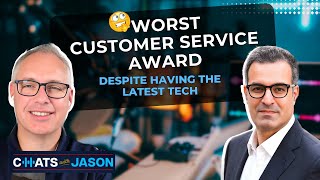
What happened in fact? Multiple moments. But I'll tell you a small story that will maybe illustrate the point for you. I received a call one day. I was working for a technology company specializing in customer service software. And I got a call from our sales director in Holland and he said, look, Leo Disaster, our best customer just received the worst customer service award in Holland. Said, maybe you have a problem with your English. You meant the best. He said, no, no, it's the worst. I said, there's no such an award. He said, in Holland there is. And I'm like, you gotta be kidding me. I said, you know what? People will forget about it tomorrow. He said, no, they won't. Because the magazine that awarded them this award plays a 10 piece orchestra in front of the office and they are playing funeral songs. I'm like, oh my gosh, I have to call my client and just check how he's doing. And I asked Jan, what happened. We just installed the latest technology. You are ahead of everybody else in Holland. You are absolutely advanced against everyone else. And he said to me, leon, even a fool with a tool is still a fool. And I said, what? He said, I bought the technology, but I didn't do the work, I didn't do the homework, I didn't do the strategy, I didn't do the operation, I didn't do the cultural transformation. And I realized how many of them of buying technologies and thinking that technologies will service customers. Technology does not service customers. People service customer, okay? And that insight was echoing to me with other clients that I started to talk to. I'm selling them tools, but I'm fooling them because they're buying the shortcut without doing the hard work and actually committing to serving the customer. And the notion that, that the customer is really at the center of it is lost on people. They treat the customer as a mean to an end, not the end game of the organization. That's when I realized it's much bigger than just customer service. Taking calls and being kind or solving problems faster or average handling time or all these types. People just forgot that the purpose of an organization is to create and retain a customer.
Yeah, I think that really reinforces an important point. It's perhaps easy and perhaps it's even expected at times for organizations to go out and buy that next best shiny piece of technology. You can remember, there was a whole movement at one point around, let's get chatbots on websites, because that will solve all of our problems. But at the end of the day, it is people wanting to be served by people. They're wanting human experiences and human outcomes. Technology can enable us to do that in a more efficient way, but it can't replace us.
Let me give you an example, Jason, if I may. Okay. Of course I did work for a major bank and they installed a whole host of self service tools and they wanted to see the impact of those self service tools on the customers. And we took the customers that adopted them the most and we actually measured a very interesting thing. We asked them what is their score of the value the bank provides to them before and after. So before, when they were serviced by a real human being, they scored it 8 out of 10. But when the bank shifted to self service, they actually ranked it 5 out of 10. And the bank was shocked. And I said, there's nothing shocking here, guys, because there is a cardinal rule that will never change. The person who serves me will keep the margin. When you serve me, you keep the margin. When I serve myself, I expect you to reduce your price because you practically outsource yourself and service to me. And by the way, Jason, we do that in supermarkets today. I don't know if you were planning that as far in your career, but I am now working in supermarkets. I'm back. I'm the cashier. I have to tell you a story. I was at a certain airport and I did my own scanning and bagging. And then right before I'm paying, a screen came up saying, would you like to leave a tip to the person who helped you? People misplace this notion. And now we're talking about AI and chatbots and everything else. Guys, be aware of self service. Self service gives a lot of power to the customer, but the margins are shifting with that.
Yeah, I really love that phrase. He or she who serves is the one that keeps the margin.
Yeah.
So you've said in the past that apathy is one of the biggest destroyers of value in business. Can you share a time with us where you saw an indifference that ultimately cost the company dearly?
So I have to tell you, when I go to organizations, I have a very interesting measure, okay? And the measure is the cynicism level in the organization, okay? And I remember sitting in a workshop, conducting a workshop, and there was a very cynical vice president sitting there and I asked him to stand up and leave the room and not come back. And he stares at the CEO and the CEOs. I don't know what's going on. And he said, why are you kicking me out? And I said, because you're cynical. And he said, yeah, that's my working tools. That's how I survived the work. I said, this is exactly my problem. It's not a working tool. It's a destruction tool. You are thinking that you're being funny with your silly jokes. But let me tell you what you're really telling the whole audience here. Here's what you're telling them. Don't bother innovate. Don't bother trying new things. Don't bother looking to the future. You took a five kilo hammer and you crashed their dreams and inspiration with your cynical jokes. Because Cynicism says, why bother? Nothing will ever change. Cynicism is the excuse not to dream and not to try. So I cannot allow you to be here because I'm yet to see entrepreneur who succeeded, who said my secret sauce to success was cynicism. Apathy. That's why in my book, I talk about two positions. You're either a victim or you're a hero. A victim. You hide behind the process and you blame the process and you blame the system and you blame what they won't let me do. Or you rise up to the better version of yourself and say, I'm owning this. This is mine. These are two modes of performance in organizations. Mediocre and superpower. Exceptional performance. And you know the difference between them? Mediocre is when I'm hiding behind the processes. Superpower or exceptional is when I choose. I choose to bring creativity, empathy, smiling, caring, thinking outside of the box, owning. Because there is no contract in any organization that can state that. Jason, you have to deliver 37 creative ideas in next month. It doesn't work that way. And no airline can force their flight attendants to smile sincerely. They can force them to smile, but not sincerely. Sincerely comes from the heart. And that's what organizations don't understand. That's my biggest struggle with CEOs is when they come and tell me I want to be customer centric. And I have to say, I have to go back to Suzy from accounting. And he's good. Susie from accounting. I said, she's in charge of your strategy. And he no, she's not. I have a VP of strategy. I said, no, you don't understand in a million ways. Every phone call, every email, every meeting, every zoom session is an opportunity for exceptional performance or mediocre performance. And the gap there is what I need to activate, which is making Suzy from accounting find a purpose and activate her intrinsic motivation. And that's the difference between those type of things. We had a special measurement in our projects. We call them stories. We didn't measure customer satisfaction in order to activate the profitability that we wanted or the growth of the retention. We. We actually measured how many employees chose to rise up and create stories that no one prescribed, but they chose to create. That's, for me, the ultimate measurement that the organization, the culture of the organization is shifting toward exceptional performance and not really overperformance.
Yeah, absolutely. Obviously, trusted advisor, being in a position where you can say to CEOs from all walks of life that you shouldn't be in the room because you're not giving it the right attention and that maybe that VP isn't the person you need to talk to. Your career, obviously, has been an evolution and a journey. I'm wondering about whether there was a moment where people doubted your approach or told you that's not how to do it. How did you just keep pushing through because you knew that getting to Suzy is the way forward.
I have a story for you. Because all of us in the customer experience business, guys, you're in the change management business, and change is tough, and people are going to resist and people will be cynical and people will say, it will never happen here. I'm going to tell you a story that is so extreme, but it's so telling. So we were doing business with an European company, and we were preparing our proposal, and we put a proposal out there for a customer study in six languages. And we got a pushback from the company, from the marketing department. We don't need it. We just need one language. We just need English. I said, it's Europe. We need. No, no, no, no. We just need one language. And so we reduced the price and crafted the proposal the way it was. It was approved. Day one. We're designing the study. The same guy for marketing. I remember his name still. David is telling me I need six languages. And I look at him as like, are you kidding me? I have an email from you saying that you need six. And you said no. Said, yeah, I know. I told you I only need English and now I need six. And I said, why did you do that? He said, because I don't want you here. And I knew you're going to lose money on six languages, so you're going to cancel the project. I want you out of here. So that's why I told you to do one language. So you lose money and you'll get out of here and you won't do the job. He's saying that in front of my teeth. And he was instructed by the VP of marketing to do that because they have the most to lose by what we will find. They knew it. So that is an extreme case where the guy admitted to my face that he'd done that. We have gone lost some money on those six languages because I told my team we do not show up at the finish line with excuses. We show up with results, and then we'll settle scores or do whatever we need to. The CEO, when he found out what happened on that day, he did two things. He fired David and he took 90% of the marketing budget and shifted it to sales and called IT sales operation in order to penalize the VP of marketing. But that was the most extreme case. In between, you got a lot of pushbacks. And I'll tell you, the number one enemy to customer experience is not that people will say this is a stupid idea. You know what the number one issue is? People are saying, I'm doing it already. And I'm saying, if you're doing it already, why is your cost of acquisition going up? Why is your discounts going deeper? Why is your retention in the toilets if you're doing it already? But deep down, when people hear about customer experience and they don't understand it's also an operational change, they think it's just pixie dust, that we're going to make people smile nicer and be compassionate. Guess what? They think they're doing it already.
Can you share perhaps a small moment or a gesture or a word, a detail that you've seen make a massive impact on the customer's experience? But for many people, it would just go unnoticed.
So I think that it's not just a moment, it's a guidance. Many organizations are so product oriented and so product centric that they fail to understand that it's guiding their decisions in the wrong way. And I'll give you one example I was working with. I won't expose the name, but a certain competitor who we identified is suffering from inferiority complex against their bigger competitors. Okay, so emotionally they feel that their market share is so slow and so low and the other guys are much bigger and everything else. It happens to be a Japanese player. And one day we literally in a workshop, I had to shake them up and I said, guys, I want to stop this conversation. You keep on repeating this thing. I have a question for you. How many customers are stepping into your stores and asking you for your market share? What role is market share playing in your customers decisions to buy your products? And they were stunned because the answer was zero. But that is an example where companies are addicted to some external measurements that makes no difference to customers and make decision based on that instead of applying themselves. And that's why we needed to change the story. And we used, by the way, the element of the art of war in Japan. And we said, you're trying to be a sumo player, but you're a Judah player. You are agile. You don't have the masses. For a sumo player to move takes a long time. You can move much faster. So stop showing up as a judo player on a sumo field and try to be what you're not. Be what you are, but be the best of that. And I think this is the part that companies miss the most. Customers buy you because of who you are, not because of your competitors. Be your authentic self. And I think this is the part that organizations miss. They love who you are. Be the brand that you are. Be authentic about it. And they keep on not realizing that at the end of the day, that authenticity, that human connection, is what gets people connected. It's not the feature set. No product is perfect, and nobody cares about market share.
You remind me of a conversation that I've had many a time, and I'm sure you've had it as well. Are we measuring the things that matter? Market share, in your example, doesn't matter to a customer. I would argue that the NPS score doesn't matter to a customer either. But how should a company measure, in your opinion, the impact that they're having on their customers and their employees as a proxy, if you will, for future loyalty and repeat purchase?
First of all, the issue I have with NPS is that if you're willing to recommend, then give me the recommendation, then just give me the referrals. Then I don't understand why people do not convert that. And I'm yet to see one program that follow on the NPS scores and say, oh, these people rank us at 9 and 10. Let me ask them for that. I'll give them even an incentive. So for me, it's not about customer perception, it's about customer actions. It's very simple. And to counter the product centricity of the four Ps product placement, promotion and price, we actually counter that with a model of the 5Ps of customer actions, which are strong preference for the product. That's the product that I want. I'm not RFP ing that or bids or whatever. Premium price. Are you capable of commanding a premium price portion of budget? Am I capturing the larger portion of the budget for this category? Permanence of relationship, how long are you staying with me? And promotion to others. How many referrals do I actually receive? So when clients come to us and say, hey, we want to improve the customer experience, I would say, why did you make your numbers last year? Yes. So why are we doing this? And if we cannot touch this one of those, then we have no conversation. Okay, I can tell you two main drivers that we find to be very important. The first one is what we call the money that we leave on the table. When you're product centric, you're celebrating the one sell that you've Done. You're not celebrating the full potential. So for example, I worked with a baby products company. You cannot take a baby out of hospital without a car seat. So you have to buy a car seat. And that was their average sale. A car seat for about $150 or something like that. But when I look at their complete product line for parents over a three year period, they really had $3,000 worth of merchandise to sell to them. And let's face it, parents don't get to return their baby if they don't like it, they're stuck with it for the next three years. I said, stop looking at the customer as $150 transaction. This is a $3,000 opportunity. How are you leveraging that? So the first measure that I look at is can I move the needle within the full potential of the customer? That's for me. If I got them to buy the next one, the next accessory, the cross sell, the upsell, it tells me that I've done something right here and I can move. So that's the first thing. And the second thing is longevity. If this is my average longevity, can I take it one year more, which is very valuable. So these are the two things that I can attach directly to the quality of the customer experience. And I can tell you that we've done specific, for example, in the cell phone business, we've done specific measurements that showed that if a certain transaction on the call center, on the customer service have resulted with a certain nps, I can see a spike in usage versus a drop in usage and so on and so forth. So we have done research that can show us specifically the correlation to customer actions. And I think a lot of the CX professionals are either too attached to their customer perception measures or are afraid to own the real hard numbers. And therefore, when they come and ask for a budget and the VP of Sales come and ask for a budget, he will win every day because he's committing to real hard numbers and they're committing to soft numbers. And the C suite will say, I'll take the hard numbers over the soft numbers every day.
Yeah, yeah, absolutely, absolutely. Would you say that moving the C suite from a transaction to an opportunity mindset is the biggest mind shift change you've had to help C Suite leaders make, or is it something else?
So the first thing is, yes, this is a mindset. This is a mind blowing thinking for them to look at. I'm leaving money on the table. I already acquired a customer and I'm not stretching it. So that was like oh my gosh. We never really looked at the business that way. We never looked at it as a potential. The C suite is going with couple of other challenges. The first one is you look at the C suite, many of them came from operational finance, which means their career was paved with Excel sheets, spreadsheets, pie charts, graphs. They don't look at customers as individuals, they're afraid to look at them. They think that they're anomaly because the pie charts are telling them the story and they don't understand that at the moment it's aggregated the pie chart, it's too late. So problem number one, skill set not really aligned with humanity, and so on, so forth. Problem number two again, short term thinking allows them to go and think in terms of transactions and think that they will catch up later, but nobody show them that the two are actually connected and are actually causing damage for the next quarter or the next year. So by not applying the economics of customer experience, we are not educating them correctly. They get a lot of stories, Disney have done the Ritz Carlton story and they look at that, they scratch their heads and they're saying We're a B2B widgets company. We were not born that way. Maybe customer experience is just for people who born that way and have Mickey Mouse and we are not one of those. And I think that created a counter effect as opposed to encouraging them. It actually discouraged them. And then the last thing is skillset in actually conducting successful transformation. Many times the CX people are coming saying we need to transform everything. This is a radical people process technology. They frighten the bejesus out of them them. And they're looking at those CX people and they're thinking to themselves, when was the last time you've done such a thing successfully? Why would I give the keys to the house to you? What is your track record? And I think between all of these reasons they will agree, they will not commit the resources and the budgets because they're afraid. And I always say to CX leaders, you have to look at your CEO as a human being before they are a leader. And you are proposing something that frightens them and you're not giving them the risk management and the confidence that they'll be successful. So they're not taking the baton and running as you wished for them to do because you haven't done anything to build that confidence.
Yeah, it makes perfect sense. And I think it's so important for leaders to celebrate the successes from a number of angles and not just rolling out soft results, but also Linking those soft results to the hardcore business results that at the end of the day the shareholders are expecting, the bank wants that you can take to the bank, so to speak. Leor, your work has spanned the globe, touched hundreds and hundreds of organizations and countless thousands of individuals. How do you want people to feel after they've interacted with you and your business and you've helped them transform? What emotional legacy are you hoping to leave leave behind?
I'll tell you a story. I had a CEO who approached me and he said, I want to ask you a question. Why didn't you fire us? We were a difficult client. We were kicking and screaming all the way. We were giving you hard time, we were questioning everything you do. We could tell it wasn't fun. And I said to him first, are you happy with the outcome? He said, oh my people are performing at level that I've never expected them. I did not know they're capable of doing that. Said, great. So we finished that and I said to him, look, for you, this transformation was a first time experience for me. It's a journey I've been in for quite some time. I'm like the sure pilot helping you on the Everest. I've done this many times. So what was for you an existential threat for me was a milestone. And unlike you, I knew what's coming at the end of this journey. So I knew it was worth it and I knew how to handle those milestones. And that's the first thing. And second thing, I guess I believed in you more than you believed in yourself. And really what I want their emotional outcome to be is like, wow, I didn't know I can perform that way individually or as an organization. I want people to feel that they are rising up to a better version of themselves as an organization or as individuals than they ever believe that they can. That's what I would love to leave behind. That's the kind of feedback that we are getting from people that the notion of wow, I'll share with you one another funny story. So I did, I did a certain project for a company in crisis and I had this sign that I'm not allowed to mention it in social media in any way, shape or form because it's so confidential and so on and so forth. And the CEO was so blown away by the project that he went on LinkedIn and put my picture there and I'm calling them back. You just read the sign that I do that you and you basically bless them. They said, at this point all bets are off. You can Tell people what happened. But I want people to just look at themselves, at their organization and said, there's so much potential here, both from a customer standpoint, employee commitment standpoint. A lot of CEOs are struggling with the hybrid environments and how to get the most out of their employees. It's a new way of engagement. And if I get them looking at themselves and saying, we didn't know we could get there, yeah, that's the emotional stage I want them to be in.
Fantastic. Now, for those listening or watching along at home, we're going to leave in the show notes all the links to get data, author Lior Arousi's latest book, and of course, how to follow his work. But before I let you go, I have one last question, and that's for our audience that's watching along or listening right now. Maybe they're a business owner or a team leader, or maybe it's Suzy in finance. Just someone that wants to make a difference. What's that one thing they should go and start doing today to start transforming the experience they create.
In every situation, in every request you get, there are two paths. The power you don't have and the power you do have. Make a choice to use the power you do have. And maybe the power you do have is just to smile and say, I understand, but choose the power you have. You were not brought into this situation to tell me what you cannot do. This revolution starts when people make the choice to focus on the power they do have and to activate it, as opposed to hide behind like a victim behind the power that they don't have. And everyone in the organization, including the CEO, have power that they have and power that they don't have. They just need to decide to activate the power that they have.
I love that. Activate the power that you do have. Today we've had the absolute pleasure of having Lior Arousi with us. He's reminded us that customer experience isn't a department. It's a decision. One that starts with empathy and ends with impact. So here's your challenge. Pick one moment in your business today. Choose to activate your power and make a difference. And remember, when you transform the experience, you transform your business and the world around you. If this episode moved you, share it like it. And don't forget to follow for more.
More from Jason

Bringing Wonder Back to Work | Leadership, Culture & Service with Peter Merritt







How to Lead With Empathy: Claude Silver on Emotional Bravery & People-First Culture


Inside Harley’s Cult-Like Loyalty | Ken Schmidt on Turning Customers Into Believers
