Why Disney’s Customer Service Works Everywhere—And How You Can Copy It Without the Budget
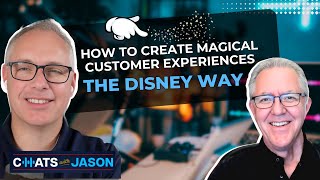
Dennis Snow explains how Disney builds loyalty through three core needs: do the job, be easy to do business with, be nice. Leadership must embed respect in every process, and small intentional gestures create lasting memories. You don't need Disney's budget to copy this.
Chapters
You don't need pixie dust to create magic. You need a mindset, a mission and a system that never forgets the human. Welcome to Chats with Jason. I'm your host, of course, Jason S. Bradshaw. And this is the show that helps you transform the experience to transform your business and the world around you. Today's guest is someone who doesn't just talk about world class service. He has lived it from decades at Disney to advising global brands. Dennis Snow knows what it takes to turn ordinary moments into magical ones. But this conversation isn't about fairy tales. It's about real strategies, deep mindset shifts and the power of human connection. We'll uncover the myths killing customer loyalty, the systems behind the magic, and how to lead with experience at the center of everything hit. Subscribe. Share this with a fellow colleague or a change maker and let's dive into a conversation that might just reshape the way you show up for your customers, your team and yourself. Dennis Snow, welcome to the show.
All right, thank you so much. It's an honor to be included in the show.
Appreciate you taking your time and sharing your wisdom with us today. Now, Dennis, take us way back to the beginning. What was that single moment at Disney that woke you up to the power of experience?
Well, it was really when I was hired and went through the initial training at Disney world. I was 19 and it was just going to be a summer job. I didn't know it was going to turn into a career. So I was hired to work on one of the rides at Disney World. And when I went through new hire orientation, they really introduced the company in a way that was very compelling. They brought it back to Walt Disney who I remembered from watching on television, but really brought it to what he was trying to create. This experience he was trying to create for people. And as a 19 year old, this was a revelation for me and that I was going to be part of this show instead of just working a job. So, so I became pretty enamored with the company right off the bat. And then as I was working, there was a ride called 20,000 Leagues under the Sea. It was a great ride and I was just fascinated by this, the impact that you could have on people just by the way you did things. And so it was really at the very beginning and that continued on during my 20 year career.
Would you say that during your career at Disney that one of the key to their success was that onboarding experience that I understand that they continue to this day, a deep, rich recruitment and onboarding experience? Do you think that's key to how people show up? And how does it apply to businesses that aren't in the entertainment industry?
I think it absolutely is key. One of the, and this goes back to the very beginning, you do not start your job without going through the new hire orientation. Disney traditions is what they call it. And it doesn't matter if you're hired to work on the rides or you, the new vice president of marketing, you go through this onboarding experience and it's not about signing paperwork and all the rules and regulations. It's about who we are as a company and what we're trying to create. And so if you ask anybody who has worked at Disney or still works there about new hire orientation, they can tell you pretty to the greatest detail of what it included and they will say it was a really important part of our career that can apply to any organization. Hopefully you're already hiring great people. That's critical. But you want to align those skills and talents that they bring into what you're trying to create as an organization. Whether it's a fabulous restaurant, whether it's a manufacturing facility, a golf course, whatever it is, there's an experience you're trying to create for your customers. And that's a golden moment for introducing people to that. Now you can't just leave it at that. Then there's the on the job training and the ongoing reinforcement. But it all needs to be connected back to, this is what we're all about. This is what we believe in as an organization. This is the experience we're trying to create.
So if I think back to my corporate career, I can only actually put my finger on one position where my day one experience was anything but. Here's your desk, here's your login, and the restrooms are down there. And if you've got a problem, go speak to it.
Right.
I've had the fortunate experience to work in global Fortune 500 companies. And it hasn't mattered whether it was an entry level position at the start of my career or a senior executive role, the onboarding experience has been pretty much the same. In fact, the more senior, the less onboarding I got. Why are companies not investing in what you and I know, and I'm sure the listeners know is such a crucial part of getting that employee to be bought into the vision?
I think part of it is they don't recognize the importance of it. Another part of it, I think is money. That it takes money and commitment to have a formalized new hire onboarding process. And there's been times when Disney, when folks in operations has been busy and they're hiring people and it's under crunch time and they've said let's get them on board, let's train them to do the job and then we'll send them back to traditions down the road. You and I know that will never happen. They won't send them back. And so it's a commitment from senior management that no, this is non negotiable, that it has to be in place. So I think that it's got to be senior management that says this is an important part of every person's career no matter what they do. And this is something that's going to stay with them their entire career with us. And that the money is worth it to invest the money into a good quality onboarding process that isn't just as you said here. Here's all the rules and regulations. Here's your desk. No, here's what we're all about as a company.
Yeah. It certainly something that I hope that changes over time as more businesses focus on sustainable and people, like I said.
Earlier, people remember it. That's the great part about it. People will remember how they felt those first one or two days of their employment with you. And you want them to feel that closeness, that enthusiasm for the company versus I'm terrified. I don't even know where the bathroom is.
Yeah. And I'm fortunate enough to have spent a lot of time with the Disney Institute and by extension Disney cast members, team members. And the one thing that is common through all those interactions that I've had over the years is the loyalty that they've held from those very early days of being in the company. And I think all of them in their own way have shared their stories about traditions with me. It's living proof that it has an impact not only on how they show up on day three and four, but how they show up 10 years down the track, 20 years down the track. And I understand you had a multi decade career with Disney and you are not unique in that respect. A lot of people become long term Disney employees and I'm sure it starts with that traditions, that onboarding experience at the beginning. So let's shift gears a little bit. Dennis, if you were sitting down with a curious 7 year old and they asked what do you do and what is this thing called customer experience? How would you describe it in a way that a child would understand?
Well, it's funny that you asked that because that actually happened with my granddaughter. Daughter. She Asked my son, she calls me Papa. He asked my son, what does Papa do for work? And she was probably around, maybe around 7 when she asked that, what does Papa do for work? And I teach customer service and speak on customer service, and he teaches people how to be nice to each other. And she looked at him and said, should people already know that? And I just thought, what a great response. And of course, my whole business is built on the fact that people don't already know that. If I were to explain it to Trinity, my granddaughter, if I were to sit down and explain it to her, I would said, you know how you want to make friends and you want them to be friends forever? That's what I help customers to learn, my clients to learn how to do, how to make customers friends, that they stay loyal to them forever. And when you think about the customer experience, that's really what we're all trying to do, is to build that loyalty. And it all comes down to what we put them through and how we treat them.
Yeah, I love that. Trying to teach people how to make customers friends for life. I also love Trinity's response that people already know how to be nice to each other.
Yes, they should, but we don't. And sometimes we forget. Sometimes we forget. You know, when you go back to companies that you like to do business with, we like to do business with companies that we like. And maybe friends isn't the right word, but places that make us feel good, where we feel important, that's what it's all about. If you're going to create that loyalty, yeah, absolutely.
And organizations can do it in different ways. I was challenged recently, actually, about speakers, thought leaders who rely on examples like Disney and Ritz Carlton when they're talking about what great looks like from a customer experience point of view. And this person said people talk about it, they take them to these experiences, and then they think they have to imitate what they're doing, and they get confused because they're not in the entertainment business or they're not in the hospitality business. But really what you'll say so far so early into the show is it's about a mindset. It's about. About being intentional, about how you show up and serve your employees, because as a leader, they're your internal customers and your external customers as well. So that takes a belief system, I think. Dennis. And what invisible stories do you think companies tell themselves that prevent them giving unforgettable service?
I think they make the mistake of that. The thing is the product, the widget is the product or the hotel room or whatever it may be, that's what they're selling. And widgets are commodities. I don't care what kind of widget you're selling. I've got a lot of choices for the same widget, probably around the same price point. So what's the differentiator? So I think that a lot of companies, they don't tell themselves the right story. They create a great widget, which is important, but they don't take it. That next step of how do we make sure people want our widget? And the only way to do that is to create loyalty, to create an experience where they like doing business with you. I always say there's three things that customers want, and it really doesn't matter if it's a theme park or it's what business it is. We want you to do the job, we want you to be easy to do business with, and we want you to be nice to us. You know, if you do those three things, I'm going to be loyal to you. If you do those three things consistently, I'm going to be loyal. And it doesn't matter what business you're in, Those three things apply. Now, how they might apply to a hotel might be different than how they apply to a car dealership, but those are still the three things we want.
Yeah. And I think that's true whether you're staying at a Motel 6 or staying at a Ritz Carlton. Right. You still want a consistent experience in experience you can trust. You still want for them to be nice to you. You want the product to do what it says it's going to do on the label, so to speak.
Now, I don't expect a Motel 6 room to be the same as a Ritz Carlton, but I still expect you to treat me well. I still expect to be treated as I'm important to you versus I'm a transaction to be completed.
Yeah, yeah. And of course, you still want the product to be to the standard you're paying for. You want a room to be clean. You want there to be a bed, hopefully a door that locks.
Hopefully.
There's lots of myths around customer experience. Some of them true, some of them not so true. If you had to throw a rock at the biggest myth in customer experience, what myth would you be throwing that rock at?
I think that a myth would be that it's hard to do. It isn't hard to do, but what you do, you have to do consistently. So sometimes a company will look at starting a customer service initiative and they look at everything all at once and think, oh my, that's going to take a long time to do. And it may take a long time to do, but if you take it step by step, it isn't that hard. It's defining what you want the customer experience to be, what you want your customers to say about your organization, what needs to happen in order for them to say those things. How do we get our people to do those things that will get the customers to say those things? And how do we keep getting better at what we do? If you build it around those basic building blocks, it doesn't have to be complicated. It is going to take some time and it's going to take commitment, but it doesn't have to be complicated.
Yeah, couldn't agree more. Let's get started on proving the experience. Get one element, one piece at a time.
Yeah.
So I know, I've seen it. I'm sure you've seen it as much as me, if not more. So many brands out there say we're customer first, but they treat it more like a tagline or an advertising position statement than an actual way of doing business. What do you think the first non negotiable move a leader would or should make if they really truly want to live a customer first mindset?
I think the first thing is that the leadership needs to walk the talk. They've got to show their commitment to it and that they are dedicated to it. One of my favorite photos, you probably, you may have seen this photo. It was a photo of Walt Disney. It was probably around 1959 in Disneyland and he's picking up trash. And that speaks volumes to me. I like to imagine a cast member at Disneyland going through training and being told we need to keep the park clean. And then they turn around and there's Walt Disney picking up trash off the ground. It doesn't get better than that. So I think just walking the talk. The other non negotiable that I think needs to be just embedded in the culture is we treat every single person with respect. Whether we have to say no or we can say yes. Whatever is happening, we never want a customer to be able to say, they didn't treat me with respect, they disrespected me. That's a loyalty killer right there. That just takes everything away. But even if I'm told no, I can't do something or I can't get something. If you treat me with respect and I understand that you really do respect me, I may not be happy about that specific Circumstance. But I'm going to give you another chance. I'm going to say okay. They treated me well, even though I didn't get what I wanted. I'm going to give you another chance. So I think that Respect idea for customers and for other employees covers a lot of ground in creating that experience.
Yeah, makes a lot of sense. And I love that you shared the story of Walt picking up trash. I remember. I think it was my first time. I was doing a tour of the boardwalk property at Walt Disney World with a sales associate. Wonderful person. She's now retired and I just wish that we had managed to stay in connection. But she retired during the pandemic and anyway, we were doing a tour. She was trying to convince me that the boardwalk was the right property to host the event. And we walking along and there was just a piece of trash on the sidewalk. And she stooped down to pick it up, popped it in the trash and kept on going. During this entire time, she just kept talking to me as if nothing was happening. That became a story that I've told a million times to people around. Why I've done so much work with the Disney Institute, because Disney has found a way to systematize a way of operating, creating a culture for their people. That says your job description might not say pick up trash, but if you see trash, you know it impacts the guest experience.
And that goes back to traditions, that new hire orientation that's introduced there, whoever you are, vice president, marketing, ride operator, that's part of the job is keeping the place clean. To be honest with you, it's non negotiable. It's just part of being a cast member there.
Yeah, it's phenomenal to see it in action. And that's why the parks always look well.
It's the number one compliment they get is how clean the place is. That is the number one compliment that Disney World gets is just how clean the place is.
I've probably taken 5, 600 people through various Disney programs. And one of the questions I used to get quite a lot was, I never see the janitorial staff, the custodians. How's everything so clean? You'll learn over the next few days. So you could say that the magic is just a well executed system. How do you balance process and personal touch?
Oh, that's a good question. Disney obviously has processes. You know, when you go on the rides, you're going to wait in line. That is a process. And keep in mind the lines absorb some of the people that are in the park. So there's a business reason for people waiting in line. That's part of the business model. So there's a process like that. But how do you Disney fy it? And that's why they have entertainment and things to watch. While you're in line, the cast members are interacting with you. And I think they've gotten better at this over the years too. The newer rides, if you don't wait in line at least for a little while, you've missed a big part of the experience. So I think that the weaving of process, like waiting in line and that personal touch, it takes some of the sting out of processes. I love the idea when people go back to their hotels after the fireworks in the Magic Kingdom, that cast members are in the lobbies of the hotels greeting them, welcome home. And you go up to the room and part of the process while you're off in the park is the housekeepers are cleaning up your room. But the personal touch is they've taken some of the stuffed Disney characters that the kids might have purchased and tucked them into the bed or positioned them playing with playing cards. So it's taking those processes that have to be in place, but Disney fying them. And again, I think any company can do that. How do we make it unique to us, the delivery process? When we deliver furniture to somebody's home that they purchased from us, what can we do? What's the gift that we can bring that makes that process different for us than it is the other furniture store that's right next door to us?
So if I'm hearing you correctly, you believe that businesses don't need Disney level budgets to deliver a magical experience? What's one question a leader in a small business or mid sized team should ask themselves to unlock what perhaps their magical ingredient could be?
Yeah, well, I and I touched on this earlier when I mentioned what do we want customers to say about their experience? And I always say come up with three things because that helps you zero in on what you want your differentiator to be. Now a small business, I think a great thing is just to bring your team together and ask that question. When a customer talks about us to another person, what are three things we would want them to say? They were nice to me. They paid attention to every detail. Whatever those three things are, that gets you thinking about what your uniqueness is or what you want your uniqueness to be. And then the next step of that is what do we have to do to get people to say those things? And now you start thinking about like At Disney, if they say, we want guests to say they paid attention to every detail, one of the behaviors then would be, if you see a piece of trash on the ground, you go over and pick it up and throw it away. So the park is always clean. It all meshes together. But I think a big missing component is we don't often take the time of, what do we want customers to say about their experience with us?
So that feels like something that a business should have to do. If they were on this 90 day mission to radically transform the way that they operated, what's something else that they could do to help further that progression? Over 90 days, they've asked the hard questions around what they think customers should feel, what our magic could be, but what else could they do?
I think one of the top things that we can all do in our business is ask our front lines, our frontline employees, what's keeping us from doing some of these things? What are some of the roadblocks that are in place? And our people know, I think our employees even know better than our customers do, what the frustrations are, because they deal with the same frustrations over and over again. And so sitting down and just saying, okay, what can we do to remove some of these roadblocks? What do you find frustrates our customers? And what can we do about it? A favorite example of mine, and keep in mind, what I'm about to talk about is a piece of paper. All right. Balloons are not allowed in Disney's Animal Kingdom. They're in all the other parks. But you can't bring a balloon into Disney's Animal Kingdom because if it pops, it can scare the animals. And if an animal gets a hold of a pop balloon, it can literally kill the animal. So the rule is no balloons. Oh, we have to tell these kids they can't bring their balloon in, and we would hold on to it for them. But, you know, I have to give up my balloon. So one of the things they did to alleviate and actually turn it into kind of a wow was when you get your balloon back from what they call balloon daycare. When you get your balloon back, there's a report card that comes with your balloon that says, your balloon ate lunch with the other balloons. It played well with the other balloons. It watched Frozen with Elsa. And it's a little report card that now the child has a smile, the parents have a smile. They've got this little report card. And that came from asking cast members what frustrates people and what can we do to turn those Frustrations around because our people know.
Yeah. An excellent example of how taking just that little extra step can make such a difference in the experience and the memory that experience creates. Talking of memory, we remember. We've talked about today how that people remember, how we make them feel. What's the most powerful service story you've personally witnessed?
There's been a number of them, but one moment that's frozen in time for me. I was a supervisor in the Magic Kingdom, and I was the supervisor of Fantasyland. That's the greatest title I've ever had. I was the supervisor of Fantasyland. Wish I had saved one of the business cards, but I was on my way back to our offices, and I was walking through Fantasyland, and Snow White was doing one of her greetings, was out doing one of her greetings, and this child came up, and I was just watching for a few minutes because that's always a magical time. I don't care how bad of a day you're having, when you watch Snow White interacting with kids, it's a great thing. This child came up, and Snow White was talking to her. And I could tell just from where I was that the parents were telling Snow White that the child was deaf and couldn't hear what she was saying. And Snow White started doing sign language with the child, and the child's face just lit up and was signing back, and the parents, you could tell, were just melting into a puddle. And that, for me, was just a powerful moment of when we show compassion and care. The impact that we can have now, we don't always know it. Right. We don't know what people are going through when they're in our business. We don't know what their challenges are. In this case, she did. And so that's why I think, going back to when we were talking about respect, of always having that I'm going to make a difference perspective, because you just don't know. You just don't know what you're dealing with. And I'm sure you've got stories of exactly those kinds of things. The impact that a little gesture had, that wasn't a big deal to us, but it made a huge difference to somebody else.
Yeah, absolutely. And I can just imagine that those particular guests have probably returned to Disney.
10 and it's a memory for life.
Yeah, absolutely. Absolutely. Dennis, it's been great having you on the show, sharing your wisdom with us. Before we close out today, I've got one last question for you, and it's a little bit of a unique one. Dennis, can you finish this sentence for me? Replace the blank word. The experience is everything, because blank. And if more companies understood that, what kind of world could we actually build together?
Because the experience is what can make us unique. And when we create unique experiences, we can make a difference in the world. So I don't know if I got it exactly right in the right spot, but the experience is what can make us unique, where we can make a difference. I know restaurants, I know stores where I literally feel good walking into them because of how they make me feel. And I know restaurants and stores where I never want to go in them again.
Absolutely. Absolutely. I love it. I love it. Customer experience is what can make us unique. Dennis, it's been absolutely my pleasure and the audience's gift to have you on the show today. Thank you for your time.
My pleasure.
Now, what if the secret to lasting success wasn't your next marketing campaign, but the way you make people feel? Dennis Snow just gave us the blueprint, and now it's your move. If you've got value from today's conversation, here's what I ask. Subscribe to the show, share the episode with a leader who needs to hear it and leave a review. It's how we keep transforming experiences and transforming the world around us. Until next time, I'm Jason Espratchuk reminding you, when you transform the experience, you transform your business and the world around you.
More from Jason

Bringing Wonder Back to Work | Leadership, Culture & Service with Peter Merritt







How to Lead With Empathy: Claude Silver on Emotional Bravery & People-First Culture


Inside Harley’s Cult-Like Loyalty | Ken Schmidt on Turning Customers Into Believers
