Don't Waste Your Money on Education Saving Plans, Here's WHY!
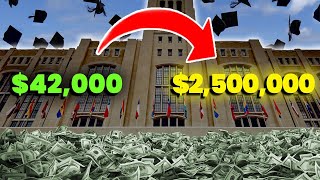
Richard and Henry Wong argue RESPs have hidden costs: a $50,000 lifetime cap, forced Canadian post-secondary use, and 20% penalties on non-qualified withdrawals. They propose whole-life insurance instead, showing how $2,500 yearly from age 5 to 22 builds tax-free cash value with more control and flexibility.
Chapters
So you want to save for your kids education, you've heard about these different savings programs that are available and you want to go ahead and implement the government sponsored plan to help save for college. Well, we're here to tell you that that might not be the best option. Instead we want you to start thinking about a lifetime value of what that savings could create for your family, including your child. I'm joined with my good friend Henry Wong here. Today we're going to talk a little bit about Canada's RESP program which is the Registered Education Savings Plan. And what are some of the unknown things that people should be aware of because we always want to inspect what are the things that we don't know so we can get clear on them. And then we're going to look at a little bit of a comparison, not that we want to compare against it, but we want to look at the, the difference of what if we were to use a different type of mechanism, a different type of vehicle to do the same objective of saving for a child's education but that allowed for continuity on an ongoing basis throughout life.
And one of the main things that really I wanted to share with the listeners as it relates to the situation on building the fund or money towards maybe the primary usage is for education. And I just want to maybe digress a little bit back on my experience. I've taught at a post secondary institution in Canada, in Toronto specifically for over 10 years. In that time, including myself going through it, I didn't grow, come from a well off family where I actually had to work to build my money to pay for tuition. And I found myself in a very interesting situation when I was doing it myself personally, which was my family was a low income household. We didn't have enough saved or built up in what most people actually saw had an resp for their post secondary education and when they were building it for that post secondary education the amount that would get built wasn't generally enough, especially with the kind of program that we were enrolled in. It was in what's called a flat unregulated fee. So the tuition fee was quite high and if you add it include books and everything along those lines, the amount that was saved up was generally not enough for affording the tuition. Now the difference though was when the amount that I was using I didn't have savings. But what happened that opened up was the loans that I can get from school or from the government was a lot higher than what my counter, I'll call parties or students were at the same Time who had an RESP billed. Because one of the things that people may not realize is the RESP balance that is being built is factored into the loan qualification on what the student can get for their tuition. So in my standpoint, actually in terms of the amount of tuition and ancillaries that I had to pay, majority if not all of it was funded by the government loan. And for those of you who didn't know, I'm in Ontario and the loan I could borrow money until about the sixth month post graduation is when I actually would start paying for it. So I had basically no cash outflows for four and a half years while I was going through this education process. Now to the comparison, other students who had resps, they would be able to get a certain amount and then that's the amount that was saved by the parents or the sponsors of the resp. But the shortfall for the tuition they needed to get a loan. But the loan often for the loan criteria, qualification requirements never met enough to get to the rest of the tuition. So those students were actually stuck in a situation where they couldn't afford it. So one thing we're really going to talk about is the process about just being a lot more.
How you may have known it. Right now, I'll call it the traditional way, focusing specifically on building a fund just for education. And we're going to expand that thinking or the scope of that thinking to just beyond just education. However, what about the other factors of life? Whereas if you kind of limit to what you're already knowing now, there's kind of an end stage to that side of things. But what we want to start opening your mind to seeing is a bigger side of things. And again just for more consideration as we're going through it, it's first important to recognize the construct of the program and talk about the flow of the stages of the program. So we're using RESP as the capital aspect. So there's that accumulation stage where money's going to go in. Then there's the kind of called the storage or the warehouse. And that's where the value can go up and down depending on what you put it into. There's that withdrawal stage. You can withdraw earlier or you can withdraw during the time when it's eligibility for usage. And then there's an end stage to it. Like this doesn't run all the way until lifetime. It doesn't follow the child all the way until 7080. Because the specific purpose of this program was for education and education Only. So the first thing I want to just highlight is this was a very defined program that was set up by the government. So now the next is capital. So money is going to go in. So you've already talked about this, Richard. So money goes in, and if you fund it properly according to them, then you're going to get one. You can access one of the main federal grants. And that grant is if you fund it up to 2500, you'll get an extra 500. And everybody's like, as long as I fund that, I've guaranteed. If you look at things from quote unquote, finance lens, where people try to look at ROI and they're like, oh, I put 2,500 in, and this is a guaranteed $500. So that's 20% return. That's free money. One thing I just want to take a step back and really recognize is whether you agree with this or not, the government has created something that has influenced your choice. And I don't like to have my choices influenced. I like to make my free choices. And that, to me, is just something I wanted to put as a pin mark for people to recognize. And that's what incentivizes behavior for people to drive into something like this. And then that, in a way, if you are just so focused on that, you kind of neglect looking at other options. So that's the money going in, and it's being incentivized by the government by providing you a $500 grant. Now, this grant is really important because it's actually not yours until it meets the eligibility requirements. For example, going to an approved institution, you may see the money go in, but it's not actually your money until you've earned it. And the only way it can get earned is when the child achieves the specific requirement.
What you don't recognize is what you're giving up, and what you're giving up is control over your choices. And now, granted, there's a lot of institutions that are available and actually more were added at one point. It used to be that, like a lot of trades, things weren't really covered very well. But that's more factored in now. But one of the other keys I want to identify here about incentive, Henry, is it's not just the incentive of starting the plan because you might get this grant, but it's also an incentive to limit how much you put in. Because if you get the maximum for putting in 2500, that means every dollar greater than 2500, you would diminish the Effect essentially of that quote, unquote free money or return. So the incentive works on both ways. For you to start the program and to cap the amount that you put in the program, which happens quite frequently for people. So neither one of those is ideally good. How we incentivize behavior often is what dictates how we go about doing something. So just be mindful of that.
Yeah. And the overall cap actually in terms of the program, the government only allows you to put in 50 grand as a max.
So over the lifespan of the program, on the lifespan.
So that's also important to recognize. Then there's the tax environment. So you're actually deferring taxes and you're actually transferring or distributing the taxes. And ideally if the child does use it, the government's next incentive is to defer the taxes to be taxed in the hands of the child, which in theory should be. They're not working and therefore they're not going to get taxed. So money's going in and it is getting housed in a location. And that location is what is being a portfolio. Again, depending on what you use. If you use a sponsorship program, if you use a self trading account, whatever you use, they have now been a lot more creative of expanding options and what you're going to do with it, not going to critique the merits on what's better from there, but just the general process. That money is going into a storage location where you'll get market gains, market losses, interest income and any forms of that. Now this is also growing for you in a sense of what's called tax free. And we've already kind of talked about this as it relates to RRSPs. You're surrendering tax advantages. If you had the same gains outside of this program, you actually get favorable tax advantages like for capital gain, which is 50%, whereas if you're putting it in here, you're actually surrendering those tax advantages because it's inside this program and.
It will be taxed in theory in the hands of the end user being the child, which may or may not be the case if they qualify for an approved.
So the key is the qualification. Now we're going to talk about that withdrawal stage. So the withdrawal stage comes from if it meets the approved usage. So there's three options. You can withdraw it at any point in time. Of course you're going to face potentially penalties which is not really actually disclosed to you up front. Then there's the approved usage of it, which is where it meets qualification. And then there's the Last one where it doesn't meet qualification and there's no usage of it. So there's kind of three routes on that end stage which most people are actually not talked about right at the beginning before they enter into it. The focus is do this right now, be responsible and you're going to get incentivized by the government grant. But they don't talk about the end stage component of it. So there's a withdrawal stage and if you withdraw the gains in the portfolio, so let's just say you've accumulated and it's become 50,000 and the amount has become 60,000, the extra amount, 50 to 60,000 is a gain. There's a tax on that if you are withdrawing it before the eligibility period and there's also a penalty involved and we'll talk about that in a lot more detail. And then there's that approved usage. The child uses it, goes to grant, gets taxed at their tax level, so on and so forth. And then there's the no utilization. And that also goes back into the framework of getting this potential penalty. And then the last option is to avoid the penalty. A lot of people end up doing what's called rolling it into an RSP as another potential option.
Now a lot of our conversation is going to focus Henry, on the, on the actual, you know, paying for education component.
Correct.
But I want to touch a little bit on the utilization piece because you mentioned that's one of the things no utilization. In comparing contrast, if we just think for a moment what, what is one of the biggest expenses of the average North American family? Well, we know it's interest and we know it's taxes on a lot of things, but it, it's actually rearing a child, you know, having a child, raising a child, feeding a child, like all of the necessities and the needs, putting your child through hockey and soccer and lacrosse and volleyball and tournaments and vacations. Eventually if you have kids and they're teenagers, well, you know, they eat a lot of food and they have a lot of high end needs. Eventually they need a car. Like all of these associated things, when we add all up, that is a massive amount of capital over a period of time per child that gets added up. That's where a lot of parents money goes. The money flows towards things that we need to do for our kids and to make them survive and thrive. And so the lack of utilization, if you, if you're spending all of your money just to make your kids survive and thrive, plus you're also putting money over here for the future so that they can continue to survive and thrive. But it's separated and it's now locked away in a box that there's penalties and issues that would, that would get in the way. If you had to withdraw that capital, then you're de incentivized from being able to utilize it, which means all of your other earned income has to go towards that utilization of life. Vacations, you know, hey, if you wanted to buy a condo, let's say, and you're the university that you could rent out as an asset for your kids and like those are things that people will talk about doing. There's not an opportunity to utilize any of these capital in the method that we teach people about becoming your own banker. And if we implement that method, you don't give up that utilization aspect and you don't give up the ability to use it as a training mechanism, a training tool to start teach monetary value and monetary implementation in the family line. Whereas if you park it and set it away into this locked away machine with the government rules and, and the incentives and the deincentivization of taking money out, you're literally giving up a lot of opportunity that could show up for you and the family by having access to that capital. And I can't understand enough how impactful that can be over a lifespan. So don't underestimate the value of utilization. It is probably one of the largest valuable components that we have with all of the money that we work with on a daily basis.
When you're rearing a child and essentially funding the survival and the nurturing of the child and to then eventually, let's say utilize some of the funds for education to invest in their development for career and future. That is a lot of money that you are bringing in and then it's also leaving you. And that's probably why the reasons behind the resp was built and restricting you with all these rules so that you don't interrupt the compounding of the capital that's sitting in that particular location. We're just trying to tell you that when you practice the process of banking and implement the infinite banking concept, you're still able to enjoy the fact of having uninterrupted compounding of the capital while as you touched upon Richard, utilizing the funds for raising the child, using it for education. And the best part is you actually get to decide the amount of what you want to put towards this fund. Instead of the government telling you that you're capped on a lifetime of 50,000 and we're going to incentivize you for the extra only 7200amount. So this is kind of where we're starting to wanting to open up your eyes to realize this other option. There's a lot more flexibility in terms of how you get to control your money. Now we've got to really take an honest assessment of that container, whether or not it meets the needs of what you need. Now, post secondary school is expensive. It's 50,000 per child. And what I've done is I've actually gathered information from the government's website and other government specific sources and they've already shared with you college and vocational school. So this is if it's again, one of the approved ones in Canada is about 7,000 to 22,000 per year. And usually the duration that people go through is about four years. So four times 22,000 is $88,000. Now if we just look at the cap that they've put in, that's not enough. So where is the rest of the 38,000 going to come from?
According to what you told us earlier, it's not going to come from a government student loan.
They weren't even. Yeah, exactly. So not only were they going to fund the shortfall for the student loan part, but there may not even be from your resp. You may not even have built enough from the resp in that standpoint. And that's still going to impact the quantity of funding that you're going to get from the government from there. Now if you go to university student and roughly international, but let's just say the domestic is still around the same 22,000 and we can range it to the 36,000 also. So if you're going to a university, there's an even higher capital commitment. And if we look at the individualized resp program, the max is 50,000. So in the lifetime of when you start it, until when the child is actually going to use it, build the shortfall from capital gains or market gains. Most of the time it's unlikely because the sentiment from most parents when they're putting money into this container is they want principal protection. And if they want principal protection where the value could never go down, they're trading off for the value of the capital is likely not going to be significant. They can't expose it to risk. And in that circumstance that minimizes the ability to actually have much capital gain or growth in the first place. And if you kind of choose these kind of programs, again, depending on what you choose, they charge very, very High fees. If you kind of take a step back and think about it, the amount of money that's sitting in the container, you're not really going to get a lot of gains from the market. And the fees on these type of containers to manage this container is quite high. You're essentially paying someone to hold on to or look at the container for you while they're enjoying those fees. I'm sure they do a lot of work on those fees for getting those fees. But if we're looking at the end user, the real important question is did your capital actually raise in that period of time and was it enough for educational purposes? So the first thing is to now to also recognize in order to be eligible, the contributions can't be withdrawn at any time. However, because if you draw it too early, that's going to impact the government grants, the qualification criteria. And the second is it forces the child to go to an approved post secondary to get the grant and generally it must be in Canada. What if your child wanted to go somewhere else for post secondary school? That's not going to be an option for them. What if your child doesn't go that direction and wants something different? This is a very key thing.
What if they want to start a business?
Exactly. Instead they've already been pigeonholed to, you must go to the school. Otherwise you're foregoing my grant that I built up over that time and those, you know, other things that happen. So this is kind of what's really important. It's already predestined what the child needs to do to financially handcuff them. And that's not kind of the parenting style I'd like to have for my children. But, but some people are able to make their own choices, which is good.
A person would need to get consistently, without fail, about 7 and a quarter percent on their $2,500 a year plus their government grant accumulation. Just to factor in that minimum amount of payment that you estimated based on, you know, what, what it needs to get to a four year degree based on that, that government site. And that assumes no losses, constant compounding. And that would be an after tax level because you need the net version of that essentially for the student to be able to use that capital to go to work towards the education environment. And on top of that you'd also have to be in a position where you'd also be able to match with inflation because those university cost numbers are today's numbers. So if we add 15 some odd years on there, that's not going to be tomorrow's numbers. So if we want to add that in, well then the, the impact obviously would be much greater. So even earning seven and a quarter percent consistency without fail with no loss, and most people I meet and I work with, been working with client families for, you know, 15 years, one thing they don't want to do is they don't want to gamble with their kids education fund. So the result is they usually have it in very conservative types of investment structures because that's so important to them. They don't want to gamble with that education fund, which means they're not really achieving, most likely in many terms what they're actually setting out to do in.
A very effective model what happens at the stage when the eligibility is actually not met. So the child has decided to do something different. Now one thing is that you can withdraw your contributions, but when you're withdrawing the contributions, you're surrendering those grants. So that 500 that you were putting in or that max that's going to be surrendered, the next thing is, let's just say that choice is being made and you are withdrawing that money. And if there's gains, the gains in the portfolio went up, the portfolio or the value in there is 30,000, the portfolio went up 20,000. You know, just realistically speaking, the nature of products the capital is being applied to, the likelihood of that happening is very low.
Kind of like a snowball in hell sort of a situation, I would think.
No, it just doesn't work. It's not going to an extra 20,000. But I'm using 20,000 for a very particular reason. Just to keep the conversation simple now on that 20,000, that's going to get included for the gain. So first the grants are gone and now like the 20,000 gains are going to get included to the person's income for setting up this program.
The parent, essentially whoever the tax paying parent is going to have to take that on as added income that tax year.
So let's just say that's 20,000. The person earns 100,000, so that's 20,000 getting added to their marginal income, which we'll talk about that impact. The next thing is that 20,000. There's a 20% penalty that is levied on that gain unless it's transferred to an rrsp. So you get the option to transfer to an rrsp. Now we're not going to talk about whether RRSP is good or not, but what if you have already maxed out your RSP contribution room? So this is going to use up your RRSP contribution room too. So these are again, just making sure that you recognize there's other components involved that likely hasn't been fully discussed with you when you've been setting this up. And this is where not only is it impacting your RSP program that you may have been using, but it does incentivize you to not penalize you for taking it out today. They've created a road or a bridge to roll that money into another pre existing government program. And this is not a good or a bad thing. It's just recognizing the fact is there's another bridge that's created for you to push the problem to the RRSP standpoint. So let's just drill into a little bit of this AIP penalty. So let's just use an example. In the middle of the screen here, you'll see the income of the individual is 100,000. And again, these are estimated tax numbers. So taxes would be 26,000. So the net income 73,000. Average tax rates 26.35%. 26 divided by 100 is the average tax rate. Now what I want to just tie upon is this marginal tax rate which is 33.89. So that means any additional income on top of that, you start triggering this higher tax rate and what is being clawed against you, you're not getting taxed at 26%, you're getting taxed at extra 100 will be a $3389 tax on that hundred dollars.
So basically, for every $100 earned, you're going to give up $34.
Moving forward above 100k. Now this is based on an Ontario example, I believe.
Yes, correct, correct. And that number goes up each layer of the brackets you run into. So now I'm going to use that $20,000 and that's getting added to this particular individual's income. So first you'll see the tax goes up from 26 to 34,000 and you'll see that marginal tax rate is 43%. So you think it's a 2% increase. So 26.35 to 28.7, it's about 2.35% increase, but it's not actually 2.35%. It's $8,000. $8,000 of the 20,000 is being taken away from you in the form of.
The taxes, which is actually almost 41%. So pretty painful. So, yeah, so you get the 20,000, but you actually don't get the 20,000 because you only get 41% of it. Has to disappear to the government. And then on top of that, now you also have to pay that penalty as well that you indicated.
So the 12,000 would be what you actually get to keep. 8,000 goes to taxes or the 40% and then that $20,000 is applied on that penalty. So that's an extra $4,000. So the whole $20,000 that you believe you got to gain your tax bill is actually $12,000. So you only got $8,000 of the.
$20,000.
And you've got about, roughly speaking, 15 to 20 years worth of time that you cannot make up. So not only do you have this tax problem created, you can earn more money, you can grow more investments, you can do a lot of things. What you can't do is make up the time, the decisions that you make early on. And when you're getting involved in an RESP program, you have to recognize that your future decisions, and it's not just yours, it's also your child's future decision or your, perhaps your grandchild's future decisions are things that you can't control. You can't control the market, can't control the economy, can't really control the political environment. You also can't control the government changing the rules on plans that they create. So there's a lot of areas where you don't have the capacity to really provide undue influence onto the outcome that you want. And so shifting gears, we want to consider where can you have a higher degree of influence on the outcomes and have far degree of higher control to be able to implement the things that you actually want to do, regardless of what your child decides they want to do. And I think that's really the direction that we want people to go so that they can have peace of mind, freedom and just in general have that feeling of complete and total decision making power at their hands.
Yeah, one of the things we just want to encourage is to give your child the ability to make their decisions that is best for them. I think by that age they are able to think for themselves and they shouldn't be pigeonholed to forced to make a decision to go to, let's say a post secondary school to make sure that they get the grant money. That is definitely one thing that is pretty important to see. The second thing is just based on the mechanisms, on the structures, how it's been designed, that you are basically forced as a choice not explicitly written to if you want to avoid the penalty or the tax bill, to roll it into the RSP and again push the can down the rope. And just at that moment of evaluation should be a very important evaluation of recognizing that this moment something's not right. And if I kick the can down the road again, is that going to be better in the future? If the plan was designed for your favor, it should have been designed in a way where you can exit without any penalty. So what does the other side of things look like where you have a lot more freedom of choice and option and you're basically going to build an extension to your family banking system. And what I've kind of put together is just using a pretty similar. Most of my clients similar example of this is on one of their child, starting at age 5, putting 2,500 the equivalent amount until 22 years. Now, I made 22 years just for us as a discussion illustrating that again, most people, they go through their program and then the resp ceases and that's it. But what if we also do the same stopping point? So what you see is 2,500 going in since age 5 all the way to age 22. So an accumulated amount of capital was 42,500. Now, by virtue of the vehicle and the contractual guarantees built into the vehicle, the total cash value is $59,801. Now again, everybody's numbers are different and how we design it. It's important to have a proper discussion to bespoke the situation to yours. But this is what I'm just showing you from example client situation. So on that 59,000 now in that journey that that cash value is being built by the insurance company, you have the ability to borrow against that cash value, to use it for the things that you want to use it for. So you're not restricted. And this is where we're talking about utilization. Now the next thing is so what does like now while the resp has a fixed finite period which it can be utilized and there's also a maximum cap that money can go in. Well, there's no cap on this one other than the choice that you've decided how much you wanted to start with. When it's funded properly, this asset, without eroding or breaking it down, it's still going to have the inherent characteristics where the cash value is going to continue growing. I At year 22, the only amount that has accumulated was 42,550 9,081 was the amount that the cash value was at then. Now 23, no money has gone in. Cash value is 61,846. So no money's Gone in, but it still went up tax free inside the asset, no money has gone in year 24, it's gone up 64,000, 67,000. What does it look like at the person's age? 30, 85,000. What does it look like if the person's at 41, 37, 945? This is just the vehicle still growing uninterrupted and you can actually utilize it for other things as part of the journey. Maybe by 25 they find someone special and they want to get married. And that's the fund that you're going to also tap into to fund the wedding. Maybe when they're 40 and they have to fund a down payment, maybe then that's also an additional fund that you can tap into for purposes of helping support the down payment for their home.
One even going a little bit earlier if it's at that 22 stage. And maybe they aren't interested or they've made a decision that they're going to go to a trade school or whatever. Let's say they want to go become a welder, as an example. And they use that to fund buying a welding truck with a welding rig, a used one, so they can actually start their own business and then they can level that up into buying even an additional one. So, you know, those are the options that, you know, the seen versus the unseen. These are the things that we have to. We don't know what's going to happen in that unknown future, but if we take away options, we certainly can't add more in. So we're talking about a direction here where we're adding options, we're adding possibility and flexibility into life's, life's plan that may or may change and divert. And so we want to make sure we have all that available for our children.
Right. And now let's kind of extend that further and just talk about because of the type of asset we have, we have data in front of us that with reasonable precision, not saying it's exactly going to play out this way, but reasonable, good precision, that gives you enough indication because it's contractually guaranteed and it's bound by the insurance company that the impact of making a decision, we can see the values of that impact. So remember, that cash value is 85,000. Again, no additional fuel is going in. It would be 137,945. And now what if the child lives all the way to 90? The value is 1.6 million. So if you put in 42,000, the value is 1.6 million. That's the impact of the unseen that people don't actually really see just by making the choice of where they put the money in the particular container or the asset. And if the child lives all the way to age 100, you've just set up for 42,000 in this particular example, a decision that set them up for 2.5 million by age 100. So just to kind of summarize it really quickly, starting it properly in this way up until age 22, 42,000 has gone in and the vehicle, just by nature of how it is.
In this example got to almost 2.5 million. So just wanted to really highlight the impact of rethinking how things have been told to you. It may not seem high stakes, but it just looks as this way in how we were just walking you through today in the context of the situation, the path and journey that your child will go through, looking at the impact of making just that choice and what kind of a different trajectory that choice led to because you haven't closed and defined the options for your child.
My kids, I actually have two policies on each of my kids presently. Those are policies that I own and control. My kids can't own and control them yet. And I get to decide if I hand control over to them or if I make them request access to the family bank. And so in my world we're going to have more of an access discussion then we're going to have, hey, here you go. Here's this thing I created for you because I want to make sure I can maintain incentive and stewardship over that, that capital that I've put in for their benefit as long as possible. And there's going to be certain behaviors I want them to demonstrate to prove that they're going to be capable and, and follow the rules and the, and the mindset that we've set out. And so I want to maintain that control for a longer period of time. It's not that I'm a control guy, it's just, it's important. It's something I want to be able to steward. If it's just for their long term benefit, we have to make sure that is the case. Now that also means my wife and I get to utilize that system for many things while they're young and even when they're old because eventually going to get old. So I can choose to use that as part of a, a supplementary passive income source on my kids policies for my own income if I want. That means I will be utilizing it and then when dad goes, there's going to be a lot of tax free benefits show up and there's also going to be other estate value created at my passing. And my kids will take care of, they'll inherit that. So that'll, that'll self fulfill. It'll allow them to replenish what I've used so that they can now reuse it fundamentally. And that allows far greater capacity in not only thinking in potential, in decisions around how we can utilize capital at various stages of life. In the discussions that I have with my own children, how interactive we can be in discussions around money in the family. These are all ripple effects that are created just by instituting this model of behavior and this type of a product choice in the whole life insurance that we can implement so many additional things over and beyond just saving for education. So we started our conversation about the concept and the objective of saving for a child's education. But we need to remove those boundaries. We need to, we need to pull off the chains of mental restriction that we have around this idea of education and by unpacking and unbundling that into what the potential is on a lifetime of utilizing money. Funding for education is to allow your child the advantage of being able to create future income. That's really what the purpose of the education is. Otherwise why would we do it? It's for them to create future income. What about all the incomes containment? So what if they can create a whole bunch of income but they can't contain any of it? If we get our mindset around the containment of all of the income, regardless of how big it is, then we are setting them up for the best possible success and then we're pulling this education piece out of the equation and we're just saying as well as the ability to get educated. And that I think is where we need to have our mindset.
Walking through this process is definitely a different way of thinking and just come to the fact that we do this all the time, especially for ourselves. And not only are you building a fund for diversity of usage and multitude of choice and how it's being used as a parent, when you do adopt this process, you're going to teach your child how to do it. And they by nature are also going to get educated and on stewarding the process of what you are building for them and you're not limiting your access and options by doing this. It's not an either or, it's an as well as. And instead of pigeonholing following that process there, give yourself the option of opening and having yourself a lot more choice, not just for yourself, but for your children and their future. Because while you're building this fund today, they're not cheap to raise or nurture. You're going to need to tap into those funds and why not tap into it while not interrupting the compounding by doing it? So, as I've shared with you the context of today's environment as it relates to post secondary education, it's getting very difficult to afford and by following this process, you're also actually not going to fall into those lending criteria requirements and perhaps open a lot more financing options for the child too. So again, there's just a lot more flexibility at play by walking through, rethinking your thinking and the approach to this.
Well, we hope you enjoyed this conversation today. We certainly enjoyed doing it and coincidentally, we enjoy doing this a lot. So much so that we've got other videos. Poof. Right down there you'll see one that just got recommended. You should check it out. We put that there for you. Go ahead, dig in.










