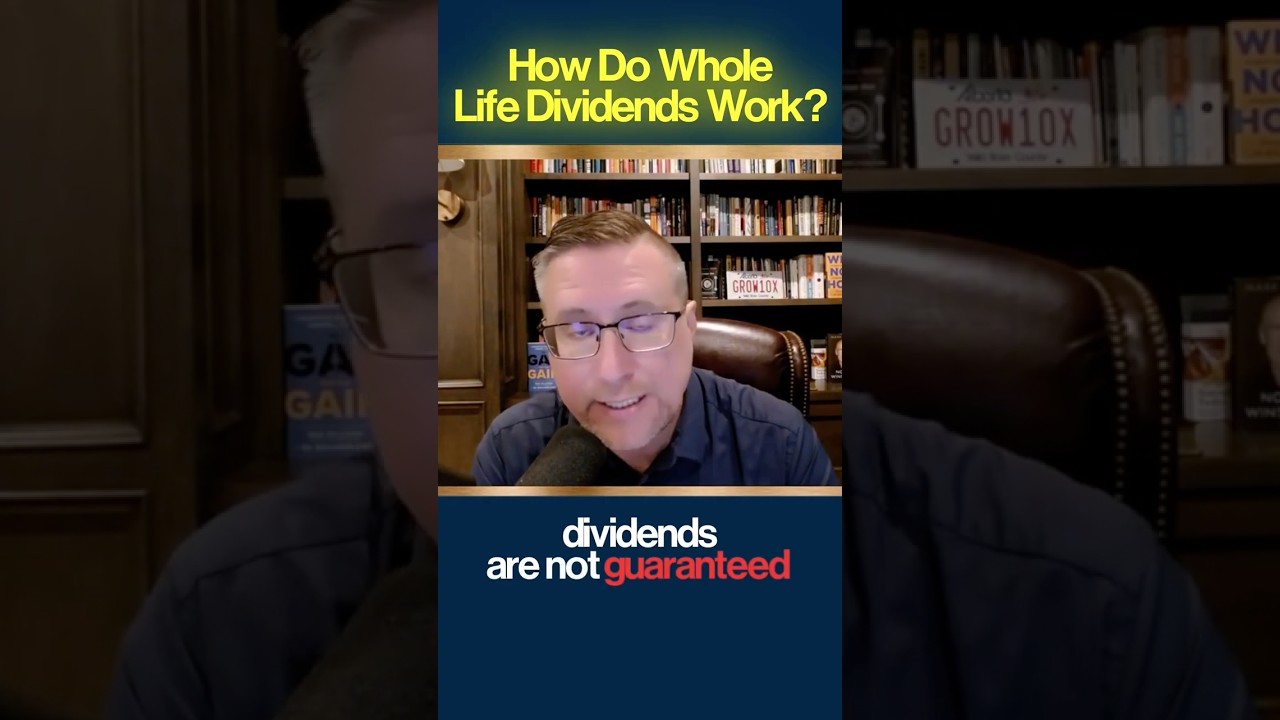
Jayson Lowe explains how whole life insurance dividends work: they're annual payouts from the insurer's surplus that become contractual obligations once declared. Life insurers have paid dividends every year since 1847 and none have failed through major economic crises, making the policy's cash value a stable place to keep capital.
Chapters
How do whole life dividends work? Given that the policy is participating, meaning it's a dividend-paying whole life insurance contract, the owner of that contract participates in the divisible surplus generated by the life insurance company in the form of annual dividends. Now, you may have also heard dividends are not guaranteed. For clarity, the only dividend that isn't guaranteed is the one that hasn't been declared yet, because once a dividend is declared, which has been happening every single year since the inception of these contracts with the carriers that we work with, going back as far as 1847. Once a dividend is declared, it is contractually guaranteed to be paid. It cannot be repossessed, and it cannot lose value ever. And so if you understand that as the owner of the insurance contract, that you participate in the divisible surplus generated by the very company that you co-own, how much capital do you not want flowing there, and how much capital do you not want residing there? Given that these life insurance carriers have been the most financially solvent institutions on the planet, if you're to think of all of the economic calamity that's happened just over the past century, not one life insurance company has failed as a result of any of those economic calamities. So again, understanding that your money must reside somewhere, what better place to have it reside than here? And then from that very place, you can go and control how you finance all the things that you need throughout your life. Want to find out more about how you can become your own banker? Click the link below or head over to learnwithjay.com. That's learnwithjay.com.