How To Plug Financial Leaks (3 common financial leaks in Canada that can waste you THOUSANDS)
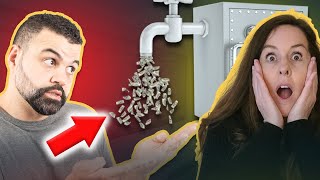
Liz Lamond and Vern McCarty explain three ways money leaks from your finances: opportunity cost when cash sits idle, interest paid on car loans and mortgages, and emergency reserves earning nothing in bank accounts. They propose using participating whole-life insurance policies to keep capital working and access liquidity through policy loans instead of traditional financing.
Chapters
Often these leaks are not anything that we're necessarily even aware of. We often think, oh, well, no, I'm meeting all my obligations, so therefore I'm not losing money. But if we actually do a little bit of a forensic examination of where is our money flowing to, then we'll see that it is actually leaking in all sorts of directions.
Hi, I'm Liz Lamond. I'm here with my colleague Vern McCarty, and we're here to talk to you today about infinite banking, how you can solve your money leaks. We're going to give you three ways that infinite banking can solve your money leaks. The first one that we're going to talk about, Vern, is opportunity cost. Do you want to kind of explain what we mean by that?
Yeah, absolutely. Thanks a lot for the introduction, Liz. And yeah, opportunity cost is one of those things that people hear about and people talk about, but a lot of times people don't really understand opportunity cost. And so if I break it down, think for a moment about, you know, let's say you borrow money from somebody else, you know, that you're paying interest up to somebody else because you had to tap into their pool of money. And the way that your, maybe your grandparents or that maybe you were taught to defeat that, paying interest to other people was, hey, you know what? Build up money and pay cash for things. Well, let's break that down for a second. Money has two values. It has the value of what it can buy and it has the value of what it can earn in the future. And so if I spend my dollars today, I have given up the opportunity, the opportunity cost of earning money in the future. So that's what opportunity cost is. If I can leave that money somewhere, have it invested or growing somewhere, I'm growing that money. The minute I spend it, I've now I've lost that opportunity to grow the money.
And yeah, I think people often feel like, well, sure, that's great, but they only think about it in terms of investing. It's understanding that it's in everything that we're doing, even in buying groceries when you. I mean, I'm sure everybody spends at least $2,000 a month on just living. And so if you say 24,000 a year, if that money has gone away from your family forever, then the amount of money you're giving up is actually in the hundreds of thousands over the course of your lifetime. So it's also understanding opportunity cost is in everything that we do, including our living expenses. So it's using infinite banking to solve these problems so that you're not using the ability to reuse that money not only for your lifetime, but for the lifetime of family ongoing.
Liz, thanks for bringing that up. And I'll take this opportunity. You know R. Nelson Nash, the founder, the pioneer of the process of becoming your own banker, in his book, he'll expand on that. He'll say exactly what you're talking about. He tells us that you finance everything that you buy, whether you borrow money from somebody else or you use your own cash. Exactly what you said. It's all about changing the way that you think. It's not just about paying interest, it's about giving up interest. So I'm financing even when I use cash. So really well said, Liz. Do you want to.
Really great segue into number two, Vern, which is financing. We finance everything. And so let's use the example of car loans. How does that work then?
Yeah, absolutely. So car loans, you know what we're going to do when we're talking about the process of becoming your own banker, all we can do is compare the process of becoming your own banker to what you're already doing today. So if you're going to go and get a new vehicle today, the way that you're going to do that is by either using cash and piling up money in somebody else's bank. Right. Somebody else's bank. Or you're going to go finance the vehicle. So you. Or lease the vehicle. If I go do that, it's a bit of an invasive process. Right. They're going to go through all my finances. They're going to check my credit, they're going to check my income verification. And now I have to agree to their terms. I have to make a payment back to someone else, money flowing away from me. Right. On their terms. So now I'm paying principal and interest to a dealership just so that I have the luxury of having a vehicle.
Yeah. And I think that's really important. And using infinite banking instead. I've actually done that where I've taken a policy loan from my policy. If you want to learn more about how to do that, you can click on one of the videos that's appearing up in here. We won't talk about that in this video, but I've taken a policy loan, paid cash for my car, and I was able to negotiate a cheaper price because I did that. And then I set the terms of how I paid back that car loan. So can you imagine the control and the freedom that gives you if something changes in your employment or whatever else. Nobody's banging down my door to make that car loan payment that month. But I'm going to be an honest banker and I'm going to continue to pay that money back into my system. But my money is sitting inside the policy, continuing to grow while that happens. So the available cash that I have on an ongoing basis is just going to keep on increasing.
I want to jump in and just build off what you said because it was absolutely brilliant. So if we walk through the actual process, you're either paying money to somebody else to get that same vehicle, or again, you're piling money in someone else's bank so you can go make a balloon payment. And we trick ourselves into thinking by paying cash, you're escaping payments. You're not escaping payments because you're making a payment to someone else's bank to build up the money. It's working for other people, and then you go and access it and give away all that energy just to get the vehicle. But what you're talking about is you actually tied in point number one, opportunity cost as well. You're instead, you're changing the direction. We're placing our capital, wherever possible, into a mutual insurance company. We're purchasing one of these permanent participating whole life contracts. That's the tool that we use to implement the process of becoming your own banker. Now I'm making premium deposits into my policy system. I build up cash value. It's contractually guaranteed to rise on a daily basis such that the cash value and the death benefit match by the time the life insured reaches age 100. So now we own the contract and we have the ability, the luxury of going and accessing money. No income verification, no credit check, no repayment schedule. But to your point, we need to be responsible bankers and make payments back to our own system. You'll never escape the payments. You're just going to transform the flow of that money back into your own system. So now Liz accesses that money, Much like Liz, you might be doing this as well. But I access money out of my policy systems as well, just to pay for my family's living expenses, so that I'm not giving up the opportunity to grow my money. I'm never spending my own cash. I'm accessing money from my policy. I'm paying for groceries like you mentioned, or I pay for the vehicle. And now I'm systematically replacing the cash that I used while my money continues to grow and expand. And I always have more and more capital in my system. Really well said, Liz.
Yeah, that's awesome. And thank you for clarifying that because I think it's really important to understand the mechanics of how that works because people get very caught up in, well, I got zero percent car financing. But did you really?
Yeah, did you really?
So what does that actually look like? And what is actually, you know, just watching where that money flows, which is what you were talking about, is really, really important. Where is that money flowing? And how could I do it more efficiently so that I'm not losing out, not that it's not leaking away from me in ways that I don't really even realize are happening? Because I. That's often how it happens is that, you know, I'm sure you can relate that often these leaks are not anything that we're necessarily even aware of. We often think, oh, well, no, I'm meeting all my obligations, so therefore I'm not losing money. But if we actually do a little bit of a forensic examination of where is our money flowing to, then we'll see that it is actually leaking in all sorts of directions. I certainly found that for my own self, and I'm sure you did as well, Vern.
Yeah, really well said. Like, if I'm paying attention to where the money's flowing and who's getting the money and who is it being put to work for, I'm going to be really cognizant of those leaks. Liz. Really well said.
Yeah. So let's talk about in case money then. Our third point around investing, like in case money. I'll give you an example. So for real estate investors, people often hold in case money in a bank account, like in case the water heater goes, or in case the tenants move out or whatever else. But that money sitting in a commercial bank account is, I think most people would agree, is not really doing anything. So if you look at your own bank accounts and you have some in case money or emergency money, whatever you want to call it, I'm sure you can see that it's not really growing, but you need to leave it somewhere that it's fairly safe and that you're able to access it whenever you can. But that's effectively money leaking away from you, especially if we consider inflation, and that that money's not actually earning or actually working for you at that time. So putting it in a place where you still have access to liquidity, but. But it's growing on a daily basis really just changes that equation, but doesn't change your access to the money is the really important part.
Yeah, excellent, Liz. It ties right back again, it ties right back into opportunity cost. If I store my money into someone else's bank, a commercial bank, they're reliable to give it back to me, but that money's not really there. They've taken that money and they're putting it to work for the shareholders of the bank. I've worked for that money and it's not working for me anymore. If I can shift that, if I can put it into a business that I co own and that money's working for me and the other co owners of the business. And to your point, if I can still go back and access money and it's growing.
I'm recapturing that lost opportunity that I'm giving up by either spending it or leaving it in somebody else's bank. So it all kind of ties together. And I'll just point this out because I forgot to mention it earlier. Back to Nelson's book. There will be a link in the description of this video. The best investment you can make is education and learning more about this process. So I recommend that you click the link in the description of this video and get yourself a copy of Nelson's book because he's the founder, the pioneer of the process of becoming your own banker, the Infinite Banking Concept. And his book Unlocking the Infinite Banking Concept is the greatest resource to learn more about how this concept works along with all of our wonderful YouTube videos.
Yeah. Thanks Bern. So if you'd like to learn more, please click on the links that have appeared below the video. And we just encourage you to really have a look and see where are those leaks occurring in your own life?
Yeah, absolutely. And don't be a stranger. Leave some comments, ask some questions and don't be afraid to get in touch. We're happy to help.










