Learn How Canadians Create Cashflow and Passive Income
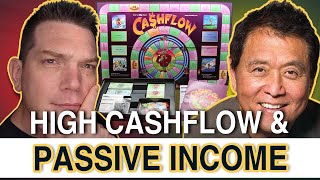
Jayson Lowe walks through Robert Kiyosaki's Cash Flow board game, a tool designed to teach financial literacy and passive income strategies. The game has two tracks: rat race, where you pay bills and chase paychecks, and fast track, where you build assets and escape the cycle. Players learn by playing deal cards, managing mortgages, and watching their cash flow change in real time.
Chapters
Players in life, the people in your team or the people that you associate with or meet with who have deals, have opportunities so you can learn through their experience. So the learning is amplified because it's not just you learning on your own, you're learning with others. And that's part of the design of the game, which is one of the reasons why it's so functional. Expenses can chip away at the value you're trying to build and create in order to have the life that you really want.
So how do you create cash flow in your life? Passive income. Income that comes in no matter what's going on. How do you learn how to do it? What's a great way to get started? A lot of people are watching YouTube, they're trying to find out ways that they can increase their financial industry, increase their financial well being and try to create an environment where maybe they can get out of that job or just make sure they can secure their retirement in some way. Now I'm going to talk to you a little bit about a tool today that I think is a great tool I've personally used. I have a lot of fun with it and, and the best thing is that it's a tool that's based on a game and games can be, first of all makes things a lot more fun and they can be really great learning opportunities for us when we can get around a group of other people. So this particular tool is the Cash Flow board game created by Robert Kiyosaki. If you haven't heard of him, make sure you get on Google and find out a little bit. He's got a number of great books, some of my favorites, of course, being Rich Dad, Poor dad and Cash Flow Quadrant. So, so these are a couple phenomenal books. He has many of them available now. This game is called Cash Flow and it's all about how do you get out of the rat race. So I'm going to show you the board here a little bit and talk a little bit about the game. Now the version I'm going to show you is a, is a newer version that you can purchase. I have the original version as well. I've had it for about, I don't know, 14 or 15 years. It's well worn at this point. Play the game a lot and I noticed there are a few differences between the original version and the current version I'm going to show you here today. But I'll just talk about the premise of the game and why it's an important learning tool that can help you improve your Financial circumstance by simulating the experience. So one thing that you may be familiar with is something called the cone of learning. It talks about when how much information do you retain after learning something based on the different ways that we learn? And so if you just read something, you know, you might only retain 10, maybe 15% of that information over a two week period. Or versus if you participate in a discussion, you know you're connecting with someone or a group or a class and you're actively engaged, it's going to increase the amount of retention over a period of time. And then simulation or simulating the experience or demonstrating has the highest, highest retention level over a period of time. So the beautiful thing about this game, the game of Cash Flow, is that it's about simulating the experience. They use real life examples of buying real estate and opportunities that can show up in your life to help you recognize those opportunities, discover what they are, understand how to view them, and then practice actually acquiring those things in the game setting so that you can get out of the rat race. So let's bring up the board game here. I'll do my best to hold this up for everybody. So here is, here's the board game again. There's cash flow. And now out here we have this whole outer section. This is called the fast track. This is where the great deals happen. But you spend most of your time in this section, which is known as the rat race. So you go around and around and around the rat race and you pick up cards as you go and then you create deals, you make deals that are available in the game. And of course you can do deals even with other players or you can sell deal cards to other players. So it teaches skills around sales and how to be able to find opportunities. And if you can't maybe do it yourself, how could you maybe collaborate with another player at the table? Or how could you generate some revenue by just selling the deal to another player as well? So there's lots of opportunities like that in the game. Now I've picked a couple here, just kind of at random out of the, out of the deck. And when you go around in the rat race, some of the deal spaces are, there's, there's deals. So if you land on deal, you get to choose do you want a, a big deal or a small deal. And small deals are typically less than $5,000, you know, to get into the deal. Big deals are greater than $5,000 to get into. There's a payday. So every time you cross payday, that's when you would get your allotted income, which you know is a game card that shows you how to do it, depending on if you're an air lane pilot or a janitor or a dentist. Like, there's a whole host of occupations and you just kind of randomly select one. And one of the great ways when you play the game enough, one of the things that Robert Kiyosaki says is that if you can learn how to get out of the rat race with every occupation that's in there, you've really mastered some quality skills that will now take you very well, very, very far in every other of your life. There's a market space in the rat race. So if you pick up a market card, it says, hey, here's a market condition that's happened. Real estate market is up in your area. There's a buyer who's looking to buy houses of this kind. If you've got a house of this kind, anyone that has one can sell at this price. So there's market cards that do that sort of thing. There's a charity card. If you land on charity, you have to, you know, roll some dice to donate some money. There's a downsized space, so if you land on downsize, you. You lose all. You have to pay all of your expenses and you lose two turns and there's a baby one. So if you land on baby multiple times, you have to increase your expense load. So it's a very interesting and interactive game. And again, it's a. It's a ton of fun. Great to play in little clubs and groups of someone else in your area, your neck of the woods that's played before. You know, you might be able to find a meetup group on meetup.com etc. Lots of entrepreneurs like to play this game, of course, but I'm going to go ahead, I'm going to go over one of these cards. So this one here, if I can get my camera to view. Oh, there we go. It's a small deal. This is a small deal card. And then I also have a big deal card here. So we'll kind of look at that. So I'm just going to read what's on the card just to give you an idea of the types of things that can come up in the game. So this, and the way you play the game is that whoever picks up the card, you have to read the card aloud for all of the other players so that everyone can hear what's going on with the deal. There's a rule in the game Though the market waits for no one. So if you get up and leave the table because you have to go and, you know, visit the washroom or go get a beverage or something to that effect, and someone picks up a market card and there's an ability to maybe sell one of your pieces of real estate, but you're not at the table, you might lose out on the deal because the market waits for nobody. So there's an important lesson there that's built into the game rules itself. So anyway, here's our small deal card house for sale. 2 bedroom, 1 bath, nice 2, 1 house available in a depressed market due to layoffs. Would make a great investment property for the right buyer. Use this yourself or sell to another player, assuming you can get them to buy it from you. And one of the things you can also negotiate, by the way, is you might be able to sell it for actual dollars and coins in the market in the game. Or you may choose to sell it for something else. Like, hey, if I sell you this deal or I give you this deal, will you give me your next three opportunities? Will you give me first, right, first dibs on your next three deal cards or will you, you know, whatever, you can negotiate some, some interesting things there that again, it's all about your creativity and what can you imagine is possible, which is a reflection on real life. So it says the cost is $50,000. In other words, the house is worth $50,000, the mortgage is $46,000 and the down payment is $4,000. Has a positive cash flow of $200 per pay period or per month. But we assume that the pay periods in the, in the game board are basically a monthly equivalent. So this has a $200 positive cash flow. You need a $4,000 down payment to get this, get this card. And then you would go and write down, if you completed the deal, you would give the bank your 4,000 bucks. You would write down the mortgage and the asset value and what type of house it is. And then if a market card comes up that says, hey, there's a buyer in your area looking to buy to any two bedroom, one bath houses, they will pay $80,000 for that type of house. Then you could sell that house, you would give up the cash flow, you'd have to erase all that on your, on your, you know, the sheet that you record, your balance sheet, your income statement, and you would pay off the existing mortgage and then you would receive from the bank a chunk of capital because you got all the equity, you sold that property and Then you can use that to fund additional deals. So it's a lot of fun and it's very interactive with people. It raises a lot of questions. It's a great way to learn how other people play the game. It's a great opportunity to coach if you have some inside knowledge around how these kinds of things work. Maybe you've bought a couple rental properties. So it's a great way to give back and help other people understand, you know, as they're just learning these kinds of skills and tools. So I picked another one. This is a big deal card. So again, big deals are over 5,000. And this card says automated business for sale. Vintage arcade with 30 pinball machines and loyal clientele. Hey, maybe I'm one of those guys. Owner has become overextended and is desperate to liquidate. This is a real life experience. These cards are based on real life things that happen to people and they happen all the time. So opportunities like this are in the market, they're available. Use this yourself or sell to another player. The cost, in other words, the cost of the business. The price tag is 180,000. There's a mortgage for the business of 160,000. The down payment is 20,000. So you got to come up with 20 grand to be able to remortgage or get a new mortgage or take over the mortgage on this business. And the cash flow, the positive cash flow is $1,600 a month. So the whole objective of the game is that you go through buying these deals. Now I had a business option here, a business deal and a, you know, standard house, you know, regular rental, long term buy and hold rental property deal. There's lots of other deals you can, there's some mutual funds or some buying gold examples, there's some buying stock examples, lots of business related ones that are in there. There's buying four plexes and eight plexes and 16 plexes all available in the game, mostly in the big deal category. And there's some land deals. So there's tons of options that are in there. And each one of these are designed to help teach not only you as a player, but all the other players at the game table. Players in life, the people in your team or the people that you associate with or meet with who have deals, have opportunities so you can learn through their experience. So the learning is amplified because it's not just you learning on your own, you're learning with others. And that's part of the design of the game, which is one of the reasons why it's so functional, I refer to it as like Monopoly times a thousand. You know, it's, it's a ton of fun and it's a great way to learn about different kinds of opportunities that are out there that you may not be familiar with. And as you become aware of something, your brain gets tuned in to start to see those things more frequently. So again, the whole objective of the game is to get out of the rat race. The way to exit the rat race and get onto the fast track, which is the outer perimeter of the board, is that your passive income. So income coming from sources like this, this pinball machine business at $1600 a month or the $200 a month positive cash flow of the two, one house that I shared, you build up enough of those so that there's greater passive income than your total expenses, whatever your expenses are to use to live, which means sometimes your expenses go up. But then if your income is going up in, in proportion again, it's, it's all a relative basis. Another thing to point out on this is there's also a doodads spot that you can land on. I remember the first time I played the game, it was one of my very first turns. I landed on the biggest doodad of all, which is a boat. And the boat was like $18,000. And then if you didn't have the money to do it, you had to borrow the money from a bank and you had to increase your monthly expenses. And so that almost put me out of the game. It wasn't very friendly, but it was a great learning lesson because large doodads like that expenses can chip away at the value you're trying to build and create in order to have the life that you really want. Really good, really good learning lesson. So again, encourage you to go play the game. It's a great game. Hope you enjoyed this video. There's a ton to learn. There's a ton of resources and tools like this that are available for you. We have a lot of resources on this channel. On the banker's vault. We have a ton of resources. Over here at Wealth Without Bay street, go to wealthwithoutbaystreet.com YouTube. You can go directly to our YouTube channel or we do interviews with our clients and successful business owners, people who have sold businesses, people that teach people how to sell businesses, Profit first coaches and tons of real estate investors and people who've done these kinds of deals that are in this game and they themselves have made it out of the rat race and onto the fast track, implementing the same ideas and strategies that this game teaches you how to do. So make sure you stick close to like minded people who have a success mindset. They're actively growing and developing themselves. Themselves. They're focused on becoming something more, something greater, something grander. They have a big goal and a big vision, and they have the tenacity and the persistence to get there. Be around the right kind of people. Gobble up as much information as you can, and then put some of that information into action. I hope you enjoyed it. Subscribe to the Channel. Leave a comment below if you find this helpful. If you played the game, leave a comment below. Share an experience of playing the game, what you learned, and make sure to check out some of our other content.










