The #1 Financial Risk Families in Their 40s Still Ignore
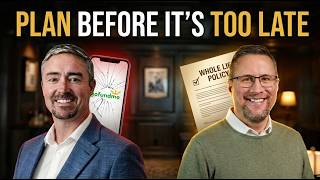
In this YouTube discussion, Ash and Speaker B use stark vehicle‑fatality statistics to illustrate how families often overlook a critical financial safeguard: permanent life insurance. They criticize the common reliance on GoFundMe campaigns after a sudden death, arguing that such reactive fundraising cannot replace proactive coverage. The conversation contrasts dividend‑paying whole‑life policies with term policies, emphasizing that a permanent solution provides a tax‑free death benefit and a source of ready‑access capital through policy loans. They introduce the Infinite Banking Concept (IBC), drawing on Nelson Nash’s teachings, and explain how owning a whole‑life policy lets families act as their own bankers, enabling intergenerational leverage, stress‑free capital access, and long‑range wealth planning. Real‑world client stories (business owners, professionals, multi‑generational families) illustrate the ripple effect of reduced financial stress and increased control. The speakers urge viewers—especially families in their 40s—to start a conversation with a knowledgeable advisor, get a suitable policy in place, and commit to a legacy‑building mindset.
Chapters
Stand by. We're loaded. God forbid something does happen.
Bob Shields said everyone has a best before date. And, you know, the late Ben Feldman would often say that nobody has a lease on life.
You may not have thought about this, but if you just look at statistics of just car crashes and vehicle deaths, just look at vehicle fatalities, the number and the percentage will shock you.
Am I going to have you know, dividend-paying life insurance coverage in place, or am I going to have term life insurance coverage in place? At least have something. You can't solve a permanent problem with a temporary solution.
The important thing is that you start. The cavalry has arrived. Leads me into— I do have to bring this up because I keep forgetting about this, but it's always at the back of my mind because it's like one of those things, you know, like I mentioned with the red car. Once you see it, you see it all the time. How many times have you come across a post or, you know, somebody where someone's had a tragic loss in their life and the next thing you see posted up is a GoFundMe page?
Oh, all the time.
That I, I'll never personally understand that. I get that things happen in life, but when I see that, I can't help but shake my head. It's— I just, especially with when we just mentioned the Turnbit, you know, and how much of a minimal cost that is, I just don't understand the GoFundMe stuff. I just, you know, and And if that's what they have to do, then, you know, it's understandable. Things happen in life, but it's just so heart-wrenching whenever you see that, especially if you know, like, who's being left behind, what the family looks like. But even that, those final wishes, that last moment in life where you want to either celebrate or remember, you're stricken with not just grief, but just the financial hardship of trying to have those final moments transpire. And you can't even do that or focus on remembering or grieving because you have this financial anvil that's hanging over your head waiting to just fall on you because you can't even afford to take care of the final wishes. I just— the GoFundMe, it just, it gets me every time. I just—
yeah, me too, me too. And I, I think of, um, one thing that I'm reminded of is something that Bob Shields said so many years ago, a wonderful human being. He was just an amazing guy, and he said that, uh, everyone has a best before date. It's just so true. And, you know, the late Ben Feldman would often say that nobody has a lease on life. And the late John Savage would say, you know, think, think about how many homes you've seen burnt down in your neighborhood. For most people, they just don't experience that, right? It's like, oh yeah, I really can't think of a time where that's happened. But he said, when you see that hearse driving down the roadway, they're not practicing. There's somebody in there. And so making sure that you've got coverage in place is obviously responsible and the right thing to do. What I remember from Bob as well is he would say that you can't solve a permanent problem with a temporary solution. And so the choice being whether it's, am I going to have dividend-paying life insurance coverage in place or am I going to have term life insurance coverage in place or am I not going to be covered at all? At least have something. And we always share with people, it has to check the boxes on comfortable and affordable. And so whatever solution is the most comfortable and affordable is still that— it's a solution, it's in place. And we've had to fulfill that duty of care in delivering death benefit. And anytime that we do that, it's an incredible honor. And there isn't any other profession where we can literally, with a keyboard, create a guaranteed promise to pay a lump sum of money on a tax-free basis exactly when it's needed the most. There's no other profession that can do that. And so I honestly do have to pinch myself sometimes when I, when I reflect on what an enormous privilege that is. And it's a big responsibility, which is why we get on platforms like this, like YouTube, and we share with the hope of even just connecting with that one person who's saying, you know what, I've been pondering, contemplating getting life insurance coverage in place. I have a growing family. Don't let procrastination hold that contemplation back. Get in touch with somebody, get that coverage in place. And because that day will come.
It's like we tell people all the time, like, I'd love to be the one that serves you and that brings you through this process, you know, and helps you pave the way for future generations. However, that may not be the case.
Yeah.
And if that's not the case, that's fine. But just please do it. Do it with someone. At least just get it done. Yeah. It doesn't have to be with me. Pick anybody you want, but just do it. I was just going to say that this leads—
you know, given that most, uh, the overwhelming majority of our clients, they, they're on that, that journey of, of implementing a process, and obviously they have, uh, the, the product in place, the dividend-paying life insurance coverage. And what I think of in reflecting on all the stories, all the client stories that I hear, whether it's a business owner who financed some equipment or they financed the expansion of their company, or a family who created intergenerational leverage, or a young professional who starts up a dental, you know, practice and finances all their operatories and everything that they need to run their practice. It's not for me so much the specifics of those stories. It's who I see these people becoming when they really understand the concept, when they really understand how controlling the banking function is actually one of, if not the most important thing that they've done financially in their lives. And you just expressed what many families are going to go through when someone dies unexpectedly. There's not enough money to even take care of, like you said, their final wishes. And contrast to that, you've got a family who's implemented a process. The tool is the life insurance, so it's in place, it's there. Often multiple family members who are insured. You were just describing you have a family of 7 that's gone into application, and not if, but when one of those family members passes away, there's going to be a tax-free windfall of money that shows up exactly when it's needed the most. And yet throughout that time leading up to that tragedy, they're becoming different people because they're not stressing financially like perhaps they might have been prior to implementing the process. Think of the ripple effect that that has on a family. If there's less stress regarding the one thing that triggers primarily the most stress in, in a family, which is issues, concerns, debates, arguments about money. It just, um, every single time that somebody goes into application, we— you and I— we couldn't quantify that impact if we tried. We can express all these things that we're describing now, but we can't truly quantify that impact.
It's amazing, especially because if you're looking at IBC and you're looking to apply it properly, we won't even be around when it's got full steam and momentum to last the generations and to be a true legacy. I I won't be here.
Yeah, no, it's—
I mean, I may have left, I may have left some final wishes and, you know, you know, depending on what the structure is and how things are set up, you might still have a little bit of leverage. But other than that, you know, all you're going to have is those family values that we've instilled and what you've started and established. You know what it really looks like at the end of the day, you can foresee what that's going to be, but you're even yourself, you're not truly going to understand what that impact is.
That's such a great point because it speaks to, you know, Nelson's— one of his golden rules around thinking long range. And sometimes we encounter people who, they're incredibly excited about the infinite banking concept and they somehow associate it with quick wins. And share— I was just literally sharing this with somebody that, what did I say? I said you can't microwave results in infinite banking, right? It's a crockpot, not an air fryer.
And so that's, uh, mechanism there that they had in Star Wars where they could just order whatever and it just popped, it just appears. Or not Star— sorry, not Star— Star Trek. Sorry.
Yeah, Star Trek. Yeah. It's like— and the person, it clicked with them right away. They're like, no, no, okay, I get it. Like, this isn't, um— it all begins when Nelson said everything begins with the way that you think. He meant that. He didn't say everything begins with how quickly you can access a policy loan. It starts with your thinking and thinking like the banker in your life, it changes decisions that you make, both personal and business. But it also, I think, it brings in abundance into your thinking, which is so amazing to see that transformation of people. It's pretty incredible.
Yeah, because that, that thinking leads to planning, and that planning leads to clarity and direction. If you're not planning, then you're just planning to fail. 100%.
100%. And when I think, Ash, of again, just recent conversations, opportunity often comes up right in a discussion where it's like, look, if, if you and I were speaking to somebody who was exploring the infinite banking concept, and the three of us were presented with the very same opportunity. And, you know, that opportunity, call it whatever it is, like, uh, there's an opportunity for us to invest in a rapidly growing business. All three of us need capital to do that. The difference between you and me and the person we're speaking to is that you and I don't have to ask for permission. We're not dependent upon being granted permission to access someone else's pile of capital. We co-own the lender. And so when a person evaluates an opportunity through that lens, it's a much different— it's just a much different feeling of control. And once you experience that, you said it best earlier, like when once you see it and use that car example, you can't unsee it. And when you experience that element and that degree of control, ready access capital on demand on your terms without reducing the asset's value, without triggering a taxable event, I think this gentleman said it best. What a peaceful, stress-free way of life it is when you get the bankers out of your life. So true. Isn't that good?
Absolutely. Obviously, you know, it must have had some kind of weight when he said, don't do business with banks.
Oh, oh my goodness. He— I reflect on things that, you know, I remember him saying, and every now and then I'll click on a video on the Nelson Nash Institute YouTube channel just so I can hear his voice again. And he just had such an incredible way, helping you to think about your thinking, not his. And I may have shared this with you the last time we spoke, but he, he would send— for example, he would send me a book, and in that book, take it out of the package, and there'd be a note from Nelson, and it would read something to the effect of, um, read chapters 2 and 7, think about it, call me. And I would do that, and then I would be intentional, really taking the time to think, because immediately my brain would go to what's the lesson that he wants me to, to gain from what he's invited me to read. And if you caught it and you had that discussion with him, he would always, always, always acknowledge it with one word. He would say, precisely. If you didn't quite get it, he would say, I suppose you should reread chapter 7, ruminate, call me again. And he'd never give you the answer. And that was part of his brilliance, because we're challenged to think it through. And That is such an incalculable advantage. And I just, I give him all the credit for teaching me that because I carry that into all my interactions with people that I'm blessed to serve. I won't give them the answer. I will get them to think about their thinking so they arrive at it. And once they get there, you're just standing right next to them going, precisely. And so credit to Nelson. I miss him. I think about him every single day.
That's one of those when you can use a line, listen to your elders.
Oh yeah.
I'll listen to that guy.
Oh my God. Oh goodness, yeah. And what a joy it was to know him. And what we're describing, you know, for anybody who hasn't had the opportunity yet to read this book titled Becoming Your Own Banker, it takes a couple of hours to get through. And it's, um, if you read it with an open mind, it will open your eyes to a whole new financial world. And much like the car example that Ash shared earlier, once you see it, once that seed is planted, it's either been planted in fertile soil, or for some folks, uh, they're just not ready yet. They're not ready to catch the concept yet, but they might be, you know, at some point down the road. But for most people who pick up and read this book, they pick it up as who they are now, and they put it down as someone who's thinking much differently. It has sold— I think now I'd have to get the exact number from David Stearns at the Nelson Nash Institute, but last I heard it was 570,000+ copies. And this book is self-published. I don't know any self-published author that sold even a fraction of that quantity. And, and there's a reason why so many have sold. It's because the concept works brilliantly. But, um, boy, what a gift it was to have him around. Amazing. And Ash, I'm curious, genuinely curious, like, if, if somebody were watching and thinking, you know, what, where do I go from here? Like, what would you say to that person, just from your own vantage point? What would you say to that person?
I would say that it costs nothing to have a conversation, getting in touch with somebody who's knowledgeable, you know, in practicing infinite banking, that can guide you in the right way, in the right direction, that's not here to take advantage of you and just wants to see you do the right thing and Set up for success. Now, whether that's with us, that would be great. If not, it is what it is, but, but just get on the path so you can stay the course. You got to— the important thing is that you start. And, uh, but make sure that you're being coached and mentored by people that do this, that practice what they preach, that do this in their everyday life. Um, you know, and that are here to support you throughout your entire journey, not just to get you up and running and set and forget. Um, but, you know, we'll be here to continue to guide you, uh, for, you know, for future generations. So that's, that's the key.
That's incredibly well said. And very sound guidance. And these conversations I always enjoy. Like I was sharing with you, the, uh, you know, we're going to start referring to this as the command post. So this is our version of, uh, this is today's episode of the command post. And so, Ash, always great obviously having these discussions, and we'll, uh, obviously, you know, continue to share. And to anyone watching, you'll have seen another video that's part of YouTube's algorithm recommending that you stay on the platform and that you continue your journey of learning. And it ties perfectly to Nelson, who always said there's no such thing as having arrived in knowledge. There's always something new to learn. And all I would add to that is that there's no destination or landing spot. It's a journey that continues. So click through that next video, continue watching, and, um, we'll see you again real soon.










