What Nelson Nash Taught Me About Paying for My Kids' Education | Whole Life Insurance for Families
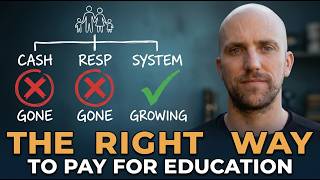
Jayson Lowe compares three ways to fund a child's education: cash savings, government plans like 529s, and whole-life insurance policies. A $250-monthly whole-life policy grows to $650k+ in death benefit and accessible cash value, versus $89k from an RESP with grants, giving families control over borrowing terms instead of relying on banks or governments.
Chapters
When that education bill shows up one day, do you want to be in a position of control or do you want to be in a position of being under pressure? A lot of us have probably been taught to think about education as a savings problem, right? How much should I save? Where should I put it? Will it grow enough? But what if education's not a savings problem? Money doesn't just sit, it's constantly moving, it's constantly flowing, and we finance everything in life. So education is a financing problem, and who controls that flow and financing in your life? Now, I just want to start the night just recognizing this man, so R. Nelson Nash, and just, you know, just being completely real, this man changed my life. And, you know, anyone that was blessed to know him or read his book, Becoming Your Own Banker, has been influenced by him. And, uh, and so one of the things that, that he would say, and, and one of his re— his core principles is everything begins with the way that you think. Everything begins with the way that you think. And there's just, you know, if, if you think about our culture right now, there's just, there's so much noise out there, right? You go on any social media, you go on the news, you watch any of that stuff, there's just, there's so much noise trying to depend— demand our attention. And, and, and there's noise around this topic of money and what we need to do. And so tonight my goal is not to just add to the noise. I'm not going to try to tell you what to do, but what I want to do is invite you to take a step back and let's just spend this time that we have together really taking some time to think about our thinking. The fundamental truth when it comes to money is our money has to reside somewhere, right? We, you know, money comes in, we have to put it somewhere. And so if you think about where we store that money, is it safe to say that typically we're either saving or borrowing? You know, we're storing that money in maybe an asset. Or we, you know, we're using a government type of saving education plan. Is it fair to say, and just type a Y in the chat box if you agree with this, is it safe to say that typically where we're storing that money would fall under one of these three categories? Is that fair to say? When we think about where to store money, it's not like there's a bajillion different places we can do it, right? And so, and I think it's fair to say that it's typically, you know, gonna fall under one of these 3, you know, 3, we could do 4, 4 categories. And so, you know, since we've kind of established some ways that we can save for the child's education, why don't we take a little, a bit of time and we're going to dive a little bit more into each of them. And then we'll just look at, you know, a fourth, an alternative way to access money for education. And so would it be okay with you all if, if we just, you know, if we compare them tonight and just take some time. We're just gonna compare those different ways. And to do that, I thought what we would do is, is use 3 different families, okay? So we'll talk about, you know, family number 1, we'll talk about family number 2, and we'll talk about family number 3. And, and let's just assume that, you know, they're all very, very similar. So maybe they live in the same city, uh, similar incomes, they hang out at the same places. And, you know, since for— so for me, I have two— my two older kids are girls. So let's just assume they have a daughter that they want to attend university one day. Okay. And so we'll also assume, you know, that they sat down, they had a family budget meeting, and decided they could start setting aside $250 a month for education from the day they were born until that daughter turned 18. Okay. Is that— that sound good, Jeff, with that? That hopefully, hopefully I explained that well and that made sense.
That makes good sense. And maybe they also all have Costco memberships.
Okay, perfect. Yeah, they all have Costco memberships. Okay, so, so what we're going to do, so family, we're going to go like this. So family number 1, let's have them, they're going to focus on saving and borrowing. Okay, now I'm going to jump over here and let's say family number 2, they're going to focus on the, you know, the government education program, whatever, whatever that may be. And then family number 3, we're going to have them kind of in this asset category and we're going to talk about they chose to build a family banking system. So we'll get a little bit more into that later. So let's start with the simplest one here. Okay. So I'm going to move down. Okay. So let's, let's start with number 1, with, with family number 1. And so they're going to be, you know, they're going to be saving cash. So, you know, they got their money line here. This is, this is our time, you know, all the way up until age 18. And, you know, let's say they're putting aside, like we said, $250 a month and it's just going, it's just going into an account. So now if you kind of look at that and you do some math, after about 18 years, there's going to be about $54,000. In there. But then the daughter, you know, she needs that money for the school. So what's she going to do? They're going to spend it, right? And then what happens to that account? Goes down back to zero, right? That's pretty standard for— we save and save and save and save, and then we need that thing. So in this case, it's that education, and then we spend it and it's gone. And so we'd just love to hear again in the chat box, you know, when you kind of think about funding your kids' education, this way, or your grandkids, I'd love to hear what are some of the benefits that you can kind of see in doing it this way. Okay, I see them, some of them there. So low risk. Dan says no benefit. Yeah, Darcy, no student loans, liquid. Awesome. You know, it's simple, right? It's accessible, right? And kind of what Stan said there at the end, right? It's liquid. It's, you can access that. Now, When you think about the downsides to this, right? If you think about downsides of saving cash over a long period of time, what would be some of the downsides to doing it this way and saving the money? Now, here's something to think about, okay? You're putting that money aside. So let's just say you're putting it in a bank account. Now, that money's sitting in your bank account. So technically the money's sitting in your bank account. Who's that money working for? Because, you know, money's always flowing, right? It doesn't stop moving, right? Because the money's not actually sitting still. It's, you know, we put in our savings account and there's a number on our ledger that says this is how much money is in our savings account. But, you know, those bank— the banks are taking the money, paying you very little interest, and then lending it out to others who need it and charging them a higher interest rate and keeping the difference, right? And then the other piece is, you know, where does the money go when you spend it? It's gone. You know, you can't, you can't reuse this money again once it's gone and paid for the education. You know, it's not going to continue growing again. You can't earn interest on it again. You save it, you spend it, and then it's gone, right? Now let's, let's assume for a second here that there's not enough saved, okay? So, the daughter has to go out. She has to get a student loan. And then what happens after she borrows it? Eventually, she's got to repay it. Yeah, thanks, Lisa, right? She eventually has to repay it. And what's she doing? She's paying interest to somebody else. And when she's doing this, who's really in control of the terms of the loan is the banker. Yeah, 100%. So she pays it back over time to somebody else, pays them interest, making them more money for the use of their money. So when you think about, you know, student loans, um, and, and, and I got some more questions. I'm loving the engagement. Thanks so much for in the chat box. So when you think about, you know, student loans and accessing money this way for education, do you see any benefits to borrowing? Right? So type in the chat box. Are there any benefits to doing it this way? And yeah, it's true. There's, you know, there is downsides to this as well. And, you know, over that time that she's paying that back, again, she ends up back at that zero spot, right? Where it's, she borrowed the money, she got the education, but then she had to pay that back and ended right back up to zero. And, you know, going back to Nelson Nash again is one of the core ideas that he taught is this, is every decision you make with money is a financing decision. You either pay interest to somebody else. So in this case, it's, you know, borrowing a student loan and paying that interest to somebody else, or you pay cash for things and you give up the opportunity to earn interest on that money ever again, right? So you think about it, that money is spent. You can no longer earn interest on this cash anymore. It's gone. So you've given up the right to earn interest on that money, or you're paying interest to somebody else. And so every decision we make with money is a financing decision. Another way to say it is you either pay up interest or you give up interest. And that applies to how we fund education as well. So in both of those saving, you know, in both, sorry, in both of those scenarios, you know, think about it, whether it was saving or borrowing, who was it that benefited the most? Yeah, banks, banks, banks, right? You do all the work to save the money. But in the end, the bank ends up with all your money. And not because we did anything wrong, because, you know, we're doing what we're taught, but because the bank controls the process of banking in our lives, right? So the real question becomes, who controls how we finance the things we need in our lifetime? And for a lot of people, it's the bank., right? So let's move on to family number 2. Okay. And so this one is, is, is really the government education savings plan. And so I know, I know we have so many Americans here on the call. So I'm, I'm in Canada. And so for us Canadians and all my fellow Canadians on the call, for a lot of us, that's, you know, the RESP, the, the Registered Education Savings Plans. And so it's federal, but you know, some of the provinces have additional programs you can qualify for, but you know, it's typically just some form of savings government structure. So, you know, we got our timeline, right? Time's going to pass anyways. So there's our timeline. And so how, you know, typically how these government savings plan would be structured is, you know, you're putting your money in. So whatever that amount is. So we'll just say, you know, for the sake of the conversation, like we said, this family's putting in $250. And then the government comes along and will put in, you know, however much that is, they'll match or, you know, different Different places have different things that they do, but the government will come in and the forms of grants or something like that will, will put in, put in some extra money. And then, you know, the hope is that it continues to increase and it continues to grow. Now, Jeff, can you— you want to hop in here for a second for me? Sure. Awesome. Okay. So, Jeff, if this— if you're investing money, can it ever go up?
Sure, it can go up.
Okay. So, so potentially if this, this RESP or in Canada or the 529, Mike said in the States, if it's invested, it could potentially go up. Right. So, so, Jeff, can investments go down?
Unfortunately, yes, they can.
Okay, so, you know, potentially there is that, that risk of it going down, right? If it's invested and, and market goes up, market goes down. So over time, you know, you hope that it increases, but I don't know about, about you, but I, I can't control the market. So the investment side of it, it can go up, it can go down. Now let's just assume that, you know, everything was perfect for this family. And, you know, we lived in a perfect world. The government chose to make the best choices with that money. They picked the very best investments and the market never went down. And we'll just pick, you know, an average interest rate. But let's just say for the sake of the conversation that this savings plan earned, we'll just say 4% a year. Just to keep, keep it kind of simple. So now if you look at it, there's, there's so— there's different pieces going on, right? So there's what you contributed, so, you know, $54,000 over the time. You know, in Canada there's, there's our, uh, our, our RESP grants, which the max is $7,200, uh, for the lifetime. And, you know, if this— in the investment piece of it earned that 4%, then, you know, we're looking at about $28,000, almost $29,000 in growth over that time. So theoretically, in a perfect world, this investment grew to, you know, just, you know, $89,000 just for the sake of this conversation. Okay. So now that, that, that the daughter, she goes to school, she has access to it. And again, Same thing, right? She accesses the capital, pulls it out, and uses it to get her education. But what happened to the capital? It's gone again, right? Now, when you look at it like this, how it's, you know, how it's kind of drawn out of what potentially could happen, type in the chat, what would the benefits be of using a government savings plan for a child or grandchildren education. Now let's take it a little bit further, right? What happens if she decides to delay going to school? You know, the program can still go. It's still going to be there. But she may decide to just, hey, you know, I want to take a year or I want to take some time. And then maybe what happens even if she decides not to go to school? Right. And like I said, I don't want to, you know, criticize the tool. It is what it is. It's a tool. But, you know, not everything goes exactly as planned. Right. And so in that case, who's really in control? Is the government? Someone else is in control. And so if you, you know, if you're on the call and you have an RESP or some kind of savings plan, you know, first of all, I want to just tip my hat to you because, you you cared enough about your kid or your grandkid that you took action and started something for them. And that's incredible. I'm a little bit curious, is anyone on the call, maybe you've had a program and for either a child or a grandchild and who did not end up going to school? And if you're willing to share, I'd love to, you know, type it in the chat if there's someone on here. Okay, we got a yes in there. Okay, so now in just like a few words, if you're willing to share again, what was the experience like trying to get that money back when they didn't go to school? I was recently chatting with someone and they were going through this very scenario and the words they used is it was very painful. And, you know, we can't predict the future and that's a potential thing that could happen, right? So let's talk before we jump into family number 3 and the family system. Let's, uh, let's take a look at how money flows in most of our lives. So let's just say, you know, this is you, and you know, you, you go, you go do work or whatever it may be, and, and you have that money that flows into, um, your life, right? You work hard, the money comes in, and it's constantly in motion, right? So Isn't that money then going and flowing away from you? Doesn't it feel like a lot of that time? So when you think about, you know, just, just yourself right now, where all, you know, that money seems to be constantly flowing out, what are some of those things in, in your life that, you know, money seems to always constantly be flowing to? So just again, dump, dump that in the chat box. I'd love to hear some of those things that come up for you.
See, okay, yeah, we're seeing retirement, taxes, kids, bills. Yes, vehicle repairs, living. Yeah, absolutely. Rent, food, bills. Yep. Mortgages, travel.
Yeah, it seems like all these things are flowing away from us as soon as we, as soon as that money comes in, it seems like it just flows right out. And then, you know, hopefully we're able to take some of it and, you know, put some of it aside, right? Whether that's for, like we've been talking about tonight, whether education, retirement, you know, something that we're hopefully able to set aside. But it constantly seems like the The money's just coming in and then flowing out. And so, for the majority of people, right, it's money flows in, but we don't actually control it or where it ends up. And then every time money flows out, we're just, we're financing something, right? We're either paying interest on some of these things, right? Like the vehicles or the mortgages. We're paying interest to somebody else or we're giving up the ability to use that money in the future to earn interest. Because you know what we do? We go back out and same thing. We go, we work hard again, money comes in, and then it repeats the process. So yeah, lots of whys there. Now let's bring this back and think about, you know, your children or your grandchildren or, you know, the future next generation in your life, right? Whether it's kids, nieces, nephews, whoever's coming along behind you. Let's look at family number 3. So they took that same, you know, time passed just like for everybody. They took that same $250 a month and started building a system where they could start to control the banking function in their lives and how they financed, financed the things that they all needed with access to capital on their term. So instead of, you know, putting it into savings, instead of putting into the market, um, instead of putting it into a government plan, they chose to just flow that same $250, um, bucks a month into their family system. And by doing that, they paid— or just paying premium into a properly designed participating dividend-paying whole life insurance contract. And immediately when they were doing that, something different happens. So from day one, they created a guaranteed tax-free death benefit. So in this case, it's, it's just over $200,000 in that case. Okay, so, so $217,865 tax-free death benefit. And now that number, you know, the way that it's structured, that number is going to grow over time. And at the same time, what they're doing is they're building access to capital in the form of cash value, right? Because contractually, by the time this girl reaches age 100, that cash value has to be equal to the death benefit. So it contractually has to grow each and every single day until she reaches age 100. So every single day, regardless of the market, regardless of inflation, regardless of, um, anything going on, that cash value, uh, must grow. So at age 18 You know, if the child chooses to go to school, so now how this is going to be designed is this, this, we're going to increase this death benefit constantly over her lifetime. And so what that does is now that cash value has to increase, uh, every single year. So now when she gets to age 18, age 18, this death benefit will have grown $651,775, right? That's the power of time and compounding. If you think about that growth, right, this growth that's happened over time of that cash value, how much cash value do you think the family would have access to by the time she reached age 100, um, and needed it for school? So access to $65 $100,000 of cash value on demand, on their terms, for their child or grandchild's education. And since, you know, the mom or dad or the grandparents, they're in control, then when the child finishes, you know, college or university and starts making an income, then she can start paying back the family system. And this, you know, That's a more peaceful way of life where you are in control of paying for that education. Now, doesn't that sound like the control that we talked about at the beginning? And so family number 3, they didn't commit their money to one outcome for education. They built a system that works no matter what happens. So 3 different families, 3 very different outcomes. But, but what I wanted to kind of do is, you know, maybe for somebody on the call, you think, you know, maybe $250 is a lot right now, or maybe you're kind of thinking, hey, you know, that's— I want to put in more, right? Like, like, where do I, where do I go? Where do I sign up? Or, or, you know, maybe you don't even know, um, how to start. Um, those are all valid, valid points. And, and here's what I've kind of seen over and over and over, uh, a lot of people don't start because they think they need to either start bigger than they can, or maybe they don't know how to start, or they think they missed the boat and it's too late. And so they kind of don't take action and they just kind of wait, and then the time passes. But the most important decision that we can ever make is when we start doing what we know we need to with what we have, with where we're at. And so let me, let me I, I wanted to kind of put my money where my mouth is, so to, so to speak. And so I want to, uh, to just show you something here, if that's okay. So this is my family, um, and, and it's a little bit of an older picture, I'm not gonna lie. It was, it was from, uh, from last summer, uh, because it— I don't know if, if you know, but, uh, it's really hard to get a good picture when you have a teenager and a toddler. So, uh, so don't judge me on, on this being an old picture, um, because actually We, uh, we added this, uh, adorable little handsome fella, um, this last year, and we don't have an updated picture yet, but actually 6 months old today. Um, so we added this little handsome man, um, 6 months ago. And, and so when, when my youngest daughter was born, we started policies on our girls, and, and, and it wasn't a huge amount, so we just did, you know, we did $50 a month each because we just wanted to get started. And so our girls are 10 years part. So when we started the policies on our girls, my youngest daughter, she was, she was 2 months old, and our older daughter was 10 at the time. But you know what, we didn't look at the older one and be like, oh, you know what, it's too late for you, so, so we're just, we're just not going to start anything on you. No, we, we didn't want to do that, right? We wanted to start where we were with what we could. And so at the time when we started this first policy, it was, it was $50 a month. And so now we have, you know, we have two systems started at the same time. And are they going to look different? Yeah, 100%, right? My toddler has, you know, has some more time to catch up to my older one. But the thing is, is that they were both started. You know, when it's time for them to go to school or when it's time to buy a car, or when it's time to get married, I don't want to think about that one. But when it's time to get married, or buy a house, you know, there's going to be a pool of capital that we can access on our terms for them, that they can pay back according to what we work out, right, because we're in absolute control. So when they, you know, when they are 18, right, we have access to capital on our terms. You know, we started and, you know, being able to access, you know, $12,000 to pay for a college year or whatever it may be, right, is going to be a more peaceful way of life, right? And you know what, if they don't, if they don't go to school, then we, they can access that capital for whatever, whatever path they may take. It's, it's not necessarily about starting big. It's sometimes it's just about starting. And so every single year we have access to more and more capital on our family's terms. So when we, you know, take a step back and look at everything we've covered, there's, you know, really 3 ways we can approach education. We can, you know, we can save or borrow. You can use a government plan or you can build a system. Same discipline, 3 different structures, 3 different outcomes.










