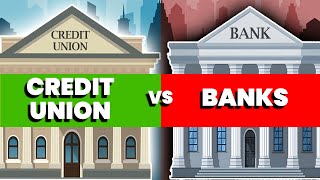
A short YouTube explainer (by Jayson Lowe, uploaded June 3, 2024) defining what a credit union is: a member‑owned, not‑for‑profit financial cooperative governed democratically by members who elect the board. The video contrasts credit unions with banks (member service vs. shareholder value), lists benefits (typically better rates, lower fees, more flexibility), and notes drawbacks (fewer branch locations, fewer products, membership eligibility restrictions). It cites historical founding years (Canada 1900; USA 1909) and gives aggregate figures (over 5,400 credit unions across Canada and the U.S.; about 130 million members). The video ends with a recap and a subscribe/related-video call-to-action.
Questions this video answers
Jayson Lowe (creator/uploader).
June 3, 2024.
1900.
1909.
Over 5,400 credit unions (combined).
Chapters
Hi and welcome. Today I wanted to talk to you about what is a credit union. Not everybody has used a credit union and not everybody knows what a credit union is. Well, a credit union is a financial institution. Yeah, that's right. Just like a bank is a financial institution, a credit union is a financial institution. Now the big difference is, is that credit unions are member owned, not for profit cooperatives providing financial services to its membership. Credit unions are owned by the members and one of the huge advantages of that ownership is that members get to elect the board of directors that oversee the credit union. So members have control over who directs that particular credit union. They're there to serve its members. So if you think about banks, banks are there to provide services to customers, but their focus is shareholder value. Well here credit union, its focus is to serve its members. Yeah, there's a small one time fee typically to become a member of a credit union, but the services and the fact that it serves you as a member should outweigh that very small cost. Now when we look at the history, the first credit union opened in Canada was 1900 and the first credit union opened in the USA was 1909. So credit unions have been around for a very long time in both of our countries serving hundreds of thousands of people, millions of people over that time. So what are some of the benefits of credit unions? Well, be able to offer their membership better rates, be able to offer their membership lower fees and at times more flexibility. Some of the big banks just have less flexibility when it comes to certain tolerances and you'll find differences at credit unions and membership. So when you have member focused governance, that's a benefit. So they're focused on the benefit of the members. Again we talked about what banks focus on, and rightfully so, is shareholder value. So they don't always give the benef best benefits to its customers. Well here you're a customer and you're an owner. So it's membership ownership that's a key advantage for credit unions. Now this want to step back for a minute and just say, you know, if you're finding this kind of financial information beneficial, I'm just going to encourage you to subscribe to our YouTube channel. Yeah, we have all kinds of great information about things financial, so I'd really encourage you to do that. Now let's talk about some of the potential drawbacks with credit unions. And the first one that comes to mind for me is typically fewer locations. So if you're someone who likes to walk in to where you do your banking, then you May have fewer opportunities with a credit union. Next. Quite often there's less products available in a credit union than you'd find in some of the big banks. So that's one thing to be aware of. There may be a service that you want or a product that you want that's just not available at that credit union. Now the other thing is some credit unions are very restricted to who can be a member there. So there's credit unions that support military members and retired military members and they're very restrictive to that demographic. Other ones for police forces and those kind of things. So sometimes there's restrictions on who can be a member at that particular credit union. So can be good and it just may limit you from being a member because you don't fit into that demographic. So be aware of that. Now let's just look at some of the numbers. It's kind of surprising to find out that there's over 5,400 credit unions between Canada and the U.S. that's a lot of different credit unions and how many members. I was surprised to find 130 million members of credit unions across our two great countries. And there's just a few other things here just to remind you they have a not for profit, they're member owned, they have a democratic governance and their focus is on service to the membership. Now I just wanted to end with a real reminder about what is a credit union. It's a financial institution that has members, member owned, it's a financial cooperative and is controlled by its membership and operating for the purpose of promoting thrift, providing credit at competitive rates and providing other financial services to its members. So that in a nutshell is what a credit union is. Now if you've never used a credit union, I have. They look and feel a lot like a bank but there is some differences and ownership membership has its advantages. So always be aware of that. Now I wanted to leave you with something else today and that's that if you like to hear stories about banks and every once in a while I like to hear somebody's horror story about how their banking experience was. Well, I'm going to direct you to watch this next video. It's called A Real Alternative Banking System and really it's a rant. They talk a few stories about some banking experiences. So I'm going to encourage you to do that and I hope today you now know what a credit union is.