Why Doing Business with Banks is OVERRATED (What to do instead)
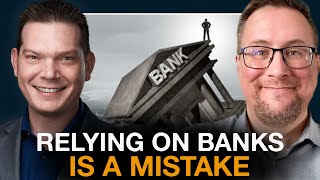
A conversational YouTube interview (Jayson Lowe with Richard Canfield) arguing that doing business with banks and placing money into tax-deferred retirement accounts (RRSPs/401ks) is "overrated," while dividend-paying whole life insurance and insuring children are "underrated." The hosts criticize bank customer service and loss of control, warn of future tax increases and limitations of government-qualified retirement vehicles, and promote participating whole life insurance (and early-life insurance for children) as a financing/control strategy. The video references the book Becoming Your Own Banker and quotes its claim about government taxation.
Chapters
People are waking up, often too late, at a point in time in life where they're about to be in retirement or they're already in a retirement phase and they're trying to live the life that they were told 40 years ago they could have. And they're finding out really quickly it's too damn late because the taxes have gone up, right? And the amount of money that they're actually paying is much greater than what they were told was going to happen when they put the money in. And the problem is it's just too damn late for them going to talk.
About a couple things and we're going to identify them as being overrated or underrated. So here's the first topic. Rich doing business with banks. Is that overrated or underrated?
Overrated. Overrated.
Let's talk about why.
Just thinking about recent experiences I've had with my own banking, personally and corporately, and frustrations of being able to just move money around my own money from a corp that I have to another corp that I have. And all the bank accounts are with the same fricking bank and they know about it. And the amount of times I've actually had to physically go into a bank and be like, hey, hey dude, hey gal. Me, my accounts, me, my accounts, me personally, my accounts. I'm going to move some money from here to here. Stop stonewalling me and getting in the flipping way. You do your damn thing and just let me go into online and verify my identity and move my around and get the out of the way. Excuse my language. And that's just one level of frustration that's been, I've been dealing with recently. And the problem is it's actually like a two year old problem. And I just didn't fight with it two years ago because I was so busy and I didn't care. But it got to a point where it was really additionally frustrating and I had to actually go in. I've had more in person periods of going to the bank. I got some other doozies, man. I went in recently about some other stuff like, and every time I literally am like, you know when you're in traffic, you're the passenger and someone slams on the brakes and it's like you could dig your fingernails and then like the dash because you're so freaked out or whatever, or you're just like, like that intensity. That's how I feel every time I know I gotta go walk into a bank.
That's what I would ask all of the viewers. How do you feel when you have to deal with a conventional bank, especially as it relates to gaining access to someone else's capital, how does that make you feel, that experience overall, how does.
It make you feel when you call in and you get the AI prompting voice that wants to really help you and it tells you all the wonderful ways that it's going to help you, and then proceeds to not help you. Tell me what you're calling about. And then you tell it what you're calling. Like, I'm sorry, I don't understand. I don't understand what you're calling about, probably because I don't understand who you are or your needs or anything about you. Because I'm a computer and I don't give a damn. But don't worry, I really care because I've been programmed to tell you how much I care. Hey, give me your client card. And then you give it. Hey. And what's your special password? That's a different number of digits than the other three banks that you deal with. So you can never remember your special password. And then you ask for an agent and says, hey, don't worry, it sounds like you want to talk to an agent. We'll allow you wait on the line for 45 minutes so we can find someone because we fired half of our staff because they spent all the money on this computer that's talking to you. That's another way that I really feel at the bank is looking out for me.
Yeah, the reason nobody's available on the phone is because they're all waiting in line at their branch too, waiting to talk to somebody. That's why they can't get on the phone and talk to you.
All these cars are being sold from people that are going to the bank with just these fingernails just dug right into the dash, these imprints.
The fact is, right, banks are not your friend. And we don't have to look very far in terms of examples from, from our viewers who, who can attest to that. And the fact that you need to. Right, everybody needs to bank. Right. It's. It's this sort of function of medium of exchange and transacting for all the goods and services that you need throughout your lifetime. The banks need you far more than you need them. And there's a much better way to control how you finance all the things that you need throughout your lifetime. Getting your hands on a copy of the book titled Becoming youg Own Banker, which is a 92 page, ready. Take you a little bit less than an afternoon to go through it. That will Open your eyes to a whole new financial world. Doing business with banks is definitely overrated.
By the way, only 77 pages of those 92 pages have words on them. The rest is either blank space charts or a glossary.
So topic number two is purchasing dividend paying whole life insurance contracts. Is it underrated or overrated?
In my opinion, it's underrated.
Underrated? Why? Why is that?
I think it's underrated because people don't understand and have the knowledge base to recognize the value of what that tool can provide for them. And part of that is because it has the word insurance attached to it. It's like a mental door slams in their brain the moment the word insurance comes up and they just want to, they just basically stop listening or hearing anything about it because they have preconceived ideas, etc. Etc. So the marketing, the way it's communicated, the way the industry has communicated it, the way that people have been impacted by other types of insurance which have nothing to do with that, it impacts them for some reason because maybe a past experience with like travel insurance or car insurance and so they lump it all together in one big bag and that's, you know, it's just not really effective. It's underrated because of the value it provides for families and for individuals relative to how they can use it. And for business owners, for corporations, we get a few more check marks on the list for the types of value that it can provide there. So it's, in my opinion, it's vastly underrated. And one of the other reasons it's underrated is because even when people have the tool, depending on how it was set up, often they're not putting enough into it to be to understand and leverage or utilize its proper value, its characteristics that it provides.
And I would say in addition to what you described is that another reason why it's underrated is that the perception may be much like any other form of life insurance, the general perception being that you have to die in order to trigger a benefit, which certainly isn't the case. You know, these dividend paying whole life insurance contracts, they have far more financing characteristics than death benefit characteristics. And when people recognize that someone, some organization is going to control how you finance all the things that you need throughout your lifetime, and that someone can be you through the device of dividend paying, participating whole life insurance policies, or ideally a system of policies and all of the attributes and the control that that provides to you, then you realize that you can really control how you're going to set Financing the things that you need throughout your lifetime and you will need to finance things throughout your lifetime. And so I think for all the reasons you shared, in addition to what I've described, purchasing dividend paying whole life insurance is definitely underrated. Okay, let's go to the third topic. Putting money into registered retirement savings plans or 401ks. Is that underrated or overrated?
Overrated. Overrated.
Why is that?
I've never personally had any inclination to go and take myself and walk into a prison and just close the bars behind me and give up all my freedoms. So that's never been an interest to me, you know, as an individual. I've never once woke up, man, I really think I should just go and walk into prison and just lock myself in. So if I haven't thought about that being a good idea for me, why would I want to do that with my money? Now that's just me personally, that's how I view it. If you consider how when you place money into a vehicle that is created by a government entity that promotes the idea of how it's going to give you some kind of a break, a tax deferral. But the marketing and the language over the last 50 years has been it's a tax savings. But there's no conversation, marketing, explanation or tutorials about the tax grab on the back end of that system. Then that to me is a bit nefarious and I think it is misleading the general public to a large degree. Now, far and wide, is absolutely every human being who participates in one of those programs or tools, depending on the market condition or whatever what they invest in is, are they gonna have a bad experience, it's gonna work out negatively. For the answer is no, not for everyone. But I think by a large majority, people are waking up, often too late at a point in time in life where they're about to be in retirement or they're already in a retirement phase and they're trying to live the life that they were told 40 years ago they could have. And they're finding out really quickly it's too damn late because the taxes have gone up, right? And the amount of money that they're actually paying is much greater than what they were told was going to happen when they put the money in. And, and the problem is it's just too damn late for them because they've been sitting in prison for 40 years with all their capital and they have no, they have nothing, they have no recourse, they have nothing they can do about it. And that tends to stress people out. And when you're stressed out, you know you don't live as long. So if you die early, there's also no damn insurance available to, to go to your family members. And everything that you have is in a taxable account, which means Uncle Sam or Uncle Trudeau or the cronies at the tax authority, nothing wrong with them. Hey, they're doing their job. If you work for a tax lawyer, it's totally fine. You do a great job, I recognize that. But the machine is going to dictate how much is going to be grabbed and sucked away from your remaining family members. And that to me is sad, unfortunate, unnecessary, and therefore highly overrated.
I would add to that and just say that the irs, Revenue Canada, two of the greatest thieves in the world. And if the government creates a problem, onerous taxation, too much taxation. Like if you're a viewer, ask yourself whether or not you feel like you're taxed enough. Take a moment to think about that.
So if the government, maybe you'll be the one comment in the, in the, in the YouTube that says, oh yeah, I, I don't think I'm taxed enough.
Like, well, go get your head examined.
Maybe you need to earn some more money. I don't know it.
Given that government creates a problem, too much taxation turns around and grants you an exception to the problem that they created by permitting you to put your money into a tax qualified plan. This is a creature of the tax code and does it under the guise of giving you a break. Aren't you just a little bit suspicious that you're being manipulated if you really think about it, and where that money is flowing to and who that money is actually being put to work for.
How much control do you have over it?
And understanding what rich, what you described when you said, look, if as the account grows, you're compounding the tax problem too, because you're not only deferring taxation, you're deferring the calculation of the tax. And I don't know what the tax rates are going to be when you, the viewer, needs your money and you don't know what the tax rates are going to be either. And neither does your accountant, neither is your advisor.
Not only do we not know what the tax rates are going to be, what we don't also know is how bad is the tax necessity of the need of the population as dictated by the government and power at that time, the requirement. But if we just use a little bit of logic and we consider over the last decade and certainly over the last three to five years, in a Covid related world post Covid scenario, we have seen by far and above a drastic hockey stick level of increase in government spending or borrowing which places essentially a mortgage on the back of every taxpayer. Yeah, so someone else is determining how much mortgage and how much mortgage interest you have to pay for as a taxpayer and they're saying, don't worry, you don't have to make the payments now. We're going to get the payment on the back end. So a logical person would need to consider that and say, well, if the problem of what the tax is going to pay for got bigger, the need to ask for more tax must, must also rise in a logic based way of thinking, which would lead me to think that when the tax is due, it's going to be a bigger number because they're going to have to take more to take care of what they've been spending money on. I don't see any other way around it. Maybe I'm looking at the math incorrectly, but it's not even about the individual math. It's about the mindset around how every dollar that a government takes in is created off the back of some taxpayer, which means that's the primary revenue source. Well, when you need more revenue, what do you do? You try to get more out of the revenue source. That's just the only way it can happen.
That's very true. And I would say that when you think about the analogy that, that we share, you know, when, when it comes up and it's appropriate and we talk about the. If you and I were to go into business together and I was to say, rich, you put up all the capital, you take all the risk. Now you can sell some or all of the business that you and I have gone into together. But before you do that, you need to contact me and I'll let you know at that time what percentage of the business I own, well, you're not going to be very interested in going into business with me yet. That's what people are doing with their RSPs and their 401ks. And it's not that financial tool is good or bad, it just is. It's important to understand the attributes and it's important to understand really truly what's going on so that you understand what to do. And Nelson, we're referring to R. Nelson Nash, who authored the book titled becoming your own banker, which has sold more than 550,000 copies for a reason. On page 29 of the book he said government is a Parasite and lives off the productive taxpayers, the host. It is self evident that if the parasite takes all the produce of the host, then both parties die. Government officials may be cunning, but they're not stupid. But immediately I remind myself that the USSR did exactly that. They shot themselves right through the heart. And so, as a result of the above bit of history, you will find yourself engulfed in confiscatory taxation. If you are the least bit effective in producing and accumulating wealth, you can count on it.
Willie Sutton's Law. Hey Willie, why did you keep robbing banks? Well, that's where they keep all the money.
So putting your money into RRSPs or 401ks we both believe is definitely overrated. Now let's talk about one more item and that one is insuring the lives children. Would you say that that is underrated or overrated? Underrated.
It's drastically underrated. You know, we both have insurance on our children. Of course. I submitted policy applications on my kids as early as possible. They went in on day 15 or 16, I think it was. In fact, I took a picture of those applications and my kid laying on top of the application and sent it to Nelson prior to reading his book. I wouldn't have known about that importance. I would not. I would have been just like many other people who wouldn't have known and understood being someone that didn't have insurance when I was a kid and whatever. And I just didn't know any different.
Yeah.
And so I can understand why people don't know and why they might think. On the surface it seems weird to do that partly because life insurance is associated to, to the idea of death and because it's associated to that idea. A lot of times, mentally we don't want to think about it and therefore it becomes a. Either a taboo topic or something that doesn't make a lot of sense. But historically speaking, if you looked at a mortality table, mortality chart, even today there's a large percentage of people, you know, of a thousand people born, coincidentally a thousand will die. But the amount of them that pass in the first 18 years of life is actually a substantial number. There are things that happen to kids and the earlier and the sooner you can get that established to lock in their health protects them for the rest of their life as well as your family. And for many of the things. And I have been doing this business now for as long as I had. I have seen many kids who have not been insurable.
Yeah.
And we have also had to deal with death claims on children and those are highly unfortunate and. And ridiculously sad periods of time. But at least we were able to deliver a death claim. Yeah. You know, we see GoFundMes all the time. Well, insurance is the original GoFundMe. You know, GoFundMe is a community of people pooling money together to go help somebody out for some reason, some need. Well, insurance has already built an entire machine that does that of pooling capital, and they have an actuary in place to help make it the most efficient and valuable so that you're not constantly randomly chipping money into a GoFundMe. Instead, you're paying a premium and you're go funding everything with everyone else in that pool. It's a very beautiful system. And to not have your kids insured, in my opinion, as a parent, is a large mistake. It's hugely underrated, and it could be absolutely devastating if you don't do it. Nobody knows. Especially in this day and age when people, when we have advances in medical technology, but also advances in medical scanning and understanding, we're able to detect things potentially earlier. And so the ability to become uninsurable because of the type of food and the health, you know, the health condition that we are as a society, many more people are becoming uninsurable at an earlier age. Yeah. So the best time to plant a tree was 20 years ago. The second best time is today if you don't have coverage on your kids or your grandkids. Get it done. It's underrated. Fix that as soon as possible. I agree.
And it reminds me of one of our industry colleagues. His name's Duane Burnell and he wrote the book titled A Path to Financial Peace of mind. Wonderful book. In the book, he describes the greatest gift that you can give to a child. And he's describing that gift as one that doesn't require batteries. It won't end up in a toy graveyard somewhere. It won't ever be too small. It's a gift that will follow your child throughout the course of his or her lifetime. And the gift that we're referencing is dividend paying whole life insurance. And if you think that this is a video that is intended to sway you as a viewer to investigating dividend paying whole life insurance, well, you're absolutely correct in your thinking there. Because every opportunity that we have to share just how remarkable a tool that is, we will. We will share it. And so I agree with you completely. I think that purchasing dividend paying whole life insurance on children and grandchildren is vastly underrated. If you like this video, subscribe. If you hate it. Subscribe anyway.
Put a comment in about what else you'd like us to find out if it's underrated or overrated.










