Getting Results the Agile Way by J.D. Meier TEL 146

J.D. Meier discusses his book Getting Results the Agile Way, which uses a Rule of 3 system and a Monday Vision / Daily Outcomes / Friday Reflection pattern to design effective days and weeks. He covers values, principles, practices, and motivation techniques for getting things done.
Chapters
The Entrepreneur's Library, episode 146.
Welcome to The Entrepreneur's Library, the only book-centric podcast that reviews all the top-selling business books and shares authors' perspective firsthand. This is your resource to finding the next great book that will enable you to grow personally and professionally. Welcome your host, Wade Danielson.
Welcome back to The EL. Today we have JD Meier, author of Getting the Results the Agile Way. A Personal Results System for Work and Life. Guys, this is one of my favorite, I don't even know, books slash authors that we've had on to date in almost 150 interviews. Very, very personable. One of the most, I mean, you talk about an avatar for this show, as far as a person that just loves, maybe I would say might have a slight addiction to reading, that would be JD. And so I love talking with him before, during, after the actual interview. Amazing person, but also he's got some great content on his site that we're going to be sharing here in the future because it is so relevant to what we look for on a daily basis as entrepreneurs, wantrepreneurs looking to take our lives to the next level personally and professionally. So I won't keep ranting, but I just want to let you know this was one of my top, my favorite interviews, one of my favorite people. And, uh, I'm hoping he writes another book so we can get him back on. But without further ado, let's bring on JD. Welcome, JD, and thank you for joining us on the Entrepreneur's Library.
Thank you.
Will you take just a moment before we take a deep dive into your book? Will you take just a moment to introduce yourself? Tell us just a little bit about you personally.
Sure. So I'm JD Meier. I work at Microsoft. I've been here several years, but what I'm really focused on is helping businesses change. I'm in the business of business change, but I also help people too. I help people thrive in work and life.
Excellent. So, JD, first of all, thank you for sharing that. And now I'd like to jump into your book, Getting the Results the Agile Way, which was originally made available for purchase back October 6th, 2010. And JD, I didn't even tell you this before we jumped on, but we found it because of the success that you've had on Amazon. The amount of reviews that you had, but also the, I don't know if it was like a 4.5, close to a 5-star, which is difficult to do. It's easy when you got 1 or 2, mom and dad got on there and do the review for you and you got 2 reviews and they're both 5 stars. But when you have that many, it's impressive. So that was one of the things that really turned us onto your book in the first place. But we're going to move quickly.
Yeah.
But our whole point here is to cover the top questions that our listener future reader would love to get answered. The first one is, what was the inspiration behind writing Getting the Results the Agile Way?
So the big thing was I saw too many people living in pain, or I saw them not doing the things that made them come alive, or I saw people that simply didn't flourish when I knew that they could. I want people to be all that they're capable of, whether that's at work doing what they love, whether it's at home living their values, whether it's living their values at work. I really wanted people to be able to think So what would you say makes your book different from others regarding the same or similar topic? So if I think about it, I think it's a couple of things. I think it's the fact that it's about simplicity. I really wanted to create a system that was easy to fall off but then very easily get back on. I didn't want people to feel intimidated by the system, but I also wanted to be more than just a doing tasks kind of a system or managing information kind of a system. I wanted it to be a system that focused on us as a person where how do we get the most out of our mind, how do we get the most out of our body, and the most of our emotions so we can produce our best results. But when I talk about results, it's not just really getting things done or getting through things. It's about focusing on meaningful results. It's really about being able to step back and say, okay, from the balcony view of all the things that I could spend my life force on, what's worth it? Why am I doing that? And then what am I actually doing? And then how can I do that better? And really personal. I want it to be a system that works for you. That's why it's actually, it's a personal results system. And it's also about a system that's for work and life. I want people to be able to live their values while doing their best and doing what they do best.
So JD, how would you suggest the reader engage with your book? Is this one that they can, that was designed to be read from front to back? Or can they jump in and jump out based on the information they need at that time?
Yeah, great question. So you can read it end to end. So it's designed that you can read it all the way through. But I also wanted it to be a really quick reference. I know that people are starved for time and always looking to get quick insights as quickly as they can. So I made it so that you can dive in and just get the pieces that you need, or you can read it and it actually really builds on itself. You can actually read further along and get more out of the book as you go. At the same time, I wanted to make it so that if you only read The first couple of chapters, you can get started and you know how to be effective.
Excellent. So, JD, this is my favorite part of the interview. This is where I want to hand over the mic. You've already given us a little bit of background, a little bit of the purpose of the book. Now, you give the— this is a future reader who's listening right now and they're wondering, is this my next great read? So, will you take the next 5 to 8 minutes and really lay out what we can expect from your book?
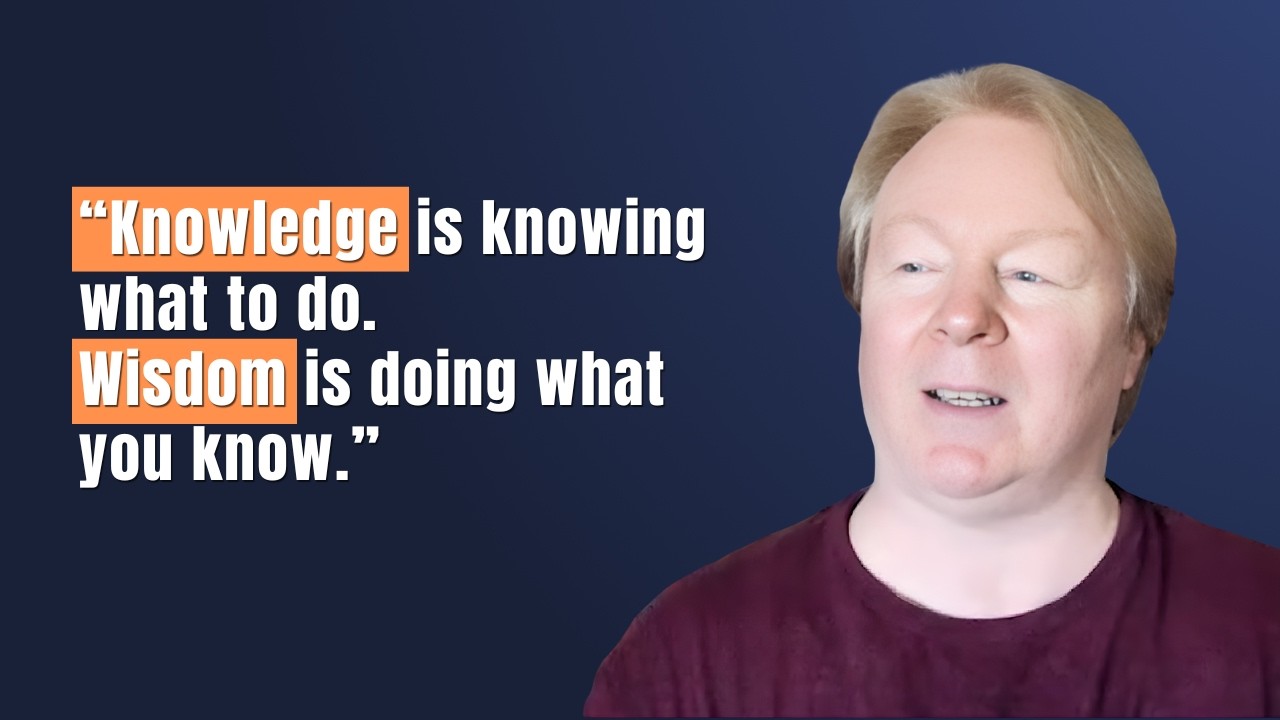
Sure. Okay. So, in the making of Getting Results the Agile Way, the idea was to really have it be more than just a book. system for people. It's a simple system. But in the first part of the book, it introduces you to the system in a very simple way by stepping into the values, the principles, and the practices. I say values because it might not be obvious, but whenever you're looking at a system or a way to do things, if it conflicts with your own personal values— for example, do you care about impact or do you care about enjoying the journey or do you care about excellence? Those kind of values weigh into the kinds of systems that are going to make sense for you. What I wanted to put out on the table in very plain English was, what are the values that make up Getting Results the Agile Way? Then I also focused on the principles because rather than have something that is only good for a certain amount of time, I was looking for those evergreen ideas, those things that we see over a period of time, whether it's from sports psychology or project management or information management or Or even motivation, inspiration. But what are the practices and principles behind that that help people bring out their best? So that's what the first part of the book is about, is giving you that foundation so that when you look at it, you're not trying to make the system— you're not trying to break yourself against the system. Instead, what you're doing is learning how to tweak the system and make it work better for you so you can really personalize it and make it your own. There's really only 3 key things up front that the book lays out That are really the big ideas. It's the idea of the Rule of 3. It's the idea of hotspots. And it's the idea of a pattern that I call Monday Vision, Daily Outcomes, and Friday Reflection. I really focused on the idea that if you could get a day right, you could get a week right. And if you get a week right, you get a month right. And if you can get that right, you can get your year right. The idea of the Monday Vision, Daily Outcomes, Friday Reflection, it's meant to be very simple. But it was actually— the idea came to me as I was having actually a really bad week. I was driving with a friend over to our favorite pizzeria, and I found myself looking in the rearview mirror. And I kept looking back wondering, man, why do I feel like I've got all this pressure on me and this burden, all these things I didn't get done, all the things I want to accomplish in the week? And right before me was to have a great chance having lunch with my friend at the pizzeria. Well, we get to the So we went to the pizzeria and we started asking the question, we've only got a couple more hours left in this day. What do we want out of it? So we started to become future-focused instead of looking behind and worried about everything that we didn't get done and instead focusing on what could we do with the time that we've got, the energy that we've got, and the results that we want to accomplish? That really was the turnaround for me. I didn't want to end another week without having a great week. Since there were a lot of people on the team, I wanted everybody to have a great week under their belt. So the idea of the Monday Vision was really to get this vision for what would— what do you want to be able to look back on if this was Friday? Then each day, before your day is done, before you go throwing a bunch of hours at something, what are the 3 wins that you want out of the day? Then on that Friday reflection, when you get to the Friday, what are 3 things going well and what are 3 things to improve? So that's really the system in a nutshell when you look at it from a week standpoint. But I wanted to dig a little bit deeper. People can get that very simple frame, but I wanted to help them design a day, design a week, design a month, and design a year. So when I designed the day, the idea was you don't have to design your day every day. Instead, you have to really look for the patterns. Think of them as the bookends. We all have a startup routine, whether we're really aware of it or not, and we tend to have a shutdown routine. The idea in designing your day was to do a couple of things. It was to improve your startup routine. Your shutdown routine, it was designed to help you find some of the better times in your day where you might be more productive or maybe where you're more creative and then to really use that time to do your best work. In designing your week, it was a similar idea, but in this case, we're stepping back a little bit. We're looking at these multiple days we're going to go spend. And before we go throw our hours at anything, what is it that we actually want out of that week? And, when we step into the week to actually design it, we can look at some of the recurring meetings that we have. We can look at the things that we end up doing, the recurring activities. Some activities are going to suck the life force out. Some activities really renew us and make us come alive. And, sometimes it's the people that we spend time with that either catalyze us or drain us. And, the idea was to take a really good look at that week See those patterns and start to use those patterns and use that insight to shape a better week. Maybe it means doing a little bit less of this activity, spending a little bit more time in that activity. And again, we don't have to design our week every week, but if we step back, even if it's once a quarter or once every few months, and take a look at how are we spending our week in general, there's usually a lot of opportunities to spend it in a much better way. And when I say better, it's all relative. It's about spending more time in your values. It's about spending more time in high-value activities. It's about getting more of those meaningful results. And it's about playing or spending more time in your strengths. That's really the key there. In designing your month, I also noticed that while the day may get out from under our feet, while the week may change a lot also under our feet, over the span of a month, we have a lot of opportunity for some course correction. So, if we can just step back and ask ourselves, what are those 3 wins that I want out of the month? We can really target those. What we can also do is we can look at the month overall, how we're spending our time, and we can start to create themes. So for example, let's say I was joining a new team. One of my favorite things to do is come up with a theme called House in Order. And the idea is that for those 30 days of the month along that theme, I'll be doing something a little bit each day to try to drive towards that so that by the time the month is over, I've had some kind of a breakthrough somewhere in really getting things in order, whether it's getting clarity around the vision, and the mission and the values, or just getting information organized and managed, or just going through your typical forming, storming, norming, and performing with everybody on the team. But I find that designing a month can be a really powerful way of getting a big block of time that really ends up working in our favor. If we do these little things, we can stack things right and work in our favor. When it comes to designing the year, I find that it helps to first step back and know what are the 3 wins that you want out of it. I know that might sound simplistic, but you'd be surprised how you can do a lot of goal planning and you can even do big dreams, but if you just step back and ask, if the year were over, what are 3 wins that I want under my belt? It might be something like— to give you an example— get to my fighting weight. It might be something like take an epic adventure. But those wins, if you don't make time for them on your calendar, they're probably not going to happen. If you just take those couple of big rocks, those things that really excite you, the things that you really want to be able to say when you get to the end of the year and look back that you were able to invest the time— and I say invest because it's not just spend time. It's really investing the time— that you'll be happy that you were actually able to work towards those and really give them the time that counts. Because it's meaningful, you'll be able to find the things that you're able to do that will make them happen because they'll be on your calendar and you'll have done things whether it's in the day, in the week, in the month, in the year. But it's really about slotting them on your calendar. In the back of the book— so if the beginning of the book is about laying the foundation, giving you the system, giving you the reasons why you might even want to use this system, the whole middle part of the book is about Really becoming the architect of your life and it's saying, all right, what do I want my days to sort of look like, my weeks to look like, my months and my years? Towards the end of the book, it gets pretty hardcore. It's more of a drill-down. Now that you've got this system that you're able to focus on your values, you're able to spend more time in your strengths, you're able to spend your time more effectively, you know what you want out of the day, week, month, and year. Now, this is a drill-down into some of the key results patterns and strategies, the things that we can do that help us spend Yeah. In fact, one simple example is actually spending more time in your strengths. There's a lot of people that will very easily fall into the trap of taking more and more things on. And as they take those things on, they find themselves gradually spending less and less time on the activities that are actually high value for them. But what also happens too is they end up draining their energy because they're no longer doing what they're actually— they're not giving their best where they have their best to give. This is about getting back to that and giving you all the tools and techniques to do that. One simple example that I can share from it is if you're looking— when you're looking for your motivation, it's easy to look for your motivation around the words that you say to yourself, or it's easy to try to talk yourself into being motivated. One little simple technique that people will use is they'll just play their favorite music. Sounds really simple, but what ends up happening is you end up linking the activity to feeling good. So if you want to do something and you want to keep doing something, the simplest way to do it is to link it to good feelings, and music happens to be one of the best ways that we could do that. And I mention that because one of my drill-down chapters at the end of the book is actually on motivation. I wrote the entire book over a span of 3 days except for the one chapter, and that one chapter was on motivation. I actually struggled with the motivation chapter, not because I wasn't motivated, but because it was really hard to distill some of the essence of what makes motivation work because motivation really is a personal thing.
Yeah.
The big thing that I found was that we can either use discipline. We can try to discipline ourselves. I think of that really just as course correction. We can also think of carrots and sticks or intrinsic versus extrinsic motivation. The key, what I find really, is to have a vision. Connect your values to the vision, so that compelling outcome in the vision. Be aware of the impact of external motivation, things like carrots and sticks. But drive from the inside with your values and then use some of these techniques to get you over the humps. So for example, if this month is about a big change in your life, do a little something each day. Make it easy to get started and keep going. Use music to feel good while you're actually doing it and then remind yourself of the win. Turn it into a simple phrase. Whenever you're doing something, if it feels like a chore, you're doing it wrong. The trick is to turn it into a chance. Look at it as a chance. call a customer back, I win a raving fan. So when I win a raving fan, what I'm doing is I'm connecting back to my value of customer impact and excellence. So when I do that, any task that I do during the day becomes more meaningful. It becomes more empowering, and it actually becomes an opportunity and not a chore. The last chapter in the book is actually about mindsets and metaphors. I'm a big believer that when we have the right approach or the right overall metaphor for something, that it helps We help breathe new life into it. So, for example, if you look at life as a dance, you're going to look at it very differently than, say, if you look at it as an adventure, or you might look at it very differently if life is a tragedy to you. So, the metaphors that we have in our life shape us, whether it's on the job, whether it's in our business, whether it's in our personal life. And so, I spent a lot of time to find some of the most empowering mindsets by some of my favorite people on the planet, as well as the metaphors that help bring them alive. But that's really the book in a nutshell. So, the first part is the system and the firm foundation around values, principles, and practices. The middle part is really helping you be the architect of your life so that you can design your time, your energy, and your actions better to support you for your day, your week, your month, and your year. And then, the last part of the book is about really helping you dive deep into key strategies, key principles, and key motivation techniques to support an unstoppable mindset and to really bring out your best.
So, JD, first off, fantastic job of taking us through and giving us a very thorough outlook. I know that can be difficult to do because, again, authors tell me all the time that they've never had to do that before, and you did. It didn't sound like the first time you've ever had to do that. So, one, excellent job. Two, there was so much I mean, it's hard for me to do this podcast because it's hard for me not to want to stop and talk to you about 95 different things that you mentioned in there and dig deeper. But that's why we all have to pick up your book and read it to find out more. But, and now I sometimes feel like a jerk asking you this question just because I think it's difficult to do. But if the reader could only take away one concept, principle, or action item out of your entire Everything you just laid out perfectly for us, what would you want that to be?
Beautiful, beautiful question. The first thing that comes to mind is the idea of outcomes, not activities. But when I say that, I realize that not everybody may know what that means because not everybody knows the difference between outcomes and results and tasks, etc. So I would actually say that if there was one thing to walk away with, it's the idea of thinking in 3 wins. Think in terms of 3 wins for your day, 3 wins for your week, 3 wins for your month, and 3 wins for the year. Thinking about if this week were over, looking back, what are those 3 wins that I want under my belt? When you think about winning, it adds the fun factor. It brings you alive.
That's huge. And you've said a couple of things that I've pulled quotes out on so far, and that actually leads into our next question, which is, do you have a favorite quote from your book? And if you don't have one that you personally— something that you wrote that you absolutely love, maybe something that's resonated with the audience.
Yeah. There's this one little passage in the one chapter that goes like this. Whether life is a bowl of cherries and you get the pits or the world is your oyster and you look for the pearls, you decide. In the last lecture, Randy Pausch taught us to choose whether we spring through life like Tigger or more mope through each day like Eeyore. So choosing your mindset and metaphors is one of the most powerful things you can do to shape your everyday experience and ultimately your life.
That's phenomenal. We will reference that in our show notes so that people can read on that and let that saturate a little bit more. I always wondered, this is very random, but I always wondered, Eeyore kind of depressed me when I used to watch that show. It was just so— I guess we all— It's contagious.
Yes.
We all know someone like that, but it was funny how they used such polarizing— here comes Tigger and you're like, okay. And you know people like this too. That's what's funny. And then Eeyore, you're just like, oh my goodness. They can cut him out of the show if they want to. He was so slow. Anyway, JD, it wouldn't be a book-centric podcast if I didn't ask you for a recommendation. And knowing now, before we even got on here, you talked about how many books you run through and you purchase per month. I can't think of a better person to actually ask this question to. And this is actually going to be probably very difficult for you. So if there was only one book, If there's one book you could recommend based on the way it's impacted your life, created a paradigm shift or a lifestyle shift, what would you recommend?
It is a fantastic question. And the book that comes to mind, I don't think it's even very well known, but it's called Work from the Inside Out by Nancy O'Hara. And every time I think of that book, the first thing that comes to mind is a quote in there that says, when it's cold shiver When it's hot sweat. And the whole idea, at least for me, the big idea in the book was stop looking for better things out there. Stop putting happiness out on a limb and reaching for it. Grow it under your feet. It was all about making sure that if you can't make the place where you're at your best arena for your best results, you haven't done the inner engineering. Do the engineering and then you're free to go to any green— any green field from there, but start where you are. Do the best with what you've got and then grow from there.
Excellent! I love getting new book recommendations and I don't believe we've had that one just yet. So thank you for that. JD, before we depart, can you recommend the best way for our listeners to not only get more information on you but also get more information on your book, Getting the Results the Agile Way?
Yeah. So there are a couple of ways. The easiest is probably to go to gettingresults.com where there are actually a bunch of articles on motivation and there are even checklists. The other way is to go to sourcesofinsight.com. That's where I regularly blog and I share a lot of insights, everything from productivity to strategy to effectiveness. But it's both a work blog and a life blog, and it's really about empowering people. That's really what the blog is all about. Perfect.
Well, JD, thank you so much for taking the time to— we say this all the time, but for Thank you for sharing your baby, your book, this thing that you put so much time and effort into. But thank you for sharing your book with us.
Thank you. It's been great.
Thanks again for listening in today. If you'd like more information on JD or his book, Getting the Results the Agile Way, check out the show notes at theelpodcast.com. And if you want an opportunity to win a book, become a VIP. It's as simple as clicking on Become a VIP at theelpodcast.com.
Looking for your next book idea? Head over to theelpodcast.com where Wade shares his amazing resource, the top 10 business books recommended by over 500 entrepreneurs with you for free. That's theelpodcast.com. Till the next time, keep it on the EL.
More from JD



2 Life Changing Questions about Success and Failure from JD Meier for Michael Teoh