Jeff Evans x Chainsmokers: The $100M Rise of Mantis VC, What Makes a Founder Truly Backable
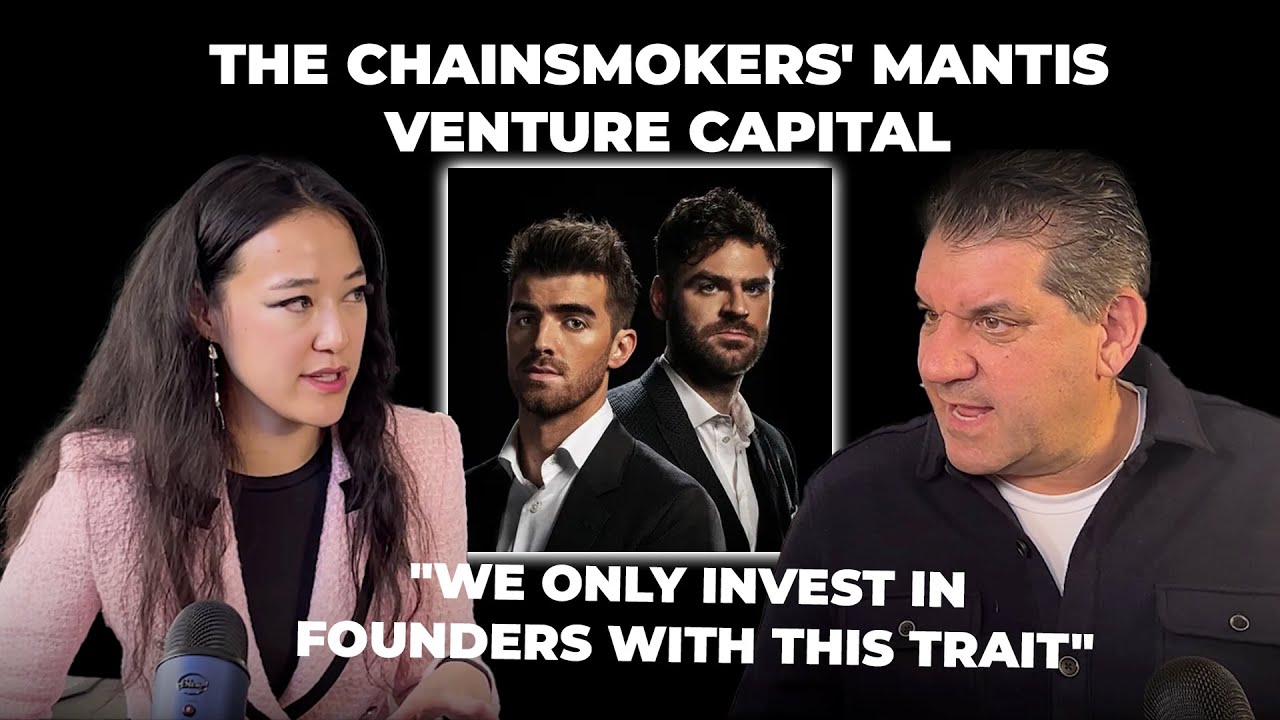
Jeffrey Evans of Mantis Venture Capital, backed by The Chainsmokers, raised a $100M fund during COVID. He breaks down what makes founders backable: clarity of vision, urgency, execution ability, and the charisma to attract talent. Evans shares lessons from his own startups and his framework for building a VC firm with a real edge.
Chapters
You know, Mantis is special, and we're partnered with Alex Pollan, Drew Taggart of the Chainsmokers. And so there was a similar kind of connection on thesis on both ends of what we wanted to bring to the table and our experience and business and culture building and what they brought to the table, which was work ethic and an access that I certainly was not going to gain and an ability to actually win allocations and prove value that I certainly couldn't do on my own. It was the edge that I needed. And in some senses, I brought the organizational strength. Structure and experience that they wanted. And so it came together. And let's, let's be honest, like right off the bat, you don't know. We started raising, having our first several meetings, and 2 weeks later it was the first shutdown for COVID. We didn't know if that meant it was over, it was starting. I mean, no one knew what was going to happen during that time, you know. And then lo and behold, a couple months later, David Solomon, who is a mentor of theirs and a dear friend, was like, you know, I think from what I see in the market, told them it's probably time to try to see if this thing is gonna work. And he was the first commitment to Mantis, which was just absolutely an amazing way to start. And from there, it just begins to build and you just start working. And, you know, that for me is when I saw the work ethic in Alex and Drew. And I will say that they're 2 of the hardest working people I've ever met. And I don't mean hardest working musicians, I mean hardest working people.
Well, congratulations on raising a $100 million fund. What an incredible feat.
Alex and Drew, deserve the lion's share of the credit. It's sort of built around— it's built a lot around their philosophies, who they want to be, the work ethic they put together, the relationships that they've built over time, and their willingness to put in the effort to go the extra mile every second of every day so that we can, you know, gain access to the best companies and then win allocation into them and then support them better than anybody else supports them. It's always a team effort. People try to figure out their lanes and stay in them, and you just need to do your job To the best of your ability, and if that's not good enough, it shouldn't be there. It's all about the founder, right? But the most important qualities— is there a clarity of vision and purpose and a rationale for that vision and purpose? I'm looking at this space, I know what I feel is going to happen with it, I know where the opportunity is, I know the ROI for the customer is, no matter what that customer may be, and I have the skills to build it and do it. And, and that's important. We don't particularly love a founder who's like, oh, I was trying to find a company to build, and so This space looked like it was high growth, so now I'm doing something in it. We're looking for kind of a purpose, right? And number one. Number 2, you know, do they have a sense of urgency? Are they going to solve problems as fast as possible, keep pushing forward? And 3, do you believe that they have the ability to execute on the vision? Because talking through stuff is one thing, but being able to execute at a high level, at a fast-paced level, is vital and important. And then the last piece is their ability to lead and inspire. And leading and inspiring is, you know, about how do you impart the vision to the team and have the team, you know, march together in the same direction, try and solve it. But also one of the biggest things you have to do as an early-stage founder is find and attract top talent. And if you don't have that charisma to sort of convince people where you're going and get them to want to be a part of it, you're not going to get the top talent. And if you don't get the top talent, You just added an additional risk to your ability to win.
Jeffrey is someone I've admired for a long time for his entrepreneurial career and investing mindset. I was so inspired by his energy, investing philosophy, and approach. To finding and working with great founders. Jeffrey Evans is the co-founder and managing partner of Mantis Venture Capital, a firm he launched in 2020 alongside Alex Paul and Drew Taggart of The Chainsmokers and tech investor Milan Koch. Under Jeffrey's leadership, Mantis is now investing out of its $100 million third fund with a focus on category-defining companies in AI, ML, cloud and data infrastructure, health tech, and frontier tech. He brings his decades of operating experience, having built and scaled companies across technology, venture capital, and human capital. He's a hands-on investor and former founder who actively supports early-stage teams in navigating growth, building strong operations, and avoiding common early pitfalls. Before launching Mantis, Jeffrey co-founded TigerText, now known as TigerConnect, the first secure mobile messaging platform for healthcare. Earlier in his career, he led the OnStaff team, a local staffing firm, to a $100 million business before its acquisition. He also helped scale Orion International into one of the nation's leading placement firms for transitioning military personnel. And across all these ventures, Jeffrey has consistently built and backed companies at the intersection of innovation and execution. I'm so excited for you guys to hear his journey and what he's looking for in founders and his vision for Bantus. Please welcome Jeffrey.
Hi everyone, welcome to the Icons Podcast. We're so lucky to be in this beautiful office here in San Sam and Monica, thank you for inviting us.
Thanks for coming.
To the Mantis VC office. I've been here for many exciting events, but it's so wonderful to be here witnessing Jeff and his team in action. He has been a legendary serial entrepreneur, investor, titan, legend. In so many ways, he has inspired me, and it's so wonderful to be able to sit down with him, unpack the wisdom, behind his successes and story and be able to share a little bit with you guys about his journey. Here to unpack his story, Jeffrey.
Thank you. I think that's an oversell. I don't quite that iconic, but I'll take the compliment.
You're too humble.
Politely.
I have admired your career from the time that you were a serial entrepreneur and the many things that you've done. Your career that spans multiple industries And now at Mantis VC as the co-founder and partner, it is so exciting to be able to see your evolution across everything that you're doing. And so we're so excited to get to sit here, sit down with you and talk to you about your story.
Let's get into it.
Well, congratulations on raising a $100 million fund. What an incredible feat. I think people will see this journey and think that it's they don't see all the sacrifices, the hard work, what wasn't so glamorous going into this. Can you peel the onion a little bit and tell us about the early days, the even earlier days of Mantis?
Oh my goodness.
Yeah.
By the way, starting like, to me, Mantis is a startup.
Yeah.
So it's my, it's my next entrepreneurial journey. And what's step one in, you know, in that it's having great partners. So I have incredible partners that started, started this with us. You know, Mantis is special, and we're partnered with Alex Pollan, Drew Taggart of The Chainsmokers. And I will say that they're 2 of the hardest working people I've ever met.
Mm.
And I don't mean hardest working musicians. I mean hardest working people. There's a piece of me that's responsible for a lot of the operational stuff, but I think Alex and Drew deserve the lion's share of the credit. It's sort of built around— it's built a lot around their philosophies. Who they want to be, the work ethic they put together, the relationships that they've built over time, and their willingness to put in the effort to go the extra mile every second of every day so that we can, you know, gain access to the best companies and then win allocation into them and then support them better than anybody else supports them. So, you know, it's always a team effort. People try to figure out their lanes and stay in them, and you just need to, you know, do your job. to the best of your ability. And if that's not good enough, it shouldn't be there. And if you do it, I mean, rarely have I brought somebody who's not capable of doing that. When they do it, they just excel.
Can you talk about how this partnership with the Chainsmokers initially began and how you built this trusting relationship with them?
So it started myself and Milan, the 4th general partner with us, where when we talked about wanting to get involved in venture, The thesis that we had was if we could partner with someone with a really magnetic personality that had a lot of social capital to bring to the table, but that wanted to be a partner, wanted to work it every day and wanted to build something, we could do something special. And as I tried to define, you know, how do you sort of state that it was someone who would more than likely be in venture if we didn't come with the idea, someone who already wanted to be in this space where we could add value together. And we talked to people for about a year. There were a lot of people that wanted to do it, but no one that wanted to work it or had the ability to work it. And there was an interview I saw with Alex and Drew where they talked about expanding their platform for the purpose of investing deeper in technology. And that in and of itself was interesting to me. And then, you know, just worked and got myself connected there through one of our other partners, Josh Klein, who's been working with them their whole career and been a friend of mine. I remember the first meeting they had talked about, you know, they had made about 25 tech investments themselves and startup investments at that point in time. And they talked about understanding that they were suffering from adverse selection. They were seeing the deals that were brought to the Chainsmokers because someone thought the Chainsmokers could be useful for the deal. And that was not extremely helpful at the end of the day. And they had gotten to know some of the, some of the top founders in the world of some of the best tech companies around who had all said they would have been thrilled to have them on our cap table early, but they wouldn't have sought them out. And so they had come to the conclusion that if they set up a fund, since they could see everything out there, that they could win access to the best deals. And so there was a similar kind of connection on thesis on both ends of what we wanted to bring to the table and our experience and business and culture building and what they brought to the table, which was work ethic, and an access that I certainly was not going to gain and an ability to actually win allocations and prove value that I certainly couldn't do on my own. It was the edge that I needed. And in some senses, I brought the organizational structure and experience that they wanted. And so it came together. And let's, let's be honest, like right off the bat, you don't know. We started raising, having our first several meetings, and 2 weeks later, it was the first shutdown for COVID. We didn't know what that meant. It was over. It was starting. I mean, no one knew what was going to happen during that time, you know. And then lo and behold, a couple months later, David Solomon, who is a mentor of theirs and a dear friend, was like, you know, I think from what's in the market, told them it's probably time to try to see this thing is going to work. And he was the first commitment to Mantis, which was just absolutely an amazing way to start. And from there, it just begins to build and you just start working and You know, that for me is when I saw the work ethic in Alex and Drew. You know, everybody's sitting at their house as we're on lockdown. It seems so long ago, but it also doesn't seem that long ago. It's weird. And, uh, and we're just, uh, you know, it's interesting, right? If we had done it pre-COVID, we would have needed to hop on a plane, fly to cities, and sit into meetings with people and get to know them that way. And so you think about how many meetings you can do in a day. In New York, what's the day to get there? Okay, to get back, and you can maybe maybe you can pull off six meetings in a day, and that's a pretty busy day for moving from building to building building. Instead, we're looking at doing twenty meetings a day on Zoom, which there was definitely some fatigue that came in. But you know, all of a sudden you're just bang bang bang bang bang. Doesn't matter where they are in the world. Talk about what we're doing, doing follow-ups and sending stuff. And so there's a piece of that that was probably advantageous for us because it allowed us to do more quicker. And to be honest, they also were not touring because there was no. live performances happening. So there's a piece of that that worked out well for us. But, but we, we did it. We all saw each other worked. We all, you know, kept pushing each other. As I say, they— those 2 guys push me every day. There is no one that works harder than them or has higher expectations than them about what they're doing. And, uh, and then lo and behold, there we are with Fund 1, and then we got to figure out what we're going to do and how to do it. And so for us, as we talk about each fund, each fund There's a particular goal associated with the fund, and I think businesses should always look at themselves, what are you trying to accomplish right now? And so for us, fund one was to build the brand and the brand promise of being the most helpful investor on the cap table. It doesn't matter if we put in $50,000 or $1 million. It was sort of irrelevant. We need to build that brand because that's what Mantis needs to stand for within the founder community, because at the end of the day, money is money. And if you're looking to get into the best deals, they're always overallocated. You know, there's no deal that we're going into that's like, we're glad you're in. We just got to find $3 million more and then we're going to close. It's all— we're always fighting for allocation because they're the best companies that do want to get into them. So that's what Fund 1 was. How can we deliver that promise and get it? And without going into specific details, you know, we did that. And Fund 2 for us was the first time we had enough management fees to add to a team. And then for us as a company, we said, this is our team building. We need to build an investment team that is so much better than we were with Fund 1. And with, you know, we need to punch above our weight with the people bringing on board to the company. And so, you know, we went out and, and did that. You know, I can't tell you how many hundreds of people I interviewed, but we're selling sort of a promise and a belief. And people are, you know, looking at whether they're going to consider this job over something else. Again, no one we're hiring is looking for a job they can't find one.
Right.
And, and as they're talking to founders or talking in the community, we're building a reputation of Mantis This is truly a value-add investor. So we get out to Fund 2, we spend time team building. Then we get towards the tail end of Fund 2 and we look at what we have. And now, okay, this is the first time we've got a professional investment team. And I go back to that first adage, the investors on our team, I feel, are smarter and better than me. And that's the goal around it. You know, how do I bring in people that are smarter and better than me? And I can guide them and they can push me and make me need to be better. So we have this really strong team. And we have, you know, this experience now. And we said, as we get to Fund 3, well, Fund 3 is our first opportunity for us to be focused and thesis-driven. So, you know, hey, we're going to be seeding Series A, we know where we add the most value, we know we can make the most difference on the cap table to the founders, we're going to have certain areas we focus on. But in this case, it's cybersecurity, AML, health tech, and gaming. And in each functional area, there's gonna be an investor that is wholly responsible for that area, that's going deep, that's building the networks, that's there to guide our process through that area. And that's their responsibility. And all of a sudden we look at who we are and we're vastly different from what we were in Fund 1. And what's exciting is, you know, I mean, Fund 3 is starting off great. I think we're getting into fantastic deals. You know, we're getting larger allocations into those deals. We're able to be more focused. But I think about Fund 4. For Fund 4, we need to think about what's the next step? How do we advance what we are? How do we not get caught in our laurels? How do we challenge ourselves to be better? How do we deconstruct what we've built and say, what's best in class at this and what's not? And what do we have to be better at? And, and be critical. I just feel like every industry is competitive. Venture capital is hypercompetitive. And if you're not always thinking about how you can be better, you're going to get surpassed.
In the early Fund 1 and Fund 2, were there crucial lessons that you learned that you take with you as you're thinking about Fund 3 and Fund 4?
Yeah, I mean, I think it's— there's lots, right? At the end of the day, I mean, one, one is really stick to your guns. So you look at the 2020 and 2021 market, valuations were a round or 2 rounds ahead all over the place. And so the challenge becomes one of, well, should we just not deploy for a minute? And the answer is yeah, you probably shouldn't deploy for a minute if valuations aren't appropriate. But that's a lesson you have to learn by a correction. And our fund run, I think, is performing well. It's going to be a very good return profile. But, you know, you see some of those things and you go, you know, in hindsight, it becomes obvious. Think back to the old Warren Buffett statement of, you know, whenever you hear this time it's different, run away because it's not. So I think that's an important lesson that we learned. 2 is to have conviction. I mean, if you have belief, it's okay to be contrarian. If you have belief about someone, Or something in particular, believe in it. And the third, I think we've always known this, but you can see a couple of isolated instances where early-stage venture, gotta have a great idea, gotta be able to build a great product, you know, gotta have a great vision, but it is really about that founder. And if you have question marks about the founder, just don't do it, period. It's like, if, oh, if I just add the following to their sprinkle, it's gonna work. They're just missing these qualities that are needed, don't do it. It is about the founder. Like, the 3 most important rules when we said venture are the founder, and then the founder, and then the founder. And it's really true. So I think those are— they weren't necessarily things we didn't know coming in, but when you have experiences with that, you become much more convicted about them and you follow those important rules and guidelines.
Was there a founder or particular pitch that really stood out to you?
Yeah, I mean, there's probably more than one, but I'll give you one story. Conviction on a path where I think we actually did things right.
Yeah.
As opposed to some other stories where I can look back and maybe think differently. And this one particularly, it was Alex and I believed strongly that there was real opportunity in online gambling, online betting. And we got excited and we saw, you know, our first couple of companies and we were like, you know, not there yet. And then we're about 15 pitches in on different ideas and companies and startups. And I remember calling Alex after one of them and just being like, man, this is ridiculous. Like, there's got to be something good going on in this. We're not gonna invest in these things we don't really believe in. But I don't understand why no one's kind of solving this. It seems like this area is about to explode. I remember Alex said to call one of our LPs, Topher Conway. He's like, call Topher, see what he's saying about it. And Topher is part of Silicon Valley Angels. The conversation was brilliant. And they're some of the best early-stage investors investors ever. And Topher said, you know, we can guide you on this. He's like, call Jeremy Levine. He can probably help guide you in this area. He's one of the smartest people I've ever met in that front. So we called Jeremy as an information call. As we're getting deeper into the call, we learned that Jeremy's just kind of finishing a friends and family round on an early, on an early business to get back into it, a company called Underdog Fantasy. And we— and Jeremy was at that point kind enough to let us into this friends and family round. Just to sort of get a taste and get an understanding of who he is. For us, you know, pre-revenue, pre-product, pre-everything, but it was sort of like, this is definitely the right guy. And he seemed to have an understanding of it, clear vision for what he wanted to build, a little bit contrarian point of view than the other people that were in the space. And he had a chip on his shoulder about it as well. And so we were able to back Jeremy. I mean, fast forward now, just a few years later, he has built You know, a tremendous company. You know, we're talking, you know, 9-digit revenue business. I don't want to say, you know, too much, but I believe that Jeremy, at the end of the day, is going to build the best and most important online gambling company in the world. And we were, you know, lucky enough to get in. But that's an example of early on finding the founder, backing the founder because it's the right person and you know that they're going to win no matter what. And then as we get opportunities to do it, follow on and put more money in and keep pressing through and show value at every step of the way to them however we can. That's a good story of having a thesis. And I think for us, you know, getting frustrated at what we were seeing, but sticking to our guns of we're not going to put money in the space for the sake of putting money into it. We got to find the right one.
Your lens on how you identify founders or people with tremendous potential was probably informed by your own experiences running and operating. Do you see a common theme among the winners in the industries that you've invested in or seen successes in. Hi everyone, I'm so excited to welcome this extremely distinguished guest, ecosystem builder, and head of community in San Francisco, Christopher Floyd.
He runs one of my favorite organizations in San Francisco, Founders Bay, along with Marian Becker, and here to talk to us a little bit about all the amazing things and how you guys can be involved in person through different conferences, events, And get connected.
It's Christopher.
So can you tell us a little bit more?
First of all, thank you so much for having me. It's a pleasure to be here and I love what you're doing. Founders Bay, it's awesome. So we're based in San Francisco. We're a community of getting close to 80,000 members.
That's huge, guys. You have to be a part of it.
Yes, you have to be a part of it.
So we're based in San Francisco, but our members are spread across the country, across the globe. But we have a very high concentration of folks that are based here in the city. We do events constantly. We do large events. You know, the 2,000+ people. We also do smaller events. Basically what we're trying to do is connect founders, investors, operators, and even just tech enthusiasts to each other and give them an avenue to share ideas, collaborate, and, uh, kind of expand their networks.
At founderspay.com. Thank you.
I'm a perfectionist and I often don't feel like these videos meet my standards. And for me, that's where BeCreatives comes in. I sent them my raw, imperfect footage and they worked their magic. They helped me clean up the audio, video quality, fix the lighting and help me make everything look more professional and polished. Now, no matter where I'm recording, I know my content is going to be in good hands. It's been a game changer and one of the best decisions I made for this podcast. BeCreatives and I have partnered for a special discount of $150 off per month for the Icons community. Please click the link here to sign up.
Do you see a common theme among the winners in the industries that you've invested in or seen successes in?
For the founder, you know, most— I mean, it's all about the founder, right? But the most important qualities is there a clarity of vision and purpose and a rationale for that vision and purpose. You know, it's like, I, you know, I've seen— I'm looking at this space. I know what I feel is going to happen with it. I know where the opportunity is. I know the ROI for the customer is, no matter what that customer may be. And I have the skills to build it and do it. And that's important. You know, we don't particularly love the founder who's like, oh, I was trying to find a company to build. And so this space looked like it was high growth. So now I'm doing something in it. We're looking for kind of a purpose, right? And number one. Number 2, you know, do they have a sense of urgency? Are they going to solve problems as fast as possible, keep pushing forward? And I'd say that's number one quality in sort of anyone I want to work with. You know, that sense of urgency, I think you see. And 3, do you believe that they have the ability to execute on the vision? Because talking through stuff is one thing, but being able to to execute at a high level, at a fast-paced level, is vital and important. And then the last piece, you know, around that— I say last piece, there's so many pieces— but the last major piece is their ability to lead and inspire. And leading and inspiring is, you know, about how do you impart the vision to the team and have the team, you know, march together in the same direction, try and solve it. But also one of the biggest things you have to do as an early-stage founder is find and attract top talent. And If you don't have that charisma to sort of convince people where you're going and get them to, to want to be a part of it, you're not going to get the top talent. And if you look at the top talent, you just added an additional risk to your ability to win. So, you know, we talk about founder, founder, founder, but you kind of look at those things and say, does this founder have those pieces? And if they do, you know, you're pretty far on your way to this is the kind of thing I want back. A lot of diligence work. to do still. But if they don't, you really should not be involved.
I think a common thing that I've heard you speak about over and over again is the execution element and the operation side of a founder's journey, that they could have a great idea, a great product, but a lot of it has to do with execution. And do they have the right operating team behind them? Do you think that that is the most difficult component or the biggest challenge in helping a company really take off, or is there another element that you think?
I think it's different for each. It can be different for each company. So, you know, you can have people that build a great product and they, and they're having challenges with their go-to-market strategy and finding those initial customers. You know, people that have all the relationships in the world. And so there's sort of a myriad of areas that you can run into. But at the end of the day, you've got to be able to do all those things. Again, in a mature company, it's very different. You can be brought in and siloed to do your function and make it happen. If you're leading a startup, you need to be everything.
Yeah.
And by the way, it includes you may need to take the trash out. Yeah, like it doesn't matter. You're sort of at a startup. What does it take to get the job done today so that you can continue tomorrow and just keep doing that day in, day out? This is right. This goes back to that original analogy. Are you sprinting? And moving nowhere because you know when you hit the ground, you're going to win.
Yeah.
The problem is you just don't ever know when you're going to hit the ground.
Exactly. For the iComms community, people who are listening, a lot of people will be wanting to aspire to follow in your footsteps.
Oh, don't do that. Okay. Sorry.
For those who are looking to start their own fund or in the process of becoming an investor, what are 3 non-negotiable first steps? that they should be taking?
I'd say number one is, why are you doing this? A lot of people get into VC because they're— they want— they think you can make a lot of money in venture capital. I would say that there's probably easier ways to make a buck than venture capital at the end of the day. So that's kind of the first piece. Why are you doing it? 2 is, which is really hard. I'm going to go back to this is why I'm lucky enough to be able to partner with 2 brilliant partners in Alex and Drew and the rest of our partnership team, you know, Josh, Adam, Mac, Milan. Incredible group. But what is your edge? What is the reason that a founder is going to want you beyond the money? And what do you bring to the table that gives you an edge? And I think that's the hardest part, because at the end of the day, again, anybody can invest in rounds that are having trouble filling up and you could win some of those. Like, you know, who knows at the end of the day? But the, but the best ideas, the best founders, there are a lot of people out there spending all day, every day searching for those opportunities. And when it comes to the ones that seem like they're the best founders, whether it be contrarian or straight down the middle, it's a competitive nature to get into. And so why is someone going to, when they have more money than they can take, got to take your money as opposed to taking somebody else's? And the answer needs to be clear and then it needs to be proven. We understood that with Fund 1, and at Fund 1 we had to go prove it, you know, as we got into it. And by the way, we wrote some checks into some rounds for $50,000 into companies that we believed in the founder, where we knew that that was not gonna really move the needle at the end of the day. And we went and proved ourselves so we could write a larger check into it in the next round, and then we could build that reputation. So I think that's one of the biggest things you have to ask yourself is, you know, do I bring something to the table that's gonna be different, that's gonna help me win against everybody else out there in a hypercompetitive industry?
And then now on the founder side, Do you think there's 3 steps that you can share in terms of advice that are non-negotiables in order to be successful?
Well, I think it just goes back to those qualities again. Do you have a clarity of vision and a purpose and a reason that you have— that you're the person to do it? I think that matters to us, number one. Number 2, are you able to get the right team? Because at the end of the day, for a founder, getting it funded is one piece, but you've got to win at the end of the day. I mean, you can't make money on your funding. That's not, you know, it's going to work from. So, do you have the idea of who the team is and the ability to go out and get that team and win that team? And 3, are you an executor? Can you do whatever it takes to get the job done every day as you continue to just take a little step forward each day? I just think those things are hard to answer for people.
Yeah.
And you don't know until you're in it, in the thick of it. You're on the edge of death. Are you a person on the edge of death that is just able to see clarity and focus And win, or do you panic? You should know that about yourself because you don't want to be in a situation— you're going to be at the edge of death if you're a startup founder at some point in time, probably multiple points in time. And in that process, can you bear down, focus on the problem, and work through it so that you win?
You are so introspective and have so much wisdom around all of your experiences. It's clear that you're reflecting and a very deep thinker. As a child growing up, did you always have such an inquisitive mind of reflecting on your experiences? And where does this come from?
Oh God, you know what I mean? I did— I started my first business when I was 15. There was always an entrepreneurial spirit, but I think it originally came from, I want to figure something out and I don't like listening to people, which is a, you know, as a teenager, young adult, just gets you in trouble. You know, it's a joke, like, you know, I knew everything I needed to know from the ages of 16 to 20, and then I learned that I knew nothing.
Yeah.
But I was certain.
Yeah.
My brother jokes that, uh, often wrong but never mistaken. So I think that there was always a part of me that's like, I can do it.
Yeah.
And I have that attitude of, I'm gonna, I'm gonna make stuff happen no matter what.
Yeah.
There's also nothing for me more satisfying than looking back in the middle of a journey.
Yeah.
And realizing that there was nothing and now there's something. If you didn't do this, and the people around you didn't do what they did, there would just still be nothing.
Yeah.
And that sort of means to me, that's also— that's the spirit of what actually does make America great from that standpoint. But that feeling of looking back at a team that you've built and seeing them being successful and a business you've built, there's nothing like it. I mean, you know, beyond getting married and having kids, that's the greatest feeling on the planet. And then when you're in the midst of it, sometimes you don't even look at it and see it. But I look around and again, as I talk about Mantis, that this team at Mantis is incredible. The people that are on our investment team are brilliant. I am humbled that they're, you know, continue to give us their time every day to work here. And I kind of look back at it and go, amazing. Yeah, that we all came together and built this.
Common theme among all of your journeys and companies you've founded, companies you've invested in, is you have this sheer willpower and resiliency. tenacity that you can inspire in your teams. Can you tell us something about leadership that you try to instill in your portfolio companies?
I mean, one is you got to lead by example. So we need everyone to work hard and to work fast. And we expect the same of ourselves. And we expect the same internally. So, you know, I don't believe you can expect people to do things you're not willing to do yourself. So that's number one. I mean, when it comes to Mantis, and Alex is probably the most responsive human I've ever met on the planet and responds to texts or emails within minutes. We joked once that if we didn't hear back from him within an hour, we were going to call the police to see what's wrong and call for help. Yeah, because something was seriously wrong. But that example flows down. So there's one thing to have a vision and expect everybody to do the work and, and you're going to take it easy. Another thing to lead by that example and say, if you're not going to keep up with me, you're not going to be here.
One of your other talents is being able to find and identify early talent among companies, among people that you want to team up with as a founding team, for example, for Mantis. Can you talk a little about the key qualities?
There are key personality traits that make people successful, at least in my opinion, when they have to be self-starters. So, I mean, I could talk a little bit about those pieces. Like, for me, the number one quality in anybody at really at any level, if you can find it, is sense of urgency. So do they have a sense of urgency? I used to joke, like, if you want something done, give it to a busy person because they don't have time not to do it. Whereas someone's got plenty of time, they just have plenty of time to waste on it and not get it done.
Procrastinate.
Yep, but sense of urgency is number one. I take great pride in hiring, and it's not a simple process for anybody who's sort of worked in leadership at any of the firms that I've been responsible for being a part of building. So I can sort of talk more about what I talk to other people about, helping them learn what is important to me in hiring. You know, you want to hire people as best you can who are smarter than you. So I tell people who want to move up from a career standpoint at a firm, if you like the job you're doing and you want to step up for the next job, then you need to hire someone who's going to work under you to take over that job, who's going to be better at that job than you, because then it's really easy to say you've nailed that and now you're ready to move up. Now, this is really hard for people because they get intimidated and scared by people who who are smarter than them or going to do something better than them. Because there's this natural defensive mechanism to say, you know, I need to be the best at it, so they need me. And to me, you're just setting yourself up for a failure point if you're not going to move past where you are, because it's— you've got to set it up to be done better than what you're looking at. So I have another joking adage that I say: if I'm the smartest person in the room, I'm surrounded by idiots.
Yeah.
I don't think it's completely true, but it is the way that I look at it. How do you find people that are smarter or better than you. So when we're looking for, you know, to add to the investment team at Mantis, my thought process is how do we find somebody who's going to bring a new perspective and be a better investor than we are individually and then help the team lift up to the next level? And that's my responsibility for each piece of it when it comes to that. When companies are looking to hire internally for who they need, they need to say, what do we need to accomplish and how do we find the best human possible to accomplish that? that meets our goals from the standpoint of what the skill set is, but then can fit into our culture. And so the problem is that that's hard to do, right? And a lot of people can fit one side and not the other. Most of these lessons that I talk about are not like things I've learned in books. They're things I've learned from doing them wrong.
Yeah.
And making the mistakes and hiring people that were— that fit all the criteria but didn't fit the culture. And then the culture got messed up and the person didn't fit in and the person had to be terminated. Or not waiting until— hiring the best you could find at that moment, even though you knew that they probably weren't going to work out, but you needed the position filled. And that's the hardest part because you really do need things to happen. Those are challenges that I've only learned from doing it wrong, making the mistake, getting burned, and then the lesson is sort of ingrained at that point.
What incredible advice in terms of how to build your team, being surrounded by people who are truly I would say hire slow and fire fast, which sounds mean, but it's kind of true.
It's efficient.
I was telling— we were talking about it this week, and I said no one's ever once said, oh, I wish I had been slower to get rid of that person. Yeah, it's always like, what took me so long to figure out, to decide to do it once I decided they weren't going to work? So hire slow, fire fast.
legendary investor, but prior to that, you had quite the interesting and successful career as a serial entrepreneur. Can you tell us a little bit about that journey and maybe the key formative experiences that set you up to be an investor today?
Yeah, I mean, the background, everything, sort of how do you become an entrepreneur or what are the qualities? And I talk to a lot— there's a lot of people that come to talk to me about that, to get advice. And I tell them that it's probably a different journey for each person, but for me, in every business that I've started, and sort of what's the magic sauce, and it's a willingness to run through brick walls when everyone's telling you not to until something is there. For once, there was nothing, and then there's something. And so, and I think that's an important thing to get because I think, I think that's the quality that a good entrepreneur needs no matter what.
Absolutely.
And, you know, there's an old adage, and I think we spoke about this once, a cartoon called Road Runner and Wile E. Coyote that people know, and maybe we could put a clip up on the screen at some point in time. But in every episode, at the end of the episode, the Road Runner jumps in the air and his feet start moving so fast it's just a blur. It's like a— and the Coyote is standing right next to the Road Runner with the fork and the knife out like this and ready to close them in and eat the Roadrunner. And at the last second, as the fork and knife were coming in to close in on the Roadrunner, the Roadrunner's feet hit the ground and he's off over the horizon in a cloud of dust and gone. And the coyote's sitting there with nothing, didn't get to eat him. And I tell people that that is what the entrepreneur is. You need to jump in the air and start sprinting, and then you got to keep sprinting. And then when you think you're done, you got to keep sprinting. Then when everyone around you is telling you this is not going to work, You're not gonna make it, or you come in on Monday and you don't have payroll on Friday, which has happened to me multiple times. When all that stuff around you is saying stop, you need to keep sprinting, and at some point in time, your feet will hit the ground and you'll be over the horizon. But if you ever stop, you're dead.
Yeah.
What I say is, if you don't have those qualities, if you don't have that kind of almost just obtuseness not to listen, then you probably shouldn't be an entrepreneur because it's not a journey for everybody, and it's I love this analogy of the Roadrunner.
It stayed with me, how you have to keep going, keep adjusting, and it's exhausting, but that's how you survive. Can you tell us about one of the first companies that you founded and a story or a lesson that you learned that has stayed with you through your investor journey today?
Yeah.
I mean, there's, I guess there's lots, but I could talk about, I was talking about a company called OnStaff, brick-and-mortar staffing firm. I remember, I remember a point in time where we had one of our larger customers have financial troubles. And in the staffing industry, you're paying employees every week and then you net 30 or net 60 on your receivables. So it's a, it's a tight cash flow, low margin, tight cash flow business. We had a customer that ran into financial troubles and couldn't pay their bills in a timely fashion, yet we were paying the employees every week to be there. And it became clear that we were getting more business from them because we were almost like factoring Their business, and we didn't have the money to do it. And we actually—this is one of those examples—hit a Monday where we were like, "Oh my God! We don't have the cash to meet payroll on Friday, and if we don't pay the contractors on time, they're going to all walk from the jobs. And if they walk from the jobs, the business is out. Like it's a death spiral that's coming on Friday." And we go back to think about what it was, and I tell people this all the time. There's actually another movie analogy for it too. But we just came in on Monday, me and my. my partner, and said, clear the week. We're focused on solving this problem because this is a critical life-or-death problem, and we're going to work the problem until we solve it. And we did solve it. We were able to figure out a way, you know, with banks and other customers to work out stuff to have the cash to get through that week and the next week, at which point in time we started to get payments back from that customer, and then it started to flow again, whatever. And I go back to— there's another— I'm trying to get, you know, great analogies for people to think about in life. There's a movie called The Martian, a Matt Damon movie, and in that movie, you know, he's stuck on Mars and he actually has survived for 2 years by himself on Mars when they're coming back to get him. Oh yeah, spoiler alert everybody, but if you haven't seen it, I just blew it. But he gets back and he's teaching a class and someone asked him a question about survival and he says, all you do is focus and work the problem, and then when you solve the problem, you find the next most important problem, and then you work the problem. And I thought that was a great analogy for what it's like to be an entrepreneur, that it's important to have big vision, great work ethic, good idea, sense of urgency, all sorts of stuff. But when you run into the challenges, you just bear down and focus and work the problem, because nothing else really matters, whatever that problem is right now. And then when you solve that problem, solve the next one. And if you solve enough problems, then you win.
Looking back on your journey, are there key Are there any pieces of advice that you would want to give your younger self as you were going through these challenging moments?
Oh yeah, I would say maybe invest in NVIDIA early. I think it's easy to go back and be like, if I only knew, if I only knew. It's sort of like, where's the fun in that? Like, you kind of have to learn. There's so many things that, you know, after you've made a mistake, you can look back and see, if I'd only done this, I wouldn't have made that mistake. But the The flip is they also wouldn't have learned it if they didn't make the mistake. I believe you learn 10 times more from messing something up than you do from when it works. You know, the successes, people, tons of people want to take credit for them, but you worked hard and you got lucky.
Yeah.
You know, which is great, by the way. At the end of the day, when you go into something and you mess it up and you fix it and then you still work through to success, you're not going to make that same mistake again. And so I think it's important to have the challenges and the mistakes. In some senses, every mistake you've made, if I could go back, I'd say, oh, I wish I'd known that and I wouldn't have done that and I'll fix it. Yeah, but I couldn't have known that without making the mistake. So I'm not a big look-backwards person on what you could have done better at the end of the day, unless you're in the process and you say, let's evaluate what we did so we can do better next time. Absolutely. But when it comes to my life, you know, it is what it is. And I think I'm incredibly lucky.
What is your vision? For what you want Mantis to look like in the future?
I think our brand promise, we need to be— we always want to be the most helpful investor on the cap table. I mean, we would like to be the preferred partner for early-stage founders, period. And for us, as we look at who we are right now, you know, we are a co-lead fund. We are not a lead fund. We're looking to be either, you know, a side-by-side check or the second largest check into the rounds, because we have a lot of incredible partners that we work with on the venture capital side that brings something to the table that we don't bring to the table, and we bring stuff to the table that they don't bring. And by working with them, we can be everybody's friend, everybody's, you know, the plus one they want to bring to the wedding. At the end of the day, we can do that and we can be valuable across the board. And that's what it is right now. What it is for the future, I think we have to, as I said, evaluate each fund and where we want to go next. And then where we go is where we're going to add the most value and where we're going to be able to win for our limited partners. in the best way. I just think we need to look at it each time for those purposes.
That's so good. And in terms of what you want your legacy to be?
It's really about the people that are around me and what we've built. So one, he saw potential in me that I didn't see in myself and pushed me towards being that better person, that better leader. He treated everyone with respect and made everyone feel valued. He didn't just talk excellence, he showed us the way to excellence. And he cared about more than outcomes, he cared about us. To me, that's about team building. And if I can, you know, bring people around me that inspire me and I can inspire them, then we're going to win. You know, at the end of the day, it's relationships that matter. We all want to make a lot of money. I want Mantis to make a ton of money for LPs and for us. But at the end of the day, you're not taking any of that with you. You know, it goes, it goes back to that. And then for my, you know, if I had to be, I guess, look at myself, consider myself a risk taker. I always want to be a risk taker. So my own personal mantra, motto, whatever, is to always take bold risks and just remember where home is. I have a beautiful wife of 28 years and 3 adult kids now. I know you could say I don't look old enough for that. Hey. But, you know, I love building stuff. You know, I love where we've gotten. I am nowhere near done building things. But at the end of the day, I do it and wanna come back to them 'cause that's what matters.
That's so good. Thank you for sharing your story and your journey a little bit more with us. Your reputation in this industry, even prior to meeting you, was one of so much tenacity, resilience, and kindness more than anything. And getting to know you, the last couple of interactions that we've had, every time I'd leave feeling so inspired and empowered and just so much warmth in all of our interactions. So thank you for inspiring me with this journey.
Oh my God, you're so nice. I don't know what to say.
And I am so excited to see all the ways that Mantis will continue to grow and excel with you as the leader and almost as the patriarch of this incredible organization. And I'm so excited for our viewers to get a chance to interact and engage and hear a little bit more about this very inspired journey. journey that you have been on and how the road wasn't always easy, but you've always been running and never stop. And then look at what you've built.
Thank you so much. I really appreciate it. It's been a pleasure to get to know you. I feel very humbled that you want to interview me and talk about this, but it's my honor to do it and excited for what you're bringing out to the world with Ikon. So congratulations to you on that. sprinting to make that work and happen.
Thank you so much, Jeffrey. It has been such a pleasure to interview this iconic investor and visionary, and this community is all about how we can inspire the next generation of visionaries. So I hope you learned something from Jeffrey's amazing story, and we'll see you next time. Thank you. Bye.
If you're an investor, a builder, an entrepreneur, and someone who likes to attend events in person, you guys have to check this out.
It's great to meet the Icons community here. It's amazing work that you've done. AIIFY produces events, everything from summits with thousands of people to workshops, hackathons, and we'd love to invite you. Go to aiiify.io for links to all the events we have coming up. And if you put in Icons when you go to purchase your ticket, you'll get a significant discount on all of our upcoming events.
Please visit the website at aiiify.io. Fy.io. If you're tired of LinkedIn and X, check out Inspo, a new social network for thought leadership. Publish your insights, connect with a professional audience, and engage with an exciting community focused on sharing high-quality thought leadership and expert perspectives. Now join now on the Apple or Play Store as Inspo experts to find your community of growing professionals now building their own brand and unique Perspectives.