The question that can change everything | Jenn Greenhut | TEDxRobinson Road
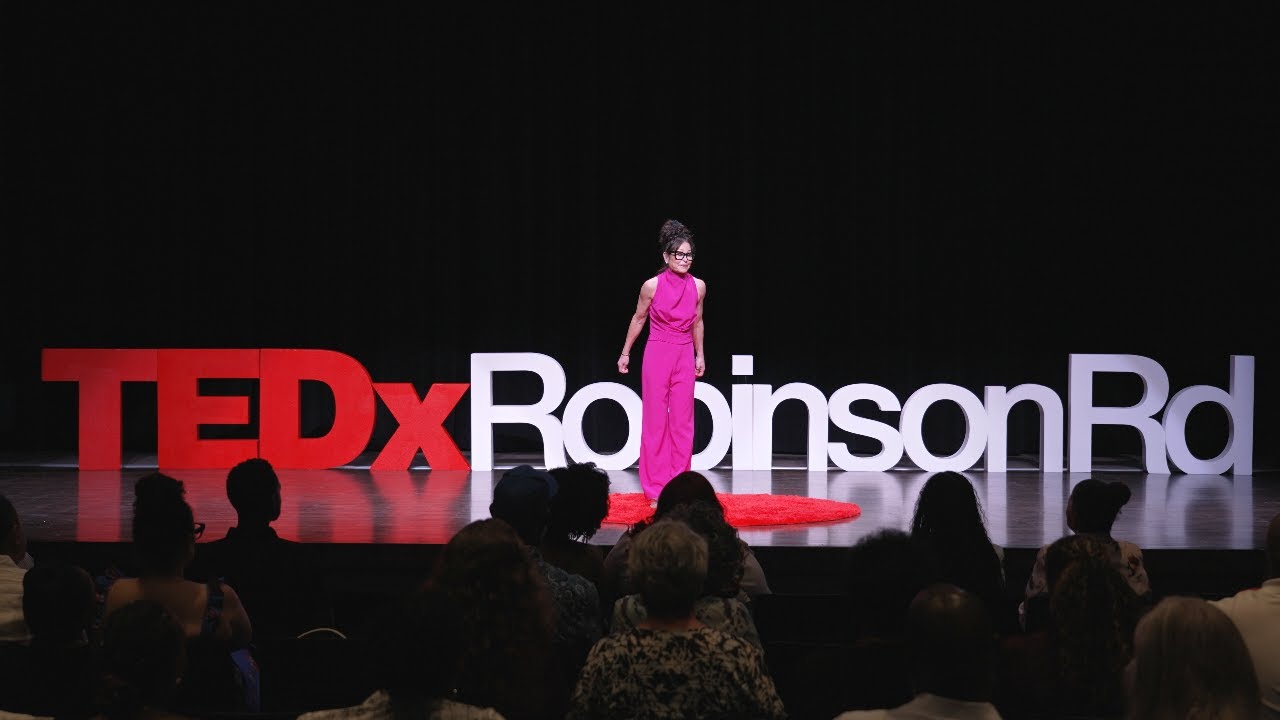
Jenn Greenhut survived stage-4 triple-negative breast cancer by changing one question. Instead of asking "Why is this happening to me?" she asked "What's in this for me?" That shift turned chemotherapy and hair loss into sources of humor and gratitude, and led her to start a foundation and write a book with her husband.
Chapters
Jennifer Greenhut. The worst day of my life, I'm sitting in a doctor's office hearing the words, "Stage 4 triple negative breast cancer." He said, "Aggressive. 12% chance of living more than 5 years." I start to panic, I'm crying, I'm thinking, "Why is this happening to me?" I'm going to die in my 40s? I've never even appreciated my life. Where's my husband? All of a sudden, there's chaos coming from the hallway. I turn and there's my husband, Larry. He's pushing a wheelchair with my mom in it. Turns out in the parking lot, he accidentally ran over her foot. Twice! Forward and backward. So I'm assessing my situation. I'm going to be in treatment for the rest of my life, and that guy is going to be my caregiver? I am so screwed. But I wasn't. That was 9 years ago, and while my story includes cancer, It's not about cancer. It's about what happens when life doesn't go your way. And it's about the moment that changed my life. And in 10 minutes, I think it'll change yours too. Because I realized we don't always get to choose the next chapter, but we do get to choose the questions we ask ourselves inside it. And those questions can change everything. Now, we're all going to face chapters we never would have chosen. A sudden loss, a divorce, diagnosis, your husband running over your mom's foot— twice. Life pinches you. The moment it happens, our brain tries to make sense of it. The questions start: Why is this happening? Why me? Well, usually, the brain comes up with an answer. What's scary is most of us have been asking and answering the same internal questions for years. And not only during hard moments. Questions like, "Why do I work so hard and still feel stuck?" "Will I ever meet my person?" "Why does everybody seem to have what I want?" Well, the brain creates evidence after researching these questions, and it always finds what it's looking for. But most of the time, these questions stop feeling like questions, and they start becoming a story that you live in. Let me show you mine. I grew up in New York City. My dad believed life was hard. He would say, "If you have 3 good days a year, that's a great year." So I believed it. I was also a competitive gymnast by choice, guaranteed hard life. I left home at 14 to train for the Olympics. I make the United States national team. I learn discipline and hard work and perfection. I also learn that crying is weakness. My worth tied to my scores. I didn't learn how to love myself. I learned how to make the perfect ponytail. And underneath all of that is one question: Am I enough? The answer was no. Not unless you're winning or achieving or sticking. Your double backs. But there was one thing I didn't question: I wanted to be a mom. I mean, not just a mom, a mom of four. It felt like my purpose. So, fast forward a bunch of decades, successful yoga career, I meet Larry, man of my dreams. We get married, I'm so excited, chapter I've been waiting for. We try to get pregnant. Nothing. We try IVF. 3 rounds. None of them work. Now I'm in a really dark place. And the questions are coming: "Why is this happening to me? What's wrong with me? Why can't I have what I want?" Well, the answers sound familiar: "You're not enough, Jen." "You don't deserve your dreams." "you already had your 3 good days." I believe it. And for 6 months, all I can see is what I want and can't have: a family of my own. And then out of the blue, I'm diagnosed with stage 4 cancer. And now my brain is frantic, it's asking, "Why is this happening to me? What did I do wrong?" Well, the answers say, "You failed at your purpose, Jen." "you don't deserve to be here anymore, you're being kicked out." I believe it too. But I was so clear about one thing: I don't want to die. I mean, I really don't want to die. It felt like I never even lived yet. So I asked for help. Now, I am a Jewish Catholic Buddhist woman, I am a JewBu, whole other TED Talk, but I did what any JewBu would do on their deathbed. I pray, I beg, I bargain, I have a spa day. Somebody had to answer. Please let me live. Show me to the right doctor. I promise I will give back forever. Well, I finally meet an oncologist who's calm. He goes over my treatment plan. He says, "Chemo first, surgery, radiation, More surgeries. And then he says, "We're going to have to remove your ovaries. You're never going to have children. But I want you to know, if you had gotten pregnant, most likely it would have killed you." Phew. Whoa. This changed everything. Life wasn't punishing me. Life was protecting me. Life was saving me this entire time. And my brain is recalculating every failure, every mistake, every chapter had somehow worked out to lead me here. And if everything was working out, then everything still is working out, even stage 4 cancer. Ah! Could cancer be working for me? I walked into this office seeing cancer as my punishment. I'm walking out believing cancer is my gift. Same life, same facts, different question, different story. Viktor Frankl, psychiatrist and Holocaust survivor, he wrote about this. He said, "Between stimulus and response, there's a space, and in that space, is our power to choose a response. Well, I stepped into that space, and I found a different question. Instead of, "Why is this happening to me?" I asked, "What's in this for me?" What's in this for me? Well, chemo begins. I'm terrified, but I try out my new question: "What's in this for me?" Chemo is healing medicine trying to save your life. Thank you, chemo. I have to lose my hair. What's in this for me? Do you know how much money you'll save on hair products? That's all I got. I had to lose my breasts. What's in this for me? Perky boobs that won't try to kill you. I mean, that's a major upgrade. I'm not saying this makes life easier. Pain is still pain, and loss is still loss. I didn't know if I would live or die. But changing the question, it changed what I started to see. For so long, all I could see was what was missing, what I didn't have. And now, all I saw was what was here, what I had. I fell in love with life. Whether I was on the beach or sitting in Los Angeles traffic, I was alive. Ah, what a gift. And for the first time, I start loving myself, for real. Because underneath all of that striving and proving and performing, there was someone in there needing love, me. So I loved her back, all of her, even the cancer. 4 months into treatment, I was cancer-free. That was 9 years ago. I've been cancer-free ever since. So cancer was one of the best things to happen to me. Not because cancer is good, and I'm not saying a question cured my cancer, but asking, "What's in this for me?" brought me back to love, back to gratitude, Two superpowers I didn't know I had. Superpowers we all have. And when I changed, everything that came after changed too. I started a foundation to support patients and caregivers going through treatment. And Larry and I, we wrote a book called "Everyone Needs a Larry." One moment inspired a different question that changed me forever. And I believe it helped save my life. But now it's your turn. What's in this for you? The next time life pinches you with a breakup, a betrayal, or even the world's longest Starbucks line, pause, step into the space, and ask, "What's in this for me?" Because the questions you ask yourself Become the stories you live in. Oh, by the way, my mom, her foot healed, and Larry stops the car completely to let everybody out before he drives forward. Or backward. We don't always get to choose the next chapter, but we can still love being alive in every chapter. Thank you.