Losing 12 Pounds in 30 Days - The Biggest Loser Interview with Sherri Ghee
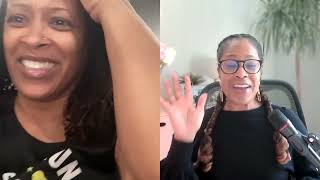
In this 30‑minute podcast episode, host Jennifer Dent Brown, M.S., interviews Sherri Ghee, a longtime member of the Stop Dieting Forever community, about her unexpected 12.2‑pound weight loss during the group’s “Have It All Holiday Lose 10 in 30 Days” challenge. Sherri explains that she initially joined the challenge reluctantly after seeing a post from Coach Lorraine, and that she was dealing with chronic back pain, a recent hand surgery, and a tendency to wallow in self‑pity. The conversation explores how she turned those setbacks into motivation, using community energy, intentional thinking, and clear boundaries. She details concrete tactics that allowed her to lose weight despite limited physical activity: planning meals around events, limiting alcohol, choosing high‑quality treats, tracking stress and sleep with an Oura Ring, and performing daily stress‑busting practices (meditation, tapping, breathing). Sherri also reflects on broader lessons— the importance of identity change, redefining her relationship with exercise, recognizing physiological stress signals, and maintaining self‑love while returning to work. The interview concludes with her current weight (184 lb, down from 186 lb post‑challenge), ongoing maintenance strategies, and encouragement for listeners to apply similar mindset and habit‑based approaches.
Chapters
Okay. All right, y'all. Interview with The Biggest Loser. This has been an interview that has been months in the making. I am excited to introduce you to Sherri Gee, who I can't believe you've never been on the podcast before. You've been in the Stop Dieting Forever Community for almost 2 years.
Almost 2 years. This probably May will be— yep, May. This May will be 2 years.
Almost 2 years. And you were our biggest loser in the last 30-day challenge that we had. And lots has been happening. I'm like, we got to get Sherri on the podcast. We got to get Sherri on the podcast. And so here you are. I want you to, first of all, tell everyone how much weight you lost. In 30 days during the holiday season. So this is our Have It All Holiday Lose 10 in 30 Days challenge that we did at the beginning of December through— it was like middle of January. How much weight did you lose?
I lost 12.2 pounds.
12.2 pounds. So you just blew the whole little 10-pound goal out the water during the holidays, during the holiday season. So this is This is what I really, really, really remember this. And I've talked about this on the podcast. I don't know if you've heard. I don't remember what episode it was, but I shared your story. You can elucidate on it, but— or elaborate, not elucidate, elaborate. You did not want to join the challenge. Do you remember that?
Yes, I did not.
Okay. So take us back. Take us back. What was your initial motivation for joining when you really didn't want to?
So literally it was like I heard, um, Dr. Jade had put a post. I think it was either on the Facebook or something, and she just said— and it was like the day the challenge was kicking off.
Oh, it was Lorraine. It was Lorraine.
It was Lorraine. Okay, I knew it was— it was something— it was Lorraine put a post that was like, even if you don't want to come by, just be a voyeur, just listen, hear other people And I'm sitting here like, I'm not doing anything. I don't have anything scheduled. You know, just, just get on the call. You could just, you just sit back and won't say anything. And then I was, I joined the challenge. So it literally was just like that. Like, had I not saw Lorraine's message, I might not have joined, or joined later, um, or not joined at all and continued to sit there, uh, wallowing and being the heaviest I had been in a couple of years.
So tell us why you were wallowing, because I remember when you did join the call, it was a kickoff call, and you were just like— I could just see it on your face. I knew something was wrong. You didn't say anything on the call. You just looked real sullen. So tell us what was happening.
So I've been experiencing health challenges in the past year or so, and I'm having really bad back issues, which is keeping me from being as active as I like to be. And I kind of use activity as, um, as medicine, really, like to clear my head. I like being active. I don't like sitting still. So I had literally been stuck sitting still, um, and being in pain. And then on top of that, gaining weight, because now I'm just eating all the things, or not eating the things, whatever. I'm just sitting there and I'm and I'm feeling sorry for myself, really. It really was feeling sorry for myself, not being able to figure out how do I get past this and move forward and feel better. So it was all about— and I just had surgery in October too on my hand, so I'm, I'm home.
And I know Sherry— well, y'all don't know Sherry. I know Sherry. Sherry is a runner. She, like, likes to exercise. She's very, very, very active. So imagine you go from being super active, working out all the time, liking— like, like you like to run and walk. I've— you've done kayaking. I've seen you in videos, like, doing kayaking. Like, you do all the things. Now all of a sudden, you are, like, riddled to the couch. You cannot move. You've had surgery on your hand, and you're having back issues, and it's the holiday season, and it's cold outside. And so you're feeling sorry for yourself, but one per— one person said one thing Yeah. And that was like, okay, I'll, I'll do something.
I'll listen in. I'll do something. But I, I miss everybody. Let me just, let me just get—
let me just connect. So I just want to say, that's just one of the examples of the power of our group and of the community. Because one, it was like you listening to Lorraine, who just popped up on a video on in her group, on a Coach Lorraine— she coaches in our group sometimes. Um, And she's motivating people to just like, hey, do this challenge, this is really important, whatever she said. You listened and you were like, let me just connect with the group. Let me just feel the energy of the group. And I'm not going to say anything. I'm not committing to joining, but let me just dip my toe in the water and just feel the energy and feel connected to like-minded people while you're laid up on the couch.
Yes.
Okay, that's great. So you decided to join the challenge. Do you remember what the thought was during the call when you were like, you decided to do it?
Um, I don't actually remember what the call— I remember my state of mind at that point in time. I just kind of was like, yeah, I lose weight during the holidays. That's never happened before. Okay. But I mean, again, at this point I had probably in the past couple of days just weighed myself, weighed in, oh, back in the 200s again. And I'm like, I said I wasn't going back there. And so it was like, well, you know, at least I think in my head I said, at least if I don't gain weight during the holidays, that's better than me not doing anything.
Yeah.
So I kind of went from not wanting to be a part of the challenge because I think in my head I just was like, I have too much, too many things going on, I don't want to have to think about another thing. And I was like, I'm gonna have to think about this. And you know me, I gotta map it all out and have a whole plan and figure it out. And I was like, I don't feel like doing any of that. And so when she said like, yeah, just come, it'll be no stress, you could just listen and don't say anything, I was like, oh, no stress, that's what I'm looking for is no stress. And but then once I got on, it was like, oh, well, maybe I just won't gain any weight because I don't need to gain anymore, so maybe this will be good for that. And I think that's where my head was. Which kind of took the stress off of it. Me, you know, because it was like, oh well, I just won't gain any weight. Let me figure that out during the holidays when I have officially can say I've always gained weight during the holidays.
Yeah, this is why I love doing this challenge during the holiday season, because everybody gains weight during the holiday season. And even if you don't do all the things during the challenge, if you can get out of the holiday season without having a weight gain, I consider that a win. Yes, especially if historically you always gain weight at the end of the year. But you just were like, nope, I'm going to— I don't— did you even have a goal to lose weight?
No, my first goal was just not to gain. And I was like, well, since I can't, you know, I can't work out, I can't do this, I can't do that, I might as well pay attention. And I was feeling crappy too, so I'm feeling crappy And I was just like, well, you know, this can't be bad for me.
I remember, I think I coached you and I said, Sherry, this is really good for you because I think you had linked exercise in your brain to being able to keep your weight off.
Very attached.
Yeah, you were very— yes, I do remember very attached on this. You were like, I can't work out, I can't move. And I'm like, that's not a problem.
Yeah. And no, it's been— that's been an issue for me. That's been the struggle for me probably most of this whole time because I've been feeling the decline in my physicality, what I'm able to physically do compared to where I had gotten. And, you know, it's like, oh, this is cool, new challenge after new challenge after new challenge. It's almost like an adrenaline rush because you're trying something different each time. And I think that's what people don't know about running because they're like, well, you're running the same. Every run is different. Your body feels different, you feel different. So it's like a new challenge. So yeah, I might be running 5 miles and I've ran 5 miles before, but I didn't run 5 miles this day at this time with me feeling this way. So it's always a new challenge, and I think I got used to seeking that out and feeling the accomplishment of doing it. So not just with running, like lifting weights, going up heavier, you know, going up heavier, go, you know doing several in a day, it just— you can become a little obsessive about it.
And this is why I tell people, depending on where you are with your relationship with exercise, when you start this program, if you're exercising for the sole purpose of keeping your weight down or thinking it's going to help you lose— like, no, stop it. If you're working out and running and doing all the things because you think you ate too much the night before, stop it. Because it's just a very disordered relationship with exercise. And I know because, trust me, that was like my whole MO for years. I tried to become a runner because someone told me— I met her at a party and she was like, oh, the only reason why I run is so I can eat whatever I want. And I was like, oh, that sounds like a good idea. I was like, how do I become a runner? And she introduced me to the Couch to 5K app and I started running. I actually did make it through the 6 weeks, but I was like, I'm done.
It was COVID that did it for me. So during COVID like, I still remember the day I'm on the phone, we're on a conference call with my boss, and he's like, Sherry, it's a great day outside. He was like, yeah, when we get off this call, you should go running. I'm going running, you should go running. So my old boss used to, you know, add to this. So I'm like, that's a good idea, like at lunchtime just run. And so I had started doing that along with the other things that I was doing. So I kind of got through COVID. I kind of dealt with some of the pressures and stress of COVID I was holding boot camps at my house in my side yard. My kids were like, oh, we'll come around, we'll work out with you. I had them in the basement with— because then I was ordering stuff off of Amazon, of course, uh-huh, exercise equipment. And yeah, it just became like that was how I coped. Like, uh, everything got too stressful I'm just going to go outside. I'm going to run up Spring Hill.
So you use exercise as a little bit of a buffer.
It was a buffer. No, it was definitely a buffer. Oh, if I got angry, I'm just going to run up 5 miles, run back 5 miles. I'm tired. I'm not angry anymore.
Now, I know somebody is like, but wait a second, Jennifer, when I exercise, it reduces stress. Yes, it can definitely reduce stress. However, there's a difference between running from your emotion to go work out and just hoping that it dissipates, or acknowledging how you're feeling and then going to work out and being intentional about processing the emotion. Most people don't know how to do that. Yeah, most people are just like, I gotta go work out, I can't take it, let me just go.
Okay, it's the equivalent to having a couple glasses of wine because you had a rough day.
Yes.
Yeah, it's the equivalent to that because You, you get used to it. It's like it does get it off of you because it gets that— it moves the energy out of you, but the thing is still there. And now if you still don't come back and deal with the thing, you just let the energy run through your body, and now it's like, I don't even care anymore. It's no different than drinking a couple glasses of wine. And if I didn't get headaches, I probably would drink a couple glasses.
I love to say, if I had a choice between drinking wine and going for a run, I get migraines.
So I said, that's the reason why I chose because I get migraines. And in my head, I was healthy. I'm, I'm becoming more active, like I'm getting faster and stronger.
And, you know, it can be sneaky. It's a sneaky thing. But I've coached many a person, um, through altering their workout routine when they start this program, just depending on where they are.
Yeah.
But let's talk about the challenge, right? So you lost the 12 pounds in the 30 days during the holidays. You were stuck on the couch What were the— do you remember what were like your biggest obstacles that you faced during the challenge and how did you deal with them?
Um, so some of the biggest obstacles were, um, planning for attending family events because it's like, oh, we're going to get together and we have this coming and, you know, everybody's going to bring their favorite dish or different things that you might want to and just figuring out how I'm not the person that's going to go to the party and starve myself or deprive myself, because I've learned that when I had that, I had to change how I thought about what I was deciding to eat, um, and also find a balance. I'm gonna— if I'm gonna have a piece of cake, I'm gonna have the piece of cake. I do have some rules, like I don't want the cake from, from like the supermarket. I want like—
you have standards. You have—
I have standards. I, I did. I, I think me and Shanay talked about this. I was like, if I'm gonna have it, I want it to be good.
Yeah, no, I hear you.
It might as well— it's going to be the same calories probably, so it's going to be the same in and out or whatever. My body's going to react to it, you know, whatever. So I just figured it should be really good if I'm going to put it in me. It should taste really good. It shouldn't taste like crap, um, or feel like crap going down. So One of them was that, was the, was the holiday.
Um, how many family obligations? Because you have a pretty big family. How many family obligations do you have for the holidays?
So we ended up with me cooking Christmas Eve dinner, and then I do Christmas brunch. So it ended up that was two that I was responsible for. And then we probably had three to four more. We had a cousin's and then just, you know, some stop-bys.
So I had probably about 5 events during that time, and that was within like Christmas to New Year's week. So I was like the—
oh yeah, I forgot about New Year's. I forgot about the New Year's. I forgot about New Year's Eve to New Year's Day. Yes, so that was between— yes, that was probably between those last— from like the 15th on, there were things. Oh, I had the brunch with my run friends, so probably from about December 11th until New Year's Day, I had about 6 events that I went to.
And you lost— you kept losing weight because I remember when you hit the 10 pounds, I think, Mark, we were 3 weeks in.
Yes.
And you continue to lose 2, 2-ish more pounds.
Yes. And keep off whatever. And I went out, I ate what I wanted when we went out to brunch. I had what I wanted at the parties. Um, how'd you do that?
Explain this to the people because they're like, what? You had 7, 6 holiday events you continue to lose weight and you're like, I ate whatever I want. How is that even possible?
So the first thing was I, I planned the rest of my meals. I planned, I planned the rest of my meals.
Everything outside of the event?
Everything outside of the, the event. The other thing that, because I was having these health issues, I kind of gave up drinking. So I wasn't drinking and eating at the same time except one event I think I was.
I think you mean drinking alcohol?
Alcohol, yeah, because I normally don't drink juices. I normally don't because I have diabetes. I don't drink juices.
Okay.
Um, as a— I drink like teas and stuff like that. Um, but so that was one thing. I— so I was like, well, I'm not drinking alcohol, I can eat what I— I'm gonna eat what I want. But I did plan my meals outside of that. I knew what I was going to have. I planned those out. I planned my snacks or whatever. And when I went out, what I did was I put what I wanted to try on the plate, and I ate till I got full. I literally stopped once I got full, and then I would have a dessert because the dessert didn't go in. I would have that a little bit later.
But if it met your standards—
it had to meet my standards. Oh yeah, yeah, I was not eating the thing that came in the Intimins box. That was not happening.
Yeah, I, I definitely feel you on that one. Okay, so you ate until you were full. How did you tell the people? Because they're like, well, how do you— like, I'm never full. I'm always eating. I'm constantly eating, right? So they're like, Sherri, how do you know when you're full? So especially when you're still looking at all the other— the food on the table. So like, you had a little bit and it was really good, but you're telling me that you said no because you were full.
Yes. So a couple of things. Um, so one of the things you had us do, you had us checking in twice a day with ourselves. We check— we did our, um, belief statement in the morning and we checked back in at night and did a belief statement that night. So I was doing that twice a day. So I was checking in with myself twice a day, reminding myself that I had a goal— goals— and this was who I am. So that was one thing, and I think that that played a really big part in it. So before that, I've checked in with myself twice because I'm checking in with myself before I go to like, this is the person I am, this is what I— this is what I do, and this is how I am. And so the other thing was, was I did make a, a plan before I went to these events. What is the reason I'm going to these events? Is it for the food or is it for the people?
And so that's a good question.
Yes. And so I, I made a goal to— I wanted to connect with the people. Like, I, I hadn't seen some of these people, most of those groups, I hadn't seen them in a while, um, or all of them together. So it was like, well, wait, I want to see how everybody's doing. We had, we had a cousin's event where we did like gift exchange, and I was like, I'm just going to focus on having a good time. I'm not gonna— I think we coached— you coached me on this because I was like, I'm not going to get involved with any of the dramas that this person has with that person, and then I get pulled into it. I'm not, I'm not making peace for nobody. I'm just coming to see how everybody's doing, and I'm gonna let all the other stuff fly over my head. So I didn't end up with the— sometimes I feel like when you go out to eat, you go out to events, you get caught up in the emotion of the things happening, so then you eat more to buffer. And so there was no buffer eating because I, I had already decided that I wasn't, I wasn't going to get involved. I was going to have a great time. I had already just went through where I'm sitting home wallowing in my own self-pity, so why would I go out and find some more pain and find more drama?
Like, more drama, right?
Yeah, find drama. I don't need any drama right now. I can stay home and sit on my couch for the drama. So yeah, that was the other thing. Um, it was really just focusing on being with the people and then just focusing on, um, like myself and what the goal was.
Yeah, you put— just put your boundaries up, right? You decided ahead of time because you've, you've been here before, right? You know what it takes to gain weight over the holiday season. You know what happens when you get with this particular group of family members. You already know.
Yeah.
And so you just decided ahead of time that this is going to be a different experience because you were creating a different result for yourself.
Yeah.
And this is what we call intentional thinking. It's like, instead of just walking in blindly and be like, oh my God, I know what happens when, you know, we get together, you're just like, no, I'm going to not just have a different experience, I'm going to be very intentional about connecting with people.
Yeah.
Connecting with my family members, being really curious about how they're doing, how the kids are doing, like what's going on. And when you do that, it's amazing. The food just becomes secondary.
Yeah, and changing my dynamic because we have it all— a lot of that is in our heads. People don't know what you're thinking, they don't know what you're feeling. They're guessing just like you are. And so you're, you're making all this like— for me it feels like this all right here in your chest. Yeah, it makes all of that just— and then you, you do these other things, you eat, you drink, you, you know to buffer from the noise in your head or whatever it is. And so it's like, well, wait, I'm going to change my dynamic with it so I don't have all of this and I can just relax and enjoy myself.
It makes for a different experience. And I know when you left the event, how— like, how did you feel when you got home?
Amazing. I felt great. I felt great because I knew when I stepped on that stuff, even if it was a pound or two up, that like That to me was like, that was, that was worth it. It was a family get-together. 1 or 2 pounds up, because I can leave a place and get away myself the next day and it's 10 pounds up. So that's so 1 to 2 pounds or whatever, it's like, yeah, that's nothing.
That's a, that's a win.
Yeah, it was a win. And I gained so much because I taught myself that I could do it. Like, you can go to an event, eat, have a piece of cake or have a piece of pie had, because you have the food you want, come home and, you know, go back to doing what you normally do, eating the way— that's the, that's the other thing that I left out too, that the foods that I have been eating, I've been purposeful about them being whole foods because I've figured out that I'm a woman of a certain age and things don't digest the way they used to digest or act the way— I feel better when I'm eating mostly whole foods. Um, And you really do. I mean, how many almonds can you eat in one setting?
This is true.
So it's that kind of, you know, how many pieces of broccoli are you going to actually eat? Yeah, you're going to eat until you get full.
Yeah, can't eat a whole big bowl of of broccoli. Do you mind sharing your age?
Oh yeah, I'm 51. I'll be 52 in August.
Women of a certain age, because I feel like a lot of us will say, well, I'm at that age, I can't lose any weight, or it's so hard for me to lose weight. And but you have lost— how much weight have you lost since you joined the program? Do you know off the top of your head?
Um, so when I started the program. I was— I had gotten back— I think I had got— I was like, I was like 210 when I started.
And you were 49, right?
You were 49. I remember we celebrated the 50th because it was, it was leading up to my 50th. And I lost— remember, I got within— I've been within less than 10 pounds of my goal, which is 170. I've been there multiple times. Um, But it's that, um, journey of learning yourself and which things— yes, I, I could lose 30 pounds by doing things, but just because you could do it that way doesn't mean that it's the best way to do it. Yeah, because you—
your identity has to change. And I think that's, that's the missing piece for a lot of people. Like, you can follow a plan to lose 30, 40, 50 pounds easy, but if your identity hasn't changed, your relationship with food hasn't changed, your why of why you're not going to drink the alcohol or why you're not— you're going to pass up on this piece of cake. If that hasn't changed, you're always going to revert back to your old way of thinking and the weight's going to come back.
Oh yeah, because when I— I think I reached out to you right before I was— right before I was— I was training for the marathon and I reached out to you because I was like, okay, now is the time. I was like, at that point I probably lost like 80 pounds. And gotten down. That was before I joined and gotten down to the lowest weight. I got down to some, some pre-children weight from running. From— it was running, it was exercising, it was learning how to, um, intermittent fast. Because the things I hadn't tried, those were the things that served. That's when I learned that. And then I also did the DNAFit, but that was after I had lost the weight, and it told me that my body doesn't process carbs. The way. So the best thing for me to be is on a low-carb, a sort of low-carb diet or whatever. And I had already figured that out by going and learning how to intermittent fast and learning how to fat burn. Like, I— so I've done that. But still, remember what I had gotten down to? Probably 164. When I came to you guys, I was like 219 or something like that. So I would go up and down. I was just going up and down, and I knew it. And I'm like, okay, that's not good. And I was like, I gotta figure out the next piece to this puzzle because I can't keep doing that. And I knew, and I was like, you know what, I've been putting this off because I kept saying I wanted to get to a certain place before I did it. And then I was like, I'm just gonna do it. And I reached out to you and was like, when's the next thing? I can't do it until after the marathon because I didn't want to add another thing. And you were starting May 1st, which is perfect. I was running a marathon on April 6th.
And you, and you joined?
Yes. And I think I, I lost— I probably lost 10 pounds in that 30-day challenge, that— because it was like the 30-day boot camp, and then like went down. But I was dealing with a lot of emotional things back then. The physicality stuff was kind of coming, but it was a lot of emotional things. And so I would see myself go down, get close, because right before my 50th birthday, that was probably the closest I had been. I think I was 170 3 when I went on vacation, and I wasn't gaining. I had lost a couple pounds on vacation and was like, wait, I need to take vacation back home with me.
Um, that's a whole nother podcast.
That's a whole nother—
the vacation mindset. We're going to talk about that. But I want to, I want to talk about— I want to wrap this up. But you lost the— you lost the 12 pounds in the 30 days. Tell me what you learned from the 30-day challenge, and where are you now that we're I don't know, what are we, like 60, 60 days out from it almost?
Maybe. Um, so a couple things I learned. One, I learned I could lose weight during the holidays, that it is a possibility.
That is a great story to tell yourself. That is a great, great evidence to now have of like, oh, I don't have to gain weight just because the calendar says it's December.
Absolutely. And I, I also did it without seriously exercising. I don't think— I, I was going to like physical therapy and doing bridges and, uh, band, um, band things. That's about it I was doing. There was no cardio. There was no— the cardio was sitting on the bike at very low, whatever, no tension for 5 minutes.
No running.
There's— I, I haven't ran. I haven't ran since September. So yeah, no, there's no running. Absolutely no running on this regimen. Uh, so there's no running and not even bike ride, not even like really serious bike riding or anything. There was no cardio.
So no exercise, little to no exercise. You can lose weight during the holidays. What else?
I also learned that I need to spend more time focusing on myself and not all the other things because I was also home on FMLA, so I didn't have to go to work and people weren't expecting me to be able to do things because I really wasn't able to, but I had time to sit and figure out some things, to spend time with myself and figure out what things I needed and how to calm my nervous system down. My sleep is now better.
My—
I'm able— because remember, I have the Oura Ring and I couldn't get— I couldn't get to the restored part. Now when I come sit down on the couch after a long day or whatever, it starts telling me I'm in restorative state. So perfect, right? So those things were not happening at that time prior to that, and that was because I, I didn't even know some of it was stress. So I was just— even though I'm sitting there and my body feels stressed, but I don't even know. So I've been able to figure some of that out a little bit better. But also, just proactively, that was one of the things you had us doing, was doing stress busters every day regardless. Like, prepare to be stressed. By doing stress busters and then do more if you, if you need, break the glass.
Um, and you were still doing that even though you were on the couch?
Yes, right?
It was even more.
Yes, before I got out the bed, I would spend a whole— I don't even know, I was spending a whole— I was tapping, I was meditating, I was repeating things into my head because I needed to get my mind right for when I stepped out of that bed and I felt that pain. And I'm not, I'm not going to sit here and wallow in any of that. Like, I'm, I'm gonna move forward. So let me get my mind right. But I had the time to do it, so it taught me to, to value the time that you spend with yourself and what you do for yourself so that you can prepare yourself for what you need to do, because you're going to have a challenge.
Those strategies work. Yeah, those strategies work. And so now you're back to work.
I am back to work, and, um, you'll be proud of me. My laptop is in my bag where it's been since Thursday night. Good. I don't even know where my work phone is, but I just was like, I'm off on Friday because I almost forgot and went to get ready to log in. Nope, I've been off, so I'm off, and there's no reason for me to log in until tomorrow morning. So trying to still keep my boundaries, it's a struggle, but I'm reminding myself to keep my boundaries because I'm important and I need to take care of myself. Yeah.
And you've seen the results of what happens when you do take care of yourself.
Yeah.
So I think that's really, really important. And I feel like where you were, Sherri, a lot of people are, is that even though you don't feel stressed, your body physiologically is reacting to stress. It is under stress. And y'all, this is another podcast, but stress can jack your hormones up. It can jack a lot of stuff up. Oh yeah. We will talk about that later. But because you had the Oura Ring, because you were in a situation where you couldn't do anything but rest and you still saw your body was under stress, you're like, oh, there's something else I need to be doing. And so—
Yeah. I'm like, wait, how much more relaxed can I be?
You're like, I think this is broken.
I did. I was like, I'm almost not sure about this thing because it keeps telling me that I was high up there. Telling me, I was like, I'm scary.
I listen, I got the Oura Ring and it started giving me the reading. I was like, I think this is wrong. I was like, I think even a sleep data can't be right.
I'm like, I slept for 10 hours, like, how much more sleep do you want me to get?
But it's so—
it's—
it just shows how powerful our brains are. So when we're thinking stressful thoughts, when we're thinking things, when we're worrying about the past or the future, or we're worried about what other people are thinking it physiologically affects our body and our heart rate is up.
Our—
it's like it just everything, everything. Our cortisol, our hormone, stress hormone raises. Like, it's just a lot is happening. So I'm gonna definitely dive into stress and the effects of our body— of that on our bodies and how we can manage it in future episodes, and especially with inside the group. I've got some plans. Um, But you're back to work. You lost the 12 pounds. Have you kept it off?
I've kept it off. I am— so I got down to 186. I'm now 184. So I've been going down slowly. And I had to keep reminding myself, well, that's OK because you said lose the 10 pounds and then lose the rest over the next couple of months. And I was like, your body took off what it needed to take off. And now you're putting in that work, tweaking the things you need to tweak to get where you need to go. It's not, you know, at this point it's not going to be— I've done the lose 10 pounds a month and then get down to here and then gain all of it and then get right back.
But the things that you learned while you were losing the 10 pounds in 30 or 12 pounds in 30 days, you now are just building on top of that and you're just, you're just going to continue to lose weight. So that's amazing.
And work through the— because like I said, I was home and now I'm back at work, and now it's, it's balancing those things out. Because all the things I've learned, even over this period of time I've been in SDF, period, you know, has changed the way, you know, I look and feel.
That is my intention.
And it allowed me to give myself the self-love that I need to do and to be able to learn myself like I learned my kids when they were growing enough. Like, I love that. Yeah, like it does, because you have to remind— you need to give yourself— what would you— what would you— what would I tell my daughter? What would I tell my son if they were feeling the way that I feel right now? Or, or whatever. You would give them grace. You would tell them to relax, everything's going to be okay. And so that's what you have to kind of tell yourself.
So you're learning how to tell yourself that. Yeah.
And figure out how, you know, what motivates you and what gets you to that, that goal? Like, what, what do you need to do? Or asking— what do you say all the time? Ask yourself. That was another thing that I really didn't do a lot. And I remember asking myself one day, I got up, I was like, I don't, I don't feel like going. Like, I was just like, I don't feel like coming in the basement. Like, I, like, I had 5 floors I had to walk down. I got like 2 flights of steps. I don't feel like going in the basement and working out. What do you, what do you feel like doing? You know, well, you know, it wouldn't be too bad to pull that yoga mat down from there and do, you know, some Earth, Wind and Fire. You know, like, and it was like, oh, I thought that was the coolest thing when that actually— when I did get the answer. You always say you ask yourself a question, you'll get the answer.
And so you want to have a powerful answer. So what I'm hearing you say, Sherri, is that you learn how to talk to yourself. Yeah, in a nice way that aligns with your goal.
In a nice way. Because I heard Ayala VanZant say the other day, don't leave yourself in, in your mind without adult supervision. And I was supervision going on up there.
I love it. Well, good. Thank you for sharing your Biggest Loser story on the podcast. I know it's going to inspire so many people. You have been so inspiring to the group members, just the way that you show up, the way that you're always consistent, the way that you aren't afraid to raise your hand and be like, I don't know why this is happening, I'm doing all the things, like, help me. And you're always very open to being coached, so kudos to you, my friend. Good job.
Well, thank you.
Good job. All right, I'll see you later. Live life, y'all, and I'll see you in the next episode.
More from Jennifer

Overcoming the Weight Loss Struggle #perimenopauseweightloss #womensweightloss



Overcoming weight loss frustration #womenover40 #perimenopauseweightloss #weightlossover40

How to Stop Food Noise in Perimenopause #perimenopauseweightloss #weightlossover40


Closing the Friendship Gap for Weight Loss #podcast #womenover40 #weightlossover40




The Real Reason Smart Women Stress Snack (It Has Nothing to Do With Food) #weightlossover40 #podcast