Losing 25 Pounds in 6 Months in Perimenopause and How She’s Keeping It Off
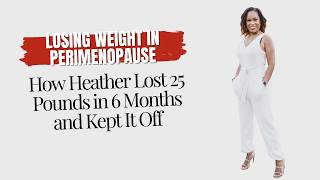
In this episode of the "Stop Dieting Forever" podcast, host Jennifer Dent‑Brown, M.S., a certified life and weight‑loss coach, interviews Heather Hansen, a client from the Learn & Lose program. Heather shares how she lost 25 pounds in six months while navigating perimenopause, a demanding job, and an office full of snacks. The conversation reveals that the breakthrough came not from willpower or a new diet, but from an identity‑based mindset shift: redefining herself from a "sugar addict" to "Heather 2.0," a healthier, confident version. Key program components discussed include the Walking Challenge, the Inflammation Interrupted Challenge, daily journaling, an identity statement, and specific goals (7‑8 hours sleep, 8‑10 k steps per day). Heather describes how she maintained her weight through the holiday season, handled a July plateau, and used quick self‑coaching techniques at work to manage stress. The interview also touches on perimenopausal hormonal concerns, the psychological impact of believing weight gain is inevitable, and how adopting a growth‑mindset helped her solve problems beyond nutrition. The episode ends with a call‑to‑action for listeners to book a free consultation with Jennifer.
Chapters
What if the real reason you can't stop eating sugar has nothing to do with willpower and everything to do with who you think you are? My guest today has lost 25 pounds in 6 months. She sailed through the holiday season without gaining an ounce, and she did it all with the same stressful job, the same crazy schedule, and an office full of snacks sitting on a table in front of her every single day. By the end of this episode, you're going to understand why your cravings, your stress, and your schedule are all connected and what it actually takes to stop fighting your own body. Stay with me. Girl, if you're tired of losing the same 20 pounds over and over and over again, listen up. For years, I thought something was wrong with me. I kept promising this time would be different, only to find myself stress eating at the kitchen counter after a long stressful day. I thought the problem was my body. I thought the problem was the diet I was on or my lack of discipline. But the truth, the real problem wasn't what I was doing. It was who I was being. When I finally stopped trying to fix my weight and started transforming my identity, everything changed. No more starting over on Monday. No more food guilt. No more feeling like I was fighting against myself. And now that's exactly what I help my clients do. Welcome to Stop Dieting Forever, the podcast that helps you break free from self-sabotage, rewire your mindset, and reinvent yourself into the healthy, confident woman that you crave to be. I'm your host, Jennifer Dent-Brown, certified life and weight loss coach, and I'm here to show you how to finally Stop dieting forever. You ready? Let's dive in. Hey, Luxe Lifers. I am excited to have another Luxe Lifer here, Heather Hansen. Heather Hansen is one of my Learn and Lose clients who came to me as a sugar addict. You remember those days, Heather?
Oh yes, I do.
She hit 45, perimenopause came up on your doorstep and started messing around with some things. And I remember that you told me that the sugar addiction was real and that you were very nervous about starting this program. And so let's, before we get into your experience, let's just talk about what everybody wants to know. Did you actually lose weight?
Yes.
We'll start at the top.
Yeah. I lost, by my last day in the program, I lost 25 pounds and my goal was like to get in that range of like 25 to 30 pounds less. Yeah, I did.
So you hit your goal within 6 months, right?
6 months. Yeah.
Yeah. That's amazing. Okay. So what feels different in your body right now? And does, and does the weight loss feel sustainable? Because it's been a couple months since you've completed the program.
Yeah, it definitely feels sustainable. And what I will say is, it's funny because I, I wouldn't say I was nervous about this, but it was just interesting that my time in the program ended, I think it was the end of October. So it was right before the holidays. And we all know that that's, you know, a difficult time to like maintain weight, lose weight, whatever. I did not gain any of the weight back through the holidays. I just maintained. Like, and that was like amazing to me because I mean, obviously there were treats around, there was lots of food, but I just, because of what I went through in the program, I was just like, you know, I just, I actually don't want it. So I just didn't, you know, I had, I had like some stuff if it was something that I wanted and, you know, like as Because, you know, we'll probably talk about this more too, but one thing that you taught me was just that like, this isn't about like dieting and like using willpower to like resist things. But what I learned in the program and the transformation I went through really got me to a place where I just like, some of those things, I just, I actually didn't want them. So I didn't even have to use the willpower, which was amazing.
Yes. And that is when you know that your identity has truly shifted.
Yeah.
When you're no longer depending on like the rule of like, okay, I'm only going to have one piece of chocolate. I'm only going to have one slice of cake. When you don't have to depend on the rule anymore and you just look at the cake and you look at the chocolate and you're like, yeah, I'm good. I don't need it. That's when you know you're— and you don't feel like you're missing out on something.
Yeah.
That's when you know your identity has shifted. So knowing that you went through the holiday season and you maintained your 25-pound weight loss. Like, how did you feel in January when you got on the scale and you were like, oh, what, I'm, I'm still the same weight?
Well, I mean, I'm still actually doing, you know, what we do in the program is, you know, I still weigh myself daily, but like, not, you know, not to be constantly monitoring it, but just, you know, what we did in the program is like, we would just keep track of like our weekly averages over time. So I was still doing that the whole time. So like, I knew the whole way through that I wasn't really like gaining weight. You know, I would still have like my natural fluctuations and everything. But when I did get to January and just kind of reflecting of like, yeah, I made it through the whole holiday season and it wasn't like a problem. And I know I didn't gain the weight and it wasn't a difficult thing to do. That was amazing.
So I love— I love— first of all, I just love hearing that from my clients who are like, I went on vacation, I didn't gain any weight. You know, I went through the holidays and I didn't gain any weight. And I'm like, mm-hmm, this is how the program works. But when you first started and you came to me and I remember we did our consultation and you were like, I'm nervous. Like, I don't know if this is going to work. I've tried to give up the sugar before. I remember we talked about you doing your experience doing like a sugar detox and you were really good for a period of time. And then, you know, you would end up eating the sugar again. How did you give yourself permission to say yes to trying something new? Again?
I think— so I remember what triggered me to join the program was it had been a period of maybe like 2 years where I was just, you know, the weight was slowly going up. And, you know, I wasn't like always actively dieting, but, you know, obviously I was trying to not gain the weight. You know, I was trying to be good and eat healthy. You know, I wasn't always, you know, sometimes I would be good at it, sometimes I wouldn't be. And of course, Yeah, I always struggled with my sugar addiction, but right when I joined the program, I— for me, there were always these like milestones in my weight. Like whenever I would go up like another 10 pounds, you know, it's like when the middle number would like go up by one, that would always be like a, oh no, like I don't want to go into that next tier kind of a thing.
It's that hell no number. That's what I call it.
Yeah. That's exactly what it feels like. And so I had already, you know, hit the 2 milestones before that, you know, cause I had gained 30 pounds. But when I hit that 3rd tier, that 3rd number, I think it was just like, I got to that point. And for me, it was just a number where I was like, no, I cannot, I cannot just keep going up to like into this next tier. I can't keep letting this happen. And I, I think at the same time, I, there was an email from you in my inbox and I just opened it at the right time. And you were opening the program at that time. And I just, something clicked where I was just like, that's it. I have to do something about this.
And you did. And I'm so proud that you did.
I am so glad I did.
So at what point in the 6 months did you feel less attached to sugar?
That's a good question. I remember, so I remember May of last year was my first month, and then I remember In June, we did the walking challenge. I want to, I almost wonder if it was, and then I remember in August we did the inflammation interrupted and that's when I really put more focus on what I was eating. And I don't remember if it was a specific moment, cause I do know that I was even in the 3 months before the inflammation challenge. I remember I was. You know, eating less sugar and I was focusing more on, on eating healthier foods, but it probably was when we did that challenge, because that's when a lot of the old habits of my eating really shifted.
The Inflammation Interrupted Challenge.
Yeah, exactly. And it was interesting because I had never— yeah, that challenge was one of my favorite parts of the program because first of all, I had never thought about inflammation or its effect on me. You know, I just thought of eating in terms of like, yeah, I should be eating more protein and fruits and vegetables and, you know, the healthy things. And so it was interesting just to approach it in that way. And yeah, when I, because I do even remember, yeah, like I said, we had, I had been in the program for 3 months already by the time we did that challenge. And I had already been seeing results, you know, I had already been losing some weight, but I do remember going into that challenge being a little nervous because I knew that the food part was going to be the hardest, or at least I thought it was going to be. So I was a little nervous going into it, but I was like, I'm just gonna dive in. And I loved that we had, you know, a daily podcast to listen to, just a little like motivation to start the day and to keep me going through the challenge. And yeah, that was, yeah, that's when everything like really shifted even more so for me.
Yeah. So I love the fact that I just remember, I love the fact that you really took to the walking challenge. I remember on the group calls, you would come to the calls and like, oh, Heather's out walking, like, yeah, how's the weather? So you did really, really great with the walking challenge in June, but that is the action, right? That is the thing that you did. And it's fun to be in a group and it's fun to like share your wins and all those things. But the big piece is that is it was your identity. So you created your identity statement. I remember you were very good with journaling and writing your identity statement and really beginning to embody this version version of Heather 2.0 that you decided you wanted to become. Can you speak a little bit about that?
Yeah, definitely. Because yeah, that is one of the biggest parts of what I consider to be what helped me be successful in this program. And actually, now that we're talking about it, I think, I think I really got even more serious about doing like my journaling and doing my self-coaching with the identity statement. I think I got even more serious about it in August, simply because I went into the challenge thinking like, oh, this is going to be really hard for me to like, you know, stick to like a diet in terms of like the food.
The inflammation interrupted.
Yeah, exactly. And when I say diet, I'm not meaning like diet diet, but just like I knew that shifting my eating habits was going to be the hardest part for me. So I also went into it thinking, okay, I really got to step up like the mindset stuff of it. You know, I had already been doing that work a little bit, but not as consistently, but when we did the Inflammation Interrupted Challenge, I was, I was much more diligent about doing it every day. And that's when I really started to see the shift in terms of how the actions became easier. Like what you were saying about, you know, the action-based type of stuff. Because I wouldn't say necessarily, I mean, I guess before I started doing that, was, there were times when I was having to, uh, you know, use willpower a little bit more because I mean, it's, it's a progression obviously, as you're going through the program, you know, it's like, absolutely.
Yeah.
Like in the beginning, you know, you're maybe using more willpower because you're still working on the identity stuff. And then, yeah, I think it was really like around August when things started to shift because I started doing the mindset coaching more consistently. And at the same time, because we were doing the Inflammation Interrupted Challenge, I think it all just sort of clicked at the same time when I realized that the mindset stuff was helping me do this in a way that like was easier, much easier than I thought it was going to be before I like going into it.
Yes. It's always, we think it's going to be so hard, so difficult because in the past it's like when you've tried to lose weight, it has been hard and it has been really difficult. And then once you start working on the identity and you focus on, I guess you put more of your focus on changing your mindset, understanding your triggers, working through through the situations that cause the cravings, then it's like, yeah, I don't really want any cake right now. Like, it's not a huge deal. So I remember coaching you specifically on, like, work stress and things that were causing the cravings and feeling like you didn't have enough time on the weekends because you have a long commute to work. And it's just like, every day is the same. And I just want some time to myself. And that was really, really hard for And I have a lot of women that struggle with that. It's like, I give, give, give all of my time to my job, to my kids, to my family, to my dog, to my parents. And at the end of the day, it's like, man, I just want to like relax, have something to eat, get a glass of wine, like, and just chill out. So, I'm assuming you still have the same job and the same schedule, and you're still walking your dog every day. What has changed for you? Like, how did you move from that hectic schedule, feeling like I just need some more me time, feeling stressed out, and that was leading you to eat, eat, to now you've lost 25 pounds, same job, same schedule. What has changed?
Yeah, that's a good question because yeah, if you really think about it, nothing about my schedule has changed. Like I still have to go to work. I still have to do all the same things, but I think it's the way that I see those things. Same, you know, and actually I'm just sort of realizing this now. I think it's actually kind of what I was saying about the Inflammation Interrupted Challenge, which, you know, I, I went into shifting, you know, my eating habits thinking, oh, this is going to be so hard. It's always like a struggle. And that's the way I was viewing my schedule before too. It's like, oh, there's just not enough time. Like I have all these things to do, but now it's just kind of my thought around it is just. Yeah, like it's not a problem, you know? Yeah, I have things to do, but I can just do them. And it's, it's actually more of the mindset that causes more of the stress around it of just thinking that it's so hard and it's so much that causes all the drama around it, you know, when there doesn't have to be the drama.
Causes all the anxiety, right? So it's the, it sounds like for what I'm hearing is you basically shifted your thoughts around your time and your schedule.
Yeah.
And you went from feeling like, I have so much to do, this will never get done, I'm always busy, I always have— I have to do this, I have to do this, I have to do this, to just like, well, this is just— this is my job. This is what I signed up for. It's going to get done. I'm good at my job. You know, it's just like you're changing your thoughts about time, which is a very difficult concept for people to understand until you actually begin to implement it. I mean, I had the same issue coming from corporate into entrepreneurship and into running my own business as an entrepreneur. I was used to working 50, 55, 60 hours a week and always feeling like, oh, I always have so much to do. There's so much to do. Always, always, always, always. I'm so busy. And that was my identity until I learned to change my relationship with time and change my relationship with my to-do list. Like, it will get done. Everything is okay. Like, we don't need to freak out because there's still 2 things left at the end of the day. It's all right.
Right.
Nobody's going to die. There's no immediate fire. There's no emergency, but that takes time. It's a skill. It's a skill you have to keep telling yourself as you're doing, working on your identity. And I remember that you had started doing some of your self-coaching at work. Do you remember that?
Yes.
Yeah. Yeah.
And I, I still will do that if I, if I ever need to. Yeah. I mean, I work in a small office, but we have, you know, like a closet. I would just like pop into the closet, you know, do my self-coaching really quick. And yeah, cause that's the thing about it. It doesn't have to take that long too. It doesn't have to, you know, my self-coaching could take like 2 minutes of, you know, yeah.
And it can change your whole entire day.
Yeah. Right.
Yeah. It's like, just take the 2 minutes. You feel the stress rising, take the 2 minutes, go into the closet. I used to go into the bathroom at work and just like calm myself down and go back out and it changes the entire trajectory of your day.
Yeah. Or even if you can't get away, just even just reminding yourself like, okay, just take a breath, you know, and just sit at your desk, take a deeper breath and realize like, Yeah, it's going to be fine.
There were, um, I think you had 3 things. So everyone has like 3 challenges they want to work on while they're in the program. Do you remember what yours were? I have them here if you don't, but do you remember?
I know sleep was one of them and yeah, the food part and the sugar. Oh my gosh. Why am I blanking on the third one? Yeah. What were they?
Um, okay. So the 3 biggest changes that you wanted to make were to lose 10 to 15 pounds, and you actually lost 25, to get 7 to 8 hours of sleep every night, and then to get 8,000 to 10,000 steps minimum every day.
Mm. Yep. Yeah.
So how you doing with those?
Great.
We knocked the first one out the park.
Well, yeah. You know, it's interesting. I didn't remember that my initial weight goal was just 10 to 15 pounds. And I think that was probably just because I never would've imagined that I could lose 30. Mm-hmm. Like, I just didn't even think that would be possible. So I'm like, let me set a realistic goal, you know? And I thought that was 10 to 15 pounds. Yeah.
And where— so when did you— do you remember when you hit your 10, your 10 pounds? At what point? What month you were in?
I don't remember for sure. You know, I don't know if I hit it in June. With the walking challenge, maybe. But I do remember what happened was I lost, uh, I think 4 or 5 pounds the first month. And then I, I lost a little bit more in June, but then I do remember in July was kind of like a plateau month for me. Like I just fluctuated, but basically maintained when I looked at my weekly averages and then lost like 6 pounds when we did the inflammation interrupted in August. So I don't know, it might've been in June or maybe August when I lost even more. I don't remember for sure though, actually.
How did you handle the plateau in July when the scale wasn't moving?
That's a very good question. You know, it wasn't, it was, I wasn't, I wasn't, you know, spinning out about it, but it was frustrating. And, but yeah, I wasn't, you know, I was just kind of, it was a, it was a busy month at work, you know, going back to the schedule part of it. So I, I did know why it was happening. I was still, you know, paying attention to my diet and the things and trying to walk more. But I do know that even though we did the walking challenge in June, I know that my daily step count went down a little bit, even though I was still trying to you know, do more walking during the day. So I knew it was a combination of, you know, I wasn't keeping up with the walking as much and I wasn't as focused on my goal throughout the week because I was busier at work. So I kind of knew what was going on, but at the same time, like I wasn't completely sure. But yeah, I think the most important part though is that I wasn't like crashing out about it. I wasn't like, oh no, like I'm not, you know, I'm not going to be able to do this or whatever, because at that point I had already, you know, like had enough coaching from you to know that this is kind of what happens. And then when those things happen, you just have to look at the information and kind of see what's going on so that you can figure out like how to push through it. And I knew that's just what I had to do.
Mm-hmm. Yeah. Yeah.
So I, so I think that's the important part is that I just wasn't like spinning out about it.
Yeah. It's like that was the entryway into the next level of your identity.
Yeah.
Where it's like, how do you— how are you going to manage a plateau? Because we all know weight loss is not linear. You're not going to lose weight every day. You're not going to lose weight every week. Like, at some point, your weight does plateau. And it's like, how do you handle yourself in those moments? Old Heather may have been like, this ain't working.
I quit.
Pass me the chocolate chips, please. Pass me the cookies. But you realize, because we have been coaching, you're like, let me look at my data. Let's figure out what's happening. Giving yourself a little bit of grace, understanding work was a little bit more You were in a stressful season. It happens. And then it's like, you just kept moving into the next month and there was another thing. I was like, oh, the nutrition thing. Yeah. So the Inflammation Interrupted challenge kind of helped you with the nutrition thing as well.
Yeah. And also the other thing I want to say about that too, is looking back on it, I think in July, the other important part of that to note is that probably the reason I maintained is I, there were probably moments through the week where You know, well, because also I told you about my office, about how they— there's always food around.
Yeah.
Everyone in the office just eats all day long. We have these tables in the middle of the room and there's always food there. So that's something I had to manage throughout the entire program. And there were, I think in July, because I was just letting myself lose my focus a little bit on my goals, I think I probably, you know, grabbed some food a little bit more often. But before Heather, the 1.0 Heather would've just thought like, okay, I already ate the cookie. I might as well just like eat all the stuff. So I think what would've happened before in that kind of situation is I actually would've gained weight because I just would've said, screw it. You know, like I, I'm just going to eat all the stuff then and try to start over next week. But when those things would happen, you know, I could say, okay, I ate one cookie, but that's fine. But I wouldn't, you know, just throw everything to the wind and like eat everything else. So I think the success there was just that I maintained my weight. Yeah.
Yeah, absolutely. Absolutely. And I mean, that was just, like I said, another level into this new identity that you were creating with Heather 2.0, because at that time you had your identity statement. You were still, you were aware of what was happening and you were in that kind of like identity conflict, uh, the shifting of like 1.0 Heather sees all the food. So you're like, I'll have a little bit, but you didn't have all of it.
Yeah.
Because you still saw the vision of Heather 2.0. I was like, Heather 2.0 doesn't eat all the food.
Yeah. Well, yeah. And when you bring up that conflict, yeah, it just reminds me of the, yeah, as, as I went through the program, there's just sort of that point where it's like the mindset and the identity is changing and you're kind of like almost already there. But then sometimes your 1.0 habits will still crop up, but then, but then your mindset, you have to remind yourself like, oh wait, no, that was Heather 1.0, but I'm Heather 2.0 now. So like, I don't do that. But there's that moment where sometimes you would still like fall into like the old habits. Yeah. So I think that's part of what was happening in, in July.
Yeah. Yeah. I love— that's the shift. That's the identity shift. Yeah, I love that. What do you— what are you most surprised about in yourself now through this whole process? When you think about Heather, when we first started and you were nervous and you— your identity was as a sugar addict and you had lost weight before and you were in perimenopause and you're also dealing with hormones, like all of those things. What have you noticed was the biggest difference between that person then and who you are now?
Good question. I think I have a better understanding of, or how do I want to say this? I think it's just the mindset of like, and I feel this more just in general in my life, not even just around, you know, food and eating habits and things like that. I'm just realizing that there's always a solution to something, you know, because when I joined the program. I just felt like I was stuck in this place of like, you know, because I had, I had heard other people say that when you hit perimenopause, you're just gonna gain weight and there's nothing you can do about it. It's the hormones that, you know, it's just, yeah. So I just had this mindset from other people that there's nothing you can do about it. And so I had kind of gotten to that place where I just thought like, oh, I hate this so much, but everyone's told me like, there's nothing you can do about it. So I'm just stuck. But having been able to work through this thing that I before thought was impossible. Just makes me realize, and that kind of mindset you can take to every area of your life. Right. You know, so I just have this overall mindset of like, if there's a problem, I just need to figure out the solution to it, you know, or find the person who can help me with the solution to it. So yeah, definitely.
That's definitely the growth mindset. What I, what I hear you saying is like, oh, I finally solved this weight problem. Like, I feel like you can do anything now. You feel like any problem is not a problem. It's just like, oh, we just haven't found the solution yet.
Yeah.
And having that as part of your identity releases so much anxiety, so much stress. It saves you so much time and energy because you're not like spinning like, oh my God, what is going to happen? I don't know what to do. And you're like complaining to 5 people and like having that mindset right there changes Everything. Everything. And what you have explained in your experience is so beautifully shows how focusing on your weight can literally change your life.
Yeah. Yeah.
Change your life.
Yeah. Because it's the, it's the same mindset of, of why my schedule doesn't bother me as much, you know, because if there's problems or things come up or if there, if there's difficulties there, I know I just need to figure out the solution to it. It's fine.
And when you feel that empowered, then you don't need food to comfort you. You don't need the extra chips. You don't need the extra cookies to relieve the stress. You're just like, "No, I'mma just figure out this issue and like call it a day." Or if you have those moments where you do have the cookies or you do eat the chips, it's like, "Okay, I have one cookie, not the whole sleeve." Right. Or like, "Oh, I had some chips," but it's not like two bags of chips later. It's a difference. Yeah. So what do you think would have happened? Where do you think you would be now if you hadn't said yes to joining learn and lose?
Ugh. I mean, I wanna hope that I wouldn't be like even 20 pounds heavier, but I think that it would've been a possibility because like I said, there, it had been a period of 2 years of just slowly watching the scale inch up and then every once in a while seeing it go into that next tier. And yeah, I honestly just think it would've, I mean, maybe at some point I would've plateaued, but who knows? But I mean, that was the track I was on.
Yeah. It's like, we don't want to think about that.
Yeah.
We don't want to go there. Yeah. But it is crazy. Like, I experienced that weight creep too with perimenopause and you're just like, what the heck? Like, what is happening right now? You know, it's just, it's, yeah. It's the weirdest thing. It's just like, I always say it's like an alien took over my body. Cause yeah, for me, like nothing changed. I was still eating the same and doing the same workouts and like, Yeah. But the weight just kept going up, up, up. And it was just like a— it, it, it collected on my body in weird places. It was just a very interesting phenomenon. But like you, I also heard like, ooh, menopause, perimenopause, like that's just part of getting older. And you know that. And I also subconsciously, I think, adopted that identity, but then I was kind of like, well, that's not gonna happen to me. Kind of like put my head in the sand. I'm like, right. That's not gonna happen. I'm a health coach. That's not gonna happen to me. And it's like, hit me terribly. And like I said, it kicked my ass. Literally. Yeah.
Well, yeah, I went through the same thing because before I went into perimenopause, I, uh, a, a former neighbor of mine who had already gone through perimenopause or gone through menopause, she was the one that told me, she's like, you'll, you'll hit an age and you'll just start gaining weight. And no matter what you do, you won't be able to lose it. And at the time I, I had the same thought. I was like, oh, that won't happen to me. You know, I've never had an issue with weight gain or whatever, you know, like I'll be fine. And then it started happening and that's when I remembered what she said. And that's what kind of shifted me into that mindset of like, she was right. Maybe there's nothing I can do.
And that's scary. And I don't ever want to be in a position where I feel like I can't do something, right. I can't do something about a problem. And then that's that growth mindset of like, oh no, like this is, mm-mm, we're going to solve this problem. Yeah. For me, it's just like when I was struggling with my weight, gosh, almost two decades ago or three decades ago when I was struggling to get off of the weight loss struggle bus and, you know, doing all the diets, I figured that out finally. And that's where Stop Dieting Forever came from, right? From my experience. And I was like, okay, well, this is just like Stop Dieting Forever 2.0, perimenopause version of it. I'm going to figure this out and I'm going to teach other women how to do the same. So I'm so glad that you were a part of the program and you said yes to yourself and you learned the Stop Dieting Forever methodology. And we literally— you've created Heather 2.0. You've completely shifted your identity from who you were when you came in, and then you have a beautiful 30-pound weight loss to show for that identity shift. Yeah, that is amazing.
Yeah, I am so grateful that you created this program and that I found it at the exact time that I needed it. So yeah, so thank you for that.
Yeah. So why don't you tell everyone what you do, where they can find you and follow along on your journey so they can like look back and see Heather's still skinny, right? When they hear this episode, like a year later from now, they're going to go find you and say, did she still keep the weight off?
Yep. Yep. Yeah. So yeah, the interesting part is, yeah, I'm a coach too. I do mindset coaching. And that was, I'll just say this. It's interesting too, because for me, another part of it too was thinking there was just that thought I had of like, I should be able to figure this out. You know, like I'm a coach, like I know how to coach my mindset. But like I said before, you know, I, I just thought, oh, it's the hormones or something, you know? But the other part of it too is like, even if you're a coach, sometimes, like, it's hard to help yourself sometimes. Sometimes you need that outside perspective. Absolutely. So that was like a, a really great experience for me just releasing that shame of thinking that like, I should be able to just do this on my own. But yeah, so I, yeah, I'm not a health coach, but I do mindset coaching for other people. You can come stalk me at Heather, @HeatherGraceHansen on Instagram. Check out how I look, how I'm doing.
Yeah.
And join Jennifer's program if you need her help, because it's amazing and you will succeed as long— I remember the first, one of the first things you told us when I joined the program too was You will get to your goal weight as long as you don't give up. Mm-hmm. And that's, I always remembered that throughout the program. Like even, um, like in July when I had my plateau or, or whatever, as long as I don't give up, I will get there. And even though there were some moments, you know, where I had doubts or I was like wishing it would go faster, uh, I just, I kept, I didn't give up and it happened. So yeah.
And here you are now.
I'm so glad.
Yeah. Here you are now sharing your story. So thank you so much for sharing your experience. Helping so many women out there who are like, please help me. I am so frustrated. Stop dieting forever. What is this? How does this work? How do I lose this weight and stop regaining the weight that I lose? How do I finally stop dieting forever? So thank you for being an inspiration. Thank you for sharing your light here on the podcast early on a Saturday morning, taking away from your, you know, your weekend time. So I really do appreciate that.
Yeah. I mean, thank you for having me. Yeah, I'm so grateful. Yeah. And it was just great talking to you. So yeah, thank you so much.
Heather, thank you so much for being here and sharing your story so openly on the podcast. You are proof that this works. And I hope every woman listening heard herself somewhere in this conversation today, because here's the thing, my friend, Heather did not find a new diet. She found a new identity. And that is exactly the work we do inside of my programs. And if you're sitting there thinking, Okay, I see myself in Heather's story. I get it. The sugar, the stress, the perimenopause, the scale slowly creeping up year after year, the food always being around at, at work, and you are actually ready to do something about it. I wanna talk to you. You can book a free weight loss consultation with me at the link in the show notes. We'll talk about what's actually going on with your body, your habits, and your history. And I'll tell you honestly whether I think I can help you. No pressure, no pitch fest, just a real conversation because you deserve to be the next Heather. And the only question is, are you ready to say yes to yourself? The link is in the show notes. Live luxe, and I'll see you in the next episode.
More from Jennifer

Overcoming the Weight Loss Struggle #perimenopauseweightloss #womensweightloss



Overcoming weight loss frustration #womenover40 #perimenopauseweightloss #weightlossover40

How to Stop Food Noise in Perimenopause #perimenopauseweightloss #weightlossover40


Closing the Friendship Gap for Weight Loss #podcast #womenover40 #weightlossover40




The Real Reason Smart Women Stress Snack (It Has Nothing to Do With Food) #weightlossover40 #podcast