She Made Two Changes to Lose 13 Pounds in 90 Days - an Interview with Gina Knox
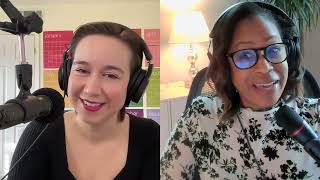
Gina Knox lost 13 pounds in three months using two tools: the energy-eating framework, which means choosing foods based on how you want to feel later, and the satisfaction scale, which means eating until satisfied rather than full. She also cut back on frequent boba-tea drinks.
Chapters
Okay.
Okay. All right. Hello. Hello, Lux Lifers. I have one of my amazing clients here, Gina Knox, to talk about her success as a private client following the Stop Dieting Forever process. I have to say, before Gina introduces herself, who she is and what she does, Gina is a rebel. She's got that rebel personality, and she was like, I don't do diets. So it's going to be really interesting for her to share her story of where she was before and how she came here. So Gina, I'll let you introduce yourself. Tell everyone who you are.
Hi everybody, my name is Gina Knox. I am a financial coach. I'm a mom of a toddler, which is very relevant for weight gain, um, and a wife and a daughter and all of those beautiful things. And I live in San Antonio, Texas. And I'm an entrepreneur. I'm a financial coach for entrepreneurs with variable income.
I love it. So Gina and I met through— I think I found you because you were on our— we had the same business coach. We were— you were on our business coach's podcast. That's how I first learned about you. And I learned about Six Figure Saver, and I was like, what is this that she's talking about, that you can save six figures as an entrepreneur? I was like, I need to know more. So I became your client. I joined Six Figure Saver. And then somewhere along the line you reached out to me and you were like, um, can we talk about weight loss? Can we talk about eating for weight loss?
Can we talk? Hi, can we chat? I think I commandeered a call or something that we were talking about something else. And I was like, before you go, can we have a little chit chat?
I was like, yeah. I was like, let's do it. I was like, oh, you want to talk about weight? Okay. So tell us. What you— like, what brought you to decide, like, okay, right now, now is the time for me to lose weight? Because you're very body confident, you're very, like, unbothered.
Yeah.
And you don't subscribe to, you know, the norms of society, norms. So tell us what happened.
Okay, well, I can pretty much pinpoint the moment. So I, um, my body is very steady, very steady, like Maybe I'll go up and down 5 pounds within like 2 years, right? Like, I don't fluctuate. My weight doesn't fluctuate. And I had a baby in the pandemic. I lost all the baby weight after— hmm, I think my daughter must have been like 6 months old. And I got on the scale and I was like, oh my gosh, I'm like lower than my pre-baby weight. Now, granted, my pre-baby weight also included some COVID pounds. So I was like, okay, I'm, I'm, I'm like back to my normal and I felt great.
What did you do to lose that weight? Do you remember?
Um, breastfeed. Like honestly, breast— so breastfeeding burns 500 extra calories a day, um, just because your body's producing so much milk. And I breastfed exclusively, so I was really nursing a lot and I nursed my daughter for 2 and a half years, so I was nursing a lot. Um, but then also we moved— actually, not even before we moved, I was just walking constantly with her. When she was an infant, I would take her on walks up and down the street because it was kind of like the only way she would fall asleep during the day. When we moved to Texas, we lived right next to the Riverwalk in San Antonio, so I would walk her up and down, and I was walking a lot. And I think that was kind of just basically it, just like nursing and walking.
Mm-hmm.
And then I weaned her off and I think I had started noticing weight gain before then, honestly. But I'm not like a, I'm not that type of person to weigh myself all the time. So I didn't really notice until it, I was like, oh, these kind of pants feel, you know, a little bit tighter than they used to, or that thing doesn't fit so much like it used to. Um, and then I went on a girls trip with a friend, and we went to Martha's Vineyard, which was so fun. And it was June, so it was kind of the beginning of the summer season. It wasn't super hot yet, but I am the one who always wants to jump in the ocean when I see it. I'm like, I don't really care how cold it is.
You're landlocked in Texas.
Especially being landlocked. And I'm from California, I'm from the Bay. I like very much am a water baby. And so I was like, hey, take a video of me, I'm just gonna run in. And it wasn't like even that hot, no one was in the water. But I was like, I'm gonna run in, I'm gonna run out. It was freezing, by the way. It was very cold.
I got out.
Yeah, I got out very quickly. The Atlantic is not playing. And, um, I watched the video and I was like Uh, like, that's what I look like.
You had that moment.
Oh, my heart just sank. I was like, that is not what my, my self-concept is. Like, that doesn't match what I think I look like. Um, and especially like running, all the jiggles, right? All the little jiggles. The angle is not what I'm used to seeing in the mirror. You're just used to seeing one specific angle of yourself. So then I went home. No, then I kind of ignored it. I think I just let myself feel bad for a little while, and it all came to a head that September or August when I weighed in at my heaviest weight I've ever seen myself. Do we talk specifics on this podcast? Okay, so my, my highest weight while pregnant was 166, I think, something around there, high, mid to high 60s. And my pre-baby weight was 144. My kind of homeostasis weight is around like 135 to 138-ish. And in September, I weighed in at 151, and I was like, uh-oh.
Had you, had you been weighing yourself No, you just happened to get on the scale and you—
I think I just happened to get on the scale. Yeah, I just happened to get on a scale. We have a scale at home, um, and I would sporadically weigh in, but I think I had been kind of avoiding it if I think back. Um, and, and then I decided to weigh in in September. So again, this, this event, this like, oh my God moment happened in June. I didn't weigh in until September. And I was like, you know, I, like, I, I love myself. I, I will put away the pants that don't fit. I'll buy new pants, right? Like, I don't have to change because of a number. And I feel in my body that I don't feel at home like I used to, and I'm not at what is normal for me. I'm not at like my comfort zone. And so I decided to start thinking about doing something about it. Like, I, I've never tried to lose weight in my life. I think that that's the whole thing. It's like, I have never tried to lose weight.
I remember you, that was like one of the first things you said to me. You were like, look, I don't diet. I've never tried to lose weight before. I was like, okay.
I've literally never tried. And I'm like, I don't even know what trying to lose weight means. So I had a planner that I had from something else, a little paper planner that I loved. And I just started writing down everything I ate every day. And I just started weighing in every day. And for me, that was easy because scales don't trigger me. I think because I can easily look at a number as neutral for myself. So I just started weighing in every day. And, um, writing down what I ate. But I did know, I'm like, I think I want a little bit of help because I've never tried to do this, because I've never— like, yeah, I've really never tried. I've never had a consistent experience with the gym. And I knew, I'm like, I don't think this is a gym issue because I was my lowest weight without the gym. So this isn't a gym issue. I don't love the gym anyways. I'd rather just go on walks in my neighborhood, and that's what I continue to do. So that's when I was like, Jennifer, can we talk? Because I don't know what I'm doing. I don't know what I'm doing. And I know what I don't want. I don't want to do a crash diet. I don't want to do a cleanse. I don't want to go to the gym. And I knew that that was right up your alley, having just known you. So I was like, Jennifer, can we talk?
Can we talk? I teach people how to stop dieting forever. And you're like, I've never done a diet. I don't want to do one now.
I'm like, I'm not ready to start now. Right.
So I noticed when you said like you just didn't feel home in your body, even though you felt like you look at yourself and you felt like there's no— there was no negative thoughts about your body, but you just didn't feel good.
Yeah.
And I think a lot of people struggle with this whole like body positivity. Like, I want to— like, I want to feel good no matter what size I am, but they still want to lose weight. And I think that's the key right there. It's like You can love and accept your body and all the rolls and the jelly and all the things exactly the way you are. And you can still want to lose weight. I think the difference is for you, Jeanine, is why you did so well with the process. It's because you're not bothered by a number. Dieters usually are trying to chase a number. It's like that vanity number. Like, I have to. Weigh this number and then I can feel great.
Yeah.
And you as a money coach, it's like, I have to see this amount of money in my bank account and then I can feel worthy of it. Like, then I can feel like I deserve it. And really, we've got to do the opposite, right? We've got to understand and like feel worthy of losing weight. We've got to feel worthy of having the money now, and then the weight will come off and then the money will come. So I think, um, you know, as I coached you, I was like, oh, Gina gets this like really quickly.
And weight, to your point, it's very similar. It's very similar. And we both coach on this all day long.
We do.
Yeah. That doesn't mean I didn't struggle with certain things, but I did. Yeah, that like neutrality around the number comes very— and that's always kind of been my MO, even in high school, college, I never really meant the scale mean anything about me. But to your point, like, we can still love ourselves and want to lose weight.
So people will say, well, Jennifer, why do you have people weigh in every day? Why do you have them like track your— track their weight? Because I really want people not to be afraid of the scale and not to be afraid of the number. Yet you can put blinders on and avoid it and just like, oh, I want to go by how my clothes fit. But really, you could gain 7, 8, 9, 10 pounds real quick before you Notice that, oh, I think I need to go up a size. I think I need to like, you know, buy some bigger clothes. Um, so I just really love just that whole feeling of just not being scared of the scale. Right. Just not being scared of it. Okay. So you said you struggled with some things. Would you like to tell us what you struggled with while we were working together?
Let's talk about this. Cause I don't even know if it was a struggle. As much as a rebellion, to your point at the beginning, me being a rebel, and I'm still a rebel, and I'm still— I'm not apologizing. I want to make it publicly clear, I am not apologizing. But I really refused to meal plan, which is part of your process, um, and like decide what I was gonna eat. And we would do it together, and I would do it when we would sit down together, but I really rebelled against the idea of meal planning, and specifically with the idea of like, okay, it's, it's Tuesday morning today, what am I going to eat on Saturday night? I'm still not doing it, Jennifer, and I've maintained my weight and I'm still not doing it. No, but, um, but what I did really, really latch on to instead of the meal planning, because I feel like I rebelled against that and I instead of doing the meal planning, I kind of replaced it with other tools that you taught. And two really come to mind. The first one, you would always ask me this on a coaching call, and I still love it to this day. Whenever I was stuck with like, what am I going to eat? Because sometimes it's like, until I'm there at lunch, I don't know what I'm craving. I don't know what I'm going to want to eat. You would ask, okay, well, how do you want to feel afterwards? Mhm. That question was so powerful because now I can think about, okay, well, I, I always looked at my calendar whenever we were meal planning because I'm like, what, what meetings do I have? Where am I supposed to be? What am I doing? So I can look at my calendar and I can be like, okay, today is a super heavy meeting day. How do I want to feel? I want to feel really alert. I don't want to feel groggy. I want to feel energized. I'm going to eat certain foods to help achieve that goal. But, you know, Sunday morning, I— maybe I just want to relax. Maybe I want to feel comfortable. Maybe I want to, um, feel chill. So I'm going to eat a different set of foods. Or date night, I want to feel a little buzzed and I want to feel a little flirty. I'm going to eat a different set of food, right? Give me a cocktail. So I loved that question of, well, okay, how do you just want to feel afterwards? And then it becomes this thing where it's not good food, bad food, okay food, not okay food. It's just food can help you feel a certain way. How do you want to feel in that moment? So that was super helpful. And then the other thing that I really leaned—
okay, can you pause it right there before you go into the second thing? I just want to say that you were the inspiration behind clarifying the energy eating plan, right? So I think for a lot of my— and you're— this is not you, but a lot of my dieters who come with a dieter's mentality, they already have in mind of like, oh, This is a good food. I'm going to put this in my energy food list. And really what I want them to think about is exactly what you latched onto is like, well, how do you want to operate later on in the day after you eat? Are you going to wake up on Monday morning and have mimosas and pancakes knowing that you have to work the entire day? Probably not. Right. So you want to create and eat foods off of your energy foods eating list that give you the energy that you need for whatever's happening later on in the day.
It's so helpful and it's so simple too.
Yeah, it's such an easy question.
It's such an easy question. I still go back to that question like, okay, I have, uh, 30 minutes after this call before a whole day of meetings. And I'm like, what do I need to feel today? What am I gonna eat?
And you were the one client— remember when you tested, um, pasta carbonara? Yeah, during the middle of the day on a work day. And you're like, I think pasta carbonara is on my energy eating foods list.
Yeah, I love pasta. I lived in Italy for 2 years, and in Italy they eat pasta every day. Like, that's just normal. It's kind of like in Mexico you eat tortillas every day. In Italy, you literally eat pasta every day, and, um, you eat pasta almost at every meal, but it's a— um, they have their menus split up into primo and secondo, which is first and second. So they do courses, and the pasta course is always small, and then you have a meat and some vegetables and something else later. So I, I love cooking pasta. I made a pasta carbonara, which is a heavy pasta. It's a ton of cheese, it's an egg, it's pancetta, which is like bacon fried up. All mixed together with pasta water to create this creamy, yummy sauce. But I ate it in the middle of the day and I ate a normal Gina-sized, like Italian-sized portion. And afterwards I felt super alert and super focused and like, oh, that really gave me, probably with the carbohydrates, the energy I needed for the rest of the day. Mm-hmm. But I didn't experience the, oh, I ate too much and oh, I'm, I could use a nap. You know, that kind of—
because you didn't have like the Olive Garden size, right?
I didn't have the big old plate and I had like a, a serving exercise that, that fit me for that moment. Um, and so I was like, Jennifer, I think carbonara is going on my energy foods list because it makes me feel energized.
I use that example all the time. I'm like, listen, y'all, you need to like remove this whole good food, bad food because different cultures eat certain foods. I had another client who wanted to eat rice with all her meals because culturally that was what they like. Yes, just because somebody told you that, oh my God, there's so many carbs in rice, doesn't mean that that's going to affect your body in the same way, right?
Also, like, carbs literally give you energy.
Carbs give you energy.
But right, like, if you overdo it, just with anything— and to your point, that is going to be dependent on everybody's own body— it can probably make you feel like you're gonna crash afterwards.
Or if you told yourself that, oh, this is bad, I can't eat this, and so as soon as you have an opportunity to eat it, then you just like overeat, you overconsume.
Yeah. I think this whole idea of like, and it's hard, it takes a ton of reprogramming, especially in the society we live in today. This whole idea that there are good foods and bad foods. When you remove that and you just tune into how does my body feel after I eat this, this food and really like try and block out the noise of how you've been told you should feel after you eat certain foods and you really just tune in. You can find the wisdom in your body because also everybody's bodies reacts to different dishes differently. And it does take an amount, an amount of concentration and like you have to actively think about it. But it's so important because otherwise we're going to just continue eating in a way that we think we should based on some arbitrary wisdom or some arbitrary study from 30 years ago that may not even have been—
that was done on a white male, right?
That may not have even been relevant to you. Or like, there's— there was this really funny, uh, not to go on a tangent, but there was this really funny NPR segment once where NPR was like, we're really curious about all of these like diet headlines in the news, like, oh, glass of good wine is good for your heart, like all of that stuff. So they're like, so we did a research study and then we paid to peer review it and then we published it and they were like doing this exposé and they were like, if you eat chocolate, you are more likely to lose 5 pounds or something. And Good Morning America picked it up, NBC News picked it up, all of these news channels picked it up. And then they went on NPR and said, that was fake. We paid to do that. And so all of y'all who are following all these headlines, you don't actually know where that information is coming from. And so to the point of like, Good food, bad food. Like, well, how does it feel to you?
Right. It's so funny. I have to look up that episode.
It's good.
It's very true. We've never questioned why we eat certain things, why we don't eat certain things. We just follow the latest headline. And this is what the diet industry wants you to do because they're always going to keep giving you another diet because they know if you try this thing, it's not going to work long-term. You're always going to be looking for another diet.
And not to be like a little conspiracy theorist, but who's paying for these studies?
Oh, the food companies, pharmaceutical companies. I actually, I just posted that on my Facebook, Dr. Mindy Peltz. Um, I'm going to pull it up cause I'm going to say it correctly, but essentially it was saying, she was saying that the healthcare industry doesn't support health. And pharmaceutical companies don't support health. And then the food industry doesn't look at food as medicine because they give you— so we're just like, we're stuck in this crazy cycle, right? We're eating this crappy food that gives us these chronic issues. And so we've got to get on these drugs. And all of this could be circumvented if we just cleaned up our nutrition and ate more whole, unprocessed, cleaner food. It's—
yeah. And if you just tap into— to the point again, how do I feel after I eat this? That's— guess what? That's free. Doing that is free.
Yeah. And for someone who's been on a diet for, like, my, my experience was a decade, it takes courage too. It takes courage to be like, oh my God, am I about to eat some pasta? Like, white pasta in the middle of the day?
Whoa.
But there is freedom on the other side of courage.
Ooh, that's good.
Yeah. That's a tweetable.
That is tweetable.
All right. What was your second thing? Oh, right. Cause it's not even Twitter anymore.
It's not Twitter anymore. Whatever. The second thing that I really leaned into instead of, um, in rebellion of meal planning is, um, the satisfaction scale. Which is a tool that you teach, um, around really tuning into your body and understanding the feeling of hunger and not waiting until you're starving to eat, right? Not waiting too long and also not eating until you're overly full. You stop eating when you're satisfied. Which is, it's a very like, understanding this balance takes a little bit of time to like feel your way into it. Also because I think that there is a delayed response, at least in my body, where I can feel satisfied and keep eating before I feel full, full, full, like, oh, I overate. So you really have to like tune into stopping when you're satisfied. And even if taking 3, 4, or 5 more bites wouldn't make you feel worse immediately, you had to stop then. And so I really tuned into that, into, you know what, I, I ate a late lunch and my whole family's eating dinner, but I'm not hungry, so I'm just gonna sit with them at the table.
So you were— you did that pretty well. What was your thought? Because I have other clients who struggle with like, but everyone else is eating, like, I need to be eating too, and it will be weird just to sit there and not eat. So how did you deal with that?
The only one thinking it's weird is you. No one's paying attention to you that much. I went, um, I went on a lunch date with some friends, and one of the friends is doing a juice cleanse, so she didn't order anything. She just ordered a drink, like a water with some stuff. Nobody cared. No one's like, why isn't she eating anything? Oh my God, nobody cared. We just cared that we had her company.
Right, right, right. So when you're worried about OPT, other people's thoughts, you end up eating things that are not aligned with your goal.
And it's not even aligned with your goal. And it's like, as much it is at the end of the day, but it's also like, it's not going to make you feel good right then. It's going to make you feel stuffed because you're not actually hungry and you're eating. Oh, I get to this point now where if I eat when I'm not actually hungry, I almost feel a little bit disgusted in the, like, I'm like, oh, I know I'm not hungry and I'm eating, and it doesn't, it doesn't even taste good anymore. Like, because I, I'm so conscious of, like, I'm eating even though I'm not hungry because of some other external factor. And we, we still all do it, right? Like, we still all do these little things every once in a while, but I'm really, really aware of it because of the satisfaction scale and having really leaned into that tool.
Once I feel like the moment, like once you eat to satisfied and you like enjoyed your food, you enjoyed your meal and you still feel good in your body, it's like this light bulb moment comes off, like goes off in your head. The angels sing and you're like, oh, like, no, it's like a win-win.
Like, yeah, you're like, wow, I really enjoyed my meal and I I don't have this compulsion to finish my plate, or sometimes I finish my whole plate because I was satisfied at the end, right? Sometimes they match up, and I don't need to order anything else. If I'm at a restaurant, I don't need to get dessert. I don't need to, like, be— not— what's the word? Compelled. That's what it is. I don't need to be compelled to continue eating. I ate this amazing plate, and now I feel amazing, and that's great. That, that feel like it's the best. Why isn't that the goal? It really is the best. I think about, um, we should talk about this, about Thanksgiving, because I started working with you right before the holiday season.
I remember.
And, um, Thanksgiving is one of my favorite holidays. My mom's a chef. We go all out with all of the food. And in previous years, I would remember like this idea that Thanksgiving, you should pile your plate and you should get seconds. Like this, this— and no one ever said that outright, but that was just kind of like what people did because it's this big feast, right? Um, and I remember going for Thanksgiving and I, I had a whole plate. I didn't exclude any of the foods, but I didn't like pile it into this mountain. And I don't even think I finished my whole plate. I just think I like enjoyed everything. And I put— because you made me do a meal plan and we did it together— I put on my meal plan the Friday after Thanksgiving, for breakfast I'm gonna have pie. Because I love pie and coffee. Oh, it's so good. It's so good. And I remember waking up on Friday and being like, okay, the pie's there. And I was like, you know what, I think I'm still full from yesterday. I think I'm not gonna have the pie. And then I think I had it for like lunch or a snack in the afternoon. I still had the pie, but because I was so in tune with my satisfaction scale, it wasn't like, oh, I'm missing out if I don't have the pie and coffee. And I had it later And I didn't overeat because that would have made me feel bad that morning.
Um, you probably enjoyed it more when you had it later versus you had it when you didn't totally enjoy it.
I totally enjoyed it. And I think I had pie the night before with, with dessert. I probably went a little past my satisfaction to have some pie, but to that point, like the next morning I was like, no, I think I'm good. Um, and I can't remember the exact— I'm sure you could pull up the numbers because you track all of your clients' data, but, um, I, I think I lost weight over Thanksgiving.
I think you did.
Not a monumentous amount, but—
and you were traveling, so that's right. Even with, with air travel, you know, your body retains water, so, you know, a little bit of weight gain is normal. But yeah, not for Gina.
Listen, you just eat till you're satisfied. It's that simple.
It's that simple. And just knowing all of the programming we have, understanding what people think about Thanksgiving, right? You're supposed to pile your plate high and you're supposed to eat these foods because you only get them one time a year. Knowing that all of those thoughts drive you to overeat, when you're aware of them, you just have to question them. Like, do I have to pile my plate for Thanksgiving dinner?
Who said that? Why? Yeah.
Who told me that I had to do that?
And believe me, like, my favorite part of Thanksgiving is gravy. I made the best gravy this year. The best. Oh my, I've never made a better gravy. And I put gravy all over the entire plate. That's my MO. I don't like just gravy on the mashed potatoes. I want gravy over everything. And so like, don't, don't get it twisted that I was like skimping. I wasn't skimping at all. Oh, I slathered everything in gravy, but I was following the satisfaction scale. That was it. That was it.
And it's so simple, y'all. That's how you can go into a restaurant and order whatever you want and not feel compelled to eat the whole— all of it, because you're like, I'm done. You've given yourself permission to eat and enjoy what you want. And I always say, if you're going out to eat with someone like your friend, Enjoy the person that you're there with. Like, focus on your friends, focus on your family. The food actually becomes secondary.
Yeah, totally, totally.
All right, so tell us, Gina, how much did you lose? What, what are your results from working?
So, and following the process, I, um, so from that high of 150, I am down to 137, 138, which is what I said was my homeostasis, right? And it's funny because like I hit 138, 137, 138, 137, just right about there. I hit that, um, when did I hit that? Back in January of this year? February? I can't remember. Anyways, I hit it a while ago and I've really just stayed. I just weighed in this morning, 138.1. I'm like, I am chilling there. And I think it's because my body's like, oh, you're back. Your home. This is where we're comfortable. Um, so that's— yeah, what is that? That's 12 pounds from 1— 155— no, wait, 151.
I am with math.
137.5, let's say, uh, 13.5 pounds.
It's excellent.
And I'd never— I'm like, I'm over here shocked because I've never— you have to understand, I've never tried to lose weight in my whole life. I've never been like, this is going to be something I do. I always thought, oh, I've always tried to have a consistent gym workout routine and that never worked. So the fact that this worked, and of course it did because I— you're an expert at this. And so like I had all the support that I needed, but in my mind I'm like, wow, it actually worked. And we've We've been done with coaching for a month, like over a month now.
Yeah.
And it stayed off and it stayed there. And I still have some chocolates every once in a while and I still eat what I want to eat. We had pizza for dinner last night because we were really tired and we just needed to order something. And it's like not showing up on the scale because I'm still following the satisfaction scale and I'm still asking myself, how do I want to feel after I eat this meal?
Yep.
Those two things, that's life-changing. That's it. Yeah.
Honoring your body and just questioning and being aware of all the emotional noise and static that we get when it comes to food, all of those messages.
Well, to that point, right, it's like, it's easy for me to say, it's so easy to stop eating when you're full. It's so easy to ask yourself, how do you want to feel after this meal? There's— it is easy, but there's all the stuff that comes in that complicates meets that. And that's where working with a coach like you is so helpful, because we worked through a lot of the things that we talked about today. We worked through the sitting at the table and not eating while other people are eating. We worked through our Thanksgiving plan and our Christmas plan and our New Year's plan and all of that. We worked through— like, actually, over Christmas I ended up gaining some weight, and we worked through that. Like, there's— it's simple on paper, and then our brains make it real complicated with all of the circumstances of our lives. So, um, yeah, having someone like you to work with makes that process so much easier because you have an unbiased third-party support to walk you through what is going on and, and to see what's happening.
Because I remember specifically your 4 PM juice, drink, shake, milkshake habit, which was only the transition between your workday and going to pick up your daughter.
It was boba, boba tea.
Oh, boba tea, that's what it was, right? So I remember that was a thing. I don't even know if you recognize that that was a potential issue, but you were like, at that point for you was just a habit.
Yeah, I'm, I'm ending my day, let me go pick up a tea, then let me go pick up my daughter. And those boba teas are highly calorically dense.
Tell people what a boba tea is because I didn't know either.
Oh, it's, um, it's like a, a milk tea, so they're iced. It's, uh, like a black tea with milk, and then boba are these tapioca balls that are boiled, so they're chewy and soft, and they are usually mixed with brown sugar, like They're like— they look dark, dark brown, and they're caramelly.
It's like candy. There is a candy that's made like that. I'm trying to think which one it is.
It's very like, um, gelatinous, because when you— when you boil tapioca balls, they become like kind of like chia seeds, like gelatinous. And then mixed with the brown sugar, it's super caramelly. So that sits at the bottom of your drink. Then you have the black tea with the milk and a big straw that's like wide to get the boba tea to your mouth, and it's delicious. Delicious.
There's a boba tea shop.
Oh my God, no sugary treats. It's so good. But then here's the problem with it is I would get them at like 4 PM, and then I wouldn't be hungry for dinner because the boba like sticks to your stomach because it's so starchy, and it just fills you up, right? And then I would eat dinner still because before working with you, I would kind of just go along with it. And to boot, black tea is incredibly caffeinated, so then I wouldn't sleep well because I was having a ton— a huge, huge cup of caffeine at 4 PM.
4 o'clock.
Yeah, yeah. But I just really love boba tea.
And you can still have your boba tea, but it's like, sometimes how do I want to feel later?
Well, and that's the actually The caffeine more than anything has been the kicker for me because I'm like, how do I want to feel later? I want to sleep. So I don't— my body, I don't like to have caffeine after even 11 AM. I maybe like a little Coke or something with lunch sometimes, but even then I notice the difference in my sleep. And so I haven't had boba because the caffeine, because I don't want to be awake all night. And I also don't want boba before 11 AM. Like, it— so the desire doesn't match anymore. I have two competing desires. I want to sleep well, and I want boba at 3 PM, but I'd rather sleep well. And sometimes the boba wins, and I still have gotten them every once in a while. But I went from going maybe 3 times a week to maybe going once a month. I don't feel— yeah, I think the bigger thing is I don't feel, um, deprived. I don't feel like I restricted myself. I don't feel like I can't have the boba tea. It's more if I want to sleep well, I probably shouldn't have the boba tea after 11 AM. Yeah, that's it.
Yeah, because I don't— I don't think I've ever told you like, no, you can't have that, Gina. You can't eat this, Gina. Don't eat that, Gina. Don't eat this. Because that's just not how I roll. That's how— right? That's just putting restriction and enforcing those diet rules. And so when you give yourself permission to eat what you want, somehow the desire for things kind of lessen.
Do you remember those Costco s'mores clusters that I loved?
Yes, that your husband bought.
Uh, okay, this is my thing. I kept blaming my husband for everything because he does most of the shopping in our family and most of the cooking. So I'd be like, I can't meal plan and I can't be in control of what I eat because my husband buys everything. So he bought these chocolate, like, s'mores clusters. They're from Costco. If you like chocolate, go get them. They're delicious. Um, but I was like, Jennifer, I, every night after I put my daughter to bed, I crave it so much. And so I would get a little bowl and I would get actually like one of them because two of them, they're very sugary. And after about 1.5, I would feel like, oh, it's too much sugar. So I would get 1 and I would read my book after putting my daughter to bed. And it just became this habit. And we worked through it. And you were like, Gina, just put it in your meal plan. And I did it. I put it in my meal plan that I was going to have this every night after putting her to bed. And I think I had 1 or 2 more. And then I was like, Jennifer, I don't really want them anymore. You took away the fun. It was, it was probably more fun to be sneaking behind your back, to be rebellious, right? To be rebel. And so then once it was in my meal plan, I was like, I don't, I don't know, they lost their luster. Now there's a bag of them sitting on top of my fridge and they've been sitting there for months and I haven't eaten any.
Oh really?
Yes. So I'm like, you took away the fun.
Uh, that's, that's what happens.
That's what happened. That's what happens. And I, it's not even, again, it's like, I don't even really crave them anymore. Like, it's not, cuz if I crave, if I crave something, I'mma have it. My cravings are strong and my willpower is weak, but it's the fact that the craving went away. That's what really happened. Yeah. And I think it's because I just allowed myself to have it.
And it seems weird at first too, right? Cuz you look at the thing like visually, you're like, oh, that's the thing that I really loved and, but you're like, but I don't really want it anymore. And so you're like in this disconnect for a moment.
Yeah, totally. It's, it's a trippy experience.
It is. But on the other side of it, I remember going through that with, um, waffle fries from Chick-fil-A because that was my thing every, every Saturday. Go out, run my errands, go to Target, stop by Chick-fil-A drive-through and get the waffle fries. And so when I broke the desire for the waffle fries, I would drive by Chick-fil-A and I'm like, I don't feel anything. Like my mouth isn't watering. Like I I didn't even want to go in there. It was a very strange thing until it was just normal.
It is so strange. And I think for me, like I said, if I crave something, I'm going to have it. So for me, really the work of learning how to break cravings, that is really powerful because my willpower is just super, super weak. Jennifer, I think I locked my husband out of our house again. Oh, give me a sec. I'll be right back.
Go ahead.
I'm sorry, it's muscle memory. Babe, it's literally paper. The door is made of paper. Why do you want— I'm sorry. Oh my God, I'm in trouble.
Okay, Paul's back in. Yes. All right, so I do want to say Um, part of our coaching calls that we would spend kind of just talking about the similarities between money mindset and the eating mindset. And so I invited Gina to do a workshop inside of Stop Dieting Forever, which is a bonus which lives inside of our client portal now. But do you want to talk a little bit about Six Figure Saver?
Yeah. So Six Figure Saver is my 12-month group. For entrepreneurs with variable income. And we talk about saving money, right? Very similar to weight loss in that, like, if we, if we really make it like clinical, weight loss is calories in, calories out. If we really make saving clinical, it's spend less money than you earn, right? But there's all this stuff that comes in and makes that complicated. And so what we talk about, especially in Six Figure Saver, is saving on inconsistent income that makes it all much more complicated. Because as entrepreneurs, we'll have, you know, a $5,000 month and then a $13,000 month and then a $2,000 month. And it's like, oh, it's, it can feel like a roller coaster. And so we teach our clients how to save using a banking system that removes willpower from the conversation. You just follow a set of rules. They're like if this, then that rules. If my checking account is over a certain number, then move the remainder to the savings. If the checking account is under a certain money and a certain number, move some savings back to make sure we don't overdraft. Like, that boring. It's not about, um, don't spend money on this because that's bad, uh, don't spend money on yourself because that's bad, you better restrict yourself, you better budget. Although we do have a budgeting spreadsheet if you want it, but you don't need to use it. And in our In our workshop, what we did was we adopted a lot of that— adopted— adapted a lot of that. Let me say that again. In our workshop, what we did is we adapted a lot of that, and we also made it more for personal finance because at the end of the day, it's very similar. We talked about how to spend money well, right? Because even though spending money is not good or bad, there's not good or bad decisions necessarily. Kind of like with eating food, there is different considerations you may want to make when you spend money.
So we share later—
how do you want to feel later, right? It's very much like the how do you want to feel later. It's how do you want to spend your money. Because my philosophy is the way you spend your money is the way you spend your life. And yeah, you can spend all your money, but was it worth it for you? Was it worth it for you? And there's a lot of individual— like, every individual is going to have a different answer to these questions. But we talked about the 5 types of personal spending. We talked about the— I think we talked about the Cash Flow Waterfall, which is our banking tool. We— can you hear that in the background?
Oh, it's good.
It's very loud. Lawn mower.
It's a lawnmower. It's super—
Okay, good, good, good. And what else did we talk about? One second. I just remember the 5 types of spending.
We talked about the cash flow waterfall.
Oh, debt, debt, debt, debt, debt. And we talked about debt because I have pretty— In the money space, I have pretty radical ideas around debt. My philosophy is that It's actually not that radical when you say it plainly. It's very hard to pay off debt when your bank account is empty. It's very easy to pay off debt when your bank account is full. That's really all it is. So what we teach is save first, fill up your bank account, then pay off debt last. But it is, in the face of a lot of other money advice, it can feel very radical. So we talked about debt as well. And yeah, it's just so fun how so much of— there's so much crossover between what we teach.
If you're emotionally eating, there's chances are you're probably emotionally spending.
Yeah.
Because you're doing something to make yourself feel different than how you actually feel. So whether that's eating a cookie or buying all the stuff in your Amazon cart just because, right, you're, you're trying to create a feeling other than the one you have now. So when you become aware— and that's why I thought, I was like, oh, I want Gina to come in and talk to my emotional eaters about their spending because Spending does come up, right? Finances do come up in our coaching calls. And when people's finances are like all over the place, guess what they're going to be doing? They're going to be eating to feel better about the situation. I'm like, well, let's just like combine this conversation.
Yeah.
Right. Let's understand our emotions and understand what we're doing now is going to determine how we're going to feel later, how we're going to live later.
Yeah.
Yeah, in our bodies and in our lives.
Um, one of the things too, like, especially with emotional eating and emotional spending, is like, okay, you, you feel stressed in your life, so you went and bought everything in your Amazon cart. Did it work? Did it make your stress go away? At the end of the day, like, like, let's, let's actually just evaluate it from that lens. Okay, you're doing something to make yourself feel better. Did the strategy work? If no, then why are we continuing to use that strategy?
If anything, it probably added to the stress.
It probably did add to the stress because it probably added to the debt or added to the financial stress. And it's like, maybe it worked for the 3 seconds when you pressed buy, But did it have a long-lasting effect and a long-lasting impact on your stress? Probably no. So I, I, again, it's like when we think of it very, very rationally, which can be hard when you're in the thick of it, when we think of it rationally, it's like, okay, if that didn't work, let's just go find something else that does work.
Right, right. Question, question everything you're doing before you do it. Just question, why are you doing this? Why are you doing— why are you eating this? Why are you about to buy this stuff? How many times have we— I don't know about you, but me— how many times have you bought stuff from Amazon and you forget? You get it, got the dopamine hit, and then you forgot that you ordered it, and stuff just comes to the door and you're like, what is this? And you, and you open and you're like, oh, it's not that great. I didn't even really want this.
I had an Amazon kick for a while. Probably back in 2018, 2019. And my husband was like, he sat me down. He's like, Gina, I think the Amazon is a little bit too much. And I was like, you know what? You're right. It is too much because I was having that experience of like, oh, what was this? Um, and, and with my own like views on Amazon and the carbon footprint and all of that, it was easy to convince myself to stop. So ever since that conversation. My Amazon, it's like the only Amazon packages I get is when I order my Expo markers for my whiteboard, and like maybe if I have a last minute thing that I need, but really it's just Expo markers. It's just Expo markers these days. That's it.
Yeah, you— your thoughts about Amazon changed, just like your thoughts about the chocolates on top of the refrigerator changed, and so your behavior changed, which creates a completely different Result.
Yeah, Amazon is not getting my money these days.
So good. All right, tell us how people can find you, how they can connect with you if they're interested in Six Figure Saver or Seven Figure Wealth. Um, tell us all the deets.
Yeah, so you can find me— the, the main place is my website, www.ginanox.co, and that will take you to the sales pages for Six Figure Saver, which is my 12-month group for entrepreneurs, and Seven Figure Wealth is my 6-month mastermind. Which is all about taking the success of your business and leveraging it to build out personal wealth, which most entrepreneurs wait way too long to start doing. Um, 7 Figure Wealth only enrolls twice a year. We're coming up on an enrollment in late April, and then we won't enroll again until the fall. 6 Figure Saver enrolls a lot more often, so just check the website. Um, you can also hang out with me on Instagram @GinaKnox. It's like my favorite place to hang out. And my podcast, Save 6 Figures with Gina Knox, talks a a ton about, just like your podcast, the strategies, client stories like this, um, and all the behind the scenes on all the money stuff.
Yeah, so good, so good. Well, Gina Knox, I'm so proud of you and what you've accomplished. Me too. 3 months that we've worked together. So thank you for coming on to share your story and inspire all of those people who are listening and like, can I really do it? Yes, you really can. You really can.
Thank you, Jennifer. Thank you for all your help.
Alright, see you later.
More from Jennifer

Overcoming the Weight Loss Struggle #perimenopauseweightloss #womensweightloss



Overcoming weight loss frustration #womenover40 #perimenopauseweightloss #weightlossover40

How to Stop Food Noise in Perimenopause #perimenopauseweightloss #weightlossover40


Closing the Friendship Gap for Weight Loss #podcast #womenover40 #weightlossover40




The Real Reason Smart Women Stress Snack (It Has Nothing to Do With Food) #weightlossover40 #podcast