Why You Always Want Sugar at 8 PM—and What to Do Instead
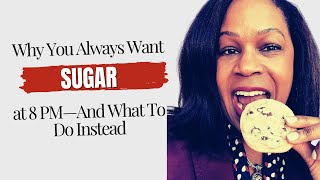
In this solo‑host episode of the Stop Dieting Forever podcast, certified life and weight‑loss coach Jennifer Dent‑Brown challenges the common narrative of "sugar addiction" and reframes it as a self‑regulation gap—a lack of emotional coping skills. She argues that cravings are not failures but communication from the body indicating emotional overwhelm, boredom, anxiety, or stress. Rather than relying on willpower, food rules, or detoxes, she proposes building "emotional fitness"—the ability to sit with uncomfortable feelings without turning to sugar. The episode weaves personal anecdotes from her corporate life, explains how the nervous system seeks quick relief, and describes the cycle of shame that follows sugar binges. Jennifer also promotes Salt of the Earth electrolytes for proper hydration and invites listeners to a one‑on‑one "Tea Chat" coaching session and to subscribe to her "Forever Well" newsletter for ongoing guidance. The overall message is that by expanding emotional capacity, women can stop dieting forever, lose weight sustainably, and regain confidence.
Chapters
What if you don't need to ban cookies and cupcakes from your home anymore? What if you buy chocolate for the kids and actually let them eat it without eating it all yourself? What if those late night cravings weren't proof of weakness on your behalf, but a sign of something that you've probably never ever considered before? Well, Today, in this episode, I am flipping the script on sugar addiction. Yes, those two words that you may have said to yourself, sugar addiction. I'm going to tell you how to stop using willpower to avoid sugar and how to break your compulsion for good, because you don't need more control. You need to expand your capacity. You're listening to the Stop Dieting Forever podcast, episode 250. Girl, if you're tired of losing the same 20 pounds over and over and over again, listen up. For years, I thought something was wrong with me. I kept promising this time would be different, only to find myself stress eating at the kitchen counter after a long stressful day. I thought the problem was my body. I thought the problem was the diet I was on or my lack of discipline. But the truth, the real problem wasn't what I was doing, it was who I was being. Being. When I finally stopped trying to fix my weight and started transforming my identity, everything changed. No more starting over on Monday. No more food guilt. No more feeling like I was fighting against myself. And now that's exactly what I help my clients do. Welcome to Stop Dieting Forever, the podcast that helps you break free from self-sabotage, rewire your mindset, and reinvent yourself into the healthy, confident woman that Crave to Be. I'm your host, Jennifer Dent-Brown, certified life and weight loss coach, and I'm here to show you how to finally stop dieting forever. You ready? Let's dive in. Hey, LuxeLifer, welcome back to the podcast. If you are new, I am your host, Jennifer Dent-Brown, certified health and life coach, and I help high-achieving, emotionally intelligent women who are holding it down forever everyone upgrade their nutrition, their mindset, and their lifestyle so they can lose the weight that they want and keep it off because they have reinvented their approach to weight and wellness. And today I'm addressing two words that I hear so many of you say to me. Y'all tell yourselves that you are sugar addicts. If you say that to yourself or you tell other people that, girl, you know, I have a serious sugar addiction, like you can't keep cookies in the house, you can't buy chocolate for the kids because you're going to end up eating it yourself, you can't have ice cream in the freezer when guests come over because you're going to inhale it when you're not even, you know, planning to do it. Those moments when you tell yourself that you're going to stop eating the sugar, but every single night you're back in the pantry snacking on something sugary and you're wondering why you have zero willpower— this episode is tailor made for you, my friend. But before we jump into the sugar addiction and how we're going to flip the script on that, today's episode is sponsored by salt. No coincidence there, but it's sponsored by Salt of the Earth, which is my new go-to favorite electrolyte for staying energized, focused, and truly hydrated. Because let me teach you something here for a minute. The mo— the thing that women over 40, most of y'all don't realize is that just drinking water isn't enough. Putting a little bit of lemon in your water isn't enough because research will show if you don't have enough sodium in your water, the water doesn't actually make it into your cells, which is like beyond the point. Your, your, your cells are drying up, which means I mean, they're not technically drying up, but when your cells aren't hydrated, you're suffering from brain fog, you're chronically fatigued, you're low on energy even though you're doing everything right, and you find yourself having to depend on Starbucks in the afternoon. Sodium is the most important electrolyte for hydration, and Salt of the Earth is my new favorite. It's made with Himalayan sea salt, and it gives you exactly what you need without the $2 a packet price tag that some of the other popular brands charge. So I drink 1 to 2 packets of Salt of the Earth electrolytes every single day, first thing in the morning for sure, especially on workout days. And as the weather gets warmer, it's going to be even more important for you to make sure you have your hydration. So I recommend this to all of my clients. And because you are my people, I'm recommending it for you too. So you can go to their website at drinksothe.com and feel the difference. And you can use the discount code Jennifer Dent Brown on the checkout page and get 15% off of your order because you are a listener of this podcast. So I also put the link in the show notes for you with the coupon code. All right, let's get into this episode. So let's talk about the problem here. The problem about sugar addiction. We have been taught that cravings mean that something basically is wrong with us and that needing a cookie to get through the afternoon means that you're weak, um, you're addicted, or, uh, somehow you're broken. And so what do you do? You call yourself a sugar addict and that makes you feel a little bit better because I don't know, a couple of years ago there was some research that came out that when you consume sugar, it's as addictive as cocaine, right? It lights up that center in your brain that the— where cocaine also lights up that center in your brain as well. And so it's kind of like socially acceptable now to call yourself a sugar addict because 9 times out of 10, you tell that to someone, they're gonna be like, girl, yeah, I know, me too. So you call yourself a sugar addict on the outside because that makes you feel okay, but on the inside you're beating yourself up every time you have a cookie, every time you eat the cupcake, every time you're chomping on some licorice. You tell yourself, you know, this time I'm gonna stop, like, this is gonna be my last pack of Twizzlers and then I'm gonna go cold turkey. And when you don't and you end up with Ben Jerry's in your mouth again, the shame hits harder than the sugar ever did. But here's what you've never been told. And so I'm so glad that it's not a coincidence that you're listening to this podcast because this is for you. I want you to pay attention and hear me when I say this, your cravings Your sugar cravings are not the problem. Mm-hmm. Did you hear me? Cravings are not the problem. Because we love to make the cookie the villain, right? Oh, I just can't stop eating sweets. I must be addicted. I'm just a sugar monster. But here's what I need you to understand. Cravings are not failures. Cravings are actually communication. What? Cravings doesn't mean that there's something wrong with you because you have sugar cravings. These cravings are actually communication from your body. These cravings are telling you something and it could be saying something like, hey, you over here, we're overwhelmed. Or maybe it's saying, we just don't know how else to cope. Or maybe these sugar cravings are telling you in the afternoon, on Friday afternoon, you're trying to get everything done so you can leave for the weekend. We just need something right now that feels like relief. I always say that your body is always texting you, right? It's always sending you text messages. Some of them are really loud. Some of them are very soft and quiet, but your body's always texting you and it's up to you to pay attention and listen to what it's saying. So these Sugar cravings aren't a problem. They're actually a clue. And the clue is that you are emotionally under-resourced. What does that mean? That means that your nervous system is waving a white flag saying, "Help! We need relief now. Give me the sugar. Give me the gummy bears. Give me the jelly beans. Give me the cookies." And sugar delivers because it's fast. It's quick. It gives you that nice little spike very quickly. It's reliable. It's cheap. It's always around. Like, it's everywhere. You don't have to go very far to find it. And so I want you to just understand, if you don't take anything away from this podcast, I need you to understand that your sugar addiction is not the problem that you think it is. You don't have a sugar addiction. So let's just erase that from your identity because that piece of your identity, that part of your self-concept, is keeping you in this cycle of always having to consume sugar to cope. So you— I'm telling you right now, your coach, as your coach, I am telling you right now, you do not have a sugar addiction. You have a self-regulation gap. So what does that mean? A self-regulation gap is what happens when you have never learned how to manage your emotions without food or wine or work or scrolling, whatever it is, right? Online shopping. You have not learned how to manage your emotions without those other things, without those vices. The self-regulation gap is the space between feeling something uncomfortable, like boredom, because maybe you're at home on the weekends and you don't have anything to do because you're not in a relationship with someone, or anxiety because you're worried about something in the future that hasn't even happened at all, or stress because maybe you have so much to do at work, but you also have so much to do at home, right? So those uncomfortable feelings that are most common to us, and the other side, right, actually being able to sit with those feelings and move through those feelings without trying to escape it. That is the space of a self-regulation gap. Okay. That is the gap. And most of us, 99.9% of us, especially in this grown woman era that we're in, 40 and up, 50 and up, we were never taught how to bridge that. We weren't even taught what it is. So when we're feeling these uncomfortable emotions like boredom and anxiety and stress and overwhelm and frustration and anger, what do we do? We reach for sugar because it's always there. And we don't do it because, you know, there's something wrong with us and we just can't say no. It's not because we're weak. It's because sugar works. Like it's the jackpot. You have your go-to sugar snack, don't you? Right? Sugar, it changes your chemistry. Maybe it is that Starbucks, uh, cappuccino macchiato, whatever, whatever, right? The combination of the sugar and the caffeine. Maybe it is a Snickers bar. Maybe it is a bag of Twizzlers, right? Whatever your go-to sugary snack is, it changes your chemistry in that moment and it feels good. It feels good. It soothes you. It distracts you. It helps you avoid what you don't know how to feel, which are those uncomfortable emotions that I mentioned before. Right? So the real problem isn't the Oreo cookies. The real problem is that no one ever showed you how to feel safe inside your own nervous system. Mm-hmm. Hang with me here. No one told you that emotional mastery is a muscle. It's a skill that you have to learn how to use. But the good news is that you can build it, you can train it, and you can close the gap. Because what happens when you close the gap? Then you don't need the sugar anymore. This is why trying to white-knuckle your way, uh, away, away from the craving and, um, trying to use willpower and say, you know, I'm just going to cold turkey, I'm never going to eat sugar again, won't fix the problem. Because for those of you who have done sugar detoxes— and listen, as a health coach, I used to take my clients through 10-day sugar detoxes. You can be successful for 10, 14 days, and you will lose the taste of sugar. But something's going to happen. Life gets lifey. Your identity as a sugar addict has not changed. So when life gets lifey, you run up against a challenge or an obstacle, those uncomfortable emotions, they bubble up and they come up, what's going to happen? Because you haven't learned how to close that gap yet. You're going to go right back to the sugar. So this is why throwing sugar out of the house, like banning cookies from your house and saying, you know, don't bring any cupcakes in here, or, you know, inviting people over and saying, girl, don't bring any dessert over here. Cause you know, I'm trying to like stay away from sugar. Why would you do that? Right. Throwing sugar out of the house never works long-term. Because you're not treating the real issue. You're not changing your identity. So you don't need another food rule, like, okay, I'm only going to consume 5 grams of sugar every 2 hours, right? Like, you don't need another silly food rule. What you need to worry about— what you need is capacity. What you need is capacity. The capacity to feel what's hard, and not to run to the vending machine or to Starbucks drive-through to try to fix it. This, my friend, is what I call emotional fitness. And that is the new wellness flex that I want you to focus on in your grown woman era. So I remember when I first started to work my emotional muscle, right? I started to, um, work on my emotional mastery. And this is when I was working corporate and I was working from home. And I remember getting off of meetings. So this is before we didn't have Zoom back then. We were on, I think it was like WebEx or something. So we were, we wouldn't, there was no camera, but, um, we would communicate just voices. Right. And so I remember being on these team calls and after every single meeting, there was always like a longer list of things to do. So you go into the meeting, right, with a list of things that you already need to do, time for the meeting. And then it's like, oh man, from that meeting, there was like 5 or 6 new things that you need to add to your list. And then because of the business I was in corporate America, I'm working at a Fortune 100, global Fortune 100 company. We were in back-to-back meetings, right? We were in back-to-back-to-back meetings. So at the end of the day, The to-do list was like out the door. And I remember I would get off of these calls and I would jump up from my desk and I would run downstairs, not like out of fear or not like, you know, not consciously, but I would tell myself, girl, we need a break. We need to take a little break before the next meeting. And I would go into the kitchen and I would eat something. It would be a handful of trail mix. A forkful of something that was left over from dinner, something sitting on the counter, like some type of sweet treat, a piece of bread and cheese. That was my little favorite go-to snack. And it— and I was telling myself, I just need a break. But really, I was feeling overwhelmed, probably a little stressed, probably a little bit of anxiety altogether, because I'm like, oh my God, I have more work to do. And so I was unable to sit with those feelings and I would rush off. And go get something to eat and then go and start the next meeting. When I became aware of this self-regulation gap, I was like, oh, I think I have a problem here. And it wasn't for me— sugar wasn't like my big thing, but it was just food in general, whatever was available. And so when I learned about this self-regulation gap, I remember the first time that I got off of a meeting and the urge to like jump up from my desk was there and I wanted to run out the door, go downstairs out of my office door and go downstairs and get something to eat. And I literally remember physically holding on to my desk, like, okay, this is anxiety. This is a little bit of overwhelm. Like, nice to start naming the emotions. And I resisted the urge, physical urge to jump up out of my seat and leave my desk. That was a defining moment in my journey. And so from that place, my capacity to feel and experience these uncomfortable emotions began to grow. And my emotional mastery began to, uh, began to get better, right? So that emotional fitness that I was practicing in that moment became easier because I did it the first time that I knew I could do it again. And I remember when I, like the creative craving had passed and I was like, oh, and I was still sitting at my desk. I was like, oh my gosh, it worked. I did it. So here's what's really happening in that moment. The moment when the craving hits and the cookies start calling or the Twizzlers start calling, whatever your go-to snack is. Right? So this is the real pattern. Listen along. A feeling shows up, right? Maybe you're tired. You're stressed. You're bored. You're lonely. You're overwhelmed. You're anxious. Whatever it is, you maybe relate to my, you know, meeting feelings, my post-meeting emotions. And what happens? Your body panics and your nervous system is like, we don't have time to process. We need relief fast. If we don't like this feeling, maybe your heart is racing a little bit. Like the physiological symptoms of stress. Stress starts showing up. Maybe you get a little hot. And listen, you may not even be paying attention to the physical symptoms of uncomfortable emotions because you're so used to them. You have normalized this uncomfortable feeling, and so you're always rushing to go grab sugar. But when you know what it feels like when your, your active— your nervous system is activated, it's like, oh, this is what's happening. Right? And so your body panics and then all of a sudden sugar becomes a solution, right? It's familiar. It's fast. It works for like 10 minutes. You feel that buzz. You feel a little bit of a release. You feel a little calmer. You feel a little bit of, okay, all right, we can keep going. I can get through the rest of my day. But then what happens is you look back at the end of your day or the end of your week or the end of your weekend and the shame creeps in and you start beating yourself up, telling yourself you have no discipline, this addiction is out of control, there's something wrong with you, you got to do a cold turkey sugar detox starting on Monday, you're going to do better tomorrow. You tell yourself that this is the last time you're going to reach for the go-to snack, but you know it's not the last time because again, this is not about the cookie, it's not about the Twizzlers, it's not about the Starbucks drink. It is about the fact that no one taught you how to slow down and self-regulate in the in-between, that gap, right, that I talked about, that self-regulation gap. And so you have trained your brain by always going to reach for sugar. You've trained your brain to be afraid of the discomfort, and sugar has always been your escape hatch. It's always been there for you. So you're just doing what you've trained your brain to do. Here's the good news. Like, all is not lost. Here is the good news. When you close that self-regulation gap, when you build the emotional capacity that you don't have right now to feel those uncomfortable feelings without feeding them, everything changes. I mean, listen, The first time that you do it consciously, you're going to feel like a superhero. You're going to feel like no one— you can do anything. I remember that moment like it was yesterday. And from that place, you're like, ah, okay, okay, girl. We don't need sugar to survive the day. We can get through anything. You can stop feeling out of control around food when you go to an event and you see the dessert, or you're at a restaurant and they bring out the dessert tray. And you're like, oh my God, you start feeling uncomfortable and your mouth starts watering. You can get to that place with emotional mastery and be like, yeah, I'm good. Thank you. Thank you. But no thank you. That is such an empowering and powerful place to be because then you can stop being scared of having cookies in the house and everybody in your household won't be mad at you because now they can have their sweets and they don't have to hide them from you. Right. You can actually feel normal. You can feel at peace, and you can feel free, which is what we want. And food becomes food, your emotions become information, and your body stops living in reaction mode. This is, this is when we're living our Luxe Life, y'all. And this is what it feels like to trust yourself again around food. And this is what real control looks like. Not using external things to change your brain chemistry or change your hunger signals. Not white-knuckling through the craving and saying, "I'm not going to eat sugar. I'm not going to eat sugar. I'm not going to eat sugar." But real control is you telling your body that it is safe. So no, you are not a sugar addict. You're releasing that from your identity immediately. You're not a failure. There's nothing wrong with you. You're not broken. You are a woman with a brilliant body and a big heart who just has never been taught how to manage her emotions without food in a way that supports you. But the great news is You can learn. I learned it. You can learn it. And I teach so many other women how to do this. And when you learn how to master your emotions in that way, that is when everything changes. Your cravings change, your habits change. You're more willing to go out for a walk in the, after the stressful meeting, instead of running into the snack cabinet. Right. And then when that happens enough times, guess what else happens? Your weight changes, your life changes, because now you're not having to force yourself through these sugar detoxes. If this episode has hit home with you and you're ready to stop defaulting to food every time that life gets overwhelming, let's talk about it. Let's have a tea chat, shall we? Tea chat is what I'm offering now. It's a private one-on-one conversation with me where I will listen to what's, what your issues are, what's been coming up for you, what's your, what your challenges are. I will ask you the right questions and together we will custom create a solution that fits your life, your lifestyle, and your reinvention goals. Because y'all, we are in our grown woman era and we don't have time to be dealing with and battling, uh, Oreo cookies and Chips Ahoy cookies and, you know, the muffins from Costco because somebody brought them to our house. We don't have time for that anymore. We got bigger things to do because you don't need another diet. You don't need any more silly food rules. You don't need to tell anybody, like, don't bring any sugar near me. We don't need that anymore. What you need is a strategy that works with who you are right now and who you are becoming. So go to jenniferdent.com/t TEA, as in the drink, the beverage, T-E-A, or just if you follow me on Instagram, send me a DM. I don't know how long I'm going to be doing the tea chats. Um, it's something that I really felt in this moment was needed because there's so much happening in the world and there's so much happening, um, that can cause us stress, that can cause us anxiety, that are causing us to just feel, be in a constant state of feeling uncomfortable and unsure and uncertain. And so the Tea Chat was my way of like connecting with you. So you're not out there suffering alone because emotional mastery is the only way that you're going to work through these current situations, these current life circumstances without depending on food. Emotional mastery, y'all. Remember, this is the new wellness flex. This is what we're doing in our grown woman era. We are learning how to master our emotions, and that can start for you with a single conversation with me. All right, y'all, live luxe, and I will see you in the next episode. Did you love today's episode? Are you loving this podcast? Then you are going to love Forever Well. Which is my exclusive newsletter where I break down how to stop self-sabotaging your weight loss and reinvent yourself into the healthy, grown-ass, confident woman you know you want to be. Girl, each week I'm gonna send you bold insights, real talk because, you know, I like to keep it real, and strategies that you can actually use to start your diet-free lifestyle straight to your inbox. Subscribe now at jenniferdent.com/emailclub or find the link in the show notes and start your reinvention today. Oh, and if you love this episode, don't forget to subscribe, rate, and review because it helps more women just like you find this life-changing work. All right, y'all head on over to jenniferdent.com/emailclub to get Forever Well. All right, live luxe, and I'll see you in the next episode. [MUSIC] [MUSIC]
More from Jennifer

Overcoming the Weight Loss Struggle #perimenopauseweightloss #womensweightloss



Overcoming weight loss frustration #womenover40 #perimenopauseweightloss #weightlossover40

How to Stop Food Noise in Perimenopause #perimenopauseweightloss #weightlossover40


Closing the Friendship Gap for Weight Loss #podcast #womenover40 #weightlossover40




The Real Reason Smart Women Stress Snack (It Has Nothing to Do With Food) #weightlossover40 #podcast