Using Plant Stem Cells for Stronger Bones and Vibrant Health With Jennifer Payeur & Margie Bissinger
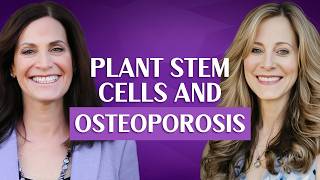
Jennifer Payeur and Margie Bissinger discuss how plant stem cells support bone health and detoxification. Payeur, a holistic health practitioner, shares her personal health journey and explains how stem cells aid in rejuvenation and overall wellness.
Chapters
Hey, Margie. Here we know how amazing plants can be for our health, but even more powerful are plant stem cells, something many of us have no idea about. Well, that's going to change with this interview because we're going to focus on how we can use plant stem cells to improve our bones and overall health. And our very special guest is Jennifer Payer. And Jen is a holistic health practitioner and researcher.
She.
She's an inspirational speaker and is the founder and co owner of Divine Health Alliance, a holistic healing center in Charlotte, North Carolina. She is also the founder and CEO of Nature Provides, an innovative plant Stem cell company. Her mission is to educate and empower others on how these unique plant remedies detoxify, strengthen and rejuvenate the cells, tissues and organs in the body to, to bring us vibrant health. So in our talk, we're focusing on bones and everything that we can use to really enhance our bone health as well as our overall health and happiness as well. So it's full of lots of great information that I'm so excited to share with all of you. So stay tuned. Welcome, Jen. I'm so excited to have you here on the podcast. I can't wait to hear what you're doing.
Going to say I am thrilled to be here with you, Margie. Thank you so much.
Yeah, this is really an interesting topic and one that most people don't know about and something that really can change lives. So I'm so excited. So before we get started, I always like to hear the backstory, and you have a really interesting backstory of how you got into this because you didn't start out, you know, investigating plant stem cells. So you want to share a little bit about where you started and how you're doing what you do now here.
And let me just preface with, like, none of it is a logic thing. So. I was a banker for 29 years and I ate healthy, I exercised, but high, high draft, long hours, lots of travel. And I had two major health crises. The first one, in 2008, I was diagnosed with bronchitis, tachycardia, mono shingle pneumonia, and finally chronic fatigue. That diagnosis in 2008 led me into the healing world because I was looking for answers. I was on Ambien and Xanax and Prednisone, and every drug you could imagine had lymph nodes the size of golf ball just kept overriding, you know, a whole nother topic. But I think we've been taught to kind of override the signs that our body gives us. So I Just kept plowing through, kept going. And that led me into a four year program, Barbara Brennan Healing Sciences, where I learned about plants and about natural healing and about energy and the body. I studied two years with the 13 indigenous grandmothers, which was an amazing program. Deeper into plants and natural healing Yoga, certified medicinal aromatherapist. You name it, I did it. I was really searching and searching and researching, looking for answers. And in 2012 I actually left corporate. And for three years I had balance in my life. I had a hearing practice, I was seeing patients, clients every week. And in 2015 an old boss of mine called me, one of the best guys on the planet and, and asked me to come back and work for him. And I went back into the corporate world in 2015, in May and in August, I was diagnosed with stage four cancer. So three months out of being out of alignment with, I think, my purpose, my mission. And so truly the concept of pain to purpose is what originated how I am doing what I'm doing today. So I did, I did do surgery. That was the only conventional treatment I did. I passed on chemo or radiation and I did natural therapy. And in 2018, so I was great. You know, I made it through that. That was a really tough time. I have four kids, so I was trying to balance, you know, still working and raising a family and all the things and really looking at the meaning of my life. And I was, I was pretty good. For several years I had no evidence of disease. I was considered in remission. And then in 2018, my marker started going up. And it's not uncommon for people that have cancer for your cancer markers to start rising and to have a reoccurrence. And so I was very clear in myself that I was not going to go back through the experience that I went through in 2015. And I was visiting a friend and her husband was a doctor. And he came out with this bottle and he said, hey Jen, you know, this product has saved a lot of my patients lives. And very casually said, oh, that's great, Dr. Michael, what is it? And as soon as he said embryonic plant stem cell, I had goosebumps all over my body. The way I describe it is I felt like I was struck by lightning. And in that moment, it was a total divine synchronicity, something that happened to me that said, pay attention. And through my health journey, I learned to do that. And so I looked at him and I said, I need to know more about these. And I became very intentional around how do I find out more about These, there's something in this for me and bigger than me. And so three months later, I went to a class that was an emergent, a week long class about learning about the plant stem cells. And on the last day, the guy that was teaching the class, who had a practice and was working with these, that he was going to be selling it. And then boom, here comes that same bolt of lightning. And so I get to the airport, this was in Hawaii, I live in North Carolina. I get to the airport and I call my husband and I said, I think we're going to be buying a plant stem cell company. And he's like, whoa, wait a minute. You just went to a class? What are you talking about? And I said, I'll talk to you when I get home. The funny thing was a whole week long immersion. I'm a very experiential learner. And there were no plant stem cells in the class. It was all in the head. And so I came home and I meditated and I sat with this concept of, what is this? And why am I having these very visceral experiences? And so I decided to call the guy and I said, put me on a protocol. I want to, I want to try these. I want to see what happens. And two months later, my cancer markers were back in the normal range. And I said, okay, there's something to this, because I had tried everything, I had been on tons of supplements and nothing realigned my body like these. And so I went back into meditation and I said, okay, you know, divine spirit source, God, what are you showing me? And I got a very clear message that this was my next, my next path forward. And so five months later, I ended up buying the company and really looking at it and rebranding. And then there you have it. That's how it happened.
Wow. I love this story on so many levels because I'm such a big believer of the mind, body, spirit, connection. And I teach a happiness program. And I really teach looking for signs and being open and being receptive and your life will just be, just be so much more synchronistic. And when you're in the flow, you get the messages and you sort of know your next direction and oh, so I just love that story because it does happen. It does happen. And look how you took the messages. But a lot of times people are just not connected and they miss the messages and it's, you know, it really makes a life so much more miraculous. Oh my gosh, what a fantastic story. And then you've done all these Amazing things. So let's start from the beginning so people can appreciate how great these are. Well, actually, even before we start, I just have to say something. So to me, this is new. This is not something that I've used up until recently. You had sent me some samples, but the director of marketing for me, who I know quite well, told me that she had asthma. She's had asthma her whole life. She's had Asthma for over 40 years. And after doing three stem cells that you gave her for four to six weeks, it's gone.
She said we were able to walk.
Into places, and it was so debilitating. And now, unless she goes, she doesn't use any medication anymore. Unless she goes, she says, into New York City or somewhere where there's going to be, you know. Yeah, but it's so miraculous. So this isn't made up. When she told, I said, oh, I have to. I have to meet Jen and I have to learn about this because it's, you know, what a healing modality. And so, anyway, yeah, it's really exciting. All right, so let's start at the very basics. Like, just explain to everybody what plant stem cells are like. Why are they so special?
Yeah. So plant stem cells reside in the new growth on the plants. So in springtime, when everything starts to bud, and I know New Jersey, you have a beautiful spring, just like we do in North Carolina, and you can go outside and you can see all the little buds on the trees. And most of the plant stem cells do come from trees, Some come from bushes. But it's that new growth, and that new growth contains the entire genetic makeup of the plant. It's very similar to a human stem cell in concept. So it's an undifferentiated part of the plant. And that undifferentiated part of the plant contains these beautiful stem cells. The stem cell contains something called juvenile phytohormone, which is a mouthful, but it just means young, light hormones. And they are responsible for basically cleaning up the body, clearing things out which aren't supposed to be there, bringing the communication network back online. So they work with the extracellular matrix, and then they regenerate things that have broken down. That is really where they shine. The analogy that I use is you look at something like broccoli. Broccoli is healthy for us. But broccoli sprouts in the sprouted form have so much more nutrients and potential in them. They contain sulforaphane, which we know helps with cancer and helps with a lot of debilitating chronic illness. So in that new growth phase, there is just so much more vitality. There's so much more nutrients and healing properties that actually start to dissipate when the plant starts to produce chlorophyll. So as soon as that bud starts to open up, it starts to lose some of those healing properties. And so the whole process is so intentional around knowing when to pick those buds. They're all handpicked in the wild and the Italian Alps, so they're away from pollution, they don't have heavy metal, and to be honest, adult plants. I mean, I love all things plants. I'm looking at your plants behind you, and I'm like, oh, hi. You know, I just. I love all things in your beautiful flowers. All plants are balancers in the body and create homeostasis, but these plants do much more than that. And I just want to mention one other thing, Margie, the reason you haven't heard about these. So when I started Nature provides, I wanted to research. I'm always wanting to learn. I'm a lifelong learner. And I found there's a woman, Saint Hildegard of Bingen, who was born in 1108. She wrote a book called Physica in 1158, this is how long ago. And she wrote about the buds of eight trees, and she specifically called those out and from. And she's considered the first true naturopath. She was the one who was saying, go out and be in the sun. Go out in nature, drink fresh water. Right. So she truly was a very grounded woman. And then from that period of time, 800 years, they kind of went underground. Can't find any research for 800 years until 1958, when Dr. Paul Henry discovered them and started seeing how they were cleaning out the liver. From 1958 on, you can find more research. That's why. And these are very well known in Europe, and part of my mission is to bring them to the United States because they are a very potent but very gentle healing modality.
Wow. I love that. I mean, that's really incredible.
Yeah.
I was thinking, like, why doesn't anybody know about so many things, though? People don't know about it until they're really brought out. Because medicine has its traditional ways of treating things, and it takes a while to get things accepted and to integrate them in. So, yeah. What a fabulous mission. Well, it's funny, my story with them is so okay because I never have anybody on the podcast unless I try things myself and just see what they are. And so you had sent me four different ones And I put two together. And at the time, I was my. I had gotten my blood work back, and my A1C was a little higher than I. Like when that happens, I use a continuous glucose monitor for two weeks just to see what's going on and what food and this and that. And so I guess I started these in the middle of. I had two weeks. So maybe a week had gone by, and then maybe two days later, I'm like, wow, my blood sugar's lower in the morning, My curve's totally flat at night. Like, all of a sudden, something crazy happened. And I'm like, could it be the stem cell? And then I realized one of the stem cells you had given me was called Ash. And. And that one of the. I mean, maybe you wanted to say what. What Ash does. But it was. It was really shocking to me. I'm like, you know, because I was really measuring things. I'm thinking, what did I do different? Did I eat different? I couldn't imagine what was different. That my blood sugar was, like, so good, better than it's ever been. And I guess that's what it was.
Yeah. So Ash is fabulous. It's great for tendons and ligaments and bringing those back into a state of health. But it's also a uric acid neutralizer and blood sugar balancer. And so that, you know, one of the things that's amazing about plants is that plants do multiple things, right? You have a plant like rosemary, that's wonderful for the liver, but it's also great for the skin and the hair and, you know, and the mind helps the clarity of mind. And so Ash does multiple things. Really, really great. So one of the reasons I sent that to you was to look at all things bone and connective connected to bone, which the ligaments and the tendons are. And so that was why I sent that to you. I didn't know you had a blood sugar issue, but, wow, how amazing.
Yeah, I mean, I keep it because I regulate it. It's not an issue. You know, and most people go to the doctor, and unless they have diabetes, the doctor's like, you're fine. So if I think if I ran to the regular doctor, they wouldn't even think anything. But to me, I wanted to be in the real optimal range, not just, you know, borderline pre diabetes type of thing. And so I was able to, you know, monitor it and keep it at bay. Because I think. I mean, if I. If I didn't watch my diet, I think. And I have a son who has type 1 diabetes. You know, we have some diabetes in the family, so it's. Yeah, anyway, really interesting. All right, so let's focus on bones. Since this is a bones crew, how can we use these and what would you recommend? How do you see this fitting in and helping our bone health? Like, what specific, you know, what have you found?
Yeah, so there are several plant stem cells. So first of all, all plants have an affinity for systems in the body or for organs. And some of the best plant stem cells for bone. Giant redwood, you know, you think, and I always like to look at, what does the plant do. You know, I like to look at the plants. So look, think about a giant redwood tree, right? They're so strong and, and tall. So giant redwood is a fabulous plant. It's also great for prostate health. So again, you know, they're multi dimensional. The giant redwood is a fabulous plant. Mountain pine that I shared with you is absolutely. If you have knee issues, hip issue, Mountain pine is actually my go to. And that is one of the plants that I sent to you. It supports the bone, the cartilage, the ligaments, the tendon, tendons. It helps reminisce, mineralize the bones. Fabulous for osteoporosis, hip issues, vertebrae issues. It actually helps with the inflammation that happens in the bone and even things like carpal tunnel syndrome, so highly anti inflammatory. And it also pulls heavy metals out of the bone. So heavy metals love to go to the bones over a long period of time. And mountain pine is one of the best plants to help pull that out and bring the bones back into balance. So that's why I sent you that one.
Big question about mountain pine then. So often with some of the detox protocols, you feel worse before you feel better when it's pulling metals out, does that happen with the mountain pine?
That typically never happens. You know, I, I was talking to somebody yesterday. I've had two people in five years that had, you know, one. One practitioner actually had a slight headache and another person had, you know, a little bit of tiredness. So I call those Herxheimer reactions very, very unusual. And I'm a big believer you go slow first. So I'm not somebody who says, oh, you know, jump in and take like three droppers of something. I would rather go slow and let the body build up and then, you know, add as you go, as long as you feel okay. But you know, we use these with babies, we use these with 90 year olds, we use these with pets. So they are really, really gentle remedies for, for all. And the Other thing I love about them is they work really, really well with other herbs, with other supplements, and even with pharmaceuticals. I've had. I had an eye doctor who had a heart attack, and they, you know, they put him on. I think it was two or three different medications. And he said, you know, I really want to get off of these. I don't want to be on these the rest of my life. And I said, okay, great. So I put him on two plants, and within three months, he was able to start winding off of the pharmaceuticals, and within six months, he was completely off. So, you know, that's. That's how gentle they are and how they do play well with other modalities, which I love.
So for people who are. Because there are people who are on osteoporosis medications, whether they're the bisphosphonates, the Fosamax, or they're people who are taking the anabolics that are building bone. Do you need to separate them when you're taking this from any medications or it's not.
You don't. And actually, there really are no contraindications. So I love that there are no, you know, no side effects, anything like that. And again, they work really well. You know, the only thing, like in this case with the doctor, he started feeling a little dizzy. So he went back to the eye doctor, went back to his physician, and the physician said, oh, we need to reduce your medication. So he was actually having, you know, an impact from too much medication in his system.
That's so interesting. In terms of. What about people who are on Coumadin or blood thinners, anything like that? Is there anything that we need to add?
Yeah, there's a plant called main hair tree, which is ginkgo biloba. If somebody's on a blood thinner, I'll use that more moderately. I might do one or two drops versus 15 drops just to make sure there's not an issue. But I've never experienced an issue, and I've had thousands of people take these.
So let's say you give us a couple more for the bones. How would someone. What's the best way to start? Is it best to start with one? What do you. What's. What's your protocol? Someone's listening, and they're thinking, oh, my insert, or this hurts. I'll try these. What would you. How do you recommend?
Somewhere between one and three. I would never put somebody new on more than three.
Okay.
Yeah, three different. Three different products. I sent you four. Yes. I personally take a lot because, you know, I want to stay healthy and I work through all my different systems in my body. So I work on my heart, my liver, my kidneys. So, you know, but I've been taking them for five years, so. And I'm in maintenance mode. I would say if we didn't live in the toxic world that we're in, it wouldn't be necessary. But unfortunately we have issues in our food and our water and our air. And so for me personally, that's my protocol. But I would start somebody probably on one or two depending on what they working through. Maybe three if I, you know, had an intuitive feeling that they needed a third one. But I would start low and slow.
And so how many drops of each one?
Somewhere between two and three drops. Okay. To start, I look at somebody's weight and what's going on and how sensitive they are, the bottle will say I think 5 to 25 drops. You know, a 220 pound man can tolerate more. He could probably take more of the 10, 15, 20, 20 drops. And then if there's an acute issue, you know, you can take more, but they have a five and a half hour half life. So they stay in the body for five and a half hours. So usually I recommend people take them at least twice a day, sometimes three times a day, depending on what food.
Without, like what, what's, what do you rec, you know, what do you think?
Yeah, I recommend before food, but you don't have to wait hours. You know, they're usually 15 minutes before food. So for me, I get up in the morning, I make mine and then I go get my cup of tea and I'll eat breakfast. If I eat breakfast that day.
Right, and do you like to put it in water? What's the best way?
Yeah, I mean, I have some sitting here on my desk. I've got linden tree here. You know, I'm kind of a type A. And so if I'm having one of those days, you know, linden tree is very calming for the nervous system. So I'll put a few drops in my mouth. But because I take a lot, I usually put a small amount of water in and I just put them in the water and then sip it.
Yeah, that's what I've been doing. Just putting it in the water now. Interesting. Mary Agnes, the director of marketing who's had such amazing results, isn't can't have alcohol. So. Yeah, so for people that can't have alcohol, she explained she want to just help what people do if they can, because there is some alcohol in It.
So yeah, there's organic grape alcohol. You need either alcohol or vinegar typically to extract the healing properties out of the buds. So what I've told her and others that, you know, just heat up some water, plain water, and then put the plant stem cells in there and let it sit until it cools off and the alcohol will actually dissipate out of the tincture. And so you're not getting that alcohol taste or so much alcohol. It's really minimizing what you're getting.
And that's great. And it doesn't ruin or destroy the stem cells. Yeah. Hey, Margie here. High quality supplements are a big part of a comprehensive osteoporosis program. To help you, I offer a significant discount every day in my supplement store through FullScript. FullScript has the most extensive catalog of professional grade supplements and wellness products I've ever found. So all you need to do is go to tinyurl.com that's t I n y u r l.com supplements for last and you'll get to my fullscript store and in there you'll see my favorite bone building supplements. So make sure to check it out. And the link will also be in the show. Notes up. So let's get back to the show. Okay, so let's continue now. Now that we know how to use it, let's. So we talked about the two we talked about.
Yeah. So another one is Virginia Creeper. It's absolutely one of my favorite for helping with joint ligament tendons and cartilage. It's great for things like rheumatoid arthritis. Arthritis tendinitis, fibromyalgia, anything like that. So think all. Anything degenerative around the joints. Virginia Creeper is absolutely one of my favorites. It's one, you know, I work out and it's one that keeps my joints healthy. I used to sometimes get knee pain and shoulder pain and all of that. I don't have any of that when I take Virginia Creeper well, because there's.
So many people who have degenerative arthritis. You know, as people get older, a lot of people and it really impedes their exercise program. And as we know, exercise is so important for bones and a lot of people are like, you know, I just can't do that because of the pain. So. And you know, we don't want to live on Advil or different things. So this would definitely be something to the best.
And how long would it take?
Like how long would you say so someone is knee pain? I know it must vary, but what would you say is the time, you know, just a good time to see is this having any effects?
Yeah, I mean, I usually tell people, give it a couple of weeks. And the way that I work with folks is I look at how long they've had an issue. So if somebody has had hip issues for 20 years, it's not going to go away in two weeks. Right. But you should start to feel a difference. And I usually say a month for every year you've had something to get it back into balance, and then you're really more maintenance. Right. So going back to the Mary Agnes story with her asthma, my husband had terrible allergies and he was taking Flonase and, you know, what else is he taking? Zyrtec, Claritin. So he was alternating all these things, and twice a year he'd be miserable for about two months. And he started taking a complex that we have called Allergy Lift. And, you know, at first. The first year, he took it during the whole allergy season. The next year, he took it like a couple of weeks before the allergy season, and then he didn't have any allergies at all.
Wow. Incredible.
So, you know, it really does. You know, again, plants are known to create homeostasis. And these plants in particular, that's their specialty. That's where they shine. So they're really going to the root cause of why something's out of balance. And that often, Margie, is why I might give a third plant stem cell, because a bone issue may be related to something in the liver. Right. So I will want to address where I believe the cause is coming from while giving them some relief on what the issue is.
Right.
Okay.
So we talked about three. Right, we mentioned three. Any other.
What else did I send you?
Oh, you sent me. Let's see. You sent me ash. We talked about ash. So I guess. Yeah, we talked about the mountain pine. You mentioned that you sent oak. We talked about Virginia creeper. Yep. And you sent me oak.
Okay. So oak is another wonderful plant. It's really great for the adrenal, the nervous system, the glandular system, but it's also good for kind of just that overall tiredness, the hypotension and that. So I know that's not necessarily related to bone health.
You know, I noticed also because, I mean, there's so many things. But a lot of people have issues with sleep in the community. And I know you also have a. I guess it's a combined one for sleep or. What's your recommendation? Yeah, yeah.
I have something called deep Sleep that has a combination. It's got some valerian, California poppy in it, linden tree. All of those are balancing the brain and the nervous system to help calm everything down.
And when do people take that? When's the best time to take that one?
Usually like late afternoon to start taking your first dose. And then if you're taking it twice a day, taking it like an hour before you go to bed.
Okay, okay, great. Because that's an issue. And the other thing, I mean, there's so many issues. Exactly. That's what's nice that you have. But a lot of people have digestive issues. I'm sure there's so many. Is there one in particular? I mean, I guess it depends on what the digestive issue is, but a lot.
Yeah, I mean, fig is my all. My all time go to plant for digestive issues. Again, looking at my husband, we're like you, we experiment. We want to know first, does it work for us? It works for us. Then we're willing to talk about it. And he's on amethrazol. He had acid reflux and he'd been on for about eight years. And if you repeat the package insert, it says don't stay on it for more than two weeks. And so I said, okay, we've got to get you off of this. And so he started taking Fig and he's been off his omeprazole now for over two years. Never had to use it, hasn't had any acid reflux. So FIG is fixing the dysbiosis in the gut and fixing the gut lining. And I believe I don't have scientific evidence of this, but leaky gut is a huge thing. We know. I believe it starts to fix those tight junctions and close them so that they're not open anymore.
You know, it's so interesting because there are tests, you know, there's tests with Zonulin, there's tests the wheat suit. I mean there's tests that you can actually see what happens. Wouldn't that be fascinating if some.
If people did the test before and.
After you found a lot of people have gotten significant?
Yeah. And just something really interesting. And I've been searching for a way to do more research on this. I have a practitioner in Minnesota who works with a lot of autistic kids. And he came to me and he asked me to fund 10 people. He said, I am convinced that something in the plant stem cells that's fixing gene mutation and methylation issues. And so it was very expensive because it's a $5,000 cost. To do a full genetic panel and then 5,000 to do an after. But we've done nine people so far and every single person things like MTHFR fall off. The only thing we haven't been able to test yet from what I would like to test is the BRCA1 gene. So he's looking for a patient who tests with that and we're using New Amsterdam Genomics which is a huge lab and really doing the full gene panel and then giving them one plant stem cell bottle and then a full gene panel after. And so so far we can see methylation issues and so these are known to correct and upregulate the good genes and downregulate the bad genes. So huge epigenetic impact and they, and they have Microrna so they are working with our bodies to come back into the blueprint that we were born into.
Yeah, that's just so fascinating because a very big problem is that people do have acid reflux and it's huge, it's huge in this community. And you know these proton pump inhibitors people were never ever as you mentioned, supposed to be on these long term but they are. And, and it's not that you can just get off work with your doctor, but how amazing that they can. You know that this has been so effective because you really lose bone. You know there's such a huge correlation between you know, these acid blockers and bone loss. So this is so incredible. I can't wait to hear what happens. You know when I heard about Mary AGNES I'm like 40 years, you know and she's not going to make this up because she was really suffering with the asthma. She's like, it's been just so life changing. So really.
And that's not a unique story, which is beautiful, right? That have been able to resolve lifelong asthma issues and reflux issues and that's why I'm so passionate about them.
I'm so passionate about reducing stress and increasing happiness. Have any ones that reduce cortisol or what have you?
Yeah, the best plant is black currant. Black currant balances cortisol in the body. That is one that I take every day. Again I'm type A, I have a tendency to be in that. Go, go, go. And that's one that I take and I take it three times a day. So black currant and it's the best plant for reducing inflammation in the body regardless of where the inflammation originates in the body, which is amazing. So it's kind of like a universal anti inflammatory and cortisol balancer. And adrenal. Helps with adrenals.
Wow, that's really incredible. And there are a lot of people listening who are like you, cancer survivors. And they've gotten through breast cancer, and they're even on certain medications. So to keep things at bay, is there anything special for people who've gone through, whether they've gone through chemo, radiation, or they've gone through cancer? Is there anything that you think is important for those people?
Yeah, we have a complex. It's a scary word because it has the word acid in it, called betulinic acid. And it contains two things. It's the inner and outer bark of the white birch tree and almond husk. So that's where the stem cells come from. And that complex is actually known to create apoptosis of cancer cells and leave healthy cells alone. So we kind of joke, you know, behind the scenes, we call it plant chemotherapy, because that's what it's doing. And that is a product that I'm kind of committed to taking the rest of my life. I don't take it every day now, like I did. That was the one that I took that brought my cancer markers down. But I will work in a bottle, like, four times a year. So once a quarter, I'll take a bottle of betulinic acid. That's the one I actually have the most research studies on, too, which is amazing. And the studies have looked at, like, triple negative breast cancer, some of the really aggressive ones. And it shows, you know, great results with. With that.
So when someone is in remission, there's no downside to taking this at all and at all. So fascinating. Oh, my gosh. We could go on and on. You know, we could spend hours. But I think. Is there anything else for bone health that you want to share that we missed?
The only other one that I mentioned to you with silver fur. And silver fur actually remineralizes the bones. It works on the mineral balance and preventing degeneration. It's got an osteoblast action. So it's a really, really good one. We use that a lot with children who have growing pains and issues, and it stimulates bone marrow. So that's a really fabulous one, too. Those would be the ones that I would talk about for the bones.
Yeah, you know, it'd be interesting because obviously a DEXA scan is going to take a while, but I wonder how interesting a study would it be to do, you know, the CTX and the P1MP, the bone markers, and see what happens with energy. A great study. Yeah. Yes, absolutely.
I love studies. Yeah, I am a trust but verify try first. And then, you know, I do work. I have a healing practice here in Charlotte, and I work with a lot of people. And for me, just like you, it's like I want to get people feeling better, get them back to, you know, a state of joy and happiness and feeling like, you know, they feel good. I want people to feel good.
Oh, I love that.
So tell people.
I know we're gonna, there's, it's very kind of you. You're giving a 15% discount on all your products. So I'll have that in the show notes in terms of, you know, the link for that. But do people, do you recommend they work with a practitioner? Can they work with you? How does this best work?
Yeah, they can absolutely work with me. You know, we're just launching a consumer site. We do mostly work with practitioners or their patients. So people can sign up. I can put you in there, Margie, and then they can connect it to you. So whatever works for them, they just would go to info at Nature Hyphen provides. There's a hyphen in there to connect and we can get them set up.
Oh, that's great. Yeah, I don't right now work one on one with anybody. But you're saying that they can actually work directly with you?
With me, yes. Great.
Okay, so we'll have all the links and it doesn't matter where they live virtual.
Nope. I see people all over the world.
And they can also just tell their practitioners. A lot of them have practitioners that can work with you. Oh, this is great. Well, I am so excited. That's why I love doing this podcast because then I get the feedback, like, oh, so similar to Mary Agnes. Like, oh, my gosh, my knee pain deals so much. So I just can't wait, everybody to hear what, what happens with this. I was, as I said, I was shocked with my blood sugar. I thought that was just, you know, I, I, I was wondering, that's why I couldn't wait to talk to you. Like, could this really be, you know.
I know you kind of, you kind of questioned. I had a very similar experience because, you know, I started taking the stem cells and my father had had a heart attack at 50. And I always had kind of a weird, you know, my heart rate would always go high even though I didn't feel stressed. And, you know, my doctor said, hey, you know, let's do the calcium score and see what might be going on. It came back with zero. And he looked at Me. And he said, you have the arteries of a 17 year old. That doesn't make sense, you know, And I was not a good eater when I was younger, so that was kind of a shock to me. I was like, wow, these are working on clearing plaque out of my arteries and cleaning my body up. And if you saw pictures of me, I mean, I look younger, I have more vitality, my eyes are brighter. And that's another analogy I use. If you look at a newborn baby, they've got bright eyes, they are just exuding life force vitality. They've got soft and supple skin. And that's what these are doing. They're bringing you back to, you know, that original blueprint. They're just cleaning things up and regenerating things.
Oh, and I know, I want to honor your time, but just tell us. Skin one. The skin one. Because a lot of us really do care. We want to, as we get older, we want to have our skin look as good as possible.
So my favorite for the skin is a plant called cedar of Lebanon. It's a huge tree, an ancient tree, and it is wonderful for aging skin. That is one of the ones I have taken regularly and that is the one that I attribute to looking 10 years younger than I did 15 years ago. My absolute favorite. And it is essentially regenerating the skin. It's got collagen in it. You know, again, we stay behind the scenes. Oh, this is Botox in a bottle. You know, it's giving you that vitality and that young looking skin.
Oh, well, I have to try this natural Botox Navano.
I know, anything natural, right?
I'm ready for that. Yeah, sounds great. Well, any last minute things before we end. This has been so helpful and I'm so excited to test some of these and just hear what happens from everybody.
Yeah, no, just so grateful to be here. Thank you for what you're doing in the world. It's so needed and I'm just. Yeah. Just so thrilled.
Oh, well, thank you so much, Jen. It's been such a pleasure and I, I just can't wait to hear what happens with everybody. So thanks.
Yes, me too.
Thank you. I hope you enjoyed my interview with Jen as much as I did and now have an understanding about plant stem cells and how they can help so many different conditions. All the links that Jen talked about will be in the show notes as well as the link for the 15% off any of the products that you want to try. So I'm excited because I'm going to add some more of these products to my arsenal and see the results it has with me and my family. But please report back if you use anything. I want to know how it's benefited you. So please share that information with me. And thank you so much for tuning in, and I look forward to seeing you on the next episode.