Jenni Utz argues that credit scores and background checks miss what actually predicts good tenants. She recommends behavioral analysis, payment patterns, and AI tools instead, and calls for a nationwide database so landlords can finally use real outcome data rather than guessing.
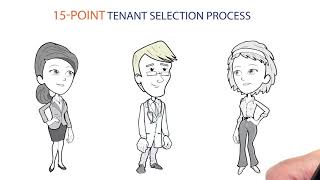
What really matters when screening tenants? Hi, I'm Jenny Utz with Utz Property Management, Maryland's number one property management firm. Many landlords and property managers believe that they have perfected the tenant screening process, each relying on their own set of rules. Minimum credit score, three times the rent, no evictions, no criminal background. However, the reality is that there's no universally proven approach to that works for everyone. This prevents a significant challenge. So in the industry, we've got this myth of that perfect formula, but we've traditionally relied on what I like to call the big five. Your credit score, income, residential history, criminal background, and eviction history. At first glance, this approach appears pretty sound. However, most landlords and property managers can't provide data demonstrating that their specific criteria is reliably predicting tenant success because that data doesn't exist at that individual operator level. So ultimately, many decisions are based on intuition, even if informed by experience. So why does that concern you? Well, consider the following perspective. How many good tenants have you declined because they didn't meet one of those checkboxes? How many bad tenants met all five, but still cost you thousands in repairs or or unpaid rent? This highlights the limitations of current screening methods. We're operating in a system that's fundamentally flawed, not because we're careless, but because we don't have the full picture. Given tightening fair housing laws and evolving technology, relying on guesswork should not be sustainable anymore. So why should credit score and criminal history. Why could that be off the table soon? Well, it's important to follow this note. It's possible that using credit scores, eviction history or criminal background could soon be restricted or even banned from screening decisions. In certain jurisdictions. States like California and Minnesota, they're already restricting how far back landlords can review applicant histories. While these policies are well intentioned, they're often leaving landlords without reliable methods to assess tenant risk. So. So where do we move from here? I would say smarter screening requires smarter tools. We recognize the need to adapt. So at U.S. property Management, we are reevaluating our screening process. We are integrating the traditional metrics with behavioral analysis, rental history patterns, and AI power tools that evaluate communication, responsiveness and follow through during the application process. The best tenant is not always the one with the highest credit score. Often the ideal tenant is the one who demonstrates genuine care for the property. I always like to say that screening tenants could be like when you've got a great resume and you're seeing this resume and you think this is going to be a great candidate for your job position. And so they pencil out on paper, but then when they get into that role, they're just not performing. A tenant following all of these checkboxes could be the same and you may be missing the tenant who might not check all those check boxes, but are the ones who are going to actually demonstrate care for your property. So where does the industry need to go? Well, the industry requires that data driven model rather than reliance on guesswork. So I'd like to see is a nationwide database of tenant outcomes risk modeling that's going to account for human complexity, not just your FICO scores. And just so you know, if you've been in a rental, in some rental communities, they're only putting out in your FICO score when positive rent payments are being made. If you've missed a payment or a tenant missed a payment, depending on what type of financial tracking that that property manager has, it could only be for the positive outcome. So you're already at a skewed number. And then moving from a shift on how do I avoid risk to how do I identify responsibility? So in the meantime, here's my recommendation. Use your screening process as a filter, not as the end all, be all. Look at how an applicant communicates. Do they show up on time? Are they proactive? And then develop a process that is consistent, compliant and considerate, recognizing that you are selecting a business partner and not just evaluating data points. Once you have that process, as I mentioned, keeping it consistent, you need to stay in compliance. So you need to make sure you're doing the same thing across the board for everyone. And, and there are no exceptions to how you are modifying your process. The best screening process is the one that protects your property without costing you great tenants. In a rapidly changing environment of technology and regulation, inflexibility could be more detrimental than beneficial to your investment. So if your screening process has not evolved with the current best practices, I'd invite you to discuss potential improvements at UTS property management. We're building smarter systems, better outcomes and stronger portfolios. One applicant at a time, share your questions or feedback that you have. How are you handling your screening and leasing process? And also if you want to discuss further what this looks like or how to protect your investment, feel free to reach out and discuss individually as well.