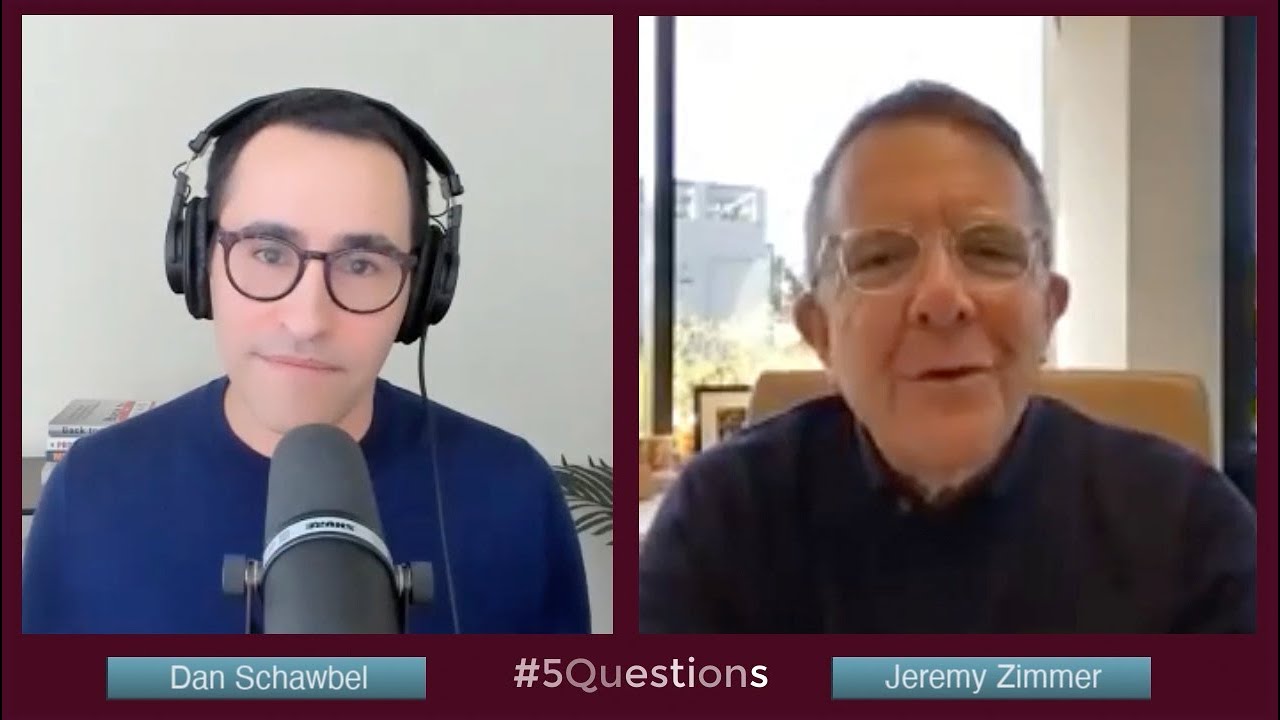
Jeremy Zimmer on Entertainment in the Age of Covid-19 with Guy Raz | How I Built This | NPR

In this How I Built This Resilience Edition episode, host Guy Raz interviews Jeremy Zimmer, co‑founder and CEO of United Talent Agency (UTA), about the sweeping impact of the COVID‑19 pandemic on the entertainment ecosystem and how a major talent agency is navigating the crisis. Zimmer recounts the early realization of the pandemic’s magnitude (the cancellation of a Lakers game), and describes UTA’s internal response: company‑wide salary reductions, furloughs, and reliance on government support while keeping morale high. He explains how production has largely halted in the U.S., with some activity shifting to New Zealand, Canada, and the UK, and notes a backlog of films awaiting theatrical release that are being sold directly to streaming platforms. The conversation moves to new revenue opportunities for talent—livestreamed concerts, podcasts, publishing, and other digital formats—as traditional live events and film/TV deals dry up. Zimmer shares examples such as a Grand Canyon livestream for DJ Kaskade and discusses the likely hybrid future of live events. Diversity and inclusion are highlighted through recent hires of African‑American division heads and a commitment to expanding the agency’s roster of agents of color. The long‑standing Writers Guild packaging dispute is addressed, with UTA reaching a settlement that concedes on packaging while emphasizing transparency and the agency’s writer‑focused origins. Zimmer offers guidance to agents working remotely, emphasizing client communication, reviving shelved projects, and maintaining empathy. He concludes that while the pandemic will reshape the agent’s role—making it more entrepreneurial—it will not dismantle the agency model, and the experience has deepened his appreciation for fragility, empathy, and balanced leadership.
Chapters
Hello everyone, and welcome to How I Built This, Resilience Edition. How are y'all doing today in week— in year 7 of the pandemic? As most of you know, this is where we're exploring creative ideas and ways that businesses are dealing with the strains of the economic crisis. In the window next to me— am I pointing the right way?— is Jeremy Zimmer. Jeremy is the CEO of United Talent Agency. It's one of the biggest in Hollywood. They represent everyone from Kevin Hart and Will Ferrell to Harrison Ford and Charlize Theron and production companies, YouTubers, news reporters, esports players, even me, by the way. Anyway, the industry that UTA represents, entertainment, has been hit really hard, as you know, during the pandemic. Studios are shut, films aren't being filmed, TV is on hold, and of course live events aren't happening except online right here. Jeremy, welcome to the show. Thanks for being with us.
Thanks so much for having me.
It's a pleasure. And by the way, if you are watching on Facebook or YouTube or Twitter, please submit your questions. As I've been saying, this is the only time I get to ask your questions. So please keep them coming because I love them. It's so fun. Okay, first of all, Jeremy, how are you doing? Just like as a human being? I mean, you run this huge talent agency, but you've been at home for the last 5, 4 or 5 months. How are you doing?
As a human being, I'm, you know, I'm weathering a series of ups and downs, you know, emotional highs and lows, and, you know, trying to be aware of and empathetic towards the difficulty that this is bringing on everyone. And at the same time, in my own home, you know, I have 3 kids living at home or one college-aged daughter who's now home from college and wondering and concerned about the impact that this will have on them and their normal, natural experience of growing up. And so, it's an incredible sort of wave of emotion. I wake up Monday mornings, walk down into my office at home and go, oh my God, not this again. But then somehow enough good things happen and there's enough ups and downs that, you know, by the time Thursday rolls around, I'm like, wow, we just did another week.
Yeah.
So that's how I'm doing.
Yeah. Take us back to March. Um, when did you realize that, that this was gonna have a huge impact on, on your business?
Well, I, I, you know, I don't know that in March I under— I could understand or grasp the full impact that it was going to have. But I certainly remember, you know, it was— I was supposed to go to a Laker game and I was sort of debating. I had been to a Clipper game that Sunday and it was kind of weird and we were all nervous about shaking hands. We were doing a lot of the elbow bump thing. And then it was Thursday and I was supposed to go to a Laker game and we were getting— I was sort of debating, should I go, should I not go? And then the news came out about Rudy Gobert and then suddenly the game was canceled. And boom. And that was the first sign of, wow, they canceled basketball games? Like, that seems really a big thing.
Yeah.
And then beyond, you know, and then I think the season was canceled shortly thereafter, and then boom, it was on. And then realizing and understanding the full and complete impact of this has been something that's been, you know, really, it was hard to comprehend in the beginning.
Yeah. You guys, UTA, like other talent agencies, has been affected by this. You have had to have furloughs and pay cuts. You're not taking a salary. Talk me through a little bit about how this has affected UTA so far.
Well, so far it's affected us because, you know, first of all, everybody in the company participated in a salary reduction of some form or another. That was a really difficult thing to ask everybody to join in this sacrifice. But, you know, what we realized is the overall financial health of the company, sustaining the company for the duration is going to be more of a more positive and ultimately important thing for people than, you know, trying to maintain everybody's salary at that current level in the short term. So that was a difficult sacrifice for everyone to make. And then we had— we chose to make some furloughs. We took advantage of the government The fact that governments, you know, were supporting people who had been furloughed. So that's been, you know, that we were able to lessen the pain for people there. And so far, we've been just trying to keep going and keep everybody's spirits up and trying to figure out ways to be creative and thoughtful and of service to the clients when we can't just, you know, make a deal and send them off to go do a movie or book a show and have them go perform in front of 20,000 people.
Yeah.
So, you know, creating new business opportunities for clients has been a big, big priority for us.
Um, you, this, the sort of the, the portfolio of which you represent is enormous, live events and, and news reporters and anchors and obviously films and production and YouTubers and esports and, and so on and so forth. Let's talk about the film industry first. Um, are, are movies being made right now? Like what's going on in Hollywood? Are, Are the sound studios and the production facilities dark?
For the most part, the sound studios and production facilities in most of the US are dark. There are movies being made in New Zealand. There was some production being done. I think Tyler Perry's doing some production in Atlanta. People are going up to Toronto, up to Vancouver to begin looking at production there. I'm not exactly sure. I think there's, you know, some production being done in London. You know, we have some things coming back, but it's very— it's still very slow. And, and we're hoping that this new wave doesn't, doesn't shut down whatever progress has been made.
Wow. Just a reminder, if you're watching on YouTube or Facebook or Twitter, please, you can submit your questions for Jeremy Zimmer, questions about Hollywood, the entertainment industry, talent agencies, um, please do submit those. And that's, that's amazing. So, um, for the most part, sound studios, production studios, facilities in the US are dark. Um, I mean, what does that, what does that mean? I mean, does that mean that, that, you know, in, in 6 months' time there's going to be just a, a massive slowdown of new content, of new, new movies?
I mean, there have— there are some, you know, there has been a backlog of releases. So movies that were in post-production being finished or being prepared for distribution. Those movies weren't— just haven't been distributed because the theaters have been dark. So there is a backlog of new theatrical releases that are available, that will be available when theaters open back up. Some studios have taken to selling some of their product direct to streamers and releasing them direct on streaming or on electronic sell-through. So there will be some flow of new material, but that will winnow down, I would imagine, pretty quickly. And for, you know, companies that are relying on pure television production, that's going to winnow down much more quickly.
Yeah, we just heard about Tenet, the, the Christopher Nolan film that was supposed to come out. And first it was going to come out in July, and then in August. And this was going to be like the tentpole movie that was going to save the summer movie season. It's now being postponed indefinitely, probably to 2021. Um, can— I mean, can movies, um, recoup their invest— you know, the, the production costs by going direct to, to streaming, to video? I mean, I know there have been some examples, Trolls and some, some other movies. Um, is that a business model that could work?
I think it's a movie that could work, but it is— it'll be, it'll be dependent on, you know, how much— how expensive the movie is, and it'll be dependent on how how much people can charge and how much the audience will show up. I mean, it's hard to know, but you could imagine that, let's take the new Jurassic Park movie. If Universal ultimately elected to put that out at $100 a household, maybe people would pay for it. And maybe if you got— you know, 5 million people to pay $100, maybe that would, you know, cover the cost of the production and put everybody into profitability. I don't really, don't know, but I think we're gonna see people starting to test different ways to monetize the content that they're making as the, you know, theatrical business remains in question.
Yeah, and same thing with television, right? I mean, television production studios probably are also, facilities are also dark.
Yes, they are right now for sure.
And, and will that mean, I mean, is there also sort of a backlog on, on television, um, programs that, that are, are not being released, or are we gonna enter a period in like a year's time when there's actually a short— I mean, it seems weird because there's so much television, but is there a world where there could actually be a shortage of new TV?
I think that'll happen perhaps more quickly than the theatrical because, you know, the, the, uh, Television gets released when it gets produced, so it's not like they've been sitting on movies waiting for the theaters to open. As soon as something's done and available, whatever they they schedule it for that release. So I don't think people, especially right now with such an unbelievably captive or captured audience, you know people want new new material now. I don't think people are. I don't think streamers or networks are sitting on their best stuff waiting for another time. I think they're throwing whatever they can out at the audience. So the question will be— that'll be, to me, a bigger concern is how do they keep the supply of fresh content going?
Talk to me a little bit about your business model and how it has shifted over the past few months or how it could shift over the next year. I mean, you depend on films and movies and films and TV and live events happening. You broker those deals and you represent, you know, very famous people around the world. So how do you kind of think about what you do and how, you know, and how your business earns revenue given, you know, given these really challenging circumstances?
Yeah, I mean, there's only so much you can really do. We try to create new opportunities and new sources of revenue for clients. And so that can be, Clients who have the time and ability to go into publishing or clients who have the time and ability to go into podcasts or, you know, you know, musicians who are going to do livestreams. And you try to create and maximize those kind of opportunities for people, but it's not going to replace the day-to-day revenue that comes from actors starring in TV shows and movies. Writers and directors and producers creating television, and, you know, musicians being out playing, you know, a full tour, or athletes, you know, playing a full season. That's going to be, you know, that is going to be compromised. And what we have to play for, which is what every, you know, retail environment, restaurant, you know, many of the— anybody in the hospitality business, you know, we are all trying to manage our our resources as carefully as we can so that when things come— start to come back to normal, we will be healthy and able to take advantage of, you know, the return to normal or whatever normal will be.
Yeah, exactly right. What kinds of sort of— what are you seeing creative performers doing at this moment? I mean, it seems as if everyone's kind of becoming a YouTuber, right? Very famous people. I think Jimmy Fallon's made jokes about that too. What are you seeing right now? Like, what kind of creative things are you seeing performers doing that is capturing your attention?
I mean, we did an incredible thing with our client Kaskade where he did a show on the overlook at the Grand Canyon. So we were able to, you know, he was able to secure that as a place and we were able to, help him arrange for a livestream of a full show shot in that incredible location. That's an example of how performers are thinking about what they wanna do and how they can use this moment to do things that aren't normal, that don't need the full audience, but then give them an opportunity to reach out to their fans in an environment that's gonna be exciting and dynamic.
Jeremy, we had Julia Hartz, the founder of Eventbrite, on the show a week or so ago, and we talked about live events. A lot of your business, obviously live events, you support live performances. I mean, what's your sort of prognosis? I mean, do you think that live events will come back in full as they were in January of 2020, or do you think that we'll see a hybrid of live and virtual, or do you think that more and more of these events will become virtual?
I think what we'll see is we'll actually see— I don't think that the categories of entertainment that have come to the fore during this time will go away. I think they'll be added to the other, to the many ways people consume content. I think live events will come back. I think people will yearn to be out with other people and have that experience. I think we'll go through a period of time where we have to feel safe and we have to feel comfortable. We have to believe that, you know, whether it's science or time has solved the problem to the large extent. But I do believe that, you know, people have always, since the dawn of time, wanted to congregate in groups and have experiences together. And I don't think that'll change. I hope it doesn't.
Yeah. Jeremy, what do you say to your agents? Right. You've got a lot of, let's say you're a young agent or, or, you know, you're an agent at UTA and so much of what you do depends on face-to-face interactions, lunch meetings, um, you know, showing up, being there face-to-face. So much of what you do is like, there's personal interaction and now it's all happening remotely. Like you are running a company of, 900+ people, hundreds of agents. How do you, you know, what kind of guidance are you giving your agents in terms of developing new clients and building up their roster when they can't actually physically see people and meet with people?
Yeah, I think what we're focusing on is staying in contact with the clients we have and making sure they feel that we're there, we're connected, we're trying to be creative, we're trying to help them think through, you know, what steps they can be taking. Or, you know, in some cases we're going backwards, particularly with writers where, you know, so many writers have written really good scripts and really good projects that somehow didn't come together. And in the hustle bustle of daily life, you've got to move on to the next thing. So we're also looking backwards and remembering the script that someone wrote 8 years ago for Paramount. And then, you know, 3 Paramount regimes changed, but the script's still really good. And how can we bring that back to life? So we're doing that. And, you know, I'm also trying to remind them, look, I was— I remember, you know, when 9/11 happened, I sat there and said, well, I'm never flying again. And, you know, I don't know, a year later, 6 months later, I was flying all over the place. Now it was different. Suddenly now I'm flying, I have to take my shoes off, I have to go through this, I have to go through that. It's all different. But we adapted and that became the norm. And I think that, you know, people have to understand that, you know, when you look back on events you're facing, they're often not nearly as awful as when you're facing them. You know, when I'm looking towards a problem, it seems it's going to be all-consuming and impossible to surmount. And when I look back on that same problem, I can go, wow, that was a pain in the ass. But here's what I learned from it. Here's how we overcame it. Here are the people that helped me get through it. And in retrospect, it was actually— there was a lot of— I learned a lot, a great deal, and I'm stronger having been through it.
Jeremy, I want to go to some questions we're getting in from Facebook and YouTube and Twitter. Let me start with this question from Noel Mesfin from Facebook. And I know you addressed this a couple of weeks ago in an email to your team, your staff. He asks, what is UTA's plan for hiring and supporting a greater number of people of color in its agent ranks?
Well, that's a really, uh, it's a really important part of, of our go-forward initiative. We are going to be as aggressive as we can be and as sort of streamlined as we can be to develop, find, develop, and support a much more diverse agent force. It started with the fact that we've, you know, in the last year, we've actually hired 3 African American division heads at the company. So we've been able to find really great executives. We just had to be able to either, in some cases, a little more creative, or in some cases, a little more aggressive. And, uh, we're gonna continue on that path and be as assertive and, uh, rigorous as we can be about that.
How much of a role do you think that talent agencies like UTA and the other big 3, uh, there's the big 4, but the other 3 have to play in, in making Hollywood and the entertainment industry more inclusive and more representative of, of the entire American population, not just people on screen, but people also behind the scenes too?
Well, I think we play a big role. To me, the role is very much driven by and guided by the people in front of the camera. It's the artists who need to have a voice and can tell stories, and those stories will help us all change the way we look at the world and change our priorities and help us focus on the problems. And I think that, you know, representing, uh, dynamic new voices and diverse voices and making sure they're being given every opportunity and in some ways, you know, really being jumped to the front of the line in some cases, I think is a really important burden for representation. And as part of that, we need to have colleagues that those artists can feel as comfortable as they can with anybody. And that, that, so when they, when they look at their, their team of agents, they wanna see people on that team that, that look like them and represent the world they come from.
There has been a long simmering dispute between the Writers Guild of America and the Big 4 talent agencies. over compensation. It's complicated. It's around this idea called packaging. I won't get into it, but basically the writers have argued that— and by the way, Planet Money, an NPR podcast, did a really cool episode on this, so check it out. The writers have argued that they have not been fairly compensated for the work they've done on TV and movie scripts. Just a couple weeks ago, I think last week, UTA struck a deal with the Writers Guild of America. The other 3 talent agencies, I think, are still working out what they, they want to do. But, um, talk to me— talk a little bit about the decision to strike a deal with the Writers Guild of America. It's been widely seen as a victory for the writers. Um, I mean, is this also sort of a realization that we're in this pandemic and we've got to kind of resolve this thing right now?
There's— I mean, by the way, you said it is complex, and it is. It is wildly nuanced. there are, I could argue, 14 different sides of the conversation with almost equal vigor. But at the end of the day, you know, we started as a writer's agency. We really believe that so much of the, you know, that really it's all about storytelling.
Right.
So what we wanted to do was we wanted to get back in business with writers and we wanted to be a place where writers feel like we, Are listening to their concerns, and we wanted to get back in business with them. Do I agree with everything that the Writers Guild believes about packaging? I really don't. Do I believe that there were a lot of benefits to writers in packaging? I really do. Do I believe that we were doing something illegal or Scandalous or anything like that. I don't. It was very—we were incredibly transparent. It was all available, and everyone seemed to be on board with it. And but things change, so we accept that they change. We've now reached a deal with the Writers Guild. We feel like both sides prevailed, and that there were some things about what they initially wanted that were completely. unacceptable to us, and many of those demands have been dropped, and that was very, very important to us. And we've given in on packaging, which I think is, uh, was obviously very important to them, right? So I'm just excited we can go back to working together, and hopefully we'll be able to put great TV shows together and continue to get great results for our clients.
And from the sounds of it, there's going to be a need for a lot of TV in like 6 months. Because no one's making TV right now.
It sounds like— I think there's gonna be a lot, a need for a lot of TV for a long time. People seem so excited and compelled by what they can watch. And, uh, it seems like there's gonna be a need for, for a very long time. And we have a very, very aggressive and competitive marketplace with these streamers who are really fighting each other to get the very best stuff. And that's gonna be Tremendous benefit for clients who are gonna be able to take advantage of that competition.
We got a question in from Scott Mueller. He asks, in terms of going back to the live events conversation, how do you think streaming will play into artists' touring plans? Like, do you see a world where bands are gonna, are gonna, you know, sell as many tickets as they're legally allowed to sell, you know, for live and virtual events? And, you know, basically make up their revenue that way? I mean, is that, is that a possibility?
I don't know that they'll make up the same revenue from those events, but I think they will be able to earn a living doing live events, especially if we can figure out the right ways to sort of geofence a live event. So if you want to do a live event for, you know, Portland and Seattle, you could sort of do it for those 2 areas. So you can kind of replicate a touring model. But it'll require really putting together something that's gonna be very dynamic on screen, which will not be a straight up stand on a stage and do a performance. So how does that, how do we create the events to be very dynamic and engaging? And that'll be part of where that business goes going forward.
Got it. So like if you wanted to see, Uh, DJ Khaled used to— you represent DJ Khaled, right?
I do. Okay, so number one hit out right now.
He does, he does. All right, so let's say you want to see DJ Khaled in Miami but you live in Los Angeles. You couldn't. You'd have to wait until it was available. It's like sort of like when I want to watch baseball, I can't watch the Oakland A's on MLB TV because I'm in the Bay Area, right? Right. So it's sort of like that.
You buy the Oakland A's ticket, which allows you to watch them anywhere, and you may be able to buy the DJ Khaled ticket which allows you to watch it from wherever you are. So there'll be different kinds of ways and different kinds of platforms that get built and different ways to have these experiences.
And are those innovations really being driven by the situation now? Are they being fast-tracked because of what we're experiencing now?
Oh, absolutely. I mean, look, every crisis has its innovation. And there are a lot of innovations being done around the music business and the touring business. People are looking at ways to keep an audience engaged. And what's interesting, I mean, I think Spotify broke its streaming record maybe yesterday or the day before. More music was streamed last week on Spotify than ever before. Wow. So the hunger and appetite for music is as big as ever, you know, and we're just seeing it over and over again. And we're seeing the way artists just explode into the public consciousness overnight, you know, where, you know, 3 years ago Billie Eilish was someone no one had ever heard of, and wow. And I mean, Juice WRLD just released his new album, and posthumously it's a gigantic hit.
Huge record.
So what we're seeing is that incredible thirst for great music. And, uh, I, I just have to believe that when people can go out and experience it live again, they will.
Yeah, I think 50% of Spotify's streams yesterday were my children listening to Juice WRLD's record over and over and over again.
Well, we certainly, certainly did a little listening at my house as well.
Um, we're getting a bunch of questions in from people who wanna be agents. Um, so I, I'll kind of ask this. This is Jeremy Zimmeroff asks a version of this question. Um, what do you look for, for people who wanna be, who, who, you know, who, who wanna become talent agents? A and B, like, um, well, let's start with that question. What, what do you look for in, in people who, who want to work for you and, and, and be agents?
I mean, one of the most important Things I look for is somebody who has a real passion for the product. You know, I, I want to be an agent because I love music and I love artists and I want to figure out a way to work with them. And I believe in the journey of the artist and I see value in being a part of the team for an artist and what I can bring to the party. That's, you know, to me, I know it sounds almost Pollyannish, but I think it's so important. You know, if you want to represent filmmakers, you have to understand and value the power of storytelling through the cinematic medium. I know that sounds academic, but it's real. And if you can't, you know, if you can't sit down and tell me, you know, who your 10 favorite filmmakers are and why, or 5 favorite filmmakers and why, then how are you really gonna communicate to a filmmaker why he or she should let you represent them? And, uh, I look for passion.
Got it. All right, last question for you, and this is coming from a bunch of people. I'm gonna kind of put 'em all together, including JT Cornelius, who, uh, asked this question from Facebook. Um, so when you think about, um, you know, the future of this industry. We've talked about streaming and events and how all these— how coronavirus and COVID has kind of fast-tracked huge changes and disruptions. I mean, with respect to what you do and other big agencies do, I mean, do you think that the last sort of 5, 6 months and maybe the next 6, 7 months will disrupt the existing model of agents and representing talent and brokering deals? Or do you actually think that This will make it, will make the work you do even more relevant and more powerful.
I think, I don't believe it will, it will change the work we do and require us in some ways to be more, more entrepreneurial, but I don't believe it will disrupt in a, in an adverse way. I think what it'll do is, I think, first of all, If you're an artist at home going, oh my God, what am I doing? The person you can rely on and talk to about the various opportunities that are out there and how to take advantage of them, I think, are agents. If you think about a platform like ours, um, if you are interested in the media business almost in any sense— podcast, fine arts, music, television, sports, esports, video games, influencer, publishing. We have expertise in all those areas, and those are areas— and that expertise is readily available to you. And so if you're sitting there right now as an artist thinking, I really— here's where I want to go, you need an agency to help you understand this incredibly diverse and complex media business that we're in today.
When you think about this moment now, Jeremy, you know, running and leading an organization in an unprecedented crisis, what do you want to take away from you? What do you want to take away with you from this time when you look back in 5 years and say, that was a crazy moment, but, you know, this is what we learned, this is what we did, this is how we kind of operated, and we want to kind of take this value with us into the future, what would it be?
Look, I think that what this time has done for me is it has really allowed me to reflect on fragility and develop more empathy. You know, when I first started hearing about this and people were scared of the virus, I was like, "Oh, come on! What are you kidding me? Let's go." Da da da da. I lived through the seventies. This is fine. Da da da. And you know that it was such an uneducated and unsympathetic view, and to understand that people are experiencing the world in so many different ways, and there's so much fear, and there's so much. anxiety out there. And to be able to be there as a friend and as a supporter and as a listener and as a concerned colleague is a really, really valuable characteristic now. And I think going forward. I think leadership today is not sort of— you need to be strong, but you need to be quiet. You need to be intense, but you need to be concerned. You know, it's like this— it's 2 different— it's almost playing offense and defense always at the same time. And, and that's been a really great challenge and a difficult challenge for me and something I've learned a lot from.
Jeremy Zimmer, co-founder, CEO of United Talent Agency. Thank you. Thank you so much.
Thank you. It's been a real pleasure. I'm a huge admirer of yours and what you, what you do. So thanks for allowing me to join you.
Thank you. And before we go, just want to say hello to a couple people watching. John Nauti from Riviera, Michael Pinheiro in Tampa, Florida, Steven Bacharach in Naples, Florida, Sheila De Castro in Washington, D.C., Kylin in Hayward, California, many others. Thank you for watching. Thank you for your questions. On Friday, we're going to be back here, 9:00 AM Pacific, 12:00 noon Eastern. with Taha Bawa, the founder of Goodwall. Goodwall is a community for next-generation students and professionals to connect, kind of like LinkedIn for Gen Z. So, check that conversation out with Taha Bawa on Friday at noon Eastern time right here. Please come join us and bring your questions. Spread the word if you know anyone who'd find these interesting or important or validating or helpful if they're running a business or freaking out or whatever. This is your community, so come join us. We're here every Tuesday and Friday at noon Eastern time. Tell people about us. If you want to see any past videos, they are at facebook.com/howibuiltthis or on the NPR YouTube page. You can see my conversations with people like Stewart Butterfield of Slack and Jen Hyman of Rent the Runway and Troy Carter and Kevin Hart and so many more. So go check those out. We just dropped a brand new episode of How I Built This. yesterday on Monday, um, the story of La Colombe Coffee. It is insane. These guys, uh, Todd Carmichael and JP Eberti, were baristas in Seattle in the '80s, like before Starbucks blew up, and they had this vision for, you know, making like an incredible elevated coffee experience. Became known as— came to be known as third wave coffee. Such a cool story. So check that out. I will see you all back here on Friday. Thank you for being with us.
Thank you.
Thanks again, Jeremy. And, um, yeah, see you Friday.
More from Jeremy


UTA Co-Founder & Former CEO: Jeremy Zimmer – Talent Powerhouse, Influence, & Representation