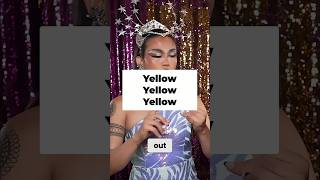
In this short dialogue, two speakers explore the layered symbolism of the color yellow in the Philippines. They begin by noting yellow’s historic role as a symbol of hope and resistance during the 1986 People Power Revolution against the Marcos regime. The conversation then critiques how complex political realities are reduced to simple color cues, framing the debate as a class versus culture war rather than a nuanced struggle. The speakers argue that elite interests suppress mass education to maintain control, advocating for free, accessible education. They cite journalist Maria Ressa’s warnings about social‑media manipulation and fake news used by powerful actors to steer public opinion in both the Philippines and the United States. Finally, they celebrate a reclamation of yellow as an expression of Asian identity, turning a historically derogatory label into a source of cultural pride.
Chapters
What I'm really interested in and what I really want to talk about is the yellow category. Yes, because one, historically in the Philippines, yellow has been like a symbol of hope, but then again, it's not. There's a lot of controversy behind the color yellow in Philippine politics because it was vastly used during the 1986 People Power Revolution. Yellow has been the color of the resistance during the Marcos regime. But the thing is, it kind of reminded me of that song again of Joey Ayala, Tatsulok, that it's not red. Red or yellow. It's not supposedly a culture war. Yeah, but it's supposedly a class war.
I really find it curious how revolutions are reduced to like basic sensitivities for human beings, you know, like we associate— in the case of the Philippines, we associated revolution to yellow at some point, but now it doesn't mean that anymore. Yeah, we resort to really basic concepts in order to accommodate a collective consciousness when in fact we are all capable of holding in our hands really complex concepts and complex politics and decide from that And yet, you know, these really simple concepts are still being used to not only manipulate but also control a population, right?
And, and another layer to that, and I'm, and I'm really glad you pointed that out as well, that humans have the capability to understand, uh, complex stuff, especially like in terms of politics or like political identity and all that. But it's always been being taken away from the bigger portion of the population. Folks who are rich and powerful do not want the, the masses to be educated. Yeah, that's why we're always like continuously pushing for like free education in the Philippines, make education accessible to everyone.
That's really interesting how we've gone so deep like that. But yeah, that is the case of, of us, of— that is the status quo of the world right now. That's why there's a lot of upheavals, because technology is actually working to our disadvantage, because it is being taken advantage by evil forces, shall we say. Yes, to manipulate, you know, choices in terms of politics or even choosing a president. Yeah, as in the case of you know, the United States and the Philippines as well.
Yeah, I think like I saw an interview of Maria Ressa letting folks know that social media in the Philippines has been used by the oppressors, or like the rich and powerful people who wanted to take advantage of the masses. They use it to propagate fake news, and it worked.
Yes.
Okay, one final thing about yellow. I'm just also like happy that they chose yellow, and it's Layshun. It has— it's rooted with the Asian identity. We are reclaiming something that has been derogatory against us. And now we're like, you know what? Yeah, yellow is our color. We're going to make yellow a beautiful part of the Asian culture.
Yes.
You might have used it as a slur to us before, as, you know, quote unquote, yellow-skinned folks. But we are owning it. Yes. And they owned it in the runway.