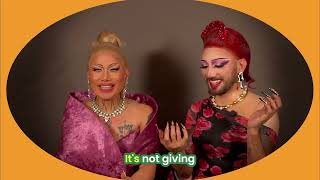
In this conversational interview, host SPEAKER B and guest Virginia explore the intersection of queer identity and spirituality. They begin by questioning the visual representation of Jesus, noting that historical accounts suggest a Middle‑Eastern appearance rather than a white, bearded figure, and argue that the lack of a definitive image allows personal interpretation. The dialogue shifts to the nature of God, with SPEAKER B rejecting a personified, gendered deity and emphasizing a universal, non‑human consciousness that interconnects all existence. Virginia reflects on her Catholic upbringing, describing how she reconciled her queer identity with a genuine appreciation for Catholic teachings while rejecting the imposition of a single “true” religion. Together they critique organized religion’s exclusivity, its tendency to create competition, and its historical persecution of LGBTQIA+ people. The conversation delves into pre‑colonial Filipino spiritual roles—Babaylans, Asogs, and Bayogins—highlighting how Spanish colonialism and Catholicism erased these queer‑affirming traditions. Both speakers assert that spirituality is rooted in caring relationships and community support, especially within queer circles, and conclude that queer individuals can hold faith without compromising their identity.
Chapters
As you know, we like to talk, and here you are, you're ready to listen. Virginia, please.
Virginia, please, at your service. Your angel, angel. I'm just your diva.
Um, Caucasian version of Jesus. Jesus Christ.
Well, he is, um, by accounts, historical accounts, you know, uh, he is not the white man with a beard. He is brown, or people would even claim he's black, you know, like bearded, um, Mediterranean. Yeah, Middle East.
Like in, in those areas, references, um, history. Yeah, I don't think I want to go there.
Well, I thought they wanted to talk about religion now.
Okay, I'll just have—
I'll have a leave, uh, okay, um, a simple statement.
Okay, sure.
I think that because no one really has, um, seen the, the face of Jesus, people are free, in my own humble opinion, to make interpretations of what Jesus would look like. So, you know, that's fine. That's really fine because we want You know, you're a visual person, just make a video, uh, how, what, whatever he looks like. I'm sure how great the, the guy is.
So yeah, yeah, I think there are really good lessons about Jesus.
Of course, as a believer.
Yeah, and that's why, that's why he's that popular.
Yeah, yeah, yeah, yeah, because in fact, you know, there's a toxic fan base, but there, there is nice. I really do think that the teachings are, the teachings are nice. It's cool. Golden rule, not do unto others what you want others to do. Something like that. Yeah, but if you want to go deeper, since you've opened up this discussion on religion, what do you believe in? And do you believe in a God?
I believe God is not a person.
Okay.
Yeah, I don't think— because it's too limiting, in my opinion. Yeah. Um, if we personify God, then you strip him— if his gender is male of all the expansive power that, you know, that you could be capable of.
Correct, correct. And might also encourage patriarchy, I guess, because it's like, oh, and I just—
yeah, I have so many contradictions about the personification of the god. I, I believe more in the spirit and in consciousness, that there is this greater power that we don't know of and that cannot be explained by science, correct, that governs not only us, not only this, um, um, Earth, not only our solar system or our galaxy, but the entire universe.
Okay.
Yeah. And we're all interconnected in that way. Whatever happens to us here is affecting everything else that is existing. That's my belief.
Well, that's, that's great. That's good. You know, I mean, if I, I don't want to question it, I— although to be honest, in the, in the Catholic, uh, way of doing things, I don't feel like with the personification creation is just one, because there's like God the Father, God the Son, God the Holy Spirit. And, um, it's a way to tie in, na lang siguro, a part of it. But I do believe kasi that there's universality of all of these concepts and principles across all religions. Um, you know, a belief in the divine or within is, is a belief. Like, meron tayo 'yan. Like, you know, and even if you don't, even if you don't, you do have to recognize that, I know, um, as, as human beings, we're supposed to be connected to each other. And yeah, we owe it, we owe responsibility towards each other, right?
Yeah. So yeah, I think what I told you before is that I think spirituality is in the relationships that you nurture. Um, and, and that speaks volumes about interconnectedness, correct? You know, and you know that because it's for me, that is more tangible. Kung pano mag-aruga, pano mag-mahal. For me, these are all different versions of the spirit.
So we can then therefore conclude that everyone can be spiritual. Yes, but definitely not everyone can be religious, which is fine, which is fine.
Yeah, because religious is the organized practice.
Yeah, yeah, yeah.
And we, we all know there's thousands of religions.
Yeah, yeah, yeah, plenty of religions.
What I really don't like about it, if I may have a comment, it becomes a competition, you know. We are the real church.
True, true.
I mean, it's not—
personally, I've heard of a pastor tell me that they uphold the standards of God, and I'm like, okay, girl.
Yeah, I mean, you know, the claim is salvation, right? If you're not part of this congregation, or you will burn in hell, you're not going to be saved. And yeah, for me, it's— that's just— I don't think I can limit the God to that.
Correct.
I know, limitation. Yeah. Yeah, so it just doesn't—
doesn't work.
It like doesn't sit well with me.
Yeah, it's not giving. It's not giving.
Not at all giving. Not giving.
But yeah, so much.
Yeah. Um, but you know, how did you grow up? Like, were you religious or—
I was religious, but I— when I grew up, I was able to kind of marry the concept of being queer and with my genuine appreciation for the Catholic faith that I was born in. You know, initially you were born in a family who's very Catholic. It takes a while for you to really understand what it is. And when you finally got it, then you have to decide. I decided to really like, oh yeah, you know what, it is a good thing to have, to have a belief system. But I also understand it's not for everyone, which is fine. We're not gonna shove things on people's throats. This is not the program for that. But, you know, I mean, I genuinely had an appreciation for how our beliefs can actually help us in, you know, day-to-day things. What I don't like is the imposing, you know, that your belief is the only valid thing. I've had a lot of people that would knock on my door and be like, "Do you want to be saved?" And like, "What?
How?
Do I need saving? But okay, great." But would only say that this is the only way to be saved. Like with that particular insert religion here, like this is how I can only be saved. I'm like, who says that?
Yeah, a lot of that relates to this conversation. Like, what does religion mean to you as part of the LGBTQIA+ community? How is religion relevant to us?
I think it's in a way that you're supposed to have, just like everyone, if you have the right to religion or the right to a belief system, then you as a queer person should not be deprived of such right as well. So you actually do need to exercise, because it is your right, exercise your right to a belief system. If that's what you believe, that's what you believe. What I hate about how it is sometimes here in the world is we are full of contradictions. On one hand, you tell people na, um, oh, it's— we have the freedom to religion. Of course you have a freedom to religion, but it doesn't also mean that everyone has to subscribe to your religion. And as a queer person, you know, if you choose to believe, it also doesn't mean that it negates who you are. You can be queer and a believer of something, and that can coexist.
For me, for me, naman, ano ko naman, second naman jan is history has proven that LGBTQIA people has always been persecuted in a lot of the most famous religions.
Yeah, but I mean, Catholicism, correct.
Well, well, yeah, we've always been, been forced to feel that we don't belong.
Yeah, but I mean, Joan of Arc for me was queer as fuck. I don't know if you know what I mean. You know, they might, you know, historical accounts may say, oh, there weren't queer people in, in the foundations of these religions, but they were. I would like to argue that they were queer people.
Okay, that's because I don't know, like, no, why is she a foundation?
No, I mean, queer people have already existed. It's just that the people who write the scriptures, you know, the versions of the Bible, tend to erase not just queer people but also to kind of place men in power, like patriarchy per se. Like, "Kunare ang babae hinogot sa tajah," or the woman that was from the ribcage. In translation, that was not a ribcage. Did you know that?
No.
Oh, di ba? Come on, like, you reduce a woman to a ribcage of a man?
Really?
But you know, we can argue, like, there's plenty of arguments for this one, but the point is, who's writing this stuff. That's a reflection of how the times were. But I would argue that even with all of these things that had happened, queer people are in the churches. There, there have been in the— and even the how they were bringing up these religions.
So yeah, let me add another layer to it.
Go, go, go, go.
I'm, and I'm talking about the Babilans.
Correct, exactly. Yeah, exactly.
When the Spaniards came and there was the Catholic agenda and there was the binary agenda, they introduced —to use to basically uphold the imperialism in the imperial country, which is Spain at that time. So what's your opinion on that? Because according to history, the Babaylans were singled out and were killed. Yeah, yeah. I'm talking about Babaylans is the occupation, are the shamans. And part of the Babaylans were the Asogs and the Bayugins, who were the queer identities that existed before the Spanish came.
So I think they needed something to vilify for their um, uh, motive to, you know, so they can get what they want. Of course, when they would introduce, um, Catholicism or Christianity, then they would have to say probably that, oh, that's, that's evil. This is how it is. Again, if the belief system of the Babaylans have already worked and already acknowledges that it's queer, so this is where I think, uh, when, when religion has been used to gain political power Um, but I would argue, supposedly, that whatever Spain did, which for me personally I already forgave them, but, um, you know, some would even argue that that was the, the gift that they gave it— Christianity. Uh, yeah, um, perhaps, but I think I would— I will also kind of it would be better to acknowledge that Spain was instrumental in deleting a lot of our culture. You know, like they wiped out, as you said, killed a lot of babaylans, you know, um, because they needed a common enemy. We can't fix that, but at least, yeah, we can learn from, from what has happened before.
I think what I've learned is that, you know, the fact that the Asoks and the Bayogins, some of them became shamans that we had spirituality. Ah, it wasn't a question about whether or not they converted to Catholicism, but in the beginning they already had a belief system. Correct. And we were part of that. I mean, I mean, the queer— our queer ancestors were already part of a religious practice. And so for me, it wasn't— it isn't a question about spirituality, but it's a fact that during When imperialism happens, you know, um, LGBTQIA+ people are marginalized. Yeah, especially in a religious context. Yeah, so, uh, from what I got is like, non-paban, ganun nai nai yare.
Yeah, even before, like, even when the Spaniards came, it just, you know, they really was—
But, but, um, again, you know, we, we are spiritual people. We are, we are. We are spiritual people. Exactly. That's why we have communities and our communities are really strong. We're the ones who actually save each other in times of crisis. And for me, that's spirituality. Yeah, for me, community is— that's how spirituality manifests.
Oh, that's weird. That's really nice. Virginia has a heart of gold, y'all.
Okay, that's nice. Yeah, and I guess we'll leave them with that thought.
Yeah, we'll leave you with that thought. And you know, queer people, we have faith and we love. We have the capacity to love.
Bye! Bye! Heart heart. Heart heart yan di ako daga. Bye!