Slaysian PersuAsian Episode 2: Girl Group Chaos & Runway Review!
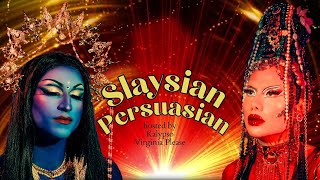
In this podcast episode Virginia Please and Calypso dissect Episode 2 of RuPaul's Drag Race Philippines: Slay‑sian Royale. They begin by noting the surge of post‑episode 1 promotional content from contestants, then move into the workroom drama surrounding the elimination of Madame Yoko and the strategic voting that led Siam to send Samting Wong home. The hosts explain the mini‑challenge “Kadang‑kadang,” a traditional Filipino game involving coconut shells, and celebrate Kiana’s win, which grants her the power to pick the girl‑group line‑ups. The bulk of the discussion focuses on the girl‑group challenge: how the international queens and the Filipino queens were split into separate groups, the cultural concept of “kapwa” (community) that gives Filipino queens an edge in collaboration, and the observable skill gap in choreography and stagecraft. They analyze the verses, highlighting food references used by international queens as a diasporic identity marker, while the Filipino queens lean into fierceness rather than culinary tropes. The hosts also reflect on broader questions of self‑representation: how Asian drag artists present themselves differently within Asia versus to international audiences, and they speculate how verses might shift if queens were placed in opposite cultural contexts. The runway theme—tech and movement—is examined, with references to designers like Hussein Chalayan and Cameron, and the hosts critique specific looks (Suki Doll’s organza, Venus’s fishnet, Yuhua’s subtle moving fingers, etc.). The judges’ critiques are summarized, noting recurring advice about confidence, personality, and choreography mastery. The episode’s top three (Brigiding, Arizona Brandy, Vignesta Luxx) and bottom three (Ivory, Something, Yua) are discussed, with the hosts debating the fairness of the eliminations and the impact of cultural dynamics on performance. Finally, they reflect on broader themes such as audience energy differences between the US and the Philippines, the tradition of impersonation in Asian drag, and personal pathways into drag, offering advice on stage practice and confidence building.
Chapters
Hello and welcome to episode 2 of Slay-sian Persuasion. I am Virginia Please, and I am Calypso, and today we're going to be talking about episode 2 of Drag Race Philippines Slay-sian Royale.
But before I want to go there, I just want to acknowledge all of the promotion that has came out from all of the contestants after the first episode. Have you seen some of them?
Oh my gosh, Siam reposted all those videos and photo shoots.
Where do all of these girls get the money for all of those productions?
Oh my gosh, right, right. Incredible.
No, but it was fierce. Um, Venus Deluxe, that Manananggal homage to her first season, did you see that with that really cinematic video?
Oh yes, yes, yes, the production value is definitely there. Each of these girls are taking their outfits and just doing the most because that's what they should be doing.
I know Arizona Brandy also came out with a video. And I think Siam Pussy also came out with something, right?
It's not just about a photo shoot anymore. It's about making an impact.
They are really taking the level up, up, up, up, up and away. I must say. It's really, really hard to reach, but anyways, time for episode 2.
Yes, episode 2. So we walk into the workroom, we're back. This is just when Madame Yoko just got eliminated. And it's kind of— it's still a little emotional. Um, Siam immediately kind of apologizes. She's like hugging Samting Wong, and she's like bracing for impact because Siam ultimately did decide to send Madame Yoko home.
Yeah.
Um, and— or yeah, Madame— or Siam decided to send Samting Wong home and keep Madame Yoko, and she explained that it was because she felt much more of a friendship with Madame Yoko over Samting Wong.
I don't really think that at this point Siam needed to explain explaining herself. I mean, Drag Race has been there for a while and this is usually the case, right?
Yeah. And to be fair, it's so early, so you really are getting to know everybody. But last moment, they had a moment last episode, they had a moment together where, uh, Siam and Madame Yoko were talking about their backgrounds. And I think maybe that moment was all that Siam needed.
You're building relationships. That's why she had to apologize to something.
Exactly. Do you think Kiana was being strategic in sending Madame Yoko home and keeping something, thinking like You know what, I can beat Something Wong another episode.
I think I believe what she said, that Something Wong was really doing the most. Doing the most. We all could see it. And Kiana did the most as well in her season.
OK, so her reasoning was her reasoning. It wasn't strategic.
It wasn't. It wasn't, yeah. What do you think?
I thought, well, honestly, both of them, you've seen how both of them have performed. And I think if I was Kiana, I would also be a little strategic in who I'm sending home. Maybe Madame Yoko could have shown a little More or less, we don't know.
Do you think Kiana really needed to be strategic?
I don't think so. I don't think Kiana has anything— between the both of us. No, no, no, you're right. Kiana doesn't have anything to be worried about.
But it's just one of the things I want to talk about later, about how the competition is going in terms of the level of skill that the Filipino contestants have. I mean, I'm not underestimating the international queens, but I just think that the Filipino girls in this competition are at a different level that they deserve to compete with the very best in the world. That's my perception.
That's your perspective. And do you think these are the very best from the world?
I don't want to throw shade.
Okay, no, no, okay, no. Well, I think it's also the home field advantage that I think we discussed a little bit because they are in their element, they are in their native country, they know everybody. Honestly, some of them could have just driven to the shooting location. With all of their outfits. Other queens would have to logistically have to pack everything into boxes and ship it over.
But girl, you could see it in the girl group competition, which we will talk about later. You could really see the difference in terms of skill level, in terms of the exposure, the number of times probably all these Filipino girls have performed already.
Together too! And with each other. They already know each other.
Like, they already have a production number, you know what I mean? They're very confident and they were just playing around.
Exactly, exactly. So, so we finish off, we start a new day in the workroom. Yeah, something is kind of energized. She's like, this is, I need to like show them. She has a fire lit under her, as they say. So they come in and then the mini— so RuPaul comes on the video message, and I thought this was really funny. She was name-dropping different girl groups and different Asian bands. She was saying Twice, I think she shouted Idol. She said a bunch of different things, and I was like, you know what, that it's— so we kind of got an idea that it's probably gonna be the girl group challenge.
Exactly.
And then we go right into the mini challenge, which is inspired by a Filipino game. Yeah, can you explain? I don't want to just be like, but tell us, tell us.
What's the name again?
Kadang-kadang?
Kadang-kadang, yes. So here's my thing, and this does not only happen with Filipinos, you know, when countries try to feature their culture, they try to feature this really old, like, traditional, you know, they really came from the eons ago. I mean, it does say something about our culture or each country's culture, but I mean, I think I question like, what do you necessarily learn from that in terms of— am I, am I getting into something?
Yeah, I mean, I mean, you're right. I mean, I think they— because this isn't just this season, like every season they've done some kind of like game, whether I think like they've done like musical chairs before, uh, they've done the one where I forgot Alarma, where they like lift everybody. But I don't think it was a mini challenge, but I'm just saying, it's like there's a rich history of these kinds of like social practices and games and activities that I like how it's being showcased.
I guess I'm very too critical about it.
But so the game is putting coconut shells on your feet and running with them. Like that's the game.
Yes.
Right, okay, okay.
That's the game, yeah. Nobody does that anymore.
Okay, so it's like an antiquated—
Exactly. Would it be like rolling a circle with a stick The point was for the audience to learn something about our culture. For sure, you'd learn something that nobody does anymore in the Philippines. But I guess that's part of our culture, right?
Right, right. Okay, so everybody is in quick drag. They come out, they have the coconuts tied to their feet, and they're running across. And the winners are Kiana. Kiana, again, you're a mini challenge slayer. Move out, Mathilda. So, so far she is our new mini challenge slay-sian slayer.
Yes.
So she wins, and because she wins, she gets to pick the girl groups.
Yeah.
Because it's introduced that it's girl groups. And she doesn't even finish naming everybody. She picks over the first 2 girls and she said, "All the Filipino queens, come over here.
We're a group." Do you think that that was Kiana's decision or that was an advice from the producers?
You know, I'm curious. If we're thinking about production, I'm like, where did they get these matching outfits? Did they tell all the international girls, "Come and like bring a pink girl group look." And did they tell all the Filipino queens, "Bring like a green girl group look." I think it's very strategic because there would seem to be a competition against the Filipino girls and the international girls.
That's a good story, right? That's a good narrative.
Well, even in the top 3 that they had for the mini challenge, I feel like, I feel like, I feel like if it was an international girl who won, she would have definitely picked some of the Filipina queens. Because I think, you know, like, if I, if I, if I was there, I would have immediately picked Yana if she wasn't the one picking, right? Because you know that she's a powerhouse. She can write lyrics, perform. Um, so I think Kiana was like, let's just show the world how Filipino queens can be.
Yeah, and this is the point where I started feeling, oh my God, there really is a disadvantage and advantage for the Filipino girls. And I'm like, why? I mean, why did they even have to come? I mean, you know, I questioned the competition already. I mean, maybe the Filipino girls, they can compete against each other. I'm not saying the other international girls can't, but I'm just saying like there is a disadvantage and an obvious advantage.
Yes, yes, you're right. But I think, I think maybe as the season progresses— I mean, like even last week there wasn't just one Filipina queen in the top, it was also CM. So it's like, I think there are opportunities, and I think they even mentioned it, like what will happen when one of the international girls— yeah— is the winner and in the bottom there might be a Filipina queen? Then you're already setting up that rivalry of—
you're right—
well, let's get rid of them because they're so good.
Yeah. And maybe I'm just— again, I'm very too critical, and you know, when you're there, it's I'm not taking into account all of the pressure and the stress that each girl has to go through. Even if you are very skilled and very experienced, at some point you also break, right?
Absolutely. And I think so they split off into these groups, and one thing immediately, all the Filipina girls are like kiki-ing with each other, like, "This is the first time we can talk to each other in Tagalog and not in English," because it's just amongst them. In the other group, it's like very serious, it's like 'Who's gonna do what?' 'Who can do this?' 'Who can do that?' Everyone's just looking at each other because they don't want to jump up and say, 'Oh, I can— I'm a really good dancer. I'm a really good singer,' because they don't want to set themselves up.
Yeah.
So everybody there is just kind of like seeing who wants to talk first, while the Filipina girls are like, 'Girl, we got this.' Yeah.
I would argue that it would have been more interesting if they were mixed. Oh yes, because they would— there would be a challenge in terms of, um, how they work with each other and the level of skill, like I said, you know, I mean, if you, if you like it, I mean, it was already obvious in Sam Ting Wong's group, not everyone knows how to follow choreography and thus the difficulty, right?
Yes. I mean, uh, yeah, we're gonna get there, like, because they, they come in and they, they're, they're already discussing like, I don't know if I want to take responsibility for this solo.
Exactly.
So then they go in and then they're talking to each other about, okay, so the first international group comes in And they record their verses with Maxi. So I think it's really cool how we get Maxi integrated into this season. Yes, she's already been here for 2 episodes. She's a great singer.
She is a pop star.
Yes, I've seen her music videos. I've seen her music. It stands out. It just stands out. It's perfect.
Yeah, someone told me that during her season, it's like, if Maxi was there, you would have just backed out already because she is a perfect queen.
Yeah, I mean, she's charismatic, she's super talented. And she was on Queen of the Universe as well, which is the singing competition.
Her personality is just— yes, on top.
So, uh, she comes in. What I thought was really funny in this moment, they had name tags. Everybody had name tags, which I thought was silly. Like, I was like— I mean, it made sense. I mean, logistically, I'm like, how can you know everybody's names? You're seeing them for the first time. But I noticed that— yeah, it felt like that because I noticed I'm like, do they have name tags? I mean, it makes sense. I've always wondered, like, there's no way these like guests coming in know everybody's names, so they have to like maybe But I thought that was silly. But yeah, they record their verses, something's kind of going off with the vocal. She's like, oh, I can really turn it out. And she's like, this is so good. She's like, me, Maxi, and the producer are having such a good time. Yeah, we're like really killing it. And she's really feeling very confident about her performance.
Um, she, she really showed off, and some of the girls didn't like that.
Yeah, I mean, you're intimidated. You're in a setting where you're competing, and you're like, oh, she's really showing off, and she's really popping off.
I mean, it's your time to show off. Really, when you're there, you have to give it all, right? I mean, you're all— yeah, yeah.
Um, so then, uh, the international— or the international girls are done with theirs, and then the Filipina queens come in. They're all singing, they all do really good. And then here's when the first, like, drama comes, when the international girls are starting to choreograph. And this is where it gets tough, because if you wrangle 5, 6 drag queens together, everybody, when they perform, they are the star.
Exactly.
So coming together and doing anything collaborative is always a Like, it's tricky navigating that.
Yeah.
Have you had any experience like doing a group number? Like, have you been in charge of like planning together?
I haven't been in charge, but I always try to follow and always try to catch up as much as I can. I mean, I'm not the dancer queen, but I mean, you know, I can dance. But like I said, the skill level and the amount of time you've trained and performed as a dancer really contributes a lot. And I think that's the problem in this group. Yes.
Yeah, because Kitty and Something are kind of taking the big brunt of it. They're saying, okay, Kitty's like, I will do the blocking, and then Something, you can do the choreo. And then queens aren't able to do it. Yeah, and I've been in this situation too where it's like, okay, where's everybody's skill levels? Let's just go to the lowest common denominator.
You're a really good dancer, girl.
Oh girl, it's similar. Like, I could do my own thing, but then if it's like learning choreo, learning this, it's like, ooh. I think every drag artist especially as they perform more and more, they get their own performance style and they're comfortable with that.
Yeah.
I just did a dance choreo class the other day and I was struggling. I was like, this is— I need like 2 hours more. And you can only learn so much when you're in such a time crunch.
Exactly.
But thank you. Thank you. I can move. That's it. That's all I'll say.
No, you, girl, you, you, you can dance. Thank you. I must say.
But yeah, so they're like learning, they're doing their choreo, and then there's changes happening all the time. It's like, we can't do this, I can't do this, we can't do this. And one thing that I really found funny was, uh, something was— back to the recording— something was giving suggestions to Yuhua, and Yuhua was like, this is my verse. Yeah, I don't need you. I don't need your suggestions. But with a grain of salt, I think that speaks to like, you're a drag queen, you control everything about yourself. You have a little bit of that diva in you.
Yeah, because I can also suggest that If you're— someone is bugging you about something that suggests that you don't know of, it also catches up on your insecurity and your self-confidence. So it was very smart of her to like shut it down.
It's like, yeah, it's like, and I think something was coming from like a genuine place of like, let's make everybody sound good. But at the same time, it's like, you guys don't know, you don't have the rapport.
Yeah.
So you can't just be like, hey girl, do this. It's like, you are sing like this. And she was like, "No, we're not doing that." But yeah, so then the Filipina queens come in, they do their choreo, seemed to be very fluid, very dynamic.
They were just laughing.
They were having such a good time. There was actually a, I spoke to a Drag Race girl, it was Bombay actually, who told me that coming back for All Stars is like going on vacation with your best friends. And that's what she said that she would want in an experience if she went back for All Stars. And she said if there was an all-Canada All Stars she would do it because you're with your friends, and I felt like that's what was happening.
These Filipino girls perform together all the time, and they perform so many times in a month. Yeah, in like really big productions. Yeah, and so that way it was an easy breezy process for them.
Absolutely. So yes, we go right through there, and then yeah, and then that's pretty much it. That's all that happens there. But then we go into the— it's the next day, they're getting ready for the runway, and there's already a little bit of tension between— I think it was so funny, it was Ivory, Yuhua, and Something all having a conversation together and it was getting heated. I was like, they were also the bottom 3 for the episode. So it's like foreshadowing when they're like, well, who do you think did the worst? Well, who do you think did the worst? I'm like, girl, all 3 of you were the worst.
Well, let me ask you a question. Who do you believe the most, um, in terms of their claim on who fucked up? Um, sorry for the word.
Oh no, no, who messed up? Who messed up?
Yeah. Um, something— well, or—
I think it's tricky because we only see so much. Yeah, right. It's like they're doing this for 2 days.
Yeah.
And we only see like an hour. We see 16 minutes of it.
Yeah.
So I feel like something— taking the brunt of the choreo also means that you have to fall, you have to fall. Like if you— yeah, if it's like you falling on your own sword, like you are taking all the choreo, you're taking the responsibility. That means that you're also gonna be responsible if people don't do it well or if it's not that good in the final product.
Yeah.
So I feel like maybe there were challenges, but I think that's where communication is really important as a team.
Yeah, I, I also see something in there that's culturally based. You know, the Western culture is really about individualism, but you know, we— I will speak for the Filipinos— we are known for the word kapwa, which means community, and that's why we're so good at collaborating with each other. Yeah, and so we do— there are instances where, you know, we don't agree, but most of the time Kapwa prevails. Like, we consider each other as part of each other, and that's why it's easier for us to collaborate and work together. Um, not to say that, um, the state of the Philippines right now is really, really good. Um, I don't know if it has something to say with, um, with a kapwa culture that we have, but I know it's complicated politics and all of that.
Right, right. Yeah. Oh, that's, that's really beautiful insight to have. I think that's a very non-Western tradition.
Exactly.
Like, that's so many countries and cultures just prioritize, like, you are part of group. You are not by yourself.
Yeah, I've literally been in, um, in a retreat where, um, I was— we had facilitators from the US and from the Philippines. And of course, we— I live here, but I easily blended with the Filipino facilitators. But the, the US people, they were fighting and they were on each other's throats, unfortunately. Yes, I'm not generalizing, but no, no, that's just your—
that's your lived experience. Yes, yes, your lived So then, yeah, so we go through, they're discussing their shortcomings as a group perhaps.
Before we go there, does India have the same thing?
I would say, I would say in my own experiences, I definitely feel like you do so much more for the society and for your culture and for the overall group. There's much more of a reliance. I think now it is changing. I think now as people are moving towards having the nuclear families of just 4 people, Before, it used to be like, it was very common to just like move in with your family. Like you, if you are married, your spouse would just come live with the rest of your family and you would live in these really large group settings and group homes. But as industrialization happened and as people like go into modern life, people are mimicking what they see in the West where it's like, okay, no, you know what, this is my parents' home, this is my grandparents' home, this is our home. And I think that disconnect, I think there's pluses and minuses.
Yeah, you're right, I was gonna say.
Yeah, 'cause when you live in a group home, you kind of lose access to privacy. You're kind of like one person is delegated is a decision maker, and there's a lot of clashes that may or may not happen. It might have been out of necessity back then, but now when everybody has the affordability, everybody has the opportunity to live by themselves, that's what they prioritize.
There's also a societal pressure when you're so community-minded. You're pressured to obey and follow what the community dictates, as opposed to when you are, um, when you have an individualistic point of view, you are more free to decide for yourself and not really depend on, you know, the rest of the society.
Exactly, exactly. And I think the same can be said in a lot of different Asian cultures. I think as it progresses, people are valuing their individual identities rather than for the group.
Yeah. And then the girl group performance happened, the much anticipated one. This is the most anticipated segment in the Philippine Drag Race.
Absolutely. I mean, every single season has produced such iconic songs.
I would say season 1 is still the best. Boosh, right?
Yeah, literally. I think when I met Toring, the first thing I said was boom, because that was so iconic. Yeah, no, right, right, right. I think there was a clip they even talked about it. They were like, when we were— I think it was, um, uh, Brigiding was talking about how when she was performing it live, like, the energy in that room, everybody's— everybody's— yeah, everybody's singing along, everybody knows all the words.
Yeah, that was the most iconic one. Yes, in all of Drag Race franchise. I'm sorry.
Oh sure, I mean, yeah, I think they even ranked them internationally and like it, it stacks up. You don't even need to know the language to know that somebody like slayed it. Yeah, because I think— because I don't think there were subtitles for the verses, but I still felt like I enjoyed— I like— I will get there, but like I think like even without the subtitles you can tell like who is the energy and the intensity they all just ate in season 1. Oh yes, because that I think was just like, we have something to prove, we need to put this franchise on the map, and that's exactly what they did. Yeah, we're still talking about Bush. Yeah, yeah, yeah, yeah, yeah. But yeah, so there, the international queens come first. The choreo is a little shaky here and there. There's a little bit of out of sync. Yeah, I think the main thing is like, it goes to what you were saying.
There's the disadvantage is more— it has become more and more obvious.
Yes, performance. Yes, because you're right, this style of performance is much more common in the Philippines. Yeah, they're doing group numbers, large-scale productions.
Yeah.
And perhaps a lot of these queens are just used to performing maybe in different spaces, a bar or cabaret, where they're just the only person on stage, smaller stage.
In the Philippines, they have backup dancers, girl.
Oh girl, it's fierce.
Yeah, yeah.
And like, because a lot of these queens, I think that's one thing to think about too. It's like, it is one thing to have stage presence, but you need to know where your stage is. And for a lot of these queens, their stages are probably just smaller, and that's just the reality of it, you know? I mean, the places that you and I perform are much different than you know, these large-scale sweeping background dances, huge productions, right?
Yeah. But aside from that, um, who is your favorite in the international?
In the international, I think the top— I'm gonna— I don't want to rank them because I think it'll be too much. My favorite was Tsuki Dolls because my favorite thing was when she like went backwards and she had that hair, the human hair model was moving, and she was like really using everybody. She was using up the whole space to make a moment. And I think also Kitty really surprised me.
I— she's my favorite.
Really?
She's like that entrance of her. Yeah, like a drama in it. And also her voice was deep and sultry.
I loved it.
Yeah.
And I also like how she finished it with a cartwheel. She's like, oh, I'm showing you this stuff.
Yes.
Uh, so yeah, I think those two, those two were my favorites. So it was Kitty and Suki for me. Siam also did great. Our girl, she did great.
Of course.
Yeah. Um, I actually do want to talk a little bit about their verses because Siam came in actually Even the, the song itself, Asian A, right? They talk about serving with a side of rice, which I thought was like, okay, okay, here comes the food references. Yeah. And then Siam's verse was like, we have mango sticky rice, we have pad thai. And I think it's so funny because from an international perspective, when you think about representing your culture, oftentimes you think about food. Exactly, right? Because yeah, even in— I like, I've studied this, like even when new generations of immigrants come to a country, the last thing to go is food. Like, they might assimilate in other ways, but their food culture remains with them. And I think that translates a lot to these queens who are experiencing or doing drag in a Western space. They go back to food.
Yeah. Can you remember the tune again in the chorus?
The chorus? It was like— oh, I know I can't, but like, I just thought it was rice.
Rice.
Rice. I was just like, rice.
Yeah. I mean, rice is a stereotype, but I don't think any Asian complains about that.
I don't know. I mean, it's like valid, valid. I mean, if there's one thing that unites the entire Asian diaspora, it's probably the presence of rice and cuisine.
Remember Ari Ayola's performance at GAPA runway?
Yes, yes.
And I rise up.
Or even like, that reminded me, like during that same time period, Eva Le Queen on Global All Stars did a similar rice cooking performance.
Exactly.
So it's funny how like our international perspective as Asians is like let's talk about food. And in fact, that doesn't even stop with just like the references here. I know so many South Asian drag artists whose names are food.
Yeah, like who?
Okay, I'll list them. Like a lot of girls who I know, like in New York, I was just there for Dragastan. We have Ruabsa, which means rose syrup. We have Malai, which means cream. We have Kulfi, which is a type of like ice cream. There's Masala Sapphire out in Chicago. Masala, we're talking about masala. So there's all sorts of queens who just have food names.
And Masala's surname?
Yeah, I mean like, yeah, it's just like, it just like means like spice and like, like, it's so, it's so funny to me. When I was picking my name actually for drag, I was like, no, I said no food, you can't be food. But, uh, when I first started, I was like, what if I did something like curry? Like, I was thinking about like spicy.
So many curry drag queens, right?
I'm like, let's not, let's not do that.
Like, yeah, who do we know in the, in San Francisco has a food as a name? Sushi.
I always make this joke, only in San Francisco will you find a drag, a drag artist who is Thai with the name Sushi. Yeah, I remember when I was doing her show and I was like, that's so funny. And her show's name name is literally MSG.
Yeah.
And like, we have the Rice Rockets. Yeah, we have the Rice Rockets. We have MSG as a show name. It's just so funny how like Asian drag artists go immediately there. But yeah, especially I always thought it was funny. So when I was coming up with drag names, I was like, I'm gonna— I'm a South Asian drag artist, no food.
No food. Yeah. But I guess it's the easiest way to be funny about—
yeah. Oh yeah, I mean like pun names make sense in all cultures. Every drag artist all across the world has like names that are play on words or references to specific things. But I just think it's interesting, especially as Asians. I mean, none of these queens have food names.
Yeah.
So to be fair, that's not the case. But Siam is talking about food, Ivory Glaze is talking about milk tea. Milk tea. So I just thought it was interesting how those references came forward. But the Filipina girls weren't making food references in theirs. You know, so I think that was a uniquely like, I'm an Asian living abroad, or like, this is— I'm pulling food culture to the forefront.
Yeah, it's interesting also how they have as a group a different mindset and choice in terms of how they wanted to approach the verse. And it's interesting that the Filipinos did not choose food, but the international queens did. Why do you think that is?
I think it goes back to the idea that when you are a minority, or perhaps you are a cultural minority in the spaces that you are, you think about all the things that are associated with your culture. And a lot of the times food is the thing that is the most popular. I mean, if you go down the street and you ask a non-South Asian person, what do you know about India? What do you know about South Asia? They might— their experience with it might be through food.
Yeah. And I guess the Filipino queens, they didn't feel the need to reference the food because they're already in the Philippines.
Exactly. They were too busy talking about how fierce they are.
But like Uh, these are my sculptures.
I know, I don't want anything to happen to them. I wanted Lady Susan because I wanted to go with the theme of the runway. Yes, this is perfect. Um, but we'll talk about the verses real quick. So we finished the, uh, the, the international queens.
Yeah.
And I thought it was funny how they, like, it was seamless between the groups. Yeah, it wasn't like clap clap clap next. It was like, it almost felt like the international queens were opening for the Filipino queens. See, I told you.
No, you don't say it, but that's what I was talking about, right? Not to underestimate, but I'm just saying The skill level is not the same, right?
Yeah, right, because as soon as they move to the side and the entrance of the Filipina queens, that was iconic. And then at the very end, they kind of do a little dance battle. Yeah, and the international queens are doing their thing, and then the, the pans to the Filipina queens, perfect sync. Everybody's doing the exact same thing down to the microsecond. Yeah, um, and then the performances are done. But I thought it was interesting how matching—
What was your favorite?
My favorite? Okay, yes, from the Filipina queens.
I—
Vinas really gagged me. I didn't know that she could do the splits.
She did a split in season 1. Oh really?
Okay, I thought—
very last, uh, very last part of the performance.
Okay, well, perfect, then it was a callback. It was a perfect reference. There was just something, as soon as I saw that, I was like— I think she was dragging across the floor too.
Vinas is fierce. She does Beyoncé performances.
Oh yeah, incredible.
She's amazing.
Incredible.
Oh, shout out to you, Venus, and Brigading as well. Especially live. Oh my God, yeah, yeah, yeah.
Actually, that's interesting because there's a culture of, uh, impersonation. Yeah, especially in Southeast Asia drag. I know in Thailand as well. Yeah, um, I think the mindset is if these artists are never gonna come here, we will create the illusion ourselves, right? Because there's like Gaga impersonators, there's Ariana impersonators. Every— queens have more of an onus to do impersonations. Yes, they can bring that experience to a place maybe that can't come.
Yeah, exactly. I mean, that's the bread and butter of drag, is because we're lip-syncing all these pop songs. Sometimes we don't impersonate, but we actually lip-sync the songs of all these pop superstars.
That's very true, that's very true. I think I've never done an impersonation per se, yeah, exactly, but when you do a song, you are channeling aspects of that artist, yeah, and making it kind of your own.
Impersonation can be a double-edged sword. I mean, because you're expected to like really copy, or if not, be really funny about That is, right?
Yeah, absolutely. Well, I'm actually— do they do this? I'm excited for Snatch Game then, because I think that'd be interesting to see this mix of queens do it.
Yeah, because the references, right?
That will be interesting, right? International references.
How is that gonna be?
Wow.
How are they gonna judge it?
Even like, like, let's think about Season 2. I mean, Arizona was Adele. Yeah, right. That was still an international reference, but she was still making it funny.
No, but I'm just saying, yeah, will the international queens get the reference?
That's true.
And vice versa. That's true.
That's true. I mean, yeah, I'm sure like I'm sure the Filipinos—
And who's judging?
That, well, we'll get to that episode. We're already thinking ahead. We're thinking way too far ahead. Yeah. But yeah, so then the runway, so time for the runway.
Yeah.
So the runway theme is tech. Movement has to be in your outfit, some kind of movement. That was the key thing. And what better way to represent that here with the movement of these beautiful sculptures?
Exactly. I'm gonna make a costume with all of these headpieces attached.
Oh my God, I was like, wait, how heavy are these? Just kidding.
But yeah, um, do you know the designer Hussein Chalayan? Have you seen the fashion show where all these dresses fold and unfold? Um, it was, it was in the early 2000s. Okay.
Yeah.
And that's what I thought when I saw this segment.
That was the inspiration, you believe?
And I expected more.
More? Yeah, because it's tricky because that's such a tall order. Yeah. And I think you can only ask ask all-stars level queens to execute something like this.
Yeah.
Um, there is a designer here, I believe his name is Cameron. He does something similar with like mechanical. He recently came up with like a tentacle dress. Yeah, I think movement is so interesting.
Yeah.
Uh, but we'll go through the runways. Who are some of your standouts?
I mean, Suki Doll, did she have something moving? I really love the fabric, by the way.
I think, I think her interpretation was she said that she got a very special fabric. Exactly, a certain type of organza from Japan.
That's what I thought about it.
So I think that was the— I think when she heard tech and movement she was thinking, what can we do in a very technical way rather than like technology?
Fabric as technology.
Yeah, because to create that textile, it takes a lot of innovation. Research. Yeah, exactly.
Yeah, yeah.
So I think—
I want to have one of those.
No, I was— and I think she said something about moving by itself.
Yeah.
But I think because she was also moving, I thought it was moving with the air, but maybe she had like a fan or some kind of element that was moving it.
Yeah. But well, it's open for interpretation.
Yeah. And I think it was beautiful look. Beautiful look.
I loved it.
And we know that she has that stylistic mind.
Yeah. And she's a designer, girl.
Yes.
Yeah. I really love the dress and all the getup.
Right. Did you have any other favorites that were like that fit the brief more perhaps for your taste?
Venus was—
No, Venus was my favorite too.
Venus was my favorite. At first I was like, I was biased because Tec, I expected I expected like science fiction, like, you know, but she came up with the fishnet.
That was my favorite.
It's not very tech, but when they— when it— I'm like, oh, there I go.
That was— yeah, and she hit it because we couldn't see that coming. Maybe it was like shock activated or something.
Exactly. I have one of those.
You have one of those fish?
Yeah, it's for the cats.
Oh, so as soon as it hits the ground, it'll start moving?
Yeah.
Is that how it works? Yes, that's— let me Let me— Gappa, gappa. That might be my standout. Me just— nothing to do with Mr. Legends, but I'm just going to throw fish that are attached to my outfit. That's— yeah, that was actually my favorite.
She was very smart because like you said, you don't expect it because you're expecting technology, high tech. But she came out with a fishnet and then when she threw it away, there you go.
It was beautiful. I think another standout for me— well, it stands out in kind of a bad way. Yuhua Hamasaki's era. Did you see Yuhua's? It was— she said that she had another idea that fell through.
She had to leave it with her luggage. Is that one of those cases where you bring too much and it's overweight and they don't allow you to bring it in?
I would like to see it. If she still has it, show us.
No, because I heard that there's a limit, right?
Yeah, yeah, yeah. There's probably— I think there's sometimes— I think for US Drag Race, there's like a weight, like a literal weight limit.
But you're right, if she has it, she should make a video out of it and show it to everybody.
Yeah, like, yeah.
But it was unfortunate where she was just like a robot.
She swallowed call it a battery. Yeah. Oh, I don't know if this was— I don't know what to say here. Um, but, uh, Arizona Ivory had similar rotating pieces on theirs. Uh, Something Wong's was very subtle. It was just the fingers that were moving. Yeah. Uh, that kind of reminded me of the AI runway on Canada vs. the World Season 2. Um, uh, LaFille kind of did a similar look where it was like, if AI interpreted a drag artist, how would it do it? And it was just like all the extra hands, extra fingers. And then who else kind of stood out to you for runway?
What was that all about, by the way? All the hands?
Yeah, I don't— I mean, even I think one of the judges said it kind of looked like AI. Like, because, you know, if you say AI generate a drag queen, sometimes there'll be extra fingers or extra toes or extra things. I don't know what the reference was either, but I think it was that. It's—
you have to Really go there. Yeah, really think about it.
Yeah, yeah, yeah. But yeah, I think it was a good runway overall. I think it was, but you're right, I think the expectation was just a little bit higher because based on what we've seen internationally with this kind of thing.
Exactly. I mean, I like Brigading, although I really like that in the head, but I thought that— how am I going to say this? Brigading is my friend.
What would you say to your friend?
I would say that she's too young for that sort of getup. That gives me sort of like this Madame, you know.
Ages her perhaps, or maybe it doesn't flatter her.
I mean, it's very good. It's very executed well. I mean, it's perfect and, you know, very opulent, but I don't know, maybe I'm biased. And you want to see your friend look as beautiful as possible. Because she is.
She is. Absolutely. I think sometimes it's okay to take a risk like that and be like, I want to show a different side of my character or show her a different kind of look. Yes.
What did you think about that, though?
I actually really liked it. I liked the gold. She said mirror, mirror, something related to that. I really enjoyed it. And I think the Filipina queens really fit the brief.
Yeah. I'm just one of the top 3.
Yes.
So my opinion doesn't matter. Yeah.
Well, yes, but then they call the end. So the challenge is over, runway's over. They call the top 6, right? Or the tops and bottoms of the week. So they said that it's not gonna be judged as a team, it's gonna be judged individually, which is always a little tricky because I feel like it was clear, obvious who the winning team was. But I think this makes for more drama. So the top 3 is announced. It is Brigitting, Arizona Brandy, and Vignesta Luxx.
Who would you have— who would you have chosen?
Actually, I think I would have liked to see Kiana in the top 3. I mean, I agree, I think all of them did really, really well, but Kiana's verse was really good, and she did that slow motion drop. Yeah, which was incredible.
I—
she defies all— she defies all logic, defy gravity, she does everything. Yeah. Um, and I thought her outfit was really good too, so maybe I would have put her in the top 3. But I agree with the bottom 3. Uh, we have Ivory, Something, and Yua.
Yeah, I think everyone will agree. Yeah. Oh my God, what am I throwing shade so much?
I mean, it's okay.
I mean, it's a competition and you can't help but judge because that's the point, right?
I mean, these are all opinions that are coming out of respect and admiration for the show, and that is what the show is about, you know, discussing and talking, uh, about our opinions. So, uh, they— so they go through, they talk through each of them. I really was like, Kiana should have been on the top, but it's okay. So Mama Pow actually starts it off very spicy. Yeah, she says, tell me who did the worst in your group, which I thought was very, uh, a spicy question to ask before the critiques even started. She's like, tell me. And, uh, immediately Ivory and Yuhua both say Sun Ting, and then Sun Ting has like a very, uh, emotional— she's very— she has a reaction immediately. She's like, well, if the choreo was too hard, I should have just said, you know, 'F you all,' and I should have just continued on. So we're already seeing— the judges are seeing that there was some kind of a little bit of butting heads, or there's some kind of issue with the choreography, and something may or may not have been the catalyst for it.
Yeah.
But then when the Filipina queens get the question, they're just so nice and congenial, and they're like, 'I couldn't name anybody,' until Vina says, 'I didn't get Bernie's verse.' I think I think that's the inherent problem if you gather these Filipina queens who have worked together for so long.
You're not gonna get any big issue girl because they've already acquainted to each other. They already know each other from head to toe.
Yeah, and I think also strategically they're like, we're gonna present a united front.
And you can see the frustration from Mama Pao's questioning because she was like, you'll just ask Venus because she's the only person who said something. Make into an issue. But this is not throwing shade, but did you like Mama Pow's hair? Oh, I love the silver thing, you know, and then there's that extra bun on top. I'm like, you probably didn't—
as someone, I can see where she goes, sometimes you just want to feel really— you want to feel your oats in a human unit. Yeah, and I think that's what she was feeling. She's like, get me the good auburn red unit and I'm just gonna feel my fantasy.
And when she removed that, the huge tinsel headpiece, yeah, when she removed it and that extra bun Still, like, the hair looks very synthetic and it looked real. I don't know if I'm throwing shade again, but what do you think?
I think, I think Mama Val makes a lot of interesting choices. Yeah, but I stand by her choices because— but you're right, I, I honestly keep the hat on, keep the tinsel on.
She just didn't need the extra bun.
Maybe that's what was carrying that. Maybe, you know, like, from an architectural point, that bun was what was needed.
What I was thinking is that there space in between so they needed to fill it—
fill the gap.
Yeah yeah mama pow's over but no shade Mama Pow is so beautiful she's very very beautiful.
And then on the panel we have Maxi and we have Jimbo. Uh Jimbo was kind of a pink look and Maxi's in this beautiful orange look. Um and then we go on with the critiques they kind of say you know you kind of fell short uh even when you don't know the choreography that were saying the same thing about me too like I didn't really understand what he said at all because my Korean wasn't good enough for him to tell me orange look. Yeah um and then we go on with the critiques they kind of say you know you kind of fell short uh even when you don't know the choreography they were saying the same a common theme, like, just work it out. Give, give us you. Give us your personality and don't be afraid. Because I think if you— I think when it comes to drag performances, if you're having a good time, the audience is gonna have a good time. If you let it slip that you're not having a good time, or if you feel uncomfortable, then the audience is going to feel uncomfortable.
Yeah, I, you know, that's— there's a learning curve into that. You know, I took theater arts and I also took lessons in dancing and acting, and for a while I've never practice those skills because I've, you know, concentrated on filmmaking and the corporate world. And if you don't practice it, then you lose the confidence as well. And it really took a while for me to really gain that confidence again. I'm just trying to— I'm beginning to, you know, get into that groove again recently. What about you?
When it comes to like performing and that style? Same. I don't have any formal background in anything. But when I was in college, I didn't study anything related to performance, but I still found opportunities to put myself out there. Yeah, it was actually the Boulet Brothers who said on a Reddit post somewhere— this was years ago before I even started drag— I was reading this, and so what someone asked them, what advice do you have for someone who wants to start doing drag? Yeah, and then the Boulet Brothers said, get yourself on a stage, because when you get yourself on a stage, you're gonna start developing your stage presence. So that's exactly what I did. Yeah, so I found opportunities to present myself in a space, whether that be like a dance club, whether that be speech and debate, whether that be, you know, doing student government, like anything that I could do to get myself in front of people. Yeah, I think contributes, you can translate that over to Dryad.
Yeah, I mean, there are girls who are very natural on stage, but for some of us, we really have to hone that, not just the skill, but just the confidence of being on stage and projecting yourself to your audience, because like I said, You know, the audience mirrors how you feel on stage. If you feel insecure and you're second-guessing, that's what they feel as well.
True, exactly. And vice versa too. If the audience is dead silent and you're turning it, I feel like your performance kind of goes down. Am I doing good? You could be the best performer in the world, but if the audience is just like dead and they're just quiet and they're not saying anything, not screaming, clapping, and you're like, what am I doing here?
It's an exchange of energy.
It is an exchange.
Exactly. Symbiotic.
Exactly. But I think in this specific again, since it's up to the queens competing to give that energy, because whatever you give— there is no audience too. That's another thing. Yeah, when you're competing on Drag Race, there is no audience. Yeah, it's just cameras and the judges.
Yeah, that's really interesting also because culturally there might be a difference, because some would say that the Americans are more appreciative than other cultures.
Oh, like when it comes to being an audience?
Yes.
Oh, interesting.
Yes, yes, yes, we are more supportive and we cheer people on. As opposed to, I don't know, the Philippines might be more critical.
Hmm, interesting. Have you performed drag in the Philippines? Not yet.
I have before, a long time ago in 2007.
Wow, okay, many things have probably changed in that time.
Yes, exactly.
Including your drag, the audience too. Yes, yes, definitely. But that is an interesting point. I think the thing that comes to mind is like those concert clips when artists travel different countries Yes, and some countries are just sitting quietly in their seats. Nobody is like standing up. Yeah, but then here in the US, everybody's screaming.
Exactly.
Even if they're in the cheapest seats in the nosebleeds, they are standing up screaming and dancing.
I think there's a queen who talked about this.
Really?
Okay. Yeah, because they travel all over the world. Yeah, they can compare which audience is the most fun and which audience doesn't give up.
Mm-hmm. Yeah, but yeah, I think that also goes to it, but that was the main critique that the international girls got. And then we go into the top 3. They named the top 2 winners as Vina Selects and Arizona Brandy. Yeah, and then the bottom 2 are Ivory Glaze and Something Wong.
Girl, I— when I was watching that battle, I was like, oh my God, this is so epic. These 2 queens are so seasoned performers, you know, and just the way they carry themselves and tell a story. They had almost had the same movements at some points, like the skin, and you know, they They've honed their skill. It's very, very, very evident.
It was very evident, and they know how to— you're right, the storytelling is the biggest part. Because I wasn't familiar with the song, I've never heard it before, but it was very evident that they— it was a studied performance from both of them.
Exactly.
They were singing like, okay, this is what these lyrics are saying, this is what I'm gonna give here, this is what we're gonna do here. And it was a good— it was a well-matched lip sync, I would say.
You can see the amount of experience that they've already had in their performance. Performance. And I would be so scared to perform against any of those two.
Absolutely. And I think what Binyas has— she talks about her mouth. Yeah, she has such a captivating mouth.
Exactly.
And I think, yeah, if you are a lip sync artist, then the way that your mouth moves is such a big part of making a performance, like, taking you above the edge.
I think that's what Arizona really banks on, her storytelling skills and capabilities.
Yes.
Yeah. Yeah, that was epic.
It was a great lip sync. Yeah, but before the lip sync, they're backstage and they're deliberating, they're talking to each other, and they don't have a traditional one-two, one-two. They're not talking one-on-one. Yeah, um, Something is very, very disappointed and angry.
Yes.
Um, she's explaining that like she feels— she's— it was— she was crashing out. That's what was happening. Kind of reminded me of Delta Work back on season 3 when she was just like, you know, taking the wig off, taking off her hat, like her outfit. She was just very disappointed.
Yeah, but yeah, I was listening to something and I was like, you know what, if a Filipino queen did this, if I interpreted into Filipino, she would be looked upon as like a really, you know, a queen with a huge attitude that you can't deal with. Because in translation, it doesn't sound that nice in Filipino. It sounded like, yeah, you have your heart, queen, that's that's really hard to work with.
I see, got it. And maybe that's what the— that's the vibe that the Filipino queens— because it's two Filipino queens picking, and maybe they're thinking about like, who do I want to be in this workroom with next week?
I wouldn't— I wouldn't— I can't think of any Filipino drag queen who would be in that state and in translation saying those words. Like, she was like, fuck them. Like, you know, yeah, yeah, yeah. Um, I— again, a difference of culture.
Absolutely. Yeah, I think that's exactly what happens when you mix these queens from different places together. But yeah, so Vinyas, after she wins the lip sync, decides to send Something Wong home. And I liked her reasoning. She, when she was picking the lipstick, she said, "This queen will thrive in a space that isn't here," which was like, it's kind of like a compliment, but also kind of like acknowledging the issues that she was having. It's like, it's not taking away from any of these drag artists. It's just like, it's clear that you are going to thrive not here. And that's what basically she said, which I think was a very diplomatic way of saying, Something, your time time has come to an end.
Yeah.
Um, and Ivory is saved. Ivory is very grateful. And yeah, that was, that was pretty much—
did you think that the elimination was fair?
And I was right. I think so. I think it was just, it just came down to something's story. It just come to a close. Yeah, it's tough being in that situation where she had a lot to prove and they found the instances that they needed to justify her elimination.
I mean, judging it based on track record, yes. Yes, I agree. But in this episode alone, I thought again something Wong did the most and really tried the hardest to stay in the competition.
I see that, I see that. In fact, I would argue out of the bottom 3, I maybe could have seen a point for Yua also being there.
Exactly.
Yua and Ivory.
Because girl, she didn't have the right, um, you know, maxi challenge, the runway.
Yeah, her runway was not up to par.
And then she struggled in the girl group competition as well. So I would have thought it was you as Twan.
Yeah, but I think the judges were very clear that they appreciated her perseverance.
Yes.
Which is like, I'm gonna keep going.
Yeah.
While Ivory, I think, was stumbling and was just a little too nervous for that.
Yeah, yeah. But these are just our opinions.
No, absolutely. And like, these, you know, it's like, like Vinnia said, yeah, these queens are beautiful queens, talented queens in their own regard.
Yeah.
It's just sometimes in the context of a competition, it gets tough. Yeah, I know it's so easy for us to stand here and talk about whatever we want to because we're not the ones in there. We're not in the position. But all of this is said with love. And of course, you know, once you're on reality TV show, you're like kind of like characters. We're talking about TV show characters. Yeah, right.
Yeah, yeah, yeah, yeah, yeah, yeah.
But these are real people. We love and respect all these queens.
Yeah. In hindsight, what have we learned in this episode? I'm always about, you know, even if there's—
yeah, I think there was a lot of, at least for me, there's a lot of internal reflection on how we represent ourselves as Asian within Asia and outside of Asia. Because that's what I was thinking about, because these queens, the international queens, their perspective when it came to writing their verses were very external. We are Asian, I'm Vietnamese, I'm gonna give you this, this is the food from Thailand. So that's what all of them had at the forefront of their mind. Well, the queens who were in the Philippines were like, girl, I'm fierce, this is me, me, me, me, me, and which is the point of the challenge. Um, I think I think the verses, this is like a mental exercise that I did. Like for example, let's say we took one of those Filipina queens and put them on an International All Stars. And we put one of these queens and put them back on their home country. Do you think the verses would have changed or stayed the same? You know what I mean?
It would have changed.
I think for the international queens it might have been almost pretty much the same. Because I feel like Siam, whatever season she would have been on, she would have talked about Thailand and maybe the Thai food, you know? But I think the Filipina queens, like when Marina Summers went outside, She was like, "I'm a Filipina, I give you this, this, this, and this." But in the Philippines, she doesn't need to say that.
She doesn't need to, yeah. I think we also learned about kapwa, the Filipino culture. Also the difference between individualism and community perspective, and the difference between the two and the advantage and disadvantage between the two as well.
Absolutely. Yeah. And that was evident with the way that the two groups tackled the girl group challenge.
Exactly. And yeah, this has been a good review. See you again next week for Slaysian Persuasion.
This is Virginia Please, and I'm Calypso.
Have a great day. Yeah, wherever you are. Bye.








