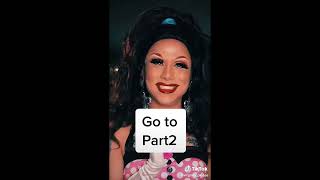
Filipino drag performer Virginia Please traces drag's political roots from her mother's use of makeup to evade the Marcos regime through pioneers like José Sarria and William Dorsey Swann. She weaves queer history, slang from Mexico and the Philippines, and urgent calls for safety amid rising anti-Asian hate and anti-Blackness.
Chapters
Hello, this is Virginia Please. I'm Virginia Please. Hello, this is Virginia Please. I'm Virginia Please. I'm a Filipino drag queen, filmmaker, singer-songwriter, go-go boy, immigrant queer activist, and beauty pageant titleholder all rolled into one. In short, I'm a nobody. Did you know that my drag name is derived from my real mother's name, Virginia? My mother was a political activist during the Marcos regime in the Philippines back in the '80s. And in order not to be killed by the military, she had to create a disguise. I would watch her put on makeup, eyeshadow, lipstick. Witnessed the power of drag firsthand through my mom. So drag for me is political first and foremost. Did you know that the very first openly gay man to run for public office in America was a drag queen? That's right, José Saria ran for supervisor of San Francisco in 1961 when it was illegal to be gay in America. RuPaul's Drag Race alum Honey Mahogany made history as the very first transgender leader for the San Francisco Democratic Party. Stormy DeLarverie is an African-American butch lesbian whose scuffle with the police ignited the Stonewall Riots uprising in 1969. Did you know that the Folsom Street Fair is the world's largest BDSM and leather subculture street fair? It is held annually every September and caps San Francisco's Leather Pride Week. At a march in 1985, in those terrifying early years of the AIDS crisis, gay rights activist Cleve Jones was inspired to create a patchwork quilt where each panel commemorated a person lost to AIDS-related illness. Back in the late 1800s, William Dorsey Swann organized drag balls in Washington, D.C. and named himself the Queen of Drag. Here are 4 terms to refer to queer people in Mexico. Number 1: Una loca, which means effeminate gay man or a queen. Number 2: Marica means gay or homosexual. Did you march with the Black Lives Matter protests last year? Well, guess what? Anti-Blackness and white supremacy are still pervasive. Hi, my name is Virginia Pleas. I am an Asian American, a Filipino Asian American, and so are my parents. I fear for their lives in the middle of this growing hate and violence against Asian Americans. First, you choose to get vaccinated because you know why? You're obligated to not only protect yourself, your family, your community, your country, and the entire world. What should you do when you don't know the gender identity of a person? That's right, ask politely. Did you know that we LGBTQ+ Filipinos have our own secret language? Yes, we do! It's called Bekimon, or formerly known as Swartzspeak. Hey you, what's the Filipino term for gay or queer? Bakla is an umbrella term that refers to a queer person in the Philippines. Hoy bakla! Bakla ka talaga? Bakla!