The RIGHT Way to Optimize Your Health ft. Humanaut Health CEO & Co-Founder Jim Donnelly
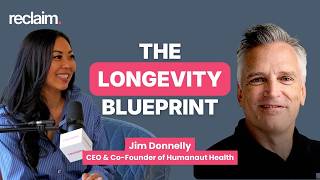
Jim Donnelly, CEO of Humanaut Health, built the company after his father's cancer and a car accident. The startup acts as a wellness copilot, starting with five basics: movement, nutrition, sleep, stress reduction, and cognitive health. Then it offers peptides, stem-cell therapies, and clinic services, with plans to open 100 locations in four years.
Chapters
I do think the whole world of wellness, health optimization, longevity, it's kind of the wild, wild west. It's obviously a huge category right now. There is tremendous consumer interest. I don't know anybody in my world— my world, you know, might be a little bit weighted in a certain direction, but I don't know anyone in my world that isn't looking at ways to optimize, isn't doing some kind of diagnostics, they're not doing some kind of wellness modalities, you know. And once again, I might live in a little bit of a bubble, but I think Clearly consumers want a more proactive, preventative approach to things and they're kind of lost.
Welcome to Reclaim, a podcast powered by Future Digital. I'm Destiny Berman, founder and CEO of Future Digital, where we partner with venture-backed health, wellness, and family brands to scale with trust. Each episode, I sit down with founders and growth leaders to uncover two things: the story behind the brand and the decisions behind the growth. Let's get into it.
Well, Jim, I'm excited to have you on. And we had just started to have a conversation around longevity. Jim is the CEO and founder of Humanaut Health, and I'm really excited to talk about the sparking of your latest venture. You've been an entrepreneur for a long time, a founder in the wellness space. Um, and so I thought maybe we could start this conversation talking about what sparked the origin, um, of, of Humanome.
Sure. So, um, my entrepreneurial thesis is I do things I'm passionate about, I do things that I think I'm gonna be good at, and I do things that I think are gonna be good for the society around me or the society or society at large. And so that, that, that's sort of the foundational underpinning. And then, um, a variety of things tend to happen that that move an entrepreneur to do something. For me, I was at Restore previously, Restore Hyper Wellness. Restore grew to 250 locations. I'd been doing it for 8 years. We'd taken in a large private equity investment. And to be quite frank, I was ready to do something different. I had gotten to the point where I'd use the word work, where I'd never thought of Restore as work before. You know, you start to have slightly different opinions with some of the folks on the management team. You start to have a different approach than the private equity group. You think there's more innovation to do. They think there's more optimization to do. And so you just wake up one day and say, you know, let's go do something different where you can reset the table and you can kind of build on what you've done. So that was the professional part. And then the personal part was my dad died of cancer. I had a strong conviction that if I had had Humanout at the time, I could have saved my dad. Not that we could have cured his cancer, but we would've caught it in stage 1 instead of stage 4. And for the type of cancer he had, like, like most cancers, early detection is key. And then number 2, I got run over by a drunk driver. I had a, a guy going through a red light at 65. I was going through a green light at 65 and it about killed me. And for a year I was pretty miserable. I physically was broken. My neck was crushed, my chest was crushed. And I, I couldn't sleep. I couldn't work out like I like to. And I went around the country and I found a stem cell doctor and he performed a procedure on me and it made me whole again. And so I said, there's something here that I want to explore and I wanna take things to the next level. And so all of those things aligned and, you know, that was it. I was ready to go to the next level.
A couple of things you said there. One, the fact that for the longest time you choose work that drives you and doesn't feel like work. Which is, you know, which is pretty incredible. And two, the fact that you've taken such life-changing moments and, you know, heartbreak and grief and turn that into your next venture and then turn that into inspiration and you're just here making it happen.
Yeah. You, you listen, I don't, I don't wanna overstate it. I, I'm not that deep, but you, you know, tho— those things do kind of accumulate. And you, you know, once again, going back to the private equity dynamic, the private equity dynamic a pandemic forces you to have to do things or not. And for me, I was not prepared to run the company in the ways I was being asked to run it. And I'm relatively unemotional about that because we had taken that money. I was, you know, I'm emotionally mature enough to say, hey, maybe if we can't get on the same page, it's time to go. And then, like I said, all the personal stuff is just the sort of call it validation from other forces that tell you, yes, your instincts are right, it's time. And, you know, if those things hadn't happened, I might still be running Restore, which, which I don't want to say would be a bad thing. But, you know, it was, it was just time. I think leaders can become wallpaper. I think, you know, my style of leadership, which is, you know, probably a little more lead from the heart, take care of people. You know, there comes a stage at a company where you're talking more about OKRs than people. You know, it was just time.
Yeah.
Yeah.
Well, I think your timing in terms of the longevity, even if that definition can be pretty wide-ranging, is strong, right? I mean, there has been a lot of attention in terms of not just wellness, but different bubbles around longevity popping up, whether it be the premium red light therapies, the saunas, the cold plunges. I was at the other ship in the Williamsburg location not too long ago, and now there has been a lot of attention beyond the traditional core customer of biohacking, let's say. And so I'd love to hear a little bit more about how you define Huminaut and how you define its offerings, um, and also who you're designing it for, because not everyone's going to understand it right away.
Yeah, you know, I do think the whole world of wellness, health optimization, longevity, it's kind of the wild, wild west. It's obviously a huge category right now. Um, there is tremendous consumer interest. Um, I don't know anybody in my world— my world you know, might be a little bit sort of weighted in a certain direction. But I don't know anyone in my world that isn't looking at ways to optimize, isn't doing some kind of diagnostics. They're not doing some kind of wellness modalities. And, you know, and once again, I might live in a little bit of a bubble, but I think that clearly consumers want a more proactive, preventative approach to things. And, and they just— they're kind of lost. And you're getting information information from influencers, you're getting information from the media, you're getting information from friends. And to be quite frank, a lot of it's uninformed or ill-informed and people are confused. And so our first dynamic we wanted to create at Humanaut was the notion of we are your copilot through all of this. There are lots of things to consider. It's very complex. As you get older, your sort of issues become exponentially more complex. Complex, and you just need a copilot to navigate it all. So, so number one, we think of Humanaut as a copilot. Number two, um, as, as a part of that copiloting, we want to reorient people in the foundations. And so my— the frustrating thing for me with a lot of folks is that they go straight to the last 1% rather than take care of the first 90%. And for all of the great things that you find in the wellness world, the biohacking world, the quote-unquote health optimization longevity world, many of them are the things you should be doing after you get the fundamentals right. So as, as cool as Humanaut is and as cool as all the things we do at the end, um, our, our foundation is make sure people are oriented around their movement, nutrition, sleep, stress reduction, and cognitive health. All of our care plans, all of our diagnostics strive towards a personalized plan around those 5 foundational things. When you take care of those 5 foundational things, you get great results. Now, once you have all of that in a good place, now we can get more specific. So that's when, you know, we'll, we'll take a person who's moving in the right direction and we'll say, what are the other issues you have? It might be menopause for a woman. It might be andropause for a man. It might be sexual health. It might be metabolic health, joint pain, healthspan, all of these things. But those things that are more specific come after the foundational stuff. Is, is, is on a good path. And then what I say is Humanaut brings all of the tools to the game. And so all of the exogenous molecules we use— peptides, we use hormones, we use supplements, we use medications, we bring in regenerative medicine. So we do stem cell treatments of all kinds— joints, hair, skin, sexual parts. Your stem cells, umbilical stem cells, under sedation, awake. You know, etc., etc., all these permutations of it. Then we have a variety of things we do in a clinic. We firmly believe that if you're going to get truly great results, you actually have to do things. And it involves a presence, it involves meeting with the clinician, it involves getting things done, everything from shockwave to PEMF to hyperbaric oxygen therapy to, to sort of more medical things. And, and then it involves tracking and behavior change. And so we put a ton of energy into our coaching platform. We put a ton of energy into all the things that are going to help people follow a game plan that's going to get them great results. And then we bring in things that you don't typically see in a medical offering. And I always say to people, if you remember two words from this entire thing, remember the word fun and remember the word guarantee. So the fun I'll take on first. We make the whole experience more engaging. We give our clients more license and more information and make them a part of the process. We bring in things like community so that we can create aspiration. We bring in things like community so you have support for these hard health goals you're trying to achieve. Then on the guarantee side, we think that we do it better and differently. If you come to Humanauts starting this quarter, You can sign a Humanaut pledge which says you understand what it means to be a Humanaut. It's a different way of thinking about your health. It's a different way of living, and everyone should want to be a Humanaut. And then we make you sign the accountability protocol. The accountability protocol says that if I do these things, the results are guaranteed. So what are those things? It's things like I'll wear a wearable device so the coaching team can track some important things like movement, nutrition, sleep. I'll achieve my goals 80% of the time. Not 100%. 100% draconian. No one's 100% compliant.
It's on my son.
Yeah, yeah. You don't want, you don't want to be 100% compliant. You, you want to have the latitude to, hey, tonight's a special night. I think I'm gonna have a glass of wine. I'm going to stay up a little later. I'm going to have some fun. You know, all those things. But 80% is a pretty good, good number. You got to check in once a month. You've got to adjust your care plan. You know, a couple other things. And if you pull all of that together, you get fantastic results. And I'll, I'll say this last thing and then I'll, I'll be quiet and pause for a sec, but I'll, I'll use metabolic health for example. 87% of our clients who come to us with metabolic dysfunction, prediabetes or worse, within 6 months have no sign of metabolic dysfunction when they sign the account— accountability protocol and follow all the things we need them to do. So if you compare that to traditional medicine, it's over 4 times faster and it's close to 3 times as effective in a much more fun, interesting way. And so when you can get those kind of results, you have a great business, you have an impactful business, you have something that, that people are gonna use and appreciate and stick to.
So I have quite a few questions to unpack from that share. One, and this is a good segment from your, uh, example of 6 months. So when you're reviewing the foundational period, how long is that? Is that typically 3 months, 6 months? 3 months? I'm kind of curious what that—
Yeah, you know, we don't think of healthcare as a point-in-time thing. It's something that's constantly evolving, constantly moving. And so we, we don't think you should expect great results in less than 3 months. We think 6 months is a little more realistic. So we'll have a lot of programs and packages around that. But to be quite frank, we think of it as an ongoing relationship. So depending on what it is, we don't want you to think of, I'm going to pop in and pop out. Now, there are certainly things that are very specific. And, and, you know, I'll talk out of the other side of my mouth. I wrote a book called Restore: The Power of Right-Away Wellness, and the idea is that we want to show people progress immediately and every time. My goal is for you to walk out of our clinic feeling better than when you walked in every single time. If you don't give people quick results, if you don't show people that things are improving quickly, they will not stick with it. So you got to give them quick results and, and continue to show them you'll feel better, you'll feel better, and you get them in virtuous loop. The better you feel, the more you do. The more you do, the better you feel. Because the problem in the world is humans are in the opposite cycle. They're in the, the worse I feel, the less I do. The less I do, the worse I feel. And, and that's kind of describing aging in America. But no one wants that. And, you know, and, and I use the analogy of a, of a 20-year reunion or a 30-year— pick the number. You go into that room and you immediately notice there are two kind of people. They're the kind of people on one side of the room that you're like, holy mackerel, who are those old people? They cannot possibly be my classmates. They cannot possibly be my peers. Who are they? And then you look at the other side of the room and you're like, hey, they're my people. They're the people that have taken better care of themselves. They're the people that have lived a healthier life. And you realize, hey, this can, this can go well. You can age well. You can, you know, it looks better.
Yes. And I appreciate that you are addressing the foundational pieces first because right now there's a lot of conversation around women's health, you know, HRT. And I am in complete alignment that you do need to address the stage before, you know, we start to add, you know, all these pieces. So that, that absolutely makes sense. Yeah.
You know, whether it's HRT for women or anything else, it always works better on a healthier body.
Who are your core customers now? Are these folks who are looking to optimize? Are they dealing or have undergone a health crisis in your example? Because I'm curious. Well, there's a couple of points here, but how are your customers having awareness around, around your offerings and who, who are the people you're speaking to in this phase?
We do get the health optimizers, and they come in all ages. Some are younger, you know, we start to get folks doing diagnostics even in their 20s. But the folks I consider our hardcore user, they tend to be in their 40s at the lower end of our memberships and in the 50s at the higher end of our memberships. And, and so the reason that is true is because that's when things start to get really complicated. So I'm a big believer that don't wait till things get complicated. So we love it when, you know, our sort of 20s and 30-year-olds come in and they get their data and they make sure nothing's completely off track. And, and, you know, that's good to have a baseline, but once you sort of hit different ages, especially over your 40s, things get really complex. And, and, you know, the things that you've used before, maybe it's a function blood test, that's all great, but now you need solutions. Yeah, you need solutions. So, so they're great at telling you what, what's going on with your blood panel, but, but now you have really complicated things. And people are far too trivial about women's hormone replacement therapy. It's very complex. It's multimodal. There's a lot of titration and experimentation, and, and you need someone who's a true partner with you there. And, and so we get the folks that, that realize it's going to take a little more than an AI printout. Um, and by the way, it's, it's, it's 50/50 male and female, and, and part of that is because of some conscious decisions we make. If you came in or your husband came in— I use the guy example better. If a guy comes in and says, hey, I want to look at hormone replacement therapy, our first question generally is, where's your partner? Where's your wife? Where's your girlfriend? Where, where's your partner? Because if we fix you and we don't fix your partner, we're not setting you up for success. We're actually setting you up for a very bad life outcome. So you got to think about it that way. We think about health as a little more like an ecosystem than an individual journey, and, and we want to make sure that that ecosystem is considered. You're not going to stick with things if, you know, if my wife is totally off the rails and doesn't appreciate good food and wants to go out drinking all the time, but I'm trying to go down my health journey and we're not on the same page, it ain't gonna work. And so we really do try to think about it like that. And so as a consequence, we do tend to get an equal number of men and women.
That makes sense. In terms of being their co-pilot, which I love that term, by the way, are they— do you find that your customers As far as is this in place of their primary? Is this in addition? And then also, do they have a dedicated clinician and coach, or how does that service delivery team work, especially with the level of personalization that's involved?
Yeah, this is in addition to your primary care. However, I will say that in many instances, because we are all about health optimization and proactively making you healthy, I would say many of our clients would literally forget forget who their primary care physician is because they just don't need them anymore. And that's the whole point— get ahead of it, be proactive, be preventative. Now, if you get strep throat, we don't want you coming into the clinic sitting in the lobby with strep throat. That is for a primary care physician. Now, on our concierge membership, if you have something like that, we might do your prescription so that you don't have to go somewhere else. But, but, but we don't think of ourselves as being your primary care physician. We don't replace that, but we do make them someone that you will visit far less often and maybe forget. It'll be a relationship that you forget over time.
And then in terms of their support team, I'm curious how that is set up.
Yeah, you have a dedicated team. You know, once again, we want you to think of your relationship as with Humanaut. There are, you know, we're a whole ecosystem. That ecosystem involves lots of medical clinicians, lots of different doctors. So at times we can bring different people into your care for different reasons. And I think that that's why we're better than the sort of one-off functional medicine practice or one-off concierge practice. They tend to be cult of personality businesses. It tends to be one leader who's kind of leading everything. And I will say health is too complex, too complicated. You need lots of folks working together behind the scenes. You need a sophisticated tech stack. You do need AI support and those sort of things. You don't need AI to replace the clinician. You need it to kind of do the foundation sort of easy stuff to tee up the clinicians so that they're doing the part that you care about. They have more time to spend with you, more time to answer your questions, more time to walk you through things. And so if you're going to a place that doesn't have all of that, a backend with lots of doctors, a sophisticated tech stack and lots of different support things, you're probably going to the wrong place. And, and I will say the thing I am most proud of, if you look at our medical team, for instance, at the corporate level, Our chief medical officer is Amy Killen, Dr. Amy Killen. She is one of the most followed, if not the most followed, doctor on Substack. She's absolutely a world-renowned expert on women's health, hormone health, sexual health. She speaks at more conferences than, than I think any other doctor in the world. She's someone that people respect. And so, you know, when you're coming to Humanaut, she's the back end part of how we provide care to you. Same thing with our regenerative medicine practice. Dr. Harry Adelson's one of the most respected regenerative medicine doctors in the world. He's been doing it for 25 years. Dr. Navarro, who's the head of our concierge longevity practice, he's been doing this for a long time, very respected. And so, you know, when you come to us that you've got a great team of professionals that are well respected and followed, you know that we're going to do things the right way. All of our, um, suppliers are vetted. All of our suppliers are third-party tested. If we tell you we have a peptide for you, you can trust that it's a peptide that comes from a good source, that it's good quality, all of these sort of things, because we have the scale and the infrastructure to do all that. I, I'm shocked at, at how cavalier people are about things like peptides. They'll buy peptides from Tijuana and, and, and, you know, and China, and no offense to those places, but they don't vet them. They, you know, they're cheaper, they want to save 20%. It's like, you're putting this in your body, you're injecting this in your body. It matters. You know, it's, it's crazy.
This may sound so obvious, and I'm just curious, how did you assemble such a world-class team? Is it timing, background, all of the above? Um, built high trust category.
I sort of say my superpowers are two things. I'm pretty self-aware and I'm relatively egoless. I'm certainly egoless in terms of not having the bad ego. And so I know what I need around me. I know what I'm good at and not good at. That. So I think that first of all provides a construct of who to go find. Number 2, I defy you to find people in the world that would say bad things about me or say that I'm a bad guy. I am, I am what I say I am. I'm authentic. I, you know, everything that I say people should do, I do myself. It's, you know, so I think people appreciate that about me. My reputation is my most valuable asset. I'm very proud of it. And so when I approach people, they are very receptive to talking talking to me. I think the third thing is the track record. When you've done things like Restore, when you've done things like I Go, You Go, which was my travel company that won a Webby Award for the top travel site in the world, when you've done, you know, all of these things again and again, you know, people are going to want to be a part of that. There's a belief there, there's, they, they, there's a conviction that this is the right team to be a part of. And then, and then, to be quite frank, I'm also a guy who talks about things like get your priorities straight. I tell anyone that works with me, don't get it wrong. Faith, family, work is a distant, distant third. Now, I also tell them there are gonna be times when you gotta work your ass off.
Yes.
But if you're missing your daughter's recital, if you're missing your daughter's soccer game, if you're not showing up for your husband or your wife and things like that, it's like, come on, what are you doing? The journey is just as important as the destination. I think the journey and destination dynamic is the final part. People know the journey's gonna be fun. My one promise I make to people who work with me is not that every day will be great, but it's that you will be better off having come work with me. You will have better opportunities. You will learn. You will work with great people. And no matter what happens, you will be better off. And we tend to get really good results at the end. We tend to create good liquidity events. And, and I think all of those things together is what makes it. And then there's a little luck, probably, you know, catch people at the right time and, you know, yeah.
Well, let's, let's maybe touch on, you know, growth, expansion, building awareness, right? This is high trust category, even if there is a lot of consumer interest and attention. And so what is your current approach? You know, if you oversee this part of the business with building awareness, getting people to actually take action and their drive, book a consult online or actually walk into a clinic. I'm curious as to what's the current approach and strategy there.
I always say a lack of options provides clarity. And so you have to kind of apply that construct to the various stages of your company. In the beginning of launching Humanaut, we had no idea what was going to work and what wasn't going to work. So it was a lot of testing of small things to kind of get to a playbook. It's literally taken us close to a year and a half to finally figure out what things are going to work through digital marketing, what things are going to work better through direct sales, what things are going to work better through some kind of viral coefficient type program. And, and I think now you're going to see, starting literally this month, we are launching marketing programs. We have some pretty sophisticated digital marketing campaigns going out. We hired a, a head of sales from Solace Health who was in the world of direct sales and corporate sales, so she could build our corporate sales team. We, we, we definitely are doing more things around leveraging our existing clients because there's a pretty large viral coefficient with happy customers in the health optimization space. I mean, our customers are walking billboards, you know, like when someone walks into the room and someone says, oh my gosh, what are you doing? You look great. Like, and then they say, well, you know, I'm going to this place called Humanaut. And I think those are the three main ways. We also have clinics in beautiful places like the Grove, and so people see it. We also do a ton of— we do things like this. Yes, we get on podcast. Amy— Amy is one of the most followed doctors in the world. Once again, if, if the women on this, this podcast do nothing else, go follow Amy B. Killen on Instagram. She talks about, you know, she had a funny— she did a post the other day where she had a conversation with her clitoris. Like, now that sounds kind of crazy, but it was so funny and interesting and My wife loved it. She did a rap video about the Women's Health Initiative that's kept women off the hormones for 20 years. And she's kind of got this just really fun, goofy— there's just something authentic about it that people really love. And she's got real conviction. And so we do things like that. We have some organic social activity and we're building our Instagram following all that.
Yes. Well, I think you've got folks' attention now. Yeah.
Well, you gotta be a little bit, you gotta be a little, I don't wanna say edgy for the, you know, certainly not for the sake of it, but you gotta do things that break through and, and, um, you know, you know, people are bombarded with, with so much stuff.
Yes. Yes. And so, you know, if you wanna touch on this, I'm curious when you mentioned these, the more sophisticated digital campaigns. Means? Is that multi— is that multifunnel? Is that multichannel? Like, I'm curious.
Yeah, I would say yes and yes. It's multifunnel, multichannel. It's very iterative. There's a lot of A/B testing. Um, you know, we have a very sophisticated marketing lead. You know, if you look at our corporate team, the, the other secret sauce of Humanaut is— I talked a little bit about the medical team. It's world-class, pedigreed, followed, respected. And it's the same thing on the corporate side. We have a highly capable, intellectually, you know, high-level track record, beyond Thunderdome kind of thing on our marketing lead, our ops lead, our tech lead, you know, all those sort of things. And so these are people that have been at other companies. Our head of marketing was formerly at Waze as well, for instance. And so, you know, he did a lot of things there. So he gets the kind of the best of both worlds, you know, what they tried there that didn't, didn't work, what we've tried previously. And he's in an ecosystem of other highly, um, proficient professionals. Um, you know, I, I'm really proud of our, our corporate team and their capabilities. It's a lot of Harvard, Stanford, kind of West Point. Um, but I always say, but they're the kind of folks from those places you'd never know they went there because they're not going to tell you. But it's important because, you know, they're intellectually capable. But more importantly, they've left those places and they've gone out in the world and they've done great things. And so we've had many exits, we've built big companies, we've scaled companies, and, and we, we, you know, we sort of have a mentality of try things, iterate, fix things that aren't working, and, you know.
Well, two more questions on my end. One, what's next? Is it, you know, is there a current timeline around more locations or is it more about, you know, growing each of the locations before expansion? And then any, any known— so really any known blockers to growth or not growing as quickly, or if you're growing quicker than you expected, and then like kind of what's next in terms of this new— of this next chapter of the vision.
Yeah, I always start by saying there are lots of people in this space that talk a big game, how they're going to expand and open clinics and all that. And I'm very proud of the fact that when we say we're going to do something, we do it. And so we have our third location in Dallas under construction. We have a clinic in Palm Beach. We've obviously got the clinic in Austin. We've got about 6 6 or 7 other clinics that will open this year, a few in California, places like Nashville, Kansas City, hopefully New York City. So we have a very aggressive growth plan for this year relative to how other people view growth. So, you know, 6 or 7 for me doesn't feel like crazy hypergrowth. Next year we'll probably do around 20, 25 locations. And so the idea is in the next 4 years we'll have 100 clinics around the country. And so that will continue to grow. Our e-commerce platform will continue to grow. We do now have an e-commerce platform for members. At some point, we'll expand that to non-members, that where we sell our exogenous molecules. So that's growing at a very rapid pace. We do a bunch of telehealth, so the telehealth helps us be in places where we don't have a clinic yet. So that's growing every day. And then we have some international opportunities. So we've signed a letter of intent in one country, and we're negotiating with multiple other countries. So this idea of, of humanauts This is a movement. There are going to be Humanauts around the world. It's something that resonates not just with folks in America, but folks in other parts of the world. We've got big plans for propagating this throughout the United States, but also around the world.
I love that you're going to be offering your D2C products over time to non-members. Is that such a great way to gain exposure and cross-pollinate as long as, you know, in addition to the digital and virtual clinic? So that's—
I love that. And I always say we don't chase money, we chase problems. There is a real problem around where you're getting your things like peptides from and, you know, who's the, you know, the point of truth, who has a real system in place, great suppliers, quality suppliers. And we want to be that voice and we want to be that place for everybody.
It does spur one last question because I think I could go on forever in terms of asking you questions. But in terms of scoping out locations, besides the obvious cities. How are— what's the criteria when you're, you know, going into a new location like Nashville? Like, how are— how is that prioritized?
Yeah, I lean into people and partners rather than locations. And so I, I seek a great partner on the ground. If I find a great partner on the ground in Nashville before New York City, I'm gonna do Nashville first. This is a complex business. I think we have a really good set of playbooks and a system that helps the, the sort of partner on the ground manage the complexity appropriately. But you do need a good partner. And, you know, at Restore in the beginning, you know, we basically sought West Point grads to be our early Restore owners. And people are like, West Point grads, that's crazy. That's really hard. It's like, yeah, it is really hard. And those are great franchisees. They're great leaders. They've done really hard things. They've learned to follow a playbook. You know, they're like the perfect partner. At Humanaut, because we've done done so many concepts between me and my partners, we have a very good construct on what type of partner we're looking for, what type of person. They have to have capital capability, they have to have operational capability and a track record, and they have to be good human beings. You cannot be a Humanaut franchisee or a Humanaut partner if you can't unambiguously show us that you're doing it for the right reasons, you're passionate about what we're doing, and you're a good human being. And by the way, I say that— I'm not a pastor, I'm trying to be a moralist or whatever, but you can tell when someone's a pretty good human being. You know, by the time you reach your 40s and 50s, there are enough breadcrumbs out there. So, you know, we, we, we have a good group of people we work with. And, and to be quite frank, we don't need that many partners because our partners will open multiple locations. And so I always say I want a number of franchisees that will never exceed the number that allows me to have a Christmas party at my house. And so once you get bigger than that with franchisees at this level, you have too many franchisees. And so I think it's a system that needs to support, you know, others in the system. There's a really great knowledge exchange. There's a familiarity and comfort with, with the other folks in the system. And I think that's what works. And, you know, obviously we, we want to be in the top places like New York and LA and you know, Miami. But, um, it's like I said, I, I've got a really great partner. I'm, I'm looking at, at a Midwestern city that you would say, well, wow, you're doing that as like your fourth city. And I'm like, yeah, I've got a badass partner there. He's going to be awesome. I love it. And, um, you know, why not? Like, this idea that you got to go to all the gateway cities first, I'm way more excited about, you know, at Restore, when we would put a a location in Omaha, or we'd put a location in Wichita or Lubbock. That was, you know, to be quite frank, that was a little more exciting than putting one in Santa Monica. Santa Monica spoiled, you know, people in Santa Monica, they got everything.
That's right.
So don't be greedy. Don't be greedy. Let's spread, spread it out a little bit.
Interesting. In terms of your criteria about having people at your Christmas party, I would also say that depends on the size of your parties.
Listen, I have a nice house. I don't have a big house. I don't have a big— my philosophy on my house is that if you're not using every square foot, then you've got wasted space. And I will say the other secret to, you know, why I think people like working with me and my partners is we all value our personal lives. You know, I've got a wonderful personal dynamic. I'm— my kids are such a joy and crushing it. My, you know, I've been married for 20 years. I've got great friends. I've got a business with purpose. And, um, you know, people that have that kind of things, those kind of things, are— they're just happier people. They're better to be around, and, um, they're more interesting, they're more positive. And I think, I think that's, you know— and so you're kind of creating this whole network of just more and more and more of that. And, um, you know, it lacks the joy.
Yeah, I love it. And what a, what a high note to end on. Um, thank you Thank you for carving out time and for sharing different narratives in your story today.
Well, thank you. I appreciate it. I, I probably talk too much, but I'm super passionate about health optimization. I hope people come and try Humanaut. I hope I'm going to be able to get you over and, and try a few things. My compliments. And, and I'd love to, love to get your opinion and feedback. And so, you know, that'd be great.
I love that.
Thanks for listening to Reclaim. If you're building a women's health, consumer wellness, or family brand and you want a growth partner who understands trust-based categories, visit scalewithfuture.com. And if this conversation resonated, follow the show so you don't miss what's next. I'm Destiny Berman. See you next time.
More from Jim
Unlocking Longevity & Health Optimization with Humanaut Health CEO, Jim Donnelly
Humanaut Health, CEO Jim Donnelly | Our Mission Is Your Healthspan | Episode #45