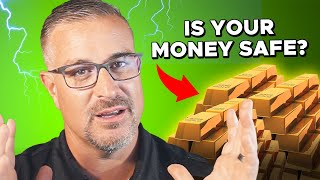
In this video, Jim Striker presents a framework for evaluating where to store retirement savings, emphasizing safety and predictability over high‑risk, high‑fee tax‑deferred accounts. He opens with a Warren Buffett quote about keeping money safe and growing like seeds, then introduces the concept of two “tanks”: a risk tank and a safe tank. Striker outlines four essential questions to ask about any retirement vehicle—how safe the principal is, how liquid the funds are, the expected rate of return, and the tax implications—and advises asking them in order. He compares evaluating a savings vehicle to checking a price tag, urging viewers to weigh cost versus worth over time. Using a hypothetical friend “Larry” who prefers higher risk for higher returns, Striker challenges the wisdom of placing retirement money in risky, fee‑laden accounts such as 401(k)s, IRAs, 403(b)s, and 457s, arguing that most people prioritize principal safety. He suggests there is a better, more efficient way to save for retirement that requires careful analysis and multiple conversations. The video ends with a call to follow for more content and not miss the next video.
Chapters
Warren Buffett says the best place to store money is where it will be safe and grow over time, like planting seeds in fertile soil and watching them blossom into a bountiful harvest. So where is the best? Where is the safest and most predictable place to store your hard-earned retirement money? Saving money in the safest retirement vehicles is like building a sturdy castle to protect all of your treasures. It's like planting a magical money seed that grows into a big, strong tall, colorful tree with lots of shiny coins on it so that you can enjoy those coins later when you grow up. So in this video, we're going to discuss the questions that you're going to want to ask yourself and of your advisor or anyone else that you're working with with regards to managing money. If you are somebody who is saving money for your dream retirement, you're going to want to ask these questions. You see, there are two tanks that you can save money in, and each of the two tanks have features, benefits, pros and cons that you need to know about. The first tank is your risk tank. The second tank is your safe tank. So, hi, I'm Jim Striker, and I help people decide what the best retirement strategies are for them to achieve their dream retirements and which of the two tanks they should be saving their money in. And there are four important questions that you need to ask when you're deciding where to save your money for your retirement. Grab a pen and a piece of paper and write these down. Number one, how safe is my money? In other words, what is the risk I'm taking on my money? Number 2, how liquid is my money? When I want access to my money, how readily available is it? Do I have to pay fees or surrender charges to qualify to access it? Number 3, what is the rate of return on the money that I'm saving? Number 4, what are the tax implications on the money that I'm saving? Now, I always recommend that people ask these questions in order. So don't go to the next question without first getting the answers to the questions before it in order so that you can feel comfortable about what that answer is. So let's talk about cost versus worth. What is the cost versus what it's worth? Have you ever walked into a store to buy something but first had to flip it over and check the price tag? Now, if you're like everyone else, you looked at the price before you decided what you were buying. What's it worth to you? Well, places to store your hard-earned retirement money can be looked at in the same manner. What are the costs of the vehicle versus what is it worth to you? So it's important when deciding to place your money and store it up in one of the two tanks, it's always best to ask the questions. What is the cost of the savings vehicle over the course of time so that you can determine if it's worth value to you? Now, Larry, he's a good friend of mine and he's a big believer that he has to take on more risk to potentially generate a greater rate of return. And I guess sometimes that may be true. But is storing your money in a risk tank investment really what you want to do? Is it really worth the gamble? Or is it more important for you to get the return of your money instead of the return on it? In other words, is it more important for you to get the return of your savings or the return on it? Are you willing to risk it all for a particular or potential hypothetical rate of return? Everyone knows it's best to first seek the understanding for is your money safe from principal loss? Is your money and your savings going to be there for you? Or are you going to chase rate of return? How much market risk are you willing to take with your hard-earned saved money? Now, most people I know, they feel that it's way better to know that the savings will be returned first. Before they want the return on the money or what that return can be estimated. It's what it is anyway, right? Is it wise to save money in risky, tax-deferred, high market risk, high money management fee accounts? Is that really the best place to store your retirement money? Look, every single person and every single time people do this, they make a conscious decision to store their money in qualified accounts such as 401(k)s, IRAs, 403(b)s, 457s, you know the ones, they're taking on all of the risk, the taxation risk, the market risk, and they're paying their money managers fees to manage their money, whether or not they make you any money or not. Now, there's just got to be a better way for you to save for your retirement than that, right? Good news. There is. There's a more efficient way for you to get this done. You can save your hard-earned retirement money. And you should think about this very carefully and make sure that it's a well-thought-out decision, one that's going to require probably multiple conversations, a deep analysis in weighing out the pros, the cons, the features, and the benefits of each and every vehicle that you place in each of your two tanks, your risk tank and your safe tank. So follow me for more and don't miss my next video. You don't want to miss it.