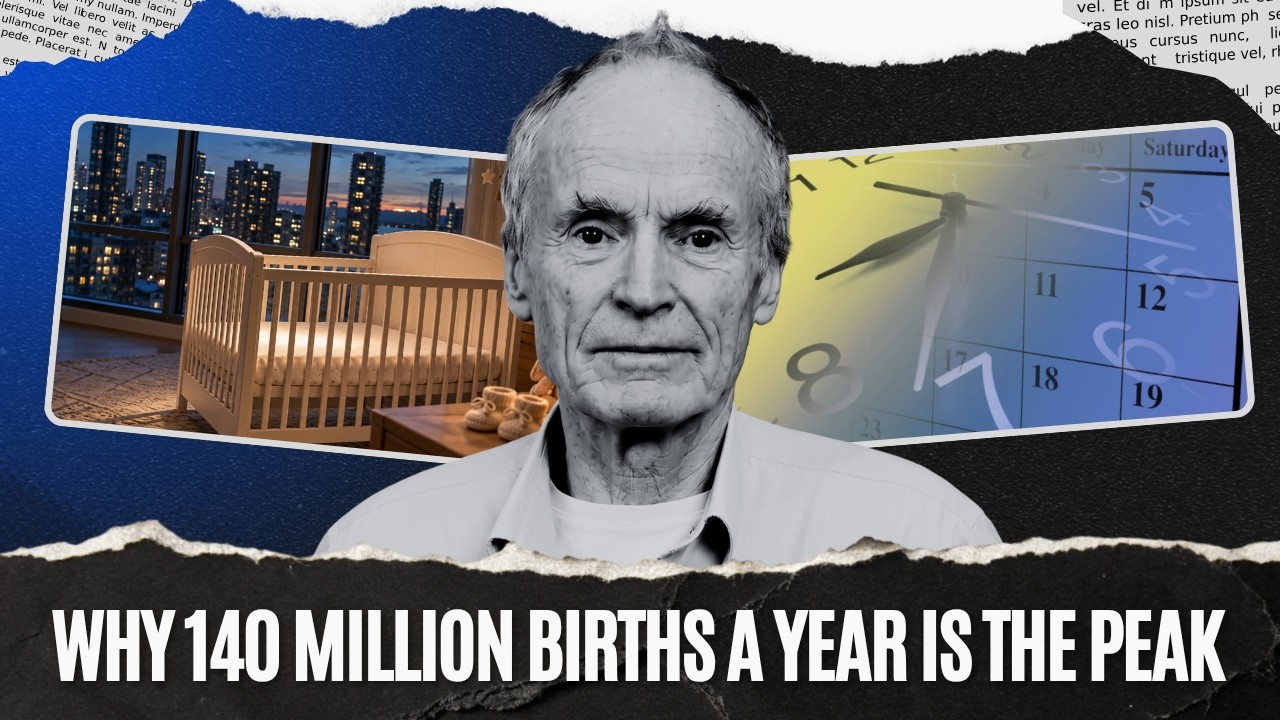
Businessman Jim Penman argues that rising youth mental illness and falling birth rates stem from the same cause: modern life has made our brains insensitive to dopamine from friendship, family, work, and faith. When these activities stop feeling rewarding, people become lonely and depressed, and fewer want children. Resensitizing the brain to dopamine, he says, could reverse both crises.
Chapters
Hi, I'm Jim Penman. I'm a businessman who's funded a research institute into, amongst other things, the birth rate crisis. Why are birth rates dropping? I've written previous books including Epigenetics and Character and Biohistory, about to release Birth Rate Crisis. What we see here is a pattern throughout OECD countries and throughout much of the world is the rates of mental illness are rising, particularly amongst the young. And we're talking about the degree of suicide, of depression, of anxiety. Now, it's important to understand why this is happening because it's the same basic problem that's behind the birth rate crisis. What actually happens is this: when your brains become insensitive to dopamine as a result of the wider society, then certain kinds of activities which only produce a trickle of dopamine are not very satisfactory. And those things are friendship, community, family, children. work, faith, religion. They become less interesting and less engaging. And the problem with that is these are exactly the kind of things that tend to make people happy. So when you retreat from these, you go into meaningful lack of relationship and loneliness and stuff, and people become very, very sad. So it's the same problem. This dopamine insensitivity is causing people to have less children, also become more lonely, more anxious, more depressed. The same solution in each case. We need to understand what's happening, and therefore work out a way to reverse it by resensitizing the brains. And that would actually help people not only to want to have children, but also to be happier and have more meaningful lives.