20 Minutes AGO : Sam Altman FINALLY RETURNS TO OPENAI! (NEW BOARD!)
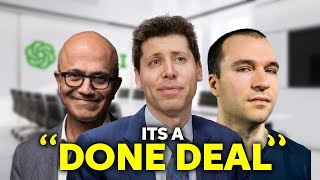
Sam Altman returns as OpenAI CEO with a new board led by Brett Taylor, including Larry Summers and Adam D'Angelo. The previous board members Helen Toner, Tasha McCauley, and Ilya Sutskever are out, signaling a major shift in how the company will be governed.
Chapters
It's official, Sam Altman has just announced his return to the helm of OpenAI. This news marks a significant milestone for the organization, known for its pioneering work in artificial intelligence. But before we delve into the implications of this major development, it's important to examine all the nuances and details surrounding Sam Altman's return to OpenAI. OpenAI tweeted:20 minutes ago we have reached an agreement in principle for Sam Altman to return to OpenAI as CEO with a new initial board of Brett Taylor Chair Larry Summers and Adam d'. Angelo. We are collaborating to figure out the details. Thank you so much for your patience through this. Firstly, the context of his comeback is crucial. OpenAI under Altman's previous leadership achieved groundbreaking advancements, particularly in the development of advanced AI models. His return could signal a new era of innovation and growth for the company. Understanding the circumstances that led to his departure and now his return will provide insight into the company's current trajectory and future plans. Furthermore, the specifics of Altman's role and the structure of the leadership team at OpenAI are essential. Details the composition of the new board, including figures like Brett Taylor, Larry Summers and Adam d', Angelo, and their respective role will have a substantial impact on the company's direction. Each member brings a unique set of skills and perspectives that could shape OpenAI's strategies in research, ethics and application of AI. Additionally, the strategic goals and vision for OpenAI under Altman's leadership need to be explored. What new initiatives or projects might be launched? How will OpenAI balance its ambitious technological pursuits with the ethical considerations that are increasingly important in the AI space? Satya Nadella added a quote tweet saying, we are encouraged by the changes to the OpenAI board. We believe this is a first essential step on a path to more stable, well informed and effective governance. Sam, Greg and I have talked and agreed they have a key role to play along with the OAI leadership team in ensuring OAI continues to thrive and build on its mission. We look forward to building on our strong partnership and delivering the value of this next generation of AI to our customers and partners. Sam Altman also added a tweet saying, I love OpenAI and everything I've done over the past few days has been in service of keeping this team and its mission together. When I decided to join Microsoft on Sun evening, it was clear that was the best path for me and the team. With the new board and WSATYA's support, I'm looking forward to returning to OpenAI and building on our strong partnership with MSEFT. Greg Brockman also tweeted saying amazing progress made today. We will come back stronger and more unified than ever. He did another tweet stating returning to OpenAI and getting back to coding tonight. Greg Brockman also shared a photo where he showed the OpenAI team clearly happy at the decision the recent announcement of the restructuring of OpenAI's board represents one of the most crucial changes in the organization's governance. Previously, the board was comprised of Adam D', Angelo, Helen Toner, Tasha McCauley and Ilya Sutskever. These individuals brought a diverse range of expertise and perspectives to the table, contributing to OpenAI's strategic direction and growth. Adam D', Angelo, with his background in technology as the CEO of Quora, Helen Toner, known for her insights in global security and emerging technologies Tasha McCauley, who has experience in robotics and business, and Ilya Sutskever, a co founder of OpenAI and a leading figure in AI research, collectively formed a board that guided OpenAI through various stages of innovation and challenges. The new board, however, marks a significant shift. It will be led by Brett Taylor as the Chair, joined by Larry Summers and retaining Adam d'. Angelo. This reshuffle introduces a different dynamic and set of competencies to OpenAI's leadership. Brett Taylor, currently serving as the President and COO of Salesforce and co creator of Google Maps, brings a wealth of experience in both technological innovation and and corporate leadership. His role as chair will likely influence OpenAI's strategic decisions, potentially steering the company towards new business models or partnerships that leverage AI technologies. Larry Summers, a renowned economist and former Secretary of the treasury for the United States, adds a distinct perspective to the board. His expertise in economics and public policy could be pivotal in navigating the broader societal and economic implications of AI advancements. Sommer's presence on the Board suggests a more nuanced approach to addressing the global impacts of AI, including regulatory and ethical considerations. Adam d' Angelo's continued presence on the board ensures a degree of continuity. His deep understanding of the AI field and the vision of OpenAI will be instrumental in bridging the old and new governance structures. This reconfiguration of the Board is not merely a change in personnel but but indicates a strategic realignment. The new board composition reflects a balance of technological insight, business acumen and economic and policy expertise. This diversity is critical as OpenAI faces complex challenges in AI ethics, global impact and technological breakthroughs. The Board's guidance will be crucial in defining OpenAI's trajectory as it continues to innovate and shape the landscape of artificial intelligence One question that's likely on the minds of many following the recent leadership changes at OpenAI is the role of Ilya Sutskever within the company. Presently, there's no indication that Sutskever, a co founder and a pivotal figure in AI research, is planning to leave OpenAI. This is somewhat substantiated by his action of retweeting the announcement about Sam Altman's reappointment as CEO. Such a public endorsement, albeit brief, hints at a level of support, or at least acknowledgment of this significant shift in the company's leadership. The dynamics of Sutskever's involvement in OpenAI post these changes are intriguing. Given his substantial contributions and deep expertise in AI, it's likely that he will continue to play a crucial role in the company's research and development initiatives. However, the exact nature of his position might evolve or shift to align with the new leadership structure and strategic direction under Altman. There's also the matter of the reported public fallout between Ilya Sutskever and Sam Altman. Such incidents, especially in high profile tech companies, can lead to questions about the future working relationship between these key figures. Reconciling after a public disagreement, especially in an environment that thrives on innovation and rapid development like OpenAI, can be challenging. Yet it's not uncommon in such settings for professionals to set aside personal differences in pursuit of common goals. Considering the high stakes and rapid evolution in the field of AI, the ability of Sutskever and Altman to collaborate effectively despite past disagreements will be crucial. Their relationship going forward will likely need to be one that transcends personal differences, focusing instead on the shared vision of advancing AI responsibly and effectively. The tech community will be watching closely to see how this relationship evolves and how it impacts OpenAI's trajectory and contributions to the field of AI.










