250 ChatGPT Prompts and How To Use Them
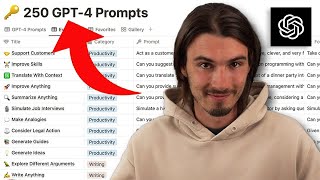
LARRUZ walks through a free 87-page ebook and Notion template with 250 ChatGPT prompts across 25 styles. Learn how to reduce ambiguity by adding variables like format and audience, and when to use follow-up prompts to refine outputs.
Chapters
Okay, we're back. Okay. Welcome to the stream, everybody. This is going to be interesting. Wait, we'll put the lights on. I have some topics here that you guys will enjoy. We'll look at the difference between GPT 3.5 and GPT 4 prompts. All right? But for now, a little, you know, two minutes, warm up. Hey, hey. Welcome. Welcome to the chat. What's up, hero? Random bleach fan. I enjoy that name. That's kind of funny. Welcome. All right. That's random, huh? We'll get right to it. Okay. Long live AI for anybody new, we, we always just do a little musical warm up because it takes a minute for people to come in, you know, for me to settle in, for me to warm up with speaking. We're gonna do a YouTube style intro in a second here and I'll tell you all about what the stream is about. But for now, you know, take another minute, get a drink. Welcome, welcome everybody. Yeah, get some food, get a drink. I have iced coffee here. Okay. I hope some new sound effects lined up anyway. Yeah, music is louder than voice. Yeah, musical intro, whatever. Okay. Okay, I've almost got it. We'll begin in like 30 seconds. All right? Okay. Okay, I'm all set up. I'm all set up. How are you guys doing today? We're gonna get right into it. I would like to kind of, you know, do my market research here and just leave the country that you're coming from in chat. I always love to see the internationality up in here. It's unbelievable for myself, I'm sitting in Slovakia, Europe right now. Just leave the country in the chat below and see where all the fellow viewers are from. I always really enjoy seeing that. And then let me give you a little preview. So I'll get right into the intro and then as know the recording will be cut off at the point where the intro begins. So this thing kind of just warm up with bladder. But we're going to be comparing. We're going to be comparing like no official term for it, but I call it like GPT4 prompts when they're like more specific and there's additional context and the results are better. So essentially what I would categorize as a GPT4 prompt is, you know, if you test them in both and the GPT result is not just. It's not just better is such a, such a weak word. It's really not specific enough, but where it really makes a difference, where the additional context really makes a difference in the results. So it's not just, you know, adding target audience, it's really adding a layer to it that gets you better results in GPT4. I think this is going to make more sense once we get into this, but that's what we're going to be doing. We're going to be comparing the tool and we're going to be talking about like base level prompt engineering for beginners and intermediates. This is not going to be, you know, some super advanced, like Persona modeling or this is not going to be like in depth business use cases. This is going to be rather like how the everyday person can put it to work today, you know, and it's. And we're going to be talking through the lens of my new notion template that I released. So, you know, we're going to be talking about that briefly. And then also I want to take some time to answer questions all around the course because there's many. And yeah, so that's basically kind of the outline for today. And yeah, with that being said, I think it's time to kind of officially begin here. So let me just open one more PDF so we can hop right into it and lose no more time. Let me see. There we go. Okay. This has been a busy week, you guys. Holy moly. We have to chat. Go. Oh, my God. Oh, my God. It happened. It happened. Check that out. This is unbelievable. Look, I. I love this internationality. I'm telling you, as someone who grew up in two countries and everything, this is incredible. Estonia, Boston, Germany, Poland, India. Atlanta, Georgia, England, Czech Republic, uk, Texas, Serbia, Washington, Brazil. Blaze, BW is from Austria. My man. I'm born in Vienna, grew up in Graz, so, yeah, very familiar with Austria. Santourist, Interesting. Where's that? Cleveland, Ohio. Auto GPT. Of course. Of course I've seen Auto GPT. I've just been busy with other things. I'm sorry that I didn't create content. Okay. All right, let's do this. Okay, so. But I have one more thing here. How about this? Okay, let's go. Oh, thanks, Simon. That's. That's really appreciated. That's a new uk, Florida. Oh, my God, you guys. All right, all right, let's get to this. Let's get to this. Okay. You probably played around with GPT when it came out, and now GPT4 has released and a lot has changed. But what has changed? How should you adapt your prompts? Should you even bother improving them? That's what we're going to be discussing today in this live stream. And we're doing this live because we're going to be able to take questions and to share some of these insights directly with you. The lens that we'll be looking at, the discussion that is going to ensue here is going to be through looking at the brand new ebook that I released and the notion template that comes with that. It's completely free. You can get it by going to new newsletter.myaidvantage.com and then you can either follow along or you can just watch the stream and see what's going on. Essentially it's a notion template with 200 prompts, 25 styles and 25 follow up prompts. Going to show you how to use those, how to put them to work, and then it's the same thing in PDF format. So you just get that for free, for signing up for the free newsletter and giving me a shot at delivering you some value. You know, we have a weekly newsletter, so that's essentially it. So that's what we're going to be looking at. But as this book, this book is really the second version of my first eBook, which had 100 prompts and was really great already, especially for beginners. You know, just like a point, as a first point of reference of diving into ChatGPT, it really delivered a lot of value to a lot of people. But the second one, it's just so much better. I would say it's more than twice, twice as good really. The prompts are all changed up. The notion template is now freely available with it. There's styles where you can pick different styles and get inspired and you know, you can use authors, brand voices, etc. And then there's follow up prompts which will help you to go deeper and add more context. So we can talk about all that one by one. But first, let me switch to my desktop here. Let's see, let's see. Yeah. Okay, there we go. This works. So this is the two versions that I've been talking about. Let me just add my camera on top. I had to switch around my setup here. This is beautiful. Look at that. Beautiful. Okay, so essentially this is the before and after and this is how I want to look at it because before it was fantastic and you know, it had 30, 35 pages and everything. And now, now we're at a whopping 87 pages. So this is, is really the freebie that I'm giving to everybody, kind of the taste for my more premium content that I also offer. But essentially this is really for a lot of people. This is going to be all you need. You Know if you just want to poke around inside of ChatGPT for a weekend and you want to see what's up with this new thing and what can it do, what can't it do? This is the thing for you. If you want to start crafting, you know, more and exploring more and actually putting it to work, then I think you'll find more value and kind of the ebook format of this, which is essentially like free, around three times more content than this. And then I just released the course which, which we can talk about later on. But that is really kind of my high end right now where if you want to learn how to write stuff this prompts like this yourself, that's where you look towards the course. We can talk about all that step by step. But for now you're from Slovakia joke, right? No, I'm sitting in Bratislava right now. I over in Boslomanski. Whatever you want, man. Anyway, okay, so we're going to talk about these one by one and not all. I just want to kind of give you an idea and I really wanted to do this and I really wanted to do this live to get your guys thoughts because what I did here, and I'm lucky enough at this point to have a small team helping me and a lot of like AI enthusiasts that kind of, you know, tag along and help me in developing these things. Because let me tell you, going through 100 prompts and actually developing all them and improving them, it's no small task. And at this point, before we get into it, I would just like to give a shout out to my man Rastislau. You can find him, you can find him in the Discord. He's a philosopher from the Czech Republic and he really helped me in upgrading some of these prompts. So we essentially went through it and we talked about, we had a lot of discussions around what additional context we could layer on top. And he helped me with some of the prompt engineering here. So shout out to him. He's an enthusiastic member of the Discord community so you can talk to him there and hit him up with your GPT4 questions. Sorry Rastio, for that responsibility to your court. But yeah, so he helped me out here. And before we get started, one more thing. I need to answer one question that I've been getting all the time. Now this is the free ebook, right? This is available. You can go into the description promos. Most of you guys probably have this already. That's all great. There's a, there's a paid e book, right, Which I which I sell on my website, which is essentially. And it sits in a weird spot right now. There's an update coming within the next week. I said by the end of April, I'm going to do my best. It's going to be up to me to update that thing, to finish updating that thing. And I just come, I just slept three days in a row in the office to finish the course and everything. So, you know, have a little bit of patience with me. But essentially this is the free ebook. Then there's the paid ebook, which hasn't been updated yet. But you're going to get the same notion template, you're going to get the same amazing notion template that you might have already seen with the video, and you're going to get also GPT4 updated prompts, all of them inside of the ebook. So don't worry. Just have a few more days of patience and you're going to get your promised update completely for free for all previous buyers. So with that being said, let's go through this step by step. Yeah. The most minor thing is we have a new logo. Yay. This finally looks the way I want it to look. But basically here in the beginning, not much changed. Right. Like, if you look at the table of contents, you're going to see, I added marketing and entrepreneurship chapter. Very brief. It's just free prompts each to give you a little bit of inspiration. But for any, you know, aspiring entrepreneurs, I think this delivers some stuff. So can you get ChatGPT to generate your book? I think that's a good question. I want to answer that right now. So I think you absolutely can. I have a video showing you how to do it. But with a book like this, it's going to be all about battle, testing it and just running the prompts tens or hundreds of times and exploring like legitimately to come up with kind of the, you know, the thousand prompts inside of the course, you just have to run tens of thousands of prompts and like the ones that you have in multiple variations. Right. There's no way around that. So, yes, you can have it help you, you know, add some context. And you can, you can use it to help you generate some examples, but it's not going to. Yeah, you can't write a book like this easily, you know, so that would be my answer. If you have any further questions, check out the video. I talked about it extensively there. This is all trial and error. And you know, my favorite use cases for beginners, essentially. Okay, so as you can see, you have These new chapter here, chapters here. So for anybody that had the book before it had five chapters. Productivity, writing, social, health, entertainment. Again, all this is free. This is the last time I'll say this. Probably not, but. All right, then you have the same ones. I extended some of them. So for example, for health, I added one that I really like. It's one of my favorite prompts. You can actually create a meal plan. No, no, no, you can actually. Oh, wait, this one. This one is double. Okay, there's a little mistake in the book I just saw. But yeah, it's actually snacking responsibly. It's really, this is one of the best. And this one I moved down from from like the paid e book to here just because it's so incredible and I want everyone to have it. And if you click these, as per usual, it's just going to bring you right to the page and you have more examples now. So this is really to get your creativity going. And I just love this because you can just add your flavor preferences like for example, spicy or garlic, that's what I really like. And then dietary restrictions, for example, if you're gluten free, if you're vegan, if you're not free, dairy free, that this applies for me. You can just customize this. So I would, for example, say, you know, can you suggest some healthy and tasty snack options that are, you know, okay, this is not perfect. That are garlic and dairy free friendly and then it's just going to give you some. And this is really fantastic because I love snacking. I love snacking healthily. And this is just, this just gives you ideas that you wouldn't even know. I'll give you another one from the same bucket of like health that isn't even in the book. And Daniel Pierce brought this to my. He's responsible for a Twitter now. Yeah, I'm kind of like just helping out there. But he does most of the posting and he brought up this amazing prompt that, you know, he told me his girlfriend was cooking and she discovered that you can use ChatGPT and be like, okay, I have, you know, I have eggs, I have rucola, I have, you know, some ham, I have some tomatoes. What ingredients could I buy to make an, you know, incredible but easy to make meal. And then from the ingredients, it just creates like custom, custom food. And then you can ask it for like the step by step recipe. And it's, it's just one of those use cases that, you know, it's not gonna, it's not Gonna change your life. But it's, it's a fantastic way to show somebody who hasn't experienced the power of ChatGPT before what it can do. It's like, okay, you know, just open up the fridge, you just type in the ingredients and you're like, okay, what could I cook with this that is beginner friendly? And it just does it. So I thought that was really cool. Okay. So anyway, back to the table of content. So I added a few prompts here and there. Almost all of them are better. That's what we're going to look at next. But essentially you also get the marketing prompts. You get to read about how to launch products, identify niches, define brand voices, and then you get the entrepreneurship prompts where it's all about evaluating business ideas, which I feel like is the most important one. That's why I included this. Then develop brand strategies, which is kind of step two. Once you have an idea and you can find side hustle. This one is really cool. You can find side hustles. And again, as you might already be aware of, all of this is available inside of this free notion templates that I provide. Now all you need to do is sign up to the newsletter. You'll just get an email with a link to download both. And so we just talked about these prompts. So they're right here. You know, the same thing. And the cool thing is if you click the database and you go to the gallery view, you can view all of them as such. And what do you guys make of this? Do you think this is useful or is this just like kind of a. I think it's a. I wouldn't even say it's a nice to have. It's a very nice to have. You know, it's just cool. Like it's just especially, you know, you can still use this interface, but when you open them up, you know, and you're like, translate with context. It's actually going to come with the way. What do you guys make of this images? I haven't got any feedback on that yet, but I don't know. I haven't seen anybody else do this. It was a ton of work, let me tell you. Especially for the course. Like, this template has over a thousand prompts and all of them have, you know, this, this set up. I should say that a thousand prompts means that, you know, this is 1, 2, 3, 4, 5, 6, 7 prompts right here. Okay. So it's not like a thousand of these. It's more like 150 of these where as of right now, you have like 30. Right. So that's what I mean when I say thousand prompts. It's like one prompt is always like an example. That. That's how I would say that. But yeah. Anyway, very dope. Okay. At least one piece of feedback. Nice. You know, the four days of work, the five days of work that went into it were worth it. Nice. We got one comment. Okay, good. So I think this is just cool. But either way, this is the notion template. And now let's get to the meat of this. Now let's get to the part where we start talking about the differences here. Okay? So, okay, you have to find out. Let's find side hustles prompt that is new. There's a few new prompts. Something there for everybody. But the real change here, it doesn't hide within the, you know, eight new prompts. It doesn't hide within the notion template. Although that is my favorite thing that I've shipped since a while. Except of the course. What? Yeah, and also, also I have to say, Hero Dent here in the chat, he has been helping me with generating these images. So, yeah, shout out to him. He helps in the server, you know, very a great guy. It was super, super easy to work with him. And yeah, shout out to him. Thanks for helping me out with that. I kind of set up, I gotta say, I kind of set up like the way that we're gonna do it and the prompt and the formula for everything. And then he went through and he used this visual taste to, you know, generate hundreds of images. And then. And then there's also ones for the different chapters in the course. Those are cool too. Anyway, I just really got into like my journey image generation lately, I suppose. But again, back on topic, I go on these tangents and I apologize. But hey, it's a live stream and I can do what I want. I hope you guys still enjoy it. Does this cost money? No, this is free. Where do you get it? You can go to. I'll post the newsletter. You just go to newsletter.myaidvantage.com you enter your email and you'll get an email with a welcome. You'll get a welcome email immediately, which is a link that brings you to a page where you can download both the PDF and the notion with one click. So essentially all I'm asking is like, I put in all this work and all I'm asking is, you know, give me a chance to provide more value to you through the email list. That's literally it. It's completely free. You just enter your email. If you don't like it, you can legitimately unsubscribe right away. Just get your files, you know, be on your way, no pressure. Feel free to do whatever you want. I'm just going to do my best to deliver value to you. For the inbox. I have to say this, for anybody subscribing this week, there's going to be more emails than usual. Usually it's like one email per week and I don't do any sales, any nothing. But now that I launched the course yesterday, we have a course launch sequence where we talk about different aspects of it and you're going to get like four mails and then all the ebook buyers are also going to receive a mail once the update is out in like less than a week. So yeah, I really do my very best not to spam just because I hate it so much and I unsubscribe to anything that I consider spam. I try to be concise and value packed, but you guys probably know that by now anyway. So. Okay, here's the explainer and maybe this is the last thing I'm going to go through before we go ahead and compare some of the prompts here. What changed? Because I think that's the important part. What changed? Because by talking about what changed, we're going to learn about what to change in your prompts. You know, why did I make the changes? Why do I call this a GPT4 upgrade? There's reasons for that. And maybe in this longer format of a live stream, we get to discuss that in more detail as opposed to, you know, hey, what's up? One, two, three. Okay, let's go. You know, all the hyped YouTube videos, like this is a little bit more. Let's get deep into it. Yeah, Remy, thanks. Good to see you here, man. Remy, the one boss of a mod inside of the Discord server. Just. Yeah, I follow him and leave a. Like if you enjoy this either way. So last stop before we compare prompts. The explainer, very simple. As you might already know, the prompt is just like my personal favorite use case from all the prompts. Then you have a bunch of examples below to kind of get your imagination going. What is possible and the formula, this is really like where a lot of the, in my opinion, most of the value hides because this is what's going to help you understand how these actually work. And if you, if all you want is a quick win, you just copy, paste the prompt, boom, send it, you're on Your way, fantastic works, value delivered. But if you're looking to go deeper and if you're looking to understand how these are structured, if you're looking to customize them to your own needs, for anybody using them for business use cases, the formula is absolutely essential because you're going to want to customize it to your target audience, to your context, to your company name. You know, all that that's going to be understandable through the formula. And then here's the two new things. This you might have known already from my older like content and the old free ebook, but another dance stream, we can do that sometimes. Yeah, that was really fun. So what this is for and where people can share ideas and grow together, all this is new and we are all learning something which can be valuable to all of us. I agree. So YouTube chat right now and otherwise the Discord server can just hop in there, ask your questions, meet some people, mod check one too. I like that. Okay. All right, so the two new things here, the last two new things is follow up prompts. As you can see, this is, is my attempt at showing you how to add more context to ChatGPT and how to strategically continue your conversation to get results that are really specific to what you need. Because a lot of these are going to be like, all right, you know, generate me, you know, 10 ideas for my company. Let's say, you know, my, my YouTube channel and it's going to do it, and that's great, but then only by following up will you kind of, I like to say, tickle out those, those juicy results, those, the gems really. Because if you follow up, because if it gives you ideas and then you're like, you know, give me 10 more. That's the simplest example, right? Give me 10 more. You kind of get more variety. And if you say, and if you maybe follow up with why did you come come up with those ideas, it's gonna, it's gonna go a layer of abstraction above and it's gonna give you its thoughts behind the ideas, you know, so it's really within the follow up prompts where a lot of the nuanced results hide. And my feeling is that if a lot of beginners were familiar with follow up prompts, they would, they would you, they would have a higher opinion of ChatGPT because a lot of them are like, ah, whatever, you know, it can do recipes, that's cool. But like, it's not that valuable. But you know, once you start getting into advanced context, then, you know, you really get amazing results from it. So anyway, so let's see. Why would I ignore you, skydk? I mean, I mean, just, just because, just because of the, like the rude way you talk, maybe. But look, this is not about writing the, the most complicated prompts in the world. And this is not a competition. This is about helping people and showing them a variety and the thinking behind it. Right? So that's. Since it's not a competition out here, who writes the best prompts, I think you kind of misunderstood the point of this. Yeah, just be friendly. That's all I would say. All right, so about styles. Styles just, you know, style your text. And look, this document is really geared towards people that are newcomers or like maybe advanced beginners. Right. This is not like high end stuff. But I do want to show you my thinking here. And we're going to do that by looking at the very first prompt inside of the productivity chapter. All right. So. Yeah, yeah, we're just gonna, we're just gonna, we're just gonna mute him. Yeah, he's just spamming at this point. Okay. All right, let's get to it. So the main part of the content. So, okay, generate ideas, ladies and gentlemen. So what changed here? Okay, as you can see, a lot changed here right before. And maybe we're going to make these a little. This a little larger just because we can. How about that? I like that. Nice. We cleaned house within the chat. There you go. That easy. All right, so what changed? So this was the version before, right? This is what I would call, you know, a GPT free prompt. The thing is, would this one perform better in GPT3? Yes. But is this like kind of a new chapter? And is it just an easy way to communicate the fact that it's just better? Just like GPT4 is better than GPT 3.5 and do these work better in GPT4 than they do in GPT 3.5? That also. Yes to all of that. So that's why I call this GPT4 prompts. You can call that, you know, a marketing angle, but I think it makes sense on so many levels that, you know, I'll just go with that wording and let's see, so what is, what is better about this version? Well, first of all, if you look at this formula, you're going to see there's three variables, right? So and the amount of variables, you know, roughly estimates the amount of context that you're providing here. Right. And as you know, it's all about context because there's always an instruction within your prompt. You Know, write this, do that, give me ideas. That's the instruction part. And then there's the context part. And that is such a wide umbrella term. And this is also what I start out with. And it's going to be so fun to teach some of these concepts because I kind of did all the mental housekeeping and sorting of all my thoughts because I had to for the course, right, to record the different modules and for it to all to make sense so I can bring these concepts to you, which I kind of just realized right now. I love that. Kind of. So here's the construct that I present in the course. It's. It's kind of like you have instructions and you have context, right? If you really break it down, this is like one of the first videos. If you really break it down, that's all a prompt is, right? It's do something and then, and then how do you do it? Right? So like, what do you do and how do you do it? Okay, so what is, what is the instructions in here? Can you give me ideas? There you go. That's the instructions, right? You could also say give me ideas or please give me ideas. All the same thing, no fluff, no extra words, super concise. Give me ideas. That's the instruction part, right? So can you provide ideas? So that's essentially the same thing, but here the word provide is actually less ambiguous than give. And this brings me to my first point. We really want to avoid ambiguity when it comes to this prompt. All of this is covered in the course also. But, but I think these basic, you know, these things that are easily communicated in two sentences, I'm just going to be throwing around here on the YouTube anyway, and giving to you because really you want to avoid ambiguity at all costs. GPT ChatGPT is really, really bad. One of the worst things is processing two things at once. This is not confirmed. This is just my theory. But I think that's also the reason why it's so bad at math. Because in math, often a few of these operations happen simultaneously. And if you look at math in GPT 3.5, as opposed to 4, you know, like a basic thing like 7 times 12. You're going to see that GPT 4 actually first goes ahead and kind of prompts itself to outline the steps. So it's like, oh yeah, first we need to multiply this with that. And in more complex operations it does that. It kind of outlines the steps and then it does the math step by step. GPT 3.5, it kind of just goes ahead and tries to do everything at once and fails and gives you a wrong output confidently. So, yeah, so, okay, so the first thing is ambiguity. You want to avoid ambiguity. Ambiguity, right. At a very base level. So here we improve that. Give is not bad, but, you know, provide is just a little more clear. And how do you know that? Well, first thing, you're going to test it. Second thing, you can actually run a prompt that asks for the ambiguity within your wording, you know, and you're gonna find provide is just a more specific term than this. For this reason. Also, academic language is excellent within prompt engineering because, you know, if I were to use like all of these, these big words here while we're just casually conversing, it would seem unnecessary and over the top. And maybe it would seem like I'm bragging or something. Right? But if you do it in the context of ChatGPT, it loves it as long as it knows the word. And it mostly does because you're being extremely specific with what you're trying to express. Right? You're being, it's, it's right there. Because academic language really expresses very, very narrow. It means a lot of those big words mean one thing within a very narrow context. It's like, you know, from, from. If you go. I just have to come up with example now. But if you go to the finance sector and, you know, you talk about, you know, ebit stuff, for example, that that's, you know, maybe that's an academic language, but that's a very specific term that means one thing and one thing only. You know, it's. It's accounting term. But if you use that, ChatGPT is going to love it. If you use something like give, that is a little, you know, give. Let's just think about this like a human, you know, like, what does give mean? Like, it means I could be giving you prompts, but I could also be, you know, giving you my time. I could also be giving you, you know, my attention. I could be also giving you a gift. But then you could also, you know, there's like many, there's many definitions to that, but if you're like, providing something, it's more specific because giving is really hard to define, man, these semantics here. But providing is like giving something of value. Giving something that is of value to you. I think that we could look at the definitions here. We're going to actually do that. I think that's a good idea. But providing is more like it's val. It's of value to me. And now I'm providing it for you. So you know, when a parent is providing for the children, if you think about it, it's like they're giving up a piece of themselves to help the children. If you're giving something, it's like, oh yeah, sure you can you, yeah, just take this paper. I don't need it anyway. You know, you wouldn't say, ah, sure, I'm providing this paper. You know, you wouldn't say that providing is more valuable. So that's why this is better. That's why it's better. So that's my best attempt at. Yeah, I don't think we need a definition. I'm actually quite happy with how we defined that. Greg Smith had a question here. How. Yeah, how was he spamming? He was copying the same message over and over again and it had a rude tone to it. I answered to kind of the question there and he just kept going. That's how. Okay, this PDF. Yeah you can get it newsletter.myaidvantage.com Just fill out your email. You're going to get an email where you can download the PDF and the notion template that comes with it for free. All right, so now let's move on. So now we talked about ambiguity. This is the really like, this is the first part that you need to watch out for. Okay. Avoid ambiguous words and whenever you can be more specific. And is this going to be night and day? No, but if you're going to run this on a hundred examples, it's just going to give you better results and that's what this comes down to. You know, repeatability, reliability, that's what you want from, from your prompts. And, and by the way, I'll say this, I also think that natural language interfaces are going to be the main way of prompting AI for a long time to come until we get like neural links and such. And while things like auto GPT and graphical user interfaces are definitely going to swoop in and with things like, you know, Microsoft introducing the copilot into their documents, we're definitely going to see more user friendly approaches than custom prompting like this. But just like there's no code website builders, there's also the deep end of the pool where you can go ahead and customize your website and do your own HTML, CSS, JavaScript, whatever. Like this is at first when I came in I was like who prompting, right? And then I was like, oh. But it's going to be replaced by these user friendly interfaces and this is kind of a phase that's going to like last For a few more months or maybe a year. And then I realized, wait a minute. But this is always going to be kind of the custom solution. This is always going to be the back end of the user friendly interfaces. And if you want advanced solutions, you do need to get good at this. So yeah, it was kind of, I think that's my current view on it right now. We don't have those user friendly ways yet fully built out. So it's super relevant if you want results now and in the coming weeks and months. But I think from like a two year perspective, you're still going to be able to prompt the AI manually, right? It's going to be something that is reserved to, you know, probably the people watching this channel like you and me and everything, because we are the people that are in deep and that are ready to get into the customer solutions. We are ready to explore this. And explore this we shall. Let's move on. So we talked about ambiguity, ambiguity here, right? Let's, let's next up talk about the different variables in here. Okay, so it's kind of how to learn academic language. You don't have to learn it. Just, just think about if there's synonyms. So for example, a tip would be if you're looking for a word and you're like, you have a feeling that there might be a more specific term for that or you know that it has a critical part, it's a critical of your prompt, go ahead and look for synonyms. And if there's like an academic term that expresses exactly that thing, just don't shy away from it. That, that would be my recommendation. All right, so next up we have can you provide number ideas, for example? This is just super. This is just like so simple. We just added a number counter here. So, you know, now it's not like can you give me ideas, but can you give me five ideas, free ideas? That's like the most basic building block that you can introduce. And this is what I really call them also here and in the course and from here on out, I'm just going to call these building blocks because it's really like Legos, right? If you build your own like Lego house, you're going to be sitting there and you know, taking one apart and building another one. That's how you can think about these formulas, you know, so you can take this number variable and slap this into pretty much, you know, most of these, you know, can you provide number suggestions for how I can improve? You know, you can just slap this into anywhere. Doesn't work with every single one. But generally speaking, okay, and then for a format about subject. And this is where it gets tricky. You know, if you just format, it's like, what Format what? But then you look up here and you're like about public speaking for okay, ideas. No, here for this is format workshop. So the format is a workshop, but then, okay, what other formats exist? Right? Maybe you know, you're not the creative type, or maybe you are the creative type, but you don't want to use that mental energy. Well, you're in luck because these examples show to you serious webinar podcast. These are different formats with here YouTube, serious newsletter. This down here is really to get your imagination going. And then it's way easy to generate like three more examples off the top of your head once you see a bunch of these. Right, so all right, all right, so that's that about subject for target audience, focusing on topics. All right, same thing, like topics. What kind of topics? Well, this one is a little easier to derive than format, right? But you have a bunch of examples. So renewable energy with an emphasis on actionable tips is additional context. So there's different ways to express this. And if you look at this, the additional context really varies. This is like the widest term in here, right? Additional context could be emphasis on actionable tips. And this just shows you the ways to approach that. So it could also be a focus on maintaining balance during academic stress. It could also be budget friendly meal planning with step by step instructions. It's just whatever you want to tack on. And here's some examples of that. So why is this prompt better than this? Well, well, as we explored, first of all, the ambiguity has been lowered, you know, with like the change of GIF to provide. Then secondly, we added a number counter so you can, you know, customize it a little more. That's really no big deal. But then if you go further, you know, format is great, subject is great. But then here, all of a sudden we're specifying a target audience. And guess what? I didn't just randomly include this like, oh, whatever, let's just slap on target audience into anything. No, if you're generating ideas, if you think about it, if you think about it at a high level and you abstract up what are ideas good for? Not like, I'm not asking what ideas are, I'm asking what are they good for? Well, that's kind of a philosophical question, right? But if you really break it down, ideas are there to improve something. Maybe could be one approach or ideas are Just something that hasn't occurred to you yet. That's just a completely different angle to it. And what do most of those definitions you could come up with? Probably like a hundred more. Right, but these are just like my first two takes off the top of my head. But what do all those have in exam in common? Like the idea is going to, it's going to potentially affect the world. Right. And what is the world we live in? Well, it's mostly people, right. And if it's mostly people, we need to talk about what kind of people. So, so that, that was the, that was my thinking behind this. Right. I didn't just randomly slap together like multiple, like added multiple types of context. That's kind of funny. I didn't just random step this together. It's like in relation to ideas, you really want to talk about what people the ideas are going to be affecting in order to get better ideas. Because otherwise you're kind of just leaving that open. If you're just saying, if I just told you, give me 10 ideas and you know, if we were strangers on the street and I would just walk up to you and be like, give me 10 ideas, it would be like, what ideas? One of the things that's going to help you answer that question is specifying the target audience. So that's another way to think about that. All right, So I hope that was helpful. And obviously covering topics. Another thing is, you know, you can see focusing on is different than covering. Again, focusing on is just better wording. It's more specific. Absolutely fantastic improvement to this particular idea generation prompt. And what are the results like? Right, let's see, let's compare the results because there, yeah, maybe, maybe first. And you know what, I'm actually so confident in this that I'm just going to lie. I didn't, I should have, I should have spent some time before and you know, tested this use case. But I'm just going to go ahead and do it live. Okay, let's see. Okay, so here we are and we're just going to go ahead and first run the simple version. So you know, maybe a format. Well, now that I think about it, actually running this, it's not even fair. It's not even fair because I'll tell you why, I'll tell you why we don't even have to run it to prove this point. Because let's say our idea is, you know, whatever, we're generating ideas in my context and we're looking for, you know, YouTube video ideas about AI, let's say okay, perhaps covering, you know, GPT4, maybe we could say. Right, but if you go ahead here and I'm gonna tell it, it's a 10 minutes, you know, it's a 10 minute YouTube video. YouTube video tutorial. And I specify the target audience to be 30 year old American males. That is kind of the main demog. That is kind of the main demo within my, within my YouTube analytics. But hey, it's, it's super diverse. Shout out to all, all the Indians out there. I love you guys having, you guys are super curious and that is, there's also a lot of UK people. So you know, but just as an example, we're going to say, you know, U.S. males, 30, 25 to 35 years old, focusing on. And then I'm gonna give it some subtopics. It's not even fair, man. It's not even fair. So with additional context, we just, we just kind of like, it's not even a competition, it's kind of like a lightweight MMA fighter. Just, just like walking into the cage for the first time. First time. And going up against like a heavyweight champion, like it's not even fair. Just by specifying all of this additional context, you're gonna get results that are more relevant to you and that you're gonna be happy with. And at the end of the day, all of this being said, let me say one thing. What is a good prompt? What is a good prompt? That's the most basic questions, that's the most basic question, like what makes a good prompt? Well, there's a million definitions, but honestly, I say this within the course too, and I stand by this. And I'm think this is gonna be my. I swear to God, the course helped me explore so many like of these topics in depth. I love it. Just for now, I have the ability to communicate this even better. A good prompt is one that gets you a result that you're happy with. That's gonna be the definition. That's it. That's it. Right? If you're happy with the result, that was a good prompt. And guess what? By being more specific on the target audience, the topics and adding context, you're gonna get a better results. So is this a better prompt than this? Yes. 10 out of 10 times one that gets your desired results. Exactly. Natron, exactly. Yeah. Satisfactory results. That's it. You know, and then it all depends. Okay, what are you looking for? You know, maybe if you're a marketing manager for a Fortune 500 company, you're gonna have very high demands in terms of Okay, I want a marketing plan in this exact formatting and I want to cover this like multi channel strategy and I want like exact, like tables of different influencers that we're gonna engage and you're gonna have very specific demands. And if you're gonna run, you know, just create me a campaign for my, you know, for Coca Cola. A marketing campaign for Coca Cola. The result is not gonna satisfy you because you have those requirements, right? That means that's not a good prompt for you. Doesn't mean that's a bad prompt for somebody who's never done marketing, you know, doesn't mean this is a bad prompt for generating ideas just because there's more ways to do it. It's all about working backwards from what you need and arriving at what you need is really a bit of an iterative process. And that's why I included these follow up prompts here in the end because we could go through and we could talk about more of these. You know, there's differences and there's, as you can see, like all of these have a bunch of variables now and, but I think really by showing you one, it kind of shows you most of them. So if you have any questions, I'm going to look into chat a little more from now on. But essentially what I wanted to cover another thing is these follow up prompts here in the end, because really this is going to, if you watch the video, I explain how to use them in the context of the notion template. It's the same thing here in the PDF for the person that asked. I'm just going to post the link where you can get this. There you go. It's in chat. So you just go there, you sign up with your email, you get a mail with everything. But yeah, is this for a YouTube channel? Don't forget. Yeah, don't forget to tell it about your, your YouTube channel. Yeah, I agree. And a lot of time it's going to involve some thinking, right? What is the additional context that could be good? You could always follow up. You know, this is, this is one that isn't in here, but that is good. But you could ask, ask what additional context could I provide? You know, and then you provided. But essentially follow up prompts are a way to continue the conversation. So if you start with, you know, generate me 10 ideas, yada, yada, yada, then you could go ahead and follow up with. Could you elaborate on how the last response you provided doesn't align with my previous instructions? After clarifying that, please make another attempt at following the instructions I gave earlier. So this would be one that kind of like resets it and tells it to, you know, try again. I wasn't happy. This is a different way. This is a more specific way of saying try again. I wasn't happy with what you gave me. And there's just different variations of this. Right? So you can be clarify what you mean by concept and maybe if it gives you idea on, you know, like AI used for, I don't know, I'm coming up with all this on the spot. This is my notes here. You know, if you're coming up with, with like a results for you know, AI for transistors or whatever, that's a terrible example. Then you could be by, be like, can you clarify what you mean by transistors? You know. Okay, that's not, that's kind of clear. But I think you get the point. You can kind of just dig deeper on a specific aspect of what it told you. And the cool thing about this and why this is a follow up prompt is because it's going to have the context of your conversation above. So in this terrible example of ours, if it recommends like ideas around, let's say AI for transistor manufacturing, you know, then you could go ahead and say can you clarify what you mean by transistor manufacturing? And it's going to go in depth and it's going to explain that. But the cool thing is because this is a follow up prompt and not an initial prompt, it's going to explain the concept of transistor manufacturing within the context of you asking for YouTube video ideas first. Right, and that's important. It's not just going to talk about transistor manufacturing. It's going to talk about it from an angle that is relevant to you as a YouTuber, let's say. So that's really cool. So I hope you learned something there. You left a little probe question. I don't know, I thought like just transistors aren't like, I don't know, I'm just kind of spitballing it here. Okay, fine works. So there's more of these here. So these universal ones here you can always see the category kind of. And these universal ones are applicable to anything. So you can always go ahead and say 10 more. Right? You could always go ahead and say but why, but why, but why? You know, give me ten ideas, but why? Give me a marketing plan, but why Write me a essay and then but why? It's like, it's like a little kid inquiring over and over again. And at some point it's just gonna, you know, you just got to explore yourself. What happens if you run this often enough. But yeah, it's essentially, this is a super simple one, but a non obvious one and I find it useful. So really I gave you these to kind of continue the conversation. And then you have transformation prompts which are going to allow you to kind of, as the name implies, they're going to allow you to transform your text so you can rewrite in a certain style or you can try again, but consider, you know, a new piece of context that you might want to add. And then you can say, now transform all the information into a text type. All right, so, and what is a text type? Well, you know, an essay is a text type, email is a text type. I'm going to talk. Well, maybe I can just mention it in the course. I'm providing a list of 60 text types. So there you can just go in and you can look at. It's my, it's kind of my 60 favorite ones. Yeah. So you can, you know, you can, you can check it out in there. A good one. I'll give you a good one. A good one is instruction, Is it an instruction manual? Instructional manual, I think. Instructional manual. That's a really good one. No, that technical manual, that's it. If you say transform it into a technical manual, it's going to transform it into this format where it looks like a manual for a TV or like a coffee machine, where it really goes step by step into every single detail of the process. You might want to outline that one, by the way, is a fantastic way of generating standard operating procedures for all of your business people out there. You can transform something into technical manual and then provide that to your employees. And every single detail of that process is going to be outlined for you. Super powerful thing that I just gave away right there. So. So take note. Yeah. Display the above results in a table, Remy. Spot on. So that's fantastic too. You could follow up and the way, you know. Okay, so now we had a new prompt from chat here, right. What do you do about that? Well, if you have the notion template, right, then you're in here, you got this thing and maybe you just got set up with notion. Never used it before. Like how the hell does this even work? You just kind of duplicate. You press the button up here, it duplicated into your private prompts, into your private pages. So what do we do about the fact that we just got a new prompt from Remy here? Well, there's two options. First of all, you can just go in here.










