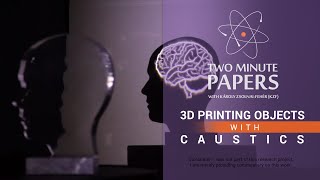
Caustics are light patterns created when curved surfaces bend light. Researchers used light-transport simulation to design 3D-printable objects that cast specific caustic patterns, including a multicolor Einstein portrait. The Technical University of Vienna offers a full course on the topic.
Chapters
Dear fellow scholars, this is two minute papers with what are Caustics? A caustic is a beautiful phenomenon in nature where curved surfaces reflect or refract light, thereby concentrating it to a relatively small area. It looks majestic and it is the favorite effect of most light transport researchers. You can witness it around rings, plastic bottles, or when you're underwater, just to name a few examples. If you have a powerful algorithm at hand that can simulate many light transport effects, then you can expect to get some caustics forming in the presence of curved refractive or reflective surfaces and small light sources. If you would like to know more about caustics, I am holding an entire university course at the Technical University of Vienna, the entirety of which we have recorded live on video for you. It is available for everyone free of charge. If you are interested in check it out. As always, a link is available in the description box. Now, the laws that lead to caustics are well understood by physicists. Therefore, we can not only put some objects on a table and just enjoy the imagery of the caustics, but we can turn the whole thing around. This technique makes it possible to essentially imagine any kind of caustic pattern, for instance this brain pattern, and it will create the model that will cast caustics that look exactly, exactly like that. We can thereby design an object by its caustics. It also works with sunlight, And you can also choose different colors for your caustics. This result, with an extremely high fidelity image of Albert Einstein and his signature, shows that first a light transport simulation is run and then the final Solution can be 3D printed. I am always adamantly looking for research works where we have a simulation that relates to and tells us something new about the world around us. This is a beautiful example of that. Thanks for watching and for your generous support and I'll see you next time.