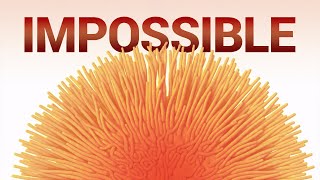
Dr. Zsolnai reviews a new method for simulating soft-body deformation at massive scale without self-intersections or ghost forces. Five demos show squishing, twisting, and high-speed impacts that match real footage. Complex scenes take minutes per frame on CPU, but GPU acceleration could speed it up.
Questions this video answers
March 9, 2021.
A few seconds per frame for simpler scenes, and on the order of minutes per frame for more complex tests (measured on CPU).
Houdini Vellum.
Weights & Biases (referral link: wnb.com/papers).
Chapters
Dear fellow scholars, this is two minute papers with Dr. Zsolnai. If we study the laws of physics and program them into a computer, we can create a beautiful simulation that showcases the process of baking. And if we so desire, when we are done, we can even tear a loaf of bread apart. With this previous method, we can also smash Oreos, candy, crabs, pumpkins, and much, much more. This jelly fracture scene is my long time favorite. And this new work asks a brazen question only a proper computer graphics researcher could. Can we write an even more extreme simulation? I don't think so, but apparently this paper promises a technique that supports more extreme compression and deformation. And when they say that, they really mean it. Let's see what this can do through five super fun experiments. Experiment one, Squishing. As you see, this paper aligns well with the favorite pastimes of a computer graphics researcher, which is of course destroying virtual objects in a spectacular fashion. First, we force these soft elastic virtual objects through a thin obstacle tube. Things get quite squishy here. Ouch. And when they come out on the other side, the their geometries can also separate properly and watch how beautifully they regain their original shapes afterwards. Experiment number two, the tendril test. We grab a squishy ball and throw it at the wall. And here comes the cool part. This panel was made of glass, so we also get to view the whole interaction through it. And this way we can see all the squishing happening. Look, the tendrils are super detailed. And every single one remains intact and intersection free despite the intense compression. Outstanding. Experiment three, the twisting test. We take a piece of math and keep twisting and twisting and still going. Note that the algorithm has to compute up to half a million contact events every time. It advances the time a tiny bit. And still no self intersections, no anomalies. This is crazy. Some of our more seasoned fellow scholars will immediately. Okay, great, but how real is all this? Is this just good enough to fool the untrained eye or does it really simulate what would happen in reality? Well, hold on to your papers the because here comes my favorite part in these simulation papers. And this is when we let reality be our judge and try to reproduce real world footage with a simulation. Experiment number four, the high speed impact test. Here is the real footage of a foam practice ball fired at a plate. And now at the point of impact, this part of the ball has stopped, but the other side is still flying with a high velocity. So what will be the result? A ton of compression. So what does this simulator say about this? My goodness, just look at that. This is really accurate. Loving it. This sounds all great, but do we really need this technique? The answer shall be given by experiment number five. Ghosts and chains. What could that mean? Here you see Houdini's Vellum, the industry standard simulation for cloth soft body, and a number of other kinds of simulations. It is an absolutely amazing tool. But wait a second. Look. Artificial ghost forces appear even on a simple test case with 35 chain links. And I wonder if the new method can deal with these 35 chain links. The answer is a resounding yes, no ghost forces. And not only that, but it can deal with even longer chains. Let's try a hundred links. Oh yeah, now we're talking. And now only one question. How much do we have to wait for all this? All this new technique asks for is a few seconds per frame for the simpler scenes and in the order of minutes per frame for the more crazy tests out there. Praise the papers. That is a fantastic deal. And what is even more fantastic, all this is performed on your processor. So of course, if someone can implement it in a way that it runs on the graphics card, the next paper down the line will be much, much faster. This episode has been supported by Weights and Biases. In this post they show you how to use their tool to interpret the results of your neural networks. For instance, they tell you how to look if your neural network has even looked at the dog in an image before classifying it to be a dog. If you work with learning algorithms on a regular basis, make sure to check out weights and biases. Their system is designed to help you organize your experiments and and it is so good it could shave off weeks or even months of work from your projects and is completely free for all individuals, academics and open source projects. This really is as good as it gets and it is hardly a surprise that they are now used by over 200 companies and research institutions. Make sure to Visit them through wnb.com papers or just click the link in the video description and you can get a free demo today. Our thanks to Weights and Biases for their long standing support and for helping us make better videos for you. Thanks for watching and for your generous support and I'll see you next time.