Adobe just Shocked the Industry: OpenAI's SORA in Premiere Pro! Reka's New AI Beats Claude 3...
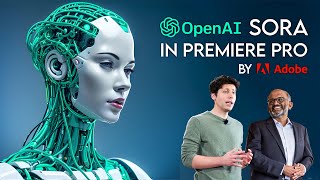
Adobe is integrating OpenAI's Sora and Pika Labs into Premiere Pro for video editing. Reka launched Rekka Core, a multimodal AI model with a 128,000 token window, priced at $10 and $25 per million tokens. Grok added image understanding, and Meta is testing an AI chatbot for creators to auto-reply to followers.
Questions this video answers
Monday, April 15
128,000 tokens
$10 per million input tokens and $25 per million output tokens
Chapters
Adobe has recently announced that it's working on integrating AI video tools from OpenAI and other third party companies like Pika Labs into its popular video editing software Premiere Pro. This means that Sora will be available directly in Premiere Pro, which is awesome news for editors. This move is seen as a big step for Adobe, a well known multinational company that specializes in content software. The company revealed this plan on Monday, April 15 and it has caused quite a stir in the AI community. Adobe is taking this step to keep up with the fast paced changes in technology, especially AI. Wall street has raised concerns about how AI could be a major threat to Adobe's editing software. In response, Adobe is moving forward with this integration to overcome these challenges. The company plans to include these third party AI tools in Premiere Pro, which will allow the software to add AI generated objects to scenes or remove essentially any object from the video automatically without needing much input from video editors. Additionally, options will be available to extend clip lengths using generative AI from Pika Labs or Runway, and to create entirely new AI generated clips with OpenAI's Sora. This integration promises to open up limitless possibilities in video production for everyone. As we already know, Adobe is not new to AI. Its Photoshop software already includes an AI called Firefly, which helps users edit still images. Now Premiere Pro will also benefit from AI aiming for a significant upgrade as competition increases with companies like OpenAI and MidJourney. Adobe is looking to stand out by training its AI system with unique data and protecting users from copyright issues. This could greatly increase Adobe's value in the market. Deepa Subramaniam, the vice president of Product marketing for Creative Professional Apps at Adobe, shared more details. She mentioned that Adobe is still deciding how the profits from third party AI tools used on its platform will be divided between Adobe and the developers of these tools. Supermanium also said that users would be informed when they are not using commercially safe AI models and it will be clear which AI technology was used in the videos created with Premiere Pro. She emphasized that Adobe will continue to lead with ethical AI use and will keep addressing human bias in their AI work, showing Adobe's commitment to staying relevant and responsible in the AI and tech industry. Alright now another exciting news comes from Raka, an AI startup based in San Francisco and founded by researchers from DeepMind, Google and Meta. They have launched a new multimodal language model named Rekka Core. This new model, described as the company's largest and most capable, is designed to compete with major AI models like GPT4 and Claude 3 Opus. Rekka Core was developed from scratch using thousands of GPUs and is now available for use through API on premise or on device options. This model is different from their previous models because it can process multiple types of data, images, audio and video, allowing it to perform a variety of tasks including translating scenes from movies like Netflix's three Body Problem from video to text. Despite being developed in under a year, this model matches or even surpasses some of the top AI models created by well funded companies like OpenAI and Google. Reika Core's chief scientist Yi Tae mentioned on social media platform X that the model has been trained using thousands of H1. Hundreds GPUs. He highlighted the team's efforts and achievements in reaching high performance levels quickly. The model is not only large in scale but also broad in capabilities. It supports 32 languages and can handle a vast amount of information at once thanks to its large context window of 128,000 tokens. This makes it particularly effective for tasks involving large documents. According to tests, Raka Core has outperformed other leading models in various benchmarks and continues to improve. The model is also priced competitively with costs for processing input and output Data set at $10 and $25 per million tokens respectively. This pricing strategy is part of Reika's effort to introduce the model into various sectors such as E commerce, gaming, healthcare and robotics. As Reika continues to grow and develop its technologies, the company is focused on enhancing its business functions and improving its models. However, despite the progress and the push towards innovation, Reika has decided not to open source its technology. According to Danny Yogetama, the co founder and CEO, this decision is part of finding the right balance between sharing and protecting their developments to sustain business growth. Alright now. Elon Musk's company XAI recently introduced a new version of their Grok 1.5 model called Grok 1.5 Vision. This updated version can now understand and interact with images, which means it can analyze pictures and answer questions about them. This Upgrade makes Grok 1.5 Vision similar to other recent AI developments like OpenAI's GPT4 with Vision and Google's Gemini 1.5 Pro, both of which also have Vision capabilities. The announcement of Grok 1.5 vision was made on Xai's official X account. They shared a blog post detailing what's new in this version. Although the basic features of GROK 1.5 are the same, adding the ability to see and understand images significantly enhances how it can interact with the real world. To see how well Grok 1.5 Vision performs. Xai ran several tests. They used their own real world QA benchmark, which checks how well the model understands space and objects as we do in the real world. Grok 1.5 vision did exceptionally well in this test, doing better than both GPT4 with Vision and Gemini 1.5 Pro. However, it didn't do as well in some other tests. Computer Vision, the technology behind this, is a field in computer science that helps computers recognize and understand real world objects in images and videos. It aims to give machines a visual understanding similar to humans. This technology is getting a lot of attention and investment from major tech companies because of its wide range of potential uses. For instance, a new feature called Snap by Healthify, an Indian platform for nutrition tracking, lets users take photos of their meals. The AI then suggests healthier recipes or exercise plans to balance their calorie intake. Beyond nutrition, Computer vision is also promising for medical diagnosis, self driving cars and many other areas okay now Instagram is working on a new way to let its popular influencers talk to their fans using artificial intelligence. The project, called Creator AI, is still being tested and would allow influencers to use a chatbot to respond to direct messages and possibly comments on Instagram. The chatbot would use the influencer's unique way of speaking to automatically send messages. Initially, these messages will tell fans they were generated by AI. The idea is to help influencers with many followers manage the huge number of messages and comments they get, making it easier for them to keep up without having to respond to each one personally. Eva Chen, whose who heads Instagram's fashion partnerships, has been promoting this new feature to content creators and Instagram has also been discussing it with agencies. However, it's not certain when or if this feature will be widely available. Influencers can choose what data Instagram uses to train the chatbot like their past posts or messages to make sure it sounds like them. They can even program specific answers to certain questions. Meta, the company that owns Instagram, is really pushing artificial intelligence across its business. They're using AI to improve ads, help with smart glasses, and more. Mark Zuckerberg, the head of Meta, thinks AI will be a big deal for people and businesses everywhere. He also wants Instagram and Facebook to be great places for influencers to work and make money. Meta plans to show off some of their new AI ideas at an event in New York in May. They've invited some influencers to come and see what's new. The Creator AI program builds on earlier attempts by Meta to use AI avatars that look like celebrities to talk to fans. However, not all influencers are excited about this. Some worry it might make them say things they don't agree with, while others doubt a chatbot can truly capture the real interactions they have with fans. Despite these concerns, companies like School of Bots are already helping influencers automate their messages. So far, Meta's AI avatars haven't been very popular. For example, the avatar inspired by Kendall Jenner only has 193,000 followers, and some people don't like the idea of interacting with a robot. All right, don't forget to hit that subscribe button for more updates. Thanks for tuning in, and we'll catch you in the next one.










